Why Is It So Hard to Fix an Electric Bike? (2026)


If you Ask any bike shop owner or manager if they fix electric bikes, you get an interesting array of stories.

“I know a guy who has lost a finger working on ebikes,” says MacKenzie Hardt, owner of Hardt Family Cyclery in Aurora, Colorado, and the former executive director of the nonprofit bike shop and community hub Bikes Together. Hardt has torn tendons in his own hand after accidentally triggering a cadence sensor that caused the wheel to spin out of control on the stand, even when the motor and battery were disconnected.

He now has a message on the company voicemail that informs customers the shop will not repair any ebike without third-party UL 2849 certification, the gold standard that certifies that an ebike’s entire package, from electrical drive train to battery to charger system, has been thoroughly tested. (Check out our guide to How to Buy an Electric Bike for more info.)

The Wild, Wild West

A lot of the problem in fixing ebikes is related to the fact that a surprising number of electric vehicles that are sold as ebikes are not, in fact, ebikes. According to PeopleForBikes, the third-party advocacy group, an ebike is a low-speed electric vehicle that “closely resembles traditional bicycles in their equipment, handling characteristic, size, and speed.”

Image may contain Machine Spoke Wheel Adult Person Accessories Bag Handbag and Tire

A mechanic works on a bicycle.Photograph: Dikushin/Getty Images

In 46 states, all ebikes fall under a Class 1, 2, or 3 distinction. The distinction depends on the bike’s maximum motor-assisted speed and how it’s powered. However, many ebikes sold online are way more powerful than the maximum 28 mph speed allowed on a Class 3 ebike, and they operate more like a moped or even a motorcycle.

“That’s really the heart and soul of the service problem,” says Cory Oseland, manager of the Ski Hut, a high-end bike shop in Duluth, Minnesota. “Once you slide out of the three classes, you run into a lot of parts and equipment that aren’t part of the bike industry.”

Repairing an ebike can also land the shop in a quagmire of liability issues. As bike shops are part of the product liability chain, they can be held responsible if they so much as inflate a tire on an electric vehicle and the rider later injures themselves or another person. Ebike-related injuries have jumped more than 1,020 percent nationwide from 2020 to 2024, according to hospital data, so this is not an unforeseen occurrence. “I have known people who have lost their shirt,” says Hardt.

In most states, if the bike doesn’t fit the Class 1-3 classification system, the shop’s insurance will likely be null and void. The problem, says Hardt, is that “we don’t regulate nationally what an ebike is. What is legal here may not be legal somewhere else.” Working on an unregulated bike, he adds, “is like if somebody brought in a Tesla to fix.”

The SEC drops its four-year-old investigation into EV startup Faraday Future


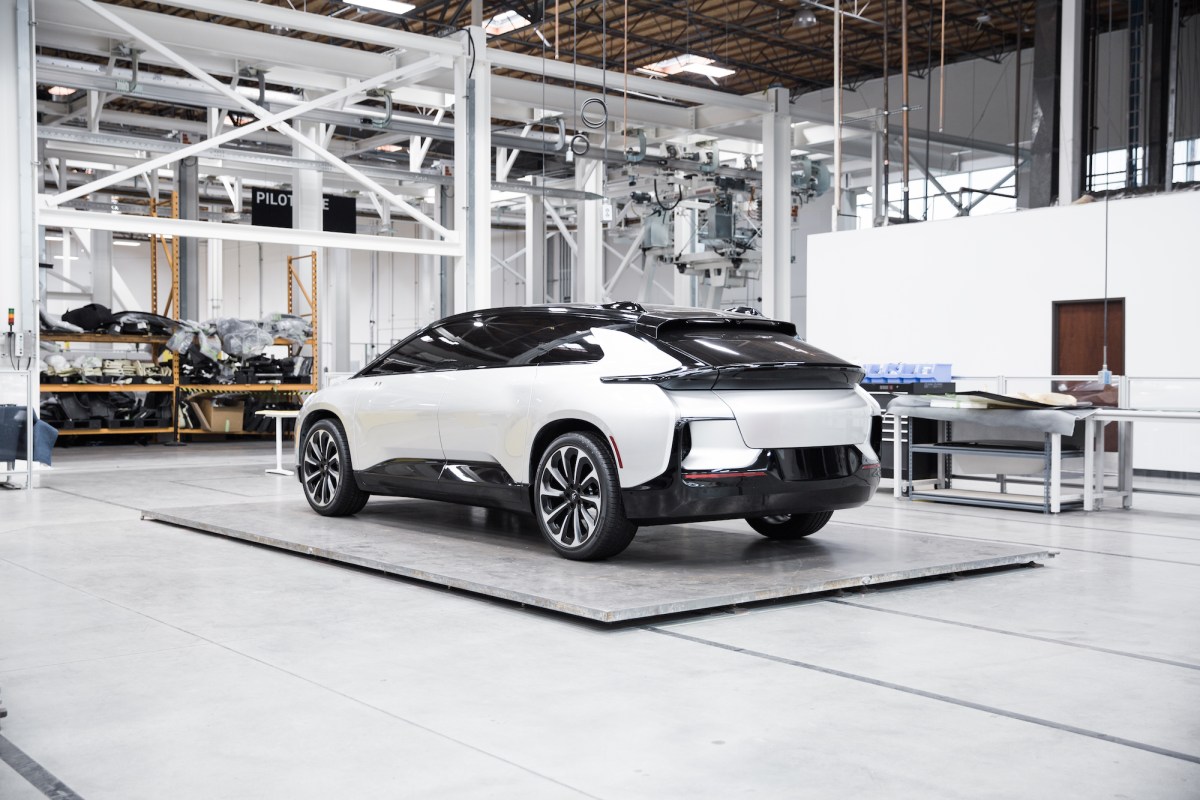
The Securities and Exchange Commission has closed its investigation into electric vehicle startup Faraday Future, despite SEC staff on the case recommending an enforcement action last year, TechCrunch has learned.

Four sources familiar with the investigation, who were granted anonymity to speak about the government case, told TechCrunch that the SEC informed the company and people involved in the probe about the closure this past week.

The dismissal of the case comes amid a historic drop in enforcement actions by the SEC, which only initiated four cases against publicly-traded companies in its 2025 fiscal year, a recent report shows. The SEC did not respond to an after-hours request for comment.

The investigation into Faraday Future lasted for nearly four years. The SEC was looking at whether the EV startup made “false and misleading statements” when it went public in a 2021 merger with a special purpose acquisition company (SPAC), and was also probing whether Faraday Future faked the sales of its first electric vehicles in 2023 — a claim that’s been made by at least three former employee whistleblowers.

The financial regulator sent the startup multiple subpoenas, regulatory filings from Faraday Future show. The SEC also took depositions of multiple former employees and executives in 2024 and 2025, three of the people familiar with the case have told TechCrunch.

In July 2025, Faraday Future revealed the SEC had sent the company and multiple executives — including founder Jia Yueting — letters known as “Wells Notices.” The SEC sends Wells Notices when staff working a case have decided to recommend the agency take enforcement action.

“We can now put all our energy into strategy execution. Over the past five years, we had to spend a great deal of time, effort, and money on cooperating with the investigation,” Jia said in a statement Sunday. Faraday Future said the SEC informed the company that it won’t take action against any of its executives, either.

Techcrunch event

San Francisco, CA
|
October 13-15, 2026

It’s not clear if Faraday Future ever responded to the Wells Notices sent last year. As recently as February, the company disclosed in regulatory filings that it had not. “The Company and executives plan to engage with the SEC to explain why enforcement action is not warranted,” Faraday Future wrote in such a filing last month.

The Department of Justice also sent Faraday Future requests for information after the SEC opened its investigation in 2022. Faraday Future has referred to this as an “investigation” in regulatory filings; the DOJ has never confirmed if it opened a full probe, and it did not respond to an after-hours request for comment.

It is rare for the SEC to not pursue an enforcement action after sending a Wells Notice. One study done at the Wharton School in 2020 showed that around 85% of targets who receive a Wells Notice wind up in court with the SEC.

The SEC investigated nearly every electric vehicle startup that went public in a SPAC merger over the last six years. In almost all of those cases, the agency reached a settlement with the startups. It dismissed an investigation into Lucid Motors in 2023, and as TechCrunch first reported in February, the SEC ended a probe into bankrupt EV startup Fisker late last year.

Origins of the investigation

Faraday Future was founded in California in 2014 by Jia, a businessman who at the time was running a booming tech conglomerate in China known as LeEco. It was one of many new companies trying to become the “next Tesla” or, optimistically, a “Tesla killer.”

Faraday snapped up talent from Tesla, other automakers, and also tech companies like Apple, and at one point employed as many as around 1,400 employees. But things got bumpy quickly. The company turned heads, in both good and bad ways, at the 2016 Consumer Electronics Show, with a flashy concept car and the lofty goal of being as disruptive as the iPhone.

The company revealed its first vehicle the following year: a luxury electric SUV called the FF91. By the end of 2017, though the company was nearly out of cash and had laid off or furloughed hundreds of workers. Jia’s company in China had collapsed, and he self-exiled to California as the government in his home country placed him on a debtor blacklist. (It was at this time that a close business associate to Jeffrey Epstein pitched the sex criminal on investing in Faraday Future, as well as other EV startups, as TechCrunch recently revealed. Epstein never invested.)

Faraday Future was rescued by an investment from major Chinese real estate conglomerate Evergrande. But that relationship fell apart quickly, too, with Evergrande walking away by the end of 2018 and Faraday Future laying off even more employees.

Jia nominally stepped aside as CEO in 2019 and also filed for personal bankruptcy to settle billions of dollars of LeEco debt he had personally guaranteed. But behind the scenes, he was still largely in charge of the company.

This became an issue when Faraday Future went public in 2021 and raised about $1 billion. Members of the newly-appointed public company board believed that Faraday’s executives had misrepresented Jia’s control over the day-to-day operations — especially after a short seller report was published that scrutinized Faraday Future — and formed a special committee to investigate.

That committee hired an outside law firm and a forensic accounting firm, and within the first few months it started reporting its findings directly to the SEC, the three people familiar with the investigation told TechCrunch.

Between January and April 2022, Jia was sidelined as a result of the board’s investigation, a senior VP named Matthias Aydt (who is now co-CEO with Jia) was placed on probation for six months, and another VP named Jerry Wang (who is Jia’s nephew) was suspended. (Wang ultimately resigned after “failure to cooperate with the investigation,” according to company filings, but is now back with Faraday Future.)

The committee’s work also showed that Faraday Future had, in the two years before it went public, survived in part on multi-million-dollar loans made to the company by low-level employees with connections to Jia — known as “related party transactions” in legal parlance.

On March 31, 2022, Faraday Future disclosed that the SEC had opened its investigation. The startup revealed the requests for information from the DOJ in June.

Dodging another bullet

Through the rest of 2022, and amid the early stages of the SEC investigation, employees and people close to Jia waged a campaign to regain control of the board and his company. This eventually resulted in death threats against some directors, who ultimately resigned, paving the way for people close to Jia to run the company once more.

Faraday Future finally delivered the first few FF91 SUVs in early 2023. Former employees have sued the company alleging that these were not true sales, and that the company had misled investors. The SEC investigators working the case subpoenaed Faraday Future about issues related to these sales, filings show.

Former executives and employees were initially deposed by the SEC in 2024, according to the people familiar with the investigation. The SEC sat some of them for longer depositions in the first half of 2025, the people said.

The Wells Notice sent in July 2025 said SEC staff had made “a preliminary determination to recommend that the Commission file an enforcement action against the Company alleging violations of various anti-fraud provisions of the federal securities laws.”

Specifically, the Wells Notice referenced “purported false or misleading statements” made during the SPAC merger process about “related party transactions” and Jia’s “role in the Company.” Jia, his nephew Wang, and two other unnamed employees also received Wells Notices.

Faraday Future is still trying to sell the FF91, but it has also recently changed its business in a few ways. The company is importing more affordable hybrid and electric vans from China. It also appears to be selling re-badged versions of Chinese robots, and turned a publicly-traded biotechnology company into a firm focused on crypto.

Those efforts have not stopped the company’s struggles. On Friday, the company announced it had received a warning from the Nasdaq that its stock price was under the minimum of $1, which could eventually lead to the company being de-listed.

This story has been updated with a statement from Faraday Future.

Lucid Motors sets record as Gravity sales pick up and tax credit expires


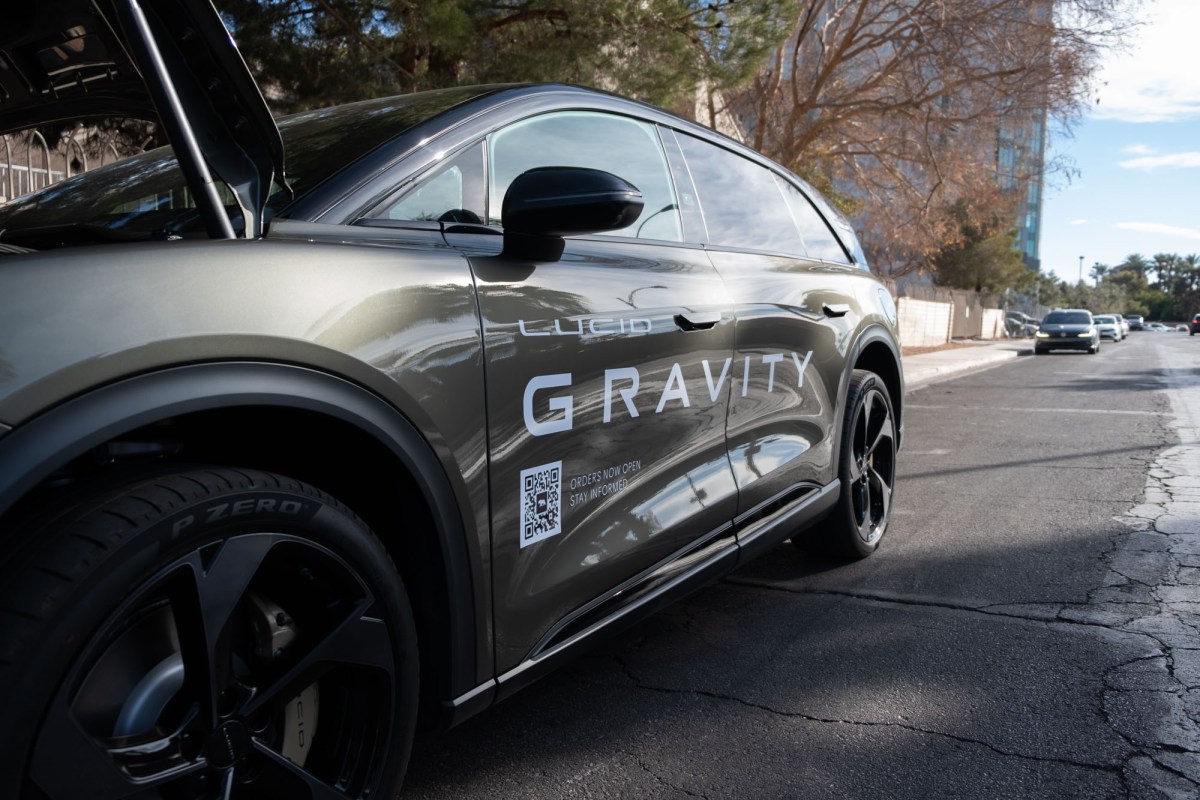
Lucid Motors delivered a record 4,078 vehicles in the third quarter, likely buoyed by a combination of more Gravity SUVs hitting the road and a rush of customers taking advantage of the expiring federal EV tax credit.

The Saudi-owned luxury EV startup is still way off the projections it used to go public in 2021 — a transaction that netted it $4 billion. But Lucid Motors has seen deliveries steadily climb over the last two years. The third-quarter delivery figures announced Monday mark the seventh consecutive quarter that Lucid Motors has seen sales increase.

Lucid Motors was not alone in seeing a big third-quarter bump in EV sales. Tesla recorded its best quarter in company history, and legacy automakers like Ford and General Motors saw big increases as well. Even Rivian, which is forecasting a worse overall year for total EV deliveries than 2024 or 2023, saw a boost in the third quarter.

Like Rivian, only customers who leased Lucid Motors vehicles were eligible for the federal EV tax credit, meaning the impact of its expiration is hard to quantify. It’s also unclear how many Gravity SUVs were delivered compared to the company’s first model, the Air sedan. Lucid Motors will reveal full financial results for the quarter on November 5.

Lucid Motors has struggled to generate interest for its luxury EVs since going public in 2021, with former CEO Peter Rawlinson openly admitting the company needed to beef up its marketing operations. Earlier this year, the company announced it signed actor Timothée Chalamet to be its first “global ambassador.” The company has also benefited from rental sales and company leases in some quarters, as TechCrunch previously reported.

The company is also increasingly looking to Saudi Arabia — which owns around 60% of the publicly traded company through its sovereign wealth fund — as a market for its vehicles. On Monday, Lucid Motors said it built more than 1,000 vehicles specifically for the Saudi market. (The company currently operates an assembly facility in the Kingdom and plans to open a full-fledged factory there.)

Lucid has also locked in future demand from an unlikely customer: Uber.

Techcrunch event

San Francisco
|
October 27-29, 2025

Uber announced last month plans to buy at least 20,000 Gravity SUVs over the next six years and use them as robotaxis on its network. For that deal, Lucid Motors will work to integrate autonomous vehicle company Nuro’s technology into the vehicles.

Elon Musk’s New Political Party Sparks MAGA Backlash Online


The suspense is finally over. Elon Musk, the visionary behind Tesla and SpaceX, officially declared the formation of a new political party on Saturday, July 5, 2025. His stated aim: to challenge the long-standing dominance of both the Republican and Democratic parties.

“Today, the America Party is formed to give you back your freedom,” the controversial tech entrepreneur announced on X (formerly Twitter) at 3:46 PM ET.

The creation of the “America Party” is nothing short of a bombshell, particularly given Musk’s significant financial contributions and political alignment with Donald Trump in the lead-up to the 2024 presidential election. Last year alone, Musk spent nearly $290 billion to support Trump’s return to the White House. This timely alliance granted the self-described “Techno King” an unprecedented level of influence for a tech entrepreneur in American politics. Trump, in turn, entrusted Musk with a custom-created federal department: the now infamous Department of Government Efficiency, or DOGE.

DOGE, however, quickly became a lightning rod for criticism, seen by many as emblematic of the very dysfunctions it was meant to fix within the federal government. Its methods and decisions, including the closure of federal agencies and drastic cost cutting at essential institutions, provoked widespread rejection of the billionaire.

This backlash manifested in protests outside Tesla showrooms, a drop in the electric vehicle maker’s stock price, and a noticeable plunge in profits and sales. Tesla’s sales erosion continued into the second quarter of 2025, during which the carmaker’s global deliveries fell by 13.5%. Tesla’s reputation, and that of Musk, suffered significantly, especially as the carmaker’s customer base heavily includes progressives and liberals who viewed his political alignment as a sharp departure from their values. Under increasing pressure from the markets, Musk formally withdrew from his government role at the end of May.

His public fallout with Trump began almost immediately after his departure, marked by a public spat between the two powerful figures on June 5. After a few weeks of relative calm, Musk reignited the feud by sharply criticizing the “One Big Beautiful Bill,” President Trump’s signature piece of legislation. He then publicly vowed to launch a political party and do everything he could to defeat Republican elected officials who voted for it.

As promised, on June 30, Musk formalized the political party he had previously hinted at, following the bill’s signing into law. The initial post announcing the party’s formation generated more than 3 million views in less than an hour, signaling the immediate and widespread attention it commanded.

Reactions on X, Musk’s social network, were acutely mixed. Users who visibly supported the MAGA movement and the Grand Old Party (GOP) expressed palpable disappointment and anger. Many lamented that the billionaire’s decision would, at best, fracture the conservative vote and, at worst, pave the way for Democratic victories in upcoming elections, particularly the crucial 2026 midterms.

“Why not just try and take over the GOP with more America First candidates?” asked one user, clearly disheartened by the billionaire’s move.

Roger Stone, a long time ally of President Trump, weighed in, commenting, “I have huge respect for @elonmusk and everything he has done for free speech and to ferret out waste fraud and corruption in federal spending. But I would rather see him pursue his efforts at electoral reform within the Republican Party primaries rather than having a new party splitting the vote of sane people and letting the Marxist Democrats gain control again.”

Another disappointed user questioned the legitimacy of the decision: “So a little over a million people across the entire world take your poll and you’re convinced this is what Americans want? And you do understand Democrats (who now despise you) would vote yes, knowing that you’ll end up splitting the Republican party. Don’t do this.”

“@elonmusk you need to rethink this one,” one user pleaded. “All you can hope to accomplish is to hand power over to democrats for decades with a successful 3rd party.”

An angry user directly challenged Musk’s character: “Has anyone thought about the fact that Elon Musk turned his back on someone he called a friend because things weren’t going his way? This is the kind of person you want to get behind?”

“This will fracture the right and split the vote. I’m against this, and so should you,” another user declared.

“I hope you know what you’re doing, Elon, because if you don’t, you’re about to hand over the Democrats to Congress, and then we’ll be completely out of options,” another user cautioned.

Conversely, other users, many of them avid fans of the billionaire, seemed amused by the announcement, which did not appear to surprise them. “You do throw a decent party 🎉😂,” joked Jason Calacanis, a well known tech investor and friend of Musk.

“Good split the GOP vote,” rejoiced another user, while another enthusiastically proclaimed, “Rest in Peace to the Republican Party!”

Prominent political scientist Ian Bremmer commented simply, “The people have spoken.” Another user expressed confidence in Musk’s judgment: “Your instincts have a good track record. I hope they are correct once again.”

Musk remains convinced that neither the Republicans, who currently control the government, nor the Democratic opposition adequately represent a significant portion of Americans. He appears confident that the political environment is favorable for a new movement. Data from a 2024 Gallup study suggests broad dissatisfaction with the two major parties: 43% of Americans identified as independents, while only 28% identified as Republican and 28% as Democrat.

With a net worth estimated at $361 billion by the Bloomberg Billionaire Index as of July 4, Musk certainly possesses the financial capacity to pursue his ambitious political endeavor.


The Pope gets his first electric Popemobile from Mercedes-Benz


Mercedes-Benz has delivered the first all-electric Popemobile to the Vatican: A modified version of the German automaker’s G-Class SUV.

Some of the biggest changes from the standard G-Class involve using the four electric motors at each wheel to carefully control the vehicle at low speeds as it travels around the Vatican grounds. There is also a dedicated height-adjustable swiveling seat so the Pope can address more of his audience.

While it’s an all new type of propulsion for the Pope’s dedicated ride, it’s not a new partner. Mercedes-Benz has built these types of vehicles for the Vatican for around 100 years, and a 2015 analysis by the Washington Post showed the automaker had built roughly one-third of all so-called Popemobiles to that point.

Mercedes-Benz says it’s been working with the Vatican on the vehicle for around a year. But it wasn’t the first company that wanted to electrify the Pope’s wheels. Now-defunct EV startup Fisker once claimed that it was working with the Vatican to create a special version of its Ocean SUV for the Pope. The validity of that claim always seemed suspect at best, though, and Fisker went bankrupt earlier this year.

The fight over Fisker’s assets is already heating up


Fisker is just a few days into its Chapter 11 bankruptcy, and the fight over its assets is already charged, with one lawyer claiming the startup has been liquidating assets “outside the court’s supervision.”

At issue is the relationship between Fisker and its largest secured lender, Heights Capital Management, an affiliate of financial services company Susquehanna International Group. Heights loaned Fisker more than $500 million in 2023 (with the option to convert that debt to stock in the startup) at a time when the company’s financial distress was looming behind the scenes.

That funding was not originally secured by any assets. That changed after Fisker breached one of the covenants when it failed to file its third-quarter financial statements on time in late 2023. In exchange for waiving that breach, Fisker agreed to give Heights first-priority on all of its current and future assets, giving Heights considerable leverage. Heights not only gained pole position to determine what happens to the assets in the Chapter 11 proceedings, but also gave them the chance to tap a preferred restructuring officer to oversee the company’s slow descent into bankruptcy.

Alex Lees, a lawyer from the firm Milbank who represents a group of unsecured creditors owed more than $600 million, said in the proceeding’s first hearing on Friday in Delaware Bankruptcy Court that it took “too long” to get to this point. He said Fisker’s tardy regulatory filing was a “minor technical default” that somehow led to the startup “basically hand[ing] the whole business over to Heights.”

“We believe this was a terrible deal for [Fisker] and its creditors,” Lees said at the hearing. “The right thing to do would have been to file for bankruptcy months ago.” In the meantime, he said, Fisker has been “liquidating outside the court’s supervision” for the benefit of Heights in what he said amounts to “suspect activity.” Fisker has spent the run-up to the bankruptcy filing slashing prices and selling off vehicles.

Scott Greissman, a lawyer representing the investment arm of Heights, said Lees’ comments were “completely inappropriate, completely unsupported,” and derided them as “designed as sound bites” meant to be picked up by the media.

an”There may be a lot of disappointed creditors” in this case, Greissman said, “none more so than Heights.” He said Heights extended “an enormous amount of credit” to Fisker. He added later that even if Fisker is able to sell its entire remaining inventory — around 4,300 Ocean SUVs — such a sale “will maybe pay off a fraction of Heights’ secured debt,” which currently sits at more than $180 million.

Lawyers told the court Friday that they have an agreement in principle to sell those Ocean SUVs to an unnamed vehicle leasing company. But it’s not immediately clear what other assets Fisker could sell in order to provide returns for other creditors. The company has claimed to have between $500 million and $1 billion in assets, but the filings so far have only detailed manufacturing equipment, including 180 assembly robots, an entire underbody line, a paint shop and other specialized tools.

Lees was not alone in his concern over how Fisker wound up filing for bankruptcy. “I don’t know why it took this long,” Linda Richenderfer, a lawyer with the U.S. Trustee’s Office, said during the hearing. She also noted that she was still reviewing new filings late Thursday and in the hours before the hearing.

She also expressed “great concern” that the case could convert to a straight Chapter 7 liquidation following the sale of the Ocean inventory, leaving other creditors fighting for scraps.

Greissman said at one point that he agreed that Fisker “probably took more time” than needed to file for bankruptcy protection, and that some of these quarrels could have been “more easily resolved” if the case had started sooner. He even said he agrees with Richenderfer that “even with a fleet sale, Chapter 11 may not be sustainable.”

The parties will meet again at the next hearing on June 27.

Before he dismissed everyone, Judge Thomas Horan thanked all the parties involved for getting to the hearing “pretty cleanly” despite the rush of filings this week. He particularly called out the U.S. Trustee’s office for working under “really difficult circumstances” to “get their heads around” the case with “minimal controversy, in the scheme of things.”

“I imagine there are a few people who want to catch up on some sleep now,” he said with a smile, as he ended the hearing.