RJ Scaringe has raised more than $12 billion across three startups and investors still want more


Investors can’t seem to get enough of RJ Scaringe or his ideas.

In less than a decade, the serial entrepreneur best known for his EV company Rivian, has raised more than $12.3 billion from venture capital firms, as well as strategic and institutional investors for his three — and counting — startups. If the latest $400 million raise for his new venture Mind Robotics is an indicator, investors are still happily piling in.

Outsized raises for newly minted startups have become more common in recent years. But those hundred-million-plus seed rounds have generally been reserved for buzzy defense tech startups or AI companies founded by former OpenAI or Anthropic employees.

Those supersized seeds certainly weren’t flowing toward something as niche as an electric micromobility startup. And yet in 2025, Scaringe raised $105 million for exactly that — a startup called Also, which he founded that same year. The total has since surpassed $300 million, with DoorDash among its backers.

Jiten Behl, partner at Eclipse and former chief growth officer at Rivian, has spent years watching and learning from Scaringe. His firm is now one of Scaringe’s biggest backers, leading rounds in both Also and Mind Robotics — Scaringe’s industrial AI and robotics startup that he also founded last year.

Storytelling and communication are one of his superpowers, according to Behl, who joined Rivian when the company had just a handful of employees.

“When RJ explains a certain issue, topic, opportunity, vision, he just has this very unique ability to communicate it so effectively, and it comes across so credible,” Behl said. “He’s not trying to undersell the difficulty or oversell the opportunity, and that’s an art.”

Scaringe isn’t the only serial entrepreneur to repeatedly attract massive amounts of capital, but founders who can raise billions across multiple ventures remain rare. The self-professed car enthusiast who earned his doctorate in mechanical engineering from MIT, joins a small cadre of entrepreneurs that includes Tesla CEO and SpaceX co-founder Elon Musk, OpenAI CEO Sam Altman, Anduril and Oculus founder Palmer Luckey, and Jack Dorsey, who founded Square (now called Block) and Twitter.

The difference, at least in the view of some investors TechCrunch spoke to, is that he is able to separate selling the idea from selling himself. “He is very comfortable and confident in his own personality, and he’s not trying to be an Elon,” Behl said, noting that many have tried to make the comparison over the years.

“It’s not about him,” another insider familiar with Scaringe’s companies told TechCrunch. “When you talk to him, he has enthusiasm about the product that is completely external.”

Of course, there is confidence and even a little ego, the same source mused, but “it doesn’t weigh on you.” The source also added that Scaringe also has a unique ability to make you feel like the most special person in the room — a sentiment others echoed.

Giving that kind of undivided attention to an investor, supplier, or exec at a manufacturer is a challenge at the scale Scaringe is attempting. He is running three companies, often traveling between Palo Alto, Irvine, Rivian’s factory in Normal, Illinois, and a second factory soon to open in Georgia. And then there is family — Scaringe has three sons with his ex-wife.

Joe Fath, another partner at Eclipse, credits his open-mindedness and collaborative nature for helping him attract investment and juggle these connected, yet disparate businesses.

He noted that Scaringe also “has the rare combination of being a truly great engineer while also having an exceptional instinct for product design,” said Fath, who previously worked at a major Rivian backer T.Rowe Price. “Very few founders can operate at that level technically while also understanding what resonates emotionally with customers — both consumers and commercial buyers. That combination is incredibly uncommon and has clearly been part of what makes Rivian’s products (and now ALSO and Mind’s) so differentiated.”

The pace of Scaringe’s fundraising over the past eight years is particularly notable, and doesn’t seem to be slowing.

More than $11 billion, and by far the largest slice of VC and strategic capital, went into Rivian — most of it between 2018 and its blockbuster IPO in 2021. That’s a startling timeline especially considering the company, initially called Mainstream Motors, had existed since 2009. For years, Rivian operated as a small, unknown entity until its breakout moment in late 2018 at the Los Angeles Auto Show, when it revealed prototypes of its all-electric R1T truck and R1S SUV.

The money soon flowed, and from every direction. In early 2019 and just a couple of months after that reveal, Rivian raised a $700 million funding round led by Amazon. U.S. automaker Ford would invest $500 million and make plans to collaborate on a since-scrapped future EV program. Cox Automotive contributed $350 million. Rivian would close out the year with a $1.3 billion round — its fourth in 2019 — led by funds and accounts advised by T. Rowe Price Associates, with additional participation from Amazon, Ford, and funds managed by BlackRock.

In July 2020, Rivian raised $2.5 billion and another $2.65 billion six months later. As whispers of an IPO got louder, Rivian closed another $2.5 billion private funding round led by Amazon’s Climate Pledge Fund, D1 Capital Partners, Ford Motor and funds and accounts advised by T. Rowe Price Associates Inc. Third Point, Fidelity Management and Research Company, Dragoneer Investment Group and Coatue also participated.

Then the IPO came. Rivian raised nearly $12 billion in gross proceeds after locking in $78 per share. Its market cap hit $100 billion when it debuted on Nasdaq in November 2021. Today, it stands at $18.2 billion today, a significant comedown that also reflects the broader struggles of the EV sector.

The ability to raise that much capital, despite those headwinds, is exceptional. But Scaringe didn’t stop with Rivian. If anything, the pace has accelerated. Also and Mind Robotics have together raised more than $1.3 billion so far, with Mind Robotics moving especially fast: $115 million in its first year, $500 million in March, and another $400 million just this week.

Rivian also continues to land notable backers through high-profile deals like the $5.8 billion joint venture with Volkswagen Group and a robotaxi partnership valued at up to $1.25 billion with Uber.

“Now, the big question is, how much can he do?” Behl said. “That’s a question [that] already assumes that he’s reaching his limit. The thing is, he doesn’t look at it that way. His perspective is that there is huge value to be created, there is huge impact to be created, and I just have to do it.”

When you purchase through links in our articles, we may earn a small commission. This doesn’t affect our editorial independence.
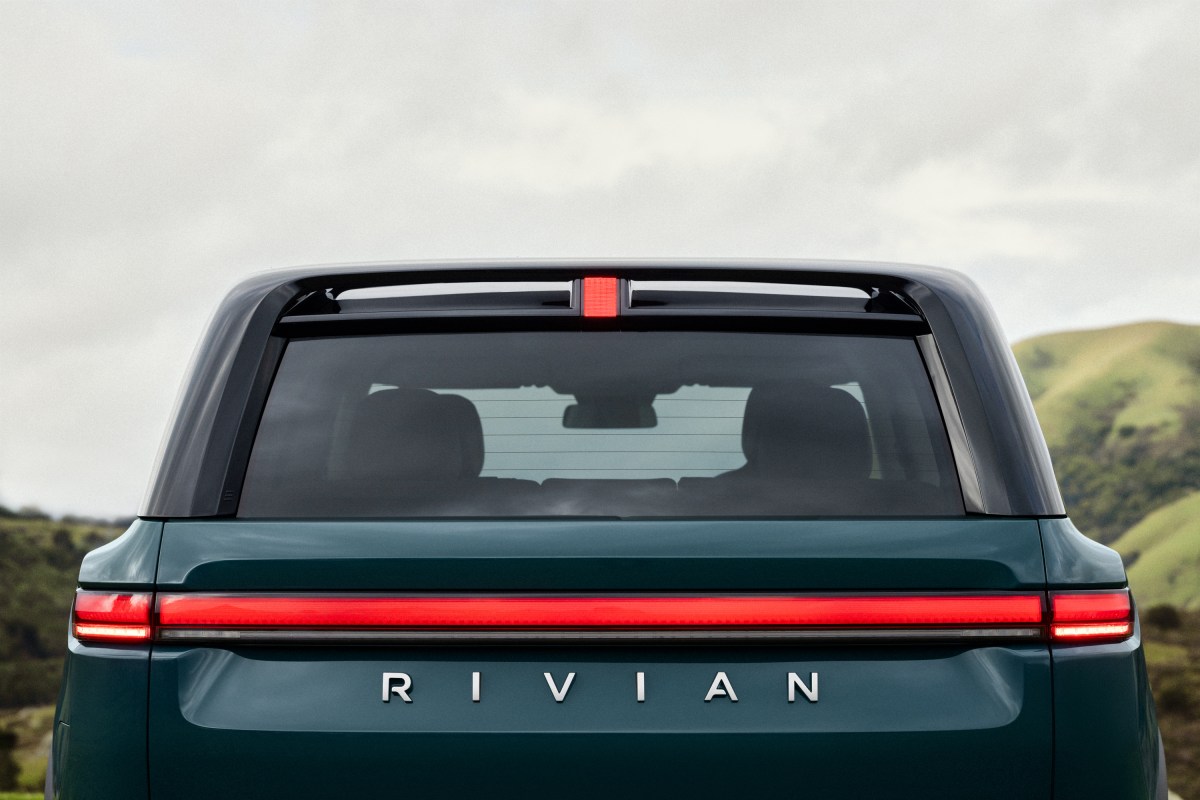
Volkswagen becomes Rivian’s top shareholder, displacing Amazon


Volkswagen has pushed Amazon out of the top spot to become Rivian’s largest shareholder, new filings with the U.S. Securities and Exchange Commission show.

VW Group’s increasing equity stake in Rivian, which has grown from 8.6% to 15.9% in less than two years, is tied to a joint venture with the EV startup. The Rivian and Volkswagen Group Technologies joint venture — officially formed in November 2024 — is focused on the development of electrical architecture and software.

And that stake will continue to grow, as long as Rivian continues to meet its end of the deal.

VW has committed to invest $5.8 billion into Rivian, capital that is unlocked as certain milestones are reached. The German automaker kicked off the deal with an initial $1 billion investment, followed by another $1 billion in mid-2025.

Rivian received another $1 billion last month after completing winter testing of the VW ID.EVERY1, a small four-door hatchback that will be the first vehicle under the joint venture to be equipped with its software and electrical architecture.

The latest SEC documents, filed Monday, show that VW Group now owns 209.7 million shares of Rivian stock.

Amazon, a longtime backer and customer, holds 12.28% of Rivian. Amazon was an early backer of Rivian, investing $700 million into the company when it was still a privately held upstart. The company disclosed in 2021, ahead of Rivian’s IPO, that it held a 20% stake in Rivian. Amazon is not only an investor in Rivian; it’s also a customer. In September 2019, Rivian entered into an agreement with Amazon to produce 100,000 electric delivery vans.

Other top shareholders include Oryx Global with an 8.6% share, and Vanguard with 5.1%. Rivian founder and chief executive RJ Scaringe holds a roughly 1.1% stake in the company.

Volkswagen’s deal with Rivian came at a critical moment for the EV maker as it poured millions of dollars into R&D and pushed to bring its R2 from the design studio to the assembly line. Rivian started production of the R2 in April and is expected to begin delivering the mid-sized SUV to customers in the coming weeks.

If successful, the VW-Rivian joint venture could lead to future tech licensing deals with other companies or new categories. For instance, the joint venture with VW excludes AI and autonomy, two areas that Rivian has focused considerable capital towards in recent years. Rivian plowed $1.7 billion on R&D in 2025, up from $1.6 billion in 2024, the company’s annual filing shows. Much of that has been directed towards its autonomy efforts — so much that it has prompted the company to push its profitability goal past 2027.

In a filing that detailed Rivian’s new partnership with Uber, Rivian disclosed it doesn’t expect to be EBITDA positive next year because of its R&D spending.

When you purchase through links in our articles, we may earn a small commission. This doesn’t affect our editorial independence.
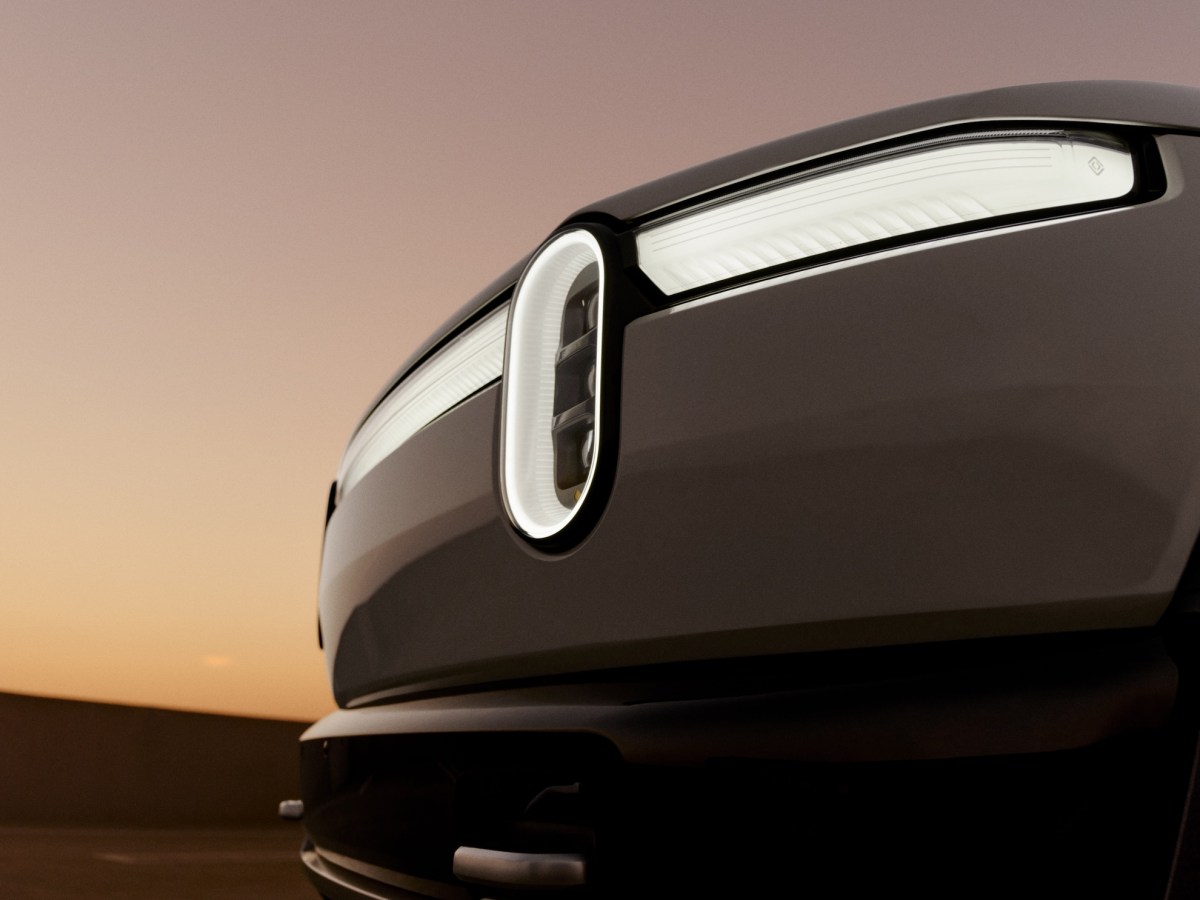
Rivian downsizes DOE loan to $4.5B, while boosting capacity of Georgia factory


Rivian has reworked its loan deal with the Department of Energy and now expects to borrow $4.5 billion to build its new factory in Georgia, down from the original amount of $6.6 billion allocated under the Biden administration.

The company also announced Thursday that it will draw on the loan sooner than planned, in early 2027, and expects to increase the total capacity of the Georgia plant from 200,000 to 300,000 vehicles in its initial phase of operation — another sign that the company has high hopes for its upcoming R2 SUV.

The larger capacity — a 50% increase over its initial plans — will help lower its per unit costs, while also providing significant room for future expansion of capacity in later phases, the company said Thursday. 

Some of the factory’s capacity will be used to produce R2 robotaxis for Uber. Under a deal struck earlier this year, Uber is making an initial $300 million investment in Rivian and is expected to purchase 10,000 fully autonomous R2 robotaxis ahead of a planned rollout in San Francisco and Miami in 2028. That initial $300 million payment is expected to close in the second quarter, and another $250 million investment is planned for later this year, according to Rivian.

The ride-hailing company has the option to buy up to 40,000 more autonomous R2 SUVs from Rivian starting in 2030. Uber will has said it will invest up to $1.25 billion in Rivian through 2031 if the automaker meets a series of milestones.

Rivian broke ground on the Georgia factory late last year and is in the beginning stages of doing so-called vertical construction at the site located outside Atlanta. The company expects to start making vehicles by the end of 2028. Until then, Rivian will build R2 SUVs at its current factory in Normal, Illinois.

The company recently started production of the R2 despite the plant suffering damage from a tornado, and Rivian said Thursday it has made initial deliveries to employees. Deliveries to customers are expected to start “in the coming weeks, according to Rivian.

Techcrunch event

San Francisco, CA
|
October 13-15, 2026

The modifications to the DOE loan come as Rivian revealed financial results for the first quarter of 2026 on Thursday. The company generated $1.38 billion in revenue, with $908 million coming from vehicle sales and $473 million from software and services. The company lost $416 million in the quarter, down from a $541 million loss in the same period last year.

When you purchase through links in our articles, we may earn a small commission. This doesn’t affect our editorial independence.
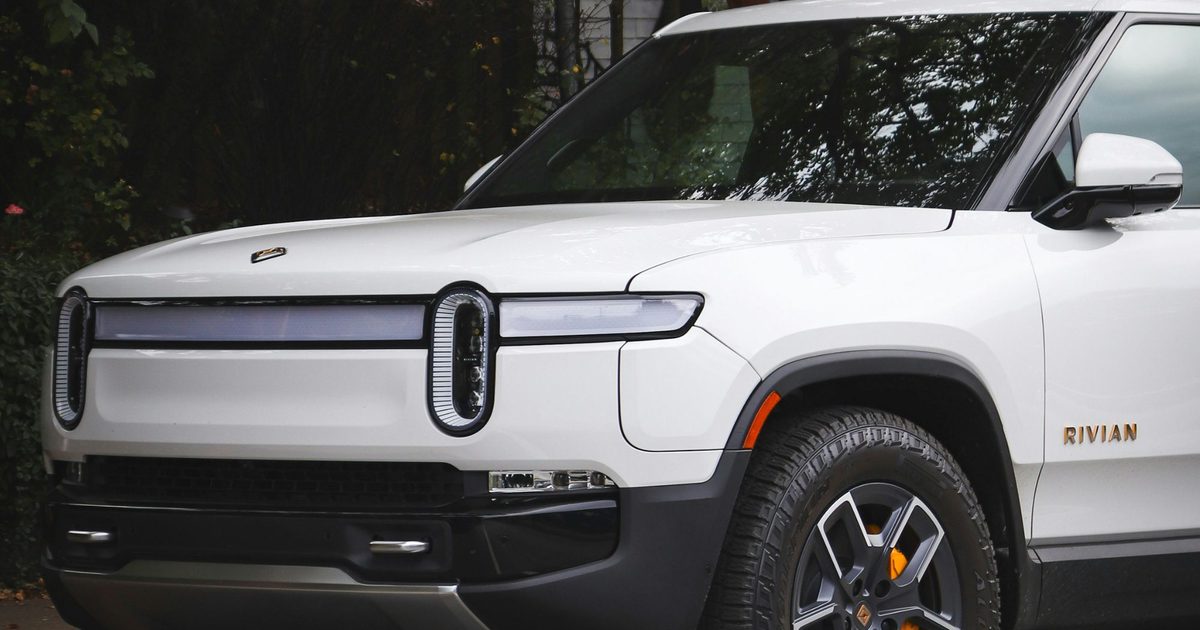
Rivian finally adds full Apple Wallet Digital Key support with new OTA update


Rivian owners, your phone is finally becoming a proper key. The company’s software chief, Wassym Bensaid, has confirmed that the upcoming .46 update will officially turn on Digital Key support for second-generation R1S and R1T vehicles. This isn’t just an app update; it introduces native keys that live right inside your Apple Wallet on your iPhone and Apple Watch.

The best part? It uses both Ultra Wideband (UWB) for precise, hands-free unlocking and NFC. That NFC bit is huge because it supports Apple’s Power Reserve feature – meaning you can still tap your phone to unlock your truck for up to five hours after your battery dies.

Rivian is also bumping the limit from four to eight digital keys per vehicle, so the whole family can have access. And it’s not just for Apple users; full compatibility is coming for Google Wallet and Samsung Wallet, too.

Why This Matters

This is a massive maturity moment for Rivian. If you drove a Gen 1 vehicle, you know the struggle of relying on the Rivian app’s Bluetooth unlocking. It worked, but it wasn’t on the same level as the seamless experience offered by BMW or Tesla. It lacked that native wallet feel, the precision, and definitely didn’t work if your phone died.

This move to true Digital Key support bridges that gap. It finally aligns Rivian with the industry gold standards – specifically leveraging Apple’s CarKey framework – and actually utilizes the upgraded hardware built into the Gen 2 platform.

Why You Should Care

Ideally, this just makes life easier and less stressful. You can genuinely leave the bulky key fob at home without worrying about being stranded if your phone battery hits 0%.

It adds a layer of safety and redundancy that wasn’t there before. Plus, being able to share access instantly via text message is a game-changer. If a friend needs to borrow the truck or grab something from the trunk, you can send them a key in seconds without needing a physical handoff.

What’s Next

Look for the .46 OTA update to hit vehicles later this month. While Gen 2 owners get the full package immediately, Gen 1 owners might be out of luck for the full experience since they lack the newer UWB hardware.

Rivian says this is just the start for the Gen 2 platform, signaling a broader push to make the car feel more like a piece of high-tech software and less like a traditional vehicle.

Rivian elects Cohere’s CEO to its board in latest signal the EV maker is bullish on AI


Aidan Gomez, the co-founder and CEO of generative AI startup Cohere, has joined the board of EV maker Rivian, according to a regulatory filing. The appointment is the latest sign that Rivian sees promises in applying AI to its own venture while positioning itself as a software leader — and even provider — within the automotive industry.

Rivian increased the size of the board and elected Gomez, whose term will expire in 2026, according to the filing.

Gomez has had a long career as a data scientist and AI expert. He launched Cohere in 2019 with co-founders Nick Frosst and Ivan Zhang with a focus on training AI foundation models for enterprises. The generative AI startup sells its services to companies such as Oracle and Notion.

Prior to starting Cohere, Gomez was a researcher at Google Brain, the deep learning division at Google led by Nobel Prize winner Geoffrey Hinton. Gomez is also known for “Attention Is All You Need,” a 2017 technical paper he co-authored that laid the foundation for many of the most capable generative AI models today.

Gomez’s skill set could be particularly useful for Rivian as the EV maker navigates a new $5.8 billion joint venture with Volkswagen Group to develop software. Under the joint venture, Rivian will share its electrical architecture expertise with Volkswagen Group — including its many brands — and is expected to license existing intellectual property rights to the joint venture.

It’s possible the joint venture will sell its tech to other companies in the future.

Rivian has also been working on an AI assistant for its EVs since 2023, Rivian’s chief software officer, Wassym Bensaid, told TechCrunch during an interview in March. The AI work, which is specifically on the orchestration layer or framework for an AI assistant, sits outside the joint venture with VW, Bensaid mentioned at the time.

Gomez’s expertise in AI and as a data scientist is clearly attractive to Rivian founder and CEO RJ Scaringe, who
noted in a statement that his “thinking and expertise will support Rivian as we integrate new, cutting-edge technologies into our products, services, and manufacturing.”

Rivian targets gas-powered Ford and Toyota trucks and SUVs with $5,000 ‘electric upgrade’ discount


Rivian is offering discounts up to $5,000 on its EVs — and a year of free charging — to customers willing to trade in their gas-powered trucks and SUVs.

The deal, which kicked off April 22, is aimed directly at some of the best-selling and most ubiquitous gas-powered trucks and SUVs on the market today, including the Ford F-150, Toyota Tacoma and Jeep Wrangler. Rivian is even going after German automakers Audi and BMW. The price cut varies between $1,000 and $5,000 depending on the model. Rivian is offering discounts on three R1T pickup truck trims and one R1S SUV model.

The company promoted Monday the “electric upgrade offer” in an email to prospective customers as well as posts on social media. The discounts come as demand for premium and luxury EVs has softened across the industry, prompting automakers such as Ford, Lucid and Tesla to reduce prices. Faced with uncertain demand, many legacy automakers have also pared down plans to shift their portfolios to only battery-electric vehicles. Gas-powered vehicles and hybrids are back en vogue, thanks to the steady sales and profit margins they provide.

Rivian, which is only expected to produce about 57,000 EVs in 2024, won’t unseat the best-selling trucks on the market. But the approach could help it win over a new batch of customers.

Only owners of specific gas-powered vehicles will be eligible for the trade in. Those include 2018 or newer Ford F-150 trucks, Ford Explorer, Ford Expedition and Bronco, with the exception of the Bronco Sport. Other eligible trade-ins are 2018 or newer Toyota Tacoma, Toyota Tundra, Toyota Highlander, Toyota 4Runner Jeep Grand Cherokee, Jeep Wrangler and Jeep Gladiator. The Audi Q5, Q7 and Q8 as well as the BMW X3, X5 and X7 also qualify.

The deals applies to customers who want to lease or buy a vehicle, although they must take delivery by June 30. Rivian is also throwing in a year of free charging at any Rivian-owned charger in the United States as an added sweetener. Rivian fast-chargers, which are branded the Rivian Adventure Network, are not nearly as plentiful as the Tesla Supercharging network. The company has installed 433 fast-chargers at 71 stations, including in Arizona, California, Oregon, Washington, Colorado and along the East Coast. Rivian has also installed 482 Level 2 chargers (called Waypoints) at 180 lives sites throughout the United States.