CarPlay is still on track for Tesla cars, but you might have to wait longer


Tesla’s long-awaited adoption of Apple CarPlay is still happening – just not as quickly as some drivers had hoped. After signaling last year that support could arrive by the end of 2025, the electric carmaker has hit a few unexpected hurdles that are slowing the rollout, according to the latest edition of Bloomberg’s Power On newsletter.

A delayed but ongoing integration

Tesla began working to bring Apple’s CarPlay system to its vehicles amid a period of soft sales and mounting pressure to boost demand. At the time, adding CarPlay was viewed internally as more than a minor software update. For many car buyers, CarPlay has become a must-have feature – a familiar, iPhone-like interface that seamlessly integrates navigation, messaging and music into the dashboard.

Despite Tesla’s reputation for having one of the best in-house infotainment systems in the auto industry, customer demand for CarPlay has remained strong. Tesla’s software already supports Apple Music, Spotify, video playback, web browsing and deep integration with its Full Self-Driving (FSD) system. But for many users, that’s not enough. CarPlay’s simplicity and ecosystem integration remain a powerful draw.

Tesla confirmed plans to support CarPlay in a windowed mode within its existing interface. However, technical challenges have pushed the timeline back.

During testing, Tesla discovered compatibility issues between Apple Maps and its own mapping software used for self-driving features. Specifically, turn-by-turn guidance from Tesla’s navigation system did not properly synchronize with Apple Maps when autonomous driving was active. In scenarios where both systems were visible side by side, this mismatch could confuse drivers.

Tesla requested engineering changes from Apple to address the issue. Apple implemented the fix in a later update to iOS 26 and the latest version of CarPlay. But another obstacle emerged: not enough users had installed the updated software.

CarPlay isn’t just another dashboard app – it’s become a central part of how many drivers interact with their vehicles. For iPhone users especially, the ability to mirror apps, access messages, use Apple Maps or Google Maps, and rely on Siri through a familiar interface can significantly improve the driving experience.

Tesla has long resisted adding CarPlay, arguing that its own system offers superior integration

But as competitors increasingly include CarPlay as standard, the absence has been a sticking point for some potential buyers. Adoption rates of iOS 26 have been slower than previous releases. Apple recently revealed that 74% of iPhones released in the past four years are running iOS 26 – slightly behind the pace of earlier updates. Crucially, the necessary Apple Maps fix did not arrive in the initial iOS 26.0 release but in subsequent updates. Apple has not disclosed how many users are on those later builds.

For Tesla, rolling out CarPlay before a critical mass of drivers has the compatible software could create inconsistencies and support issues. That has prompted a more cautious approach.

The good news is that CarPlay remains firmly on Tesla’s roadmap. As iOS 26 adoption continues to rise, the technical barriers should gradually ease. Apple is also expanding CarPlay functionality, adding support for third-party voice chatbot apps and enhancing its premium Ultra version – moves that could make the eventual Tesla integration even more compelling.

For now, Tesla drivers eager for CarPlay will need to wait a little longer. But the direction is clear: the feature is coming – just on a timeline dictated as much by software adoption as by engineering.

Watch it here Monday at 8pm ET


Sony / Honda Afeela concept EV

Sony

Be it for the Walkman portables and Trinitron TVs of old or the PlayStation consoles, Alpha cameras and superlative headphones of the twenty-first century, Sony has long been a mainstay at CES. But for the past couple of years at the world’s biggest electronics trade show, Sony has opted to focus on a different field: Automotive. The Afeela electric vehicle dominated Sony’s 2023 and 2024 CES press conferences, and we know that trend will continue for 2025, with an appearance at the Sony event (and a followup press conference) already confirmed.

The Afeela is the first product from Sony Honda Mobility, a joint venture between the Japanese electronics and transportation giants. After a surprise rollout at CES 2023, the Sony CES presser teed up additional details on the EV’s LiDAR-heavy sensor array and AI-enhanced cabin tech (the latter coming with an assist from Microsoft) at CES 2024. If the car’s previously announced scheduling waypoints — preorders in 2025 ahead of 2026 availability — remain intact, we’re hoping to hear which of the Afeela’s concept car niceties will actually make the cut once it enters the streets of the real world.

Of course, it won’t be all Afeela all the time in Vegas. Expect Sony to spend time talking up its imaging, gaming or maybe even its movie studio division. And with any luck, we’ll get more info on the company’s XR headset, which was shown off at the 2024 show, only to never be seen again. CES 2025 would be the perfect place to show off a meaty update of a possible competitor to the Apple Vision Pro.

You can watch the Sony CES press conference as it happens below. The feed will start Monday, January 6 at 8:00PM ET.

To view this content, you’ll need to update your privacy settings. Please click here and view the “Content and social-media partners” setting to do so.

The separate Afeela press conference will take place on Tuesday, January 7 at 4:30PM PT, and will be streamed on YouTube as well.

Rivian targets gas-powered Ford and Toyota trucks and SUVs with $5,000 ‘electric upgrade’ discount


Rivian is offering discounts up to $5,000 on its EVs — and a year of free charging — to customers willing to trade in their gas-powered trucks and SUVs.

The deal, which kicked off April 22, is aimed directly at some of the best-selling and most ubiquitous gas-powered trucks and SUVs on the market today, including the Ford F-150, Toyota Tacoma and Jeep Wrangler. Rivian is even going after German automakers Audi and BMW. The price cut varies between $1,000 and $5,000 depending on the model. Rivian is offering discounts on three R1T pickup truck trims and one R1S SUV model.

The company promoted Monday the “electric upgrade offer” in an email to prospective customers as well as posts on social media. The discounts come as demand for premium and luxury EVs has softened across the industry, prompting automakers such as Ford, Lucid and Tesla to reduce prices. Faced with uncertain demand, many legacy automakers have also pared down plans to shift their portfolios to only battery-electric vehicles. Gas-powered vehicles and hybrids are back en vogue, thanks to the steady sales and profit margins they provide.

Rivian, which is only expected to produce about 57,000 EVs in 2024, won’t unseat the best-selling trucks on the market. But the approach could help it win over a new batch of customers.

Only owners of specific gas-powered vehicles will be eligible for the trade in. Those include 2018 or newer Ford F-150 trucks, Ford Explorer, Ford Expedition and Bronco, with the exception of the Bronco Sport. Other eligible trade-ins are 2018 or newer Toyota Tacoma, Toyota Tundra, Toyota Highlander, Toyota 4Runner Jeep Grand Cherokee, Jeep Wrangler and Jeep Gladiator. The Audi Q5, Q7 and Q8 as well as the BMW X3, X5 and X7 also qualify.

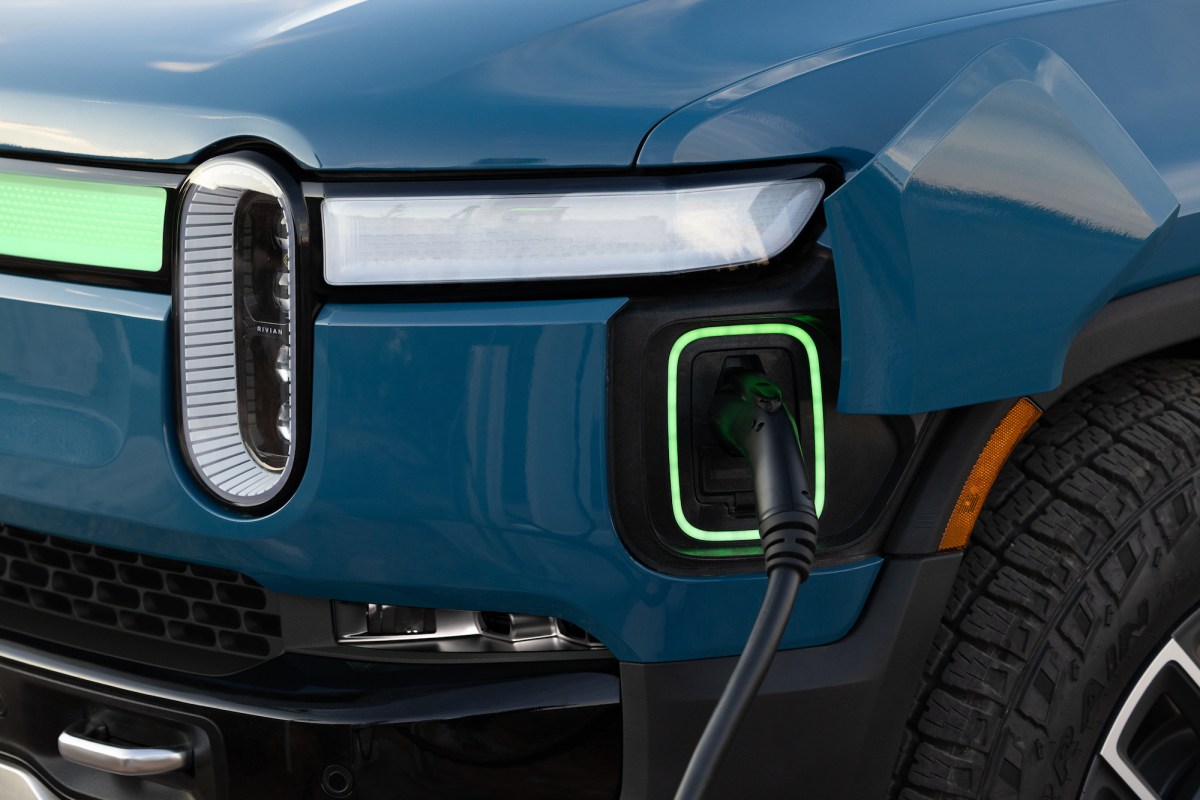
The deals applies to customers who want to lease or buy a vehicle, although they must take delivery by June 30. Rivian is also throwing in a year of free charging at any Rivian-owned charger in the United States as an added sweetener. Rivian fast-chargers, which are branded the Rivian Adventure Network, are not nearly as plentiful as the Tesla Supercharging network. The company has installed 433 fast-chargers at 71 stations, including in Arizona, California, Oregon, Washington, Colorado and along the East Coast. Rivian has also installed 482 Level 2 chargers (called Waypoints) at 180 lives sites throughout the United States.