The WeWalk Smart Cane 2 could be one of AI’s few good use cases at CES 2025


WeWalk introduced a new version of its smart cane for people with visual impairments at CES 2025, bringing a redesign that addresses many of the first model’s shortcomings and adds AI features and more advanced sensors from TDK. It’s positioned as an alternative to the traditional foldable white cane. Co-founder Kursat Ceylan, who has been blind since birth, says Smart Cane 2 can make mobility easier and safer, offering features like turn-by-turn navigation and obstacle detection, along with a ChatGPT-powered voice assistant that puts on-demand information in users’ hands without the need for them to also juggle a smartphone.

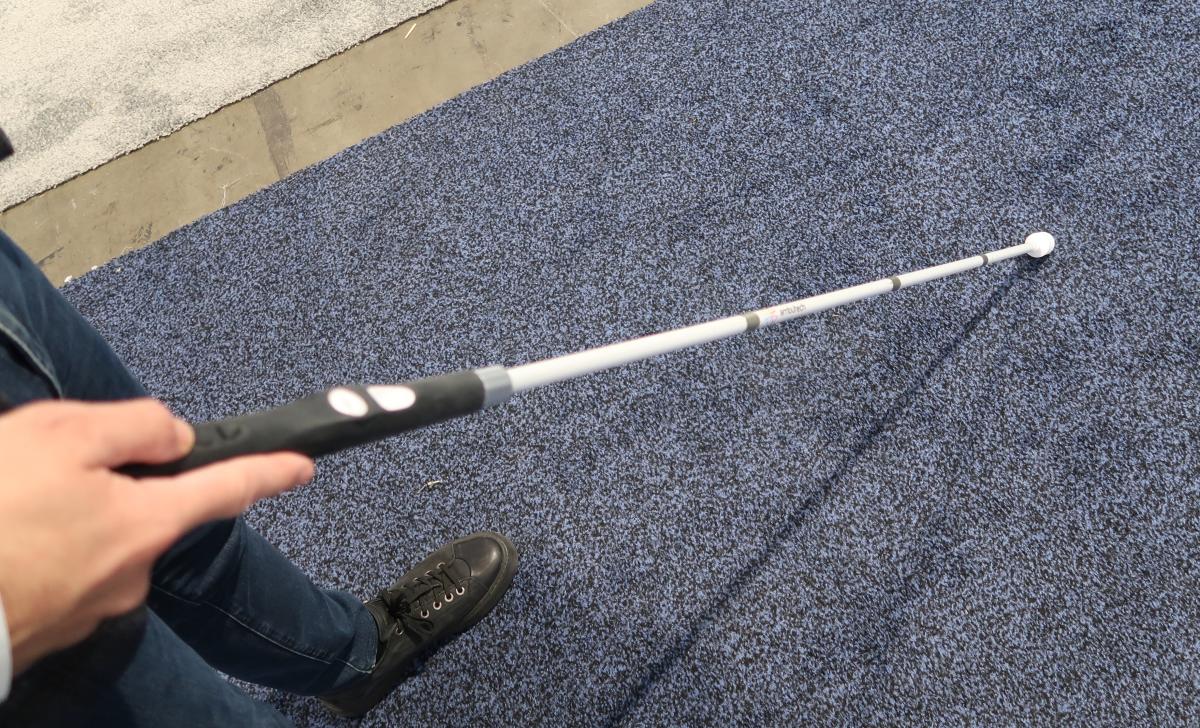
The WeWalk Smart Cane 2 has a slimmer handle than its predecessor, which should make for a more comfortable grip, and the company says it’s now about as lightweight as a standard white cane. It has tactile buttons to be more user-friendly, doing away with the touchpad of the previous model that some people found to be difficult to use. Ceylan says it can be used in different weather conditions, not just when it’s warm and dry (WeWalk describes the new cane as “rainwater-resistant”). The battery life is about 20 hours.

“You can fold and unfold it when you need it. There’s a speaker, a microphone, obstacle detection technology and a flashlight to make visually impaired people more visible at night. And also it has motion sensors in itself to provide a more accurate navigation experience,” Ceylan explained.

Under the hood, the WeWalk Smart Cane 2 has an ultrasonic time-of-flight sensor, an inertial measurement unit with six-axis motion tracking, a pulse density modulated microphone and a barometric pressure sensor from electronics company TDK. When it detects something ahead, it alerts the user with both haptic and audio feedback, according to Ceylan.

He demonstrated this in the very cramped, noisy environment of the Las Vegas Convention Center, and I was able to hear over the crowd when the cane told him he was approaching an obstacle — in this case, a carpeted step marked with yellow and black tape that I saw multiple CES attendees stumble over during our conversation. It also can connect to headphones via Bluetooth.

An tablet is positioned on a stand on a white table displaying detailed information about the sensors inside the smart cane. A monitor behind the tablet shows co-founder Kursat Ceylan walking on a path and gripping the handle of the cane. a caption at the bottom says An tablet is positioned on a stand on a white table displaying detailed information about the sensors inside the smart cane. A monitor behind the tablet shows co-founder Kursat Ceylan walking on a path and gripping the handle of the cane. a caption at the bottom says

Cheyenne MacDonald for Engadget

Paired with your smartphone, it can give navigation instructions and information about your surroundings, as well as public transportation options. “You can hear the names of stores and restaurants you are passing by,” he says. In Starbucks, where he isn’t able to read the menu, he says he might ask the assistant if they sell chocolate croissants.

“You don’t need to hold your smartphone anymore while you are going somewhere,” Ceylan said. “You can put it into your pocket and then you can get all the information through your WeWalk smart cane.” There is a smartphone interface for those who want to use it, though, which he held up through the demo so I could see what was going on on the other end. Unlike the vast majority of products I’ve encountered at CES this year that seem to include AI or ChatGPT for no real reason other than the fact that they can, this actually felt like a situation where it makes sense and could even be pretty beneficial.

Since it’s brand new, we don’t yet know how all of this will translate to real-world use. Pre-orders are now open for the WeWalk Smart Cane 2, and the first wave is expected to start shipping before the end of this month. There are two price models: $850 for the smart cane plus a subscription for the voice assistant that costs $4.99 per month, or $1150 altogether with no additional subscription fee for full use of the AI. WeWalk Smart Cane 2 is available internationally.

The London-based startup also has a partnership with the Canadian National Institute for the Blind (CNIB) that kicks off in February, when the organization will start using the WeWalk Smart Cane 2 for its cane training program. The goal is to gather meaningful data for instructors so they can really understand how people are using mobility canes (AI-enabled or otherwise), and help them get the most out of the tools. That, Ceylan says, “is so important, because the better you get around, the better you engage in life.”

Update, January 9 2025, 11:55AM ET: This story has been updated to add details on the smart cane’s battery life.

Faraday Future pitches a ‘fresh start’ with a minivan prototype at CES 2025


At CES 2017, Faraday Future introduced its futuristic luxury EV, the FF 91. Seven years later, following repeated delays, bankruptcy, lawsuits and other controversies, the company has sold “15 or 16” FF 91s. Now the company is detailing its latest strategy shift, with a plan to sell cheap EVs under its new low-cost “FX” brand. FX CEO Max Ma came to CES, along with two prototype vehicles, to pitch the plan that he described as a “fresh start” for the embattled company.

As you might expect with Faraday, the exact details are somewhat hazy, but it involves sourcing parts from Chinese car-makers and bringing them to the US to produce “mass volume mainstream vehicles” with some of the premium touches Faraday is known for. “We want to take that $300,000-car expertise from a technology and features and performance [standpoint] into a $30,000, $40,000 car to try to upgrade the overall user experience,” Ma said during a briefing with Engadget. The first FX vehicle, the flagship product of the brand’s lineup, will be a minivan (or, as Ma referred to it, “an AI MPV”) called the “Super One.”

Faraday showed off two prototype minivans to demonstrate the concept. We were not permitted to take photos but the vehicles in the photo at the top of this post are the ones I saw.

One was meant to show the kind of premium in-cabin experience Faraday is envisioning for the low-cost car. It had two rows of white leather captain seats. The second-row seats had reclining footrests, heated seats and built-in massagers. There was also a small fridge underneath the center console for keeping drinks cold. The vehicle was missing its door handles and several other pieces. “Obviously, we’ll have door handles,” a Faraday rep assured us.

The second minivan was even less finished. The entire interior, including the dashboard and instrument cluster, was covered in black fabric held together with binder clips. But a Faraday rep took me and other reporters for a ride in it, driving in small, slow circles around a Las Vegas parking lot. Later, Faraday offered to let me take the minivan for a spin and I — apparently the “first lady” to pilot the vehicle — also drove it in slow circles around the parking lot. I’m not sure what I was supposed to get out of it, though, it felt like driving a minivan.

There are two other vehicles planned for the initial FX lineup, the FX 5 and FX 6, which were previously announced by the company. Faraday is aiming for a $20,000 – $30,000 price for the FX 5 and $30,000 – $50,000 for the FX 6. There aren’t many other details yet about either, though Faraday shared a teaser image of an FX 6 prototype, which it described as an “extra-large luxury AIEV.”

A teaser image of the FX 6. A teaser image of the FX 6.

Faraday Future

Faraday claims it will start producing one of its planned vehicles later this year, with the first “pre-production” model rolling off the production line by the end of 2025, according to a timeline shared by Ma. That’s a lofty promise considering the company’s past history of mismanagement and delays. Faraday Future CEO Matthias Aydt also acknowledged that the company has yet to finalize its partnerships with the companies that will supply its parts. He also didn’t address how tariffs may affect those plans.

Ma said he understood the skepticism. “Basically, this is a kind of fresh start. We really want to demonstrate that through our dedication of hard work, we can achieve what we promised.”

CES 2025 day 2 live blog: Garmin, Amazfit, and more


Love them or hate them, but robotaxis have certainly been making headlines in 2024. And beyond the glamorous, sci-fi-inspired marketing around Tesla’s recently unveiled Cybercab robotaxi, safety has remained, in one way or another, a recurring theme.

Earlier this year, a survey revealed a majority of the U.S. public, or 68%, brought up safety concerns when asked what they thought about having self-driving vehicles (SDVs) on public roads. Yet within that majority, more than half either believe that SDV safety issues can be addressed or that SDVs will actually be safer than humans.

Dell is abandoning XPS, Inspiron, and its other classic brands


dell new branding

TL;DR

  • Dell is simplifying its lineup, removing XPS, Inspiron, and other classic brands from the mix.
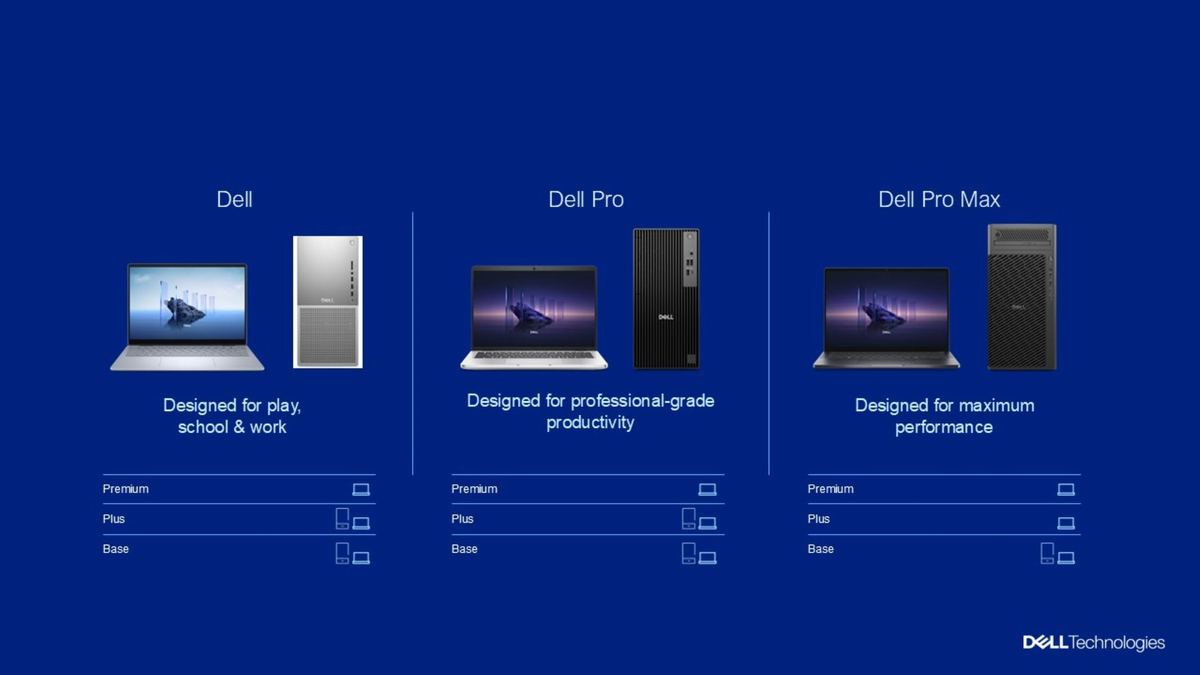
  • The new family is divided into Dell (entry), Dell Pro (mid-range), and Dell Pro Max (high-tier).
  • The new devices put a greater focus on AI with a new toolkit, NPU, and other extras for select models.

Dell has utilized the XPS and Inspiron brands since the 1990s, but all good things must come to an end. Today, Dell announced its brand-new lineup, which effectively replaces its older offerings with a more streamlined product line. Products that previously fell under the XPS and Inspiron families will now be branded simply as Dell devices, while Latitude-level devices will transition to the Dell Pro family. Finally, the higher-end Dell Precision family is being replaced by the Dell Pro Max family.

Let’s take a closer look at the reasoning behind this rebranding, as well as the new models being unveiled at CES 2025.

What the rebrand means for Dell going forward

The new branding signifies two key shifts for Dell. First, it underscores the company’s commitment to embracing AI PCs in a much bigger way, with on-device Copilot+ AI integrated into every Dell model and a stronger emphasis on AI-driven features overall with many models offering extras like a dedicated NPU or Dell’s new AI toolkit. Second, the new branding aims to simplify product selection by creating a uniform design and straightforward naming conventions.

  • Dell family: Best for family and school use.
  • Dell Pro: Tailored for professional-grade work.
  • Dell Pro Max: Designed for power users like professional content creators and 3D artists.

Dell will showcase a range of desktops and laptops across all three families at CES 2025, though only a few models will debut initially.

Dell 14 Plus and Dell 16 Plus are your entry-level options

dell 14 16 plus

The Dell 14 Plus and Dell 16 Plus are the most entry-level models in the new lineup, starting at $999 for both and launching on February 18.

  • Display: The key difference lies in screen size—14 inches for the Dell 14 Plus and 16 inches for the Dell 16 Plus.
  • Processors: Both offer Intel Core Ultra 5 to Ultra 9 options, depending on the variant.
  • Graphics: Integrated Intel Arc 130V (Ultra 5) or Arc 140V (Ultra 7/Ultra 9).
  • Memory and Storage: Choose between 16GB or 32GB of RAM and storage from 512GB to 2TB.

Both models include a full-size HDMI port, a USB Type-A port, a Thunderbolt 4 port, and a USB 3.2 Gen 1 Type-A port. They also come in 2-in-1 variants for those who prefer this form factor.

Dell Pro family has a lot more models to showcase

dell pro premium fam

Andrew Grush / Android Authority

The Dell Pro family offers a much wider range of options, but let’s start with what they have in common. Every model features a display ranging from 13.3 inches to 16 inches with a 16:10 aspect ratio, and the majority of models offer only FHD+ resolution, except for the Dell Pro 13 and 14 Premium, which have QHD+ variants.

Nearly every model includes storage options up to 2TB, but SOC-integrated RAM is the default choice initially, typically ranging from 16GB to 32GB. The good news is that a few models will eventually offer variants with single-channel and/or dual-channel RAM instead. The Dell Pro family also avoids NVIDIA or AMD graphics — at least for now — as every newly announced Dell Pro model uses Intel Arc graphics.

Dell is promising improved battery life across the entire Dell Pro line, as well as cutting-edge AI technology. This includes not only front-facing features like CoPilot Plus but also more advanced tools such as Dell Pro AI Studio, a comprehensive AI toolkit built with businesses in mind and exclusive to the Premium family.

The Dell Pro family is also adopting new modular USB-C ports designed for better durability and easier replacement. Personally, I haven’t run into USB-C port issues with my own laptop, but this addition is still a nice extra that enhances the device’s potential longevity.

As for what sets the product lines apart? Here’s a quick breakdown:

  • Dell Pro 13 and 14 Premium: At the top of the pack, the Premium family stands out as the thinnest and lightest option while offering plenty of power. These models support a variety of Core Ultra Series 2 (V) processors, including vPro. They also deliver excellent battery life thanks to mini-LED backlighting. The Dell Pro 14 Premium even offers an option with a Tandem OLED display, which is 24% more power-efficient and 49% lighter.
  • Dell Pro 13, 14, and 16 Plus: The Plus family will launch with Ultra Series 2 (V) processors, with Ultra Series 2 (U) models arriving later. All models include integrated graphics, and, at launch, RAM options are limited to 16GB or 32GB of SoC integrated memory. However, Dell plans to eventually roll out models with single-channel or dual-channel RAM ranging from 8GB to 64GB.
  • Dell Pro 14 and 16:  You’ll find Intel Core 13/14th gen or Ultra Series 2 (U) processors and memory options ranging from 8 to 64GB of RAM.

The Pro family will also consist of a variety of new desktop models in form factors that include micro, slim, and tower. All the newest models will have Intel Core Ultra Series 2 and AMD Ryzen processor options and will have built-in NPUs for better AI performance.

Pricing for the Dell Pro family has yet to be announced, but the Dell Pro 14 Plus and Dell Pro 16 Plus are expected to be available on January 6, followed by the Dell Pro 13 Plus on February 25. The rest of the family should arrive between March and April. Desktop availability details are still pending.

Dell Pro Max is the highest end of the spectrum

dell pro max
 While the Max family isn’t dramatically different from the Pro line, the standout feature is support for NVIDIA graphics. The Dell Pro Max 14 and 16 are largely identical, aside from the larger 16-inch display on the latter. Both models offer QHD+ resolution, 16:10 aspect ratios, and processor options up to the Intel Core Ultra 9, along with NVIDIA graphics.

Dell is also releasing Pro Max desktops that are scalable and tailored for various industry applications, including light AI workloads. These will be available in micro, slim, and tower form factors, with RTX and AMD graphics options.

The Dell Pro Max family is expected to launch in March or April 2025, but further details are yet to be confirmed.

Got a tip? Talk to us! Email our staff at news@androidauthority.com. You can stay anonymous or get credit for the info, it’s your choice.

Kirin offers a taste of its electric salt spoon at CES 2025


On the first night of CES 2025, Kirin Holdings, a Japanese company known for its beer and beverages, showed off its new electronic spoon that makes your food taste saltier. The company says its spoon uses a weak electric current to concentrate sodium ion molecules in your food, adding a stronger umami and salt flavor to low-sodium foods.

A limited supply of the Electronic Salt Spoon went on sale in Japan in 2024 for roughly $127 in American dollars, but Kirin hopes to sell the device around the globe in the coming years. The company claims this device can noticeably increase the “saltiness” of your food, without adding any additional sodium.

A crowd of people tried some soup using Kirin’s spoon at CES Unveiled in Las Vegas. TechCrunch did not try it ourselves, because there’s something about a communal tech conference spoon that just isn’t that appetizing.

One of the biggest crowds on the first night of CES 2025 was people trying to taste Kirin’s new spoon

While the spoon seems too good to be true, there’s some convincing research behind it that suggests it may be legit. The product launch of Kirin’s spoon marked the first commercialization of technology that won the 2023 Ig Nobel prize, a satirical award for unusual scientific research. The researchers behind it first published their thesis in 2011, but have since made spoons, forks, and chopsticks that pass electric currents into food.

Kirin says it created the spoon to help people consume less salt. This problem is especially relevant in Japan, where the country’s adult population eats more than double the World Health Organization’s recommended intake.

Watch it here Monday at 8pm ET


Sony / Honda Afeela concept EV

Sony

Be it for the Walkman portables and Trinitron TVs of old or the PlayStation consoles, Alpha cameras and superlative headphones of the twenty-first century, Sony has long been a mainstay at CES. But for the past couple of years at the world’s biggest electronics trade show, Sony has opted to focus on a different field: Automotive. The Afeela electric vehicle dominated Sony’s 2023 and 2024 CES press conferences, and we know that trend will continue for 2025, with an appearance at the Sony event (and a followup press conference) already confirmed.

The Afeela is the first product from Sony Honda Mobility, a joint venture between the Japanese electronics and transportation giants. After a surprise rollout at CES 2023, the Sony CES presser teed up additional details on the EV’s LiDAR-heavy sensor array and AI-enhanced cabin tech (the latter coming with an assist from Microsoft) at CES 2024. If the car’s previously announced scheduling waypoints — preorders in 2025 ahead of 2026 availability — remain intact, we’re hoping to hear which of the Afeela’s concept car niceties will actually make the cut once it enters the streets of the real world.

Of course, it won’t be all Afeela all the time in Vegas. Expect Sony to spend time talking up its imaging, gaming or maybe even its movie studio division. And with any luck, we’ll get more info on the company’s XR headset, which was shown off at the 2024 show, only to never be seen again. CES 2025 would be the perfect place to show off a meaty update of a possible competitor to the Apple Vision Pro.

You can watch the Sony CES press conference as it happens below. The feed will start Monday, January 6 at 8:00PM ET.

To view this content, you’ll need to update your privacy settings. Please click here and view the “Content and social-media partners” setting to do so.

The separate Afeela press conference will take place on Tuesday, January 7 at 4:30PM PT, and will be streamed on YouTube as well.