Canoo said on Friday night that it has and “will cease operations effective immediately,” after failing to secure enough funding to keep it going. The writing was on the wall for the EV startup leading up to the announcement; the company has lost multiple executives in recent months, and reported to the SEC in November that it had just $700,000 in the bank, per .
In a press release announcing the filing, Canoo said it was unable to get funding from the Department of Energy’s Loan Program Office or from “foreign sources of capital” that executives had been in talks with. “In light of the fact that these efforts were unsuccessful, the Board has made the difficult decision to file for insolvency,” it said. Canoo owes a total of over $164 million to hundreds creditors, and has about $126 million in assets, according to TechCrunch. Under the filing in Delaware, Canoo’s assets will be liquidated and the proceeds will be distributed to its creditors. In a statement, CEO Tony Aquila said, “We are truly disappointed that things turned out as they did.”
Hyundai said Monday it will send customers who have bought or leased an EV before January 31 a free charging adapter that will let them access Tesla’s supercharging network.
The Hyundai-authorized adapter will give CCS-port-equipped Hyundai EV drivers access to more than 20,000 Tesla Superchargers in the United States, according to Hyundai. Free adapters will be available to eligible owners of the model-year 2024 and earlier Kona Electric, Ioniq hatchback, Ioniq 5, and Ioniq 6 vehicles. Hyundai said that model-year 2025 Ioniq 6, Ioniq 5 N, and Kona Electric vehicles are also eligible.
Customers have to request the free NACs adapter through the online MyHyundai owner portal.
Support for Tesla’s charging connector and charge port — called the North American Charging Standard — has accelerated since Ford and GM announced plans in 2023 to integrate the technology into the next generation of EVs and sell adapters for current EV owners to gain access. Up until then, every EV, with the exception of Tesla, used Combined Charging System (CCS) connectors.
Virtually every other automaker followed, making their own partnerships with Tesla to offer customers a NACs adapter. Some, including Lucid, have made plans to integrate the charging port into future EVs.
The rollout hasn’t been as smooth as some hoped, with many non-Tesla customers still waiting for the adapters. However, some automakers have started to ship the adapters in recent months.
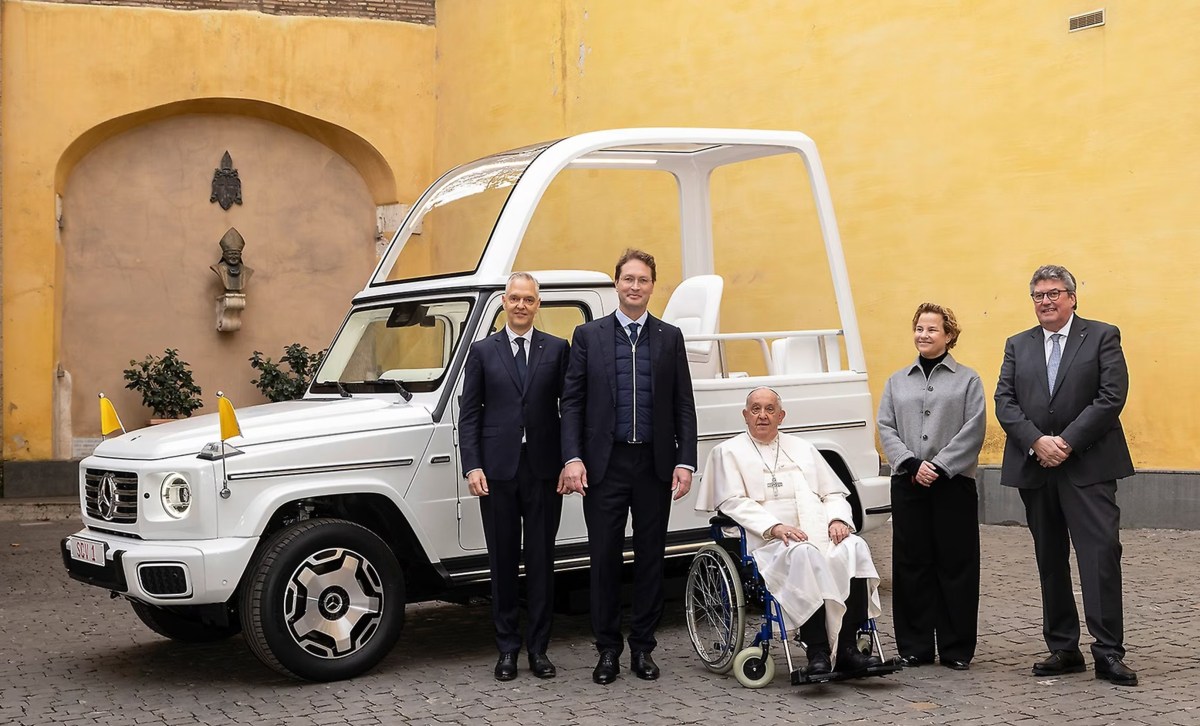
Some of the biggest changes from the standard G-Class involve using the four electric motors at each wheel to carefully control the vehicle at low speeds as it travels around the Vatican grounds. There is also a dedicated height-adjustable swiveling seat so the Pope can address more of his audience.
While it’s an all new type of propulsion for the Pope’s dedicated ride, it’s not a new partner. Mercedes-Benz has built these types of vehicles for the Vatican for around 100 years, and a 2015 analysis by the Washington Post showed the automaker had built roughly one-third of all so-called Popemobiles to that point.
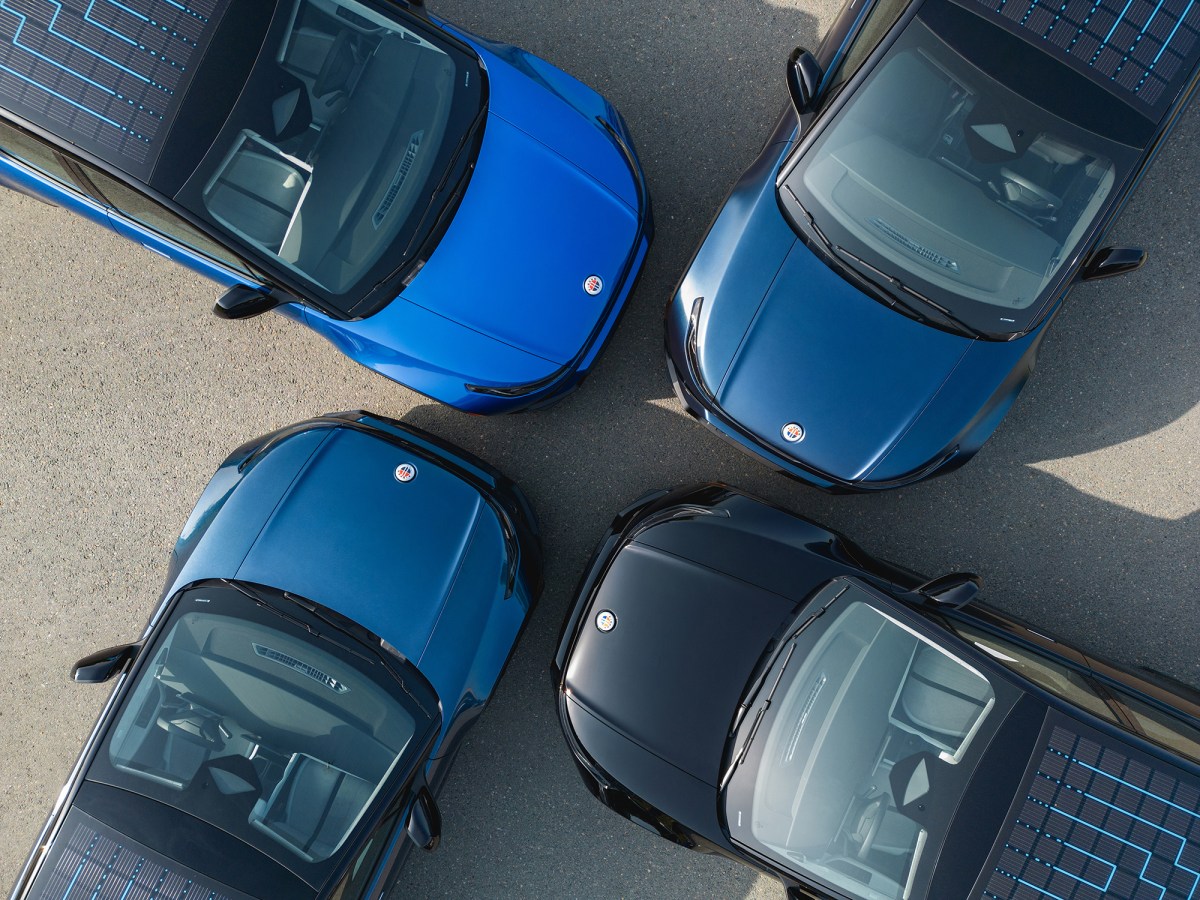
Mercedes-Benz says it’s been working with the Vatican on the vehicle for around a year. But it wasn’t the first company that wanted to electrify the Pope’s wheels. Now-defunct EV startup Fisker once claimed that it was working with the Vatican to create a special version of its Ocean SUV for the Pope. The validity of that claim always seemed suspect at best, though, and Fisker went bankrupt earlier this year.
Thomas Ingenlath is having perhaps a little too much fun in his Polestar 3, silently rocketing away from stop signs and swinging through tightening bends, grinning like a man far younger than his 59 years of age.
“You really can push this car,” the Polestar CEO says as he cruises the roads alongside other enthusiasts near Spanish Bay north of Pebble Beach during Monterey Car Week. Throughout the drive, he praises the SUV’s ability to be both comfortable and smooth while still delivering the engaging handling that buyers of the brand’s first two cars, the hybrid Polestar 1 and electric Polestar 2, have come to know and love.
In his neutral-hued suit, he almost blends into the pale interior of the full-size SUV, the yellow seatbelt across his chest providing the only contrast. It’s an aesthetic that matches the attitude of the car itself: a premium, minimalist feel with the sharp performance typical of Polestar machines.
Safe EV ground, shifting political sands
But the Polestar 3 marks a new way forward for the brand on U.S. streets. Though the car that Ingenlath hustles through traffic in Monterey was built in China, the first American-assembled Polestar 3 SUVs are just starting to roll off the factory lines at Polestar’s plant in Ridgeville, South Carolina.
Image credits: Polestar
That same factory has long made cars for Volvo, which is owned by China’s Geely Holding. Polestar — a spinoff of Volvo that’s headquartered in Sweden and also under Geely — now shares the space as it zooms forward in the United States amid headwinds from the recently imposed tariffs on Chinese EVs.
Indeed, while the company’s Polestar 2 is built in Gothenburg, all American-market Polestar 3 SUVs will come from South Carolina.
“Polestar 3 production is, I call it, on safe ground,” Ingenlath says.
Safe ground, perhaps, but undoubtedly shifting sands. Ingenlath sees EV demand in the U.S. market as evolving and requiring some patience: “How fast will that develop? We have to see,” he says. “but it’s certainly not something that worries me about the purpose of our company.”
Ingenlath says he would love for adoption rates to be even higher here, of course, but he’d be happier if United States politics could be “a bit more consistent.”
He’s watching the election closely. “All the noise around it is just disturbing,” he muses. “When you do a premium car brand, you need consistency. You need consistency in your model politics and your pricing and stuff, and of course, we would love, as well, for us to have a much more stable base for decision-making. And you cannot, you know, react on a weekly, monthly basis. You need years… to make meaningful economic decisions.”
Cars like the Polestar 3 take upwards of five years to design and develop. Moves like the new tariffs on Chinese-made EVs imported to the U.S. — which sprung up practically overnight — are a real threat.
Funding for EVs
That’s just one challenge Polestar has faced lately. At the beginning of 2024, Volvo divested a significant portion of its holdings in the company. It’s a move that Ingenlath downplays, noting that Volvo still holds roughly 18% of the company. “That’s not insignificant,” he says. “If you own 20% of a company, you’re pretty interested in how the company is doing.”
Polestar has turned to banks for a $1 billion loan to keep things on track. Ingenlath says that this change in ownership hasn’t resulted in his running the business differently. Still, he says, it’s always good to focus on the fundamentals.
“It’s important now to show them execution capability,” Ingenlath remarks of his obligations to the banks, “that we have these superb cars coming out, that we have the markets successfully launching a car, delivering and selling.”
Ingenlath declines to say whether Polestar might need more financing to execute that plan but says his focus now is making Polestar “self-sustaining.”
A bet on SUVs
The Polestar 3 is integral to that plan. Though the Polestar 2 is a sweet-driving, clean-looking sedan, it’s playing in a market dominated by SUVs in the U.S. Ingenlath calls it “rather a compact European sedan here, which will not fulfill the needs of a family.”
The Polestar 3 should fare better in that regard, at least for families that can afford its $73,400 starting price. The vehicle is much larger, more upright, and roomier than the Polestar 2, and still promises a taste of the same driving character.
Importantly, sales growth is required to set the stage for Polestar’s next releases.
The iterative nomenclature continues with the Polestar 4, a smaller SUV that trades some of the Polestar 4’s volume (and all of its rearward visibility) for a dramatically sweeping roofline and a more affordable price point, starting at $54,900.
Image credits: Polestar
After that comes the Polestar 5, a sporty, stylish sedan that ties into the brand’s design-forward focus, an attribute that Ingenlath says is more important to the business than federal EV subsidies. “We should lure people behind the wheel of a Polestar, buying our products, because they’re just so damn desirable, and they want to have them,” he says.
The Polestar 4 is set to arrive later this year, with the Polestar 5 coming in 2025. It’s an aggressive timeline considering the Polestar 2 has effectively been the company’s lone offering in the U.S. market for nearly four years.
That wasn’t supposed to be the plan. The Polestar 3 has seen significant delays thanks to software issues that has also sidelined its corporate sibling, the Volvo EX90. Still, Ingenlath says that technology sharing with Volvo is a key part of Polestar’s ability to iterate quickly.
“Why would we develop ADAS systems ourselves?” he asks. “Of course, Volvo delivers here a technology base which is excellent for that premium vehicle that we want to build.”
That technology sharing will continue despite Volvo’s partial divestment. Volvo isn’t its only partner. Polestar was an early adopter of Android Automotive, effectively handing all the in-car interface over to Google.
“That’s one of the nicest and smoothest success stories of actually implementing technology,” he says, a decision that was initially met with skepticism. “People were like, ‘Oh, what are you doing? Are you really going in bed with Google? Blah, blah, blah.’ There were so many raised eyebrows about that. Jesus, our customers love it. It’s such a step forward in terms of ease of use.”
The real step forward for Polestar will be the long-awaited release of the Polestar 3, something that Ingenlath says will now happen within “weeks.”
Fisker is just a few days into its Chapter 11 bankruptcy, and the fight over its assets is already charged, with one lawyer claiming the startup has been liquidating assets “outside the court’s supervision.”
At issue is the relationship between Fisker and its largest secured lender, Heights Capital Management, an affiliate of financial services company Susquehanna International Group. Heights loaned Fisker more than $500 million in 2023 (with the option to convert that debt to stock in the startup) at a time when the company’s financial distress was looming behind the scenes.
That funding was not originally secured by any assets. That changed after Fisker breached one of the covenants when it failed to file its third-quarter financial statements on time in late 2023. In exchange for waiving that breach, Fisker agreed to give Heights first-priority on all of its current and future assets, giving Heights considerable leverage. Heights not only gained pole position to determine what happens to the assets in the Chapter 11 proceedings, but also gave them the chance to tap a preferred restructuring officer to oversee the company’s slow descent into bankruptcy.
Alex Lees, a lawyer from the firm Milbank who represents a group of unsecured creditors owed more than $600 million, said in the proceeding’s first hearing on Friday in Delaware Bankruptcy Court that it took “too long” to get to this point. He said Fisker’s tardy regulatory filing was a “minor technical default” that somehow led to the startup “basically hand[ing] the whole business over to Heights.”
“We believe this was a terrible deal for [Fisker] and its creditors,” Lees said at the hearing. “The right thing to do would have been to file for bankruptcy months ago.” In the meantime, he said, Fisker has been “liquidating outside the court’s supervision” for the benefit of Heights in what he said amounts to “suspect activity.” Fisker has spent the run-up to the bankruptcy filing slashing prices and selling off vehicles.
Scott Greissman, a lawyer representing the investment arm of Heights, said Lees’ comments were “completely inappropriate, completely unsupported,” and derided them as “designed as sound bites” meant to be picked up by the media.
an”There may be a lot of disappointed creditors” in this case, Greissman said, “none more so than Heights.” He said Heights extended “an enormous amount of credit” to Fisker. He added later that even if Fisker is able to sell its entire remaining inventory — around 4,300 Ocean SUVs — such a sale “will maybe pay off a fraction of Heights’ secured debt,” which currently sits at more than $180 million.
Lawyers told the court Friday that they have an agreement in principle to sell those Ocean SUVs to an unnamed vehicle leasing company. But it’s not immediately clear what other assets Fisker could sell in order to provide returns for other creditors. The company has claimed to have between $500 million and $1 billion in assets, but the filings so far have only detailed manufacturing equipment, including 180 assembly robots, an entire underbody line, a paint shop and other specialized tools.
Lees was not alone in his concern over how Fisker wound up filing for bankruptcy. “I don’t know why it took this long,” Linda Richenderfer, a lawyer with the U.S. Trustee’s Office, said during the hearing. She also noted that she was still reviewing new filings late Thursday and in the hours before the hearing.
She also expressed “great concern” that the case could convert to a straight Chapter 7 liquidation following the sale of the Ocean inventory, leaving other creditors fighting for scraps.
Greissman said at one point that he agreed that Fisker “probably took more time” than needed to file for bankruptcy protection, and that some of these quarrels could have been “more easily resolved” if the case had started sooner. He even said he agrees with Richenderfer that “even with a fleet sale, Chapter 11 may not be sustainable.”
The parties will meet again at the next hearing on June 27.
Before he dismissed everyone, Judge Thomas Horan thanked all the parties involved for getting to the hearing “pretty cleanly” despite the rush of filings this week. He particularly called out the U.S. Trustee’s office for working under “really difficult circumstances” to “get their heads around” the case with “minimal controversy, in the scheme of things.”
“I imagine there are a few people who want to catch up on some sleep now,” he said with a smile, as he ended the hearing.