TechCrunch Mobility: Self-driving trucks startup Kodiak goes public and a shake-up at Hyundai’s Supernal


Welcome back to TechCrunch Mobility — your central hub for news and insights on the future of transportation. To get this in your inbox, sign up here for free — just click TechCrunch Mobility!

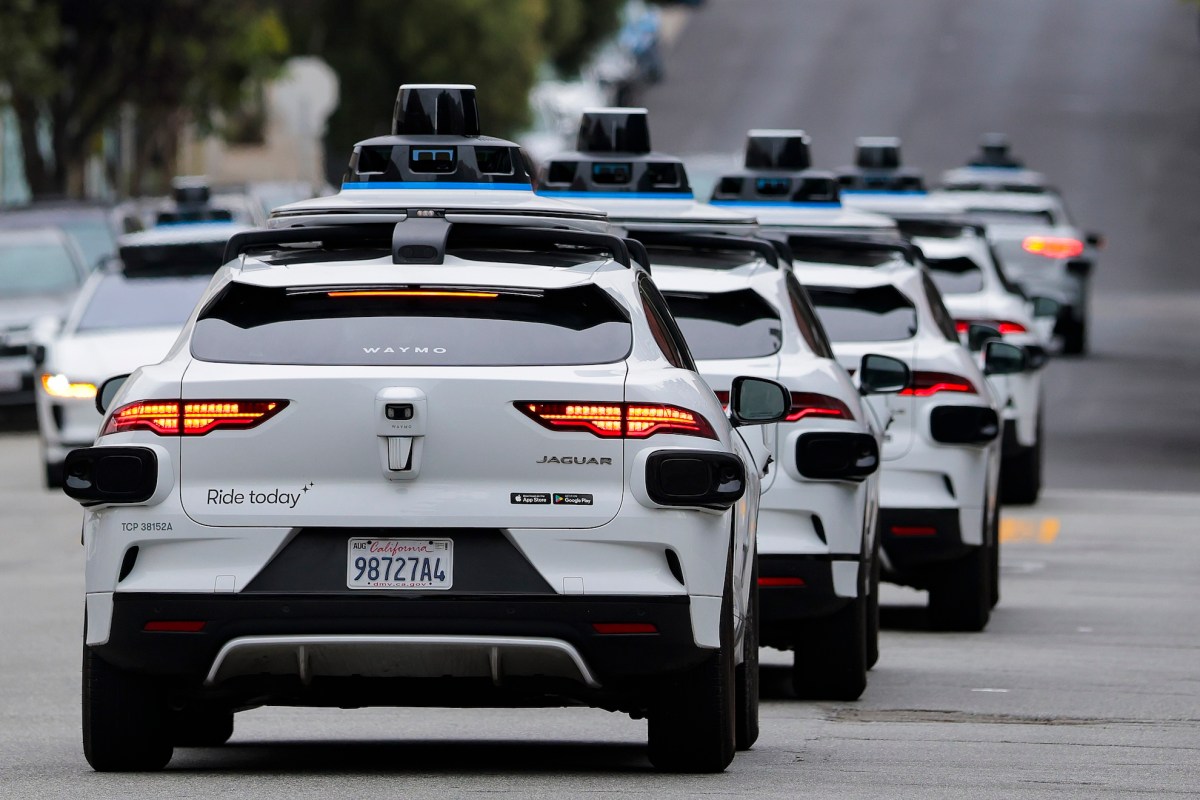
The autonomous vehicle industry is years — maybe decades — from maturing. And so there’s still a Wild West quality to the sector, in spite of the steady stream of announcements that do show marked progress. Two such news items from this week illustrate my point of progress, possibility, and even a bit of peril (at least to the ups and downs a public market can provide).

First up is Gatik, an AV and logistics startup that is applying its tech to middle-mile trucks. The startup, which I first wrote about in 2019, announced a multi-year and expanded commercial partnership with Canada’s largest retailer, Loblaw. Under the deal, Gatik will deploy 20 autonomous trucks by the end of 2025 to provide driverless delivery to Loblaw’s network of stores in the greater Toronto area. Co-founder and CEO Gautam Narang told me the company will add another 30 autonomous trucks to the fleet by the end of 2026.

The deal is notable, and not just because of the fleet size. As Narang explained to me, the trucks will be handling the full regional network for Loblaw. This means these third-generation AV trucks will operate autonomously to pick up products from two distribution centers and make deliveries to over 300 retail stores. “These are multiple brands within the Loblaw umbrella,” he said. 

In other words, this is not some fixed-route pilot program. It’s commercial, and it’s complex.

Next up is Kodiak Robotics, another startup I have reported on since its founding. The company, which is developing self-driving trucks for highway, industrial, and defense uses, began trading on Nasdaq this week under the tickers KDK and KDKRW. 

The company, which is now called Kodiak AI, went public via a merger with special-purpose acquisition company Ares Acquisition Corporation II, an affiliate of Ares Management. The deal valued the startup at about $2.5 billion. 

Techcrunch event

San Francisco
|
October 27-29, 2025

Kodiak raised $275 million in financing. More than $212.5 million came from certain institutional investors, including $145 million in PIPE funding and about $62.9 million in trust cash from Ares. It should be noted that the trust cash is smaller (it was $562 million), as some SPAC investors redeemed their shares. 

I spoke to founder and CEO Don Burnette the day before Kodiak’s big debut about why he took the company public — let alone via a SPAC. It was a big moment for Burnette, whose family was on hand to watch him ring the bell and mark the milestone. The stock was trading at about $7.70 Friday, down about 10% from its market open.

“As you can imagine, building and scaling a transformative autonomous driving company is very capital intensive, and we were looking to access the public markets as a path forward for the company. And when choosing between, you know, traditional IPO or a SPAC, we considered all the options,” he said. “We felt like, from a timing perspective, it was the right decision for the company (to take the SPAC route).”

It should be noted that Burnette is also quite bullish on defense. Here’s why:

“I think autonomy is the future of ground transportation broadly,” he said, before noting the benefits within defense for logistics and reconnaissance operations for ground vehicles. “One of the key things is defense requires unstructured autonomy, and this is one of the areas where we become specialists.”

A little bird

blinky cat bird green
Image Credits:Bryce Durbin

A few weeks ago, we wrote about some trouble at Hyundai‘s electric air taxi startup Supernal, including that the company had stopped work on its air taxi program and that its CEO and CTO were out. 

This week, a little bird told us that a wider reorg of Supernal’s C-suite was afoot — something Hyundai Motor Group has now confirmed to us.

Chief strategy officer Jaeyong Song and chief safety officer Tracy Lamb are part of a “transition to new leadership,” according to the Korean conglomerate. Song’s departure is particularly notable, as he was once the VP of Hyundai’s Advanced Air Mobility division, which Supernal was spun out of in 2021. Also gone is Lina Yang, who most recently served as chief of staff to the startup’s now-former CEO, but who also served as Supernal’s “Head of Intelligent Systems” before that.

Got a tip for us? Email Kirsten Korosec at kirsten.korosec@techcrunch.com or my Signal at kkorosec.07, or email Sean O’Kane at sean.okane@techcrunch.com.

Deals!

money the station
Image Credits:Bryce Durbin

Remember Moxion Power, the portable battery startup that raised $110 million before going bankrupt? The founders are back with a new startup called Anode Technology Company, which has designed a mobile battery and inverter that can be used for EV charging and supplying remote power to construction sites and live events. The startup just raised $9 million in seed funding in a round led by Eclipse Ventures; its partner, Jiten Behl, who spearheaded the deal, was previously Rivian’s chief growth officer. Apparently, Behl’s interest was sparked by his experience at Rivian. 

Side note: Palo Alto-based venture capital firm Eclipse sure has been busy this year. The VC firm led the $105 million round of Also, the micromobility startup that spun out of Rivian, and recently hired longtime T. Rowe Price Group investor Joe Fath as partner and head of growth. 

The firm doesn’t explicitly focus on transportation, but some of its portfolio companies in this sector include Arc, Bedrock Robotics, Reliable Robotics, Skyryse, and Wayve.

Other deals that got my attention …

Rapido, a popular ride-hailing platform in India that competes with Uber, doubled its valuation to $2.3 billion following a secondary share sale by food delivery giant Swiggy. The share sale comes just weeks after Rapido began piloting food deliveries, edging into Swiggy’s core territory.

Telo, the tiny electric truck developer, raised $20 million in a Series A funding round co-led by designer and Telo co-founder Yves Béhar and Tesla co-founder Marc Tarpenning, who is on Telo’s board. Additional investment came from Salesforce CEO Marc Benioff and early-stage funds like TO VC, E12 Ventures, and Neo.

TheTrump administration is seeking up to a 10% stake in Lithium Americas in exchange for renegotiating the repayment period of a $2.26 billion Department of Energy loan. GM is a major investor in the Canadian company, which is developing a lithium mine in Nevada that is expected to be the largest in the Western Hemisphere.

Notable reads and other tidbits

Image Credits:Bryce Durbin

Hackers have had quite an active week in the transportation sector. Stellantis confirmed a data breach involving customers’ personal information. The breach is linked to a hack of its Salesforce database. Meanwhile, a hack that began last Friday and targeted check-in systems provided by Collins Aerospace caused delays at Brussels, Berlin, and Dublin airports, as well as London’s Heathrow. The U.K.’s National Crime Agency has arrested a man in connection to the ransomware attack. And finally, Jaguar Land Rover said it will not resume production at its factories for yet another week as it continues to grapple with fallout from a cyberattack.  

Battery materials startup Sila started operations at its facility in Moses Lake, Washington, a milestone that could pave the way for longer-range, faster-charging EVs. The factory is the first large-scale silicon anode factory in the West and will initially be capable of making enough battery materials for 20,000 to 50,000 EVs. Future expansion could fulfill demand for as many as 2.5 million vehicles.

Automakers continue to pull back on EVs and electrified vehicles. Honda is ending U.S. production of its Acura ZDX electric vehicle that was being built by General Motors in Tennessee, CNBC reported. And Stellantis has canceled plans to produce a 4xe plug-in hybrid Jeep Gladiator in North America by the end of 2025. Which EV is next on the chopping block?

The National Highway Traffic Safety Administration opened an investigation into Rivian over issues with the seat belts in its electric delivery vans that could introduce additional risk in the event of a crash, Bloomberg reported.

Tesla asked the Environmental Protection Agency not to roll back current vehicle emissions standards, breaking from other major automakers that want to see the rules eased. 

TuneIn, an audio streaming service, is collaborating with the Federal Emergency Management Agency to deliver emergency alerts directly to drivers. 

Volvo Cars is pledging a commitment to U.S. production. The company said it will continue to invest in its U.S. car plant near Charleston, South Carolina, and announced plans to expand the factory to produce a hybrid vehicle by the end of the decade.

Waymo launched “Waymo for Business,” a new service designed for companies to set up accounts so their employees can access robotaxis in cities like Los Angeles, Phoenix, and San Francisco.

Zoox has asked federal regulators for an exemption that would allow the Amazon-owned autonomous vehicle company to commercially deploy its custom-built robotaxis, which lack traditional controls like pedals and a steering wheel.

One more thing

Finally, proof of life from Luminar founder Austin Russell

You may remember that Russell was mysteriously and suddenly replaced in May as CEO of the lidar company he created. The company has never truly explained his departure, only that it was the result of a “code of business conduct and ethics inquiry” initiated by the board.

Russell has been silent; while he remains on Luminar’s board, he hasn’t signed any of the filings the company has submitted with the U.S. Securities and Exchange Commission since he was replaced. This week, he reappeared as the co-founder of a new company called Russell AI Labs. It’s billed as a “platform that backs and builds transformative AI and frontier technology companies.”

It doesn’t seem like his troubles at Luminar have affected his ability to attract high-profile support or make eyebrow-raising deals. Russell’s co-founders are Markus Schäfer, CTO and board member at Mercedes-Benz Group AG, and Murtaza Ahmed, who served as a managing director at Goldman Sachs before joining SoftBank and was a partner in the $100 billion Vision Fund and managing partner of its $5 billion Latin America Fund.

As part of Russell AI Lab’s debut, the startup announced it has taken a $300 million stake in agentic AI company Emergence AI. 

TechCrunch Mobility: Google’s Gemini is coming to your car, chaos comes for Luminar, and the Amazonification of Uber 2.0


Welcome back to TechCrunch Mobility — your central hub for news and insights on the future of transportation. Sign up here for free — just click TechCrunch Mobility!

OK, who placed their bet on General Motors being the landing spot for Aurora co-founder and chief product officer Sterling Anderson? Not me. But here we are. A few days after Anderson announced his resignation from his position and the board at Aurora, he spoke to me about his next gig as chief product officer at GM. In short, he will oversee the entire product line of GM’s gas-powered and electric vehicles — a position that will cover the entire life cycle of GM’s portfolio and include hardware, software, services, and user experience.

Anderson couldn’t say too much; plus, he hasn’t started the job yet. Anderson did say he wouldn’t have taken the new job if Aurora had yet to launch its commercial self-driving truck service in Texas. 

Let’s jump into the rest of the news. 

A little bird

blinky cat bird green
Image Credits:Bryce Durbin

In an absolutely wild turn of events, Luminar’s founder Austin Russell appears to have been pushed out as CEO and board chair. You can read my coverage here, which provides a bit of an overview of how this unfolded, but I know there is so much more to this story. TL;DR: If you were to only read Luminar’s Q1 earnings report, you would assume Russell was still at the helm. A separate press release, released as the company’s earnings went out, announced a leadership change and that Russell had resigned following an ethics inquiry from the board’s audit committee. 

Here’s what I’m hearing from a few little birds. The word “blindsided” came up more than once, and the chaos isn’t over. Luminar board member Jun Hong Heng, who is founder and chief investment officer at Crescent Cove Advisors and a mentor of Russell’s, resigned a day later. Heng was also on the audit committee. 

Got a tip for us? Email Kirsten Korosec at kirsten.korosec@techcrunch.com or my Signal at kkorosec.07, Sean O’Kane at sean.okane@techcrunch.com or Rebecca Bellan at rebecca.bellan@techcrunch.com. Or check out these instructions to learn how to contact us via encrypted messaging apps or SecureDrop.

Deals!

money the station
Image Credits:Bryce Durbin

Aurora has had an odd couple of weeks filled with highs — driverless commercial service woohoo! — and twists — whoops, there goes a co-founder. To cap things off, Uber announced plans to offer $1 billion in exchangeable senior notes due in 2028 in private placement. As you might expect, stocks dropped after investors got spooked about potential dilution and what this might mean for the value of Aurora’s stock. 

Other deals that got my attention …

AutoUnify, the latest startup that has launched out of the Up.Labs-Porsche partnership, raised $5 million in seed money. The Santa Monica, California-based startup, which built an API to allow dealerships and service shops to communicate in real time with the manufacturers and software vendors that power their operations, has been operating quietly for about nine months.

Chinese battery manufacturer CATL is far from a startup. But it’s worth noting this bananas IPO plan. The company wants to raise at least HK$31.01 billion — that’s just shy of $4 billion — in its Hong Kong listing. This is the largest listing globally in 2025. 

Here’s a potential deal that has raised some eyebrows. Federal railroad regulators are in talks with Elon Musk’s tunneling firm, The Boring Company, over a multibillion-dollar Amtrak project.

Flock Freight, the shared truckload freight brokerage based in California, raised $60 million in a Series E funding round led by O’Neil Strategic Capital. Susquehanna Private Equity Investments, SignalFire, GLP Capital Partners, and Bracket Capital also participated.

Notable reads and other tidbits

Image Credits:Bryce Durbin

Autonomous vehicles

Tesla’s plan to launch a robotaxi service in Austin next month has caught the attention of federal safety investigators. The National Highway Traffic Safety Administration’s Office of Defects Investigation sent the company a detailed list of questions on its upcoming robotaxi service as part of an investigation into how the company’s “Full Self-Driving (Supervised)” software operates in low-visibility conditions.

Recalls are starting to pop up more in the AV sector. Last week it was Zoox. Now Waymo has issued a software recall on 1,200 self-driving vehicles after some of its robotaxis were involved in minor collisions with gates, chains, and other gate-like roadway objects. 

WeRide seems to be trying to ramp in Guangzhou. The Chinese company said it has introduced eight autonomous robotaxi pilot operation routes in the central part of the city. The company has also started trialing fully driverless robotaxis in Abu Dhabi.

Electric vehicles, charging, & batteries

General Motors has been working on a new battery chemistry called lithium manganese-rich, which it says should slash costs while delivering driving range. Notably, these LMR batteries dramatically reduce the amount of nickel and cobalt compared with GM’s most advanced cells, two critical minerals that aren’t readily available from domestic sources in the United States.

A footnote in Lucid’s recent Q1 regulatory filing gives a bit more insight into its sales numbers. The EV maker’s record quarter got a lift from rental sales and company leases.

Slate Auto has racked up more than 100,000 reservations for its customizable low-cost electric pickup truck. 

Everyone, let’s give a slow clap to Toyota for redesigning — and more importantly, renaming — its sole all-electric vehicle for the U.S. market. The EV, once called the bZ4X, will now simply be bZ. The original bZ4X was not well received. I’m looking forward to getting behind the wheel to see what improvements Toyota has made. Meanwhile, Toyota has brought back the C-HR nameplate, but this time as an EV. Hopefully this time it’s more successful. It arrives in the U.S. in 2026.

Gig economy

Three years ago, reporter Rebecca Bellan noted that Uber was going through an Amazonification. Her pitch was that the company, like Amazon, had created a closed business loop to feed customers back into other Uber channels. The second part of that evolution has started, she reported this week. Uber appears to be moving beyond its focus on transportation and working to become a convenient super app, an aggregator of services, a daily-use lifestyle platform with its best offerings tucked behind a paywall. 

Future of flight

U.S. lawmakers introduced the Supersonic Aviation Modernization Act in a bid to revise the FAA’s 52-year ban on supersonic flight over U.S. soil. The timing could be crucial for startup Boom Supersonic, which has made progress in developing next-generation supersonic aircraft 

Vertical Aerospace announced a plan to develop a hybrid-electric variant of its VX4, suggesting the company is pursuing opportunities in defense and logistics. 

In-car tech

Apple’s next generation of its popular CarPlay infotainment software is finally launching. Reminder: It was first announced three years ago. The new version, called CarPlay Ultra, will make its debut on new Aston Martin vehicles in the U.S. and Canada. 

Google is bringing Gemini, its generative AI, to all cars that support Android Auto in the next few months. Patrick Brady, VP of Android for Cars, said Gemini will surface in the Android Auto experience in two main ways.