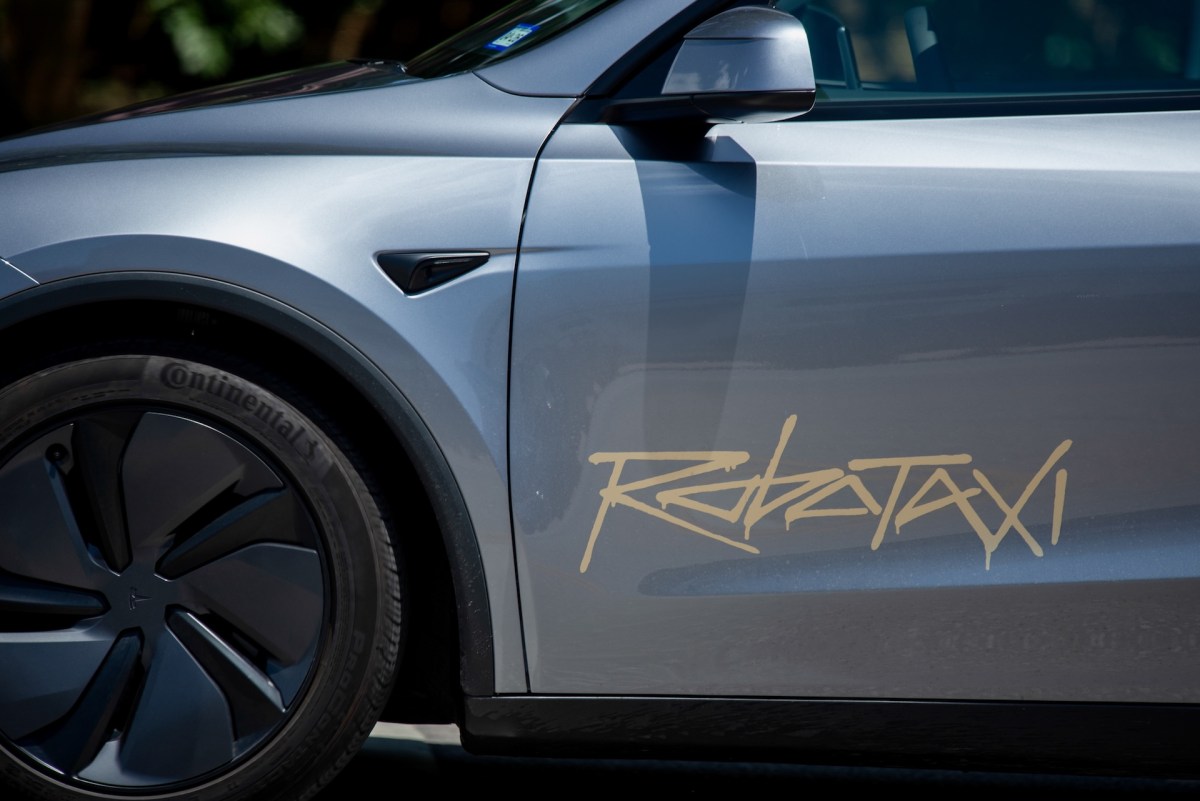
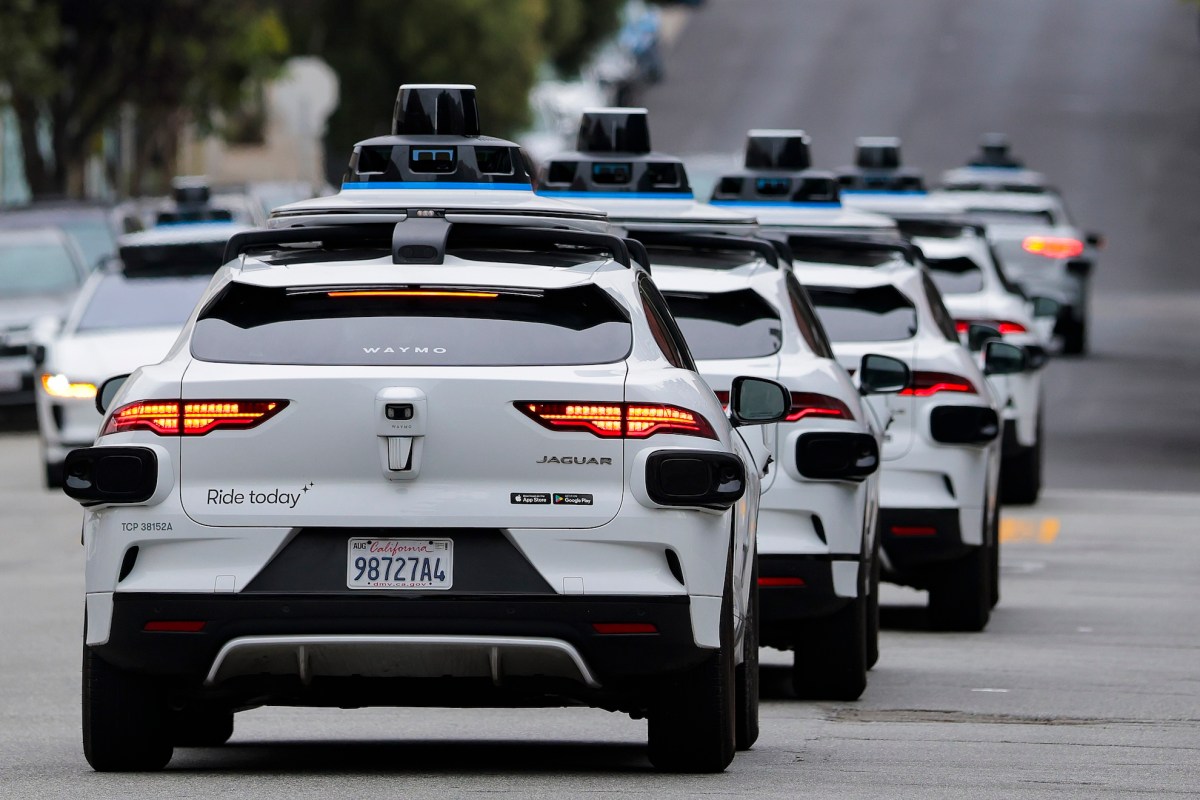
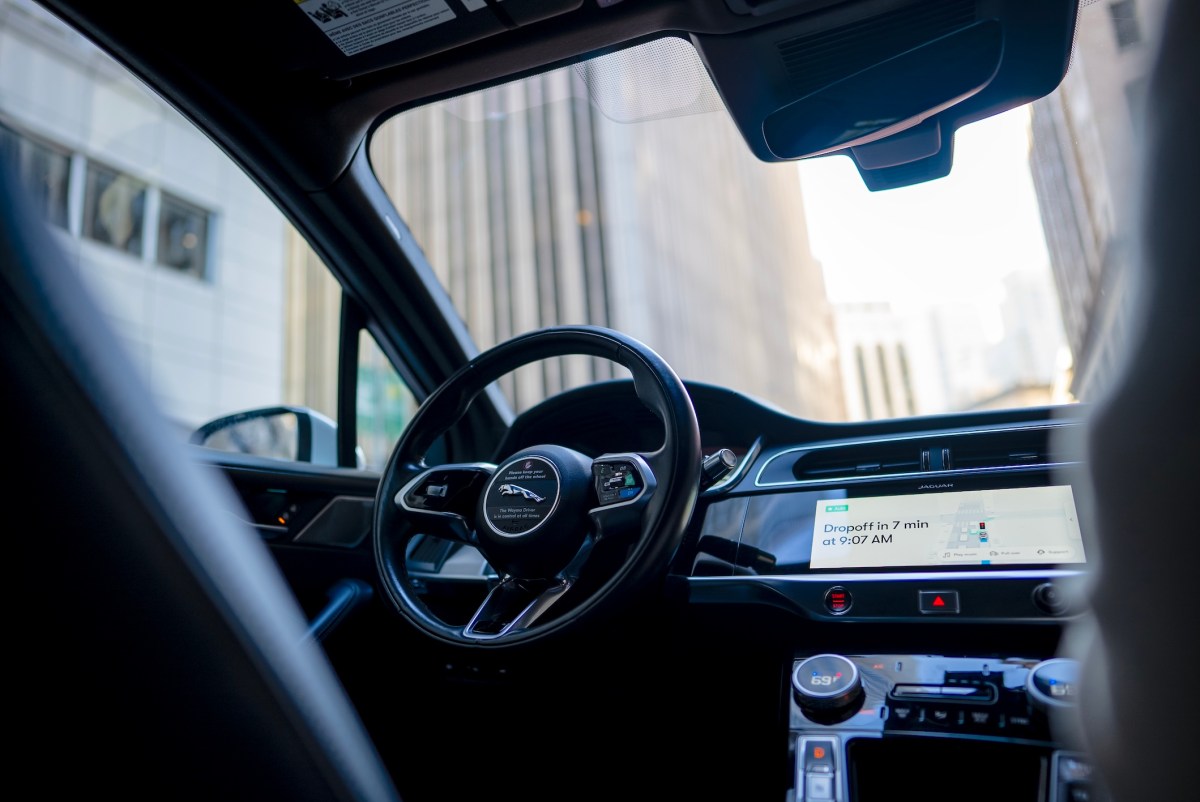
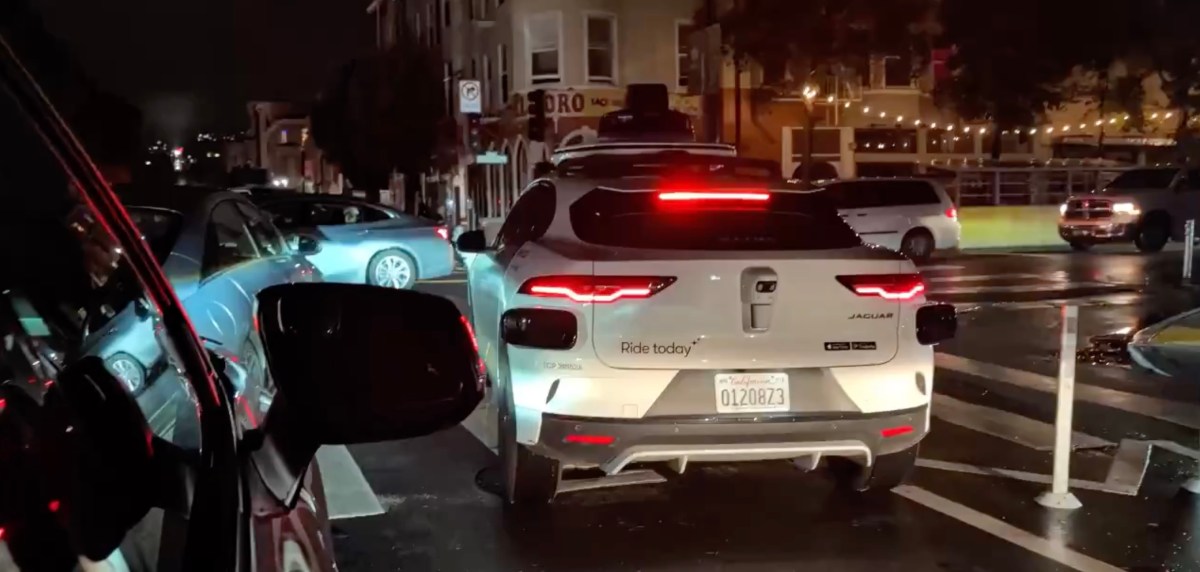
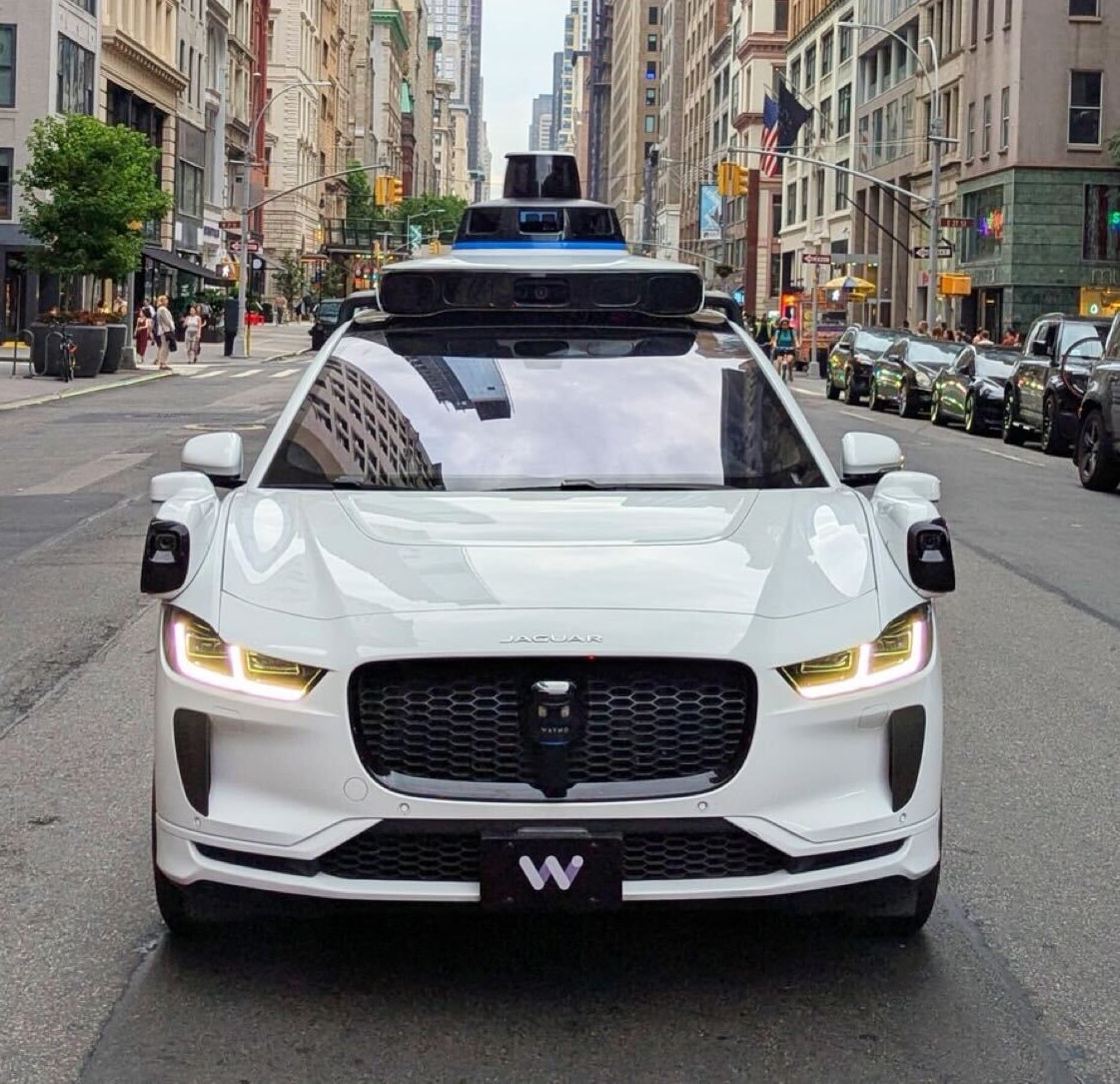
The Nevada Transportation Authority unanimously approved three permits Thursday that will allow Tesla, Uber, and Waymo to operate commercial robotaxi services in Clark County, home to Las Vegas. Together, these permits would deploy up to 8,000 robotaxis across the county over the next 12 months.
Tesla’s permit allows it to deploy up to 5,000 robotaxis, while Waymo is allowed operate up to 1,000 autonomous vehicles over the next year. Uber was also approved for 1,000 robotaxis, which it will operate through partnerships with Hyundai subsidiary Motional and Zoox. Zoox already holds an autonomous vehicle network company permit that allows it to operate 100 robotaxis.
Whether these companies will be able to launch that many robotaxis is an unanswered question. Testimony from Tesla representatives and the other companies suggests the answer is no.
“The 5,000 has always been a ceiling for us,” said Eric Early, Tesla’s Cybercab chief engineer, during the meeting. “I don’t think we’ll be in a position by this time next year to deploy 5,000 vehicles, and it’s not [because of] the technology. … I think we would be extremely happy and satisfied if we could get ourselves up to 2,500, maybe a bit higher than that in the next year.”
Even if these three companies roll out only half of those totals, Clark County — and Las Vegas specifically — is shaping up to be a major robotaxi battleground, with Tesla, Uber (via its autonomous vehicle partners Motional and Zoox), and Waymo all competing for the same riders.
That kind of fast, large-scale robotaxi deployment is poised to change the city — and specifically its workforce. Depending on who you ask, these companies will either deliver a whole new category of jobs designed to maintain, charge, and clean these vehicles or will wipe out an entire category of workers: human taxi and gig drivers.
Representatives from the Livery Operators Association and local taxi companies opposed the permits, arguing the approvals move too far, too fast.
“These applications raise two grave concerns,” said Kimberly Maxson-Rushton, a lawyer representing the Livery Operators Association, at the hearing. “One deals with the oversaturation of the commercial transportation industry as a whole in Nevada,” she said. “And the second one deals with the overcrowding of the roadways, and specifically the Golden Triangle.”
The Golden Triangle, an area between the airport and Las Vegas Boulevard and the surrounding area, is where most of the AV testing has occurred to date. Motional is also testing in the downtown area and in a shopping district known as Town Square.
Uber has tried to position itself as the Goldilocks option in this fight, advocating for a hybrid approach in which ride-hailing networks are made up of humans and robotaxis. The company has even lobbied for a system that would require robotaxis to operate on a ride-hailing network that also uses human drivers, a stance that puts it at odds with Waymo and doubles as a hedge against its own autonomous ambitions falling short of Tesla’s or Waymo’s.
Uber made a similar pitch during the NTA meeting, noting that a hybrid approach would allow cities to gradually integrate vehicles to meet peak demand rather than flooding the market all at once.
When you purchase through links in our articles, we may earn a small commission. This doesn’t affect our editorial independence.
Welcome back to TechCrunch Mobility, your hub for the future of transportation and now, more than ever, how AI is playing a part. To get this in your inbox, sign up here for free — just click TechCrunch Mobility!
I am back from vacation. What did I miss? Turns out, quite a lot — including the end of the Uber-Waymopartnership in Phoenix. Uber and Waymo still have robotaxi service partnerships in Atlanta and Austin. The question is not if, but when will these agreements end? But that isn’t the most intriguing question, in my opinion. I am far more intrigued by how these two companies will behave once the remaining partnerships end.
There is already tension with Uber executives taking not-so-subtle shots at Waymo. I expect that once the partnerships end, these thinly veiled barbs will be replaced with more direct action. One battleground will be policy, specifically markets where robotaxi companies are angling to get access.
This week, we saw another interesting development in the autonomous vehicle industry on the federal stage. National Highway Traffic Safety Administration administrator Jonathan Morrison issued a directive to autonomous vehicle developers, stating that it is unacceptable for their vehicles to interfere with first responders or law enforcement.
The money quote: “Let me be clear: the inability to detect and appropriately respond to such situations represents a functional insufficiency. Emergency scenes are not rare or extreme ‘edge cases.’ As such, NHTSA is today issuing a call to action for AV developers and operators to immediately focus their resources on fixing this issue.”
Morrison’s letter never calls out any one robotaxi company and it was sent to every AV developer listed in the Department of Transportation’s Standing General Order. But it sure seems like Morrison is directing the agency’s ire at Waymo.
A previous TechCrunch investigation found that Waymo — which operates the largest robotaxi fleet in the United States, with vehicles in cities such as Los Angeles, Phoenix, and San Francisco — has had repeated run-ins with first responders. And just this week, San Francisco supervisor Bilal Mahmood said he plans to submit a letter of inquiry to examine how autonomous vehicles affected public transit services and emergency responders following a July 4 fireworks show that resulted in massive gridlock. Local news outlets reported that numerous Waymo robotaxis had to be towed after running out of power during the lengthy traffic jam.
Morrison’s letter has gravitas. But will there be substantive consequences for AV developers? It’s hard to tell at this point. For now, the NHTSA has demanded companies present the agency with “solutions” by the end of the month.
One more news item from the feds. Take a look at the new 2026 Regulatory Plan and Unified Agenda, which was updated last week. It contains a long list of proposed changes to Federal Motor Vehicle Safety Standards (FMVSS) requirements, which govern vehicle design and equipment requirements. These proposed changes could help autonomous vehicle companies like Tesla and Zoox, which are developing vehicles without steering wheels, pedals, or other features required on human-driven cars.
We usually focus on venture deals, but this week I wanted to highlight Rivian and the sale of 86.25 million Class A common shares priced at $15.50 each (that includes an added 11.25 million in additional shares that underwriters opted to buy).
In all, Rivian said it expects to raise $1.32 billion in new capital. The raise comes at a notable time for the EV maker. The company started delivering its new R2 SUV last month and recently raised its sales forecast for 2026. The company said it now expects to deliver between 65,000 and 70,000 vehicles after outperforming its own expectations in the second quarter due to robust growth quarter-over-quarter in EDV and R1, coupled with the introduction of R2 deliveries.
The company didn’t explain the reason for the raise. But as a reminder, Rivian is not yet profitable and scaling up production of the R2 — or any vehicle for that matter — isn’t cheap!
Other deals that got my attention …
Bidbus, a Los Angeles-based startup that built a digital marketplace where multiple dealers can bid on a car, raised $15 million in a Series A funding round led by Ibex Investors. Mucker Capital, FJ Labs, Motley Fool Ventures, Data Point Capital, Walter Ventures, and the Car Dealership Guy’s Yossi Levi also participated.
Lyft said it plans to acquire Serveo’s bike-share business in Spain. Terms weren’t disclosed, but the ride-hailing company said it is expected to close this year.
TaiSan, a U.K. battery startup, raised £4.65 million in a seed funding round co-led by Eos Advisory and the Midlands Engine Investment Fund II. InnoEnergy, AFI Ventures, EverQuest Capital Partners, Exergon, Heartfelt Ventures, Adeline Arts & Science, Techmind, angel investor François Badelon, and matched funding from Innovate UK also participated.
Notable reads and other tidbits
Image Credits:Bryce Durbin
AssuranceAmerica, a U.S. insurance provider, confirmed a data breach that affected the personal information and driver’s license numbers of 6.9 million people, making it the largest known spill of Americans’ driver’s license information this year.
Beta Technologies, the electric vehicle takeoff and landing developer, completed operational flights conducted under the U.S. Department of Transportation and Federal Aviation Administration’s new eVTOL Integration Pilot Program. The flights covered about 275 nautical miles covering Virginia and Maryland.
Longtime followers of Tesla will remember the heady days when Elon Musk battled various short sellers of the company’s stock. Musk is more polarizing than ever, and one exchange-traded fund creator has found a way to tap into that negative sentiment with two new anti-Elon exchange-traded funds.
GM brand Chevrolet built an all-American EV truck. Senior reporter Tim De Chant asks, Why is nobody buying it?
Manna Aero, the Ireland-based autonomous drone delivery startup, is scaling up in the United States with a factory and operations center in Tulsa, Oklahoma, that it says will employ 1,000 in the next few years.
Slate Auto teamed up with Crayola to offer its EV truck and SUV customers vehicle wraps in five crayon colors. (Reminder: The basic Slate EV vehicle isn’t painted. Instead, it comes in a gray composite material that can be customized with a vehicle wrap. The company has hundreds of options to choose from.)
One more thing …
TechCrunch podcast Build Mode just launched its third season, and it’s a banger. Build Mode is hosted by Isabelle Johannessen, who heads TechCrunch’s Startup Battlefield program. Unlike Equity — the TC podcast I co-host along with Anthony Ha and Sean O’Kane — Build Mode is designed to help early-stage founders.
The new season kicks off with Precursor Ventures founder and managing partner Charles Hudson, who talks about what early-stage founders need to know before raising their first institutional round.
For the past 10 years, Uber’s annual Lost & Found Index has provided a rather quirky anthropological snapshot of its riders — and even a few insights into society. The annual catalogue of millions of forgotten items ranges from mundane modern-day tools such as smartphones and laptops, to more eyebrow-raising objects like live fish, an ankle monitor, a toboggan, a package of live butterflies, and a single Louboutin shoe.
This year, Uber is using the report to highlight the same old problem of lost items with a new twist: robotaxis. Thousands of items (it’s a bit too new for millions) were left behind in robotaxis on Uber’s ride-hailing network in the past year, the company said Tuesday. There were the usual suspects of phones, keys, wallets, passports, and headphones, along with a few items that strayed into the who-is-this-rider category: a set of dentures, an “I Heart Hot Dads” bag, and a blue hat that reads “Emotional Support Human.”
Beyond this entertaining list lies a business opportunity, if a minor one. Even in a future of robot taxis, someone still has to return the things passengers leave behind.
Uber has spent the past several years locking up dozens of partnerships with autonomous vehicle (AV) technology companies. But it really wasn’t until March 2025, when the “Waymo on Uber” robotaxi service launched in Austin, that the commercial wheels on its AV business started turning. Since then, Uber and Waymo have also started a robotaxi service in Atlanta. Uber has added other AV companies to its app in the past year, including Motional in Las Vegas and Avride in Dallas, although these still have human safety operators behind the wheel.
That Uber has already logged thousands of lost items in just 12 months gives some sense of just how many robotaxi rides have been completed on its app. The underlying message here is that Uber’s existing network is already set up to reunite riders with their lost items, including a 15-pound yo-yo, one large black marble duck, a Squishmallow, and a Charli XCX poster.
When an Uber rider forgets belongings in a robotaxi, the process for recovering them is similar to any other Uber ride: open the app, click the activity tab, select the trip during which the item was lost, and contact customer support. Riders are then able to message, chat, or call a support agent. If the item is located, they have two options: pay $15 for an Uber Courier driver to provide same-day local delivery, or pick up the belonging in person from an AV depot, where the vehicles are stored and serviced.
Uber Courier is a rebrand of Uber Connect, which launched in 2020 and allowed users to send packages and personal items between local addresses. But Uber says there is more to its robotaxi support network than repurposing existing services.
“With tens of millions of lost items reported on Uber each year, we’ve spent the last decade building systems that help riders quickly and seamlessly reunite with their belongings,” Amy Satrom, global head of autonomous support at Uber, said in a statement. “As autonomous rides continue to scale on Uber, we’re bringing that same expertise to AVs — combining our fleet operations, support teams, and hybrid network to make getting a lost item back simple, even when there’s no driver behind the wheel.”
In February, the company announced Uber Autonomous Solutions, a new business division that conveys its bigger ambitions around driverless tech. The division provides companies with a suite of services that handle all the tasks associated with operating a robotaxi, self-driving truck, or sidewalk delivery robot business, including software and support services.
And Uber clearly means to make AVs a major revenue driver. The company plans to offer robotaxi rides through its app in as many as 15 cities globally by the end of the year and has said it intends to be the largest facilitator of AV trips in the world by 2029.
When you purchase through links in our articles, we may earn a small commission. This doesn’t affect our editorial independence.
Waymo has now paused service in four cities because its robotaxis are struggling to deal with heavy rain and flooded roads, a problem that already prompted the company to issue a recall last week.
One of Waymo’s robotaxis was spotted driving through a flooded street in Atlanta, Georgia, on Wednesday before it ultimately got stuck for about an hour, according to local news reports. The vehicle was recovered and removed from the scene, Waymo told TechCrunch. Waymo says it paused service in the city, just like it has in San Antonio, Texas, while it figures out a solution.
“Safety is Waymo’s top priority, both for our riders and everyone we share the road with. During a period of intense rain yesterday in Atlanta, an unoccupied Waymo vehicle encountered a flooded road and stopped,” the company said in a statement.
Waymo also halted service in Dallas and Houston because of severe weather across Texas this week, the company confirmed to TechCrunch late Thursday. The expansion was first reported by Bloomberg News.
A Waymo spokesperson said the company also paused service in Dallas and Houston out of an abundance of caution for the forecasted severe weather.
Waymo admitted that it hadn’t finished developing a “final remedy” for avoiding flooded areas when it issued its software recall last week. Instead, the company said that it shipped an update to its fleet that placed “restrictions at times and in locations where there is an elevated risk of encountering a flooded, higher-speed roadway,” according to documents released by the National Highway Traffic Safety Administration (NHTSA).
But even those precautions apparently were not enough to stop the Waymo robotaxi from entering a flooded intersection in Atlanta. Waymo told TechCrunch on Thursday that the storm in Atlanta produced so much rainfall that flooding was happening before the National Weather Service had issued a flash flood warning, watch, or advisory. The company said those alerts are part of a larger set of signals it relies on to prepare the vehicles for poor weather.
“NHTSA is aware of this incident, is in communication with Waymo, and will take appropriate action if necessary,” a spokesperson for the safety regulator told TechCrunch regarding the robotaxi that got stuck in Atlanta.
This is not the first time Waymo has struggled to quickly stamp out problematic behavior with its robotaxis. When people started to notice Waymo robotaxis illegally passing stopped school buses last year, the company shipped a fix that was supposed to address the issue — only for its fleet to continue making illegal maneuvers around school buses.
Waymo’s behavior around school buses is at the center of one of two sets of active investigations into the company.
Both the NHTSA and the National Transportation Safety Board (NTSB) are looking into this problem. Waymo has already produced a batch of documents for the NHTSA, all of which were redacted to the public. On May 15, the NHTSA sent a second document request to Waymo because the company’s initial response “necessitates that [NHTSA] receive further data and information.”
The other set of investigations from the NHTSA and NTSB involve a January 23 incident where a Waymo robotaxi crashed into a child in Santa Monica, California. Waymo has said that its robotaxi braked to around six miles per hour before it struck that child and that she suffered minor injuries.
This story has been updated with more information about how Waymo uses National Weather Service alerts, and to include new service pauses in Houston and Dallas.
When you purchase through links in our articles, we may earn a small commission. This doesn’t affect our editorial independence.
Waymo suspended its robotaxi service in San Francisco on Saturday evening after a massive blackout appeared to leave many of its vehicles stalled on city streets.
Numerous photos and videos posted to social media captured Waymo robotaxis stalled at roads and intersections as human drivers were either stuck behind them or weaved around them.
Waymo said on Saturday that it had temporarily suspended service in the city due to the blackout. It wasn’t until late Sunday afternoon that Waymo spokesperson told TechCrunch in a statement that the company was resuming service.
“Yesterday’s power outage was a widespread event that caused gridlock across San Francisco, with non-functioning traffic signals and transit disruptions,” the spokesperson said. “While the failure of the utility infrastructure was significant, we are committed to ensuring our technology adjusts to traffic flow during such events.”
The Waymo spokesperson added that the company is “focused on rapidly integrating the lessons learned from this event, and are committed to earning and maintaining the trust of the communities we serve every day.”
The blackout also took down many of the city’s traffic lights and affected Muni mass transit, with San Francisco Mayor Daniel Lurie warning residents to stay off the roads unless they needed to travel.
Waymo said that although its self-driving systems are designed to treat non-functioning traffic lights as four-way stops, the scale of Saturday’s blackout caused some robotaxis to remain stationary for longer than normal as they tried to assess the intersections. The company also said that the majority of active trips were completed successfully.
Techcrunch event
San Francisco | October 13-15, 2026
The blackout appears to have been caused by a fire at a Pacific Gas & Electric substation in the city. SFGate reports that around 120,000 PG&E customers were affected by the blackout, and while the majority of them had power restored by late Saturday, 35,000 customers were still without power on Sunday morning. PG&E’s website also showed thousands of San Francisco customers still affected at that time.
A letter from Tiger Global Management that leaked earlier this month said Waymo is now providing 450,000 robotaxi rides per week, nearly double the amount that the Alphabet-owned company disclosed in the spring.
This post has been updated with Waymo’s statement that service is resuming.
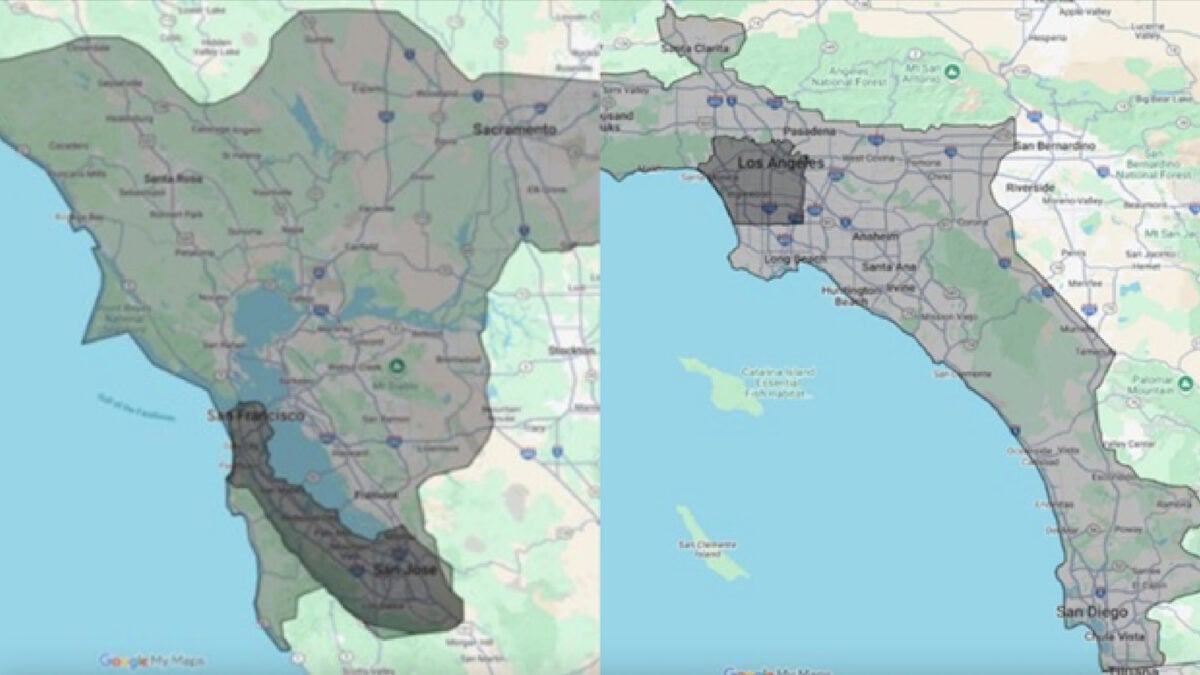
On Friday, the California Department of Motor Vehicles published a document outlining a list of newly approved areas of coverage for Alphabet, Inc.’s robotaxi service Waymo, and the implications could be massive.
The areas where “testing and deployment” of Waymo driverless taxis will now be legally tolerated by the state include two massive, apparently continuous swaths of geography full of interconnected urban population centers, suburbs, exurbs, and the rural land in between them. This includes chunks of (in alphabetical order) Alameda, Contra Costa, Los Angeles, Marin, Napa, Orange, Riverside, Sacramento, San Bernardino, San Diego, San Francisco, San Mateo, Santa Clara, Solano, Sonoma, Ventura, and Yolo Counties.
The new map includes much of California wine country, and fills in the remainder of the Bay Area. It also adds a great deal of coverage to densely populated parts of southern California. Most of Orange and San Diego Counties are now state-approved Waymo zones, for instance, and each of those accounts for millions of residents. If Waymo follows this approval with a rollout of its service in all these areas, it means commuters can travel for hours in Waymo vehicles, sightseers can take long day trips. Exurban residents can take Waymo rides to Los Angeles International Airport.
Famous expanses of California highways—and freeways—could potentially open up to driverless taxi traffic. You could take the scenic route up Pacific Coast Highway from San Diego to Malibu, or driverlessly reenact the first episode of The O.C. by hailing a ride from Chino to Newport Beach.
Of course, the price of doing any of these things could be breathtaking. At the average of $11.22 per kilometer cited by one Waymo price analysis from June, it would cost, by my count, $2,636 to travel from San Diego to Malibu in a Waymo if the current pricing pattern holds—though a new pricing pattern would probably emerge for longer rides. A similar ride would cost about $200 in a human-piloted Lyft or Uber, according to the fare estimator site Rideguru.
Waymo says it has no specific plan for rolling out its service in most of these newly permitted areas, though it does have its eyes on one of these areas. “We appreciate the DMV’s approval of our expanded fully autonomous operations,” a Waymo representative told CBS News, who claimed the company’s next expansion “will be San Diego, where we’ll welcome our first riders in mid-2026.”
The death of a neighborhood bodega cat named Kit Kat has shaken San Francisco’s Mission District, according to The New York Times.
After Kit Kat was run over by a Waymo robotaxi on the evening of October 27, locals created a shrine to memorialize him. The area has also been decorated with competing signs, some criticizing Waymo, others noting the many deaths caused by human drivers.
Jackie Fielder, who represents the Mission District on SF’s Board of Supervisors, brought up Kit Kat while making the case for a proposed city resolution that calls on the state to allow local voters to decide whether driverless cars can operate in their neighborhoods.
“A human driver can be held accountable, can hop out, say sorry, can be tracked down by police if it’s a hit-and-run,” Fielder told the Times. “Here, there is no one to hold accountable.”
Waymo, whose co-CEO recently spoke at Disrupt about the importance of safety, described the incident as one where a cat “darted under our vehicle as it was pulling away.” The company said it sends “our deepest sympathies to the cat’s owner and the community who knew and loved him.”
Waymo’s co-CEO, Tekedra Mawakana, had a clear message during her interview on the TechCrunch Disrupt 2025 stage Monday: “It is imperative that we scale.”
Mawakana was speaking in the context of how Waymo balances fundraising (and burning through that money) with eventually achieving profitability. But she was also clear in the interview that she believes Waymo can increase road safety by reaching that scale.
All this helps explain why the company has been on an expansion tear this year, and expects to launch in many more U.S. cities — D.C., Miami, Denver, Dallas, Seattle, and Nashville — as well as in London in 2026. It’s a furious pace that has seen the autonomous vehicle company leverage multiple partnerships with the likes of companies like Uber, Lyft, and Avis.
“By the end of 2026, you should expect us to be offering 1 million trips per week,” she said.
Mawakana spent a lot of time during the interview with TechCrunch Transportation Editor Kirsten Korosec talking about the challenges of safely reaching that kind of scale.
The Waymo co-CEO maintained that the company is operating at a level that is safer than the typical human driver. And while she didn’t name names, she took a shot at competitors, saying they aren’t doing enough to prove that their autonomous vehicle technology is truly safe.
“It is incumbent upon [them] to be transparent about what’s happening,” she said. “And if you are not being transparent, then it is my view that you are not doing what is necessary in order to actually earn the right to make the road safer.”
Her comments come as the company continues to iron out edge cases during its expansion — with one of the most recent incidents coming in Atlanta, Georgia, where a Waymo vehicle pulled out in front of a stopped school bus, leading to an investigation from the National Highway Traffic Safety Administration.
Waymo itself recently released a report claiming its vehicles are already five times safer than most human drivers, and 12 times safer with respect to pedestrians.
Still, Waymo vehicles have been caught making a number of head-scratching decisions.
“It’s important to recognize, it’s not going to be perfection, but that doesn’t mean you shouldn’t be accountable for transparency,” Mawakana said on stage. “I think…we really worry as a company about those days. You know, we don’t say whether, we say when, and we plan for them.”
Mawkana also said Waymo doesn’t think in terms of “how many [incidents] are allowable.”
“We know they’re going to happen because our cars are on the road with humans, and unfortunately, right now, the state of the roads and the state of human driving is there is a lot of deaths, and there are a lot of injuries being caused on the roadways,” she said.
And when asked whether the public would accept a death caused by a robotaxi in the face of the promise of greater safety, Mawakana said: “I think that society will.”
Welcome back to TechCrunch Mobility — your central hub for news and insights on the future of transportation. To get this in your inbox, sign up here for free — just click TechCrunch Mobility!
The autonomous vehicle industry is years — maybe decades — from maturing. And so there’s still a Wild West quality to the sector, in spite of the steady stream of announcements that do show marked progress. Two such news items from this week illustrate my point of progress, possibility, and even a bit of peril (at least to the ups and downs a public market can provide).
First up is Gatik, an AV and logistics startup that is applying its tech to middle-mile trucks. The startup, which I first wrote about in 2019, announced a multi-year and expanded commercial partnership with Canada’s largest retailer, Loblaw. Under the deal, Gatik will deploy 20 autonomous trucks by the end of 2025 to provide driverless delivery to Loblaw’s network of stores in the greater Toronto area. Co-founder and CEO Gautam Narang told me the company will add another 30 autonomous trucks to the fleet by the end of 2026.
The deal is notable, and not just because of the fleet size. As Narang explained to me, the trucks will be handling the full regional network for Loblaw. This means these third-generation AV trucks will operate autonomously to pick up products from two distribution centers and make deliveries to over 300 retail stores. “These are multiple brands within the Loblaw umbrella,” he said.
In other words, this is not some fixed-route pilot program. It’s commercial, and it’s complex.
Next up is Kodiak Robotics, another startup I have reported on since its founding. The company, which is developing self-driving trucks for highway, industrial, and defense uses, began trading on Nasdaq this week under the tickers KDK and KDKRW.
The company, which is now called Kodiak AI, went public via a merger with special-purpose acquisition company Ares Acquisition Corporation II, an affiliate of Ares Management. The deal valued the startup at about $2.5 billion.
Techcrunch event
San Francisco | October 27-29, 2025
Kodiak raised $275 million in financing. More than $212.5 million came from certain institutional investors, including $145 million in PIPE funding and about $62.9 million in trust cash from Ares. It should be noted that the trust cash is smaller (it was $562 million), as some SPAC investors redeemed their shares.
I spoke to founder and CEO Don Burnette the day before Kodiak’s big debut about why he took the company public — let alone via a SPAC. It was a big moment for Burnette, whose family was on hand to watch him ring the bell and mark the milestone. The stock was trading at about $7.70 Friday, down about 10% from its market open.
“As you can imagine, building and scaling a transformative autonomous driving company is very capital intensive, and we were looking to access the public markets as a path forward for the company. And when choosing between, you know, traditional IPO or a SPAC, we considered all the options,” he said. “We felt like, from a timing perspective, it was the right decision for the company (to take the SPAC route).”
It should be noted that Burnette is also quite bullish on defense. Here’s why:
“I think autonomy is the future of ground transportation broadly,” he said, before noting the benefits within defense for logistics and reconnaissance operations for ground vehicles. “One of the key things is defense requires unstructured autonomy, and this is one of the areas where we become specialists.”
A little bird
Image Credits:Bryce Durbin
A few weeks ago, we wrote about some trouble at Hyundai‘s electric air taxi startup Supernal, including that the company had stopped work on its air taxi program and that its CEO and CTO were out.
This week, a little bird told us that a wider reorg of Supernal’s C-suite was afoot — something Hyundai Motor Group has now confirmed to us.
Chief strategy officer Jaeyong Song and chief safety officer Tracy Lamb are part of a “transition to new leadership,” according to the Korean conglomerate. Song’s departure is particularly notable, as he was once the VP of Hyundai’s Advanced Air Mobility division, which Supernal was spun out of in 2021. Also gone is Lina Yang, who most recently served as chief of staff to the startup’s now-former CEO, but who also served as Supernal’s “Head of Intelligent Systems” before that.
RememberMoxion Power, the portable battery startup that raised $110 million before going bankrupt? The founders are back with a new startup called Anode Technology Company, which has designed a mobile battery and inverter that can be used for EV charging and supplying remote power to construction sites and live events. The startup just raised $9 million in seed funding in a round led by Eclipse Ventures; its partner, Jiten Behl, who spearheaded the deal, was previously Rivian’s chief growth officer. Apparently, Behl’s interest was sparked by his experience at Rivian.
Side note: Palo Alto-based venture capital firm Eclipse sure has been busy this year. The VC firm led the $105 million round of Also, the micromobility startup that spun out of Rivian, and recently hired longtime T. Rowe Price Group investor Joe Fath as partner and head of growth.
The firm doesn’t explicitly focus on transportation, but some of its portfolio companies in this sector include Arc, Bedrock Robotics,Reliable Robotics, Skyryse,and Wayve.
Other deals that got my attention …
Rapido, a popular ride-hailing platform in India that competes with Uber, doubled its valuation to $2.3 billion following a secondary share sale by food delivery giant Swiggy. The share sale comes just weeks after Rapido began piloting food deliveries, edging into Swiggy’s core territory.
Telo, the tiny electric truck developer, raised $20 million in a Series A funding round co-led by designer and Telo co-founder Yves Béhar and Tesla co-founder Marc Tarpenning, who is on Telo’s board. Additional investment came from Salesforce CEO Marc Benioff and early-stage funds like TO VC, E12 Ventures, and Neo.
TheTrump administration is seeking up to a 10% stake in Lithium Americas in exchange for renegotiating the repayment period of a $2.26 billion Department of Energy loan. GM is a major investor in the Canadian company, which is developing a lithium mine in Nevada that is expected to be the largest in the Western Hemisphere.
Notable reads and other tidbits
Image Credits:Bryce Durbin
Hackers have had quite an active week in the transportation sector. Stellantisconfirmed a data breach involving customers’ personal information. The breach is linked to a hack of its Salesforce database. Meanwhile, a hack that began last Friday and targeted check-in systems provided by Collins Aerospacecaused delays at Brussels, Berlin, and Dublin airports, as well as London’s Heathrow. The U.K.’s National Crime Agency has arrested a man in connection to the ransomware attack. And finally, Jaguar Land Roversaid it will not resume production at its factories for yet another week as it continues to grapple with fallout from a cyberattack.
Battery materials startup Silastarted operations at its facility in Moses Lake, Washington, a milestone that could pave the way for longer-range, faster-charging EVs. The factory is the first large-scale silicon anode factory in the West and will initially be capable of making enough battery materials for 20,000 to 50,000 EVs. Future expansion could fulfill demand for as many as 2.5 million vehicles.
Automakers continue to pull back on EVs and electrified vehicles. Honda is ending U.S. production of its Acura ZDX electric vehicle that was being built by General Motors in Tennessee, CNBC reported. And Stellantis has canceled plans to produce a 4xe plug-in hybrid Jeep Gladiator in North America by the end of 2025. Which EV is next on the chopping block?
The National Highway Traffic Safety Administrationopened an investigation into Rivian over issues with the seat belts in its electric delivery vans that could introduce additional risk in the event of a crash, Bloomberg reported.
Tesla asked the Environmental Protection Agency not to roll back current vehicle emissions standards, breaking from other major automakers that want to see the rules eased.
TuneIn, an audio streaming service, is collaborating with the Federal Emergency Management Agency to deliver emergency alerts directly to drivers.
Volvo Cars is pledging a commitment to U.S. production. The company said it will continue to invest in its U.S. car plant near Charleston, South Carolina, and announced plans to expand the factory to produce a hybrid vehicle by the end of the decade.
Waymo launched “Waymo for Business,” a new service designed for companies to set up accounts so their employees can access robotaxis in cities like Los Angeles, Phoenix, and San Francisco.
Zoox has asked federal regulators for an exemption that would allow the Amazon-owned autonomous vehicle company to commercially deploy its custom-built robotaxis, which lack traditional controls like pedals and a steering wheel.
One more thing
Finally, proof of life from Luminar founder Austin Russell.
You may remember that Russell was mysteriously and suddenly replaced in May as CEO of the lidar company he created. The company has never truly explained his departure, only that it was the result of a “code of business conduct and ethics inquiry” initiated by the board.
Russell has been silent; while he remains on Luminar’s board, he hasn’t signed any of the filings the company has submitted with the U.S. Securities and Exchange Commission since he was replaced. This week, he reappeared as the co-founder of a new company called Russell AI Labs. It’s billed as a “platform that backs and builds transformative AI and frontier technology companies.”
It doesn’t seem like his troubles at Luminar have affected his ability to attract high-profile support or make eyebrow-raising deals. Russell’s co-founders are Markus Schäfer, CTO and board member at Mercedes-Benz Group AG, and Murtaza Ahmed, who served as a managing director at Goldman Sachs before joining SoftBank and was a partner in the $100 billion Vision Fund and managing partner of its $5 billion Latin America Fund.
As part of Russell AI Lab’s debut, the startup announced it has taken a $300 million stake in agentic AI company Emergence AI.
Waymo is continuing to expand its foothold across the US, having recently started in more parts of the San Francisco Bay Area. Next up are and , and now the company has to offer its driverless Waymo One service in the nation’s capital in 2026.
Before that can happen, though, Waymo will need to get approval from regulators. The company says it will “continue to work closely with policymakers to formalize the regulations needed to operate without a human behind the wheel in the District.” DC currently requires autonomous vehicles to have a human at the wheel, ready to take control if necessary.
“Our priority remains ensuring that any company operating in the District — such as Waymo — does so in a manner that prioritizes safety, aligns with our regulatory framework, and integrates seamlessly into DC’s unique transportation ecosystem,” German Vigil, a spokesman for the District Department of Transportation, told . He noted that the agency is refining its approach to regulation “based on public input, emerging best practices and lessons learned” from other jurisdictions.
Waymo has tested its vehicles in DC for several years and it plans to “continue introducing ourselves to DC’s communities and emergency responders over the coming months.” Per the Post, if and when Waymo One does become available in the District, the robotaxis would not take riders to any of the region’s airports, as they wouldn’t (at least at the outset) have a permit to cross into Maryland or Virginia.