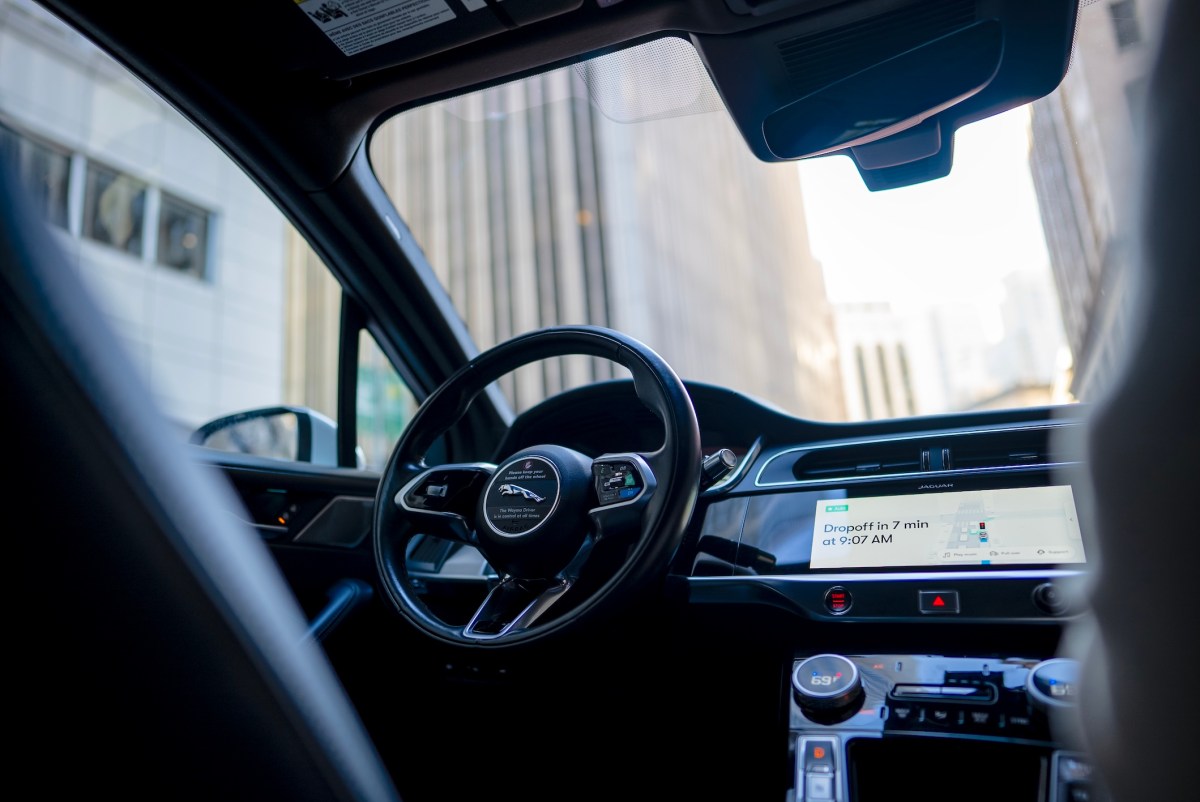
Waymo has now paused service in four cities because its robotaxis are struggling to deal with heavy rain and flooded roads, a problem that already prompted the company to issue a recall last week.
One of Waymo’s robotaxis was spotted driving through a flooded street in Atlanta, Georgia, on Wednesday before it ultimately got stuck for about an hour, according to local news reports. The vehicle was recovered and removed from the scene, Waymo told TechCrunch. Waymo says it paused service in the city, just like it has in San Antonio, Texas, while it figures out a solution.
“Safety is Waymo’s top priority, both for our riders and everyone we share the road with. During a period of intense rain yesterday in Atlanta, an unoccupied Waymo vehicle encountered a flooded road and stopped,” the company said in a statement.
Waymo also halted service in Dallas and Houston because of severe weather across Texas this week, the company confirmed to TechCrunch late Thursday. The expansion was first reported by Bloomberg News.
A Waymo spokesperson said the company also paused service in Dallas and Houston out of an abundance of caution for the forecasted severe weather.
Waymo admitted that it hadn’t finished developing a “final remedy” for avoiding flooded areas when it issued its software recall last week. Instead, the company said that it shipped an update to its fleet that placed “restrictions at times and in locations where there is an elevated risk of encountering a flooded, higher-speed roadway,” according to documents released by the National Highway Traffic Safety Administration (NHTSA).
But even those precautions apparently were not enough to stop the Waymo robotaxi from entering a flooded intersection in Atlanta. Waymo told TechCrunch on Thursday that the storm in Atlanta produced so much rainfall that flooding was happening before the National Weather Service had issued a flash flood warning, watch, or advisory. The company said those alerts are part of a larger set of signals it relies on to prepare the vehicles for poor weather.
“NHTSA is aware of this incident, is in communication with Waymo, and will take appropriate action if necessary,” a spokesperson for the safety regulator told TechCrunch regarding the robotaxi that got stuck in Atlanta.
This is not the first time Waymo has struggled to quickly stamp out problematic behavior with its robotaxis. When people started to notice Waymo robotaxis illegally passing stopped school buses last year, the company shipped a fix that was supposed to address the issue — only for its fleet to continue making illegal maneuvers around school buses.
Waymo’s behavior around school buses is at the center of one of two sets of active investigations into the company.
Both the NHTSA and the National Transportation Safety Board (NTSB) are looking into this problem. Waymo has already produced a batch of documents for the NHTSA, all of which were redacted to the public. On May 15, the NHTSA sent a second document request to Waymo because the company’s initial response “necessitates that [NHTSA] receive further data and information.”
The other set of investigations from the NHTSA and NTSB involve a January 23 incident where a Waymo robotaxi crashed into a child in Santa Monica, California. Waymo has said that its robotaxi braked to around six miles per hour before it struck that child and that she suffered minor injuries.
This story has been updated with more information about how Waymo uses National Weather Service alerts, and to include new service pauses in Houston and Dallas.
When you purchase through links in our articles, we may earn a small commission. This doesn’t affect our editorial independence.
