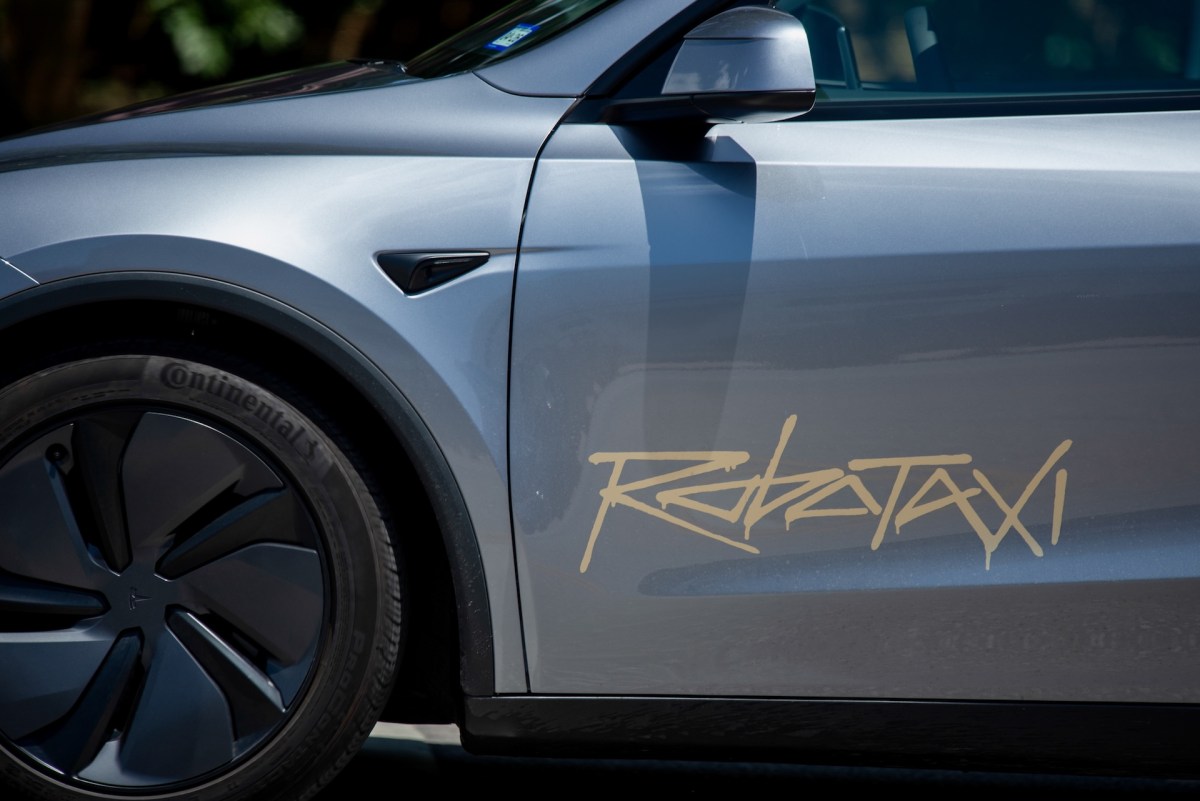
Tesla, Uber, and Waymo all get the OK to operate thousands of robotaxis in Nevada


Nevada, get ready for the robotaxis.

The Nevada Transportation Authority unanimously approved three permits Thursday that will allow Tesla, Uber, and Waymo to operate commercial robotaxi services in Clark County, home to Las Vegas. Together, these permits would deploy up to 8,000 robotaxis across the county over the next 12 months.

Tesla’s permit allows it to deploy up to 5,000 robotaxis, while Waymo is allowed operate up to 1,000 autonomous vehicles over the next year. Uber was also approved for 1,000 robotaxis, which it will operate through partnerships with Hyundai subsidiary Motional and Zoox. Zoox already holds an autonomous vehicle network company permit that allows it to operate 100 robotaxis.

Whether these companies will be able to launch that many robotaxis is an unanswered question. Testimony from Tesla representatives and the other companies suggests the answer is no.

“The 5,000 has always been a ceiling for us,” said Eric Early, Tesla’s Cybercab chief engineer, during the meeting. “I don’t think we’ll be in a position by this time next year to deploy 5,000 vehicles, and it’s not [because of] the technology. … I think we would be extremely happy and satisfied if we could get ourselves up to 2,500, maybe a bit higher than that in the next year.”

Even if these three companies roll out only half of those totals, Clark County — and Las Vegas specifically — is shaping up to be a major robotaxi battleground, with Tesla, Uber (via its autonomous vehicle partners Motional and Zoox), and Waymo all competing for the same riders.

That kind of fast, large-scale robotaxi deployment is poised to change the city — and specifically its workforce. Depending on who you ask, these companies will either deliver a whole new category of jobs designed to maintain, charge, and clean these vehicles or will wipe out an entire category of workers: human taxi and gig drivers.

Representatives from the Livery Operators Association and local taxi companies opposed the permits, arguing the approvals move too far, too fast.

“These applications raise two grave concerns,” said Kimberly Maxson-Rushton, a lawyer representing the Livery Operators Association, at the hearing. “One deals with the oversaturation of the commercial transportation industry as a whole in Nevada,” she said. “And the second one deals with the overcrowding of the roadways, and specifically the Golden Triangle.”

The Golden Triangle, an area between the airport and Las Vegas Boulevard and the surrounding area, is where most of the AV testing has occurred to date. Motional is also testing in the downtown area and in a shopping district known as Town Square.

Uber has tried to position itself as the Goldilocks option in this fight, advocating for a hybrid approach in which ride-hailing networks are made up of humans and robotaxis. The company has even lobbied for a system that would require robotaxis to operate on a ride-hailing network that also uses human drivers, a stance that puts it at odds with Waymo and doubles as a hedge against its own autonomous ambitions falling short of Tesla’s or Waymo’s.

Uber made a similar pitch during the NTA meeting, noting that a hybrid approach would allow cities to gradually integrate vehicles to meet peak demand rather than flooding the market all at once.

When you purchase through links in our articles, we may earn a small commission. This doesn’t affect our editorial independence.

Squishmallows, dentures, and an ‘I Heart Hot Dads’ bag: Uber has found thousands of items left in robotaxis


For the past 10 years, Uber’s annual Lost & Found Index has provided a rather quirky anthropological snapshot of its riders — and even a few insights into society. The annual catalogue of millions of forgotten items ranges from mundane modern-day tools such as smartphones and laptops, to more eyebrow-raising objects like live fish, an ankle monitor, a toboggan, a package of live butterflies, and a single Louboutin shoe.

This year, Uber is using the report to highlight the same old problem of lost items with a new twist: robotaxis. Thousands of items (it’s a bit too new for millions) were left behind in robotaxis on Uber’s ride-hailing network in the past year, the company said Tuesday. There were the usual suspects of phones, keys, wallets, passports, and headphones, along with a few items that strayed into the who-is-this-rider category: a set of dentures, an “I Heart Hot Dads” bag, and a blue hat that reads “Emotional Support Human.”

Beyond this entertaining list lies a business opportunity, if a minor one. Even in a future of robot taxis, someone still has to return the things passengers leave behind.

Uber has spent the past several years locking up dozens of partnerships with autonomous vehicle (AV) technology companies. But it really wasn’t until March 2025, when the “Waymo on Uber” robotaxi service launched in Austin, that the commercial wheels on its AV business started turning. Since then, Uber and Waymo have also started a robotaxi service in Atlanta. Uber has added other AV companies to its app in the past year, including Motional in Las Vegas and Avride in Dallas, although these still have human safety operators behind the wheel.

That Uber has already logged thousands of lost items in just 12 months gives some sense of just how many robotaxi rides have been completed on its app. The underlying message here is that Uber’s existing network is already set up to reunite riders with their lost items, including a 15-pound yo-yo, one large black marble duck, a Squishmallow, and a Charli XCX poster.

When an Uber rider forgets belongings in a robotaxi, the process for recovering them is similar to any other Uber ride: open the app, click the activity tab, select the trip during which the item was lost, and contact customer support. Riders are then able to message, chat, or call a support agent. If the item is located, they have two options: pay $15 for an Uber Courier driver to provide same-day local delivery, or pick up the belonging in person from an AV depot, where the vehicles are stored and serviced.

Uber Courier is a rebrand of Uber Connect, which launched in 2020 and allowed users to send packages and personal items between local addresses. But Uber says there is more to its robotaxi support network than repurposing existing services.

“With tens of millions of lost items reported on Uber each year, we’ve spent the last decade building systems that help riders quickly and seamlessly reunite with their belongings,” Amy Satrom, global head of autonomous support at Uber, said in a statement. “As autonomous rides continue to scale on Uber, we’re bringing that same expertise to AVs — combining our fleet operations, support teams, and hybrid network to make getting a lost item back simple, even when there’s no driver behind the wheel.”

In February, the company announced Uber Autonomous Solutions, a new business division that conveys its bigger ambitions around driverless tech. The division provides companies with a suite of services that handle all the tasks associated with operating a robotaxi, self-driving truck, or sidewalk delivery robot business, including software and support services.

And Uber clearly means to make AVs a major revenue driver. The company plans to offer robotaxi rides through its app in as many as 15 cities globally by the end of the year and has said it intends to be the largest facilitator of AV trips in the world by 2029.

When you purchase through links in our articles, we may earn a small commission. This doesn’t affect our editorial independence.