Anthropic is continuing to trickle down features to its free users. The latest one to make the leap out of subscriber-only mode is web search, which the company to its AI chatbot Claude in March. According to Anthropic, connecting Claude to the web allows it to deliver more accurate responses based on the most up-to-date information available online. This feature is available to all Claude users starting today.
In addition, Anthropic has begun beta tests for voice mode on its mobile apps. This option lets users interact with Claude in natural conversations in an expansion of the platform’s existing dictation tools. There will be five voice options available to assign to Claude, and the AI assistant can provide full transcripts and voice mode summaries after a conversation.
May has been a busy month for Anthropic, which just launched last week. Opus 4 is a powerful coding-focused system that can use multiple tools in parallel and can run for several hours at a time, while Sonnet 4 is a hybrid reasoning model designed to move between quick queries and more complex ones. The current beta testing of voice mode will default to Sonnet 4.
If you were wondering whether it’d be possible to ferment foods in space, the answer is apparently yes. In a study published in the journal iScience, researchers from the US and Denmark say they were able to make decent-tasting miso on the International Space Station — but the flavor and smell was distinct from that of miso made on Earth. While it still scored well in the taste tests, with similar ratings to Earth miso in qualities like umami and saltiness, the ISS miso was found to taste nuttier and more roasted than the usual stuff.
The team suggests the findings reflect a sort of “space terroir,” playing off the term often used in relation to wine grapes to describe unique, location-specific flavor characteristics. For the study, the researchers sent a package containing the miso paste ingredients (cooked soybeans, rice koji and salt) to the ISS in March 2020, and let it ferment for 30 days. They also started miso batches back at home in Cambridge, MA and Copenhagen, Denmark, and monitored the environmental conditions of each setup. After a month, the space miso was sent back and analyzed in comparison to the Earth batches.
“There are some features of the space environment in low earth orbit — in particular microgravity and increased radiation — that could have impacts on how microbes grow and metabolize and thus how fermentation works,” co-lead author Joshua D. Evans of Technical University of Denmark said in a press release. “We wanted to explore the effects of these conditions.”
Not only were there differences in flavor, including the notable roasted nuttiness of the space miso, but also in the microbial composition of the misos. The team concluded that “overall, the space miso is a miso,” but says the findings “suggest a specific fermentation environment in space.”
The Washington Post that members of the White House’s National Security Council have used personal Gmail accounts to conduct government business. National security advisor Michael Waltz and a senior aide of his both used their own accounts to discuss sensitive information with colleagues, according to the Post‘s review and interviews with government officials who spoke to the newspaper anonymously.
Email is not the best approach for sharing information meant to be kept private. That covers sensitive data for individuals such as social security numbers or passwords, much less confidential or classified government documents. It simply has too many potential paths for a bad actor to access information they shouldn’t. Government departments typically use business-grade email services, rather than relying on consumer email services. The federal government also has its own internal communications systems with additional layers of security, making it all the more baffling that current officials are being so cavalier with how they handle important information.
“Unless you are using GPG, email is not end-to-end encrypted, and the contents of a message can be intercepted and read at many points, including on Google’s email servers,” Eva Galperin, director of cybersecurity at the Electronic Frontier Foundation told the Post.
Additionally, there are regulations requiring that certain official government communications be preserved and archived. Using a personal account could allow some messages to slip through the cracks, accidentally or intentionally.
This latest instance of dubious software use from the executive branch follows the discovery that several high-ranking national security leaders used Signal to discuss planned military actions in Yemen, then added a journalist from The Atlantic to the group chat. And while Signal is a more secure option than a public email client, even the encrypted messaging platform can be exploited, as its own team last week.
As with last week’s Signal debacle, there have been no repercussions thus far for any federal employees taking risky data privacy actions. NSC spokesman Brian Hughes told the Post he hasn’t seen evidence of Waltz using a personal account for government correspondence.
Today’s the day: A solar eclipse will darken the skies in the northeastern US and Canada in the early hours of Saturday. Unlike the “Great American Eclipse” of 2024, however, this will not be a total eclipse. Instead, this event will be a partial eclipse visible in parts of the northern hemisphere.
While this one will lack the dramatic “totality” of the 2024 event, a partial eclipse is still worth seeing. The sun will not be fully obscured, but with proper eye protection, you will be able to see the moon take a bite out of the sun. And there’s a catch, but it’s also an opportunity: This eclipse will occur at sunrise in North America, meaning the sun will just barely be above the horizon. But that timing offers viewers the chance to see the famed “devil horns” — a crescent of solar light emerging from behind the moon.
When can you watch this partial solar eclipse, and those devil horns? Let’s talk about how to safely watch this eclipse.
What areas will experience the partial solar eclipse, and when?
The partial solar eclipse will be visible in areas of the northern hemisphere. It will be visible at sunrise in eastern North America and sunset in Siberia, Russia on Saturday, March 29. In Europe, it can be viewed around mid-morning. But the event’s footprint will be limited: No eclipse will be visible west of Toronto, Canada, and Washington, DC in North America.
NASA
This global map of the partial solar eclipse from NASA is more than a little confusing, but here’s how to read it. The yellow curve is the path of the partial solar eclipse, moving from west to east. The lighter colored yellow curves give the percent obscuration of the sun. (In other words, how much of the sun is covered by the moon depends on where you are and when you’re looking.)
Most of Europe will only see around a 20 percent obscuration (with the exception of Greenland and Iceland), for example, while the extreme northeastern part of the United States will see up to 89 percent of the sun covered. The Nunavik region of Quebec will see maximum obscuration of 94 percent. The green lines on the map show the eclipse’s progress over time. Times are given in UTC, which is four hours ahead of Eastern Daylight Time.
However, sunrise and sunset makes things more complicated. This is depicted on the map by the orange loop. The left side of the loop (over the Great Lakes in the United States) shows where the eclipse ends at sunrise. Therefore, the eclipse is not visible west of that orange line. The right side of the loop is where the eclipse begins at sunrise.
That means to see the maximum partial solar eclipse at sunrise, it’s best to be along that blue line running down the middle of the orange loop. (It’s worth noting that the eclipse will also be visible across a narrow part of Siberia, but at sunset rather than sunrise — that’s what the other half of the orange loop depicts).
If it seems incredibly confusing, that’s because it is indeed incredibly confusing. Some places with maximum obscuration will have a shorter eclipse duration because the partial eclipse will start before sunrise. The sun will also be low to the horizon in North America, so any viewing location will need to be above tall trees with a clear view of sunrise. In Europe, the viewing locations will be easier because the sun will be higher in the sky — but the sun will not be as obscured.
For example, in Bar Harbor, Maine, the sun will rise at 6:19AM, and the maximum eclipse will be at 6:22AM, with 80 percent of the sun obscured. The partial eclipse will end at 7:11 am. Technically though, the eclipse will begin at 5:26 am ET, but because that’s before sunrise, Mainers will be cheated out of about half their potential eclipse viewing time.
Moving south, the best view will be through coastal New England, then down through Boston, New York City and Philadelphia.The path basically ends in Washington, DC, where just 1.2 percent of the sun will be obscured at 6:59AM ET.
NASA
According to Time and Date, only 44,800 people will see a 90 percent partial eclipse, while 3,820,000 will see an 80 percent. That’s a far cry from the 30 million people in the path of totality for the 2024 total solar eclipse.
Will a total solar eclipse be visible in the middle of the Atlantic Ocean?
No, there is nowhere on Earth that a total solar eclipse will be visible for this event. For any solar eclipse to happen, the sun, the moon and the Earth need to line up. However, because the moon doesn’t orbit in the same plane as the sun and the Earth, eclipses are rare.
A partial solar eclipse, like the one occurring on March 29, occurs when the moon passes between the sun and the Earth, but it’s not perfectly lined up. As a result, the sun will have a crescent shape — as if the moon took a bite out of the sun — but it will never be fully obscured as it is during a total eclipse.
How long will the partial eclipse last?
The visible duration of the eclipse depends on where you are, and what time sunrise (or sunset) is at your location. But globally, the eclipse will begin at 4:50 am ET (8:50AM UTC). The maximum eclipse will occur at 6:47AM ET (10:47AM UTC), and the event will end at 8:43AM ET (12:43PM UTC). Keep in mind, though, that this doesn’t mean the entire partial eclipse will be almost four hours long in any given location because this is just for the extreme edges of the event.
What’s the weather forecast along the viewing line?
It’s spring across the Northern Hemisphere, which generally means unfavorable weather for any sky viewing. The Weather Channel’s senior digital meteorologist Chris Dolce said that cloud cover, and even rain and snow, may be likely in the northeastern United States during the eclipse, so it’s not great news there, unfortunately.
If it’s just a partial eclipse, do I need eye protection?
Anything that involves looking at the sun, even just 5 or 10 percent of the sun, requires eye protection. The sun can damage your retinas quickly, painlessly and often irreversibly.
If you have solar viewers left from the 2024 eclipse, and they are undamaged, they’ll work just fine for this one too. According to the American Astronomical Society (AAS), modern eclipse glasses do not expire. It’s worth checking them out thoroughly, though, making sure there are no rips, tears or scratches across the lenses and that the filters and lenses are still attached to the frame.
Solar eclipse glasses can be difficult to purchase at the last minute, so it’s always good to keep them around. However, if you donated or trashed your previous pair (or didn’t buy them in the first place), you can buy them online — with some caution. Make sure any solar viewers conform to the ISO 12312-2:2015(E) international safety standard, and check the manufacturer against this list of brands from the AAS. Counterfeit eclipse glasses were rampant leading up the 2024 eclipse.
Celestron is a reliable manufacturer of solar viewer equipment, and the company’s eclipse glasses are readily available on Amazon for a low price (though at this point, you’ll be stocking up for the next eclipses, most of which are better viewed from the southern hemisphere).
What are some cool things to look out for during this eclipse?
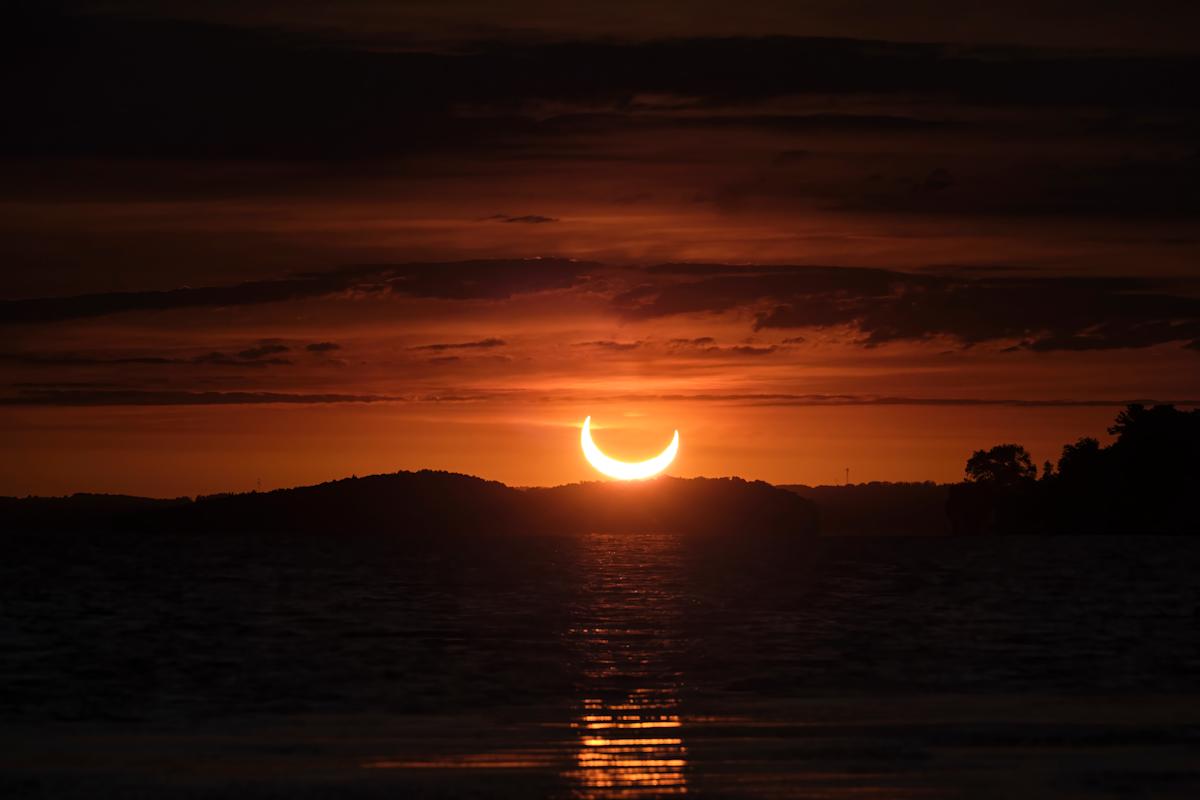
A unique feature of solar eclipses during sunrise is you may be able to see the famed “devil horns,” depending on where you are. When the sun rises during an eclipse (and therefore the sun is low on the horizon), as the crescent sun rises, it can look like devil horns coming up out of the ground.
An earlier sunrise partial eclipse over Rice Lake, Ontario shows the “devil horns” phenomenon. (John Fader via Getty Images)
It’s best to target Maine, New Brunswick, and Quebec (along the blue line in the NASA map) to see this phenomenon.
Additionally, the sun is currently at or near solar maximum, which means that our star is basically at the peak of its 11-year solar cycle. Scientists determined that the sun hit the highest level of solar activity in October 2024, and this will continue for a year or so. This means that there may be sunspots visible on the surface of the sun when the eclipse hits. (For context, here’s what the sun looks like right now, courtesy of NASA’s Solar Dynamics Observatory.) If you have solar binoculars or a solar telescope, this will make them much easier to see.
Can I just point a telescope or camera at the sun?
If you’re asking yourself this question, you probably already know the answer: Nope! Not without a solar filter. Whether it’s a phone camera, binoculars, a telescope or a mirrorless camera, the sun can do extreme damage to this kind of equipment. (On Apollo 12, astronaut Alan Bean accidentally pointed a television camera at the sun, irreparably damaging it. Don’t do this!)
You can pick up solar filters at a camera store or online, or in a pinch, you can just use an extra pair of solar viewers. Simply remove the film and tape it over your smartphone camera, but don’t look at the sun when aiming the camera unless you’re wearing solar viewers as well. If you are interested in looking at the sun regularly, a pair of solar binoculars with a permanently attached filter is a great idea.
If you buy something through a link in this article, we may earn commission.
Waymo is continuing to expand its foothold across the US, having recently started in more parts of the San Francisco Bay Area. Next up are and , and now the company has to offer its driverless Waymo One service in the nation’s capital in 2026.
Before that can happen, though, Waymo will need to get approval from regulators. The company says it will “continue to work closely with policymakers to formalize the regulations needed to operate without a human behind the wheel in the District.” DC currently requires autonomous vehicles to have a human at the wheel, ready to take control if necessary.
“Our priority remains ensuring that any company operating in the District — such as Waymo — does so in a manner that prioritizes safety, aligns with our regulatory framework, and integrates seamlessly into DC’s unique transportation ecosystem,” German Vigil, a spokesman for the District Department of Transportation, told . He noted that the agency is refining its approach to regulation “based on public input, emerging best practices and lessons learned” from other jurisdictions.
Waymo has tested its vehicles in DC for several years and it plans to “continue introducing ourselves to DC’s communities and emergency responders over the coming months.” Per the Post, if and when Waymo One does become available in the District, the robotaxis would not take riders to any of the region’s airports, as they wouldn’t (at least at the outset) have a permit to cross into Maryland or Virginia.
SpaceX could soon have greater control over the recreational activities of South Texas residents. The Houston Chronicle (viaGizmodo) and San Antonio Express-News report that a pair of state senate bills introduced earlier this month would give officials at the likely Starbase city the authority to decide when a nearby beach shuts down for weekday launch activities. Meanwhile, a third bill floated on Wednesday would take the company’s control a step further, making it a criminal offense for people on the beach not to comply with SpaceX’s evacuation orders.
The bills are possible because of an upcoming election that will almost certainly give SpaceX officials control of the area. On May 3, voters will decide if Starbase becomes a Texas city, something Elon Musk first proposed in 2021. Given that the area near the rocket site is populated mainly by SpaceX employees (after previous homeowners in Boca Chica Village moved, often after being bought out by the company), let’s just say the election’s outcome won’t likely be a toss-up.
Republican state senator Adam Hinojosa’s first bill, SB 2188, would let Starbase city officials (assuming the municipality establishment bill passes) decide when Boca Chica Beach is closed for weekday rocket tests and flights. An identical bill, HB 4660, was introduced in the state house by Republican Janie Lopez. Cameron County officials, who control the closures now, would maintain control on Friday afternoons and weekends.
Texas state senator Adam Hinojosa (Campaign for Adam Hinojosa)
Meanwhile, Hinojosa’s second senate bill (SB 2230) would make it a Class B misdemeanor for people on the beach not to comply with Starbase’s evacuation orders. The freshman state senator said the bill would give the commercial spaceport “real teeth” to “compel people to do the right thing.” (Fittingly, Hinojosa’s election website touts his belief that “we don’t need more government in business — we need more business in government.”)
The Houston Chronicle reports that the FAA’s Environmental Assessment shows that SpaceX has moved much of its testing to a site that doesn’t require the closure of State Highway 4. A SpaceX flight test in April 2023 closed the road for over 24 hours, while another shuttered it for nearly eight hours last June. The company can close State Highway 4 for up to 500 hours each year for standard operations and up to 300 more hours to address incidents like an exploding rocket.
On the other hand, environmental groups have argued that SpaceX’s activities are damaging the area. Last year, the Center for Biological Diversity, American Bird Conservancy and other groups sued the FAA for allegedly rushing SpaceX’s permitting process without a full environmental review. And the Environmental Protection Agency fined the company for allegedly dumping pollutants into Texas wetlands adjacent to the Rio Grande River.
Craig Nazor, conservation chair for the Sierra Club’s Lone Star chapter, testified to the state senate on Wednesday that SB 2188 would “put beach closures directly in the hands of SpaceX.” He also expressed concern that the second senate bill could put folks who are unaware of an upcoming launch into legal trouble. “[SB 2230] could potentially make a criminal out of someone who’s out there and lost track of exactly what may be going on at the launch pad,” he said.
The Consumer Financial Protection Bureau has dropped its lawsuit over peer-to-peer payment system Zelle, the latest in a series of dismissals from this department under President Donald Trump’s administration. The agency had only just announced the suit — filed against Zelle’s operating entity Early Warning Services and partner banks JPMorgan Chase, Bank of America and Wells Fargo – in December. According to the initial action, the CFPB said that customers of the three banks had lost more than $870 million during the seven years Zelle has been active.
A spokesperson for Zelle said the company welcomed the CFPB’s decision, and reiterated that it believes the lawsuit was “without merit, and legally and factually flawed.” A JPMorgan Chase representative called scam prevention and consumer education “a national security problem” and stated the bank’s commitment to working “across the public and private sectors” toward solutions.
The CFPB made several moves to increase oversight on the financial products offered by tech companies under its previous director, Rohit Chopra. However, the agency is now overseen by Acting Director Russell Vought, who ordered the CFPB to cease all “supervision and examination activity” last month. While employees of the bureau have sued to try to keep the CFPB alive, there have been conflicting messages from government leadership about the agency’s status.
Since taking office, Trump and ally Elon Musk have taken sweeping actions to control and close federal government departments. Agencies that have historically regulated Musk’s business activities have been among those with reduced powers, as have federal operations for cybersecurity, digital services and personnel management.
Update, March 5, 2025, 4:41PM ET: Added official statements from Zelle and JPMorgan Chase.
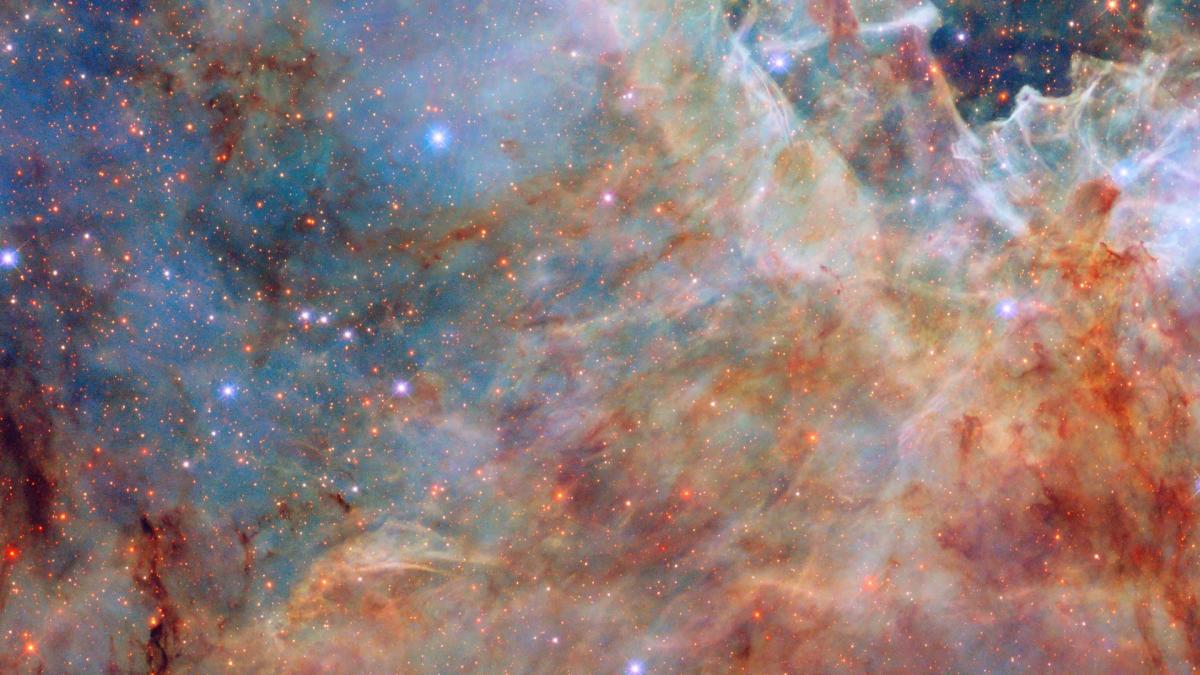
The Hubble Space Telescope is still trucking along more than 30 years after its launch, observing the universe and sending home images for us to marvel at. This week, NASA and ESA highlighted an image captured by Hubble of the highly productive Tarantula Nebula (officially named 30 Doradus) in the Large Magellanic Cloud, and it’s a sight to behold.
To view this content, you’ll need to update your privacy settings. Please click here and view the “Content and social-media partners” setting to do so.
The Large Magellanic Cloud may be only 10-20% as massive as our Milky Way galaxy, but it boasts some of the most impressive star-forming regions in the nearby Universe! 1/3 pic.twitter.com/juulDT44mD
The Tarantula Nebula is “the largest and most productive star-forming region in the local universe,” with stars roughly 200 times as massive as the sun at its center, according to NASA. This Hubble view gives us a look at the outskirts of the nebula, revealing layers of colorful gas and stars. The Tarantula Nebula sits within the Large Magellanic Cloud, a nearby dwarf galaxy.
While the final result we see is filled with brilliant colors, Hubble’s images initially come back in grayscale. As has explained, “scientists can create a composite color image by taking exposures using different color filters on the telescope, assigning a color to each filter that corresponds to the wavelength of that filter, and combining the images.” The new image of the Tarantula Nebula doesn’t just represent visible light, but ultraviolet and infrared too. In such a case, colors are assigned to those wavelengths we can’t normally see.
When President Biden took office back in 2021, he issued severalexecutive orders to address climate change. Now, the reverse is happening. President Trump is in charge now and he is signing EOs at a fevered pace. Many of these actions seek to limit or reverse any changes made by the Biden administration, taking the oft-used “head in the sand” approach to climate policy. Trump’s first step was to withdraw the US from the Paris climate agreement… again.
Trump began the executive order deluge by rescinding 78 of the Biden administration’s EOs, including one on AI guidelines, before implementing a federal hiring freeze and mandating no new regulations. Keep in mind that an EO cannot change a law or regulation, but that won’t stop Trump from trying. In other words, some of this stuff will end up mired in lengthy legal battles.
Trump withdrew the US from the Paris climate agreement during his first term and then Biden reinstated it. Now, history repeats itself. The president has once again taken the US off the agreement roster. This puts the US as one of the few nations that aren’t part of the 2015 accord, joining Iran, Libya, South Sudan, Eritrea and Yemen.
This also means that the US is likely dropping any pledges it made under the pact, including a promise of climate aid for developing nations and a commitment to cut emissions up to 66 percent by 2035. The Trump administration has to notify the United Nations in writing of its intention to withdraw from the accord, which will take a year to become official.
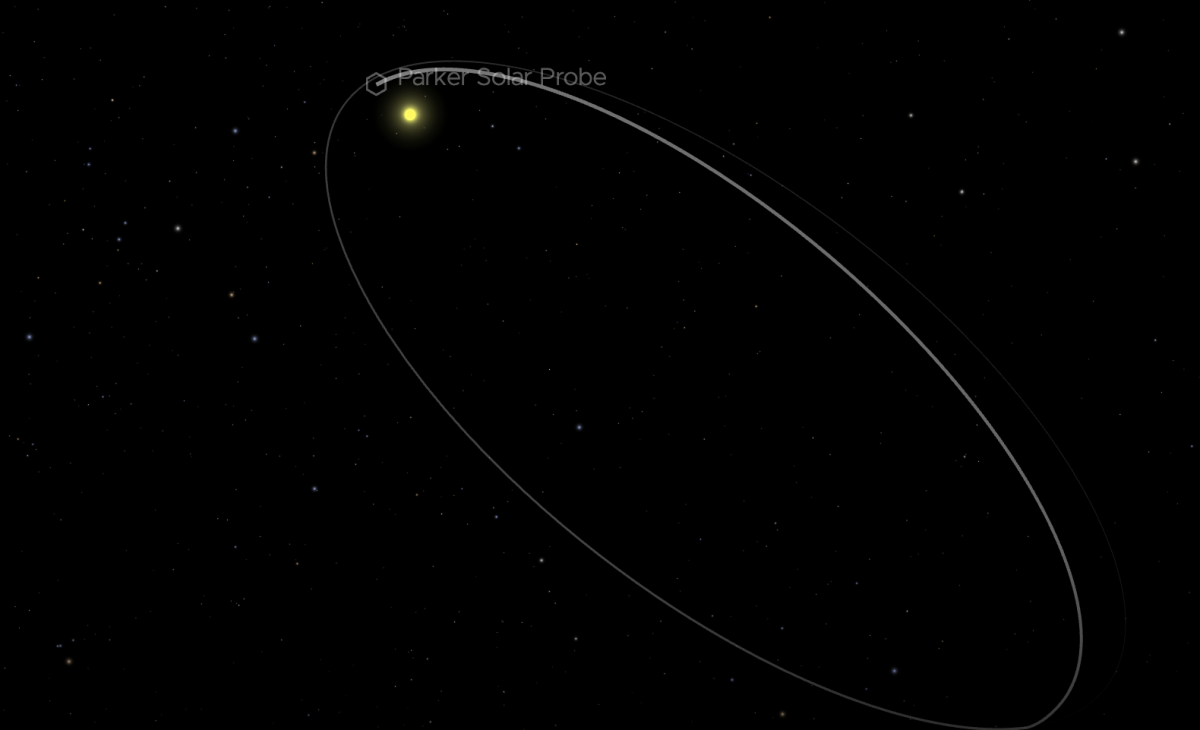
NASA’s Parker Solar Probe is still zipping around the sun making history, and it’s gearing up for another record-setting approach this week. On December 24 at 6:53AM ET, the spacecraft’s orbit will take it just 3.8 million miles from the solar surface, according to the space agency. That’ll be the closest it — or any other probe — has ever come to the sun. The milestone will mark the completion of the Parker Solar Probe’s 22nd orbit around our star, and the first of the three final closest flybys planned for its mission. The craft, which launched in 2018, is expected to complete a total of 24 orbits.
“No human-made object has ever passed this close to a star, so Parker will truly be returning data from uncharted territory,” Nick Pinkine, Parker Solar Probe mission operations manager at the Johns Hopkins Applied Physics Laboratory, said in a statement on NASA’s blog. “We’re excited to hear back from the spacecraft when it swings back around the Sun.”
The Parker Solar Probe will be traveling at about 430,000 miles per hour at the time of its closest-ever pass. It’ll ping the team to confirm its health on December 27, when it’ll be far enough from the sun to resume communications.