Palantir is reportedly helping the IRS investigate financial crimes


Palantir has helped the Internal Revenue Service’s Criminal Investigations office probe a variety of financial crimes in the U.S. for much of the last decade, The Intercept reported.

The IRS has paid the firm $130 million since 2018 to use its data analysis software to pore over financial records for investigative purposes, the outlet reported, citing public records detailing Palantir’s IRS contract that were obtained by the nonprofit watchdog group American Oversight.

It was previously known the IRS was using Palantir’s products, and that the agency sees the software as a way to automate and modernize audits. Last summer, it was also reported that Palantir was assisting DOGE, the “government efficiency” initiative launched by President Trump’s executive order with a project designed to access IRS records. However, the extent of the agency’s use of the company’s tools had not been previously reported.

The software, Palantir’s Lead and Case Analytics platform, is being used to aggregate and analyze data across a variety of federal agencies. The software can find “connections from millions of records with thousands of links” between various databases, and the tool is particularly good at mapping human relationships and communications, according to the outlet. 

Earlier this week, American Oversight sued the Trump administration for public records related to numerous federal agencies’ use of Palantir tools, including the IRS. TechCrunch has reached out to Palantir for more information and will update the article if the company responds.

Senator, who has repeatedly warned about secret U.S. government surveillance, sounds new alarm over ‘CIA activities’


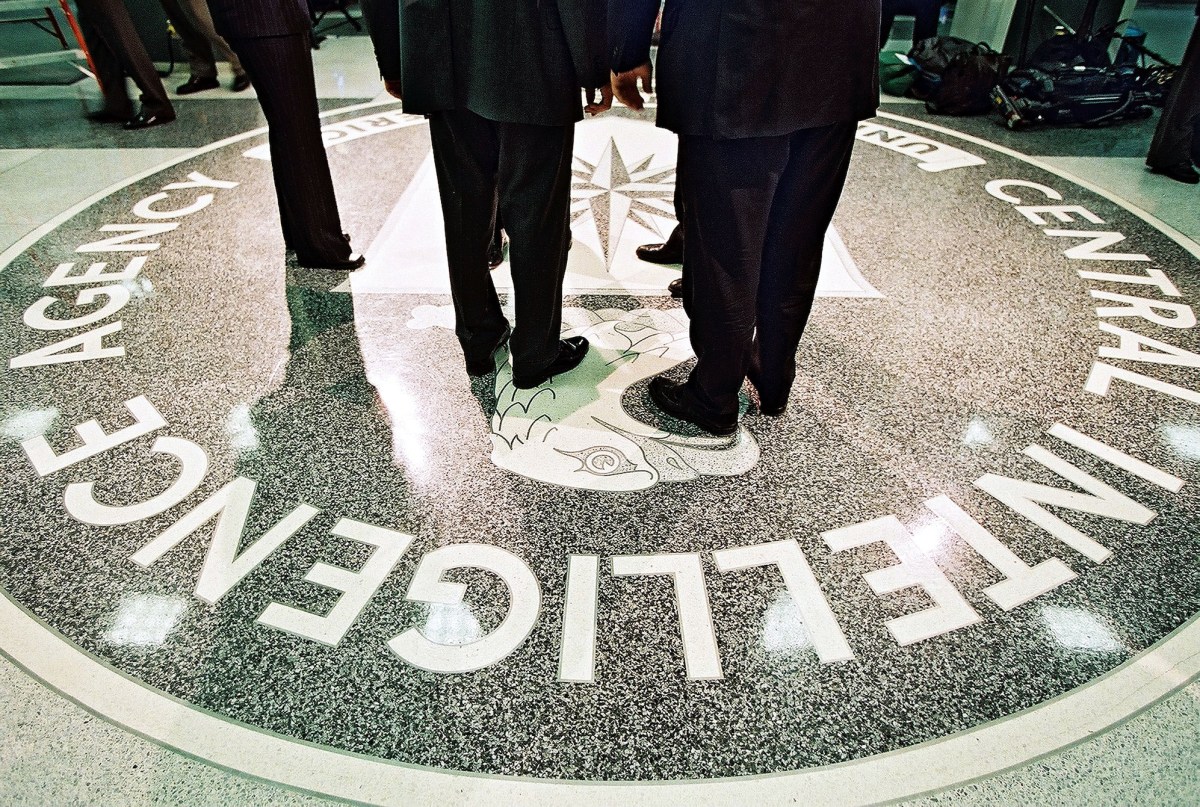
A senior Democratic lawmaker with knowledge of some of the U.S. government’s most secretive operations has said he has “deep concerns” about certain activities by the Central Intelligence Agency. 

The two-line letter written by Sen. Ron Wyden, the longest serving member of the Senate Intelligence Committee, does not disclose the nature of the CIA’s activities or the senator’s specific concerns. But the letter follows a pattern in recent years in which Wyden has publicly hinted at wrongdoing or illegality within the federal government, sometimes referred to as the “Wyden siren.” 

In a statement (via WSJ’s Dustin Volz), the CIA said it was “ironic but unsurprising that Senator Wyden is unhappy,” calling it a “badge of honor.”

When reached by TechCrunch, a spokesperson for Wyden’s staff was unable to comment as the matter was classified. 

Tasked with oversight of the intelligence community, Wyden is one of a few lawmakers who is allowed to read highly classified information about ongoing government surveillance, including cyber and other intelligence operations. But as the programs are highly secretive, Wyden is barred from sharing details of what he knows with anyone else, including most other lawmakers, except for a handful of Senate staff with security clearance.

As such, Wyden, a known privacy hawk, has become one of the few key members of Congress whose rare but outspoken words on intelligence and surveillance matters are closely watched by civil liberties groups.

Over the past few years, Wyden has subtly sounded the alarm on several occasions in which he has construed a secret ruling or intelligence gathering method as unlawful or unconstitutional.

In 2011, Wyden said that the U.S. government was relying on a secret interpretation of the Patriot Act, which he said — without disclosing the nature of his concerns — created a “gap between what the public thinks the law says and what the American government secretly thinks the law says.” 

Two years later, then-NSA contractor Edward Snowden revealed that the National Security Agency was relying on its secret interpretation of the Patriot Act to force U.S. phone companies, including Verizon, to turn over the call records of hundreds of millions of Americans on an ongoing basis.

Since then, Wyden has sounded the alarm on how the U.S. government collects the contents of people’s communications; revealed that the Justice Department barred Apple and Google from disclosing that federal authorities had been secretly demanding the contents of their customer’s push notifications; and said an unclassified report that CISA has refused to release contains “shocking details” about national security threats facing U.S. phone companies.

As noted by Techdirt’s Mike Masnick, we may not know yet for what reason Wyden sounded the siren about the CIA’s activities, but that every time Wyden has warned, he has also been vindicated.

Department of Energy cancels $7.5B of clean energy projects in mostly blue states


The Department of Energy said Wednesday night it was canceling 321 awards worth $7.56 billion that were largely focused on clean energy.

The agency hasn’t publicly released a list of the affected projects and, at the time of publication, it had not provided one to TechCrunch. According to E&E News and Heatmap, which have obtained the list, the majority of the cuts have hit states that went for Kamala Harris in the last presidential election, though some were in “red” states that voted for President Trump.

Direct air capture and hydrogen hub projects appear to have been wiped out as a result. California Gov. Gavin Newsom said that one of the canceled projects included $1.2 billion for the state’s hydrogen hub, the Alliance for Renewable Clean Hydrogen Energy Systems, and E&E News is reporting that hubs in Texas and Louisiana were also on the chopping block.

At least 10 direct air capture (DAC) projects totaling $47.3 million were cut, though those in Alaska, Kentucky, Louisiana, and North Dakota have survived. The oil and gas industry has been supportive of DAC projects because the captured CO2 can be injected into underperforming oil wells to boost production.

Other states affected by the billions in canceled contracts include Colorado, Connecticut, Delaware, Florida, Hawaii, Illinois, Iowa, Maryland, Massachusetts, Minnesota, New Hampshire, New Jersey, New Mexico, New York, Oregon, Tennessee, Vermont, and Washington.

The Harris-voting states with canceled projects were confirmed in a tweet from Russell Vought, the director of the Office of Management and Budget. He teased the cancellations earlier yesterday in an apparent effort to deepen partisanship during the shutdown, adding that “the Left’s climate agenda is being cancelled.”

All 16 states that he listed voted for Kamala Harris in the last presidential election, and many are controlled by Democrats at the state level. Conspicuously, Vought omitted Trump-voting states that were on the list.

Techcrunch event

San Francisco
|
October 27-29, 2025

The awards were originally granted by the office for Advanced Research Projects Agency-Energy, Clean Energy Demonstrations, Energy Efficiency and Renewable Energy, Fossil Energy, Grid Deployment, and Manufacturing and Energy Supply Chains.

The Department of Energy said 26% of the awards were granted between Election Day and Inauguration Day in January; the president’s authority doesn’t end after Election Day, but runs until Inauguration Day. 

The awardees have 30 days to appeal the decision.

The Trump administration has made no secret that it wants to undermine any transition away from fossil fuels. Last week, the Department of Energy banned staffers from using certain words, including “climate change” and “emissions.”

In May, the agency canceled $3.7 billion worth of clean energy and manufacturing awards. Those cancellations spanned a broad list of industries, from metal manufacturing and cement companies to power plant operators and chemical plants run by fossil fuel giants.

The Trump administration’s aggressive cancellations have prompted many awardees to sue the government to retain the awards. The Environmental Protection Agency, which was quick to cancel contracts worth $20 billion, has been an early target of legal action. So far, the plaintiffs have had mixed success.

While a federal district court said the EPA’s actions were “arbitrary and capricious,” an appellate court ruled in favor of the agency, saying that the contract cancellations were valid and showed the government exercising “proper oversight and management.”

In the instance of the recent DOE cancellations, several award recipients have already appealed the decision, the agency confirmed.

Update: The article and headline have been updated to include further details about which states and programs are affected.

US government is reportedly in discussions to take stake in Intel


The Trump administration continues to meddle with semiconductor giant Intel.

The U.S. government is reportedly in discussions to take a stake in Intel, according to reporting from Bloomberg. This deal would be structured to help the company expand its U.S. manufacturing efforts, including its much-delayed Ohio chip factory.

This news comes less than a week after President Donald Trump insisted that Intel CEO Lip-Bu Tan resign because of perceived conflicts of interest. While Trump didn’t provide a reason, this came after Republican U.S. Sen. Tom Cotton wrote to Intel’s board asking about Tan’s alleged ties to China.

Tan met with the Trump administration on August 11 to quell the administration’s fears and figure out ways for the company to work with the government. This meeting is what sparked discussions of the U.S. government taking a direct stake in the company, according to Bloomberg.

Intel declined to comment.

“Intel is deeply committed to supporting President Trump’s efforts to strengthen U.S. technology and manufacturing leadership,” an Intel spokesperson said in a statement. “We look forward to continuing our work with the Trump Administration to advance these shared priorities, but we are not going to comment on rumors or speculation.”

We’re always looking to evolve, and by providing some insight into your perspective and feedback into TechCrunch and our coverage and events, you can help us! Fill out this survey to let us know how we’re doing and get the chance to win a prize in return!

Techcrunch event

San Francisco
|
October 27-29, 2025

President Trump withdraws the US from the Paris climate agreement (again)


When President Biden took office back in 2021, he issued several executive orders to address climate change. Now, the reverse is happening. President Trump is in charge now and he is signing EOs at a fevered pace. Many of these actions seek to limit or reverse any changes made by the Biden administration, taking the oft-used “head in the sand” approach to climate policy. Trump’s first step was to withdraw the US from the Paris climate agreement… again.

Trump began the executive order deluge by rescinding 78 of the Biden administration’s EOs, including one on AI guidelines, before implementing a federal hiring freeze and mandating no new regulations. Keep in mind that an EO cannot change a law or regulation, but that won’t stop Trump from trying. In other words, some of this stuff will end up mired in lengthy legal battles.

Trump withdrew the US from the Paris climate agreement during his first term and then Biden reinstated it. Now, history repeats itself. The president has once again taken the US off the agreement roster. This puts the US as one of the few nations that aren’t part of the 2015 accord, joining Iran, Libya, South Sudan, Eritrea and Yemen.

This also means that the US is likely dropping any pledges it made under the pact, including a promise of climate aid for developing nations and a commitment to cut emissions up to 66 percent by 2035. The Trump administration has to notify the United Nations in writing of its intention to withdraw from the accord, which will take a year to become official.