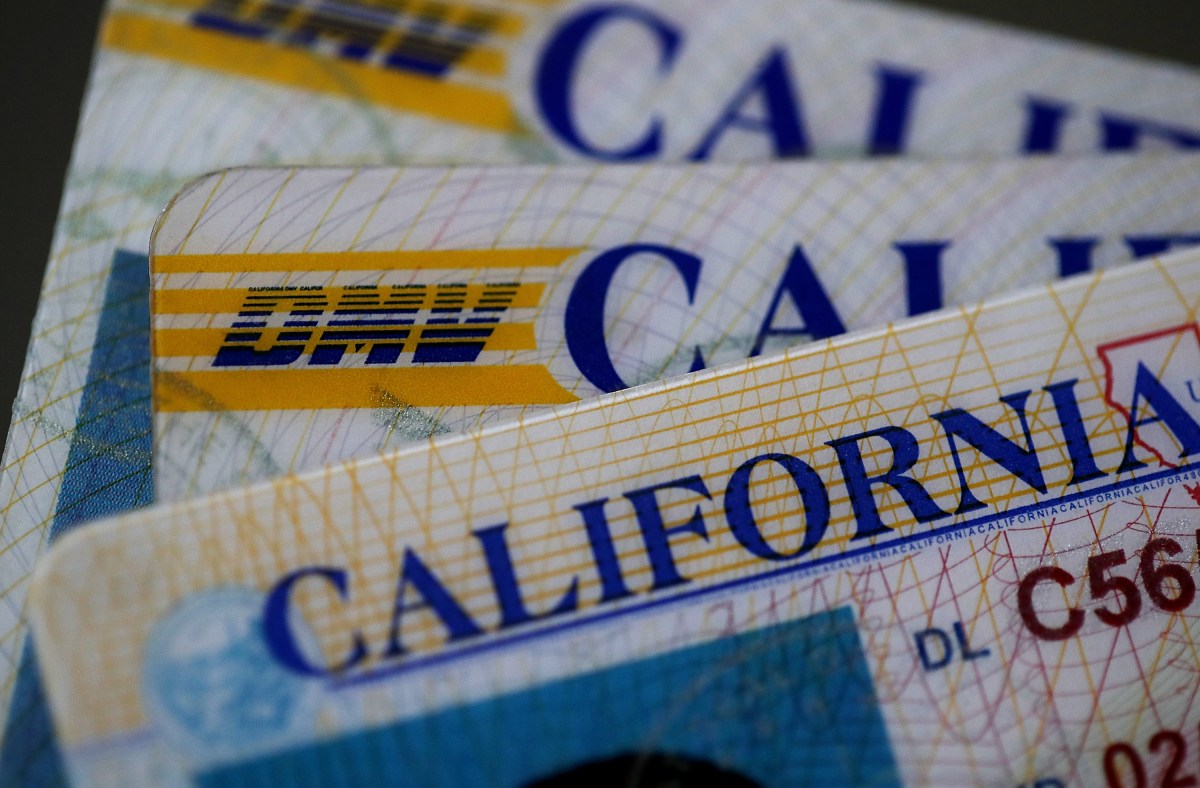
ID verification service IDScan has confirmed that a data breach involved the theft of driver’s licenses from its systems, a week after a report said the identity document checker had been breached during a year-long hack.
The company said in a website notice that hackers stole the driver’s licenses from the company’s cloud; the stolen information includes people’s full names and driver’s license numbers, along with identity numbers from other government-issued documents, such as passports.
The Louisiana-based firm is used by corporate customers from entertainment venues to cannabis dispensaries to check and verify the identity documents of their customers. The notice is the company’s first acknowledgement that it had been hacked. The company said last week that it was investigating an incident, but had not yet confirmed an intrusion.
IDScan said in its notice that it “received information” on or around September 1 about a claim of a hack, on the same day that independent cybersecurity journalist Brian Krebs first reported a data breach at IDScan.
Krebs reported that he was alerted to a website on the dark web that allowed anyone to search the driver’s license information of over 150 million people living in the United States and Canada, including accessing their photos. Krebs verified the authenticity of the data by examining his own record. The database also contained high-profile individuals, including the U.S. Secretary of Defense Pete Hegseth, and a security researcher who also verified his data for Krebs’ report.
The Pentagon told TechCrunch last week that it was aware of the suspected breach, and a spokesperson for the FBI said it was also investigating the incident.
IDScan said on its website its investigation was ongoing. The company’s statement said that, “though full access to the information required payment” — likely referring to a demand for money made by the hackers to access the full cache of stolen data — the company was providing notice on its website to notify potentially affected individuals. IDScan has not said how many individuals are affected but notes on its website that it holds over 150 million driver’s license records.
IDScan did not respond to TechCrunch’s request for comment about the incident, such as whether the hackers contacted the company with a ransom demand not to release the data.
When you purchase through links in our articles, we may earn a small commission. This doesn’t affect our editorial independence.
Offering a rare glimpse at the priorities of a top spy organization, Canada’s Communications Security Establishment said it conducted a handful of state-authorized hacks last year in order to disrupt the operations of drug traffickers, violent extremists, and a ransomware gang.
The disclosures in the Canadian intelligence agency’s annual report underscore some of the main national security threats that face Canada and its closest allies: ranging from the import of illegal drugs to cyberattacks. The spy agency, CSE, is tasked with collecting foreign intelligence, defending government systems, and disrupting online adversaries.
Published last week, the report says the CSE last year carried out three foreign “active cyber operations” — the term agency uses to describe its cyberattacks on overseas operations that threaten Canadian national security and public safety.
One of the operations, per the report, targeted cybercriminals outside of Canada who were brokering the sale of chemicals used to create the synthetic opioid, fentanyl. The CSE collected intelligence on the brokers, then conducted an operation that “disrupted and diminished their ability to operate,” the report said.
Another active operation involved the collection of signals intelligence — data produced from electronics and internet-connected devices — on an overseas extremist group that was spreading violent ideology and recruiting members, including in Canada.
The report said the agency analyzed the group’s organization, reach, and potential vulnerabilities to conduct an operation that “successfully undermined the group’s credibility and limited their ability to radicalize and recruit new members.”
Another operation involved disrupting a ransomware-as-a-service operation that let hackers rent access to a ransomware gang’s infrastructure to launch destructive extortion attacks. The CSE said its signals intelligence unit identified how the gang worked against the healthcare, transportation, and business sectors in Canada, then used an active cyber operation that “rendered the group’s infrastructure inoperable.” The operation also deleted much of the data on the gang’s servers.
The agency said it undertook concurrent “technical disruptions” against 10 of the most significant ransomware gangs targeting Canada to “make parts of their infrastructure unusable.”
The report did not say where the hackers, extremists or the ransomware gang were located, or the specifics of the operations that the CSE used to target them. It’s not uncommon for spy agencies to conduct cyberattacks against their adversaries, but such operations are seldom disclosed or detailed to protect the methods and techniques used.
Fort Meade, Maryland-based Cyber Command, which conducts cyber operations for the U.S. government, regularly carries out “hunt forward” operations that involve sending cyber teams to allied nations to secure their networks and disrupt cyber operations launched by adversaries. The number of U.S.-led hunt forward operations have risen from a few handful during 2018 to more than two dozen during 2025.
Canada’s CSE said it also carried out one defensive cyber operation during the year to target a phishing campaign aimed at Canadian federal government institutions and other important systems. The agency said it disrupted the group’s infrastructure and “degraded their ability” to target Canadians.
When you purchase through links in our articles, we may earn a small commission. This doesn’t affect our editorial independence.
A senior Democratic lawmaker with knowledge of some of the U.S. government’s most secretive operations has said he has “deep concerns” about certain activities by the Central Intelligence Agency.
The two-line letter written by Sen. Ron Wyden, the longest serving member of the Senate Intelligence Committee, does not disclose the nature of the CIA’s activities or the senator’s specific concerns. But the letter follows a pattern in recent years in which Wyden has publicly hinted at wrongdoing or illegality within the federal government, sometimes referred to as the “Wyden siren.”
In a statement (via WSJ’s Dustin Volz), the CIA said it was “ironic but unsurprising that Senator Wyden is unhappy,” calling it a “badge of honor.”
When reached by TechCrunch, a spokesperson for Wyden’s staff was unable to comment as the matter was classified.
Tasked with oversight of the intelligence community, Wyden is one of a few lawmakers who is allowed to read highly classified information about ongoing government surveillance, including cyber and other intelligence operations. But as the programs are highly secretive, Wyden is barred from sharing details of what he knows with anyone else, including most other lawmakers, except for a handful of Senate staff with security clearance.
As such, Wyden, a known privacy hawk, has become one of the few key members of Congress whose rare but outspoken words on intelligence and surveillance matters are closely watched by civil liberties groups.
Over the past few years, Wyden has subtly sounded the alarm on several occasions in which he has construed a secret ruling or intelligence gathering method as unlawful or unconstitutional.
In 2011, Wyden said that the U.S. government was relying on a secret interpretation of the Patriot Act, which he said — without disclosing the nature of his concerns — created a “gap between what the public thinks the law says and what the American government secretly thinks the law says.”
Two years later, then-NSA contractor Edward Snowden revealed that the National Security Agency was relying on its secret interpretation of the Patriot Act to force U.S. phone companies, including Verizon, to turn over the call records of hundreds of millions of Americans on an ongoing basis.
As noted by Techdirt’s Mike Masnick, we may not know yet for what reason Wyden sounded the siren about the CIA’s activities, but that every time Wyden has warned, he has also been vindicated.
We’re almost at the end of 2024, a year that will go down as having seen some of the biggest, most damaging data breaches in recent history. And just when you think that some of these hacks can’t get any worse, they do.
From huge stores of customers’ personal information getting scraped, stolen and posted online, to reams of medical data covering most people in the United States getting stolen, the worst data breaches of 2024 have surpassed the 1 billion stolen records and rising. These breaches not only affect the individuals whose data was irretrievably exposed, but also embolden the criminals who profit from their malicious cyberattacks.
Travel with us to the not-so-distant past to look at how some of the biggest security incidents of 2024 went down, their impact and, in some cases, how they could have been stopped.
AT&T’s data breaches affect “nearly all” of its customers, and many more non-customers
For AT&T, 2024 has been a very bad year for data security. The telecoms giant confirmed not one, but two separate data breaches just months apart.
Although the stolen AT&T data isn’t public (and one report suggests AT&T paid a ransom for the hackers to delete the stolen data) and the data itself does not contain the contents of calls or text messages, the “metadata” still reveals who called who and when, and in some cases the data can be used to infer approximate locations. Worse, the data includes phone numbers of non-customers who were called by AT&T customers during that time. That data becoming public could be dangerous for higher-risk individuals, such as domestic abuse survivors.
That was AT&T’s second data breach this year. Earlier in March, a data breach broker dumped online a full cache of 73 million customer records to a known cybercrime forum for anyone to see, some three years after a much smaller sample was teased online.
But it wasn’t until a security researcher discovered that the exposed data contained encrypted passcodes used for accessing a customer’s AT&T account that the telecoms giant took action. The security researcher told TechCrunch at the time that the encrypted passcodes could be easily unscrambled, putting some 7.6 million existing AT&T customer accounts at risk of hijacks. AT&T force-reset its customers’ account passcodes after TechCrunch alerted the company to the researcher’s findings.
The lengthy downtime caused by the cyberattack dragged on for weeks, causing widespread outages at hospitals, pharmacies and healthcare practices across the United States. But the aftermath of the data breach has yet to be fully realized, though the consequences for those affected are likely to be irreversible. UnitedHealth says the stolen data — which it paid the hackers to obtain a copy — includes the personal, medical and billing information on a “substantial proportion” of people in the United States.
UnitedHealth has yet to attach a number to how many individuals were affected by the breach. The health giant’s chief executive, Andrew Witty, told lawmakers that the breach may affect around one-third of Americans, and potentially more. For now, it’s a question of just how many hundreds of millions of people in the U.S. are affected.
Synnovis ransomware attack sparked widespread outages at hospitals across London
A June cyberattack on U.K. pathology lab Synnovis — a blood and tissue testing lab for hospitals and health services across the U.K. capital — caused ongoing widespread disruption to patient services for weeks. The local National Health Service trusts that rely on the lab postponed thousands of operations and procedures following the hack, prompting the declaration of a critical incident across the U.K. health sector.
A Russia-based ransomware gang was blamed for the cyberattack, which saw the theft of data related to some 300 million patient interactions dating back a “significant number” of years. Much like the data breach at Change Healthcare, the ramifications for those affected are likely to be significant and life-lasting.
One of the NHS trusts that runs five hospitals across London affected by the outages reportedly failed to meet the data security standards as required by the U.K. health service in the years that ran up to the June cyberattack on Synnovis.
Ticketmaster had an alleged 560 million records stolen in the Snowflake hack
A series of data thefts from cloud data giant Snowflake quickly snowballed into one of the biggest breaches of the year, thanks to the vast amounts of data stolen from its corporate customers.
Cencora notifies over a million and counting that it lost their data:
U.S. pharma giant Cencora disclosed a February data breach involving the compromise of patients’ health data, information that Cencora obtained through its partnerships with drug makers. Cencora has steadfastly refused to say how many people are affected, but a count by TechCrunch shows well over a million people have been notified so far. Cencora says it’s served more than 18 million patients to date.
MediSecure data breach affects half of Australia:
Close to 13 million people in Australia — roughly half of the country’s population — had personal and health data stolen in a ransomware attack on prescriptions provider MediSecure in April. MediSecure, which distributed prescriptions for most Australians until late 2023, declared insolvency soon after the mass theft of customer data.
Kaiser shared health data on millions of patients with advertisers:
U.S. health insurance giant Kaiser disclosed a data breach in April after inadvertently sharing the private health information of 13.4 million patients, specifically website search terms about diagnoses and medications, with tech companies and advertisers. Kaiser said it used their tracking code for website analytics. The health insurance provider disclosed the incident in the wake of several other telehealth startups, like Cerebral, Monument and Tempest, admitting they too shared data with advertisers.
USPS shared postal address with tech giants, too:
And then it was the turn of the U.S. Postal Service caught sharing postal addresses of logged-in users with advertisers like Meta, LinkedIn and Snap, using a similar tracking code provided by the companies. USPS removed the tracking code from its website after TechCrunch notified the postal service in July of the improper data sharing, but the agency wouldn’t say how many individuals had data collected. USPS has over 62 million Informed Delivery users as of March 2024.
Evolve Bank data breach affected fintech and startup customers:
A ransomware attack targeting Evolve Bank saw the personal information of more than 7.6 million people stolen by cybercriminals in July. Evolve is a banking-as-a-service giant serving mostly fintech companies and startups, like Affirm and Mercury. As a result, many of the individuals notified of the data breach had never heard of Evolve Bank, let alone have a relationship with the firm, prior to its cyberattack.
National Public Data goes broke after millions of SSNs stolen
The company behind the data broker National Public Data filed for Chapter 11 bankruptcy protection in October, months after a massive data breach exposed some three billion records affecting around 270 million individuals, according to various analyses by security researchers. The data broker allowed its paying customers access to its vast databases of names, dates of birth, email and postal addresses, phone numbers, and Social Security numbers (even if not all of the data was accurate). The company said it had to file for bankruptcy as it can no longer generate the revenue to address the deluge of class-action lawsuits and mounting liability from state and federal regulators.
First published on June 28 and updated on October 14.
A person claiming to be a student in Singapore publicly posted documentation showing lax security in a widely popular school mobile device management service called Mobile Guardian, weeks before a cyberattack on the company resulted in the mass-wiping of student devices and widespread disruption.
In an email with TechCrunch, the student — who declined to provide his name citing fear of legal retaliation — said he reported the bug to the Singaporean government by email in late May but could not be sure that the bug was ever fixed. The Singaporean government told TechCrunch that the bug was fixed prior to Mobile Guardian’s cyberattack on August 4, but the student said that the bug was so easy to find and trivial for an unsophisticated attacker to exploit, that he fears there are more vulnerabilities of similar exploitability.
The U.K.-based Mobile Guardian, which provides student device management software in thousands of schools around the world, disclosed the breach on August 4 and shut down its platform to block the malicious access, but not before the intruder used their access to remotely wipe thousands of student devices.
A day later, the student published details of the vulnerability he had previously sent to the Singaporean Ministry of Education, a major customer of Mobile Guardian since 2020.
In a Reddit post, the student said the security bug he found in Mobile Guardian granted any signed-in user “super admin” access to the company’s user management system. With that access, the student said, a malicious person could perform actions that are reserved for school administrators, including the ability to “reset every person’s personal learning device,” he said.
The student wrote that he reported the issue to the Singaporean education ministry on May 30. Three weeks later, the ministry responded to the student saying the flaw is “no longer a concern,” but declined to share any further details with him, citing “commercial sensitivity,” according to the email seen by TechCrunch.
When reached by TechCrunch, the ministry confirmed it had received word of the bug from the security researcher, and that “the vulnerability had been picked up as part of an earlier security screening, and had already been patched,” as per spokesperson Christopher Lee.
“We also confirmed that the disclosed exploit was no longer workable after the patch. In June, an independent certified penetration tester conducted a further assessment, and no such vulnerability was detected,” said the spokesperson.
“Nevertheless, we are mindful that cyber threats can evolve quickly and new vulnerabilities discovered,” the spokesperson said, adding that the ministry “regards such vulnerability disclosures seriously and will investigate them thoroughly.”
Bug exploitable in anyone’s browser
The student described the bug to TechCrunch as a client-side privilege escalation vulnerability, which allowed anyone on the internet to create a new Mobile Guardian user account with an extremely high level of system access using only the tools in their web browser. This was because Mobile Guardian’s servers were allegedly not performing the proper security checks and trusting responses from the user’s browser.
The bug meant that the server could be tricked into accepting the higher level of system access for a user’s account by modifying the network traffic in the browser.
TechCrunch was provided a video — recorded on May 30, the day of disclosure — demonstrating how the bug works. The video shows the user creating a “super admin” account using only the browser’s in-built tools to modify the network traffic containing the user’s role to elevate that account’s access from “admin” to “super admin.”
The video showed the server accepting the modified network request, and when logged in as that newly created “super admin” user account, granted access to a dashboard displaying lists of Mobile Guardian enrolled schools.
Mobile Guardian CEO Patrick Lawson did not respond to multiple requests for comment prior to publication, including questions about the student’s vulnerability report and whether the company fixed the bug.
After we contacted Lawson, the company updated its statement as follows: “Internal and third party investigations into previous vulnerabilities of the Mobile Guardian Platform are confirmed to have been resolved and no longer pose a risk.” The statement did not say when the previous flaws were resolved nor did the statement explicitly rule out a link between the previous flaws and its August cyberattack.
This is the second security incident to beset Mobile Guardian this year. In April, the Singaporean education ministry confirmed the company’s management portal had been hacked and the personal information of parents and school staff from hundreds of schools across Singapore compromised. The ministry attributed the breach to Mobile Guardian’s lax password policy, rather than a vulnerability in its systems.
Do you know more about the Mobile Guardian cyberattack? Are you affected? Get in touch. You can contact this reporter on Signal and WhatsApp at +1 646-755-8849, or by email. You can send files and documents via SecureDrop.