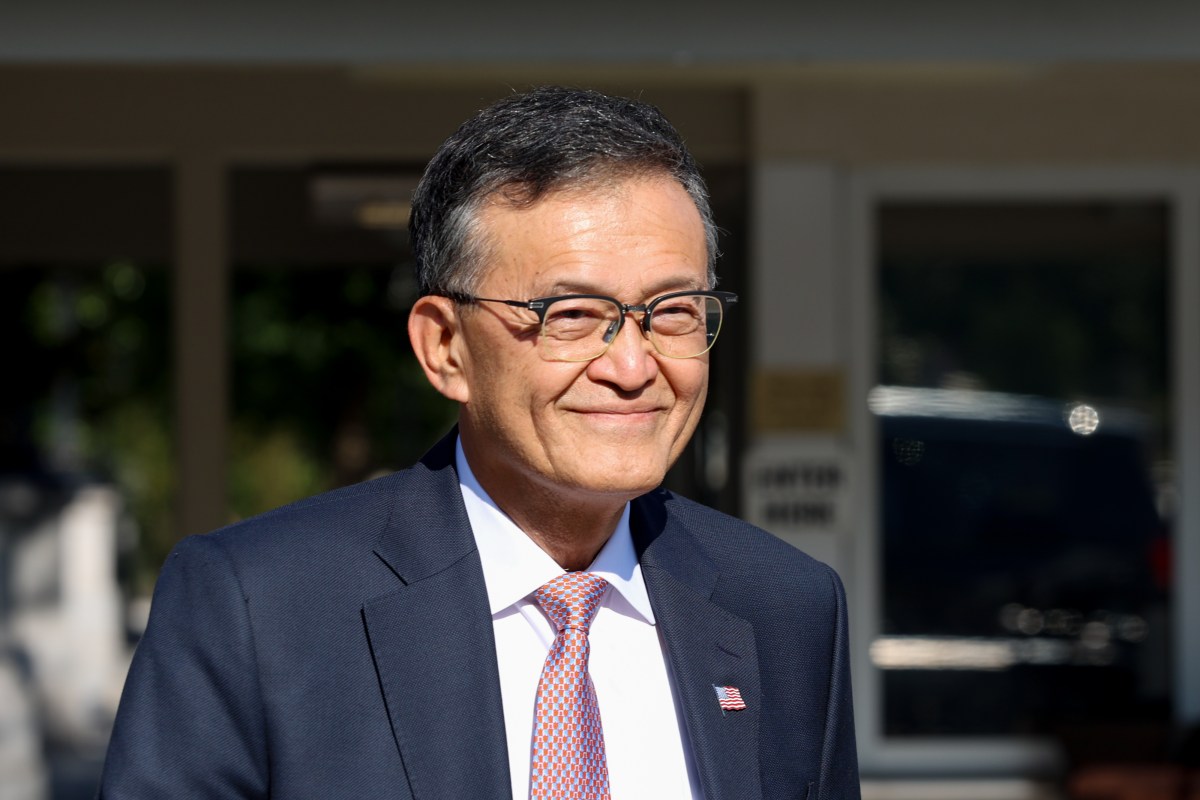
Intel’s chief executive of products departs among other leadership changes


Semiconductor giant Intel continues to shake up its senior leadership since Lip-Bu Tan took the helm as CEO in March.

Intel announced Monday that Michelle Johnston Holthaus will depart the company after more than three decades. Johnston Holthhaus was most recently chief executive officer of Intel products and will remain a strategic adviser.

The company also announced the creation of a central engineering group that will build a new custom silicon business for outside customers, according to Intel. This group will be helmed by Srinivasan “Srini” Iyengar who joined Intel from Cadence Design Systems in July.

Intel also said that Kevok Kechichian, formerly of ARM, will join the company as head of its data center group. Jim Johnson has been appointed senior vice president and general manager of Intel’s client computing group. Naga Chandrasekaran, the chief technology and operations officer of Intel Foundry, the company’s business unit that builds custom chips for outside customers, is also taking on an expanded role.

“With Srini leading Central Engineering, we’re aligning innovation and execution more tightly in service to customers,” Tan said in a company press release. “We are laser-focused on delivering world-class products and empowering our engineering teams to move faster and execute with excellence. Kevork, Jim, and Srini are exceptional leaders whose deep technical acumen and industry relationships will be instrumental as we continue building a new Intel.”

This news comes just a few weeks after the U.S. government announced a plan to convert existing government grants into a 10% stake in Intel. The deal was structured to penalize Intel if the company dropped below 50% ownership of its foundry unit.

These weren’t the only leadership changes at Intel this year.

Techcrunch event

San Francisco
|
October 27-29, 2025

Tan taking over as CEO in March is a notable one. In July the company announced that it hired four new people for sales and engineering roles including Greg Ernst to serve as Intel’s chief revenue officer.

Intel declined to comment.

Trump’s administration may look to buy a stake in Intel


Intel has had some recent struggles in delivering results for its shareholders, but the company could soon be answering to an additional boss. The current administration is reportedly in talks to have the US government acquire a stake in the chipmaker. Bloomberg first reported the news without specifics about the size or value of the potential share the government wants to buy. According to a newer report by Bloomberg and The New York Times, the Trump administration is looking to take a 10 percent stake in Intel as part of its efforts to give domestic chip manufacturing a boost.

The administration is reportedly considering converting the $10.86 billion in federal grants Intel is getting from the US Chips and Science Act into equity instead. It’s still early days, and the White House is still deciding on the exact size of the stake. Intel initially shared plans to construct a semiconductor facility in Ohio in 2022 while Pat Gelsinger was still at the helm of the company. Since then, the project has faced delays, and at its latest quarterly earnings report, execs said Intel would “slow the pace” on the Ohio construction, as well as scrapping other international building plans and making workforce cuts.

The potential for government ownership of Intel is the latest swing of the administration’s attitude toward the company. A few days after calling for his resignation over connections to China, President Donald Trump met with CEO Lip-Bu Tan and seemed to now hold a more positive outlook on the company leader.

A representative from Intel told Bloomberg in a statement that the company is “deeply committed to supporting President Trump’s efforts to strengthen US technology and manufacturing leadership. We look forward to continuing our work with the Trump administration to advance these shared priorities, but we are not going to comment on rumors or speculation.”

Update, August 18 2025, 10:31AM ET: This story has been updated to include new reports that the Trump administration is looking to take a 10 percent stake in Intel.

US government is reportedly in discussions to take stake in Intel


The Trump administration continues to meddle with semiconductor giant Intel.

The U.S. government is reportedly in discussions to take a stake in Intel, according to reporting from Bloomberg. This deal would be structured to help the company expand its U.S. manufacturing efforts, including its much-delayed Ohio chip factory.

This news comes less than a week after President Donald Trump insisted that Intel CEO Lip-Bu Tan resign because of perceived conflicts of interest. While Trump didn’t provide a reason, this came after Republican U.S. Sen. Tom Cotton wrote to Intel’s board asking about Tan’s alleged ties to China.

Tan met with the Trump administration on August 11 to quell the administration’s fears and figure out ways for the company to work with the government. This meeting is what sparked discussions of the U.S. government taking a direct stake in the company, according to Bloomberg.

Intel declined to comment.

“Intel is deeply committed to supporting President Trump’s efforts to strengthen U.S. technology and manufacturing leadership,” an Intel spokesperson said in a statement. “We look forward to continuing our work with the Trump Administration to advance these shared priorities, but we are not going to comment on rumors or speculation.”

We’re always looking to evolve, and by providing some insight into your perspective and feedback into TechCrunch and our coverage and events, you can help us! Fill out this survey to let us know how we’re doing and get the chance to win a prize in return!

Techcrunch event

San Francisco
|
October 27-29, 2025

macOS Tahoe is the end of the line for Intel Macs


Apple announced a lot of new features in today’s WWDC stream, but news from one follow-up meeting heralds the end of an era. MacOS 26, also known as macOS Tahoe, will be the last version of the operating system to work on Macs powered by Intel Processors. Tahoe-supporting Intel Macs will get full access to all the new features, and they’ll still get security updates for the next three years. By 2028, though they’ll be out of the Apple ecosystem.

The first Apple Silicon processor launched in 2020. Since then, Apple has run all its hardware on its own Apple Silicon microchips, which are significantly more powerful than the Intel chips it had been using for most of the millennium. Apple Silicon’s ARM-based architecture can perform more operations and use less battery power than the x86-based Intel processors. Many Intel-powered Macs have already aged out of updates, but today’s update puts an expiration date on the last survivors.

The announcement, which came during a Platform State of the Union (SOTU) following the main WWDC event, was aimed primarily at app developers. Apple is encouraging developers to plan for the post-Intel era and ensure the migration is as smooth as possible for themselves and their users. Both macOS 26 and the planned next version, macOS 27, will include the Rosetta translation process, which helps apps built for x86 run on ARM. After 27, Rosetta will remain in place to support legacy video games.

Intel-powered Macs that will support Tahoe include the 2019 16-inch MacBook Pro, the 2020 13-inch MacBook Pro, the 2020 27-inch iMac and the 2019 Mac Pro.

As Intel welcomes a new CEO, a look at where the company stands


Semiconductor giant Intel hired semiconductor veteran Lip-Bu Tan to be its new CEO. This news comes three months after Pat Gelsinger retired and stepped down from the company’s board, with Intel CFO David Zinsner and executive vice president of client relations Michelle Johnston Holthaus stepping in as co-CEOs.

Tan, who was most recently the CEO of Cadence Design Systems, is joining Intel — and rejoining the board — at an interesting time in the Silicon Valley company’s history. Intel has seen its fair share of ups and downs in the past few years — to put it mildly.

When Gelsinger took the helm in February 2021, Intel was already struggling and was falling far behind its peers in the semiconductor race. At the time, the company was likely still reeling from missing out on the smartphone revolution in addition to missteps when it came to chip fabrication.

It was also an interesting time for the semiconductor industry at large. The sector had seen a lot of recent consolidation in late 2020, including AMD acquiring Xilink for $35 billion and Analog buying Maxim for $21 billion, among others.

So how was Gelsinger’s most recent tenure at Intel? Let’s take a look.

Gelsinger got right to work when he started. He announced a modernization plan for the company, dubbed IDM, or integrated device manufacturing. The first part of the goal was a $20 billion investment to build two new chip manufacturing facilities in Arizona, with plans to boost chip production in the U.S. and beyond.

In 2022, the company announced the second part of this IDM plan, which involved a three-pronged approach to chip manufacturing: Intel’s fabs, third-party global manufacturers, and building out the company’s foundry services. As part of this plan, the company announced it would acquire Tower Semiconductor for $5.4 billion to help build out Intel’s custom foundry services.

That deal fell through, however, after facing regulatory hurdles. It was canceled in the summer of 2023. At the time, TechCrunch reported that the merger not going through would have a serious impact on the company’s modernization plans. In September 2024, Intel took steps to transition its chip foundry division, Intel Foundry, to an independent subsidiary.

The time leading up to Gelsinger’s retirement was particularly tumultuous for Intel. The company’s stock price plummeted about 50% from the beginning of 2024 to Gelsinger’s departure in December. Intel announced plans to lay off 15% of its workforce, around 15,000 people, in August after dismal second-quarter results. At that time, Gelsinger said the company had struggled to capitalize on the AI boom in the same way its rivals had, and that despite falling behind, Intel had overgrown headcount.

In the time since Gelsinger’s departure, the company has delayed the opening of its Ohio chip factory — again — and decided not to bring its Falcon Shores AI chips to market.

But as Tan takes the lead, things may be starting to head in the right direction. Intel finalized a deal with the U.S. Department of Commerce to receive a $7.865 billion grant for domestic semiconductor manufacturing through the U.S. Chips and Science Act; Intel has already received $2.2 billion of that grant money, according to its fourth-quarter earnings call. The company was also able to notch a win when it comes to the popularity of its Arc B580 graphics card, which sold out after positive early reviews.