NASA targets a September launch for its next big space telescope


NASA’s next eye into the cosmos is due to leave our planet later this year. The agency says it’s targeting an early September launch for the Nancy Grace Roman Space Telescope. Roman (for short) has a field of view 100 times larger than Hubble’s.

The September date is the earliest possible launch for Roman. NASA says it will go up (aboard a SpaceX Falcon Heavy rocket) no later than May 2027.

The Nancy Grace Roman Space Telescope, named after NASA’s first chief astronomer and “mother” of Hubble, was introduced in 2016. (Back then, it was known as the Wide Field Infrared Survey Telescope, or WFIRST.) The telescope’s mirror is roughly the same size as Hubble’s, but it can capture sections of the sky at least 100 times larger than its predecessor.

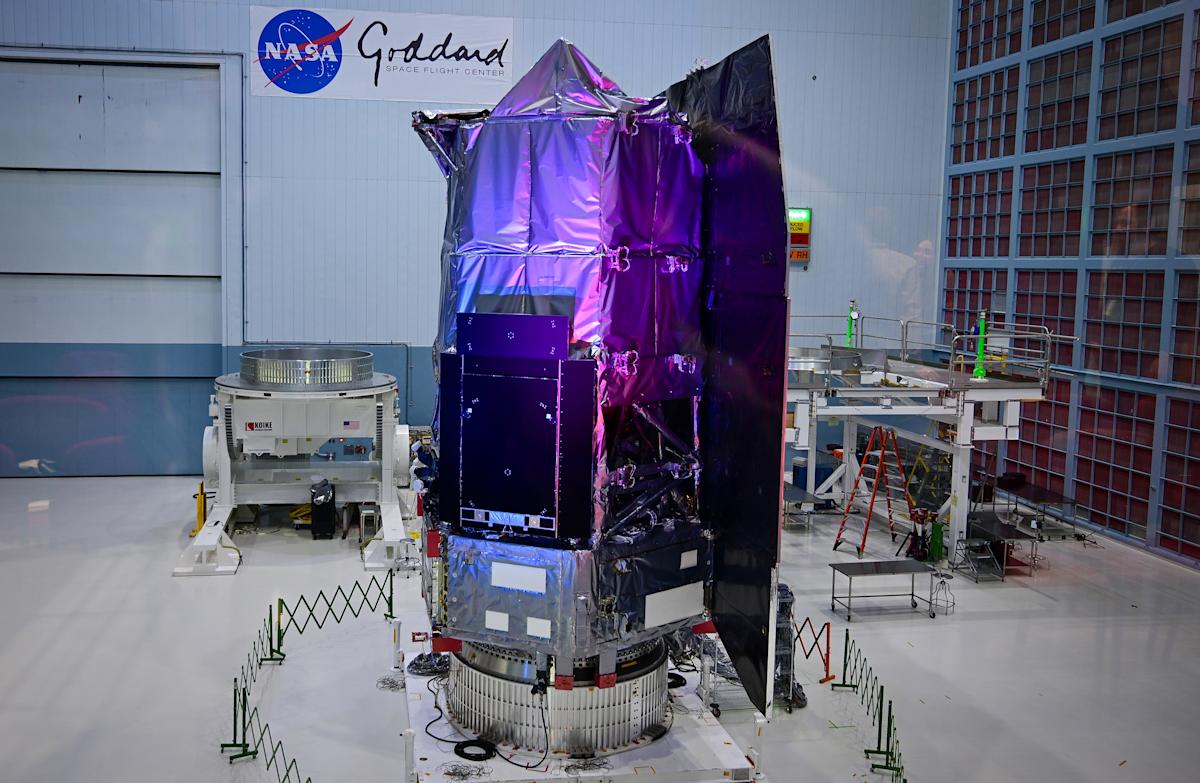
The Roman telescope, sitting inside a white NASA hangar

NASA

“Roman will work in tandem with NASA observatories such as the James Webb Space Telescope and Chandra X-ray Observatory, which are designed to zoom in on rare transient objects once they’ve been identified, but seldom if ever discover them,” Julie McEnery, Roman’s senior project scientist, said in 2023. “Roman’s much larger field of view will reveal many such objects that were previously unknown. And since we’ve never had an observatory like this scanning the cosmos before, we could even find entirely new classes of objects and events.”

After leaving our atmosphere, Roman will set course for a vantage point nearly 1 million miles from Earth. There, it will rely on a pair of instruments to study space. The first is a 300.8-megapixel camera that captures light from visible to near-infrared. There’s also a high-contrast coronagraph that will allow it to capture exoplanets that would otherwise be blocked by starlight.

Roman’s mission: “to settle essential questions in the areas of dark energy, exoplanets and astrophysics.” Despite decades of study, astronomers know surprisingly little about dark energy, which makes up about 68 percent of the universe’s contents. And while scientific discoveries are cool and all, you’ll be pleased to know that Roman is also sure to beam back more dazzling pictures of our cosmos.

NASA’s Artemis 2 Mission Blasts Off


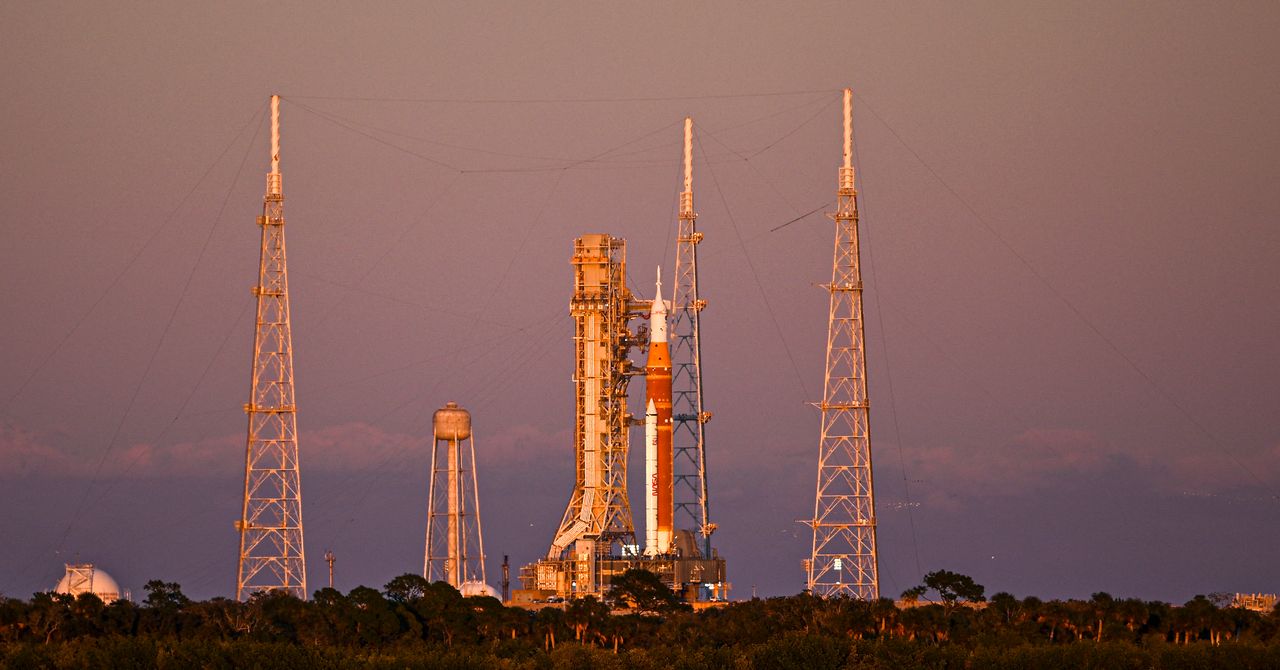
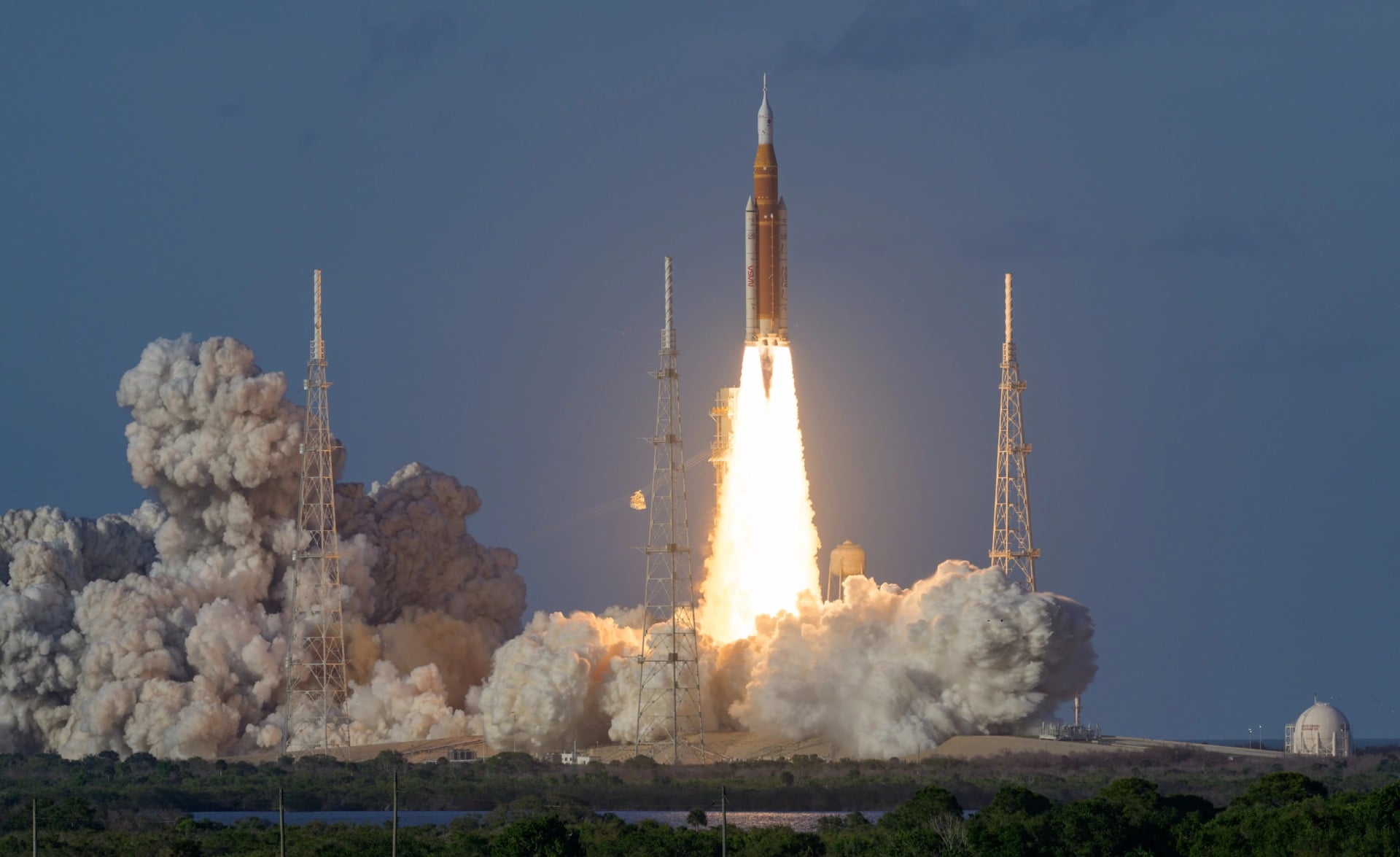
NASA’s Space Launch System (SLS) rocket and Orion spacecraft launched from Kennedy Space Center in Cape Canaveral, Florida, at 6:35 p.m. ET on Wednesday, carrying a crew of four astronauts to low-Earth orbit. In about 25 hours, Orion will set course toward the Moon.

At T-0, the SLS boosters ignited in an explosion of fire, generating a whopping 8.8 million pounds of thrust to propel the Orion spacecraft skyward. The SLS lifted off about 11 minutes into the 2-hour launch window, which opened at 6:24 p.m. Shortly after ignition, the rocket cleared the launch tower, surpassed supersonic speed, and jettisoned its solid rocket boosters.

Sls Blast Off
NASA’s Space Launch System (SLS) rocket and Orion spacecraft launched from Kennedy Space Center in Cape Canaveral, Florida, at 6:35 p.m. ET on April 1, 2026. © NASA

At 6:43 p.m., the rocket’s core stage separated, placing the Orion spacecraft and the upper stage (also known as the interim cryogenic propulsion stage) into LEO. About 16 minutes later, Orion’s solar array wings unfurled, completing a key configuration step. These arrays supply power to all of Orion’s systems, from propulsion to life support.

This is only the second flight for the SLS, the third for Orion, and the first crewed flight for both vehicles. It’s difficult to overstate how incredible it was to see them perform so spectacularly. Artemis 2 will serve as a critical stepping stone to a crewed lunar landing, currently slated for 2028. That ambitious goal has never felt more attainable.

Liftoff, at last

This achievement was a long time coming. It’s been 54 years since the last Apollo mission returned to Earth, and humans have not left low-Earth orbit since. Over the next nine days, the Artemis 2 astronauts will venture deeper into space than the Apollo missions ever did, swinging around the far side of the Moon and back to Earth.

The Artemis 2 launch also follows multiple delays. NASA had hoped to launch during the February window, but the SLS experienced hydrogen leaks during the wet dress rehearsal that derailed those plans. Then the March window went, well, out the window when NASA had to roll the SLS back to the Vehicle Assembly Building to repair a helium flow issue.

Today, tanking both the core and upper stages of the rocket went remarkably smoothly, with no major leaks or issues. Now that Orion is finally in space, humanity is poised to return to the Moon. If everything goes as planned over the next several hours, the ICPS will perform burns to boost the spacecraft’s orbit in preparation for its journey to the Moon.

Approximately 3 hours and 30 minutes after launch, Orion will separate from the ICPS, and the upper stage will begin a proximity operations demonstration to test its ability to maneuver and operate safely in close proximity to Orion. Once that’s complete, the ICPS will reenter Earth’s atmosphere and splash down in the Pacific Ocean. Orion will perform a burn to adjust its orbit, and that will conclude the first day of flight.

10 days of history in the making

Assuming the mission proceeds as planned, Orion will perform the critical translunar injection burn about 25 hours after launch. This will set the spacecraft on the path to the Moon.

Orion should enter the lunar sphere of influence on the fifth day of flight. At that point, the pull of the Moon’s gravity will be stronger than Earth’s, helping the spacecraft make a fuel-efficient lunar flyby. Orion will swing around the far side of the Moon, giving the Artemis 2 astronauts a full day to observe the surface. They will see parts of the far side never before seen with the naked eye.

NASA expects Orion to exit the lunar sphere of influence and enter a return trajectory on the seventh day of flight. The spacecraft will perform a couple more burns to adjust its trajectory on the ninth and tenth days of flight before the crew capsule separates from the service module. The crew capsule will reenter Earth’s atmosphere at speeds reaching 25,000 miles per hour (40,000 kilometers per hour) and splash down off the coast of San Diego, California.

Gizmodo will be following the mission every step of the way, bringing you the latest updates as humanity makes its epic return to lunar space. Watch this space for news on all things Artemis 2.

NASA Is Making Big Changes to Speed Up the Artemis Program


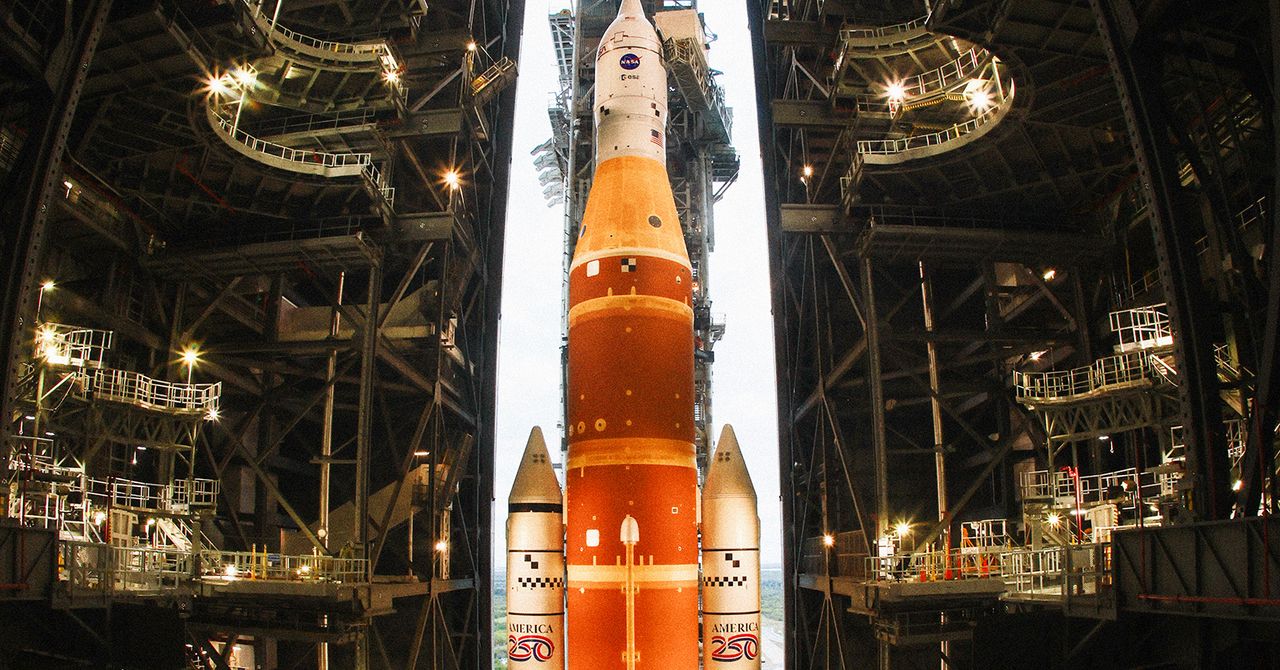
“This is just not the right pathway forward,” Isaacman said.

A senior NASA official, speaking on background to Ars, noted that the space agency has experienced hydrogen and helium leaks during both the Artemis I and Artemis II prelaunch preparations, and these problems have led to monthslong delays in launch.

“If I recall, the timing between Apollo 7 and 8 was nine weeks,” the official said. “Launching SLS every three and a half years or so is not a recipe for success. Certainly, making each one of them a work of art with some major configuration change is also not helpful in the process, and we’re clearly seeing the results of it, right?”

The goal therefore is to standardize the SLS rocket into a single configuration in order to make the rocket as reliable as possible, and launching as frequently as every 10 months. NASA will fly the SLS vehicle until there are commercial alternatives to launch crews to the moon, perhaps through Artemis V as Congress has mandated, or perhaps even a little longer.

Is Everyone on Board?

The NASA official said all of the agency’s key contractors are on board with the change, and senior leaders in Congress have been briefed on the proposed changes.

The biggest opposition to these proposals would seemingly come from Boeing, which is the prime contractor for the Exploration Upper Stage, a contract worth billions of dollars to develop a more powerful rocket that was due to launch for the first time later this decade. However, in a NASA news release, Boeing appeared to offer at least some support for the revised plans.

“Boeing is a proud partner to the Artemis mission and our team is honored to contribute to NASA’s vision for American space leadership,” said Steve Parker, Boeing Defense, Space & Security president and CEO, in the news release. “The SLS core stage remains the world’s most powerful rocket stage, and the only one that can carry American astronauts directly to the moon and beyond in a single launch. As NASA lays out an accelerated launch schedule, our workforce and supply chain are prepared to meet the increased production needs.”

Solid Reasons for Changing Artemis III

NASA’s new approach to Artemis reflects a return to the philosophy of the Apollo program. During the late 1960s, the space agency flew a series of preparatory crewed missions before the Apollo 11 lunar landing. These included Apollo 7 (a low-Earth-orbit test of the Apollo spacecraft), Apollo 8 (a lunar orbiting mission), Apollo 9 (a low-Earth-orbit rendezvous with the lunar lander), and Apollo 10 (a test of the lunar lander descending to the moon, without touching down).

With its previous Artemis template, NASA skipped the steps taken by Apollo 7, 9, and 10. In the view of many industry officials, this leap from Artemis II—a crewed lunar flyby of the moon testing only the SLS rocket and Orion spacecraft—to Artemis III and a full-on lunar landing was enormous and risky.

Image may contain Adult Person Astronaut Face Head Clothing Coat and Jacket

The Artemis II crew rehearse a walkout from the Neil A. Armstrong Operations and Checkout Building at NASA’s Kennedy Space Center.Photograph: Joe Raedle/Getty Images

NASA Delays Launch of Artemis II Lunar Mission Once Again


NASA has once again postponed the launch of Artemis II, the crewed lunar flyby mission, setting a new launch window for April. Although March 6 had been tentatively planned as the launch date, the US space agency revealed that a problem with the rocket has caused further delay.

According to NASA administrator Jared Isaacman, the failure was due to an interruption in the helium flow in the interim cryogenic propulsion stage of the Space Launch System (SLS). The helium flow is essential for purging the engines and pressurizing the fuel tanks. This system had functioned correctly in the two dress rehearsals conducted this month, but the failure occurred during a routine operation.

Due to the nature of the problem, NASA engineers will have to fix it from the Vehicle Assembly Building (VAB), so there’s no way to proceed with the March launch window. The rocket is on its way back to the hangar.

“I understand people are disappointed by this development,” the official stated on his X account. “That disappointment is felt most by the team at NASA, who have been working tirelessly to prepare for this great endeavor. During the 1960s, when NASA achieved what most thought was impossible, and what has never been repeated since, there were many setbacks.”

Will Artemis II be able to embark on its mission in April? NASA reported that rapid preparations have allowed it to potentially preserve the April launch window in the event of a reversal. It all depends on what the data, the repair efforts, and how the schedule comes together in the coming days.

Artemis II: The Setbacks

The mission had its first launch window between February 6 and 11. However, during the wet dress rehearsal (WDR), which is a full rehearsal with fuel, the team detected small hydrogen leaks during refueling and some minor technical glitches. After analyzing the situation, NASA concluded that the risk was considerable and could endanger the lives of the astronauts, so it decided to postpone the launch.

A second dress rehearsal, conducted on February 19, was successful. In a statement, the space agency explained that it loaded 700,000 gallons of liquid propellant with no leaks. “During the test, teams closely monitored liquid hydrogen fueling operations, which proved challenging during previous tests. Hydrogen gas concentrations remained under allowable limits, giving engineers confidence in new seals installed in an interface used to route fuel to the rocket,” NASA said.

At a subsequent press conference, mission representatives confirmed to the media that the new tentative liftoff date would be March 6. However, on February 20, the team failed to get helium to flow through the vehicle, a failure that also occurred during testing of the Artemis I mission. Isaacman noted that the cause could be due to a faulty filter, valve or connector plate.

“There are many differences between the 1960s and today, and expectations should rightfully be high after the time and expense invested in this program,” Isaacman said in his post. “I will say again, the President created Artemis as a program that will far surpass what America achieved during Apollo. We will return in the years ahead, we will build a Moon base, and undertake what should be continuous missions to and from the lunar environment.”

When it eventually launches, the Orion capsule will travel farther than any other manned spacecraft during its 10-day mission, surpassing on the sixth day the record of 400,171 kilometers set by Apollo 13. The return will conclude with Orion’s landing in the Pacific Ocean off the coast of San Diego, California.

Although there will be no lunar landing—that feat will fall to the Artemis III mission—the second launch is of crucial importance. Its success will demonstrate that NASA has the technical capabilities to return to the moon and begin a new phase of space exploration.

This story originally appeared in WIRED en Español and has been translated from Spanish.

NASA used Claude to plot a route for its Perseverance rover on Mars


Since 2021, NASA’s Perseverance rover has achieved a number of historic milestones, including sending back the first audio recordings from Mars. Now, nearly five years after landing on the Red Planet, it just achieved another feat. This past December, Perseverance successfully completed a route through a section of the Jezero crater plotted by Anthropic’s Claude chatbot, marking the first time NASA has used a large language model to pilot the car-sized robot.

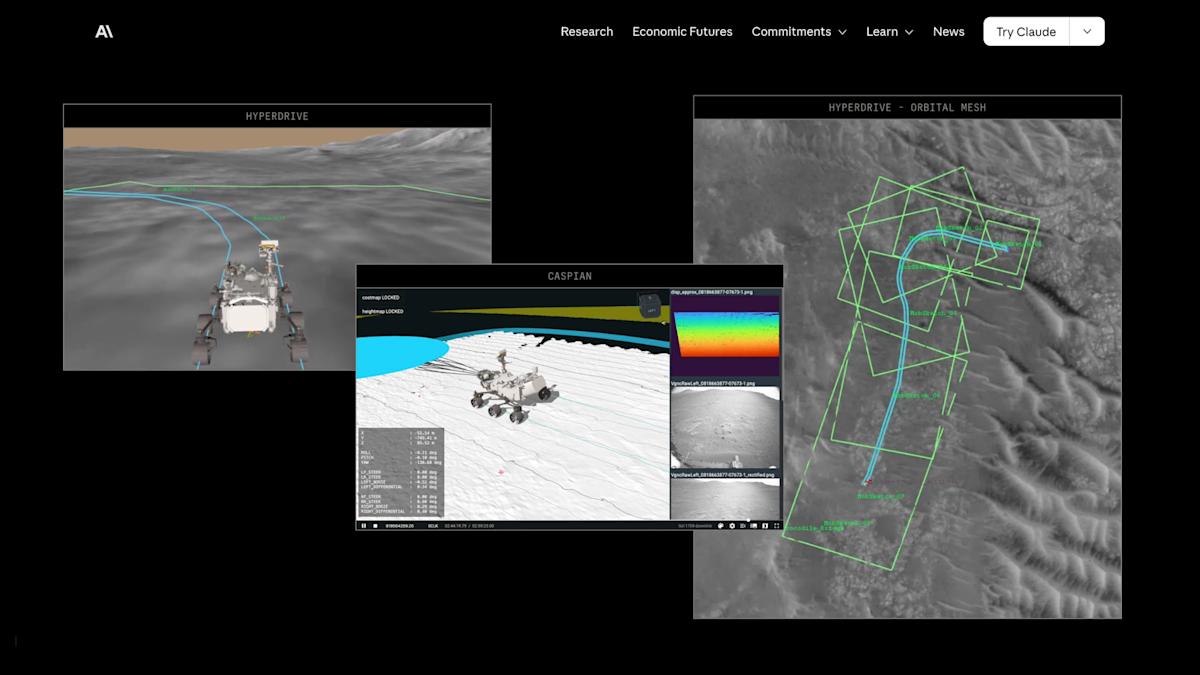
Between December 8 and 10, Perseverance drove approximately 400 meters (about 437 yards) through a field of rocks on the Martian surface mapped out by Claude. As you might imagine, using an AI model to plot a course for Perseverance wasn’t as simple as inputting a single prompt.

As NASA explains, routing Perseverance is no easy task, even for a human. “Every rover drive needs to be carefully planned, lest the machine slide, tip, spin its wheels, or get beached,” NASA said. “So ever since the rover landed, its human operators have painstakingly laid out waypoints — they call it a ‘breadcrumb trail’ — for it to follow, using a combination of images taken from space and the rover’s onboard cameras.”

To get Claude to complete the task, NASA had to first provide Claude Code, Anthropic’s programming agent, with the “years” of contextual data from the rover before the model could begin writing a route for Perseverance. Claude then went about the mapping process methodically, stringing together waypoints from ten-meter segments it would later critique and iterate on.

This being NASA we’re talking about, engineers from the agency’s Jet Propulsion Laboratory (JPL) made sure to double check the model’s work before sending it to Perseverance. The JPL team ran Claude’s waypoints through a simulation they use every day to confirm the accuracy of commands sent to the rover. In the end, NASA says it only had to make “minor changes” to Claude’s route, with one tweak coming as a result of the fact the team had access to ground-level images Claude hadn’t seen in its planning process.

“The engineers estimate that using Claude in this way will cut the route-planning time in half, and make the journeys more consistent,” NASA said. “Less time spent doing tedious manual planning — and less time spent training — allows the rover’s operators to fit in even more drives, collect even more scientific data, and do even more analysis. It means, in short, that we’ll learn much more about Mars.”

While the productivity gains offered by AI are often overstated, in the case of NASA, any tool that could allow its scientists to be more efficient is sure to be welcome. Over the summer, the agency lost about 4,000 employees – accounting for about 20 percent of its workforce – due to Trump administration cuts. Going into 2026, the president had proposed gutting the agency’s science budget by nearly half before Congress ultimately rejected that plan in early January. Still, even with its funding preserved just below 2025 levels, the agency has a tough road ahead. It’s being asked to return to the Moon with less than half the workforce it had during the height of the Apollo program.

For Anthropic, meanwhile, this is a major feat. You may recall last spring Claude couldn’t even beat Pokémon Red. In less than a year, the company’s models have gone from struggling to navigate a simple 8-bit Game Boy game to successfully plotting a course for a rover on a distant planet. NASA is excited about the possibility of future collaborations, saying “autonomous AI systems could help probes explore ever more distant parts of the solar system.”

Join NASA’s Mars rover on its record-breaking driver across the martian surface


NASA’s Perseverance rover has been exploring the surface of Mars since it landed there in spectacular fashion nearly five years ago.

In that time, NASA’s most advanced rover to date, which is about the size of a small car, has traveled almost 25 miles (40 kilometers) while all the time conducting science research and collecting soil samples for return to Earth.

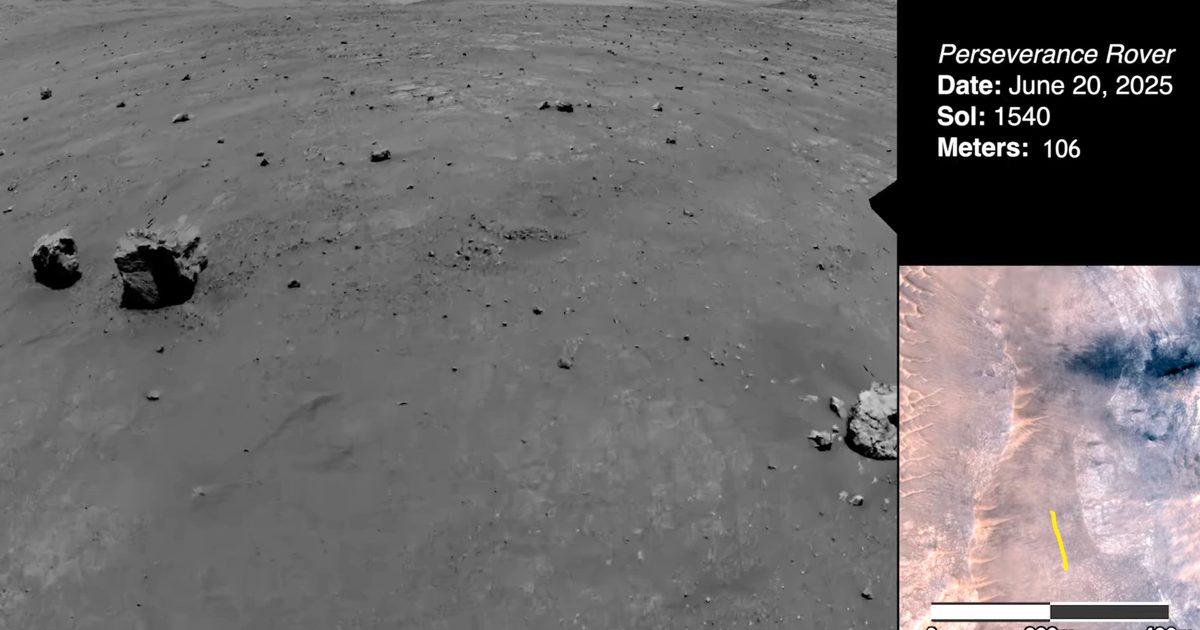
In a new video (top) released on Wednesday, NASA’s Jet Propulsion Laboratory (JPL), which overseas the space agency’s Mars missions, has shared footage captured by Perseverance’s two navigation cameras (navcams) as it completed a drive of 1,350.7 feet (411.7 meters) in 4 hours and 24 minutes on June 19, 2025 — a new record for distance covered in a single sol (a Mars sol is a martian solar day and lasts about 24 hours and 39 minutes).

The video was created by stitching together 300 image pairs from the rover’s navcams, with one pair of captures occurring every 16 feet (5 meters) for the first third of the journey, and then one every 3.3 feet (1 meter) for the rest of it. Virtual frames were inserted about every 4 inches (0.1 meters).

As the rover has a top speed of just under 0.1 mph, the final piece has been sped up to create something that has the feel of a drone flying just above the ground.

The rover tracks that appear in the video are from Perseverance’s two previous southbound drives that took place in May 2025.

The 1,350.7-feet (411.7-meter) drive beats the previous single-sol drive record of 718.5 feet (219 meters) set by NASA’s Opportunity rover way back in 2005.

The footage is a testament to the rover’s ongoing ability to deal with the harsh martian conditions that include rough terrain and freezing temperatures.

Interestingly, JPL has continued testing the rover’s various parts on Earth to confirm their longevity and to learn more about how long they’re likely to last, with the team confident that Perseverance will be able to keep on rolling until at least 2031, barring any major mishaps, of course.

“These tests show the rover is in excellent shape,” JPL’s Steve Lee, Perseverance’s deputy project manager, said on NASA’s website. “All the systems are fully capable of supporting a very long-term mission to extensively explore this fascinating region of Mars.”

NASA Aircraft Set to Perform Wild Low-Altitude Stunts Around These U.S. Cities


NASA is getting ready to fly two planes over mid-Atlantic states and parts of California, where they will be carrying out special maneuvers at a close distance while collecting valuable data about our changing planet.

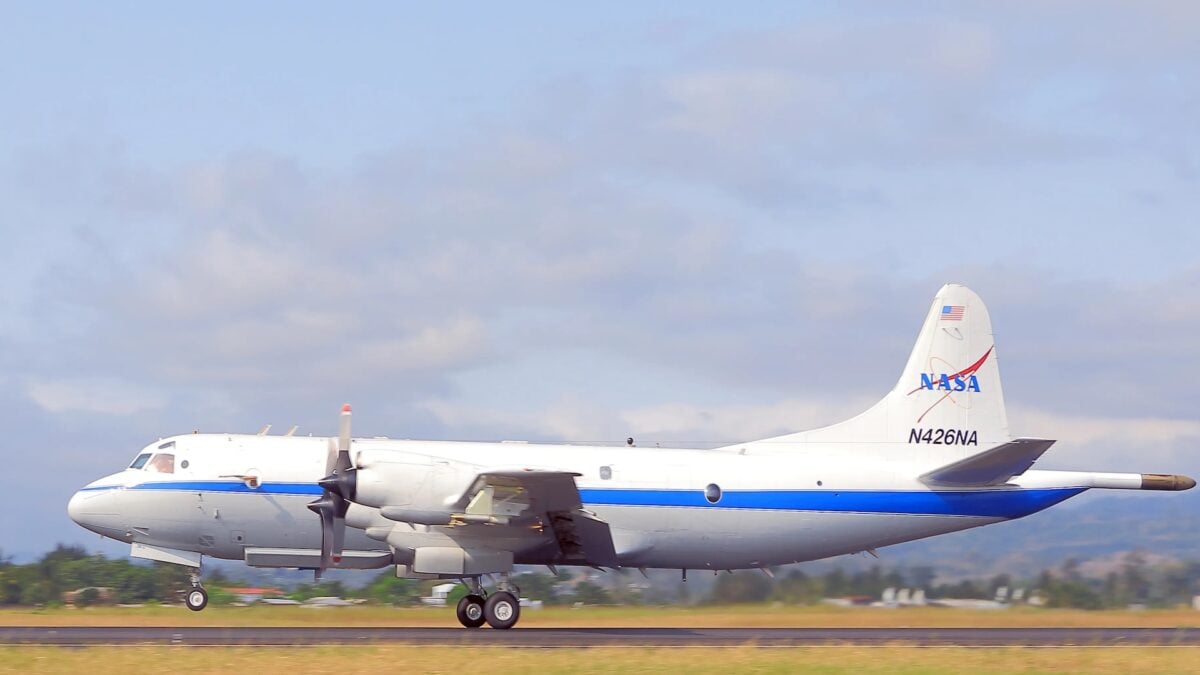
The two research aircraft, named P-3 Orion (N426NA) and a King Air B200 (N46L), are set to fly over Baltimore, Philadelphia, the Virginia cities of Hampton, Hopewell, and Richmond, in addition to the Los Angeles Basin, Salton Sea, and Central Valley, according to NASA. The flights will take place along the eastern coast between Sunday, June 22 and Thursday, June 26, and in California between Sunday, June 29 to Wednesday, July 2.

It’ll be a good opportunity to catch the two planes as they will fly at lower altitudes than most commercial flights, while pulling off specialized maneuvers like vertical spirals between 1,000 and 10,000 feet (304 to 3,048 meters), circling above power plants, landfills, and urban areas. The planes will also make missed approaches at local airports and low-altitude flybys along runways to collect air samples near the surface.

The P-3, operated out of NASA’s Wallops Flight Facility in Virginia, is a four-engine turboprop aircraft, carrying six science instruments. The King Air B200 is a twin-engine aircraft owned by Dynamic Aviation and contracted by NASA. The aircraft will carry out 40 hours of data collection for NASA’s Student Airborne Research Program (SARP) on each U.S. coast.

SARP is an eight-week summer internship program at NASA that provides undergraduate students with hands-on experience in various scientific areas. The low-altitude flights will be used to gather atmospheric data through the on board science instruments, which will be operated by the students.

“Despite SARP being a learning experience for both the students and mentors alike, our P-3 is being flown and performing maneuvers in some of most complex and restricted airspace in the country,” Brian Bernth, chief of flight operations at NASA Wallops, said in a statement. “Tight coordination and crew resource management is needed to ensure that these flights are executed with precision but also safely.”

NASA uses low altitude flights for Earth science, gathering high-resolution data that satellites can’t capture at the same level of detail. These flights have typically supported research on climate change, natural disasters, and atmospheric science. The upcoming flights will take place near populated areas, so there will be plenty of chances to see the aircraft flying overhead.


Rogue Pulsar Snaps Galactic Bone in Milky Way’s Spine


A galactic filament that stretches across 230 light-years in the Milky Way has suffered from a strange kink that has distorted its magnetic field, appearing as a fracture in a massive bone. New X-ray images captured by the Chandra Observatory may have finally helped astronomers diagnose its ailment, naming a fast-spinning neutron star as the culprit.

The center of the galaxy is marked by enormous, bone-like structures threaded with parallel magnetic fields and swirling, high-energy particles. Located roughly 26,000 light-years from Earth, G359.13—also known as The Snake—is the longest and brightest of these structures. Despite its size, the bone-like structure appears to have been struck by a fast-moving, rapidly spinning neutron star, or pulsar, causing a break in the otherwise continuous length of G359.13, according to a new paper published in the May 2024 issue of the Monthly Notices of the Royal Astronomical Society.

Bone
X-ray: NASA/CXC/Northwestern Univ./F. Yusef-Zadeh et al; Radio: NRF/SARAO/MeerKat; Image Processing: NASA/CXC/SAO/N. Wolk

Using images of the galactic bone captured by NASA’s Chandra X-ray Observatory and radio data from the MeerKAT radio array in South Africa, the team behind the paper was able to examine the fracture up close to identify the culprit. The particles that make up the Snake, and other galactic filaments, emit radio waves, which can be detected by arrays such as MeerKAT.

The images fittingly resemble medical X-rays of a long, thin bone with a fracture in the center. By examining the images, the astronomers discovered an X-ray and radio source at the location of the fracture, which may come from electrons and positrons (the antimatter counterparts to electrons) that have been accelerated to high energies due to a pulsar smashing into them. The pulsar can be seen in the image thanks to its X-ray emissions, which caused it to get caught red-handed in its hit and run.

Pulsars are the chaotic remains of stars, forming in the aftermath of the collapse and supernova explosion of a massive star. These explosions often send the pulsar flying at high speeds while rapidly rotating and beaming electromagnetic radiation. There’s a lot going on here, and the pulsar isn’t exactly watching where it’s going.

The researchers believe a speedy pulsar may have caused the fracture by smashing into G359.13 at speeds between one million and two million miles per hour. The likely collision distorted the magnetic field in the bone, which caused the radio signal to also become warped.

The Milky Way is full of violent encounters like this, and the busted filament is just the latest sign of the galaxy’s ongoing chaos. With tools like Chandra and MeerKAT, astronomers are continuing to catch these cosmic troublemakers in the act.

NASA and ESA share a breathtaking Hubble image of the Tarantula Nebula’s outer edge


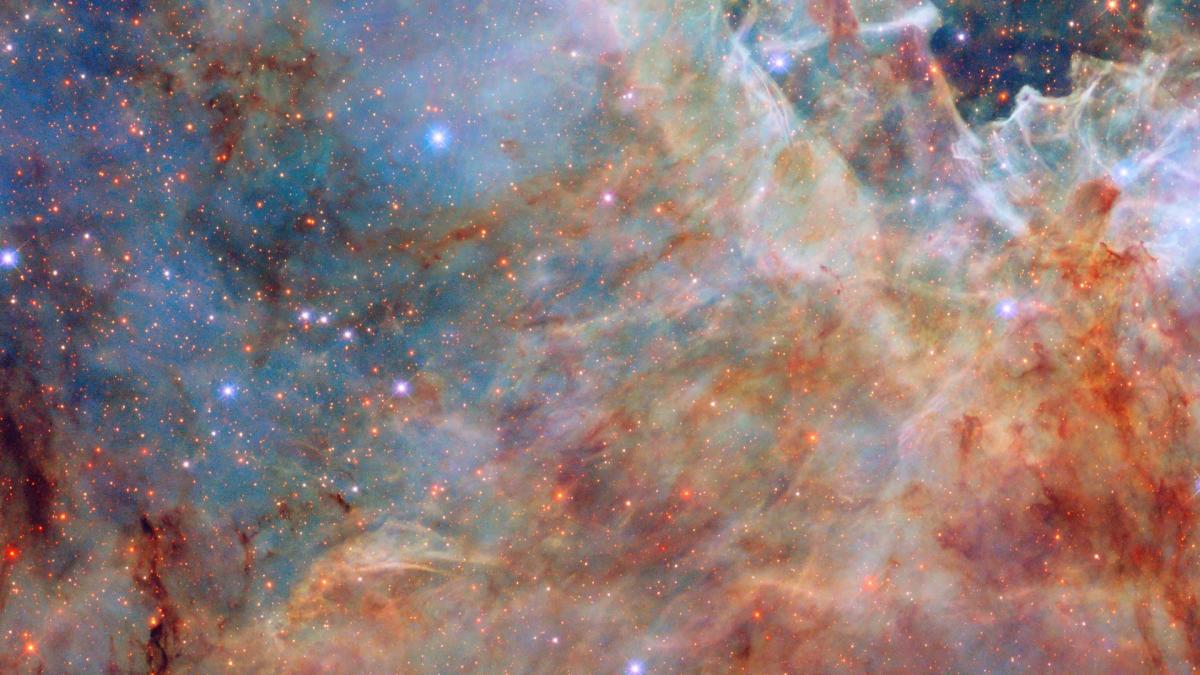
The Hubble Space Telescope is still trucking along more than 30 years after its launch, observing the universe and sending home images for us to marvel at. This week, NASA and ESA highlighted an image captured by Hubble of the highly productive Tarantula Nebula (officially named 30 Doradus) in the Large Magellanic Cloud, and it’s a sight to behold.

To view this content, you’ll need to update your privacy settings. Please click here and view the “Content and social-media partners” setting to do so.

The Tarantula Nebula is “the largest and most productive star-forming region in the local universe,” with stars roughly 200 times as massive as the sun at its center, according to NASA. This Hubble view gives us a look at the outskirts of the nebula, revealing layers of colorful gas and stars. The Tarantula Nebula sits within the Large Magellanic Cloud, a nearby dwarf galaxy.

While the final result we see is filled with brilliant colors, Hubble’s images initially come back in grayscale. As has explained, “scientists can create a composite color image by taking exposures using different color filters on the telescope, assigning a color to each filter that corresponds to the wavelength of that filter, and combining the images.” The new image of the Tarantula Nebula doesn’t just represent visible light, but ultraviolet and infrared too. In such a case, colors are assigned to those wavelengths we can’t normally see.


Elon Musk Calls Out NASA’s Moon Ambitions: ‘We’re Going Straight to Mars’


Although SpaceX founder Elon Musk is known for outspokenness and controversial comments on his social media site X, he has been relatively restrained when it comes to US space policy in recent years.

For example, he has rarely criticized NASA or its overall goal to return humans to the moon through the Artemis program. Rather, Musk, who has long preferred Mars as a destination for humans, has more or less been a team player when it comes to the space agency’s lunar-focused plans.

This is understandable from a financial perspective, as SpaceX has contracts worth billions of dollars to not only build a Human Landing System as part of the Artemis program but also to supply food, cargo, and other logistics services to a planned Lunar Gateway in orbit around the moon.

But privately, Musk has been critical of NASA’s plans, suggesting that the Artemis Program has been moving too slowly and is too reliant on contractors who seek cost-plus government contracts and are less interested in delivering results.

Silent on Policy No Longer

During the past 10 days, Musk has begun airing some of these private thoughts publicly. On Christmas Day, for example, Musk wrote on X, “The Artemis architecture is extremely inefficient, as it is a jobs-maximizing program, not a results-maximizing program. Something entirely new is needed.”

Then, on Thursday evening, he added this: “No, we’re going straight to Mars. The moon is a distraction.”

These are definitive statements that directly contradict NASA’s plans to send a series of human missions to the lunar south pole later this decade and establish a sustainable base of operations there with the Artemis program.

It would be one thing if Musk was just expressing his opinion as a private citizen. But since playing a significant part in the election of Donald Trump as the next president of the United States last year, Musk has assumed an important advisory role for the incoming administration. He was also partly responsible for the expected nomination of private astronaut Jared Isaacman to become the next administrator of NASA. Although Musk is not directing US space policy, he certainly has a meaningful say in what happens.

So What Does This Mean for Artemis?

The fate of Artemis is an important question not just for NASA but for the US commercial space industry, the European Space Agency, and other international partners who have aligned with the return of humans to the moon. With Artemis, the United States is in competition with China to establish a meaningful presence on the surface of the moon.

Based upon conversations with people involved in developing space policy for the Trump administration, I can make some educated guesses about how to interpret Musk’s comments. None of these people, for example, would disagree with Musk’s assertion that “the Artemis architecture is extremely inefficient” and that some changes are warranted.

With that said, the Artemis program is probably not going away. After all, it was the first Trump administration that created the program about five years ago. However, it may be less well-remembered that the first Trump White House pushed for more significant changes, including a “major course correction” at NASA.

“I call on NASA to adopt new policies and embrace a new mindset,” then-vice president Mike Pence said in May 2019. “If our current contractors can’t meet this objective, then we’ll find ones that will.” (Speaking of the vice president, it’s unlikely that the National Space Council will be reconstituted under JD Vance).