Artemis II arrives in lunar space ahead of its trip around the Moon


Artemis II and its four-person crew have entered the Moon’s “sphere of influence,” meaning the spacecraft is more affected by lunar gravity than the Earth’s pull. The transition occurred at a distance of 39,000 miles from the Moon, four days, six hours and two minutes into the mission. The next and most important phase will happen tomorrow when the craft loops around the Moon’s far side, taking humans deeper into space than they’ve ever been before.

At their apogee, Astronauts Reid Wiseman, Christina Koch, Victor Glover and Canada’s Jeremy Hansen will be 252,757 miles from Earth. That will break the previous record held by the Apollo 13 crew by just over 4,000 miles. They’re the first humans to cross the lunar threshold since 1972’s Apollo 17 moon landing mission.

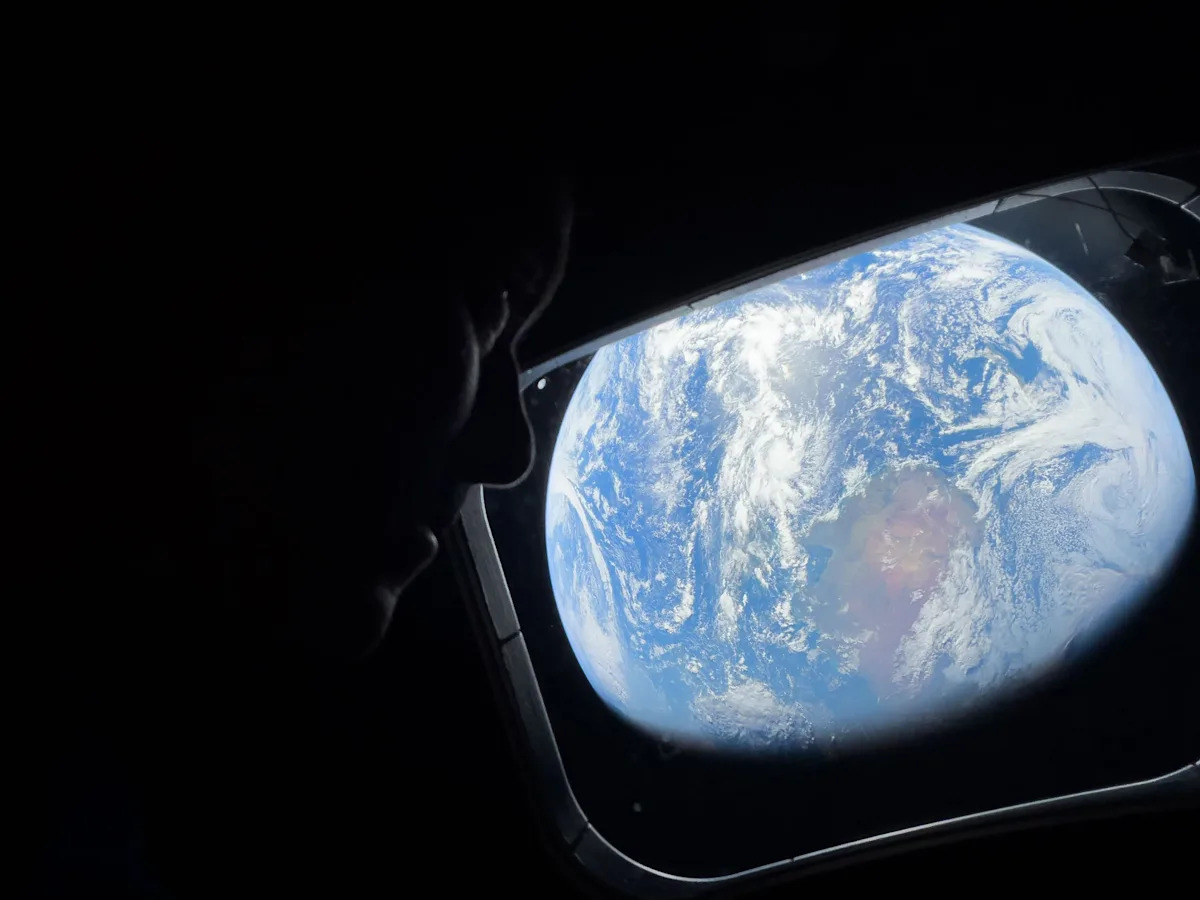
The crew spent this weekend carrying out preparations for their lunar flyby. That included manual piloting demonstrations, reviewing their science objectives for the six-hour observation period and evaluating their space suits, which are there for life support in the event of an emergency and for their return home. But, they’ve had plenty of time to take in the views, too — and those views sure are spectacular. In the latest series of images shared by the space agency, the astronauts are seen gazing at Earth through the windows of the Orion spacecraft.

Orion will reach the moon’s vicinity shortly after midnight on Monday, April 6. Later that day, the crew is expected to reach a point farther than any humans have traveled from Earth, surpassing the record of 248,655 miles from Earth set by the Apollo 13 astronauts in 1970.

NASA astronaut and Artemis II mission specialist Christina Koch peers out of one of the Orion spacecraft's main cabin windows, looking back at Earth, as the crew travels towards the Moon.

Mission specialist Christina Koch takes in the view. (NASA)

The lunar observation period will start at 2:45PM ET, and a few hours later, they’ll be behind the moon and briefly drop out of communication. The spacecraft’s closest approach to the moon is expected to occur at 7:02PM, when it will be 4,066 miles from the surface. “From that distance, the crew will see the entire disk of the Moon at once, including regions near the north and south poles,” according to NASA. The crew will later get a chance to see a solar eclipse “as Orion, the Moon, and the Sun align in such a way that the astronauts will see our star disappear behind the Moon for about an hour.” NASA will have coverage of the flyby starting at 1PM ET.

Update April 7 at 1:40 AM ET: The post has been updated with news that Artemis II has entered the Moon’s sphere of influence.
NASA Is Making Big Changes to Speed Up the Artemis Program


“This is just not the right pathway forward,” Isaacman said.

A senior NASA official, speaking on background to Ars, noted that the space agency has experienced hydrogen and helium leaks during both the Artemis I and Artemis II prelaunch preparations, and these problems have led to monthslong delays in launch.

“If I recall, the timing between Apollo 7 and 8 was nine weeks,” the official said. “Launching SLS every three and a half years or so is not a recipe for success. Certainly, making each one of them a work of art with some major configuration change is also not helpful in the process, and we’re clearly seeing the results of it, right?”

The goal therefore is to standardize the SLS rocket into a single configuration in order to make the rocket as reliable as possible, and launching as frequently as every 10 months. NASA will fly the SLS vehicle until there are commercial alternatives to launch crews to the moon, perhaps through Artemis V as Congress has mandated, or perhaps even a little longer.

Is Everyone on Board?

The NASA official said all of the agency’s key contractors are on board with the change, and senior leaders in Congress have been briefed on the proposed changes.

The biggest opposition to these proposals would seemingly come from Boeing, which is the prime contractor for the Exploration Upper Stage, a contract worth billions of dollars to develop a more powerful rocket that was due to launch for the first time later this decade. However, in a NASA news release, Boeing appeared to offer at least some support for the revised plans.

“Boeing is a proud partner to the Artemis mission and our team is honored to contribute to NASA’s vision for American space leadership,” said Steve Parker, Boeing Defense, Space & Security president and CEO, in the news release. “The SLS core stage remains the world’s most powerful rocket stage, and the only one that can carry American astronauts directly to the moon and beyond in a single launch. As NASA lays out an accelerated launch schedule, our workforce and supply chain are prepared to meet the increased production needs.”

Solid Reasons for Changing Artemis III

NASA’s new approach to Artemis reflects a return to the philosophy of the Apollo program. During the late 1960s, the space agency flew a series of preparatory crewed missions before the Apollo 11 lunar landing. These included Apollo 7 (a low-Earth-orbit test of the Apollo spacecraft), Apollo 8 (a lunar orbiting mission), Apollo 9 (a low-Earth-orbit rendezvous with the lunar lander), and Apollo 10 (a test of the lunar lander descending to the moon, without touching down).

With its previous Artemis template, NASA skipped the steps taken by Apollo 7, 9, and 10. In the view of many industry officials, this leap from Artemis II—a crewed lunar flyby of the moon testing only the SLS rocket and Orion spacecraft—to Artemis III and a full-on lunar landing was enormous and risky.

Image may contain Adult Person Astronaut Face Head Clothing Coat and Jacket

The Artemis II crew rehearse a walkout from the Neil A. Armstrong Operations and Checkout Building at NASA’s Kennedy Space Center.Photograph: Joe Raedle/Getty Images

NASA Delays Launch of Artemis II Lunar Mission Once Again


NASA has once again postponed the launch of Artemis II, the crewed lunar flyby mission, setting a new launch window for April. Although March 6 had been tentatively planned as the launch date, the US space agency revealed that a problem with the rocket has caused further delay.

According to NASA administrator Jared Isaacman, the failure was due to an interruption in the helium flow in the interim cryogenic propulsion stage of the Space Launch System (SLS). The helium flow is essential for purging the engines and pressurizing the fuel tanks. This system had functioned correctly in the two dress rehearsals conducted this month, but the failure occurred during a routine operation.

Due to the nature of the problem, NASA engineers will have to fix it from the Vehicle Assembly Building (VAB), so there’s no way to proceed with the March launch window. The rocket is on its way back to the hangar.

“I understand people are disappointed by this development,” the official stated on his X account. “That disappointment is felt most by the team at NASA, who have been working tirelessly to prepare for this great endeavor. During the 1960s, when NASA achieved what most thought was impossible, and what has never been repeated since, there were many setbacks.”

Will Artemis II be able to embark on its mission in April? NASA reported that rapid preparations have allowed it to potentially preserve the April launch window in the event of a reversal. It all depends on what the data, the repair efforts, and how the schedule comes together in the coming days.

Artemis II: The Setbacks

The mission had its first launch window between February 6 and 11. However, during the wet dress rehearsal (WDR), which is a full rehearsal with fuel, the team detected small hydrogen leaks during refueling and some minor technical glitches. After analyzing the situation, NASA concluded that the risk was considerable and could endanger the lives of the astronauts, so it decided to postpone the launch.

A second dress rehearsal, conducted on February 19, was successful. In a statement, the space agency explained that it loaded 700,000 gallons of liquid propellant with no leaks. “During the test, teams closely monitored liquid hydrogen fueling operations, which proved challenging during previous tests. Hydrogen gas concentrations remained under allowable limits, giving engineers confidence in new seals installed in an interface used to route fuel to the rocket,” NASA said.

At a subsequent press conference, mission representatives confirmed to the media that the new tentative liftoff date would be March 6. However, on February 20, the team failed to get helium to flow through the vehicle, a failure that also occurred during testing of the Artemis I mission. Isaacman noted that the cause could be due to a faulty filter, valve or connector plate.

“There are many differences between the 1960s and today, and expectations should rightfully be high after the time and expense invested in this program,” Isaacman said in his post. “I will say again, the President created Artemis as a program that will far surpass what America achieved during Apollo. We will return in the years ahead, we will build a Moon base, and undertake what should be continuous missions to and from the lunar environment.”

When it eventually launches, the Orion capsule will travel farther than any other manned spacecraft during its 10-day mission, surpassing on the sixth day the record of 400,171 kilometers set by Apollo 13. The return will conclude with Orion’s landing in the Pacific Ocean off the coast of San Diego, California.

Although there will be no lunar landing—that feat will fall to the Artemis III mission—the second launch is of crucial importance. Its success will demonstrate that NASA has the technical capabilities to return to the moon and begin a new phase of space exploration.

This story originally appeared in WIRED en Español and has been translated from Spanish.

Elon Musk Calls Out NASA’s Moon Ambitions: ‘We’re Going Straight to Mars’


Although SpaceX founder Elon Musk is known for outspokenness and controversial comments on his social media site X, he has been relatively restrained when it comes to US space policy in recent years.

For example, he has rarely criticized NASA or its overall goal to return humans to the moon through the Artemis program. Rather, Musk, who has long preferred Mars as a destination for humans, has more or less been a team player when it comes to the space agency’s lunar-focused plans.

This is understandable from a financial perspective, as SpaceX has contracts worth billions of dollars to not only build a Human Landing System as part of the Artemis program but also to supply food, cargo, and other logistics services to a planned Lunar Gateway in orbit around the moon.

But privately, Musk has been critical of NASA’s plans, suggesting that the Artemis Program has been moving too slowly and is too reliant on contractors who seek cost-plus government contracts and are less interested in delivering results.

Silent on Policy No Longer

During the past 10 days, Musk has begun airing some of these private thoughts publicly. On Christmas Day, for example, Musk wrote on X, “The Artemis architecture is extremely inefficient, as it is a jobs-maximizing program, not a results-maximizing program. Something entirely new is needed.”

Then, on Thursday evening, he added this: “No, we’re going straight to Mars. The moon is a distraction.”

These are definitive statements that directly contradict NASA’s plans to send a series of human missions to the lunar south pole later this decade and establish a sustainable base of operations there with the Artemis program.

It would be one thing if Musk was just expressing his opinion as a private citizen. But since playing a significant part in the election of Donald Trump as the next president of the United States last year, Musk has assumed an important advisory role for the incoming administration. He was also partly responsible for the expected nomination of private astronaut Jared Isaacman to become the next administrator of NASA. Although Musk is not directing US space policy, he certainly has a meaningful say in what happens.

So What Does This Mean for Artemis?

The fate of Artemis is an important question not just for NASA but for the US commercial space industry, the European Space Agency, and other international partners who have aligned with the return of humans to the moon. With Artemis, the United States is in competition with China to establish a meaningful presence on the surface of the moon.

Based upon conversations with people involved in developing space policy for the Trump administration, I can make some educated guesses about how to interpret Musk’s comments. None of these people, for example, would disagree with Musk’s assertion that “the Artemis architecture is extremely inefficient” and that some changes are warranted.

With that said, the Artemis program is probably not going away. After all, it was the first Trump administration that created the program about five years ago. However, it may be less well-remembered that the first Trump White House pushed for more significant changes, including a “major course correction” at NASA.

“I call on NASA to adopt new policies and embrace a new mindset,” then-vice president Mike Pence said in May 2019. “If our current contractors can’t meet this objective, then we’ll find ones that will.” (Speaking of the vice president, it’s unlikely that the National Space Council will be reconstituted under JD Vance).