The first step to fighting a war in space is knowing what’s happening tens of thousands of miles above the planet. Toward that end, defense tech darling Anduril is buying boutique data firm ExoAnalytic Solutions.
ExoAnalytic operates a network of 400 telescopes around the world, which it uses to track spacecraft in high orbits above the planet. The company’s engineers develop software that converts those observations into situational awareness tools for U.S. national security agencies watching adversary spacecraft and coordinating American assets on orbit.
“This is a company we’ve been working with closely for the last several years on a number of programs, and they are experts in space domain awareness and missile defense,” Anduril VP of engineering Gokul Subramanian told reporters. “We believe the [Department of Defense] deserves the best catalog of everything going on in space.”
The privately-held companies did not disclose the terms of the deal. Anduril is in the process of raising a $4 billion round from investors Thrive Capital and Andreessen Horowitz, Reuters reported last week.
ExoAnalytics will be directly integrated into Anduril, not run as a separate subsidiary, though Subramanian said it would continue to serve existing and future outside customers. Currently, Anduril has 120 employees focused on space defense, a number that will more than double with the addition of 130 ExoAnalytics employees.
The company’s technology could help Anduril win government contracts supporting Golden Dome, the missile defense system that the US Congress has appropriated billions of dollars to build. That system is expected to include thousands of satellites to track and target enemy missiles, and maintaining real-time awareness and coordination among them will be a heavy lift.
Anduril is planning to launch three spacecraft this year as internally-funded R&D projects that will draw on capabilities gained in the acquisition. Subramanian said ExoAnalytic’s experience processing space data would be used in an infrared tracking satellite it plans to launch this year in partnership with Apex Space. The space tracking data will be used to execute two missions in high orbit expected to launch this year in partnerships with Impulse Space and Argo Space, respectively.
Techcrunch event
San Francisco, CA | October 13-15, 2026
There’s another potential angle to the acquisition — the machine vision algorithms ExoAnalytic has developed to spot satellites in orbit are also useful for interceptors trying to track and engage with incoming threats. Anduril received a contract from the Pentagon in late 2025 to begin developing a space-based missile interceptor.
ExoAnalytic was founded in 2008 to adapt missile defense sensor technology to track spacecraft in orbit after U.S. military officials called for new and better ways to understand what was happening in space, CEO Doug Hendrix said in a 2024 interview. The company’s early growth was funded by grants and contracts from the federal government, including $26 million in SBIR grants since 2010.
U.S. Space Force officials have expressed deep concern about Chinese and Russian spacecraft that fly closely alongside American and European satellites, where they could potentially intercept communications or damage the satellite with electronic or other weapons.
“Two years ago, an [U.S. commander in the Pacific told] me that the fleet cannot leave the port without the space layer being secured,” Subramanian said. “We’ve been on a mission for the last several years to figure out how to be a part of that solution.”
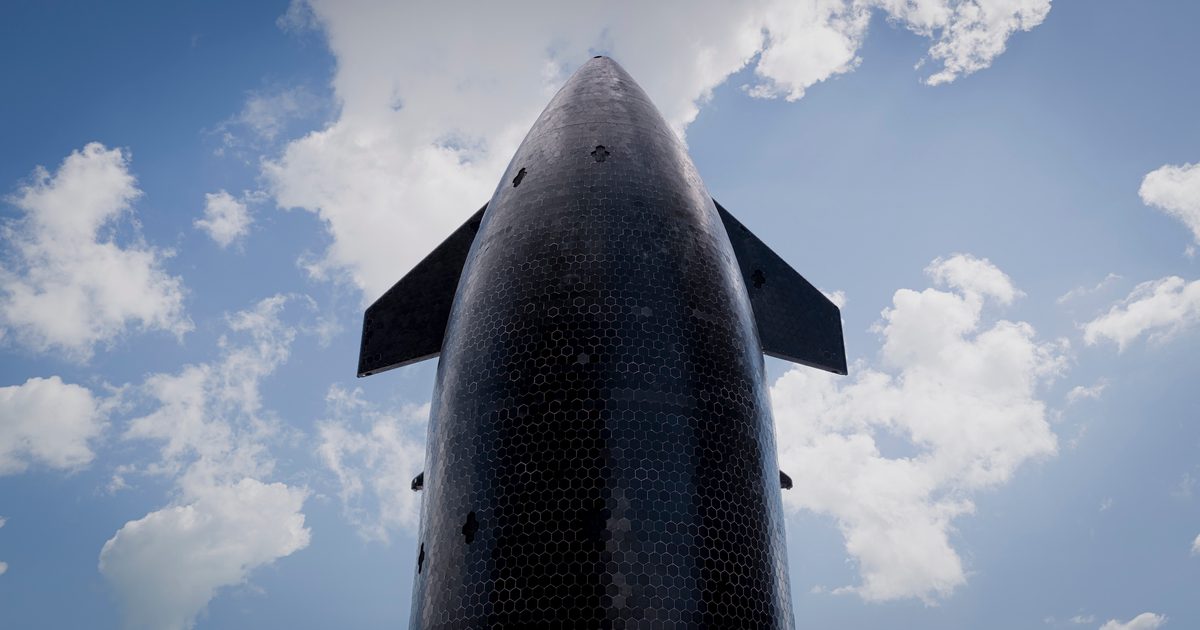
SpaceX is targeting this month for the 12th launch of its gargantuan Starship rocket, which comprises the first-stage Super Heavy booster and upper-stage Ship.
While much has rested on each and every one of its previous 11 test flights, the first of which took place in April 2023, the next launch is a big deal for the Elon Musk-led spaceflight company.
That’s because the mission involves a new version of the rocket, with its design based closely on the one that’s destined for future flights to the moon and possibly even Mars.
Version 3 of Starship incorporates structural refinements, more powerful engines, and a raft of lessons learned from earlier mishaps and failures. The entire vehicle is a little taller, too, at 124.4 meters compared to 123.3 meters, and features considerably larger grid fins for improved flight control.
The new design represents a shift from experimental prototype toward something closer to an operational system, with the redesigned rocket the first Starship capable of orbital flights.
The upcoming 12th flight will aim to demonstrate structural and systems upgrades across the vehicle, validate the performance of its latest Raptor engines, execute a clean stage separation and controlled ascent profile, and gather critical data on booster recovery systems that move the rocket closer to routine reuse, among other goals.
The Starship won’t need to perform a perfect flight, but it will need to convince NASA and its partners that progress is accelerating.
That’s because rival spaceflight company Blue Origin, led by Amazon founder Jeff Bezos, is knocking at the door.
Blue Origin is also competing for NASA contracts and could even provide the spaceflight hardware for the recently revamped Artemis III mission in low‑Earth orbit in 2027, putting extra pressure on SpaceX to demonstrate measurable progress with the Starship.
SpaceX currently has the contract for the Artemis III and Artemis IV missions (the latter of which will put astronauts back on the moon, possibly in 2028), but should Starship development falter, Blue Origin could step in.
Clearly there’s a lot to play for, though it’s worth noting that Blue Origin has far less flight experience with its New Glenn rocket and its untested Blue Moon lander, leaving SpaceX well-positioned to prove Starship’s reliability first.
SpaceX has yet to announce a specific target date for the Starship’s 12th flight. We’ll share news of it just as soon as we know.
“This is just not the right pathway forward,” Isaacman said.
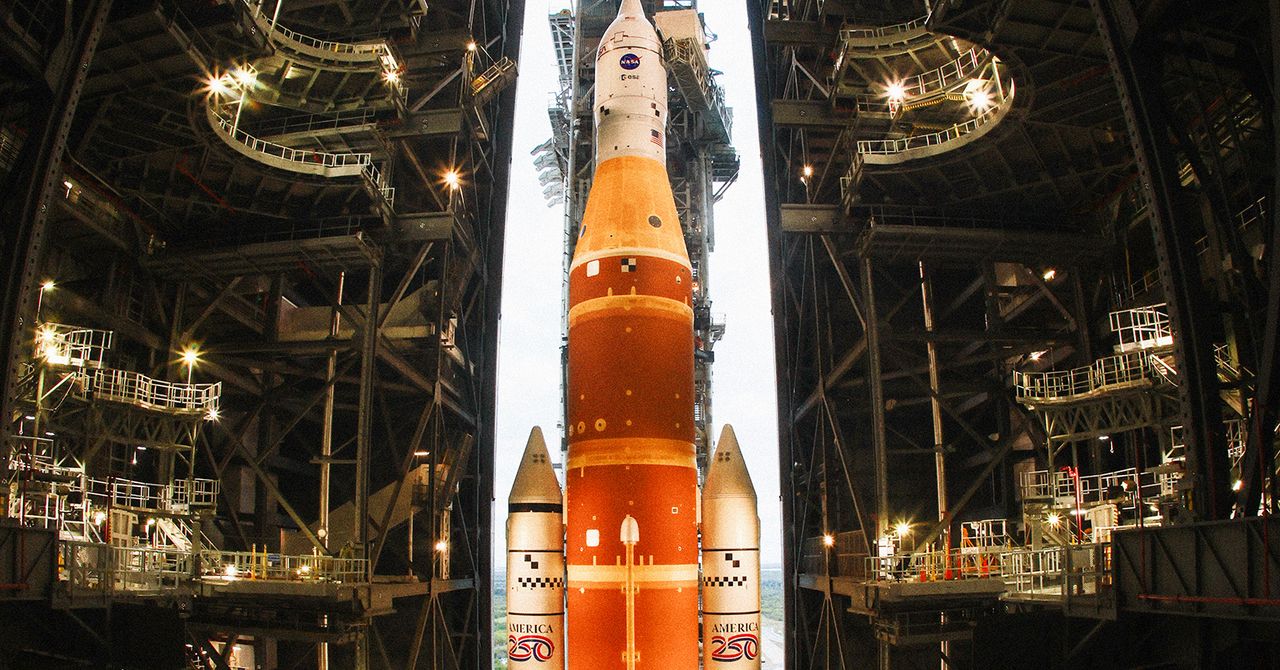
A senior NASA official, speaking on background to Ars, noted that the space agency has experienced hydrogen and helium leaks during both the Artemis I and Artemis II prelaunch preparations, and these problems have led to monthslong delays in launch.
“If I recall, the timing between Apollo 7 and 8 was nine weeks,” the official said. “Launching SLS every three and a half years or so is not a recipe for success. Certainly, making each one of them a work of art with some major configuration change is also not helpful in the process, and we’re clearly seeing the results of it, right?”
The goal therefore is to standardize the SLS rocket into a single configuration in order to make the rocket as reliable as possible, and launching as frequently as every 10 months. NASA will fly the SLS vehicle until there are commercial alternatives to launch crews to the moon, perhaps through Artemis V as Congress has mandated, or perhaps even a little longer.
Is Everyone on Board?
The NASA official said all of the agency’s key contractors are on board with the change, and senior leaders in Congress have been briefed on the proposed changes.
The biggest opposition to these proposals would seemingly come from Boeing, which is the prime contractor for the Exploration Upper Stage, a contract worth billions of dollars to develop a more powerful rocket that was due to launch for the first time later this decade. However, in a NASA news release, Boeing appeared to offer at least some support for the revised plans.
“Boeing is a proud partner to the Artemis mission and our team is honored to contribute to NASA’s vision for American space leadership,” said Steve Parker, Boeing Defense, Space & Security president and CEO, in the news release. “The SLS core stage remains the world’s most powerful rocket stage, and the only one that can carry American astronauts directly to the moon and beyond in a single launch. As NASA lays out an accelerated launch schedule, our workforce and supply chain are prepared to meet the increased production needs.”
Solid Reasons for Changing Artemis III
NASA’s new approach to Artemis reflects a return to the philosophy of the Apollo program. During the late 1960s, the space agency flew a series of preparatory crewed missions before the Apollo 11 lunar landing. These included Apollo 7 (a low-Earth-orbit test of the Apollo spacecraft), Apollo 8 (a lunar orbiting mission), Apollo 9 (a low-Earth-orbit rendezvous with the lunar lander), and Apollo 10 (a test of the lunar lander descending to the moon, without touching down).
With its previous Artemis template, NASA skipped the steps taken by Apollo 7, 9, and 10. In the view of many industry officials, this leap from Artemis II—a crewed lunar flyby of the moon testing only the SLS rocket and Orion spacecraft—to Artemis III and a full-on lunar landing was enormous and risky.
The Artemis II crew rehearse a walkout from the Neil A. Armstrong Operations and Checkout Building at NASA’s Kennedy Space Center.Photograph: Joe Raedle/Getty Images
NASA has once again postponed the launch of Artemis II, the crewed lunar flyby mission, setting a new launch window for April. Although March 6 had been tentatively planned as the launch date, the US space agency revealed that a problem with the rocket has caused further delay.
According to NASA administrator Jared Isaacman, the failure was due to an interruption in the helium flow in the interim cryogenic propulsion stage of the Space Launch System (SLS). The helium flow is essential for purging the engines and pressurizing the fuel tanks. This system had functioned correctly in the two dress rehearsals conducted this month, but the failure occurred during a routine operation.
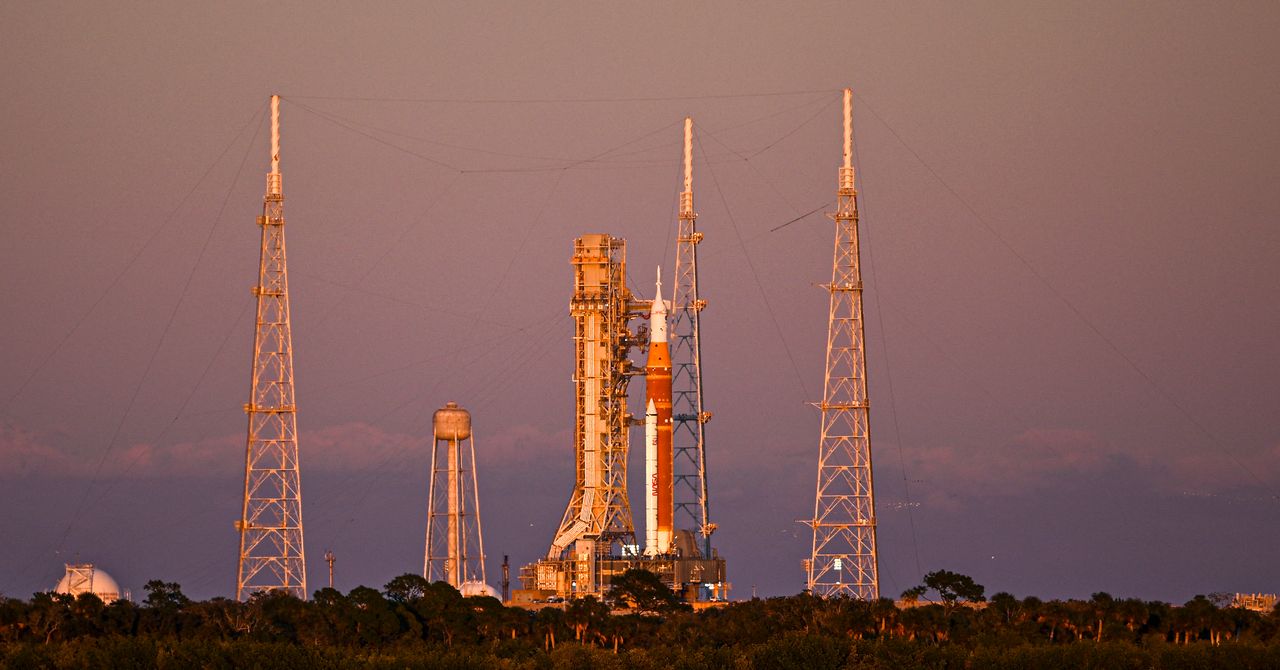
Due to the nature of the problem, NASA engineers will have to fix it from the Vehicle Assembly Building (VAB), so there’s no way to proceed with the March launch window. The rocket is on its way back to the hangar.
“I understand people are disappointed by this development,” the official stated on his X account. “That disappointment is felt most by the team at NASA, who have been working tirelessly to prepare for this great endeavor. During the 1960s, when NASA achieved what most thought was impossible, and what has never been repeated since, there were many setbacks.”
Will Artemis II be able to embark on its mission in April? NASA reported that rapid preparations have allowed it to potentially preserve the April launch window in the event of a reversal. It all depends on what the data, the repair efforts, and how the schedule comes together in the coming days.
Artemis II: The Setbacks
The mission had its first launch window between February 6 and 11. However, during the wet dress rehearsal (WDR), which is a full rehearsal with fuel, the team detected small hydrogen leaks during refueling and some minor technical glitches. After analyzing the situation, NASA concluded that the risk was considerable and could endanger the lives of the astronauts, so it decided to postpone the launch.
A second dress rehearsal, conducted on February 19, was successful. In a statement, the space agency explained that it loaded 700,000 gallons of liquid propellant with no leaks. “During the test, teams closely monitored liquid hydrogen fueling operations, which proved challenging during previous tests. Hydrogen gas concentrations remained under allowable limits, giving engineers confidence in new seals installed in an interface used to route fuel to the rocket,” NASA said.
At a subsequent press conference, mission representatives confirmed to the media that the new tentative liftoff date would be March 6. However, on February 20, the team failed to get helium to flow through the vehicle, a failure that also occurred during testing of the Artemis I mission. Isaacman noted that the cause could be due to a faulty filter, valve or connector plate.
“There are many differences between the 1960s and today, and expectations should rightfully be high after the time and expense invested in this program,” Isaacman said in his post. “I will say again, the President created Artemis as a program that will far surpass what America achieved during Apollo. We will return in the years ahead, we will build a Moon base, and undertake what should be continuous missions to and from the lunar environment.”
When it eventually launches, the Orion capsule will travel farther than any other manned spacecraft during its 10-day mission, surpassing on the sixth day the record of 400,171 kilometers set by Apollo 13. The return will conclude with Orion’s landing in the Pacific Ocean off the coast of San Diego, California.
Although there will be no lunar landing—that feat will fall to the Artemis III mission—the second launch is of crucial importance. Its success will demonstrate that NASA has the technical capabilities to return to the moon and begin a new phase of space exploration.
This story originally appeared in WIRED en Español and has been translated from Spanish.
In that time, NASA’s most advanced rover to date, which is about the size of a small car, has traveled almost 25 miles (40 kilometers) while all the time conducting science research and collecting soil samples for return to Earth.
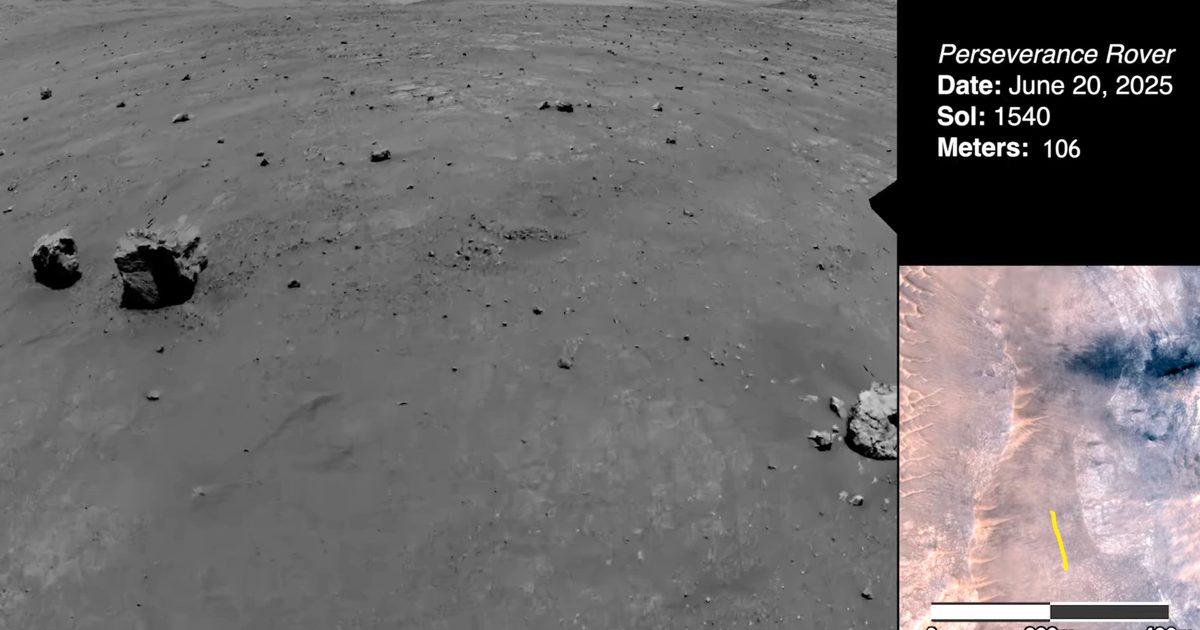
In a new video (top) released on Wednesday, NASA’s Jet Propulsion Laboratory (JPL), which overseas the space agency’s Mars missions, has shared footage captured by Perseverance’s two navigation cameras (navcams) as it completed a drive of 1,350.7 feet (411.7 meters) in 4 hours and 24 minutes on June 19, 2025 — a new record for distance covered in a single sol (a Mars sol is a martian solar day and lasts about 24 hours and 39 minutes).
The video was created by stitching together 300 image pairs from the rover’s navcams, with one pair of captures occurring every 16 feet (5 meters) for the first third of the journey, and then one every 3.3 feet (1 meter) for the rest of it. Virtual frames were inserted about every 4 inches (0.1 meters).
As the rover has a top speed of just under 0.1 mph, the final piece has been sped up to create something that has the feel of a drone flying just above the ground.
The rover tracks that appear in the video are from Perseverance’s two previous southbound drives that took place in May 2025.
The 1,350.7-feet (411.7-meter) drive beats the previous single-sol drive record of 718.5 feet (219 meters) set by NASA’s Opportunity rover way back in 2005.
The footage is a testament to the rover’s ongoing ability to deal with the harsh martian conditions that include rough terrain and freezing temperatures.
Interestingly, JPL has continued testing the rover’s various parts on Earth to confirm their longevity and to learn more about how long they’re likely to last, with the team confident that Perseverance will be able to keep on rolling until at least 2031, barring any major mishaps, of course.
“These tests show the rover is in excellent shape,” JPL’s Steve Lee, Perseverance’s deputy project manager, said on NASA’s website. “All the systems are fully capable of supporting a very long-term mission to extensively explore this fascinating region of Mars.”
Both occurred during relatively anonymous launches of the company’s Starlink satellites but are nonetheless notable because they underscore the value of first-stage reuse, which SpaceX has pioneered over the past decade.
The first milestone occurred on Wednesday morning with the launch of the Starlink 10-56 mission from Cape Canaveral, Florida. The first stage that launched these satellites, Booster 1096, was making its second launch and successfully landed on the Just Read the Instructions drone ship. Strikingly, this was the 400th time SpaceX has executed a drone ship landing.
Then, less than 24 hours later, another Falcon 9 rocket launched the Starlink 10-11 mission from a nearby launch pad at Kennedy Space Center. This first stage, Booster 1067, subsequently returned and landed on another drone ship, A Shortfall of Gravitas.
This is a special booster, having made its debut in June 2021 and launching a wide variety of missions, including two Crew Dragon vehicles to the International Space Station and some Galileo satellites for the European Union. On Thursday, the rocket made its 30th flight, the first time a Falcon 9 booster has hit that level of experience.
A Decade in the Making
These milestones came about one decade after SpaceX began to have some success with first-stage reuse.
The company first made a controlled entry of the Falcon 9 rocket’s first stage in September 2013, during the first flight of version 1.1 of the vehicle. This proved the viability of the concept of supersonic retropropulsion, which was, until that time, just theoretical.
This involves igniting the rocket’s nine Merlin engines while the vehicle is traveling faster than the speed of sound through the upper atmosphere, with external temperatures exceeding 1,000 degrees Fahrenheit. Due to the blunt force of this reentry, the engines in the outer ring of the rocket wanted to get splayed out, the company’s chief of propulsion at the time, Tom Mueller, told me for the book Reentry. Success on the first try seemed improbable.
He recalled watching this launch from Vandenberg Space Force Base in California and observing reentry as a camera aboard SpaceX founder Elon Musk’s private jet tracked the rocket. The first stage made it all the way down, intact.
“I remember watching the live video and seeing the light of the engine on the ocean,” Mueller said. “And holy shit, it was there. The rocket came down, landed in the ocean, and blew up. That was unreal. It worked the first time. I was like, get the barge ready. Get the landing legs ready. This shit works.”
It would take a good deal more tinkering and experimentation, but by December 2015, SpaceX had landed its first rocket on a pad along the Florida coast. The first drone ship landing followed in April 2016. A little less than a year after this, SpaceX reflew a Falcon 9 stage for the first time.
Silencing the Doubters
Many people in the industry were skeptical about SpaceX’s approach to reuse. In the mid-2010s, both the European and Japanese space agencies were looking to develop their next generation of rockets. In both cases, Europe with the Ariane 6 and Japan with the H3, the space agencies opted for traditional, expendable rockets instead of pushing toward reuse.
As a result, both of these competitors for commercial satellite launches are now about a decade behind SpaceX in terms of launch technology. If the ambitious Starship rocket is successful, that gap could widen further.
Considering the current state of affairs, the best gifts for the women in our lives are the ones that let them mentally clock out for a bit. The world is on fire—literally and figuratively. Human rightsare beingstripped away; the climate is in free fall. Some days, I’ll catch myself staring at the sky and think, I wish I could hitch a ride to space, but of course, that fantasy has been ruined too. If the remarkable woman in your life is exhausted by the headlines, by the slow-motion collapse of democracy, by the sheer audacity of men in power, or perhaps just the overall state of humanity, she deserves a unique gift that offers more than just distraction. She frankly needs a portal to another reality, but since that’s not possible just yet (to my knowledge), a temporary escape will have to do.
Skip the gift cards and scented candles, I’ve rounded up the best gifts for women surviving the dystopian quest that is 2025. You can’t buy her a ticket to an exoplanet (yet), but you can wrap up a TheraFace depuffing wand ($149) or a Deco Gravity Bong ($88) to make life on Earth slightly more bearable.
Updated April 2025: I’ve added the Biird Namii clitoral stimulator, the Litter Robot 4, and the Breville Smart Oven Air Fryer.
Power up with unlimited access to WIRED.Get best-in-class reporting that’s too important to ignore for just $2.50 $1 per month for 1 year. Includes unlimited digital access and exclusive subscriber-only content. Subscribe Today.
If you were wondering whether it’d be possible to ferment foods in space, the answer is apparently yes. In a study published in the journal iScience, researchers from the US and Denmark say they were able to make decent-tasting miso on the International Space Station — but the flavor and smell was distinct from that of miso made on Earth. While it still scored well in the taste tests, with similar ratings to Earth miso in qualities like umami and saltiness, the ISS miso was found to taste nuttier and more roasted than the usual stuff.
The team suggests the findings reflect a sort of “space terroir,” playing off the term often used in relation to wine grapes to describe unique, location-specific flavor characteristics. For the study, the researchers sent a package containing the miso paste ingredients (cooked soybeans, rice koji and salt) to the ISS in March 2020, and let it ferment for 30 days. They also started miso batches back at home in Cambridge, MA and Copenhagen, Denmark, and monitored the environmental conditions of each setup. After a month, the space miso was sent back and analyzed in comparison to the Earth batches.
“There are some features of the space environment in low earth orbit — in particular microgravity and increased radiation — that could have impacts on how microbes grow and metabolize and thus how fermentation works,” co-lead author Joshua D. Evans of Technical University of Denmark said in a press release. “We wanted to explore the effects of these conditions.”
Not only were there differences in flavor, including the notable roasted nuttiness of the space miso, but also in the microbial composition of the misos. The team concluded that “overall, the space miso is a miso,” but says the findings “suggest a specific fermentation environment in space.”
Today’s the day: A solar eclipse will darken the skies in the northeastern US and Canada in the early hours of Saturday. Unlike the “Great American Eclipse” of 2024, however, this will not be a total eclipse. Instead, this event will be a partial eclipse visible in parts of the northern hemisphere.
While this one will lack the dramatic “totality” of the 2024 event, a partial eclipse is still worth seeing. The sun will not be fully obscured, but with proper eye protection, you will be able to see the moon take a bite out of the sun. And there’s a catch, but it’s also an opportunity: This eclipse will occur at sunrise in North America, meaning the sun will just barely be above the horizon. But that timing offers viewers the chance to see the famed “devil horns” — a crescent of solar light emerging from behind the moon.
When can you watch this partial solar eclipse, and those devil horns? Let’s talk about how to safely watch this eclipse.
What areas will experience the partial solar eclipse, and when?
The partial solar eclipse will be visible in areas of the northern hemisphere. It will be visible at sunrise in eastern North America and sunset in Siberia, Russia on Saturday, March 29. In Europe, it can be viewed around mid-morning. But the event’s footprint will be limited: No eclipse will be visible west of Toronto, Canada, and Washington, DC in North America.
NASA
This global map of the partial solar eclipse from NASA is more than a little confusing, but here’s how to read it. The yellow curve is the path of the partial solar eclipse, moving from west to east. The lighter colored yellow curves give the percent obscuration of the sun. (In other words, how much of the sun is covered by the moon depends on where you are and when you’re looking.)
Most of Europe will only see around a 20 percent obscuration (with the exception of Greenland and Iceland), for example, while the extreme northeastern part of the United States will see up to 89 percent of the sun covered. The Nunavik region of Quebec will see maximum obscuration of 94 percent. The green lines on the map show the eclipse’s progress over time. Times are given in UTC, which is four hours ahead of Eastern Daylight Time.
However, sunrise and sunset makes things more complicated. This is depicted on the map by the orange loop. The left side of the loop (over the Great Lakes in the United States) shows where the eclipse ends at sunrise. Therefore, the eclipse is not visible west of that orange line. The right side of the loop is where the eclipse begins at sunrise.
That means to see the maximum partial solar eclipse at sunrise, it’s best to be along that blue line running down the middle of the orange loop. (It’s worth noting that the eclipse will also be visible across a narrow part of Siberia, but at sunset rather than sunrise — that’s what the other half of the orange loop depicts).
If it seems incredibly confusing, that’s because it is indeed incredibly confusing. Some places with maximum obscuration will have a shorter eclipse duration because the partial eclipse will start before sunrise. The sun will also be low to the horizon in North America, so any viewing location will need to be above tall trees with a clear view of sunrise. In Europe, the viewing locations will be easier because the sun will be higher in the sky — but the sun will not be as obscured.
For example, in Bar Harbor, Maine, the sun will rise at 6:19AM, and the maximum eclipse will be at 6:22AM, with 80 percent of the sun obscured. The partial eclipse will end at 7:11 am. Technically though, the eclipse will begin at 5:26 am ET, but because that’s before sunrise, Mainers will be cheated out of about half their potential eclipse viewing time.
Moving south, the best view will be through coastal New England, then down through Boston, New York City and Philadelphia.The path basically ends in Washington, DC, where just 1.2 percent of the sun will be obscured at 6:59AM ET.
NASA
According to Time and Date, only 44,800 people will see a 90 percent partial eclipse, while 3,820,000 will see an 80 percent. That’s a far cry from the 30 million people in the path of totality for the 2024 total solar eclipse.
Will a total solar eclipse be visible in the middle of the Atlantic Ocean?
No, there is nowhere on Earth that a total solar eclipse will be visible for this event. For any solar eclipse to happen, the sun, the moon and the Earth need to line up. However, because the moon doesn’t orbit in the same plane as the sun and the Earth, eclipses are rare.
A partial solar eclipse, like the one occurring on March 29, occurs when the moon passes between the sun and the Earth, but it’s not perfectly lined up. As a result, the sun will have a crescent shape — as if the moon took a bite out of the sun — but it will never be fully obscured as it is during a total eclipse.
How long will the partial eclipse last?
The visible duration of the eclipse depends on where you are, and what time sunrise (or sunset) is at your location. But globally, the eclipse will begin at 4:50 am ET (8:50AM UTC). The maximum eclipse will occur at 6:47AM ET (10:47AM UTC), and the event will end at 8:43AM ET (12:43PM UTC). Keep in mind, though, that this doesn’t mean the entire partial eclipse will be almost four hours long in any given location because this is just for the extreme edges of the event.
What’s the weather forecast along the viewing line?
It’s spring across the Northern Hemisphere, which generally means unfavorable weather for any sky viewing. The Weather Channel’s senior digital meteorologist Chris Dolce said that cloud cover, and even rain and snow, may be likely in the northeastern United States during the eclipse, so it’s not great news there, unfortunately.
If it’s just a partial eclipse, do I need eye protection?
Anything that involves looking at the sun, even just 5 or 10 percent of the sun, requires eye protection. The sun can damage your retinas quickly, painlessly and often irreversibly.
If you have solar viewers left from the 2024 eclipse, and they are undamaged, they’ll work just fine for this one too. According to the American Astronomical Society (AAS), modern eclipse glasses do not expire. It’s worth checking them out thoroughly, though, making sure there are no rips, tears or scratches across the lenses and that the filters and lenses are still attached to the frame.
Solar eclipse glasses can be difficult to purchase at the last minute, so it’s always good to keep them around. However, if you donated or trashed your previous pair (or didn’t buy them in the first place), you can buy them online — with some caution. Make sure any solar viewers conform to the ISO 12312-2:2015(E) international safety standard, and check the manufacturer against this list of brands from the AAS. Counterfeit eclipse glasses were rampant leading up the 2024 eclipse.
Celestron is a reliable manufacturer of solar viewer equipment, and the company’s eclipse glasses are readily available on Amazon for a low price (though at this point, you’ll be stocking up for the next eclipses, most of which are better viewed from the southern hemisphere).
What are some cool things to look out for during this eclipse?
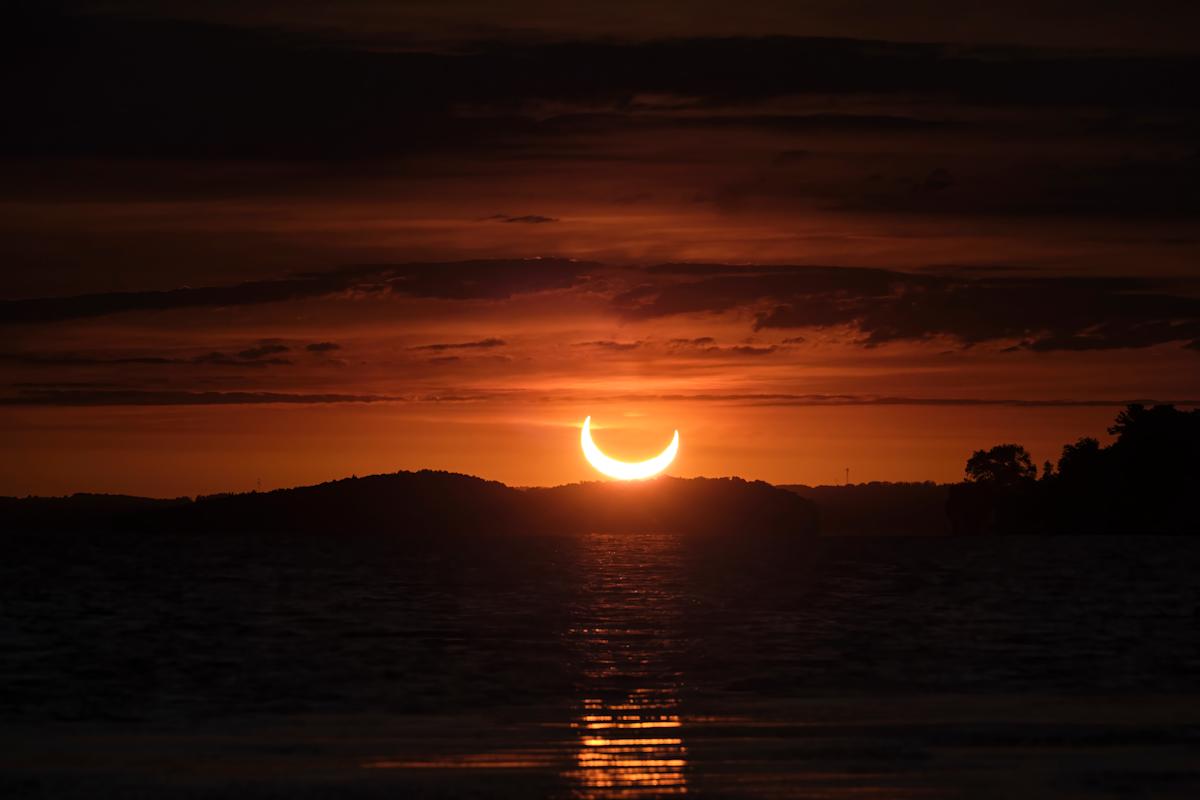
A unique feature of solar eclipses during sunrise is you may be able to see the famed “devil horns,” depending on where you are. When the sun rises during an eclipse (and therefore the sun is low on the horizon), as the crescent sun rises, it can look like devil horns coming up out of the ground.
An earlier sunrise partial eclipse over Rice Lake, Ontario shows the “devil horns” phenomenon. (John Fader via Getty Images)
It’s best to target Maine, New Brunswick, and Quebec (along the blue line in the NASA map) to see this phenomenon.
Additionally, the sun is currently at or near solar maximum, which means that our star is basically at the peak of its 11-year solar cycle. Scientists determined that the sun hit the highest level of solar activity in October 2024, and this will continue for a year or so. This means that there may be sunspots visible on the surface of the sun when the eclipse hits. (For context, here’s what the sun looks like right now, courtesy of NASA’s Solar Dynamics Observatory.) If you have solar binoculars or a solar telescope, this will make them much easier to see.
Can I just point a telescope or camera at the sun?
If you’re asking yourself this question, you probably already know the answer: Nope! Not without a solar filter. Whether it’s a phone camera, binoculars, a telescope or a mirrorless camera, the sun can do extreme damage to this kind of equipment. (On Apollo 12, astronaut Alan Bean accidentally pointed a television camera at the sun, irreparably damaging it. Don’t do this!)
You can pick up solar filters at a camera store or online, or in a pinch, you can just use an extra pair of solar viewers. Simply remove the film and tape it over your smartphone camera, but don’t look at the sun when aiming the camera unless you’re wearing solar viewers as well. If you are interested in looking at the sun regularly, a pair of solar binoculars with a permanently attached filter is a great idea.
If you buy something through a link in this article, we may earn commission.
SpaceX launched its mighty Starship rocket for the eighth time last week. The mission was a bit of mixed bag, with the team successfully catching the first-stage Super Heavy booster on its return to the launchpad, but losing the Starship spacecraft in a midair explosion minutes after stage separation. The Elon Musk-led spaceflight company is now looking into what went wrong.
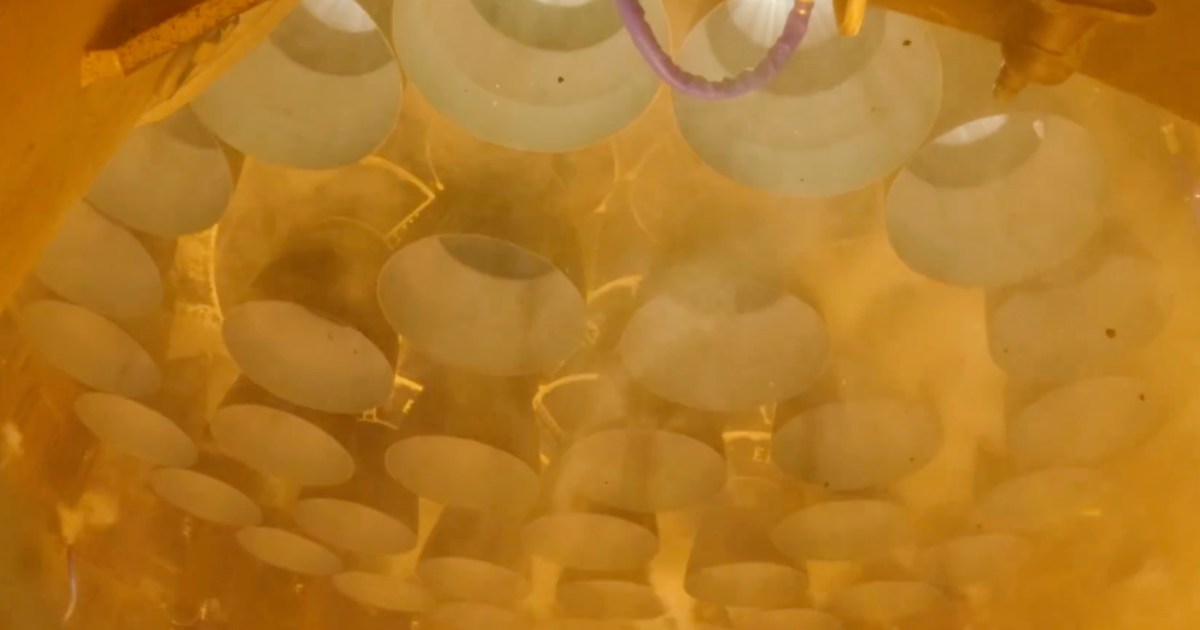
After each Starship test, SpaceX usually releases video clips showing the mission’s key moments. On Sunday, it shared some extraordinary footage (below) captured from below the booster as it launched from SpaceX’s Starbase facility in Boca Chica, Texas. The slowed-down video shows the rocket’s 33 Raptor engines firing up as the enormous 120-meter-tall vehicle leaves the launchpad.
View under the launch mount as Super Heavy's 33 Raptor engines ignite on Starship's eighth flight test pic.twitter.com/WRCazkhyXs
With the rocket pumping out a colossal 17 million pounds of thrust, it’s hard to fathom how the camera that captured the footage managed to stay intact. But stay intact it did.
SpaceX hasn’t revealed how it achieved the feat, but in the comments below the footage, someone asked X’s AI assistant, Grok, how the the footage was captured from such a seemingly vulnerable spot. The chatbot responded: “High-speed cameras under the launch mount capture the ignition of Super Heavy’s 33 Raptor engines. They’re mounted on reinforced structures, shielded from heat and debris, and use advanced telemetry to transmit footage in real-time. SpaceX has perfected this tech for jaw-dropping views like Starship’s eighth flight test.”
Capturing a close-up of the world’s most powerful rocket from this angle is all the more remarkable when you consider how the launchpad disintegrated when it was blasted by the Starship’s rocket engines on its maiden launch in April 2023.
For the second flight test, SpaceX engineers designed a more robust and secure launchpad able to handle the incredible force generated by the Raptor engines as the Starship lifted off.