Falcon 9 Milestones Vindicate SpaceX’s ‘Dumb’ Approach to Reuse


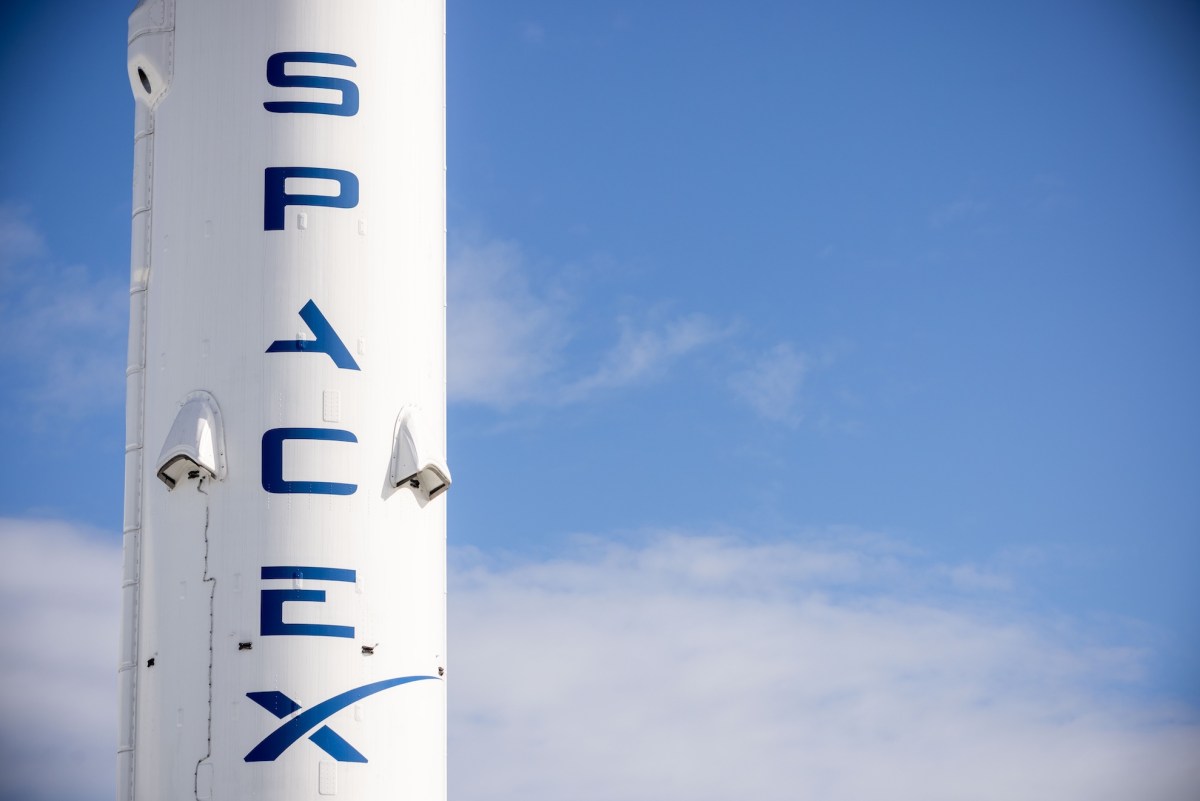
As SpaceX’s Starship vehicle gathered all of the attention this week, the company’s workhorse Falcon 9 rocket continued to hit some impressive milestones.

Both occurred during relatively anonymous launches of the company’s Starlink satellites but are nonetheless notable because they underscore the value of first-stage reuse, which SpaceX has pioneered over the past decade.

The first milestone occurred on Wednesday morning with the launch of the Starlink 10-56 mission from Cape Canaveral, Florida. The first stage that launched these satellites, Booster 1096, was making its second launch and successfully landed on the Just Read the Instructions drone ship. Strikingly, this was the 400th time SpaceX has executed a drone ship landing.

Then, less than 24 hours later, another Falcon 9 rocket launched the Starlink 10-11 mission from a nearby launch pad at Kennedy Space Center. This first stage, Booster 1067, subsequently returned and landed on another drone ship, A Shortfall of Gravitas.

This is a special booster, having made its debut in June 2021 and launching a wide variety of missions, including two Crew Dragon vehicles to the International Space Station and some Galileo satellites for the European Union. On Thursday, the rocket made its 30th flight, the first time a Falcon 9 booster has hit that level of experience.

A Decade in the Making

These milestones came about one decade after SpaceX began to have some success with first-stage reuse.

The company first made a controlled entry of the Falcon 9 rocket’s first stage in September 2013, during the first flight of version 1.1 of the vehicle. This proved the viability of the concept of supersonic retropropulsion, which was, until that time, just theoretical.

This involves igniting the rocket’s nine Merlin engines while the vehicle is traveling faster than the speed of sound through the upper atmosphere, with external temperatures exceeding 1,000 degrees Fahrenheit. Due to the blunt force of this reentry, the engines in the outer ring of the rocket wanted to get splayed out, the company’s chief of propulsion at the time, Tom Mueller, told me for the book Reentry. Success on the first try seemed improbable.

He recalled watching this launch from Vandenberg Space Force Base in California and observing reentry as a camera aboard SpaceX founder Elon Musk’s private jet tracked the rocket. The first stage made it all the way down, intact.

“I remember watching the live video and seeing the light of the engine on the ocean,” Mueller said. “And holy shit, it was there. The rocket came down, landed in the ocean, and blew up. That was unreal. It worked the first time. I was like, get the barge ready. Get the landing legs ready. This shit works.”

It would take a good deal more tinkering and experimentation, but by December 2015, SpaceX had landed its first rocket on a pad along the Florida coast. The first drone ship landing followed in April 2016. A little less than a year after this, SpaceX reflew a Falcon 9 stage for the first time.

Silencing the Doubters

Many people in the industry were skeptical about SpaceX’s approach to reuse. In the mid-2010s, both the European and Japanese space agencies were looking to develop their next generation of rockets. In both cases, Europe with the Ariane 6 and Japan with the H3, the space agencies opted for traditional, expendable rockets instead of pushing toward reuse.

As a result, both of these competitors for commercial satellite launches are now about a decade behind SpaceX in terms of launch technology. If the ambitious Starship rocket is successful, that gap could widen further.

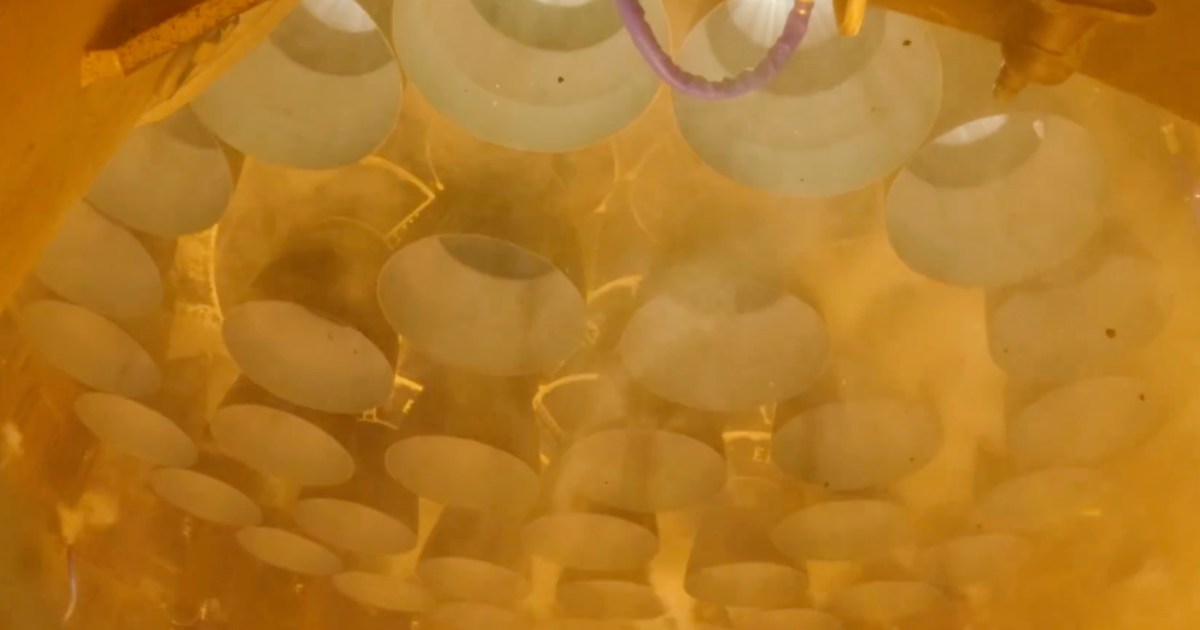
SpaceX shares stunning close-up footage of Starship engines firing up on 8th flight test


SpaceX launched its mighty Starship rocket for the eighth time last week. The mission was a bit of mixed bag, with the team successfully catching the first-stage Super Heavy booster on its return to the launchpad, but losing the Starship spacecraft in a midair explosion minutes after stage separation. The Elon Musk-led spaceflight company is now looking into what went wrong.

After each Starship test, SpaceX usually releases video clips showing the mission’s key moments. On Sunday, it shared some extraordinary footage (below) captured from below the booster as it launched from SpaceX’s Starbase facility in Boca Chica, Texas. The slowed-down video shows the rocket’s 33 Raptor engines firing up as the enormous 120-meter-tall vehicle leaves the launchpad.

View under the launch mount as Super Heavy's 33 Raptor engines ignite on Starship's eighth flight test pic.twitter.com/WRCazkhyXs

— SpaceX (@SpaceX) March 9, 2025


Please enable Javascript to view this content

With the rocket pumping out a colossal 17 million pounds of thrust, it’s hard to fathom how the camera that captured the footage managed to stay intact. But stay intact it did.

SpaceX hasn’t revealed how it achieved the feat, but in the comments below the footage, someone asked X’s AI assistant, Grok, how the the footage was captured from such a seemingly vulnerable spot. The chatbot responded: “High-speed cameras under the launch mount capture the ignition of Super Heavy’s 33 Raptor engines. They’re mounted on reinforced structures, shielded from heat and debris, and use advanced telemetry to transmit footage in real-time. SpaceX has perfected this tech for jaw-dropping views like Starship’s eighth flight test.”

Capturing a close-up of the world’s most powerful rocket from this angle is all the more remarkable when you consider how the launchpad disintegrated when it was blasted by the Starship’s rocket engines on its maiden launch in April 2023.

For the second flight test, SpaceX engineers designed a more robust and secure launchpad able to handle the incredible force generated by the Raptor engines as the Starship lifted off.

Once testing of the rocket is complete, NASA and SpaceX will use the Starship rocket to carry crew and cargo to the lunar surface, and possibly to Mars, too.


This rocket-launch photo is unlike any you’ve seen before


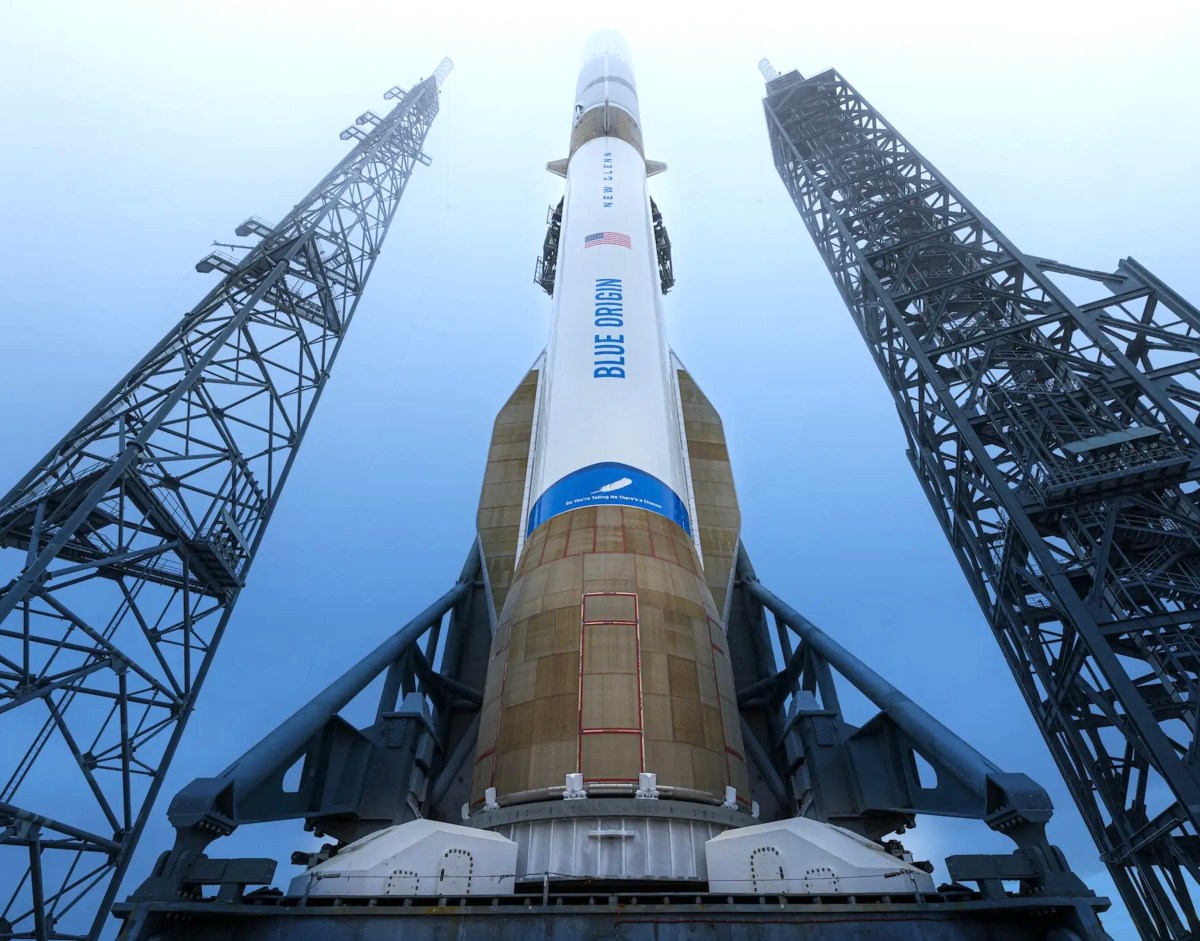
Blue Origin launched its New Glenn heavy-lift rocket for the first time last week, and news sites and social media feeds were quick to share dramatic images of the 98-meter-tall rocket heading toward the heavens.

At the same time, NASA astronaut Don Pettit captured the launch in a long exposure from the International Space Station (ISS) some 250 miles above Earth. The result is a rocket-launch photo unlike any you’ve seen before:

Blue Origin's New Glenn rocket visible as a streak of light from bottom right to top left.
Blue Origin’s New Glenn rocket visible as a faint streak of light from bottom right to top left. Don Pettit / NASA

Sharing the image in a post on X, Pettit, who arrived at the orbital outpost in September, explained that it was captured over a period of four minutes, which explains the star trails that dominate the picture. With Earth at the bottom, the New Glenn rocket is visible as a faint streak crossing the image from the bottom right to the upper left.

“This was not an easy photograph to take,” Pettit wrote, adding that the space station was over Oklahoma at the beginning of the exposure and over central Gulf of Mexico at the end.


Please enable Javascript to view this content

Pettit has earned a reputation for his impressive photography work during four missions to orbit over the last couple of decades. The experienced astronaut is particularly fond of shots filled with star trails, but this appears to be the first time that he’s been lucky enough to include a rocket launch in one.

Other notable images from Pettit’s current ISS mission include one showing a SpaceX Crew Dragon spacecraft hurtling back to Earth, and another showing the bright glow of an aurora above Earth.

Always on the lookout for a stunning scene, he also captured this stunning image of waterways, which he described as “flowing silver snakes.”

Pettit recently took time out to talk about his photography work in an interview from the space station.


How Blue Origin’s Sunday night launch went from giant leap to awkward stumble


There were high hopes for the maiden launch of Blue Origin’s New Glenn rocket on Sunday, but sadly, it wasn’t to be.

The late-night NG-1 mission was supposed to be a giant leap for Blue Origin rocket technology, but the 98-meter-tall vehicle failed to get off the ground as planned.

Blue Origin’s live stream kicked off at midnight ET, 60 minutes before the three-hour launch window opened for the New Glenn’s departure from Cape Canaveral in Florida.


Please enable Javascript to view this content

Welcoming viewers to the stream, presenters Ariane Cornell and Denisse Aranda spoke enthusiastically as they shared their excitement for the debut flight of Blue Origin’s first orbital rocket.

“This is happening,” Ariane said. Except that it wasn’t.

At around 12:30 a.m., with 27 minutes to go until the first launch opportunity, the stream dropped in on a bunch of kids and their parents waiting to watch the launch from a park close to Cape Canaveral. The children smiled and cheered, perhaps in anticipation of the imminent liftoff, though definitely because they were up way past their bedtimes. We also visited Blue Origin employees at multiple sites across the U.S., cheering excitedly ahead of launch. The one that didn’t quite happen.

Early on, things seemed to be going smoothly enough for the spaceflight company founded by Jeff Bezos. But then, just 17 minutes from liftoff, the countdown clock on the screen suddenly disappeared before quickly reappearing with an extra 20 minutes added. If you blinked, you would’ve missed it.

“They just need a couple more minutes … that is A-OK with all of us,” Cornell said in a reassuring voice that gave no indication of what was coming.

The delay gave the live stream more time to play all of the prepared video inserts explaining everything about the New Glenn rocket and its Blue Ring Pathfinder payload.

But disappointingly, 11 minutes later, the countdown clock jumped again, adding another 14 minutes to take it back to 33 minutes. Folks watching the stream at home may have started to wonder if the problem was with the clock itself, not with the rocket. At this rate, unless the engineers could work out why the darn clock kept adding minutes, we could be stuck here for weeks.

But then things began to look up as the clock ticked all the way down to 9 minutes before launch … before suddenly resetting to 29 minutes. There was mention of a checklist that the Blue Origin engineers had to get through.

Popular YouTuber Tim Dodd of Everyday Astronaut, who was running his own live stream commentating on the commentators, took a deep breath. “Oh no, another delay. You know, it’s not ideal for my sleep schedule, it’s really not,” he said.

Back at the park, the kids weren’t smiling anymore. Approaching 2 a.m. ET, it really was way past their bedtime now. Even some of the parents had a “it’s way past my bedtime, too” look on their faces. Heck, even Bezos was probably stifling a yawn or two. One little girl, who fortunately was still awake, was asked what she was most looking forward to about the launch. “Going home once this is all over,” she probably wanted to say, but staying on message like a true Blue Origin believer, she responded: “For the rocket to go up into space.” She didn’t know it then, but it was asking a lot.

Promisingly, the clock continued to tick down, all the way to 14 minutes. And then it reset to 35 minutes. This time around, Cornell, perhaps not wanting to believe it, didn’t even acknowledge the delay. Exhausted folks at home may have started to wonder if their mind was playing tricks on them.

Dodd emitted a chuckle of despair, but tried to stay clear-headed about the situation. “I expect this, I expect delays, I am not shocked by this,” he said in a tone of voice that made you wonder if he really believed what he was saying.

By 2:15 a.m., the official Blue Origin live stream appeared to have run out of video inserts, leaving viewers to stare at footage of a rocket still very much on terra firma.

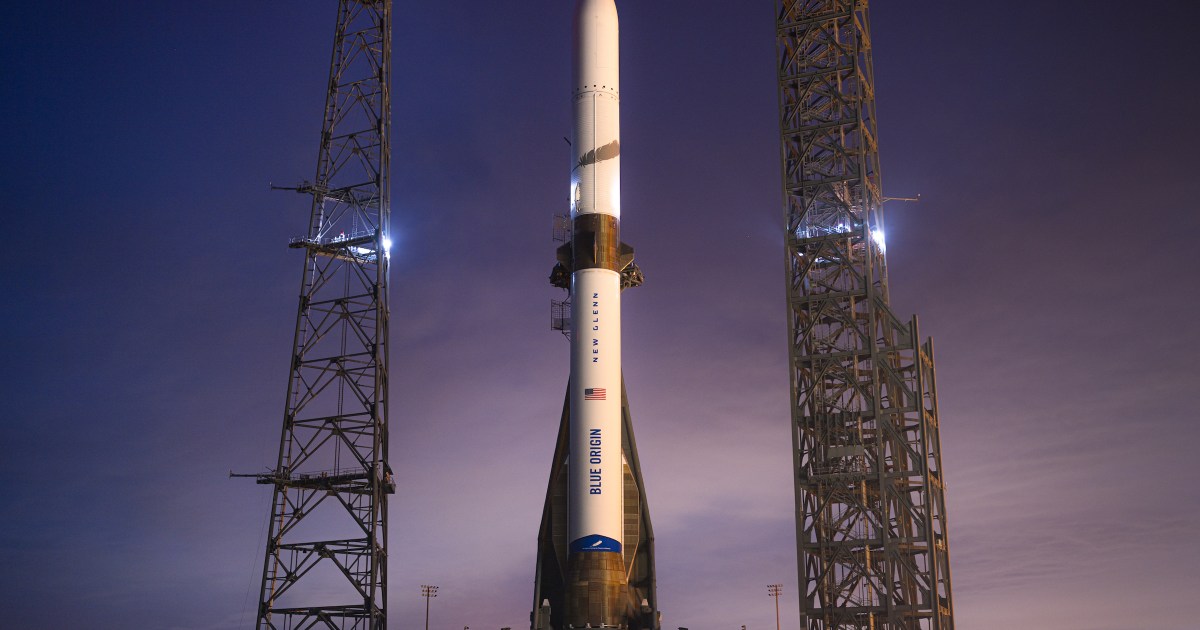
The New Glenn on the launchpad.
The New Glenn rocket on the launchpad. Blue Origin

At 11 minutes until liftoff, the countdown clock jumped yet again, resetting to 38 minutes. “Noooo, noooo, nooooo!” Dodd said, noting that Blue Origin’s launch window was rapidly closing.

“They’re working through their checklist,” Cornell said again, leaving viewers to wonder if the oft-mentioned checklist, if laid out on a single piece of paper, might reach all the way to the moon.

The countdown clock made it to 12 minutes, and then, in its oddest switch yet, flipped to zero seconds. “It’s lifting off, it’s lifting off,” Dodd said, adding, “It’s not lifting off … that is not a good sign.”

The Blue Origin live stream camera stayed firmly fixed on the New Glenn rocket, which itself appeared to be firmly fixed to the ground. Cornell and Aranda stayed silent. Perhaps they’d fallen asleep. Folks watching the live stream continued to stare at the rocket. The silence was deafening. Had everyone gone home and forgotten to tell them?

At around 3 a.m., and possibly after having just enjoyed a brief power nap, Cornell returned to the stream to announce that the launch had been scrubbed. The reason? Not a faulty countdown clock, but a “vehicle subsystem issue.”

Dodd summed it up before heading to bed. “I kind of expected that, to be honest. Better to be safe than sorry.”

He’s right. It’s not unusual for maiden launches like this to face such issues. Blue Origin has to get it right, and it’s just bad luck for the folks who stayed up late in anticipation of enjoying what should eventually be a spectacular launch. There’ll be another chance soon, and hopefully the New Glenn will finally get to fire up its rocket engines and head skyward.

Fancy another launch attempt? SpaceX’s Starship megarocket is supposed to lift off on its seventh test flight on Wednesday. But do keep an eye on that countdown clock.