Elon Musk’s last co-founder reportedly leaves xAI


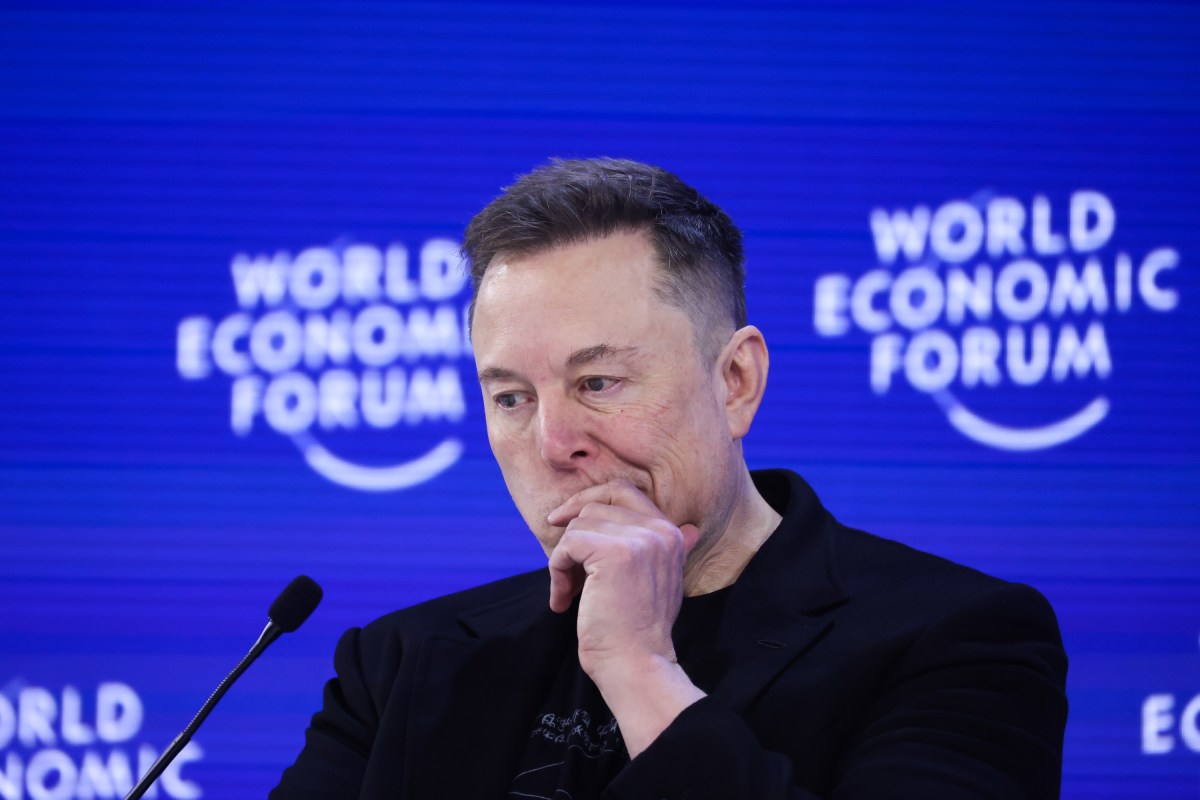
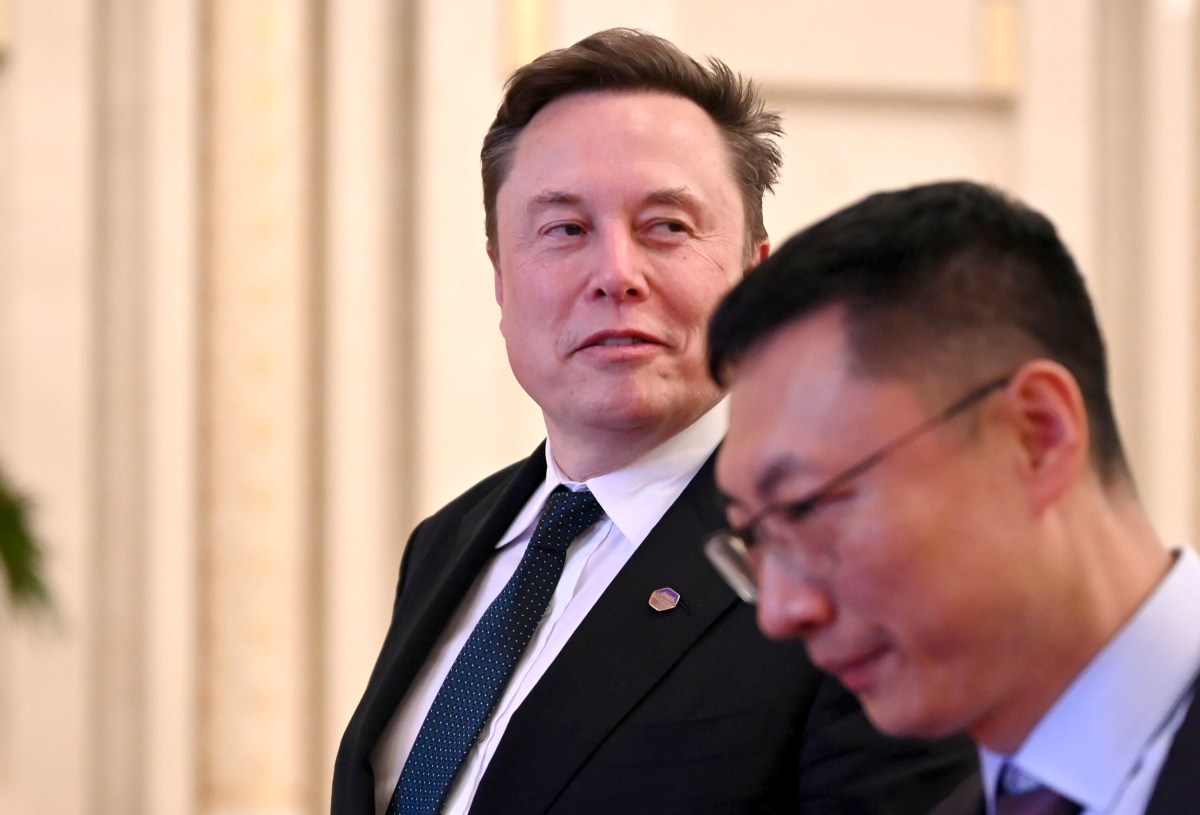
Earlier this month, it looked like all but two of Elon Musk’s 11 co-founders at his AI startup xAI had departed the company. Now, according to Business Insider, the remaining two co-founders, Manuel Kroiss and Ross Nordeen, have left as well.

BI said on Wednesday that Kroiss had told people that he’s leaving xAI, then reported that Nordeen left the company on Friday.

Musk recently claimed xAI “was not built right [the] first time around,” so it’s now “being rebuilt from the foundations up.” The company was recently acquired by Musk’s SpaceX, bringing SpaceX, xAI, and X (formerly Twitter) together under one corporate umbrella, all as SpaceX is reportedly planning to go public.

Kroiss and Nordeen both reported directly to Musk, according to BI, with Kroiss leading the company’s pretraining team, while Nordeen was Musk’s “right-hand operator.” Nordeen reportedly came to xAI from Tesla, and was involved in planning major layoffs at Twitter after Musk acquired the company in 2022.

TechCrunch has reached out to xAI for comment.

Elon Musk announces Terafab project he claims will be the ‘largest chip manufacturing facility ever’


Elon Musk has announced the Terafab project, a joint venture between Tesla, SpaceX and xAI, to build the “largest chip manufacturing facility ever.” In his usual grandiose fashion, Musk claims Terafab is the next step towards harnessing the power of the sun and creating a “galactic civilization.”

Musk, CEO of all three companies, announced plans for the Terafab in a livestream on X. As the name implies, the project’s ultimate goal is to produce a terawatt of computing power each year so that it can match the companies’ growing demand for chips. Musk explained during the livestream that he’s grateful to existing supply chain partners like Samsung, TSMC and Micron, but the current capacity of chip manufacturers only adds up to about two percent to what Tesla and SpaceX needs in terms of future computing power needs.

“We either build the Terafab or we don’t have the chips,” Musk said during the event. “And we need the chips so we’re going to build the Terafab.”

The Terafab project, estimated to cost at least $20 billion, will start with the Advanced Technology Fab in Austin, Texas, where Tesla is already headquartered. Musk said that the two types of chips will be produced in the Terafab: one for terrestrial purposes, like to power Full Self-Driving or Optimus robots, and another more high-powered, durable chip to be used in space. If you’re wondering what Musk has in store for space, the SpaceX CEO filed an application with the Federal Communications Commission to launch a million satellites to create an “orbital data center” earlier this year. As promising as this sounds, it’s worth noting that Musk has previously overpromised and underdelivered on other projects, like the Hyperloop, a $40,000 Cybertruck and fully autonomous driving.

Do You Have What It Takes to Be ‘Future Chief of Police’ of Starbase, Texas?


Does “protecting a commercial spaceport environment,” along with “critical infrastructure and high-value technology assets,” in a community “shaped by aerospace activity, coastal ecology, and a pioneering spirit of exploration” sound like your dream job? Well why not apply to be the “future chief of police” of Elon Musk’s company town in Texas?

As noted in a story last month on ValleyCentral.com, which is affiliated with Brownsville, Texas area TV news station KGBT, the city of Starbase (yes, it’s a real, incorporated city) approved an ordinance (yes, it has the authority to make laws) establishing a municipal police department. That will include a chief of police and eight officers, with that chief, according to ValleyCentral, elected by the city’s commission.

To that end, apparently, the city just published a job listing seeking applicants for a job titled “Public Safety Director / Future Chief of Police.” The rather puzzling hybrid title may stem from the sheer speed at which the institutional trappings of a city are being assembled in Starbase. The city was incorporated about ten months ago, has a mayor, and will be holding an election on May 2 of this year according to its website.

ValleyCentral makes it sound like policing is a somewhat urgent matter in Starbase because a $3.5 million contract with the Cameron County Sheriff fell through. What were meant to be five-year positions as Starbase-based deputies weren’t appealing to potential recruits. City Administrator Kent Myers told ValleyCentral “We didn’t have a lot of success in finding deputies through the county, so we decided to change direction.”

The job ad says this position will involve creating a “future-ready workforce” that will prioritize, “Integrating advanced technology and analytics into operations.” Starbase’s ideal applicant, the ad says, is a “visionary, ethical, and innovative leader with unquestioned integrity.”

But that ideal candidate will also “thrive in a startup-like environment.”

As for what the sociological picture looks like in the area for someone considering being top cop there, the first thing to keep in mind is that it’s a short drive from the Mexican border where, as of 2026, drug trafficking remains an issue of concern at the federal level. And according to a report from 2023, Cameron County was on the list of the 45 counties (out of 254 counties total) in Texas considered to be in poverty.

Closer to Starbase, there has been considerable agitation over SpaceX’s control of an ostensibly public beach, and a statue of Elon Musk in the area was vandalized last year. So social unrest due to dislike of SpaceX and Elon Musk seem like potential areas of concern.

But it’s presumptuous to try and paint a picture of the crime situation in Starbase because it’s in many ways still just a construction site. The population was about 500 as of last year, which is the approximate standing capacity of a Cheesecake Factory. And the infrastructure to support a police department isn’t even in place yet in Starbase. TechCrunch noticed some government filings last month showing that the city will likely soon have a courthouse. Common sense-wise, it stands to reason that a jail will soon follow.

Why this month’s Starship flight is SpaceX’s most important yet


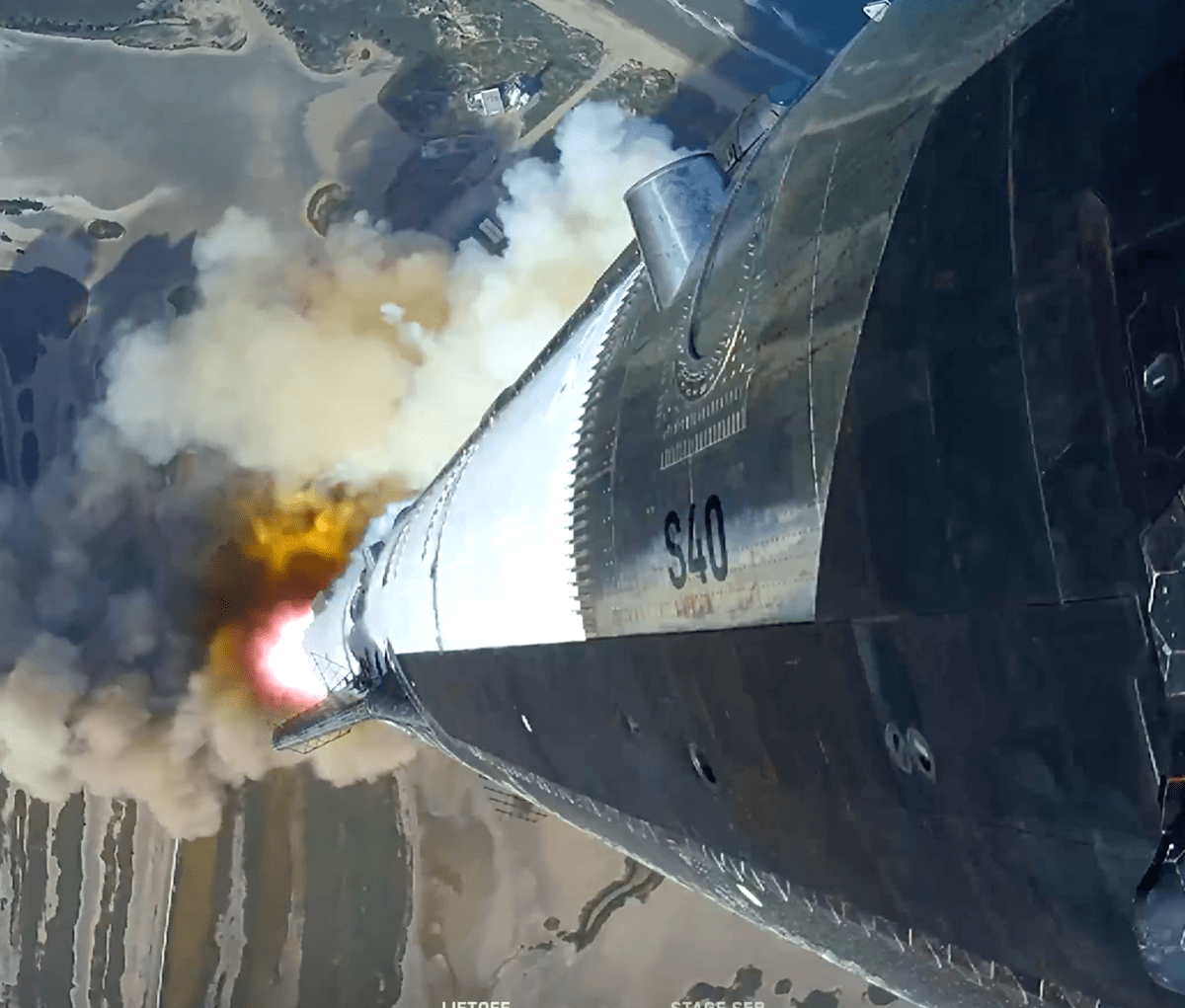
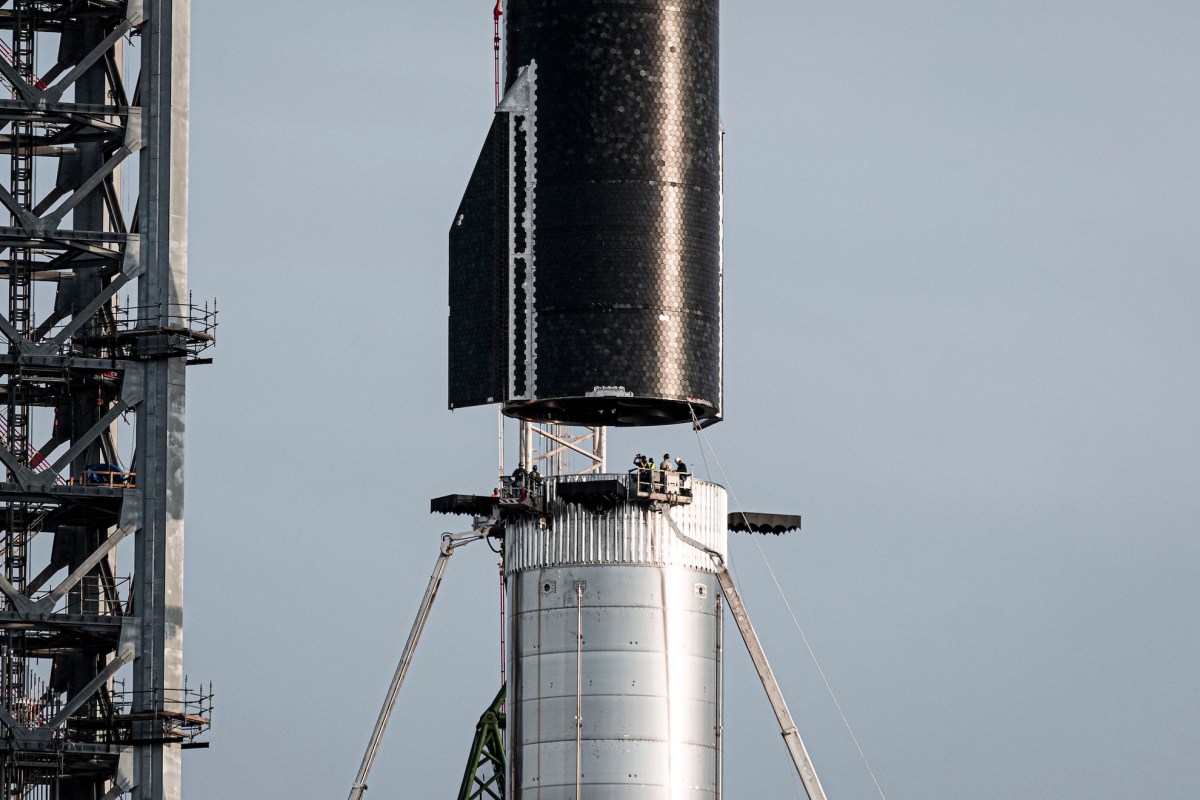
SpaceX is targeting this month for the 12th launch of its gargantuan Starship rocket, which comprises the first-stage Super Heavy booster and upper-stage Ship.

While much has rested on each and every one of its previous 11 test flights, the first of which took place in April 2023, the next launch is a big deal for the Elon Musk-led spaceflight company.

That’s because the mission involves a new version of the rocket, with its design based closely on the one that’s destined for future flights to the moon and possibly even Mars.

Version 3 of Starship incorporates structural refinements, more powerful engines, and a raft of lessons learned from earlier mishaps and failures. The entire vehicle is a little taller, too, at 124.4 meters compared to 123.3 meters, and features considerably larger grid fins for improved flight control.

The new design represents a shift from experimental prototype toward something closer to an operational system, with the redesigned rocket the first Starship capable of orbital flights.

The upcoming 12th flight will aim to demonstrate structural and systems upgrades across the vehicle, validate the performance of its latest Raptor engines, execute a clean stage separation and controlled ascent profile, and gather critical data on booster recovery systems that move the rocket closer to routine reuse, among other goals.

The Starship won’t need to perform a perfect flight, but it will need to convince NASA and its partners that progress is accelerating.

That’s because rival spaceflight company Blue Origin, led by Amazon founder Jeff Bezos, is knocking at the door.

Blue Origin is also competing for NASA contracts and could even provide the spaceflight hardware for the recently revamped Artemis III mission in low‑Earth orbit in 2027, putting extra pressure on SpaceX to demonstrate measurable progress with the Starship.

SpaceX currently has the contract for the Artemis III and Artemis IV missions (the latter of which will put astronauts back on the moon, possibly in 2028), but should Starship development falter, Blue Origin could step in.

Clearly there’s a lot to play for, though it’s worth noting that Blue Origin has far less flight experience with its New Glenn rocket and its untested Blue Moon lander, leaving SpaceX well-positioned to prove Starship’s reliability first.

SpaceX has yet to announce a specific target date for the Starship’s 12th flight. We’ll share news of it just as soon as we know.

Pentagon will reportedly award SpaceX a $2 billion contract to help develop the ‘Golden Dome’


SpaceX will reportedly receive a $2 billion contract to develop satellites for the US government, according to the . The WSJ‘s report detailed that SpaceX will be tasked with developing up to 600 satellites that can track missiles and aircraft and will be used for President Trump’s proposed “Golden Dome” project.

in May, the president introduced a project to build an anti-missile defense system that would intercept missile attacks before reaching their target. The Golden Dome is reminiscent of Israel’s system, but the Pentagon has yet to reveal concrete details about the project. Considering the scale of the project, it’s worth noting that SpaceX’s reported $2 billion contract could be one of many associated with the Golden Dome. According to the report, companies like Anduril Industries and Palantir Technologies could also be involved with the development, which the Trump administration wants to complete before the end of his presidential term.

Beyond the Golden Dome, the WSJ reported that the Pentagon is planning to use SpaceX’s extensive satellite network for other purposes, including military communications and vehicle tracking. While the numbers are constantly fluctuating, SpaceX currently has more than 8,000 satellites for its Starlink service.

SpaceX’s Starshield satellites are reportedly transmitting signals on unauthorized frequencies


SpaceX may be violating international telecommunication standards by allowing its Starshield satellites to transmit to Earth on frequencies it’s not supposed to use, NPR reports. Starshield is a classified version of SpaceX’s Starlink satellite network offered on contract to government agencies “to support national security efforts,” according to the company’s website.

The report is based on findings from amateur satellite tracker Scott Tilley, who observed what appeared to be Starshield satellites broadcasting on frequencies normally dedicated to “uplink” transmissions from the Earth to satellites in orbit. Using the frequencies that way violates standards set by the International Telecommunication Union, a United Nations agency dedicated to coordinating the use of radio spectrum across the world.

Standards around which frequencies are used for uplink and downlink broadcasts to satellites were created to avoid interference, among other technical issues. “Nearby satellites could receive radio-frequency interference and could perhaps not respond properly to commands — or ignore commands — from Earth,” Tilley told NPR. It’s not clear yet whether SpaceX ignoring these rules is causing any issues with satellite communication, but should problems arise, there’s now a possible cause.

SpaceX’s first major Starshield project was a $70 million contract with US Space Force in 2023. More recently in 2024, there were reports that SpaceX’s Starshield division had been tasked with building out a network of spy satellites to gather imagery of Earth for the Department of Defense’s National Reconnaissance Office.

SpaceX will attempt Starship’s 11th flight test on Monday


SpaceX is gearing up for the 11th flight test of its Starship megarocket, which will launch from its Starbase in Texas as early as Monday. The launch window opens on October 13 at 7:15PM ET. You’ll be able to watch live starting 30 minutes before liftoff on the SpaceX website and on X. 

Starship’s latest flight follows a successful test at the end of August, during which it deployed a payload — eight dummy Starlink satellites — in space for the first time following a failed attempt earlier in the year. The company is aiming to carry out another payload demonstration for flight 11, again using eight Starlink simulators. For this flight, SpaceX is using a previously flown Super Heavy booster, with 24 of its 33 Raptor engines being flight-proven. The goals this time around include “flight experiments gathering data for the next generation Super Heavy booster, stress-testing Starship’s heatshield, and demonstrating maneuvers that will mimic the upper stage’s final approach for a future return to launch site.”

SpaceX won’t attempt to catch Super Heavy in its “chopsticks” back at the launch site this time. The booster is instead expected to end up in the Gulf of Mexico, while Starship will splash down in the Indian Ocean.

OpenAI is now the world’s most valuable private company at $500 billion


OpenAI has overtaken SpaceX as the largest startup and most valuable private company in the world. Bloomberg has reported that the company has authorized a secondary share sale, which allowed its former and current employees to sell their stocks. OpenAI had authorized the sale of $10.3 billion in shares, but they ultimately sold $6.6 billion to investors that include Softbank, Abu Dhabi government’s MGX fund, American investment firm Thrive Capital and global investment management firm T. Rowe Price. As Bloomberg explains, that has boosted the company’s valuation to $500 billion from $300 billion, overtaking SpaceX with a $400 billion valuation and TikTok developer ByteDance at $220 billion.

In early September, OpenAI said it was getting closer to transitioning to a new structure that will turn it into a Public Benefit Corporation (PBC) controlled by its nonprofit arm. The company’s nonprofit division received an equity stake of more than $100 billion, making it a major shareholder of the PBC. SpaceX’s CEO Elon Musk is one of the biggest critics of OpenAI’s decision and has been trying to block the company’s for-profit transition in court. Musk was one of OpenAI’s founders and funded its initial operations. He claimed in court that OpenAI and Altman are breaking their contract with him and violating the company’s founding mission of building AI “for the benefit of humanity” by changing its structure.

OpenAI is hoping that being a PBC would make it more appealing to investors, as it would remove the cap on the financial returns they can get. It needs a lot more money than what it has raised so far, after all: OpenAI chief Sam Altman previously said he intends to spend trillions of dollars on building out data centers to run artificial intelligence services.

Falcon 9 Milestones Vindicate SpaceX’s ‘Dumb’ Approach to Reuse


As SpaceX’s Starship vehicle gathered all of the attention this week, the company’s workhorse Falcon 9 rocket continued to hit some impressive milestones.

Both occurred during relatively anonymous launches of the company’s Starlink satellites but are nonetheless notable because they underscore the value of first-stage reuse, which SpaceX has pioneered over the past decade.

The first milestone occurred on Wednesday morning with the launch of the Starlink 10-56 mission from Cape Canaveral, Florida. The first stage that launched these satellites, Booster 1096, was making its second launch and successfully landed on the Just Read the Instructions drone ship. Strikingly, this was the 400th time SpaceX has executed a drone ship landing.

Then, less than 24 hours later, another Falcon 9 rocket launched the Starlink 10-11 mission from a nearby launch pad at Kennedy Space Center. This first stage, Booster 1067, subsequently returned and landed on another drone ship, A Shortfall of Gravitas.

This is a special booster, having made its debut in June 2021 and launching a wide variety of missions, including two Crew Dragon vehicles to the International Space Station and some Galileo satellites for the European Union. On Thursday, the rocket made its 30th flight, the first time a Falcon 9 booster has hit that level of experience.

A Decade in the Making

These milestones came about one decade after SpaceX began to have some success with first-stage reuse.

The company first made a controlled entry of the Falcon 9 rocket’s first stage in September 2013, during the first flight of version 1.1 of the vehicle. This proved the viability of the concept of supersonic retropropulsion, which was, until that time, just theoretical.

This involves igniting the rocket’s nine Merlin engines while the vehicle is traveling faster than the speed of sound through the upper atmosphere, with external temperatures exceeding 1,000 degrees Fahrenheit. Due to the blunt force of this reentry, the engines in the outer ring of the rocket wanted to get splayed out, the company’s chief of propulsion at the time, Tom Mueller, told me for the book Reentry. Success on the first try seemed improbable.

He recalled watching this launch from Vandenberg Space Force Base in California and observing reentry as a camera aboard SpaceX founder Elon Musk’s private jet tracked the rocket. The first stage made it all the way down, intact.

“I remember watching the live video and seeing the light of the engine on the ocean,” Mueller said. “And holy shit, it was there. The rocket came down, landed in the ocean, and blew up. That was unreal. It worked the first time. I was like, get the barge ready. Get the landing legs ready. This shit works.”

It would take a good deal more tinkering and experimentation, but by December 2015, SpaceX had landed its first rocket on a pad along the Florida coast. The first drone ship landing followed in April 2016. A little less than a year after this, SpaceX reflew a Falcon 9 stage for the first time.

Silencing the Doubters

Many people in the industry were skeptical about SpaceX’s approach to reuse. In the mid-2010s, both the European and Japanese space agencies were looking to develop their next generation of rockets. In both cases, Europe with the Ariane 6 and Japan with the H3, the space agencies opted for traditional, expendable rockets instead of pushing toward reuse.

As a result, both of these competitors for commercial satellite launches are now about a decade behind SpaceX in terms of launch technology. If the ambitious Starship rocket is successful, that gap could widen further.

SpaceX notches major wins during 10th Starship test


SpaceX’s massive Starship rocket lifted off on its 10th test flight Tuesday evening, hitting two long-sought milestones and putting an end to a string of failures.

The 403-foot vehicle lifted off from Starbase, SpaceX’s launch facility and recently incorporated city, at 7:30 p.m. ET after two scrubs earlier this week. The rocket ascended on 33 methane-fueled Raptor engines before separating around three minutes after liftoff.

On descent, the Super Heavy booster tested out a new maneuver: intentionally shutting down the engines used for landing and transitioning to backup engines. The test will help engineers understand how the booster might perform in the case of failure. The test appeared to go as planned, with the 232-foot-tall booster successfully making a targeted splashdown in the Gulf of Mexico.  

Meanwhile, the upper stage, also called Starship, reached space. There, for the first time on a Starship flight, it opened its Pez-style payload door and released eight Starlink mass-simular satellites. This is a capability that SpaceX had planned but failed to demonstrate on earlier missions. The company also successfully relit one of the Raptor engines in space before guiding the vehicle toward the Indian Ocean, where it splashed down, tipped over, and promptly exploded.

On the way down, the exterior of the ship was exposed to incredible heat during atmospheric reentry, providing an excellent test environment for the upgraded thermal-protection system. SpaceX also used this test to try out a series of experiments, like removing tiles from sections of the ship to see how its “skin” operates on reentry, plus a new metallic tile and an actively cooled tile.

Most importantly, however, is the upper stage completed the entire test and splashed down in the Indian Ocean without losing comms with SpaceX engineers. During the last flight, the ship reached space and then lost attitude control during the coast phase, preventing the payload doors from opening. Engineers appear to have overcome those issues.

It’s a big win for SpaceX, which has repeatedly lost the Starship upper stage due to a series of technical failures during flight. The persistent issues have raised questions as to whether the rocket will be ready to land humans on the moon by mid-2027 for NASA, or when it will be capable of deploying next-gen Starlink satellites for the company.

Techcrunch event

San Francisco
|
October 27-29, 2025

This test marks a material advancement for the Starship program, which the company wants to eventually use to send humans and cargo to Mars. While SpaceX still has to complete a series of tough technical milestones before it can get there, it got one step closer tonight.