Service returns after over two hours down


SpaceX’s Starlink satellite internet service experienced a global outage on Thursday that lasted for over two hours. Reports of connectivity issues started around 3:20PM ET, based on DownDetector. SpaceX didn’t acknowledged the outage until 4:05PM ET, via a post on the Starlink X account. Service began to come back for some at around 5:30PM ET, and Michael Nicolls, Starlink’s VP of engineering, said the provider had “mostly recovered” at 6:23PM ET.

Users across the US, Europe, the UK and Asia reported issues on r/starlink, the service’s Reddit page, and SpaceX even acknowledged the outage on Starlink’s website. The company hasn’t shared the number of people who were actually impacted, but it could be in the millions — as of the last Starlink network update, the service has over six million active customers globally.

The initial announcement that SpaceX was working on a fix didn’t explain what cause the outage or what was being done to restore service. “Starlink is currently in a network outage and we are actively implementing a solution,” the company’s X post said. “We appreciate your patience, we’ll share an update once this issue is resolved.”

In announcing the service’s recovery, Nicolls explained that the outage was due to a “failure of key internal software services that operate the core network,” rather than any issue with SpaceX’s satellite constellation or other hardware problems. Nicolls added that Starlink will “fully root cause this issue and ensure it does not occur again.

Starlink is designed to be accessible where traditional service providers can’t reach, making it a common option for van lifers and anyone living without traditional internet infrastructure. SpaceX has also partnered with companies like T-Mobile to use Starlink to extend smartphone connectivity outside the bounds of traditional cell networks. It’s not clear how T-Mobile’s Starlink service was impacted as by the outage.

Update, July 24, 6:30PM ET: Article has been updated to reflect that Starlink service is restored.

SpaceX in talks to raise new funding at $400B valuation


SpaceX is looking to raise fresh capital by selling new shares to insiders in a deal that would boost its valuation to around $400 billion, according to reporting from Bloomberg. 

The company’s strategy is to raise money via a fundraising round and separately hold a tender offer to allow employees to sell some of their shares to a select group of investors, anonymous sources told Bloomberg. SpaceX typically holds tender offers twice per year. 

SpaceX’s valuation has steadily climbed since the company was founded more than two decades ago. The company broke the $100 billion valuation mark in October 2021 and doubled that figure just three years later. This latest round would represent a major jump from the $350 billion valuation set during the tender offer held in December 2024. 

Discussions are still ongoing, and the deal, including the final price, could change. 

Elon Musk tries to stick to spaceships


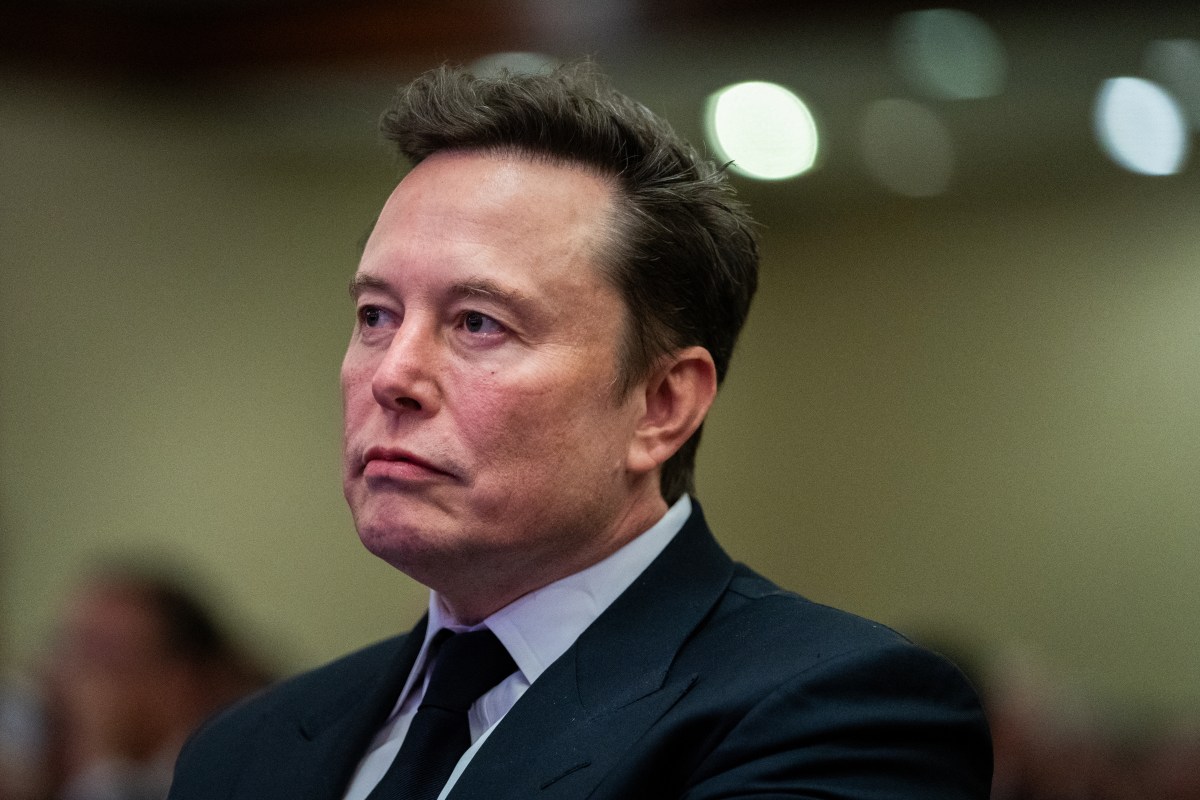
Elon Musk’s interview with CBS Sunday Morning seemed to get off to an awkward start, as reporter David Pogue asked the SpaceX CEO about his thoughts on his ally Donald Trump’s policies, including growing restrictions on international students.

“I think we want to stick to the subject of the day, which is, like, spaceships, as opposed to, you know, presidential policy,” Musk said.

Pogue looked surprised, replying, “Oh, okay, I was told, ‘Anything’s good.’”

“No,” Musk said, while looking into the distance. “Well … no.”

He did, however, comment on the controversy around his Department of Government Efficiency, which has been making aggressive cuts across federal agencies, and which Musk complained had become “the whipping boy for everything.”

“If there was some cut, real or imagined, everyone would blame DOGE,” he said.

Musk also suggested that he’s “a little stuck in a bind” when it comes to the Trump administration, where “I don’t want to speak out against the administration, but I also don’t want to take responsibility for everything the administration’s doing.”

Pogue’s interview was conducted before SpaceX’s Starship test flight on Tuesday, which saw the ship successfully launch but lose control on reentry. Asked whether there’s anything linking his various companies — in addition to SpaceX, there’s Tesla (which faces ongoing anti-Musk protests), xAI and X (formerly Twitter), Neuralink, and The Boring Company — Musk replied, “I guess you could think of the businesses as things that improve the probable trajectory of civilization.”

At the time, Musk was supposedly pulling back from his government work but said he would remain involved for a “day or two” per week. He told Pogue, “DOGE is going to continue, just as a way of life. And I will have some participation in that, but as I’ve said publicly, my focus has to be on the companies at this point.”

Pogue noted that after their conversation, an interview clip of Musk’s comments criticizing the Trump-backed budget bill drove a news cycle of their own — and soon after, Musk said he was ending his time as a special government employee. Trump, however, subsequently said Musk is “not really leaving.”

SpaceX’s ninth test flight of Starship launches into space, ends in a spin


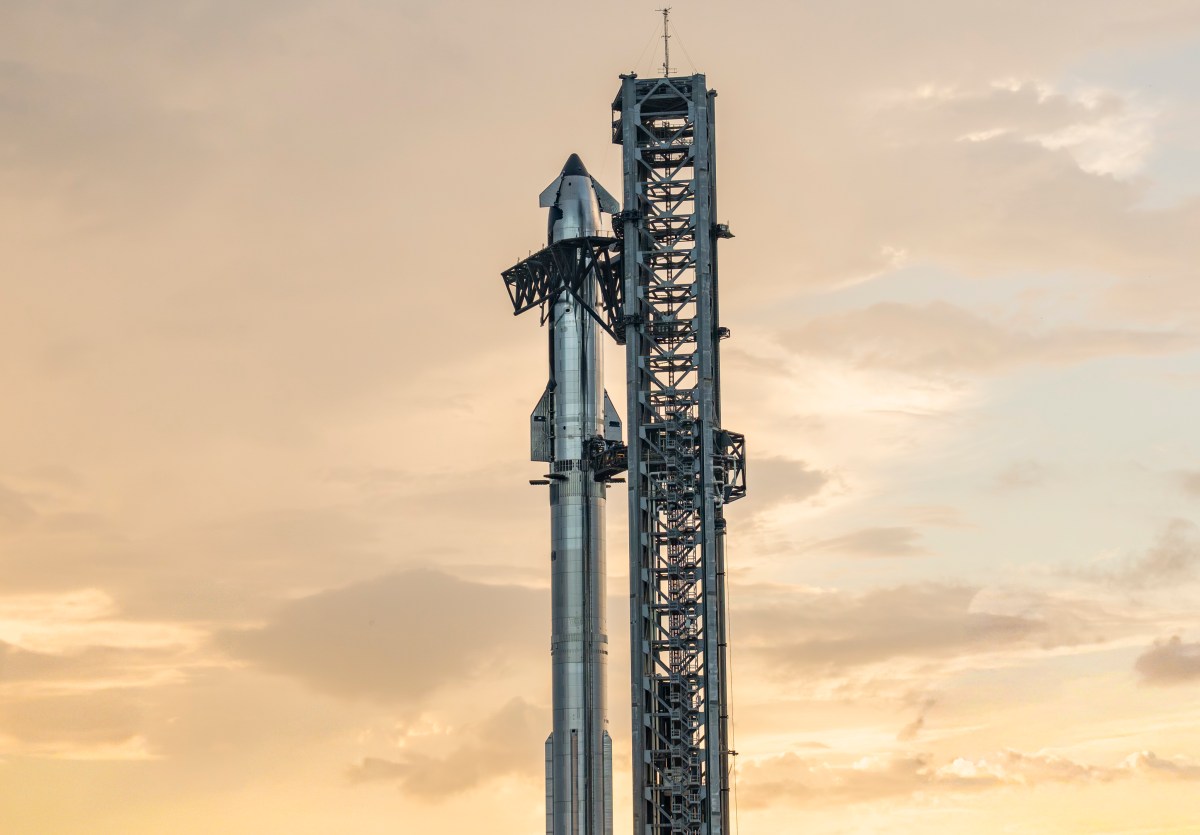
SpaceX’s Starship successfully separated from its Super Heavy rocket booster and reached orbit Tuesday evening, but later began spinning and made an uncontrolled re-entry into the Indian Ocean. SpaceX had cleared the surrounding airspace where Starship was coming down, according to the company.

The ninth test flight provided a mix of successes and failures for the company. It was the smoothest Starship test of the year, following two consecutive explosions. Starship, launched atop the Super Heavy booster, lifted off from SpaceX’s facility in southern Texas on Tuesday evening. It was also the first launch to use a flight-proven Super Heavy booster, which had launched and returned during Starship’s seventh flight test.

The heavy booster successfully separated and Starship entered space. But the ship was unable to open a side cargo hatch to deploy mock satellites in one planned test. Later in the flight, Starship lost attitude control, meaning it could no longer orient itself properly for re-entry.

The ninth flight test came less than a week after the Federal Aviation Administration cleared SpaceX to perform the test flight of its Starship rocket system following those back-to-back explosions earlier this year.

In January, SpaceX caught the Starship’s heavy booster rocket on its descent for a second time. Starship successfully separated from the booster and ignited its rockets to ascend to orbit, but it was soon lost after suffering an anomaly. Debris from Starship fell into the airspace near Puerto Rico, prompting the FAA to reroute several aircraft in the airspace.

SpaceX conducted another test in March. This time, the Super Heavy booster successfully separated was caught by the launch tower in Texas for a third time. Starship reached space, but eight minutes into the flight, the ship lost multiple Raptor engines and began to spiral.

As a result of the two explosions, the FAA expanded the size of hazard areas in the U.S. and other countries for the flight based on an updated safety analysis provided by SpaceX. After completing an investigation in the loss of Starship on its eighth flight test, SpaceX made several hardware changes to increase reliability.

How to watch SpaceX’s ninth Starship flight test on Tuesday


The FAA last week cleared SpaceX’s Starship to fly again after concluding its review of the previous flight, which ended in an explosion, and the next test could now take off as soon as Tuesday. SpaceX is eyeing May 27 for Starship’s ninth flight test, with a launch window opening at 7:30PM ET (6:30PM local time for the Texas Starbase). This launch will mark the first time SpaceX reuses a Super Heavy booster; the booster for flight nine previously flew with Starship’s seventh flight test earlier this year. While single-use parts have been replaced, SpaceX says it’s reusing 29 of the booster’s 33 Raptor engines.

As always, viewers at home will be able to watch along by tuning into the livestream, starting about 30 minutes before Starship launches. That will be available on SpaceX’s website and in a broadcast on its X profile.

To view this content, you’ll need to update your privacy settings. Please click here and view the “Content and social-media partners” setting to do so.

SpaceX conducted Starship’s eighth flight test back in March, but the vehicle ran into some issues a few minutes after launch. The Super Heavy booster was able to return to the launch site after separation from the upper stage and be successfully caught by the tower’s “chopstick” arms, but as for the ship itself, several Raptor engines shut off, causing it to tumble and ultimately blow itself up.

SpaceX says the issue was likely due to “a hardware failure in one of the upper stage’s center Raptor engines that resulted in inadvertent propellant mixing and ignition.” It’s since made some changes to prevent that from happening again. SpaceX said in an update on May 22 that “engines on the Starship’s upper stage will receive additional preload on key joints, a new nitrogen purge system, and improvements to the propellant drain system.”

For flight nine, the Super Heavy booster won’t return to the launch site, but will instead splash down in the ocean. The Starship upper stage will attempt to deploy eight Starlink dummy satellites, and SpaceX is otherwise looking to this flight to test “several experiments focused on enabling Starship’s upper stage to return to the launch site.”

SpaceX could soon have more control over Texas public road and beach closures


SpaceX could soon have greater control over the recreational activities of South Texas residents. The Houston Chronicle (via Gizmodo) and San Antonio Express-News report that a pair of state senate bills introduced earlier this month would give officials at the likely Starbase city the authority to decide when a nearby beach shuts down for weekday launch activities. Meanwhile, a third bill floated on Wednesday would take the company’s control a step further, making it a criminal offense for people on the beach not to comply with SpaceX’s evacuation orders.

The bills are possible because of an upcoming election that will almost certainly give SpaceX officials control of the area. On May 3, voters will decide if Starbase becomes a Texas city, something Elon Musk first proposed in 2021. Given that the area near the rocket site is populated mainly by SpaceX employees (after previous homeowners in Boca Chica Village moved, often after being bought out by the company), let’s just say the election’s outcome won’t likely be a toss-up.

Republican state senator Adam Hinojosa’s first bill, SB 2188, would let Starbase city officials (assuming the municipality establishment bill passes) decide when Boca Chica Beach is closed for weekday rocket tests and flights. An identical bill, HB 4660, was introduced in the state house by Republican Janie Lopez. Cameron County officials, who control the closures now, would maintain control on Friday afternoons and weekends.

Texas state senator Adam Hinojosa scowling in a photo.Texas state senator Adam Hinojosa scowling in a photo.

Texas state senator Adam Hinojosa (Campaign for Adam Hinojosa)

Meanwhile, Hinojosa’s second senate bill (SB 2230) would make it a Class B misdemeanor for people on the beach not to comply with Starbase’s evacuation orders. The freshman state senator said the bill would give the commercial spaceport “real teeth” to “compel people to do the right thing.” (Fittingly, Hinojosa’s election website touts his belief that “we don’t need more government in business — we need more business in government.”)

The Houston Chronicle reports that the FAA’s Environmental Assessment shows that SpaceX has moved much of its testing to a site that doesn’t require the closure of State Highway 4. A SpaceX flight test in April 2023 closed the road for over 24 hours, while another shuttered it for nearly eight hours last June. The company can close State Highway 4 for up to 500 hours each year for standard operations and up to 300 more hours to address incidents like an exploding rocket.

On the other hand, environmental groups have argued that SpaceX’s activities are damaging the area. Last year, the Center for Biological Diversity, American Bird Conservancy and other groups sued the FAA for allegedly rushing SpaceX’s permitting process without a full environmental review. And the Environmental Protection Agency fined the company for allegedly dumping pollutants into Texas wetlands adjacent to the Rio Grande River.

Craig Nazor, conservation chair for the Sierra Club’s Lone Star chapter, testified to the state senate on Wednesday that SB 2188 would “put beach closures directly in the hands of SpaceX.” He also expressed concern that the second senate bill could put folks who are unaware of an upcoming launch into legal trouble. “[SB 2230] could potentially make a criminal out of someone who’s out there and lost track of exactly what may be going on at the launch pad,” he said.

SpaceX shares stunning close-up footage of Starship engines firing up on 8th flight test


SpaceX launched its mighty Starship rocket for the eighth time last week. The mission was a bit of mixed bag, with the team successfully catching the first-stage Super Heavy booster on its return to the launchpad, but losing the Starship spacecraft in a midair explosion minutes after stage separation. The Elon Musk-led spaceflight company is now looking into what went wrong.

After each Starship test, SpaceX usually releases video clips showing the mission’s key moments. On Sunday, it shared some extraordinary footage (below) captured from below the booster as it launched from SpaceX’s Starbase facility in Boca Chica, Texas. The slowed-down video shows the rocket’s 33 Raptor engines firing up as the enormous 120-meter-tall vehicle leaves the launchpad.

View under the launch mount as Super Heavy's 33 Raptor engines ignite on Starship's eighth flight test pic.twitter.com/WRCazkhyXs

— SpaceX (@SpaceX) March 9, 2025


Please enable Javascript to view this content

With the rocket pumping out a colossal 17 million pounds of thrust, it’s hard to fathom how the camera that captured the footage managed to stay intact. But stay intact it did.

SpaceX hasn’t revealed how it achieved the feat, but in the comments below the footage, someone asked X’s AI assistant, Grok, how the the footage was captured from such a seemingly vulnerable spot. The chatbot responded: “High-speed cameras under the launch mount capture the ignition of Super Heavy’s 33 Raptor engines. They’re mounted on reinforced structures, shielded from heat and debris, and use advanced telemetry to transmit footage in real-time. SpaceX has perfected this tech for jaw-dropping views like Starship’s eighth flight test.”

Capturing a close-up of the world’s most powerful rocket from this angle is all the more remarkable when you consider how the launchpad disintegrated when it was blasted by the Starship’s rocket engines on its maiden launch in April 2023.

For the second flight test, SpaceX engineers designed a more robust and secure launchpad able to handle the incredible force generated by the Raptor engines as the Starship lifted off.

Once testing of the rocket is complete, NASA and SpaceX will use the Starship rocket to carry crew and cargo to the lunar surface, and possibly to Mars, too.


Elon Musk Calls Out NASA’s Moon Ambitions: ‘We’re Going Straight to Mars’


Although SpaceX founder Elon Musk is known for outspokenness and controversial comments on his social media site X, he has been relatively restrained when it comes to US space policy in recent years.

For example, he has rarely criticized NASA or its overall goal to return humans to the moon through the Artemis program. Rather, Musk, who has long preferred Mars as a destination for humans, has more or less been a team player when it comes to the space agency’s lunar-focused plans.

This is understandable from a financial perspective, as SpaceX has contracts worth billions of dollars to not only build a Human Landing System as part of the Artemis program but also to supply food, cargo, and other logistics services to a planned Lunar Gateway in orbit around the moon.

But privately, Musk has been critical of NASA’s plans, suggesting that the Artemis Program has been moving too slowly and is too reliant on contractors who seek cost-plus government contracts and are less interested in delivering results.

Silent on Policy No Longer

During the past 10 days, Musk has begun airing some of these private thoughts publicly. On Christmas Day, for example, Musk wrote on X, “The Artemis architecture is extremely inefficient, as it is a jobs-maximizing program, not a results-maximizing program. Something entirely new is needed.”

Then, on Thursday evening, he added this: “No, we’re going straight to Mars. The moon is a distraction.”

These are definitive statements that directly contradict NASA’s plans to send a series of human missions to the lunar south pole later this decade and establish a sustainable base of operations there with the Artemis program.

It would be one thing if Musk was just expressing his opinion as a private citizen. But since playing a significant part in the election of Donald Trump as the next president of the United States last year, Musk has assumed an important advisory role for the incoming administration. He was also partly responsible for the expected nomination of private astronaut Jared Isaacman to become the next administrator of NASA. Although Musk is not directing US space policy, he certainly has a meaningful say in what happens.

So What Does This Mean for Artemis?

The fate of Artemis is an important question not just for NASA but for the US commercial space industry, the European Space Agency, and other international partners who have aligned with the return of humans to the moon. With Artemis, the United States is in competition with China to establish a meaningful presence on the surface of the moon.

Based upon conversations with people involved in developing space policy for the Trump administration, I can make some educated guesses about how to interpret Musk’s comments. None of these people, for example, would disagree with Musk’s assertion that “the Artemis architecture is extremely inefficient” and that some changes are warranted.

With that said, the Artemis program is probably not going away. After all, it was the first Trump administration that created the program about five years ago. However, it may be less well-remembered that the first Trump White House pushed for more significant changes, including a “major course correction” at NASA.

“I call on NASA to adopt new policies and embrace a new mindset,” then-vice president Mike Pence said in May 2019. “If our current contractors can’t meet this objective, then we’ll find ones that will.” (Speaking of the vice president, it’s unlikely that the National Space Council will be reconstituted under JD Vance).

NASA Postpones Return of Stranded Starliner Astronauts to March


NASA has again postponed the return to Earth of Barry Wilmore and Sunita Williams, the astronauts stranded on the International Space Station after Boeing’s Starliner capsule malfunctioned in the middle of this year.

The crew of the spacecraft arrived at the ISS in June. The objective was to test the Starliner’s comprehensive capabilities, including launch, docking, and return systems. The mission was scheduled to last one week. Five of the capsule’s 28 thrusters failed to function before docking with the ISS. Boeing claimed that its technology could guarantee the safe return of the astronauts. However, NASA expressed doubts and concluded that the risk was too high. The agency entrusted the task to SpaceX.

Elon Musk’s company launched the Crew-9 mission in September to, among other things, return Williams and Wilmore. Until now, the stalled astronauts were scheduled to return in February aboard the Crew Dragon rocket. However, NASA has announced that it expects the expedition to return to Earth’s surface after the arrival of Crew-10, which will be sent in late March 2025 at the earliest.

The adjustment will allow SpaceX and NASA engineers to finalize development of a new Dragon spacecraft, which will be shipped to the company’s Florida facility early next month.

“Fabrication, assembly, testing, and final integration of a new spacecraft is a painstaking endeavor that requires great attention to detail,” said Steve Stich, manager of NASA’s Commercial Crew Program, in a statement. “We appreciate the hard work by the SpaceX team to expand the Dragon fleet in support of our missions and the flexibility of the station program and expedition crews as we work together to complete the new capsule’s readiness for flight.”

NASA said that Crew-9 and Crew-10 crews must complete a “handover period,” during which the ISS residents share experiences and knowledge with the new arrivals. This process ensures the proper performance of onboard science experiments and maintenance of the orbital complex.

NASA and SpaceX specialists evaluated several options for coordinating the next crewed delivery. They determined that the March launch for Crew-10 was the “best option for meeting NASA’s requirements and achieving space station objectives for 2025,” according to an agency press release.

A Long Haul

The ISS received two resupply flights in November, ensuring that the crew members have sufficient food, water, clothing, and oxygen. However, some experts have warned of potential health risks for Wilmore and Williams after spending more than nine months in space.

The scientific community has been studying the effects of spaceflight on the human body since the 1970s. In the years since the first lunar landing, it has identified conditions such as loss of bone mass, weakened heart function, visual problems, and the development of kidney stones.

A recent study from University College London reveals that the structure and function of the kidneys can also suffer permanent damage, although this is particularly aggressive in cases of astronauts who get too far away from Earth, which is not the case on the ISS.

NASA points out that the crews of expeditions to the ISS usually make extended stays, with an average duration of six months. It adds that some astronauts have carried out missions of up to one year to contribute to research on human adaptation to spaceflight, with a view to future lunar and Martian exploration.

This story originally appeared on WIRED en Español and has been translated from Spanish.

SpaceX facing FAA review for Starship launches from Kennedy


SpaceX's Starship rocket lifting off in November 2023.
SpaceX

SpaceX currently launches the Starship — the most powerful rocket ever built — from its Starbase facility in Boca Chica, Texas, but it also wants to launch it from the Kennedy Space Center in Florida.

For that to happen, its plans will first have to be cleared by the Federal Aviation Administration (FAA) by way of an environmental review, the agency announced on Friday.

NASA carried out a similar review five years ago and saw no issue with SpaceX launching the Starship from Kennedy, but since then the Elon Musk-led spaceflight company has adjusted its plans for the Starship and its associated infrastructure, prompting the FAA to announce its own review to assess the impact of the launches on the local environment.

Changes to SpaceX’s plan at Kennedy include a greater frequency of launches from 24 per year to as many as 44, and a slightly more powerful rocket design. SpaceX also wants to land the first-stage booster at Launch Complex 39A instead of at Landing Zone 1.

Pumping out a colossal 17 million pounds of thrust at launch — more than double that of the Saturn V rocket that powered the Apollo astronauts toward the moon from the same launch facility five decades ago, and almost twice that of NASA’s next-gen Space Launch System (SLS) rocket, which launched fro the first time in November 2022 — the Starship has a greater chance of disrupting the local environment than any other vehicle that’s launched from Florida’s Space Coast.

The maiden launch of the Starship, which has only flown three times to date, completely destroyed the Starbase launch pad when the force of the engines proved too great as the rocket lifted off. Debris was spread far and wide and into protected wildlife areas, causing consternation among environmentalists. SpaceX responded by building a more robust pad capable of handling subsequent launches.

These days, residents along the Space Coast are used to seeing launches involving SpaceX’s workhorse Falcon 9 rocket, which spits out a mere 1.7 million pounds of thrust at launch, as well as the occasional mission by SpaceX’s Falcon Heavy, which is three times more powerful. Starship launches, however, will be something else altogether.

Editors’ Recommendations