NASA Delays Launch of Artemis II Lunar Mission Once Again


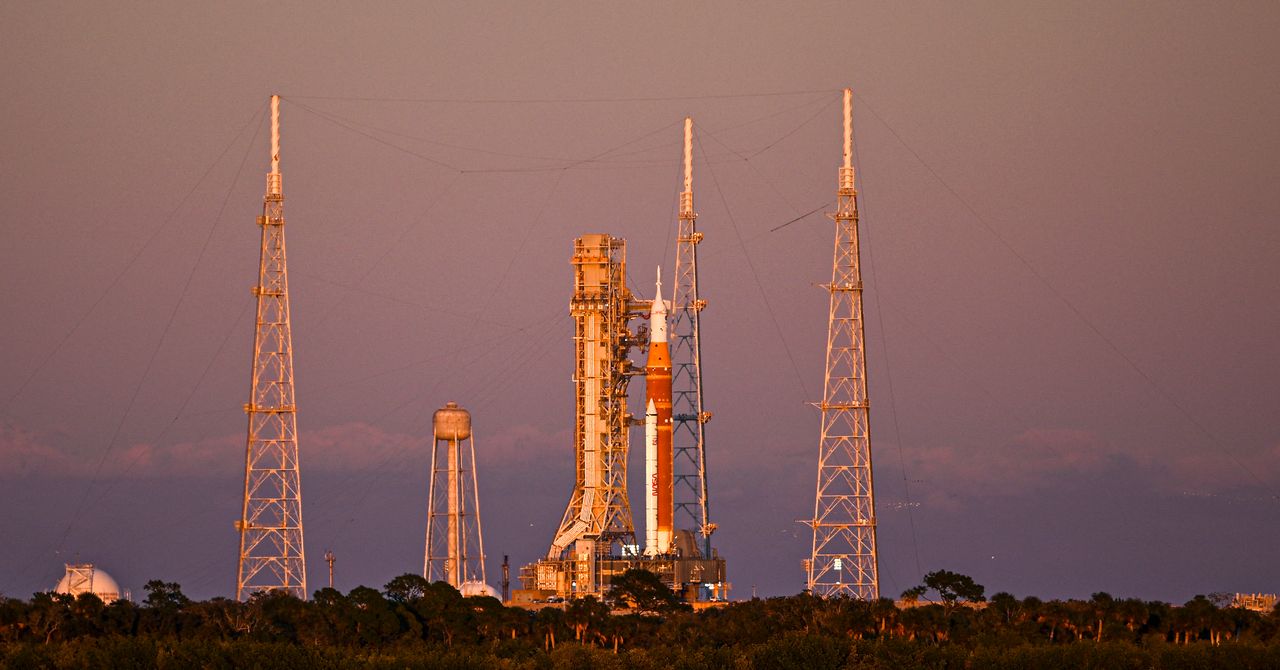
NASA has once again postponed the launch of Artemis II, the crewed lunar flyby mission, setting a new launch window for April. Although March 6 had been tentatively planned as the launch date, the US space agency revealed that a problem with the rocket has caused further delay.

According to NASA administrator Jared Isaacman, the failure was due to an interruption in the helium flow in the interim cryogenic propulsion stage of the Space Launch System (SLS). The helium flow is essential for purging the engines and pressurizing the fuel tanks. This system had functioned correctly in the two dress rehearsals conducted this month, but the failure occurred during a routine operation.

Due to the nature of the problem, NASA engineers will have to fix it from the Vehicle Assembly Building (VAB), so there’s no way to proceed with the March launch window. The rocket is on its way back to the hangar.

“I understand people are disappointed by this development,” the official stated on his X account. “That disappointment is felt most by the team at NASA, who have been working tirelessly to prepare for this great endeavor. During the 1960s, when NASA achieved what most thought was impossible, and what has never been repeated since, there were many setbacks.”

Will Artemis II be able to embark on its mission in April? NASA reported that rapid preparations have allowed it to potentially preserve the April launch window in the event of a reversal. It all depends on what the data, the repair efforts, and how the schedule comes together in the coming days.

Artemis II: The Setbacks

The mission had its first launch window between February 6 and 11. However, during the wet dress rehearsal (WDR), which is a full rehearsal with fuel, the team detected small hydrogen leaks during refueling and some minor technical glitches. After analyzing the situation, NASA concluded that the risk was considerable and could endanger the lives of the astronauts, so it decided to postpone the launch.

A second dress rehearsal, conducted on February 19, was successful. In a statement, the space agency explained that it loaded 700,000 gallons of liquid propellant with no leaks. “During the test, teams closely monitored liquid hydrogen fueling operations, which proved challenging during previous tests. Hydrogen gas concentrations remained under allowable limits, giving engineers confidence in new seals installed in an interface used to route fuel to the rocket,” NASA said.

At a subsequent press conference, mission representatives confirmed to the media that the new tentative liftoff date would be March 6. However, on February 20, the team failed to get helium to flow through the vehicle, a failure that also occurred during testing of the Artemis I mission. Isaacman noted that the cause could be due to a faulty filter, valve or connector plate.

“There are many differences between the 1960s and today, and expectations should rightfully be high after the time and expense invested in this program,” Isaacman said in his post. “I will say again, the President created Artemis as a program that will far surpass what America achieved during Apollo. We will return in the years ahead, we will build a Moon base, and undertake what should be continuous missions to and from the lunar environment.”

When it eventually launches, the Orion capsule will travel farther than any other manned spacecraft during its 10-day mission, surpassing on the sixth day the record of 400,171 kilometers set by Apollo 13. The return will conclude with Orion’s landing in the Pacific Ocean off the coast of San Diego, California.

Although there will be no lunar landing—that feat will fall to the Artemis III mission—the second launch is of crucial importance. Its success will demonstrate that NASA has the technical capabilities to return to the moon and begin a new phase of space exploration.

This story originally appeared in WIRED en Español and has been translated from Spanish.

Falcon 9 Milestones Vindicate SpaceX’s ‘Dumb’ Approach to Reuse


As SpaceX’s Starship vehicle gathered all of the attention this week, the company’s workhorse Falcon 9 rocket continued to hit some impressive milestones.

Both occurred during relatively anonymous launches of the company’s Starlink satellites but are nonetheless notable because they underscore the value of first-stage reuse, which SpaceX has pioneered over the past decade.

The first milestone occurred on Wednesday morning with the launch of the Starlink 10-56 mission from Cape Canaveral, Florida. The first stage that launched these satellites, Booster 1096, was making its second launch and successfully landed on the Just Read the Instructions drone ship. Strikingly, this was the 400th time SpaceX has executed a drone ship landing.

Then, less than 24 hours later, another Falcon 9 rocket launched the Starlink 10-11 mission from a nearby launch pad at Kennedy Space Center. This first stage, Booster 1067, subsequently returned and landed on another drone ship, A Shortfall of Gravitas.

This is a special booster, having made its debut in June 2021 and launching a wide variety of missions, including two Crew Dragon vehicles to the International Space Station and some Galileo satellites for the European Union. On Thursday, the rocket made its 30th flight, the first time a Falcon 9 booster has hit that level of experience.

A Decade in the Making

These milestones came about one decade after SpaceX began to have some success with first-stage reuse.

The company first made a controlled entry of the Falcon 9 rocket’s first stage in September 2013, during the first flight of version 1.1 of the vehicle. This proved the viability of the concept of supersonic retropropulsion, which was, until that time, just theoretical.

This involves igniting the rocket’s nine Merlin engines while the vehicle is traveling faster than the speed of sound through the upper atmosphere, with external temperatures exceeding 1,000 degrees Fahrenheit. Due to the blunt force of this reentry, the engines in the outer ring of the rocket wanted to get splayed out, the company’s chief of propulsion at the time, Tom Mueller, told me for the book Reentry. Success on the first try seemed improbable.

He recalled watching this launch from Vandenberg Space Force Base in California and observing reentry as a camera aboard SpaceX founder Elon Musk’s private jet tracked the rocket. The first stage made it all the way down, intact.

“I remember watching the live video and seeing the light of the engine on the ocean,” Mueller said. “And holy shit, it was there. The rocket came down, landed in the ocean, and blew up. That was unreal. It worked the first time. I was like, get the barge ready. Get the landing legs ready. This shit works.”

It would take a good deal more tinkering and experimentation, but by December 2015, SpaceX had landed its first rocket on a pad along the Florida coast. The first drone ship landing followed in April 2016. A little less than a year after this, SpaceX reflew a Falcon 9 stage for the first time.

Silencing the Doubters

Many people in the industry were skeptical about SpaceX’s approach to reuse. In the mid-2010s, both the European and Japanese space agencies were looking to develop their next generation of rockets. In both cases, Europe with the Ariane 6 and Japan with the H3, the space agencies opted for traditional, expendable rockets instead of pushing toward reuse.

As a result, both of these competitors for commercial satellite launches are now about a decade behind SpaceX in terms of launch technology. If the ambitious Starship rocket is successful, that gap could widen further.

How NASA Might Change Under Donald Trump


Although the details remain in flux, the transition team reviewing NASA and its activities has begun to draft potential executive orders for changes to space policy under the Trump Administration.

Sources familiar with the five people on the team, who have spent the last six weeks assessing the space agency and its exploration plans, were careful to note that such teams are advisory in nature. They do not formally set policy nor is their work always indicative of the direction an incoming presidential administration will move toward.

Nevertheless, in trying to set clear goals for NASA and civil space policy, the ideas under consideration reflect the Trump administration’s desire for “big changes” at NASA, both in terms of increasing the effectiveness and velocity of its programs.

Not Business as Usual

The transition team has been grappling with an agency that has a superfluity of field centers—ten spread across the United States, as well as a formal headquarters in Washington, DC—and large, slow-moving programs that cost a lot of money and have been slow to deliver results.

“This will not be business as usual,” one person familiar with this group’s meetings said. The mindset driving their deliberations is a focus on results and speed.

Donald Trump will be inaugurated as president for his second term a little less than a month from now, on January 20. On that day he is expected to sign a number of executive orders on issues that he campaigned on. This could include space policy, but more likely that will wait until later in his presidency.

One source said the space transition team has been working off of ideas that Trump has talked about publicly, including his interest in Mars. For example, during a campaign speech this fall, Trump referenced SpaceX founder Elon Musk, who played a significant role during the campaign both in terms of time and money, and his desire to settle Mars.

“We are leading in space over Russia and China… It’s my plan, I’ll talk to Elon,” Trump said in September. “Elon get those rocket ships going because we want to reach Mars before the end of my term, and we want also to have great military protection in space.”

Ideas Under Consideration

The transition team has been discussing possible elements of an executive order or other policy directives. They include:

  • Establishing the goal of sending humans to the Moon and Mars, by 2028
  • Canceling the costly Space Launch System rocket and possibly the Orion spacecraft
  • Consolidating Goddard Space Flight Center and Ames Research Center at Marshall Space Flight Center in Alabama
  • Retaining a small administration presence in Washington, DC, but otherwise moving headquarters to a field center
  • Rapidly redesigning the Artemis lunar program to make it more efficient

NASA Postpones Return of Stranded Starliner Astronauts to March


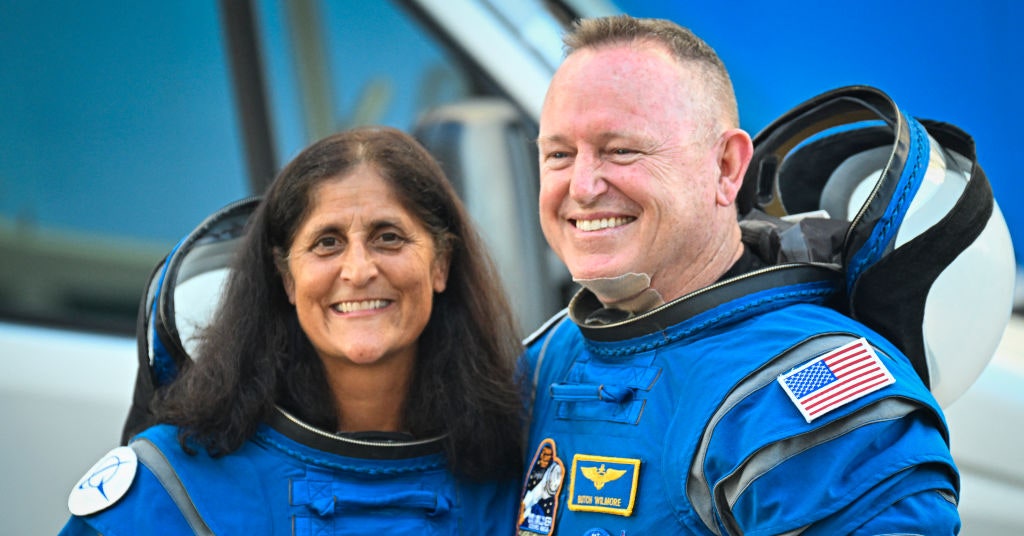
NASA has again postponed the return to Earth of Barry Wilmore and Sunita Williams, the astronauts stranded on the International Space Station after Boeing’s Starliner capsule malfunctioned in the middle of this year.

The crew of the spacecraft arrived at the ISS in June. The objective was to test the Starliner’s comprehensive capabilities, including launch, docking, and return systems. The mission was scheduled to last one week. Five of the capsule’s 28 thrusters failed to function before docking with the ISS. Boeing claimed that its technology could guarantee the safe return of the astronauts. However, NASA expressed doubts and concluded that the risk was too high. The agency entrusted the task to SpaceX.

Elon Musk’s company launched the Crew-9 mission in September to, among other things, return Williams and Wilmore. Until now, the stalled astronauts were scheduled to return in February aboard the Crew Dragon rocket. However, NASA has announced that it expects the expedition to return to Earth’s surface after the arrival of Crew-10, which will be sent in late March 2025 at the earliest.

The adjustment will allow SpaceX and NASA engineers to finalize development of a new Dragon spacecraft, which will be shipped to the company’s Florida facility early next month.

“Fabrication, assembly, testing, and final integration of a new spacecraft is a painstaking endeavor that requires great attention to detail,” said Steve Stich, manager of NASA’s Commercial Crew Program, in a statement. “We appreciate the hard work by the SpaceX team to expand the Dragon fleet in support of our missions and the flexibility of the station program and expedition crews as we work together to complete the new capsule’s readiness for flight.”

NASA said that Crew-9 and Crew-10 crews must complete a “handover period,” during which the ISS residents share experiences and knowledge with the new arrivals. This process ensures the proper performance of onboard science experiments and maintenance of the orbital complex.

NASA and SpaceX specialists evaluated several options for coordinating the next crewed delivery. They determined that the March launch for Crew-10 was the “best option for meeting NASA’s requirements and achieving space station objectives for 2025,” according to an agency press release.

A Long Haul

The ISS received two resupply flights in November, ensuring that the crew members have sufficient food, water, clothing, and oxygen. However, some experts have warned of potential health risks for Wilmore and Williams after spending more than nine months in space.

The scientific community has been studying the effects of spaceflight on the human body since the 1970s. In the years since the first lunar landing, it has identified conditions such as loss of bone mass, weakened heart function, visual problems, and the development of kidney stones.

A recent study from University College London reveals that the structure and function of the kidneys can also suffer permanent damage, although this is particularly aggressive in cases of astronauts who get too far away from Earth, which is not the case on the ISS.

NASA points out that the crews of expeditions to the ISS usually make extended stays, with an average duration of six months. It adds that some astronauts have carried out missions of up to one year to contribute to research on human adaptation to spaceflight, with a view to future lunar and Martian exploration.

This story originally appeared on WIRED en Español and has been translated from Spanish.