Join NASA’s Mars rover on its record-breaking driver across the martian surface


NASA’s Perseverance rover has been exploring the surface of Mars since it landed there in spectacular fashion nearly five years ago.

In that time, NASA’s most advanced rover to date, which is about the size of a small car, has traveled almost 25 miles (40 kilometers) while all the time conducting science research and collecting soil samples for return to Earth.

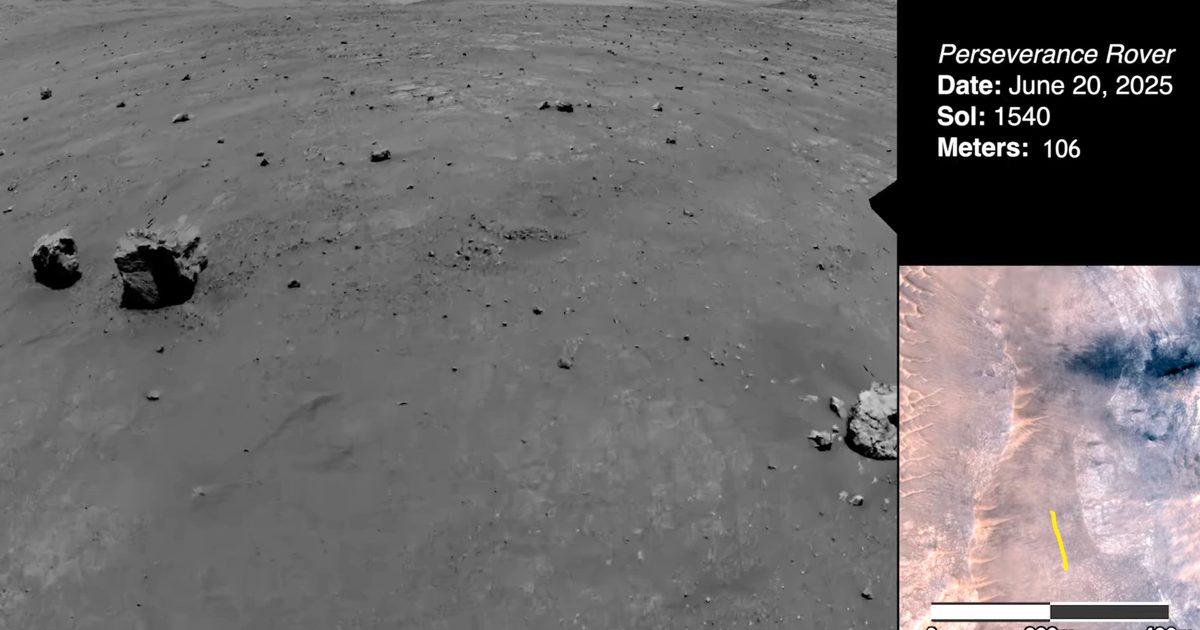
In a new video (top) released on Wednesday, NASA’s Jet Propulsion Laboratory (JPL), which overseas the space agency’s Mars missions, has shared footage captured by Perseverance’s two navigation cameras (navcams) as it completed a drive of 1,350.7 feet (411.7 meters) in 4 hours and 24 minutes on June 19, 2025 — a new record for distance covered in a single sol (a Mars sol is a martian solar day and lasts about 24 hours and 39 minutes).

The video was created by stitching together 300 image pairs from the rover’s navcams, with one pair of captures occurring every 16 feet (5 meters) for the first third of the journey, and then one every 3.3 feet (1 meter) for the rest of it. Virtual frames were inserted about every 4 inches (0.1 meters).

As the rover has a top speed of just under 0.1 mph, the final piece has been sped up to create something that has the feel of a drone flying just above the ground.

The rover tracks that appear in the video are from Perseverance’s two previous southbound drives that took place in May 2025.

The 1,350.7-feet (411.7-meter) drive beats the previous single-sol drive record of 718.5 feet (219 meters) set by NASA’s Opportunity rover way back in 2005.

The footage is a testament to the rover’s ongoing ability to deal with the harsh martian conditions that include rough terrain and freezing temperatures.

Interestingly, JPL has continued testing the rover’s various parts on Earth to confirm their longevity and to learn more about how long they’re likely to last, with the team confident that Perseverance will be able to keep on rolling until at least 2031, barring any major mishaps, of course.

“These tests show the rover is in excellent shape,” JPL’s Steve Lee, Perseverance’s deputy project manager, said on NASA’s website. “All the systems are fully capable of supporting a very long-term mission to extensively explore this fascinating region of Mars.”
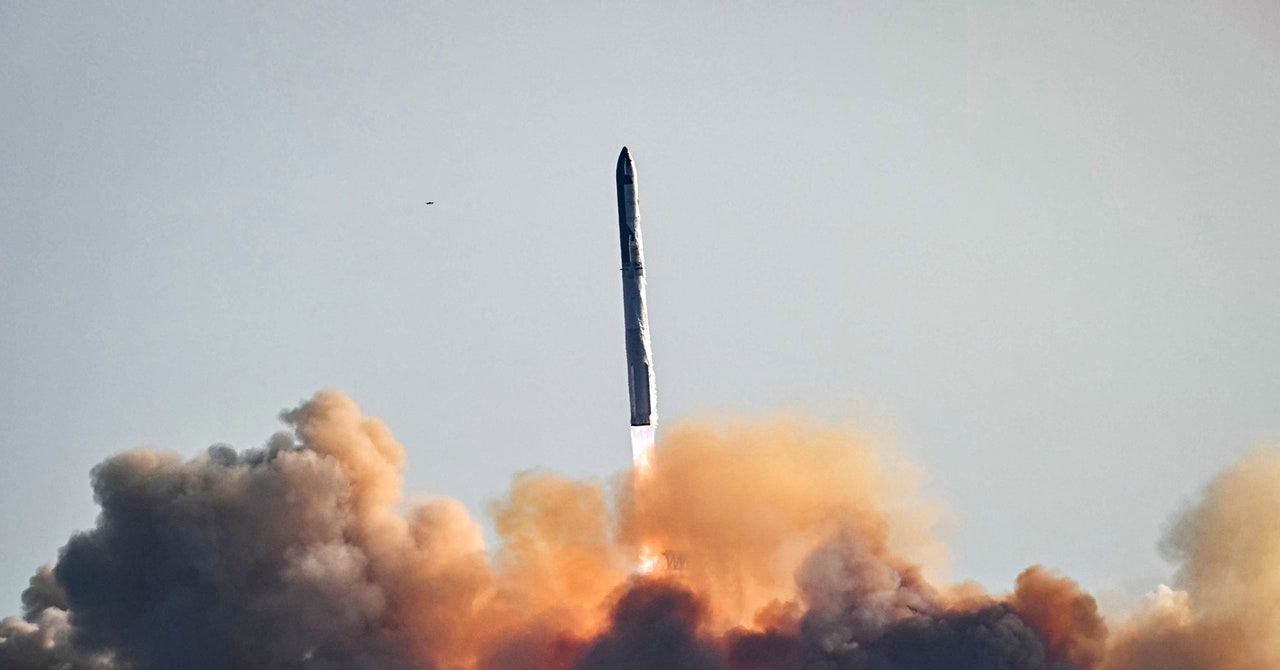
Elon Musk Calls Out NASA’s Moon Ambitions: ‘We’re Going Straight to Mars’


Although SpaceX founder Elon Musk is known for outspokenness and controversial comments on his social media site X, he has been relatively restrained when it comes to US space policy in recent years.

For example, he has rarely criticized NASA or its overall goal to return humans to the moon through the Artemis program. Rather, Musk, who has long preferred Mars as a destination for humans, has more or less been a team player when it comes to the space agency’s lunar-focused plans.

This is understandable from a financial perspective, as SpaceX has contracts worth billions of dollars to not only build a Human Landing System as part of the Artemis program but also to supply food, cargo, and other logistics services to a planned Lunar Gateway in orbit around the moon.

But privately, Musk has been critical of NASA’s plans, suggesting that the Artemis Program has been moving too slowly and is too reliant on contractors who seek cost-plus government contracts and are less interested in delivering results.

Silent on Policy No Longer

During the past 10 days, Musk has begun airing some of these private thoughts publicly. On Christmas Day, for example, Musk wrote on X, “The Artemis architecture is extremely inefficient, as it is a jobs-maximizing program, not a results-maximizing program. Something entirely new is needed.”

Then, on Thursday evening, he added this: “No, we’re going straight to Mars. The moon is a distraction.”

These are definitive statements that directly contradict NASA’s plans to send a series of human missions to the lunar south pole later this decade and establish a sustainable base of operations there with the Artemis program.

It would be one thing if Musk was just expressing his opinion as a private citizen. But since playing a significant part in the election of Donald Trump as the next president of the United States last year, Musk has assumed an important advisory role for the incoming administration. He was also partly responsible for the expected nomination of private astronaut Jared Isaacman to become the next administrator of NASA. Although Musk is not directing US space policy, he certainly has a meaningful say in what happens.

So What Does This Mean for Artemis?

The fate of Artemis is an important question not just for NASA but for the US commercial space industry, the European Space Agency, and other international partners who have aligned with the return of humans to the moon. With Artemis, the United States is in competition with China to establish a meaningful presence on the surface of the moon.

Based upon conversations with people involved in developing space policy for the Trump administration, I can make some educated guesses about how to interpret Musk’s comments. None of these people, for example, would disagree with Musk’s assertion that “the Artemis architecture is extremely inefficient” and that some changes are warranted.

With that said, the Artemis program is probably not going away. After all, it was the first Trump administration that created the program about five years ago. However, it may be less well-remembered that the first Trump White House pushed for more significant changes, including a “major course correction” at NASA.

“I call on NASA to adopt new policies and embrace a new mindset,” then-vice president Mike Pence said in May 2019. “If our current contractors can’t meet this objective, then we’ll find ones that will.” (Speaking of the vice president, it’s unlikely that the National Space Council will be reconstituted under JD Vance).

X adds Twitch to its advertising boycott lawsuit


Twitch is now on the docket for X’s lawsuit against companies that stopped advertising on the social media site. X amended its lawsuit on Monday to include Twitch as a defendant in its lawsuit in a federal court in Wichita Falls, Texas, according to Reuters.

The new complaint claims that the gaming stream site owned by Amazon stopped purchasing ads on X at the end of 2022. X alleges that Twitch and other companies conspired with the World Federation of Advertisers (WFA) network’s Global Alliance for Responsible Media (GARM) initiative to withhold “billions of dollars in advertising revenue” from Elon Musk’s social media company.

The plaintiff alleges the boycott violated federal antitrust laws and is demanding a jury trial to settle the matter. GARM also announced its discontinuation two days after X filed its lawsuit.

X Corp.’s joint lawsuit first filed in August also includes the WFA, the global food manufacturer Mars Incorporated, the drugstore chain CVS and the Danish energy company Ørsted A/S over the advertising boycott. X also has a lawsuit against the media watchdog group Media Matters for publishing a report showing X displayed ads next to antisemitic content on the platform.

Scientists find evidence of liquid water deep underneath the Martian surface


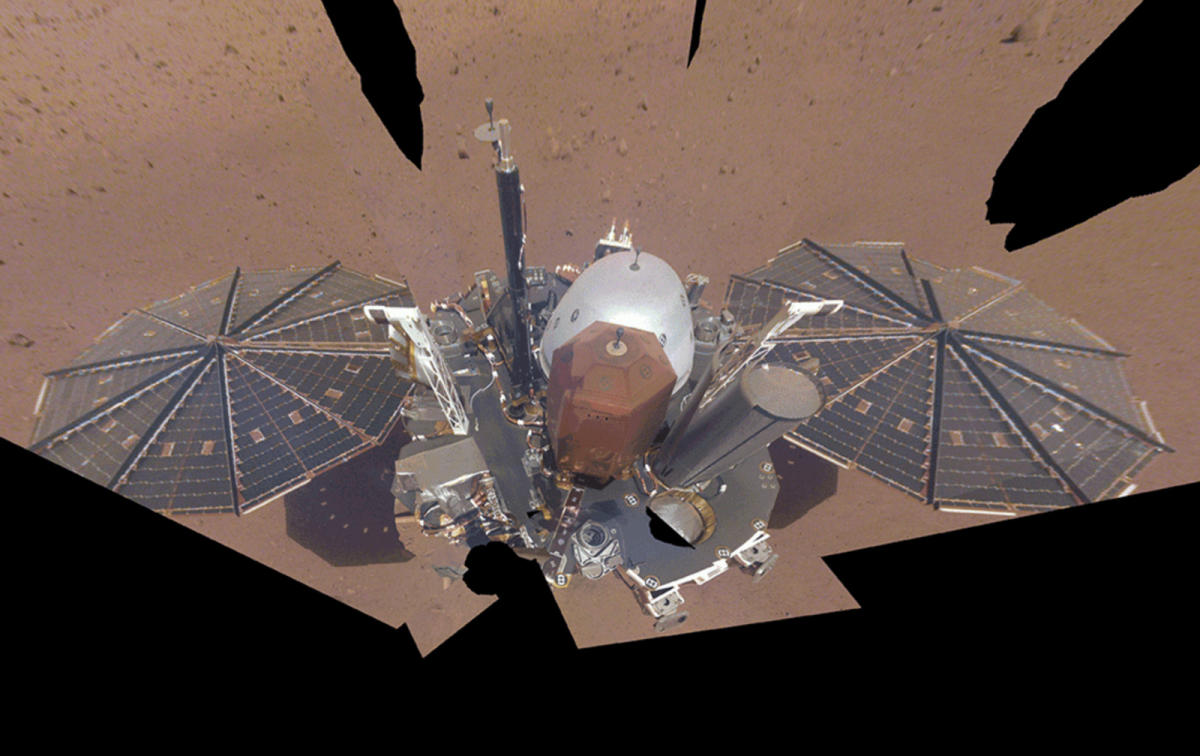
Water exists on Mars, according to a team of geophysicists, and not just as ice on its poles or as vapor in its atmosphere. The scientists have found evidence of liquid water deep in its outer crust, based on their analysis of data provided by NASA’s Mars Insight Lander. Specifically, they analyzed four years’ worth of ground motions recorded by the lander’s seismometer. By looking at seismic velocities, or how fast seismic waves travel on the planet, they were able to determine the materials that the waves moved through. What they found was that Mars’ mid-crust has fractured igneous rocks saturated with liquid water.

One of the scientists involved in the study, Prof Michael Manga from the University of California, Berkeley, told the BBC that they implemented the same techniques used “to prospect for water on Earth, or to look for oil and gas.” He said his group’s findings can answer the question of where all the water on Mars had gone, because features on the planet’s surface showed that it had lakes and rivers around three billion years ago. While there’s a theory that most of that water was lost to space, scientists have challenged that idea in recent years. One study by Caltech and NASA JPL published in 2021 found data that most of that water is still trapped in the planet’s crust.

The scientists involved in this newer study, published in PNAS, were only able to analyze seismic velocity data taken from underneath the lander. However, they believe that similar underground water reservoirs exist all over the planet, and they estimate that there’s enough liquid water under the surface to form a layer across Mars that’s half a mile deep. Manga told the the BBC that “much of our water is underground and there’s no reason for that not to be the case on Mars too.”

While the team’s findings could be taken as good news for space agencies and private companies looking to visit and even form human colonies on the planet, it won’t be easy reaching Mars’ water reservoirs. They’re located around 7 to 12.5 miles below the surface, which won’t be easy to reach even on our planet. “Drilling a hole 10km (6 miles) deep on Mars — even for [Elon] Musk — would be difficult,” Manga said, adding that “without liquid water, you don’t have life.”

NASA’s Curiosity rover accidentally uncovered pure sulfur crystals on Mars


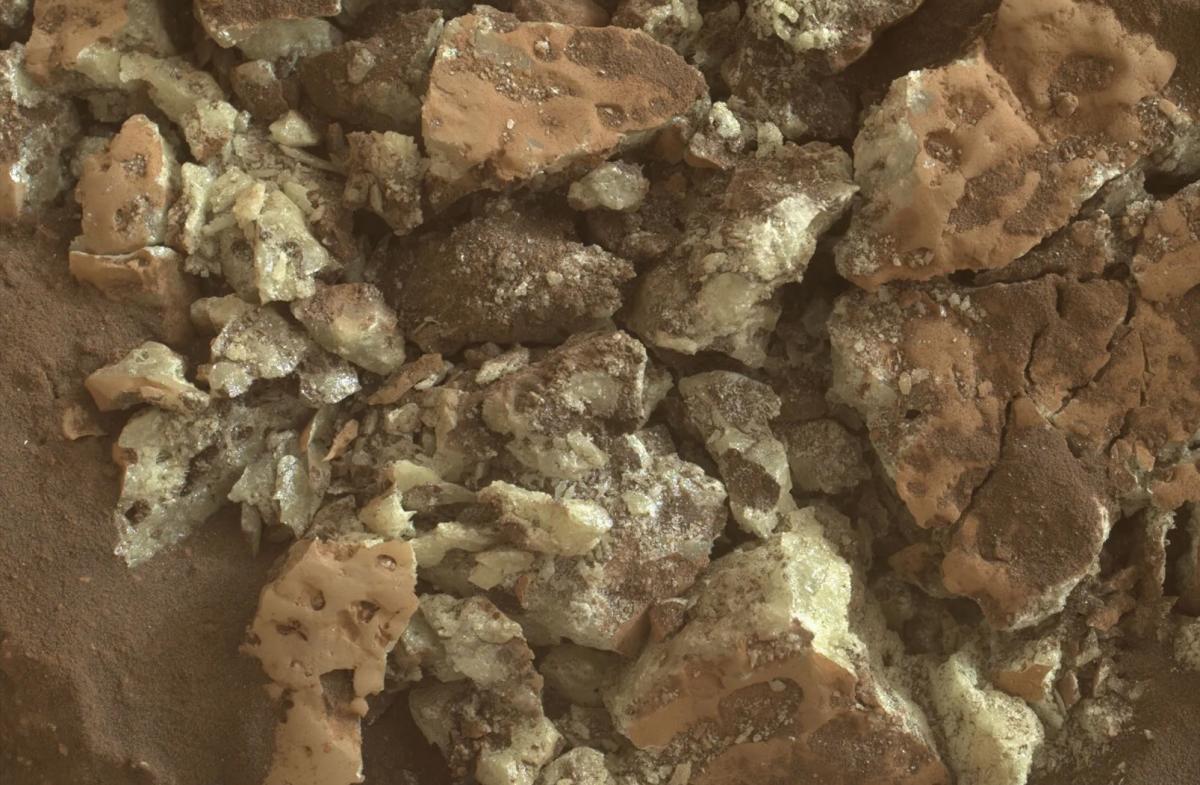
NASA scientists say pure sulfur has been found on Mars for the first time after the Curiosity rover inadvertently uncovered a cluster of yellow crystals when it drove over a rock. And it looks like the area is filled with it. It’s an unexpected discovery — while minerals containing sulfur have been observed on the Red Planet, elemental sulfur on its own has never been seen there before. “It forms in only a narrow range of conditions that scientists haven’t associated with the history of this location,” according to .

Curiosity cracked open the rock on May 30 while driving in a region known as the Gediz Vallis channel, where similar rocks were seen all around. The channel is thought to have been carved by water and debris flows long ago. “Finding a field of stones made of pure sulfur is like finding an oasis in the desert,” said Ashwin Vasavada, Curiosity’s project scientist. “It shouldn’t be there, so now we have to explain it. Discovering strange and unexpected things is what makes planetary exploration so exciting.”

A rock run over and cracked by the Curiosity rover revealing yellow sulfur crystalsA rock run over and cracked by the Curiosity rover revealing yellow sulfur crystals

NASA/JPL-Caltech/MSSS

After spotting the yellow crystals, the team later used a camera on Curiosity’s robotic arm to take a closer look. The rover then took a sample from a different rock nearby, as the pieces of the rock it had smashed were too brittle for drilling. Curiosity is equipped with instruments that allow it to analyze the composition of rocks and soil, and NASA says its Alpha Particle X-Ray Spectrometer (APXS) confirmed it had found elemental sulfur.