Google Is Slopping Up Search and It Wants You to Talk to the Ads


Worried that the ongoing embrace of artificial intelligence and the acceleration of late-stage capitalism will continue to leave people isolated from each other? Don’t worry, you can talk to ads now! According to a report from Search Engine Land, at this year’s Google Marketing Live event, the company announced a new generation of “conversational” advertisements that will soon start to populate search results.

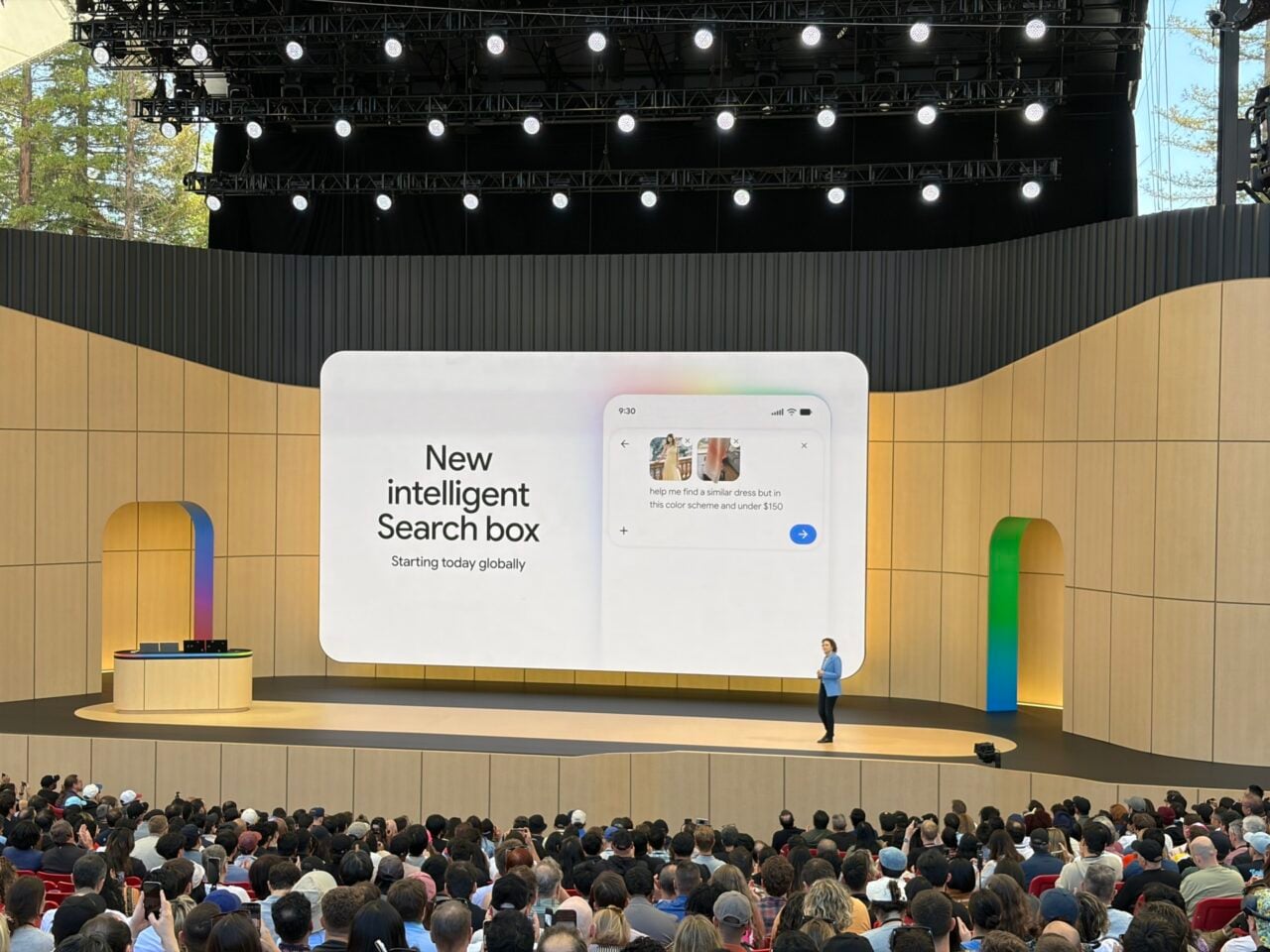
Google will be rolling out several new ad experiences that will pair with the company’s re-imagined and AI-centric search. That includes “Conversational Discovery” ads, which Search Engine Land reports are sponsored results that are designed to look like an answer to a person’s query. It’ll appear in AI Mode within Google Search and will produce tailored responses with the company’s Gemini AI model. So if you’ve ever found yourself wanting to talk to an advertisement, congratulations, because your strange, specific desire is about to be fulfilled.

In addition to the chatty ads, Google will also introduce “Highlighted Answers,” which will offer highly relevant promotions that will be displayed in a recommendation list. That, too, will be powered by Gemini and will reportedly appear in Google’s standard Search experience. On the consumer side, it’s probably just going to feel like more ads. On the business side, Search Engine Land reports that it’ll make advertisements more dynamic and targeted instead of static and locked to specific keywords and pre-made copy.

While Google is actively trashing its flagship Search product in pursuit of pumping as much AI slop into it as possible, the Wall Street Journal reported that Gemini itself will remain ad-free for the time being. But you’d have to be pretty naive to think that’ll remain the case. We’re already seeing other companies trying to slip ads into their chatbot interfaces.

OpenAI did it, though the results of that experiment would generously be described as mixed and more accurately described as a failure. Turns out corporations are thrilled to pay high rates for ad placements that don’t actually seem to get any attention. Of course, Google has been in the ad game for much longer and has a lot of dark arts to tap into that an upstart like OpenAI can’t—like, say, a digital advertising monopoly.

Search Engine Land said that Conversational Discovery ads and Highlighted Answers are already being tested on users in the United States and will appear on both mobile and desktop. More AI-powered features for advertisers are expected to roll out later this year. So get ready for the web to get even worse.

X adds Twitch to its advertising boycott lawsuit


Twitch is now on the docket for X’s lawsuit against companies that stopped advertising on the social media site. X amended its lawsuit on Monday to include Twitch as a defendant in its lawsuit in a federal court in Wichita Falls, Texas, according to Reuters.

The new complaint claims that the gaming stream site owned by Amazon stopped purchasing ads on X at the end of 2022. X alleges that Twitch and other companies conspired with the World Federation of Advertisers (WFA) network’s Global Alliance for Responsible Media (GARM) initiative to withhold “billions of dollars in advertising revenue” from Elon Musk’s social media company.

The plaintiff alleges the boycott violated federal antitrust laws and is demanding a jury trial to settle the matter. GARM also announced its discontinuation two days after X filed its lawsuit.

X Corp.’s joint lawsuit first filed in August also includes the WFA, the global food manufacturer Mars Incorporated, the drugstore chain CVS and the Danish energy company Ørsted A/S over the advertising boycott. X also has a lawsuit against the media watchdog group Media Matters for publishing a report showing X displayed ads next to antisemitic content on the platform.

Judge denies Media Matters’ motion to dismiss X’s not-libel lawsuit


A Texas judge denied Media Matters for America’s request for a dismissal on Thursday allowing X’s lawsuit over alleged anti-semitic and racist content. The Verge reported that Northern District of Texas Judge Reed O’Connor dismissed the request for a dismissal paving the way for X’s lawsuit against Media Matters to continue.

Media Matters submitted its dismissal request in early March on the grounds that X’s case lacked “personal jurisdiction,” an “improper venue” and the “failure to state a claim.” O’Connor dismissed all of those claims, according to court records.

The lawsuit filed last year in federal court seeks damages from the media watchdog group over “maliciously manufactured” images reporting that X’s platform placed Neo-Nazi and white-nationlist content next to advertisers’ images causing advertisers to flee the site. The images Media Matters used weren’t manufactured but X’s claim is that its dogged pursuit of ads’ placement with racist content by using certain accounts to bypass ad filters caused irreparable harm to the social media giant.

X owner Elon Musk’s other companies are located in Texas but aren’t directly connected to the Media Matters lawsuit. X closed its San Francisco offices earlier this month and owner Elon Musk announced in July that X’s headquarters will move to Austin. Tesla moved its headquarters from California to the Lone Star State in 2021 and SpaceX from Delaware earlier this year when a judge threw out a $56 billion pay package from the state.

However, in dismissing the personal jurisdiction argument, O’Connor noted that two of X’s “blue-chip” advertisers like AT&T and Oracle included in Media Matters’ coverage are based in Texas. He cited the landmark 2002 Internet defamation case Revell v. Lidov quoting the 5th Circuit Court of Appeals’ assertion that “if you are going to pick a fight in Texas, it is reasonable to expect that it be settled there.”

Google Wants to Show You More YouTube Ads When You Pause Videos


Image for article titled Google Wants to Show You More YouTube Ads When You Pause Videos

Image: PixieMe (Shutterstock)

If you already hate ads on YouTube, then you’re going to have a bad time with Pause Ads. During its earnings calls on Thursday, Google crowed about the success of the tests it’s run on the ads, which could indicate the “feature” will roll out to even more watchers.

As the name implies, Pause Ads are unskippable advertisements that play when you hit pause on a video. Google is trialing Pause Ads on TVs playing YouTube videos, and according to yesterday’s call, the company is happy with the results.

“In Q1, we saw strong traction from the introduction of a Pause Ads pilot on connected TVs, a new non-interruptive ad format that appears when users pause their organic content,” Philipp Schindler, senior vice president and chief business officer at Google, said in Thursday’s earnings call. “Initial results show that Pause ads are driving strong Brand Lift results and are commanding premium pricing from advertisers.”

Schindler didn’t say if Pause Ads will roll out to more YouTube users or if these unwanted advertisements will find their way to smaller screens like phones and desktops. YouTube first highlighted the feature last year in its Upfronts post saying how these ads were a great opportunity for brands to “drive awareness or action by owning that unique interactive moment when people pause a video.”

It’s no surprise that YouTube wants people to watch more of their ads because that’s where it gets a lot of its money. That and people who pay for YouTube Premium because they’re sick of the ads.

The video platform has been cracking down on ad blockers for the past year. This move appears to be helping Google’s bottom line as the company said in its earnings call that YouTube Ads revenue was up 21% over the same time last year.