Disney Asked Character.AI to Go Bankrupt for a Get-Out-of-Lawsuits Card


According to an order of dismissal in one of the cases, the overall settlement was approved by a California probate court in July, and the court tasked a referee to hear out all the issues pertaining to each individual settlement. On October 11, a day before Character.AI declared bankruptcy, the referee approved each settlement.

The Tech Justice Law Project and Social Media Victims Law Center, which represented plaintiffs in many of the lawsuits, declined to comment.

Despite losing key staff after the Google transaction and, according to the current CEO, struggled with profitability “at all times,” Character.AI continued to develop AI tools, including “real-time audio-driven FaceTime-style video generation with fictional characters,” according to the current CEO’s declaration.

In August 2025, Character.AI worked with an investment banker to try to find either a strategic buyer or investor. According to the bankruptcy filings, Character.AI and the banker received “consistent feedback” that its product and user base were “impressive,” but that the surrounding litigation and “regulatory overhang” made it unbuyable.

That November, Character.AI learned that a coalition of state attorneys general had started investigating the company. When the company filed for bankruptcy, the number of states and territories involved in the multistate investigation had climbed to 46.

According to a notice of interest filed in the bankruptcy proceedings by the National Association of Attorneys General on behalf of 40 states, those states’ investigations uncovered “serious issues” with Character.AI, including screenshots of Character.AI chatbots encouraging minors to hide their self-harm injuries and kill their parents.

A spokesperson for Character.AI says that the filing “is not an accurate portrayal of the safety of our platform.”

The filings say that Character.AI was in the process of negotiating with the states over how to address the issues they identified, but did not reach any agreements before declaring bankruptcy.

If the deal is completed and approved by the courts, Disney will have both Character.AI’s staff and much of its technology stack, but will be able to sidestep the ongoing legal issues that contributed to Character.AI’s downfall, including the multistate investigation.

The states who filed a notice of interest in the bankruptcy have made it clear that they reserve their rights to challenge any bankruptcy plan, potentially setting up a fight over the ultimate outcome of the bankruptcy.

“It’s bad for society to let companies exercise control without responsibility,” says Newman. “And that’s what it looks like.”

OpenAI reportedly plans to increase ChatGPT’s price to $44 within five years


OpenAI is reportedly telling investors that it plans on charging $22 a month to use ChatGPT by the end of the year. The company also plans to aggressively increase the monthly price over the next five years up to $44.

The documents obtained by shows that OpenAI took in $300 million in revenue this August, and expects to make $3.7 billion in sales by the end of the year. Various expenses such as salaries, rent and operational costs will cause the company to lose $5 billion this year.

OpenAI is reportedly circulating the documents the NYT reported on as part of a drive to find new investors to prevent or lessen its financial shortfall. Fortunately, OpenAI is raising money on a $150 billion valuation, and a new round of investments could bring in as much as $7 billion.

OpenAI is also reportedly in the midst of switching from . The business model allows for the removal of any caps on investor returns so they’ll have more room to negotiate for new investors at possibly higher rates.

Google Wants to Show You More YouTube Ads When You Pause Videos


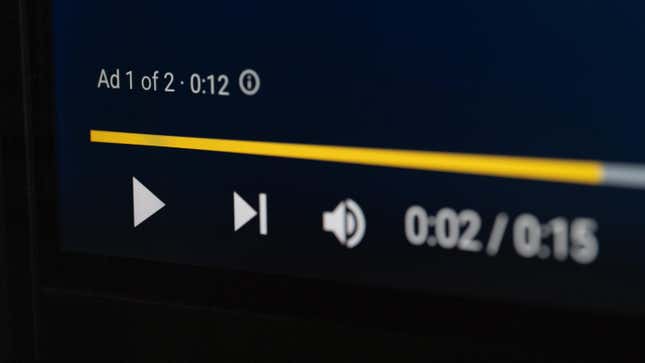
Image for article titled Google Wants to Show You More YouTube Ads When You Pause Videos

Image: PixieMe (Shutterstock)

If you already hate ads on YouTube, then you’re going to have a bad time with Pause Ads. During its earnings calls on Thursday, Google crowed about the success of the tests it’s run on the ads, which could indicate the “feature” will roll out to even more watchers.

As the name implies, Pause Ads are unskippable advertisements that play when you hit pause on a video. Google is trialing Pause Ads on TVs playing YouTube videos, and according to yesterday’s call, the company is happy with the results.

“In Q1, we saw strong traction from the introduction of a Pause Ads pilot on connected TVs, a new non-interruptive ad format that appears when users pause their organic content,” Philipp Schindler, senior vice president and chief business officer at Google, said in Thursday’s earnings call. “Initial results show that Pause ads are driving strong Brand Lift results and are commanding premium pricing from advertisers.”

Schindler didn’t say if Pause Ads will roll out to more YouTube users or if these unwanted advertisements will find their way to smaller screens like phones and desktops. YouTube first highlighted the feature last year in its Upfronts post saying how these ads were a great opportunity for brands to “drive awareness or action by owning that unique interactive moment when people pause a video.”

It’s no surprise that YouTube wants people to watch more of their ads because that’s where it gets a lot of its money. That and people who pay for YouTube Premium because they’re sick of the ads.

The video platform has been cracking down on ad blockers for the past year. This move appears to be helping Google’s bottom line as the company said in its earnings call that YouTube Ads revenue was up 21% over the same time last year.

Trump Media Stock Price in Free Fall as It Files to Issue More Shares


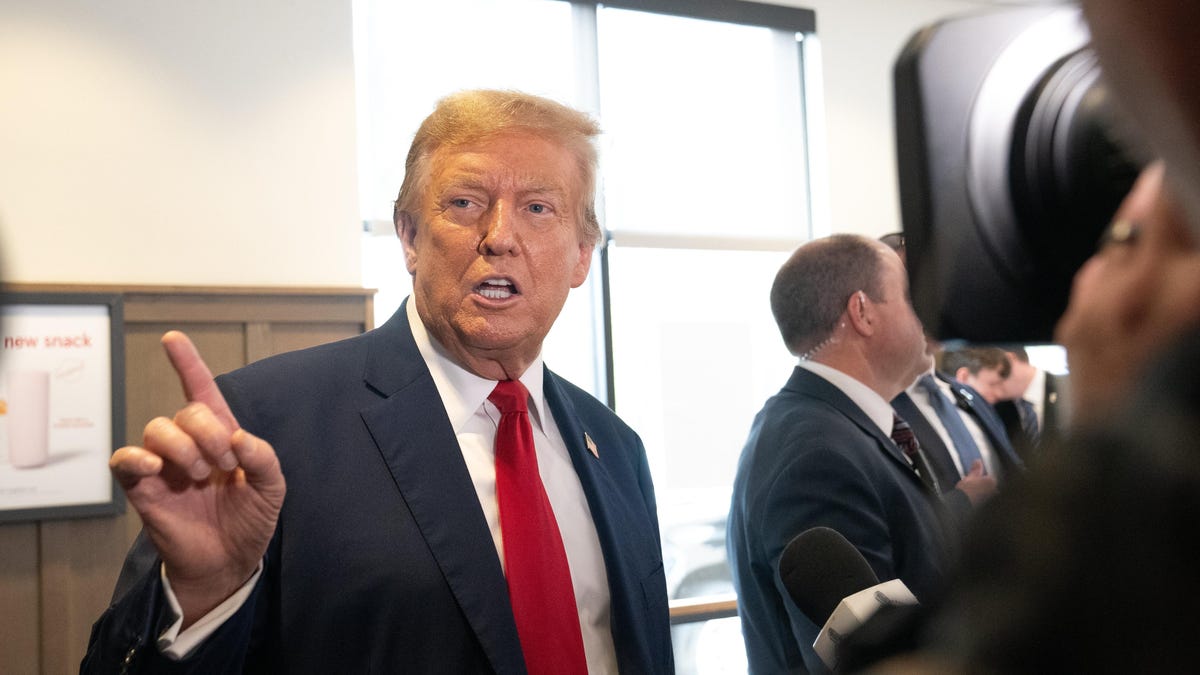
The company behind Donald Trump’s Truth Social has been public for just a few weeks, but the stock price has plunged 50% from its first full day on the market. Trump Media filed with the SEC on Monday to issue 21 million more shares of DJT stock, and made the first steps towards allowing Trump to resell some of his own shares, according to Bloomberg. DJT’s stock price dipped by almost 15% to $27.52 on Monday morning.

The SEC filing shows that Trump Media plans to increase the number of available shares by 15%, CNN reports. This could devalue the shares of existing DJT shareholders, including Trump Media’s largest shareholder, Donald Trump himself. The filing also included a provision that could allow Trump and other insiders to one day sell their stock, after an initial lockup period expires in Sept.

Also on Monday, Trump stepped into a New York Courthouse for the first day of his criminal trial. The former President has been charged with 34 felony counts by a Manhattan district attorney for his alleged role in an alleged hush money scheme.

Last week, two of Trump’s co-founders made a bid for the right to sell their Trump Media stock in the next six months, according to Barron’s. Wesley Moss and Andrew Litinsky, former contestants on The Apprentice, filed an amendment to their ongoing lawsuit against Trump asking to be exempt from a lockup provision. This amendment is part of Moss and Litinsky’s lawsuit against Trump filed in Feb., claiming the former President deprived the co-founders of a proper stake in Trump Media, according to The Washington Post.

Trump responded to Moss and Litinsky’s February lawsuit by suing them back a month later claiming they failed to properly set up Trump Media. At the moment, Trump Media is caught in a complicated web of legal battles between co-founders, major investors, and the SPAC that Trump Media was borne out of, The Washington Post reports.

The former President’s stake in Truth Social’s parent company has lost roughly $2 billion since March 28, when DJT’s price closed at $58. Though Trump is bound by the lockup agreement, he could be especially reliant on DJT’s stock price. Trump faces millions of dollars in legal fees, and his social media company once seemed like his saving grace.

Despite Trump Media’s disappointing stock performance, many investors see the stock as a direct way to support Donald Trump. A report from The Washington Post featured several Trump supporters saying they would keep their dollars invested in Trump Media, even as the price falls.

Truth Social’s stock price has been a roller coaster in the last few weeks. DJT’s stock price climbed to a high of $77 on its second day as a public company but has since plummeted. Short sellers have flooded the stock, as over 5 million shares of Trump Media have been shorted, according to CNBC. DJT became the most expensive stock to short against a few weeks ago, according to Reuters, though some still seem willing to do it. DJT is now a mainstay conversation topic on r/wallstreetbets, adding credit to the claim that Trump Media is a meme stock.

Truth Social offered Donald Trump a platform for years when few others would give him one. Now the social media company’s stock is buoying the former President’s net worth, allowing Trump supporters to invest in him. The DJT stock is emblematic of Trump himself, proving to be a massively divisive issue that investors can’t seem to agree on.