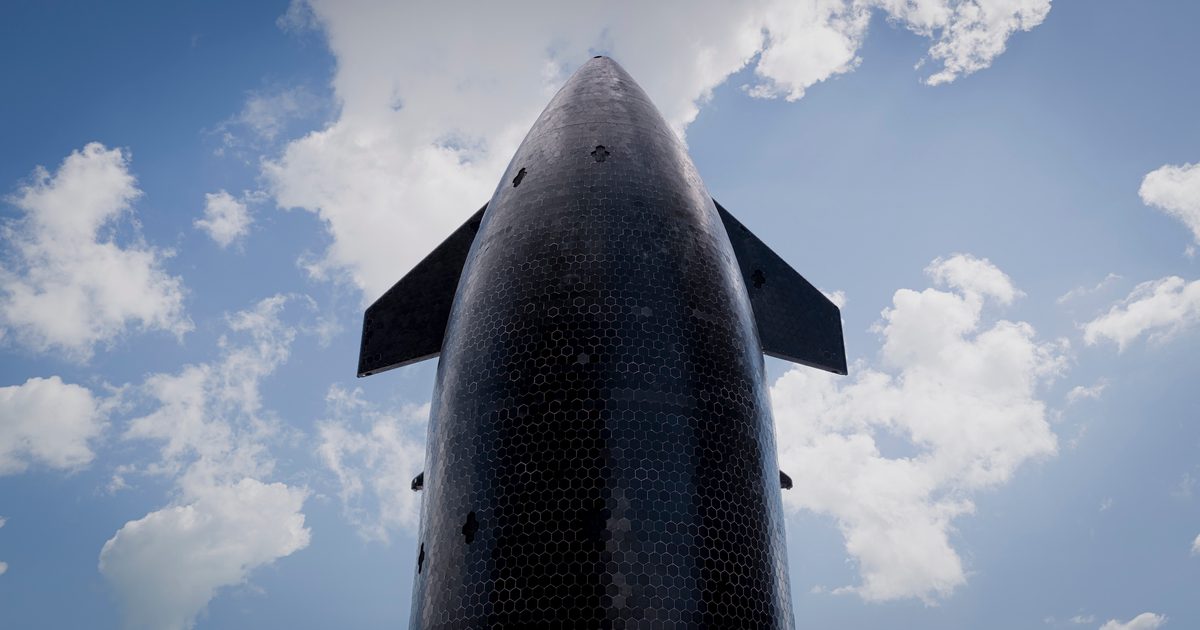
Why this month’s Starship flight is SpaceX’s most important yet


SpaceX is targeting this month for the 12th launch of its gargantuan Starship rocket, which comprises the first-stage Super Heavy booster and upper-stage Ship.

While much has rested on each and every one of its previous 11 test flights, the first of which took place in April 2023, the next launch is a big deal for the Elon Musk-led spaceflight company.

That’s because the mission involves a new version of the rocket, with its design based closely on the one that’s destined for future flights to the moon and possibly even Mars.

Version 3 of Starship incorporates structural refinements, more powerful engines, and a raft of lessons learned from earlier mishaps and failures. The entire vehicle is a little taller, too, at 124.4 meters compared to 123.3 meters, and features considerably larger grid fins for improved flight control.

The new design represents a shift from experimental prototype toward something closer to an operational system, with the redesigned rocket the first Starship capable of orbital flights.

The upcoming 12th flight will aim to demonstrate structural and systems upgrades across the vehicle, validate the performance of its latest Raptor engines, execute a clean stage separation and controlled ascent profile, and gather critical data on booster recovery systems that move the rocket closer to routine reuse, among other goals.

The Starship won’t need to perform a perfect flight, but it will need to convince NASA and its partners that progress is accelerating.

That’s because rival spaceflight company Blue Origin, led by Amazon founder Jeff Bezos, is knocking at the door.

Blue Origin is also competing for NASA contracts and could even provide the spaceflight hardware for the recently revamped Artemis III mission in low‑Earth orbit in 2027, putting extra pressure on SpaceX to demonstrate measurable progress with the Starship.

SpaceX currently has the contract for the Artemis III and Artemis IV missions (the latter of which will put astronauts back on the moon, possibly in 2028), but should Starship development falter, Blue Origin could step in.

Clearly there’s a lot to play for, though it’s worth noting that Blue Origin has far less flight experience with its New Glenn rocket and its untested Blue Moon lander, leaving SpaceX well-positioned to prove Starship’s reliability first.

SpaceX has yet to announce a specific target date for the Starship’s 12th flight. We’ll share news of it just as soon as we know.
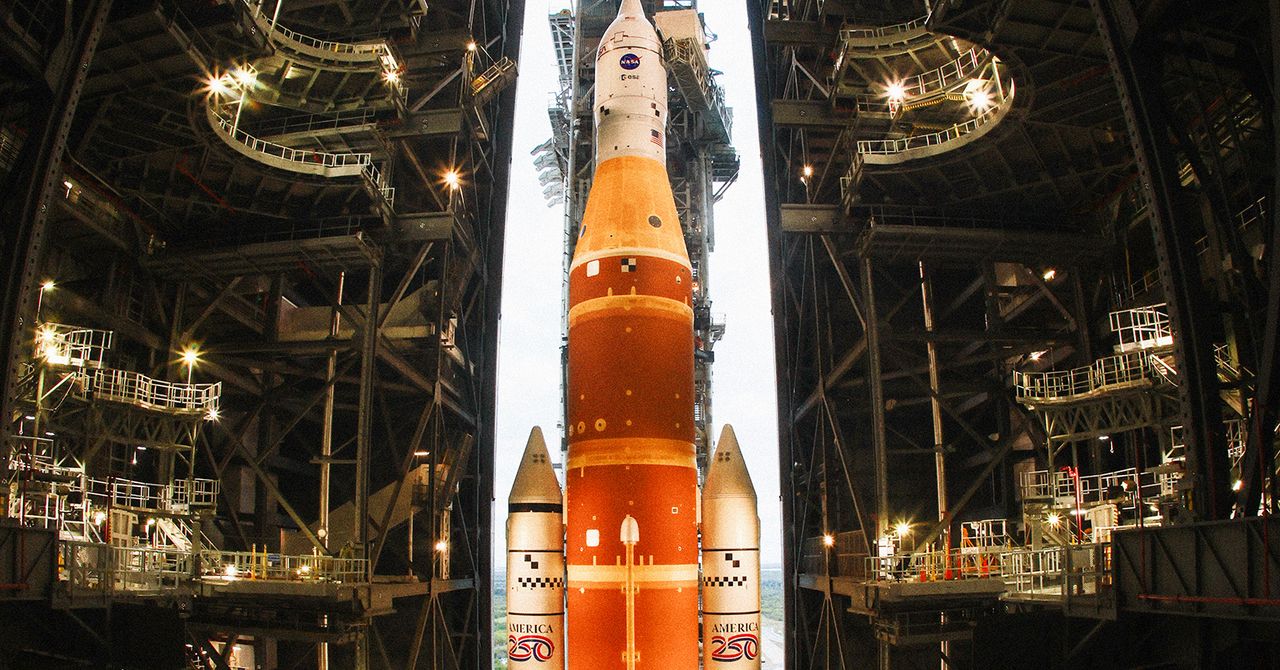
NASA Is Making Big Changes to Speed Up the Artemis Program


“This is just not the right pathway forward,” Isaacman said.

A senior NASA official, speaking on background to Ars, noted that the space agency has experienced hydrogen and helium leaks during both the Artemis I and Artemis II prelaunch preparations, and these problems have led to monthslong delays in launch.

“If I recall, the timing between Apollo 7 and 8 was nine weeks,” the official said. “Launching SLS every three and a half years or so is not a recipe for success. Certainly, making each one of them a work of art with some major configuration change is also not helpful in the process, and we’re clearly seeing the results of it, right?”

The goal therefore is to standardize the SLS rocket into a single configuration in order to make the rocket as reliable as possible, and launching as frequently as every 10 months. NASA will fly the SLS vehicle until there are commercial alternatives to launch crews to the moon, perhaps through Artemis V as Congress has mandated, or perhaps even a little longer.

Is Everyone on Board?

The NASA official said all of the agency’s key contractors are on board with the change, and senior leaders in Congress have been briefed on the proposed changes.

The biggest opposition to these proposals would seemingly come from Boeing, which is the prime contractor for the Exploration Upper Stage, a contract worth billions of dollars to develop a more powerful rocket that was due to launch for the first time later this decade. However, in a NASA news release, Boeing appeared to offer at least some support for the revised plans.

“Boeing is a proud partner to the Artemis mission and our team is honored to contribute to NASA’s vision for American space leadership,” said Steve Parker, Boeing Defense, Space & Security president and CEO, in the news release. “The SLS core stage remains the world’s most powerful rocket stage, and the only one that can carry American astronauts directly to the moon and beyond in a single launch. As NASA lays out an accelerated launch schedule, our workforce and supply chain are prepared to meet the increased production needs.”

Solid Reasons for Changing Artemis III

NASA’s new approach to Artemis reflects a return to the philosophy of the Apollo program. During the late 1960s, the space agency flew a series of preparatory crewed missions before the Apollo 11 lunar landing. These included Apollo 7 (a low-Earth-orbit test of the Apollo spacecraft), Apollo 8 (a lunar orbiting mission), Apollo 9 (a low-Earth-orbit rendezvous with the lunar lander), and Apollo 10 (a test of the lunar lander descending to the moon, without touching down).

With its previous Artemis template, NASA skipped the steps taken by Apollo 7, 9, and 10. In the view of many industry officials, this leap from Artemis II—a crewed lunar flyby of the moon testing only the SLS rocket and Orion spacecraft—to Artemis III and a full-on lunar landing was enormous and risky.

Image may contain Adult Person Astronaut Face Head Clothing Coat and Jacket

The Artemis II crew rehearse a walkout from the Neil A. Armstrong Operations and Checkout Building at NASA’s Kennedy Space Center.Photograph: Joe Raedle/Getty Images

NASA’s Space Launch System rocket arrives at Kennedy


After completing its journey from NASA’s Michoud Assembly Facility aboard the Pegasus barge, teams with Exploration Ground Systems transport the agency’s powerful SLS (Space Launch System) core stage to NASA’s Kennedy Space Center’s Vehicle Assembly Building on July 23.
After completing its journey from NASA’s Michoud Assembly Facility aboard the Pegasus barge, teams with Exploration Ground Systems transport the agency’s powerful SLS (Space Launch System) core stage to NASA’s Kennedy Space Center’s Vehicle Assembly Building on July 23. NASA/Isaac Watson

NASA’s epic Space Launch System rocket, standing 322 feet tall when fully stacked, has recently been on an similarly epic journey — traveling from New Orleans to Florida via barge. The rocket began its journey more than two weeks ago, and having covered more than 900 miles has now arrived safe at the Kennedy Space Center.

The core stage was manufactured and assembled at the Michoud Assembly Facility, and had to travel to Kennedy to be ready for integration and testing ahead of the Artemis II test flight. It will be used to carry crew members on a 10-day journey around the moon and back, including NASA astronauts Victor Glover, Christina Koch, and Reid Wiseman plus Canadian Space Agency astronaut Jeremy Hansen.

“With Artemis, we’ve set our sights on doing something big and incredibly complex that will inspire a new generation, advance our scientific endeavors, and move U.S. competitiveness forward,” said Catherine Koerner, associate administrator for NASA’s Exploration Systems Development Mission Directorate, when the core stage set off on its journey. “The SLS rocket is a key component of our efforts to develop a long-term presence at the Moon.”

Before the launch, however, there’s still a lot of work to be done to get the core stage ready for flight. It is now in the Vehicle Assembly Building at Kennedy, where it will be set into the mobile launcher — the platform that hooks it up to the ground systems — and integrated with the Orion spacecraft that will house the crew. In addition, the core stage need to have its twin solid rocket boosters and launch vehicle stage adapter added, and then the entire assembly will need thorough testing to ensure it’s ready to fly.

Artemis II is currently scheduled for September next year, following on from the Artemis I mission in November 2022 that saw an uncrewed version of the SLS and Orion capsule travel around the moon and back to Earth. That mission was a success; however, some components were damaged during the launch, and the launch of the first crewed mission was pushed back to accommodate more time for development and integration.

The long-term plan is to return humans to the surface of the moon for the first time in more than 50 years in the Artemis III mission, tentatively scheduled for September 2026.