Which Countries and Regions Might Be Impacted by Asteroid 2024 YR4?


Asteroid 2024 YR4, measuring approximately 40 to 100 meters wide, will pass very close to Earth in December 2032—and might even strike the planet. Because of its size, speed, and the possibility of it making impact, the internet has given it the nickname of “the city destroyer.”

Major space agencies, such as the European Space Agency, estimate there’s about a 2 percent chance that 2024 YR4 will hit Earth, though this risk figure will be updated as scientists learn more about the asteroid’s path. Although it’s far more likely the asteroid will miss Earth, sites that could be affected by a collision have already been identified.

The destructive potential of 2024 YR4 depends on its composition, speed, and mass. Because the asteroid is still very far away, these characteristics can only be estimated, and the consequences of a strike are therefore also somewhat imprecise predictions at this stage. Currently, astronomers believe 2024 YR4 would create an airburst—or mid-air explosion—upon impact that would be equivalent to nearly 8 million tons of TNT, or 500 times the power of the atomic bomb dropped on Hiroshima. This explosion would affect roughly a 50-kilometer radius around the impact site.

For the location of the collision, some experts, such as David Rankin, an engineer with NASA’s Catalina Sky Survey Project, have sketched out a “risk corridor.” According to the asteroid’s current path, and if the 2 percent probability becomes reality, the asteroid should fall somewhere in a band of territory stretching from northern South America, across the Pacific Ocean, to southern Asia, the Arabian Sea, and Africa. Countries such as India, Pakistan, Bangladesh, Ethiopia, Sudan, Nigeria, Venezuela, Colombia, and Ecuador would be at risk.

The threat posed by asteroids and comets that could potentially strike Earth is measured on the 11-point Torino scale: The higher the score, the greater the risk that a traveling space object will impact Earth and cause large amounts of destruction. The 2024 YR4 asteroid is current ranked at level 3, meaning it is large enough and will pass close enough to merit being carefully monitored. However, most international agencies are confident that the risk level will decrease over time to zero as the asteroid’s trajectory becomes clearer. Initially, the probability of impact was 1.2 percent. It was then adjusted up to 2.3 percent, before the most recent assessment reduced the risk to 2 percent.

This isn’t the first time such an alert has been raised, nor is 2024 YR4 the riskiest space object to have been monitored. The asteroid Apophis, which was discovered in 2004, at times scored higher than 2024 YR4 on both the Torino scale and collision probability. Shortly after it was discovered, it was given a 2.7 percent chance of hitting Earth. However, after a few months and with better observations, scientists adjusted their calculations to more realistic values. Now, although it will pass very close to Earth in 2029, the chances of collision are zero.

In response to 2024 YR4, the UN has activated an emergency protocol for the protection of the planet. For the time being, given the asteroid is on level 3 of the Torino scale, this is limited to continuous monitoring to understand the asteroid’s movements.

Measures are also being developed to protect Earth from asteroids with destructive potential. These include kinetic strikes, where rockets are sent into space to collide with asteroids, to deflect them off a collision path with Earth. NASA’s 2023 DART mission proved that such strikes can be launched and that they can move space objects, by testing this technique on a harmless asteroid called Dimorphos.

This story originally appeared on WIRED en Español and has been translated from Spanish.

Axiom-4 crew includes first Indian space agency astronaut to travel to ISS


The company Axiom Space is gearing up for its fourth private mission to the International Space Station (ISS). Set to launch this spring, the Ax-4 mission will carry four crew members to the station, including an astronaut from the Indian Space Research Organisation (ISRO), marking the first time an ISRO member will travel there.

The crew is made up of former NASA astronaut Peggy Whitson, who will act as commander, plus pilot Shubhanshu Shukla of the ISRO, and two mission specialists from the European Space Agency: project astronaut Sławosz Uznański-Wiśniewski of Poland and Tibor Kapu of Hungary. The crew has now been approved by NASA to spend up to 14 days at the ISS.

“I am excited to see continued interest and dedication for the private astronaut missions aboard the International Space Station,” said Dana Weigel, manager of NASA’s International Space Station Program at the agency’s Johnson Space Center in Houston. “As NASA looks toward the future of low Earth orbit, private astronaut missions help pave the way and expand access to the unique microgravity environment.”


Please enable Javascript to view this content

The crew have been preparing for their mission since August last year, including learning the ins and outs of the SpaceX Dragon spacecraft that they will travel in and the Falcon 9 rocket which will launch it. They will spend their two weeks in orbit working on science experiments, outreach, and commercial activities, including contributing to research on the effects of spaceflight on the human body via the TRISH program which gathers data from commercial astronauts on health outcomes.

With its international crew, the mission includes the second national astronauts to go to space for India, Poland, and Hungary, and the first time that members from each nation are participating in a mission to the ISS. Axiom Space has emphasized its interest in collaborating with space agencies around the world, including forging a partnership with ESA for taking astronauts to the ISS.

“Working with the talented and diverse Ax-4 crew has been a deeply rewarding experience,” said Whitson. “Witnessing their selfless dedication and commitment to expanding horizons and creating opportunities for their nations in space exploration is truly remarkable. Each crew member brings unique strengths and perspectives, making our mission not just a scientific endeavor, but a testament to human ingenuity and teamwork. The importance of our mission is about pushing the limits of what we can achieve together and inspiring future generations to dream bigger and reach farther.”


NASA and ESA share a breathtaking Hubble image of the Tarantula Nebula’s outer edge


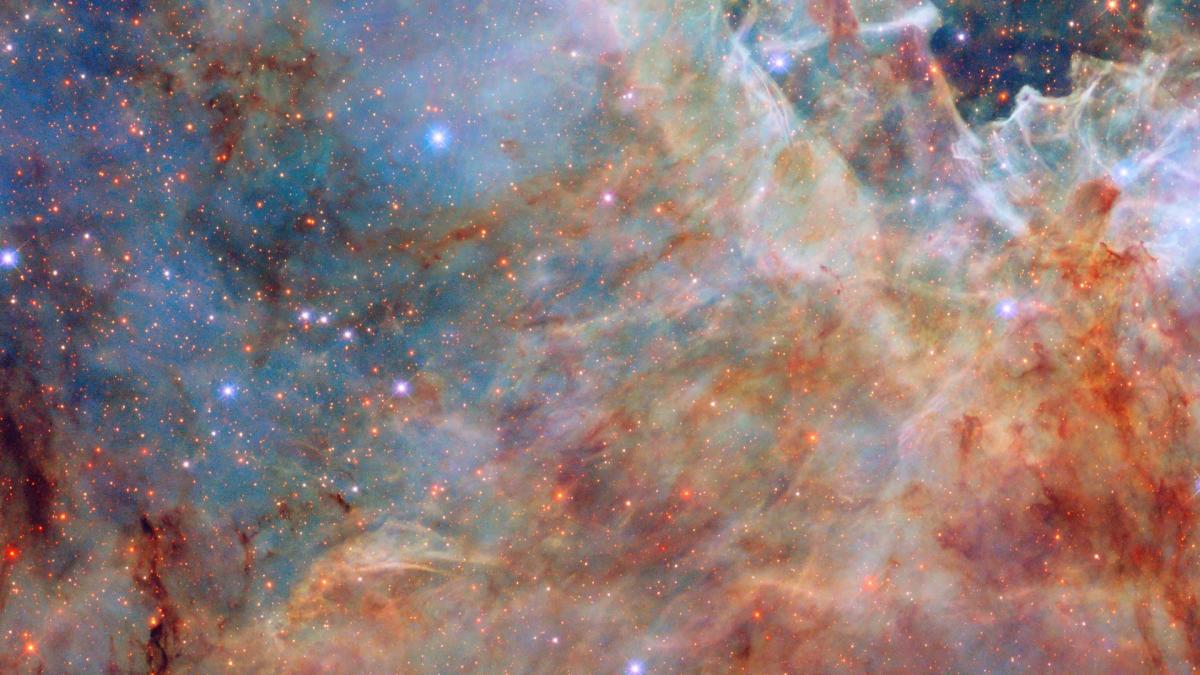
The Hubble Space Telescope is still trucking along more than 30 years after its launch, observing the universe and sending home images for us to marvel at. This week, NASA and ESA highlighted an image captured by Hubble of the highly productive Tarantula Nebula (officially named 30 Doradus) in the Large Magellanic Cloud, and it’s a sight to behold.

To view this content, you’ll need to update your privacy settings. Please click here and view the “Content and social-media partners” setting to do so.

The Tarantula Nebula is “the largest and most productive star-forming region in the local universe,” with stars roughly 200 times as massive as the sun at its center, according to NASA. This Hubble view gives us a look at the outskirts of the nebula, revealing layers of colorful gas and stars. The Tarantula Nebula sits within the Large Magellanic Cloud, a nearby dwarf galaxy.

While the final result we see is filled with brilliant colors, Hubble’s images initially come back in grayscale. As has explained, “scientists can create a composite color image by taking exposures using different color filters on the telescope, assigning a color to each filter that corresponds to the wavelength of that filter, and combining the images.” The new image of the Tarantula Nebula doesn’t just represent visible light, but ultraviolet and infrared too. In such a case, colors are assigned to those wavelengths we can’t normally see.


This rocket-launch photo is unlike any you’ve seen before


Blue Origin launched its New Glenn heavy-lift rocket for the first time last week, and news sites and social media feeds were quick to share dramatic images of the 98-meter-tall rocket heading toward the heavens.

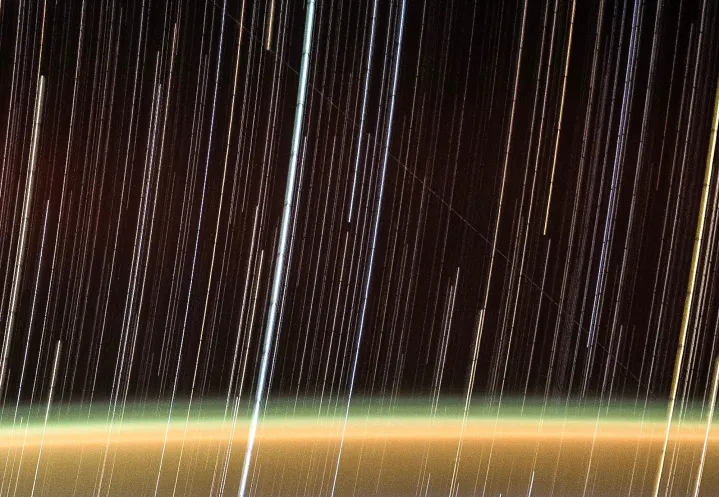
At the same time, NASA astronaut Don Pettit captured the launch in a long exposure from the International Space Station (ISS) some 250 miles above Earth. The result is a rocket-launch photo unlike any you’ve seen before:

Blue Origin's New Glenn rocket visible as a streak of light from bottom right to top left.
Blue Origin’s New Glenn rocket visible as a faint streak of light from bottom right to top left. Don Pettit / NASA

Sharing the image in a post on X, Pettit, who arrived at the orbital outpost in September, explained that it was captured over a period of four minutes, which explains the star trails that dominate the picture. With Earth at the bottom, the New Glenn rocket is visible as a faint streak crossing the image from the bottom right to the upper left.

“This was not an easy photograph to take,” Pettit wrote, adding that the space station was over Oklahoma at the beginning of the exposure and over central Gulf of Mexico at the end.


Please enable Javascript to view this content

Pettit has earned a reputation for his impressive photography work during four missions to orbit over the last couple of decades. The experienced astronaut is particularly fond of shots filled with star trails, but this appears to be the first time that he’s been lucky enough to include a rocket launch in one.

Other notable images from Pettit’s current ISS mission include one showing a SpaceX Crew Dragon spacecraft hurtling back to Earth, and another showing the bright glow of an aurora above Earth.

Always on the lookout for a stunning scene, he also captured this stunning image of waterways, which he described as “flowing silver snakes.”

Pettit recently took time out to talk about his photography work in an interview from the space station.


How Blue Origin’s Sunday night launch went from giant leap to awkward stumble


There were high hopes for the maiden launch of Blue Origin’s New Glenn rocket on Sunday, but sadly, it wasn’t to be.

The late-night NG-1 mission was supposed to be a giant leap for Blue Origin rocket technology, but the 98-meter-tall vehicle failed to get off the ground as planned.

Blue Origin’s live stream kicked off at midnight ET, 60 minutes before the three-hour launch window opened for the New Glenn’s departure from Cape Canaveral in Florida.


Please enable Javascript to view this content

Welcoming viewers to the stream, presenters Ariane Cornell and Denisse Aranda spoke enthusiastically as they shared their excitement for the debut flight of Blue Origin’s first orbital rocket.

“This is happening,” Ariane said. Except that it wasn’t.

At around 12:30 a.m., with 27 minutes to go until the first launch opportunity, the stream dropped in on a bunch of kids and their parents waiting to watch the launch from a park close to Cape Canaveral. The children smiled and cheered, perhaps in anticipation of the imminent liftoff, though definitely because they were up way past their bedtimes. We also visited Blue Origin employees at multiple sites across the U.S., cheering excitedly ahead of launch. The one that didn’t quite happen.

Early on, things seemed to be going smoothly enough for the spaceflight company founded by Jeff Bezos. But then, just 17 minutes from liftoff, the countdown clock on the screen suddenly disappeared before quickly reappearing with an extra 20 minutes added. If you blinked, you would’ve missed it.

“They just need a couple more minutes … that is A-OK with all of us,” Cornell said in a reassuring voice that gave no indication of what was coming.

The delay gave the live stream more time to play all of the prepared video inserts explaining everything about the New Glenn rocket and its Blue Ring Pathfinder payload.

But disappointingly, 11 minutes later, the countdown clock jumped again, adding another 14 minutes to take it back to 33 minutes. Folks watching the stream at home may have started to wonder if the problem was with the clock itself, not with the rocket. At this rate, unless the engineers could work out why the darn clock kept adding minutes, we could be stuck here for weeks.

But then things began to look up as the clock ticked all the way down to 9 minutes before launch … before suddenly resetting to 29 minutes. There was mention of a checklist that the Blue Origin engineers had to get through.

Popular YouTuber Tim Dodd of Everyday Astronaut, who was running his own live stream commentating on the commentators, took a deep breath. “Oh no, another delay. You know, it’s not ideal for my sleep schedule, it’s really not,” he said.

Back at the park, the kids weren’t smiling anymore. Approaching 2 a.m. ET, it really was way past their bedtime now. Even some of the parents had a “it’s way past my bedtime, too” look on their faces. Heck, even Bezos was probably stifling a yawn or two. One little girl, who fortunately was still awake, was asked what she was most looking forward to about the launch. “Going home once this is all over,” she probably wanted to say, but staying on message like a true Blue Origin believer, she responded: “For the rocket to go up into space.” She didn’t know it then, but it was asking a lot.

Promisingly, the clock continued to tick down, all the way to 14 minutes. And then it reset to 35 minutes. This time around, Cornell, perhaps not wanting to believe it, didn’t even acknowledge the delay. Exhausted folks at home may have started to wonder if their mind was playing tricks on them.

Dodd emitted a chuckle of despair, but tried to stay clear-headed about the situation. “I expect this, I expect delays, I am not shocked by this,” he said in a tone of voice that made you wonder if he really believed what he was saying.

By 2:15 a.m., the official Blue Origin live stream appeared to have run out of video inserts, leaving viewers to stare at footage of a rocket still very much on terra firma.

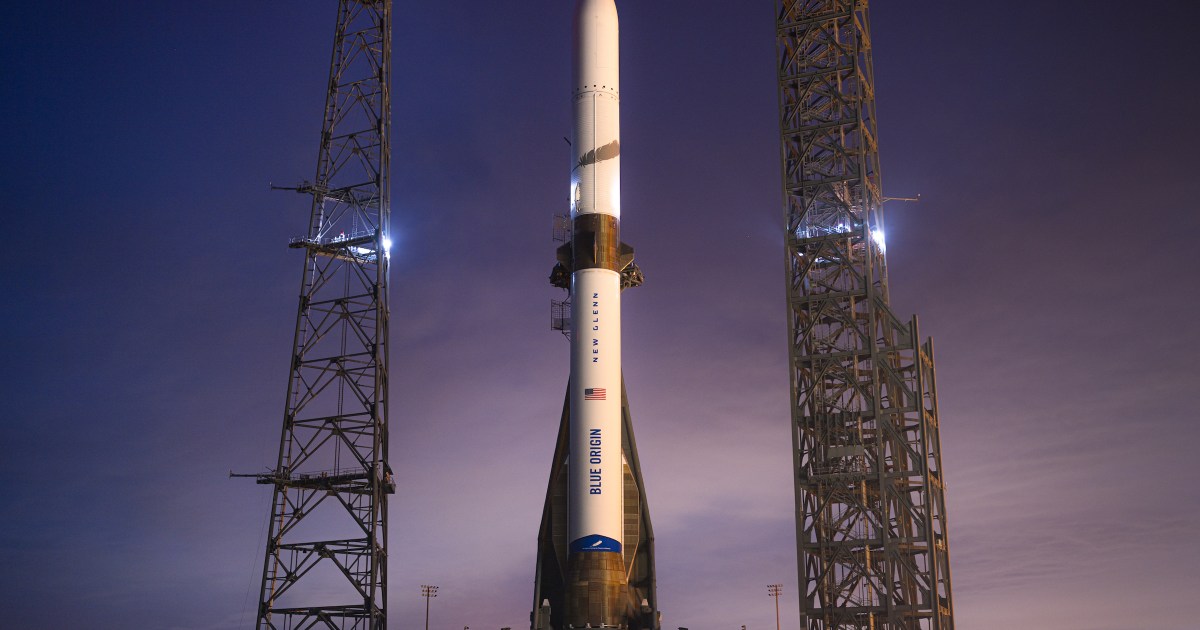
The New Glenn on the launchpad.
The New Glenn rocket on the launchpad. Blue Origin

At 11 minutes until liftoff, the countdown clock jumped yet again, resetting to 38 minutes. “Noooo, noooo, nooooo!” Dodd said, noting that Blue Origin’s launch window was rapidly closing.

“They’re working through their checklist,” Cornell said again, leaving viewers to wonder if the oft-mentioned checklist, if laid out on a single piece of paper, might reach all the way to the moon.

The countdown clock made it to 12 minutes, and then, in its oddest switch yet, flipped to zero seconds. “It’s lifting off, it’s lifting off,” Dodd said, adding, “It’s not lifting off … that is not a good sign.”

The Blue Origin live stream camera stayed firmly fixed on the New Glenn rocket, which itself appeared to be firmly fixed to the ground. Cornell and Aranda stayed silent. Perhaps they’d fallen asleep. Folks watching the live stream continued to stare at the rocket. The silence was deafening. Had everyone gone home and forgotten to tell them?

At around 3 a.m., and possibly after having just enjoyed a brief power nap, Cornell returned to the stream to announce that the launch had been scrubbed. The reason? Not a faulty countdown clock, but a “vehicle subsystem issue.”

Dodd summed it up before heading to bed. “I kind of expected that, to be honest. Better to be safe than sorry.”

He’s right. It’s not unusual for maiden launches like this to face such issues. Blue Origin has to get it right, and it’s just bad luck for the folks who stayed up late in anticipation of enjoying what should eventually be a spectacular launch. There’ll be another chance soon, and hopefully the New Glenn will finally get to fire up its rocket engines and head skyward.

Fancy another launch attempt? SpaceX’s Starship megarocket is supposed to lift off on its seventh test flight on Wednesday. But do keep an eye on that countdown clock.


Elon Musk Calls Out NASA’s Moon Ambitions: ‘We’re Going Straight to Mars’


Although SpaceX founder Elon Musk is known for outspokenness and controversial comments on his social media site X, he has been relatively restrained when it comes to US space policy in recent years.

For example, he has rarely criticized NASA or its overall goal to return humans to the moon through the Artemis program. Rather, Musk, who has long preferred Mars as a destination for humans, has more or less been a team player when it comes to the space agency’s lunar-focused plans.

This is understandable from a financial perspective, as SpaceX has contracts worth billions of dollars to not only build a Human Landing System as part of the Artemis program but also to supply food, cargo, and other logistics services to a planned Lunar Gateway in orbit around the moon.

But privately, Musk has been critical of NASA’s plans, suggesting that the Artemis Program has been moving too slowly and is too reliant on contractors who seek cost-plus government contracts and are less interested in delivering results.

Silent on Policy No Longer

During the past 10 days, Musk has begun airing some of these private thoughts publicly. On Christmas Day, for example, Musk wrote on X, “The Artemis architecture is extremely inefficient, as it is a jobs-maximizing program, not a results-maximizing program. Something entirely new is needed.”

Then, on Thursday evening, he added this: “No, we’re going straight to Mars. The moon is a distraction.”

These are definitive statements that directly contradict NASA’s plans to send a series of human missions to the lunar south pole later this decade and establish a sustainable base of operations there with the Artemis program.

It would be one thing if Musk was just expressing his opinion as a private citizen. But since playing a significant part in the election of Donald Trump as the next president of the United States last year, Musk has assumed an important advisory role for the incoming administration. He was also partly responsible for the expected nomination of private astronaut Jared Isaacman to become the next administrator of NASA. Although Musk is not directing US space policy, he certainly has a meaningful say in what happens.

So What Does This Mean for Artemis?

The fate of Artemis is an important question not just for NASA but for the US commercial space industry, the European Space Agency, and other international partners who have aligned with the return of humans to the moon. With Artemis, the United States is in competition with China to establish a meaningful presence on the surface of the moon.

Based upon conversations with people involved in developing space policy for the Trump administration, I can make some educated guesses about how to interpret Musk’s comments. None of these people, for example, would disagree with Musk’s assertion that “the Artemis architecture is extremely inefficient” and that some changes are warranted.

With that said, the Artemis program is probably not going away. After all, it was the first Trump administration that created the program about five years ago. However, it may be less well-remembered that the first Trump White House pushed for more significant changes, including a “major course correction” at NASA.

“I call on NASA to adopt new policies and embrace a new mindset,” then-vice president Mike Pence said in May 2019. “If our current contractors can’t meet this objective, then we’ll find ones that will.” (Speaking of the vice president, it’s unlikely that the National Space Council will be reconstituted under JD Vance).

How NASA Might Change Under Donald Trump


Although the details remain in flux, the transition team reviewing NASA and its activities has begun to draft potential executive orders for changes to space policy under the Trump Administration.

Sources familiar with the five people on the team, who have spent the last six weeks assessing the space agency and its exploration plans, were careful to note that such teams are advisory in nature. They do not formally set policy nor is their work always indicative of the direction an incoming presidential administration will move toward.

Nevertheless, in trying to set clear goals for NASA and civil space policy, the ideas under consideration reflect the Trump administration’s desire for “big changes” at NASA, both in terms of increasing the effectiveness and velocity of its programs.

Not Business as Usual

The transition team has been grappling with an agency that has a superfluity of field centers—ten spread across the United States, as well as a formal headquarters in Washington, DC—and large, slow-moving programs that cost a lot of money and have been slow to deliver results.

“This will not be business as usual,” one person familiar with this group’s meetings said. The mindset driving their deliberations is a focus on results and speed.

Donald Trump will be inaugurated as president for his second term a little less than a month from now, on January 20. On that day he is expected to sign a number of executive orders on issues that he campaigned on. This could include space policy, but more likely that will wait until later in his presidency.

One source said the space transition team has been working off of ideas that Trump has talked about publicly, including his interest in Mars. For example, during a campaign speech this fall, Trump referenced SpaceX founder Elon Musk, who played a significant role during the campaign both in terms of time and money, and his desire to settle Mars.

“We are leading in space over Russia and China… It’s my plan, I’ll talk to Elon,” Trump said in September. “Elon get those rocket ships going because we want to reach Mars before the end of my term, and we want also to have great military protection in space.”

Ideas Under Consideration

The transition team has been discussing possible elements of an executive order or other policy directives. They include:

  • Establishing the goal of sending humans to the Moon and Mars, by 2028
  • Canceling the costly Space Launch System rocket and possibly the Orion spacecraft
  • Consolidating Goddard Space Flight Center and Ames Research Center at Marshall Space Flight Center in Alabama
  • Retaining a small administration presence in Washington, DC, but otherwise moving headquarters to a field center
  • Rapidly redesigning the Artemis lunar program to make it more efficient

NASA’s Parker Solar Probe will fly closer to the sun than ever on Christmas Eve


NASA’s Parker Solar Probe is still zipping around the sun making history, and it’s gearing up for another record-setting approach this week. On December 24 at 6:53AM ET, the spacecraft’s orbit will take it just 3.8 million miles from the solar surface, according to the space agency. That’ll be the closest it — or any other probe — has ever come to the sun. The milestone will mark the completion of the Parker Solar Probe’s 22nd orbit around our star, and the first of the three final closest flybys planned for its mission. The craft, which launched in 2018, is expected to complete a total of 24 orbits.

“No human-made object has ever passed this close to a star, so Parker will truly be returning data from uncharted territory,” Nick Pinkine, Parker Solar Probe mission operations manager at the Johns Hopkins Applied Physics Laboratory, said in a statement on NASA’s blog. “We’re excited to hear back from the spacecraft when it swings back around the Sun.”

The Parker Solar Probe will be traveling at about 430,000 miles per hour at the time of its closest-ever pass. It’ll ping the team to confirm its health on December 27, when it’ll be far enough from the sun to resume communications.

NASA Postpones Return of Stranded Starliner Astronauts to March


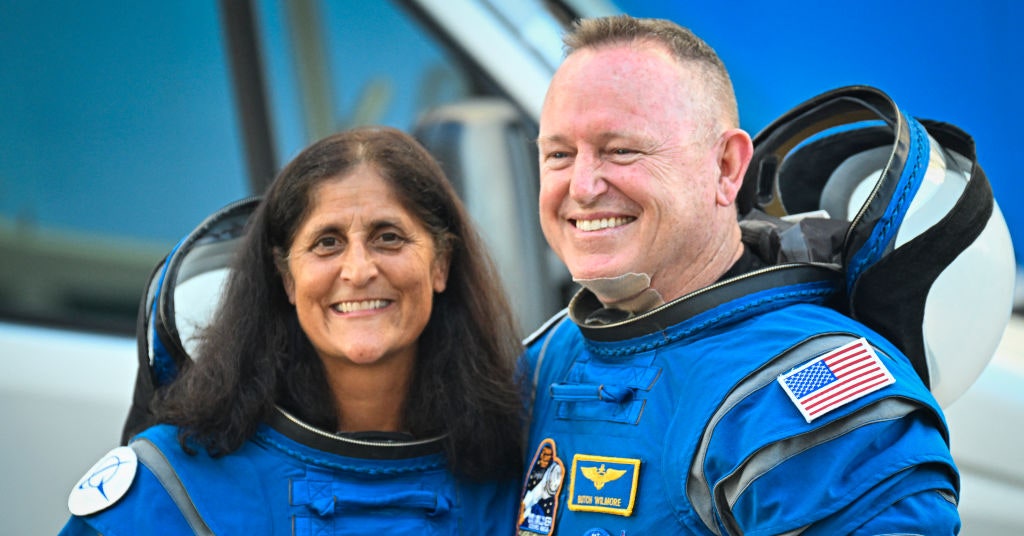
NASA has again postponed the return to Earth of Barry Wilmore and Sunita Williams, the astronauts stranded on the International Space Station after Boeing’s Starliner capsule malfunctioned in the middle of this year.

The crew of the spacecraft arrived at the ISS in June. The objective was to test the Starliner’s comprehensive capabilities, including launch, docking, and return systems. The mission was scheduled to last one week. Five of the capsule’s 28 thrusters failed to function before docking with the ISS. Boeing claimed that its technology could guarantee the safe return of the astronauts. However, NASA expressed doubts and concluded that the risk was too high. The agency entrusted the task to SpaceX.

Elon Musk’s company launched the Crew-9 mission in September to, among other things, return Williams and Wilmore. Until now, the stalled astronauts were scheduled to return in February aboard the Crew Dragon rocket. However, NASA has announced that it expects the expedition to return to Earth’s surface after the arrival of Crew-10, which will be sent in late March 2025 at the earliest.

The adjustment will allow SpaceX and NASA engineers to finalize development of a new Dragon spacecraft, which will be shipped to the company’s Florida facility early next month.

“Fabrication, assembly, testing, and final integration of a new spacecraft is a painstaking endeavor that requires great attention to detail,” said Steve Stich, manager of NASA’s Commercial Crew Program, in a statement. “We appreciate the hard work by the SpaceX team to expand the Dragon fleet in support of our missions and the flexibility of the station program and expedition crews as we work together to complete the new capsule’s readiness for flight.”

NASA said that Crew-9 and Crew-10 crews must complete a “handover period,” during which the ISS residents share experiences and knowledge with the new arrivals. This process ensures the proper performance of onboard science experiments and maintenance of the orbital complex.

NASA and SpaceX specialists evaluated several options for coordinating the next crewed delivery. They determined that the March launch for Crew-10 was the “best option for meeting NASA’s requirements and achieving space station objectives for 2025,” according to an agency press release.

A Long Haul

The ISS received two resupply flights in November, ensuring that the crew members have sufficient food, water, clothing, and oxygen. However, some experts have warned of potential health risks for Wilmore and Williams after spending more than nine months in space.

The scientific community has been studying the effects of spaceflight on the human body since the 1970s. In the years since the first lunar landing, it has identified conditions such as loss of bone mass, weakened heart function, visual problems, and the development of kidney stones.

A recent study from University College London reveals that the structure and function of the kidneys can also suffer permanent damage, although this is particularly aggressive in cases of astronauts who get too far away from Earth, which is not the case on the ISS.

NASA points out that the crews of expeditions to the ISS usually make extended stays, with an average duration of six months. It adds that some astronauts have carried out missions of up to one year to contribute to research on human adaptation to spaceflight, with a view to future lunar and Martian exploration.

This story originally appeared on WIRED en Español and has been translated from Spanish.

Europa Clipper blasts off to study Jupiter’s icy moon


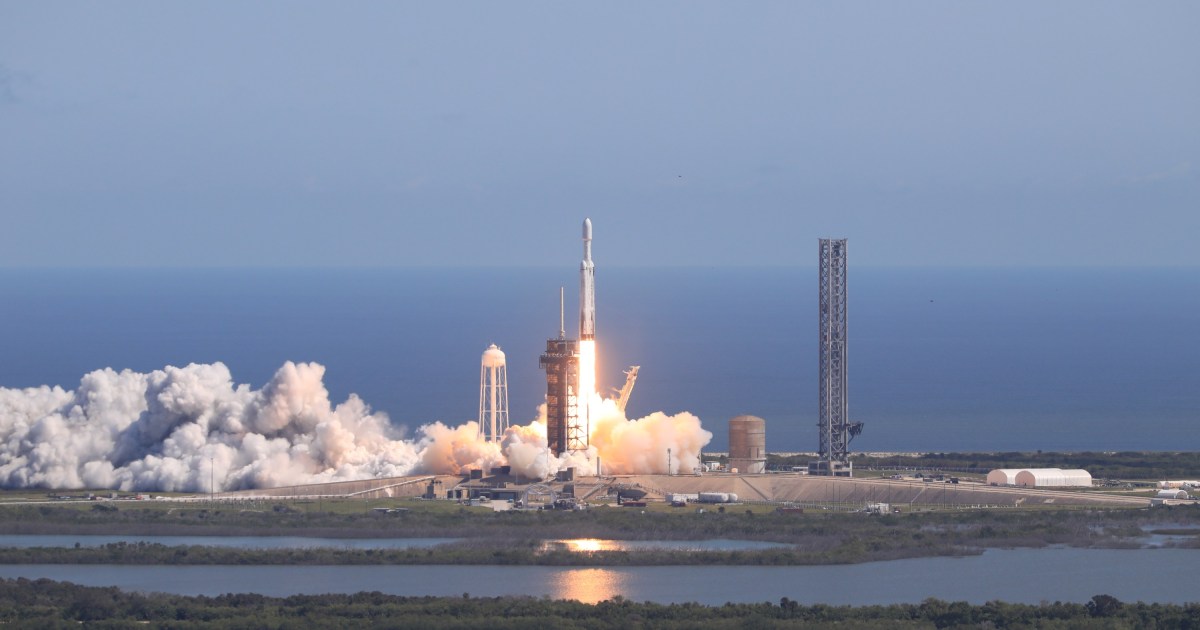
NASA has launched another deep space mission — this one to explore an icy moon of Jupiter and study whether it could potentially be habitable. The Europa Clipper mission launched using a SpaceX Falcon Heavy at 12:06 p.m. ET today, Monday October 14, from Launch Complex 39A at Kennedy Space Center in Florida, setting off on its long journey to the Jovian system.

“Liftoff, @EuropaClipper!” NASA Administrator Bill Nelson wrote on X.  “Today, we embark on a new journey across the solar system in search of the ingredients for life within Jupiter’s icy moon. Our next chapter in space exploration has begun.”

This artist's impression depicts NASA's Europa Clipper spacecraft.
This artist’s impression depicts NASA’s Europa Clipper spacecraft. NASA/JPL-Caltech

The mission aims to explore the moon of Europa, which is particularly interesting to astrobiology researchers as it has a liquid water ocean. This ocean isn’t on the moon’s surface, however — as it is so far from the sun, the ocean is hidden beneath a icy shell of around 10 to 15 miles in thickness. Missions like Galileo have orbited Europa and taken readings from it, but this effort ended in 2003. Since then, the moon has only been explored in flybys. Now, the moon will get its own dedicated mission, set to begin when Clipper arrives there in 2030.

This artist's impression shows a simulated view from the frigid surface of Jupiter's moon, Europa, where temperatures drop to minus 170 degree Celsius.
This artist’s impression shows a simulated view from the frigid surface of Jupiter’s moon, Europa, where temperatures drop to minus 170 degree Celsius. NASA/JPL-Caltech

Europa Clipper will study the moon’s ice shell to determine exactly how thick it is, and will also look beneath this shell into the ocean below to see whether it hosts materials called organic compounds — the building blocks of life. While the mission is not expecting to find evidence of life there, scientists want to know it the required elements for life to form are present, as that will help them learn about what locations in our solar system and beyond could potentially host life.

“It’s important to us to paint a picture of what that alien ocean is like — the kind of chemistry or even biochemistry that could be happening there,” said Morgan Cable of NASA’s Jet Propulsion Laboratory in a statement.

Other icy moons like Enceladus are known to give off epic plumes of water vapor from their surface, in which material from the oceans below bursts through the ice and is thrown up into the air above the moon. It’s not known if Europa also has these plumes, but to study this alien environment from orbit, Clipper will fly close to the surface and take tiny samples of material being ejected.

“The spacecraft will study gas and grains coming off Europa by sticking out its tongue and tasting those grains, breathing in those gases,” said Cable.

For now, the mission has made contact with ground control and is safely on its way to Jupiter on a 1.8-billion mile journey. It will use the gravity of other planets to give it a boost on its way, making flybys of Mars and Earth before performing a slingshot maneuver onward to its destination.