How NASA Might Change Under Donald Trump


Although the details remain in flux, the transition team reviewing NASA and its activities has begun to draft potential executive orders for changes to space policy under the Trump Administration.

Sources familiar with the five people on the team, who have spent the last six weeks assessing the space agency and its exploration plans, were careful to note that such teams are advisory in nature. They do not formally set policy nor is their work always indicative of the direction an incoming presidential administration will move toward.

Nevertheless, in trying to set clear goals for NASA and civil space policy, the ideas under consideration reflect the Trump administration’s desire for “big changes” at NASA, both in terms of increasing the effectiveness and velocity of its programs.

Not Business as Usual

The transition team has been grappling with an agency that has a superfluity of field centers—ten spread across the United States, as well as a formal headquarters in Washington, DC—and large, slow-moving programs that cost a lot of money and have been slow to deliver results.

“This will not be business as usual,” one person familiar with this group’s meetings said. The mindset driving their deliberations is a focus on results and speed.

Donald Trump will be inaugurated as president for his second term a little less than a month from now, on January 20. On that day he is expected to sign a number of executive orders on issues that he campaigned on. This could include space policy, but more likely that will wait until later in his presidency.

One source said the space transition team has been working off of ideas that Trump has talked about publicly, including his interest in Mars. For example, during a campaign speech this fall, Trump referenced SpaceX founder Elon Musk, who played a significant role during the campaign both in terms of time and money, and his desire to settle Mars.

“We are leading in space over Russia and China… It’s my plan, I’ll talk to Elon,” Trump said in September. “Elon get those rocket ships going because we want to reach Mars before the end of my term, and we want also to have great military protection in space.”

Ideas Under Consideration

The transition team has been discussing possible elements of an executive order or other policy directives. They include:

  • Establishing the goal of sending humans to the Moon and Mars, by 2028
  • Canceling the costly Space Launch System rocket and possibly the Orion spacecraft
  • Consolidating Goddard Space Flight Center and Ames Research Center at Marshall Space Flight Center in Alabama
  • Retaining a small administration presence in Washington, DC, but otherwise moving headquarters to a field center
  • Rapidly redesigning the Artemis lunar program to make it more efficient

NASA’s Parker Solar Probe will fly closer to the sun than ever on Christmas Eve


NASA’s Parker Solar Probe is still zipping around the sun making history, and it’s gearing up for another record-setting approach this week. On December 24 at 6:53AM ET, the spacecraft’s orbit will take it just 3.8 million miles from the solar surface, according to the space agency. That’ll be the closest it — or any other probe — has ever come to the sun. The milestone will mark the completion of the Parker Solar Probe’s 22nd orbit around our star, and the first of the three final closest flybys planned for its mission. The craft, which launched in 2018, is expected to complete a total of 24 orbits.

“No human-made object has ever passed this close to a star, so Parker will truly be returning data from uncharted territory,” Nick Pinkine, Parker Solar Probe mission operations manager at the Johns Hopkins Applied Physics Laboratory, said in a statement on NASA’s blog. “We’re excited to hear back from the spacecraft when it swings back around the Sun.”

The Parker Solar Probe will be traveling at about 430,000 miles per hour at the time of its closest-ever pass. It’ll ping the team to confirm its health on December 27, when it’ll be far enough from the sun to resume communications.

NASA Postpones Return of Stranded Starliner Astronauts to March


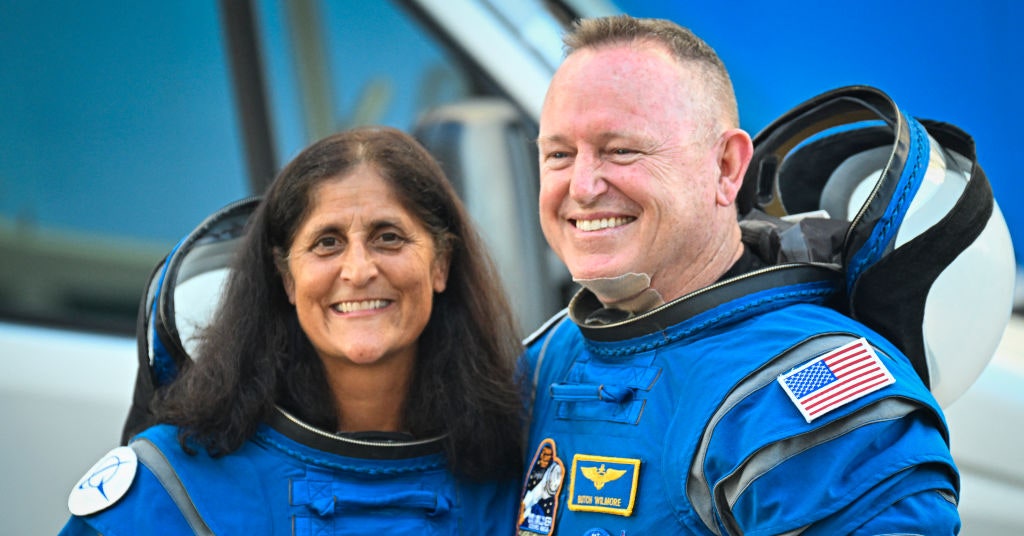
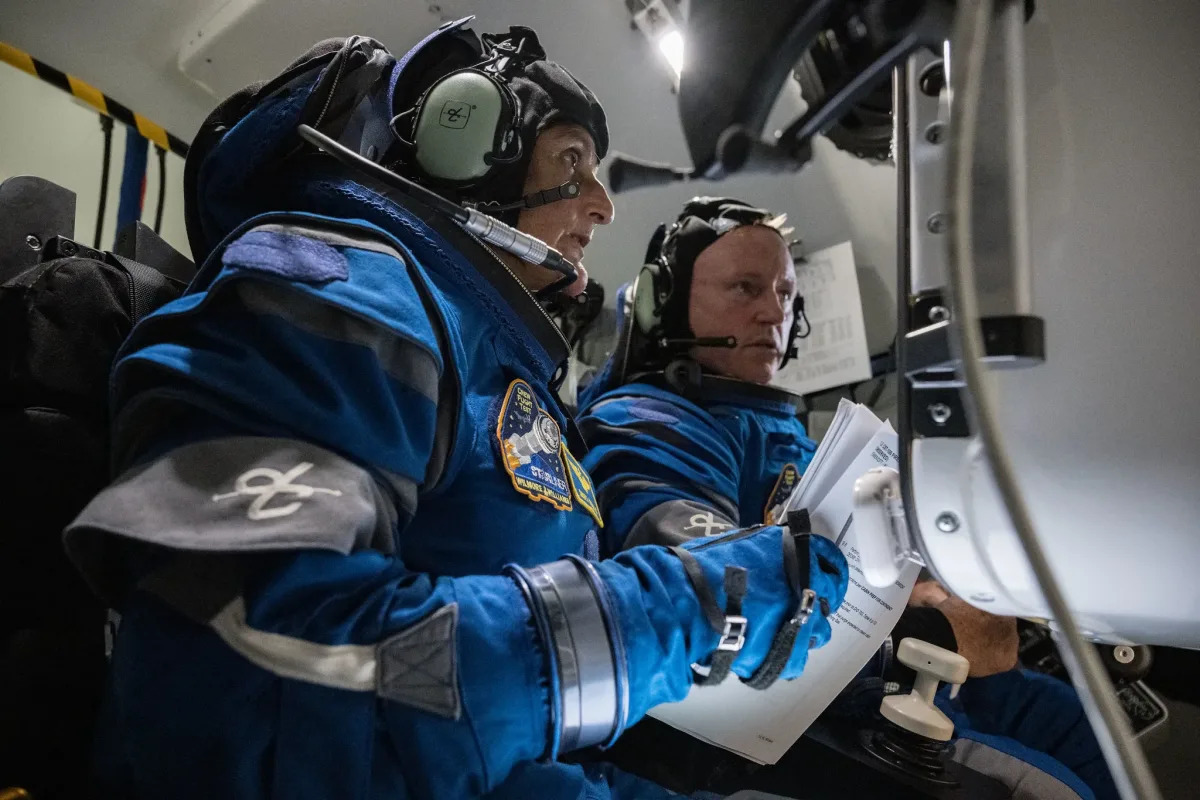
NASA has again postponed the return to Earth of Barry Wilmore and Sunita Williams, the astronauts stranded on the International Space Station after Boeing’s Starliner capsule malfunctioned in the middle of this year.

The crew of the spacecraft arrived at the ISS in June. The objective was to test the Starliner’s comprehensive capabilities, including launch, docking, and return systems. The mission was scheduled to last one week. Five of the capsule’s 28 thrusters failed to function before docking with the ISS. Boeing claimed that its technology could guarantee the safe return of the astronauts. However, NASA expressed doubts and concluded that the risk was too high. The agency entrusted the task to SpaceX.

Elon Musk’s company launched the Crew-9 mission in September to, among other things, return Williams and Wilmore. Until now, the stalled astronauts were scheduled to return in February aboard the Crew Dragon rocket. However, NASA has announced that it expects the expedition to return to Earth’s surface after the arrival of Crew-10, which will be sent in late March 2025 at the earliest.

The adjustment will allow SpaceX and NASA engineers to finalize development of a new Dragon spacecraft, which will be shipped to the company’s Florida facility early next month.

“Fabrication, assembly, testing, and final integration of a new spacecraft is a painstaking endeavor that requires great attention to detail,” said Steve Stich, manager of NASA’s Commercial Crew Program, in a statement. “We appreciate the hard work by the SpaceX team to expand the Dragon fleet in support of our missions and the flexibility of the station program and expedition crews as we work together to complete the new capsule’s readiness for flight.”

NASA said that Crew-9 and Crew-10 crews must complete a “handover period,” during which the ISS residents share experiences and knowledge with the new arrivals. This process ensures the proper performance of onboard science experiments and maintenance of the orbital complex.

NASA and SpaceX specialists evaluated several options for coordinating the next crewed delivery. They determined that the March launch for Crew-10 was the “best option for meeting NASA’s requirements and achieving space station objectives for 2025,” according to an agency press release.

A Long Haul

The ISS received two resupply flights in November, ensuring that the crew members have sufficient food, water, clothing, and oxygen. However, some experts have warned of potential health risks for Wilmore and Williams after spending more than nine months in space.

The scientific community has been studying the effects of spaceflight on the human body since the 1970s. In the years since the first lunar landing, it has identified conditions such as loss of bone mass, weakened heart function, visual problems, and the development of kidney stones.

A recent study from University College London reveals that the structure and function of the kidneys can also suffer permanent damage, although this is particularly aggressive in cases of astronauts who get too far away from Earth, which is not the case on the ISS.

NASA points out that the crews of expeditions to the ISS usually make extended stays, with an average duration of six months. It adds that some astronauts have carried out missions of up to one year to contribute to research on human adaptation to spaceflight, with a view to future lunar and Martian exploration.

This story originally appeared on WIRED en Español and has been translated from Spanish.

‘Escaping Gravity’ Takes a Brutally Honest Look at NASA


Lori Garver served as deputy administrator of NASA from 2009-2013. Her new memoir Escaping Gravity, about the struggle to get her colleagues to embrace space entrepreneurs like SpaceX and Blue Origin, paints a deeply unflattering picture of the inner workings of NASA.

“I did tell an honest—some would say brutally honest—story about an agency that I do love,” Garver says in Episode 522 of the Geek’s Guide to the Galaxy podcast. “NASA has a clubby atmosphere. It’s a bit of a ‘the first rule of Fight Club is you don’t talk about Fight Club.’ I’m breaking the rules, for sure, by speaking out—the unwritten rules.”

In recent decades NASA has been plagued by missed deadlines and cost overruns. Garver says that in many cases the people who promoted those programs knew that their budgets were unrealistic. “I just don’t believe that the people who designed those programs believed that they could do them within those amounts,” she says. “I think they sold something that they thought someone else would buy, and that got their contracts flowing, and then no one wants to cancel contracts, because these are jobs in your district. It’s all a very cozy operation.”

Garver also describes an attitude of entitlement at NASA, with many in the organization being unwilling to ask hard questions about whether or not their costly programs serve the public interest. “People come to NASA who are engineers and scientists,” she says. “They don’t have any kind of background in public policy or economics, and they don’t really see why that matters. They’re like, ‘We want to walk on the moon. I grew up wanting to walk on the moon.’ OK, but does the public owe you that? Not questions they were used to hearing, nor did they like to hear them.”

Garver’s proposal to partner with SpaceX was eventually adopted, saving taxpayers billions of dollars, but she says that a lot of hard work still needs to be done. “We have done this thing at NASA, they were able to embrace change, which is very hard in a government system,” she says. “Not all of NASA is yet changed, and there are many programs in the government that could benefit from some of this tough love.”

Listen to the complete interview with Lori Garver in Episode 522 of Geek’s Guide to the Galaxy. And check out some highlights from the discussion below.

NASA reveals date for attempted return flight of Starliner


NASA is targeting Friday, September 6, for the return flight of Boeing Space’s troubled Starliner spacecraft, the agency revealed on Thursday.

The vehicle will come home from the International Space Station (ISS) nearly three months later than originally planned and without the crew that it arrived with. The flight, the outcome of which could determine the Starliner’s future, is expected to take about six hours, NASA said in a blog post on Thursday.

“After undocking [at 6:04 p.m. ET], the Starliner will take about six hours to reach the landing zone at White Sands Space Harbor in New Mexico,” NASA said in the post. “The spacecraft will touch down about 12:03 a.m. on Saturday, September 7, descending under parachutes and with inflated airbags to cushion the impact.”

The Starliner has been docked at the ISS since early June after completing its first-ever crewed flight, with NASA astronauts Suni Williams and Butch Wilmore taking the ride.

But as it approached the ISS on June 6, issues emerged with some of the spacecraft’s thrusters. Several helium leaks were also detected.

The thrusters are key in guiding the Starliner toward its reentry point into Earth’s atmosphere for the trip home, and so NASA paused the return voyage to give it time to learn more about the issue and to confirm if it was safe to put Williams and Wilmore inside the capsule for the return journey.

After much research and deliberation, NASA announced last week that out of an abundance of caution, the two astronauts would instead fly home on a SpaceX Crew Dragon spacecraft in February 2025, with the Starliner returning empty.

And now we have a target date for what’s set to be a crucial flight for Boeing’s space vehicle.

In Thursday’s blog post, NASA said that all being well, the uncrewed Starliner spacecraft will perform a fully autonomous return overseen by flight controllers at Starliner Mission Control in Houston and at Boeing Mission Control Center in Florida.

It added that if the Starliner fails to perform as expected, teams on the ground will be able to remotely command the spacecraft through the necessary maneuvers for a safe undocking, re-entry, and parachute-assisted landing.

But clearly it’s not so confident that it’s willing to put Williams and Wilmore aboard the spacecraft for the journey home.

The current mission is the Starliner’s third flight to date. The first one in December 2019 ended in failure when the vehicle was unable to reach the ISS, though it returned safely. Its second test flight, in 2022, managed to successfully dock with the ISS and also return home.


Starliner astronauts will come home in February on a SpaceX Crew Dragon


After more than two months of tests and discussions, NASA has decided that astronauts Butch Wilmore and Suni Williams will come home in February 2025 on a SpaceX Crew Dragon, and the Boeing Starliner they flew to the International Space Station on in June will return uncrewed. In a press conference on Saturday, Steve Stich, manager for NASA’s Commercial Crew Program, said “there was too much uncertainty” around the predictions for Starliner’s thrusters to move forward with a crewed return flight.

The plan now is that Starliner’s first crew will return with SpaceX’s Crew-9, which is scheduled to launch to the ISS at the end of September. Crew-9 was initially supposed to carry four crew members, but will instead have to go ahead with two, so as to make room for Wilmore and Williams on the way back. That spacecraft is being reconfigured with seats for the two astronauts, and Dragon spacesuits will be added to its cargo for them to wear home. By the time Wilmore and Williams depart, the duo will have been on the space station for about eight months. The Starliner flight test was only supposed to last a little over a week.

The next step is to get Starliner ready for undocking and wrap up as an uncrewed flight test. The agency plans to conduct the second part of its readiness review for the process this coming week, and expects undocking to take place around early next month. “We are changing the separation sequence that we planned and we will review those aspects at the readiness review,” Stich said. “We’re going to go with a simplified separation technique to get away from the station a little more quickly.”

The issue with Starliner’s thrusters has been “very complex,” Stich said, and their performance has been “challenging to predict.” Without being able to accurately predict how the thrusters would perform from undocking through the deorbit burn, the potential risks for the astronauts were just too high, he explained.

“We have had mistakes in the past,” said NASA Administrator Bill Nelson. “We have lost two space shuttles as a result of there not being a culture in which information can come forward.” With that context looming over the discussions, he said, “We have been very solicitous of all of our employees that if you have some objection, you come forward. Spaceflight is risky, even at its safest and and its most routine, and a test flight by its nature is neither safe nor routine. And so the decision to keep Butch and Suni aboard the International Space Station and bring the Boeing Starliner home uncrewed is the result of a commitment to safety.”

Scientists find evidence of liquid water deep underneath the Martian surface


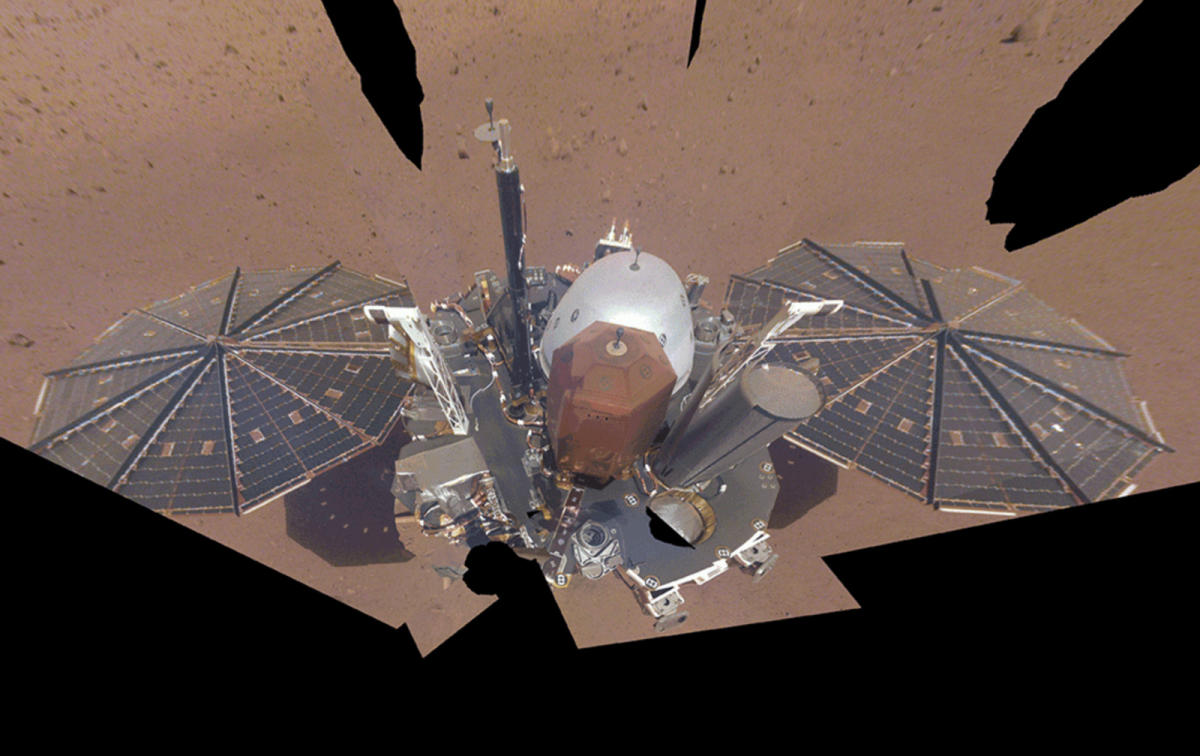
Water exists on Mars, according to a team of geophysicists, and not just as ice on its poles or as vapor in its atmosphere. The scientists have found evidence of liquid water deep in its outer crust, based on their analysis of data provided by NASA’s Mars Insight Lander. Specifically, they analyzed four years’ worth of ground motions recorded by the lander’s seismometer. By looking at seismic velocities, or how fast seismic waves travel on the planet, they were able to determine the materials that the waves moved through. What they found was that Mars’ mid-crust has fractured igneous rocks saturated with liquid water.

One of the scientists involved in the study, Prof Michael Manga from the University of California, Berkeley, told the BBC that they implemented the same techniques used “to prospect for water on Earth, or to look for oil and gas.” He said his group’s findings can answer the question of where all the water on Mars had gone, because features on the planet’s surface showed that it had lakes and rivers around three billion years ago. While there’s a theory that most of that water was lost to space, scientists have challenged that idea in recent years. One study by Caltech and NASA JPL published in 2021 found data that most of that water is still trapped in the planet’s crust.

The scientists involved in this newer study, published in PNAS, were only able to analyze seismic velocity data taken from underneath the lander. However, they believe that similar underground water reservoirs exist all over the planet, and they estimate that there’s enough liquid water under the surface to form a layer across Mars that’s half a mile deep. Manga told the the BBC that “much of our water is underground and there’s no reason for that not to be the case on Mars too.”

While the team’s findings could be taken as good news for space agencies and private companies looking to visit and even form human colonies on the planet, it won’t be easy reaching Mars’ water reservoirs. They’re located around 7 to 12.5 miles below the surface, which won’t be easy to reach even on our planet. “Drilling a hole 10km (6 miles) deep on Mars — even for [Elon] Musk — would be difficult,” Manga said, adding that “without liquid water, you don’t have life.”

NASA’s Curiosity rover accidentally uncovered pure sulfur crystals on Mars


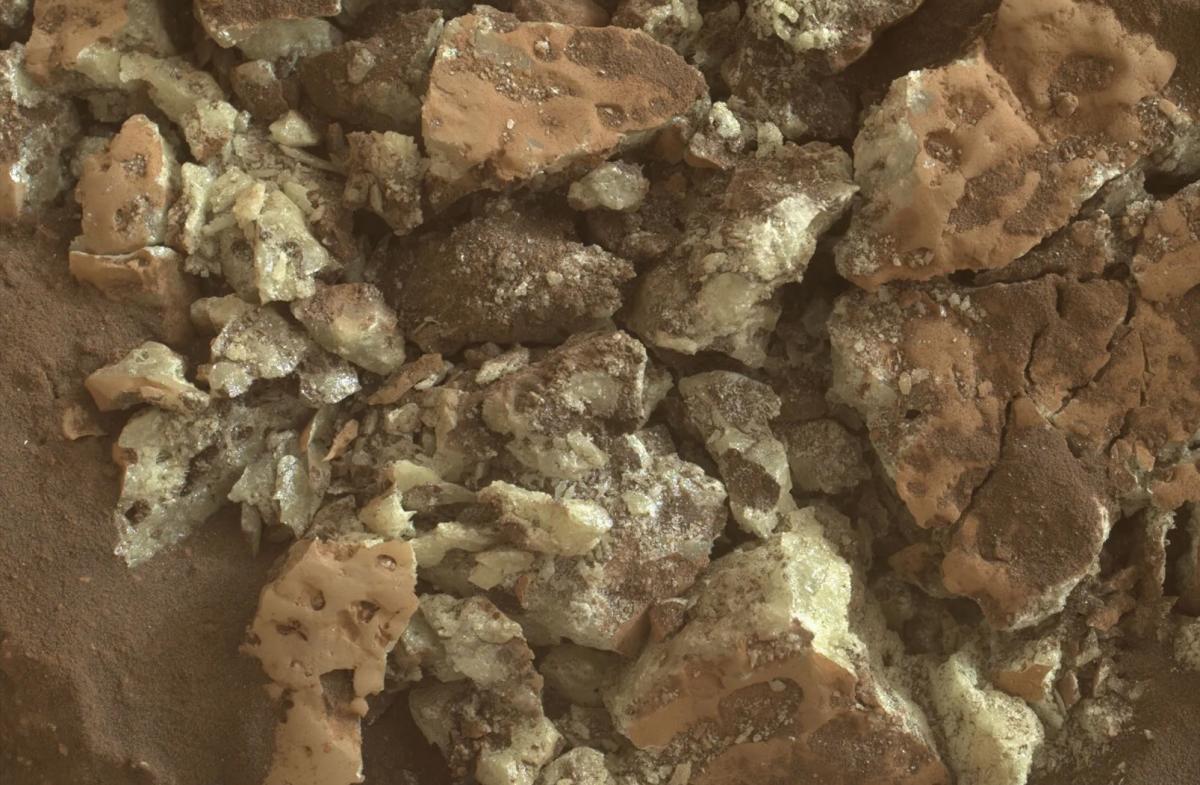
NASA scientists say pure sulfur has been found on Mars for the first time after the Curiosity rover inadvertently uncovered a cluster of yellow crystals when it drove over a rock. And it looks like the area is filled with it. It’s an unexpected discovery — while minerals containing sulfur have been observed on the Red Planet, elemental sulfur on its own has never been seen there before. “It forms in only a narrow range of conditions that scientists haven’t associated with the history of this location,” according to .

Curiosity cracked open the rock on May 30 while driving in a region known as the Gediz Vallis channel, where similar rocks were seen all around. The channel is thought to have been carved by water and debris flows long ago. “Finding a field of stones made of pure sulfur is like finding an oasis in the desert,” said Ashwin Vasavada, Curiosity’s project scientist. “It shouldn’t be there, so now we have to explain it. Discovering strange and unexpected things is what makes planetary exploration so exciting.”

A rock run over and cracked by the Curiosity rover revealing yellow sulfur crystalsA rock run over and cracked by the Curiosity rover revealing yellow sulfur crystals

NASA/JPL-Caltech/MSSS

After spotting the yellow crystals, the team later used a camera on Curiosity’s robotic arm to take a closer look. The rover then took a sample from a different rock nearby, as the pieces of the rock it had smashed were too brittle for drilling. Curiosity is equipped with instruments that allow it to analyze the composition of rocks and soil, and NASA says its Alpha Particle X-Ray Spectrometer (APXS) confirmed it had found elemental sulfur.