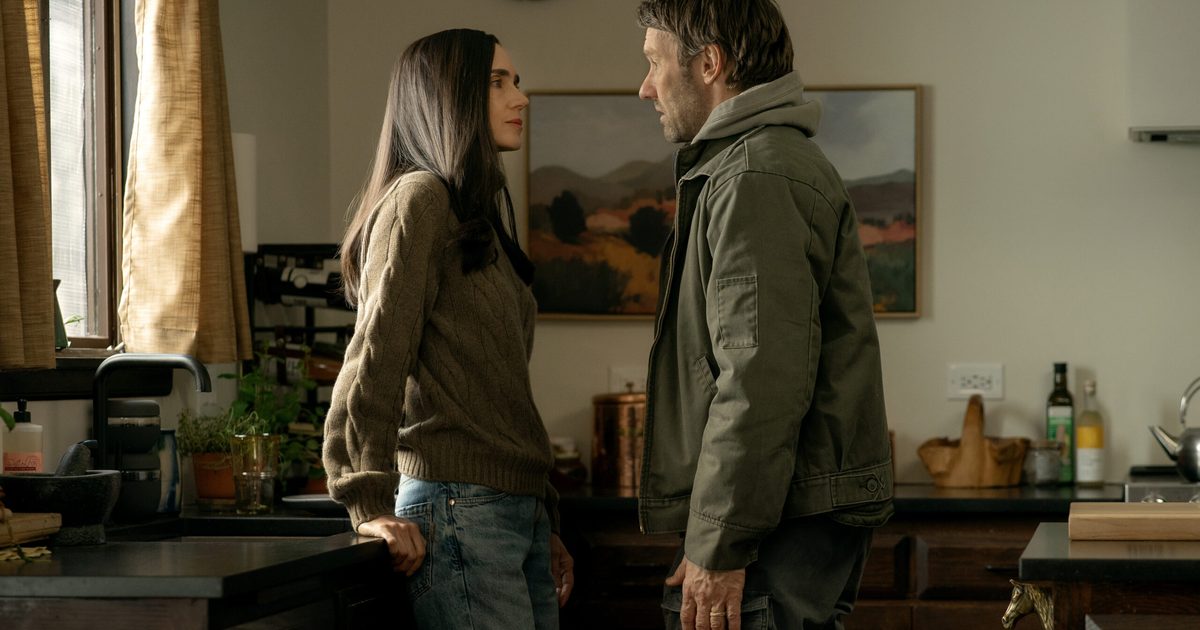
EXCLUSIVE: Joel Edgerton and Jennifer Connelly tease ‘beautiful chaos’ in Dark Matter season 2


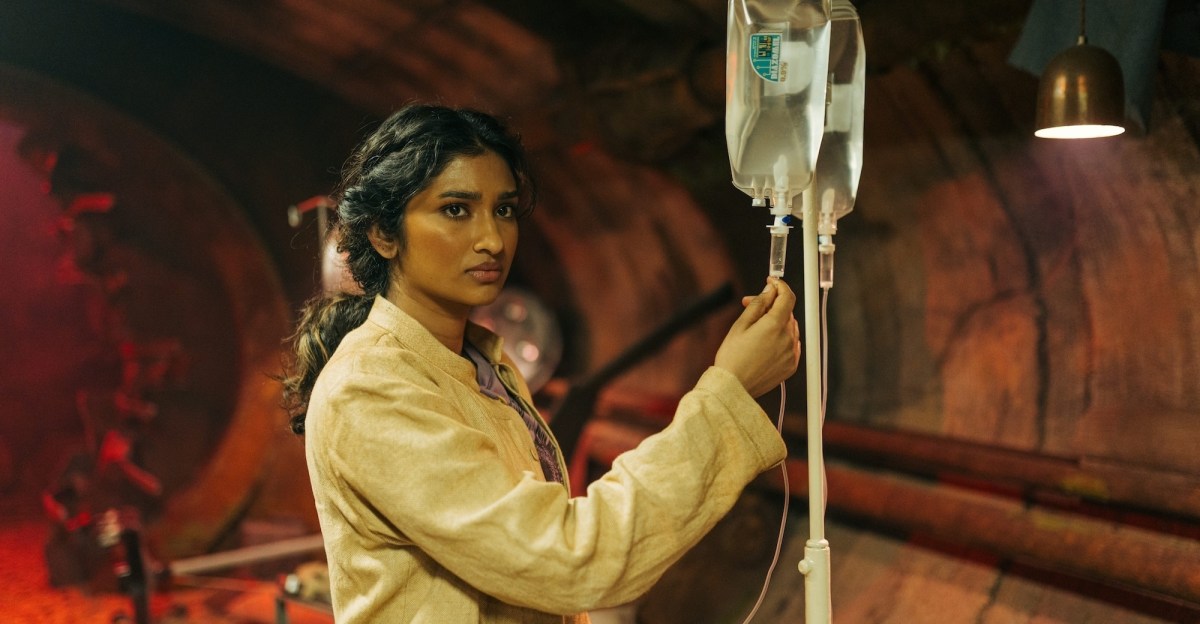
Joel Edgerton and Jennifer Connelly return for season 2 of Blake Crouch’s hit sci-fi series, Dark Matter. Following the events of season 1, Dark Matter follows physicist Jason (Edgerton), his wife Daniela (Connelly), and their son Charlie (Oakes Fegley) as they travel the Multiverse in search of a new world to live in.

In an interview with Digital Trends, Edgerton and Connelly discussed working together again on Dark Matter. They also broke down what fans can expect for the show’s second season and what new challenges their characters will face.

This transcript has been edited for length and clarity.

Digital Trends: What was it like returning to the series for season 2 and working together again? 

Connelly: Fantastic. It was great. I was very happy to come back and work with Joel and have more time actually with the couple. The original version of the couple who, in season one, you meet them, and they have a couple scenes together, and then they’re apart until the very end, where they have this very fraught reunion. So it was really fun to have time with that couple of them [and to] get to know who they were and who they’d become.

Digital Trends: Yeah, they go through a lot together, and there’s a new season, and it looks like that their relationship has a lot of challenges. They’re traveling the multiverse together, and they’re trying to hide from all these different forces closing in on them. Do you ever expect Jason and Daniela to find happiness somewhere in some other universe?
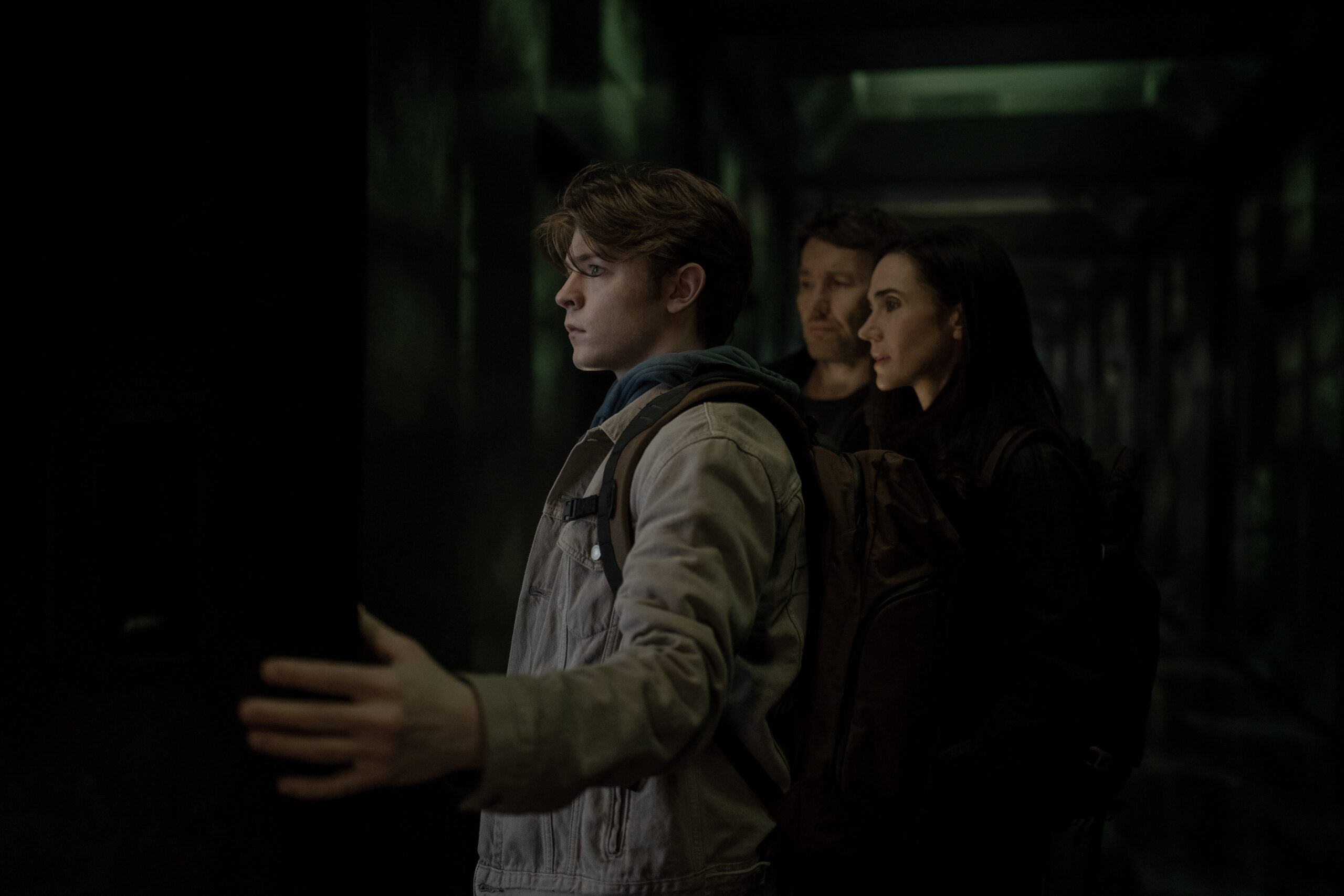
Edgerton: You know, it’s funny, I look at them and go, “I think you guys just get to Chicago, try and get on an airplane. Go to Tahiti. Greece. So I would like to shoot that episode. Look, I think they’re going to find a place.

What’s great about the challenge for Blake of writing the episodes is every time they go to a new world, there’s like a checklist for things [they] are going to do. 

It’s like: Find out not only is there’s another version of Jason, [if] there’s another version of Daniela there or Charlie. Can they avoid that? How do they get into that world with identification, and how do they find money? All these complications. How do they find work? How [do] they find a house? 

So there’s sort of these hoops [that] they got to jump through. And all the while they’re going to be kind to each other. I feel like Jason is constantly dealing with his guilt. He’s like, “I got us into this mess, sort of.” So I have hope that they’ll find that.

There’s a place we find in season 2 that’s kind of cool, and I don’t give spoilers away that there’s a couple of worlds they find. Some are not good, but one of them particularly seems to be okay. I’m not going to spoil it.

Digital Trends: All right. So what was the most exciting part about filming this season? Was there anything particularly challenging about it as well?

Connelly: There are things that are more challenging, practically, or more uncomfortable, like that tornado world we went to. Rain machines and wind machines. And then there are things like, I had the experience of the season of working with myself, which is super peculiar. That’s something I’d never done before. Nothing unexpected happens. It’s so weird.

Digital Trends: Overall, what can fans of this show expect from season 2? And in your opinion, how is it compared to season 1? 
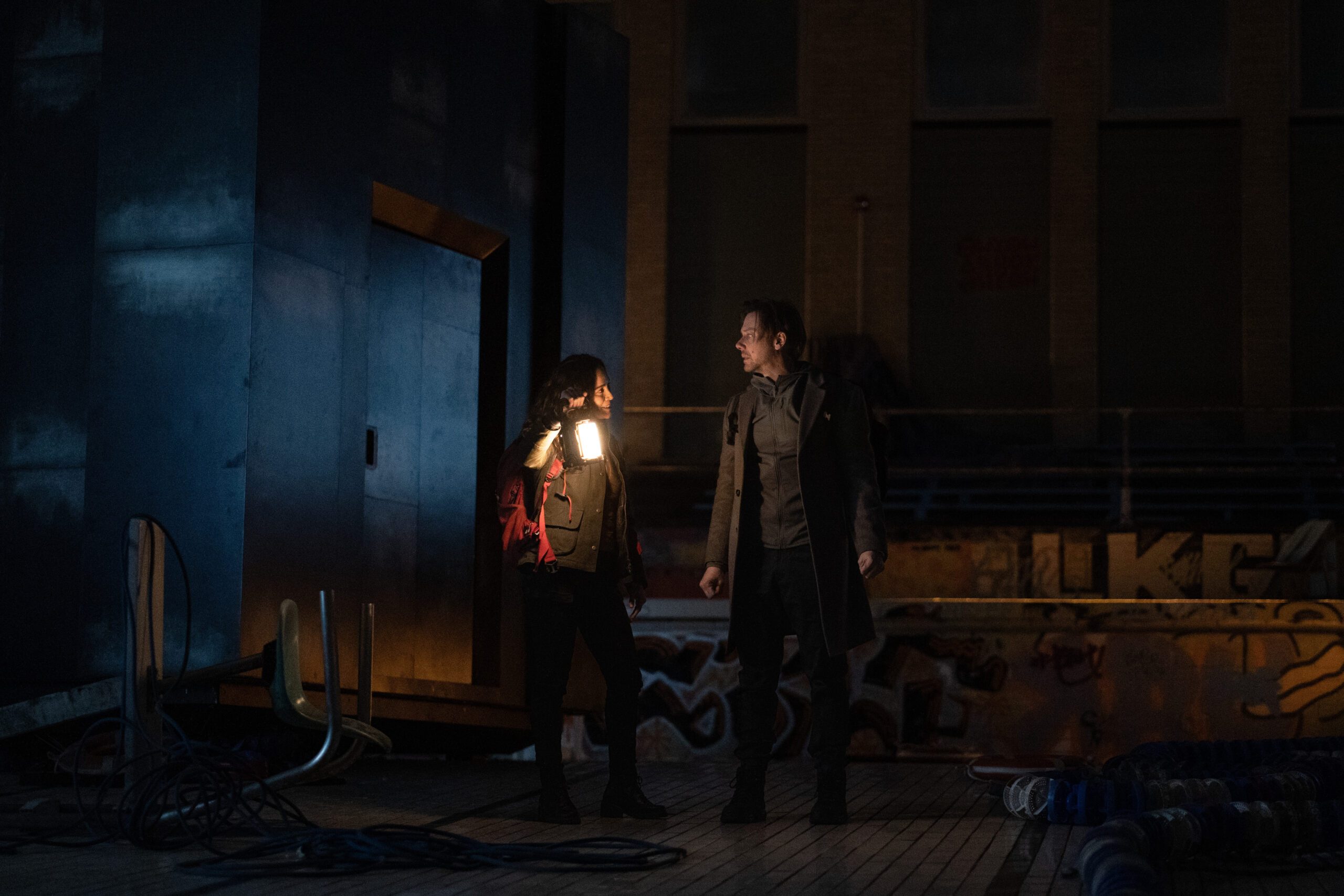
Edgerton: There’s a sort of a beautiful chaos to season 2. Sort of this world and endless possibilities, with a number of characters, and kind of following these journeys of different characters, and literally this multitude of possibilities for each of them. 

So there’s a certain chaos that is harnessed in season 2 that makes sense of the technology. And in a way, the whole purpose of season 2 is to also underline that, on one hand, the new technology creates a sense of chaos and demands that human beings really intentionally choose how they will use something.

And in the case of us, as a family…do we use it to escape? Do we use it to find it a home and then shut it down? So, I think fans can hope for a real deeper explanation, exploration, rather, of the characters that they met in season 1. The same wild spectacle, but a pinch of extra madness and chaos. 

Connelly: Yeah, I always said the same. I think things are just amplified. All the elements that were in the show in season 1 are amplified here. So I think that the world exploration is even more spectacular. 

I think that the show always had really entertaining, playful elements, and I think there’s even more playfulness in those aspects. And then there was also always this sort of domestic drama. I think that aspect goes even deeper here in season 2. So, yeah, I think everything’s just a little extra.

Digital Trends: Yeah, I’ll say. So do you see yourself working together on a third season of this series? 
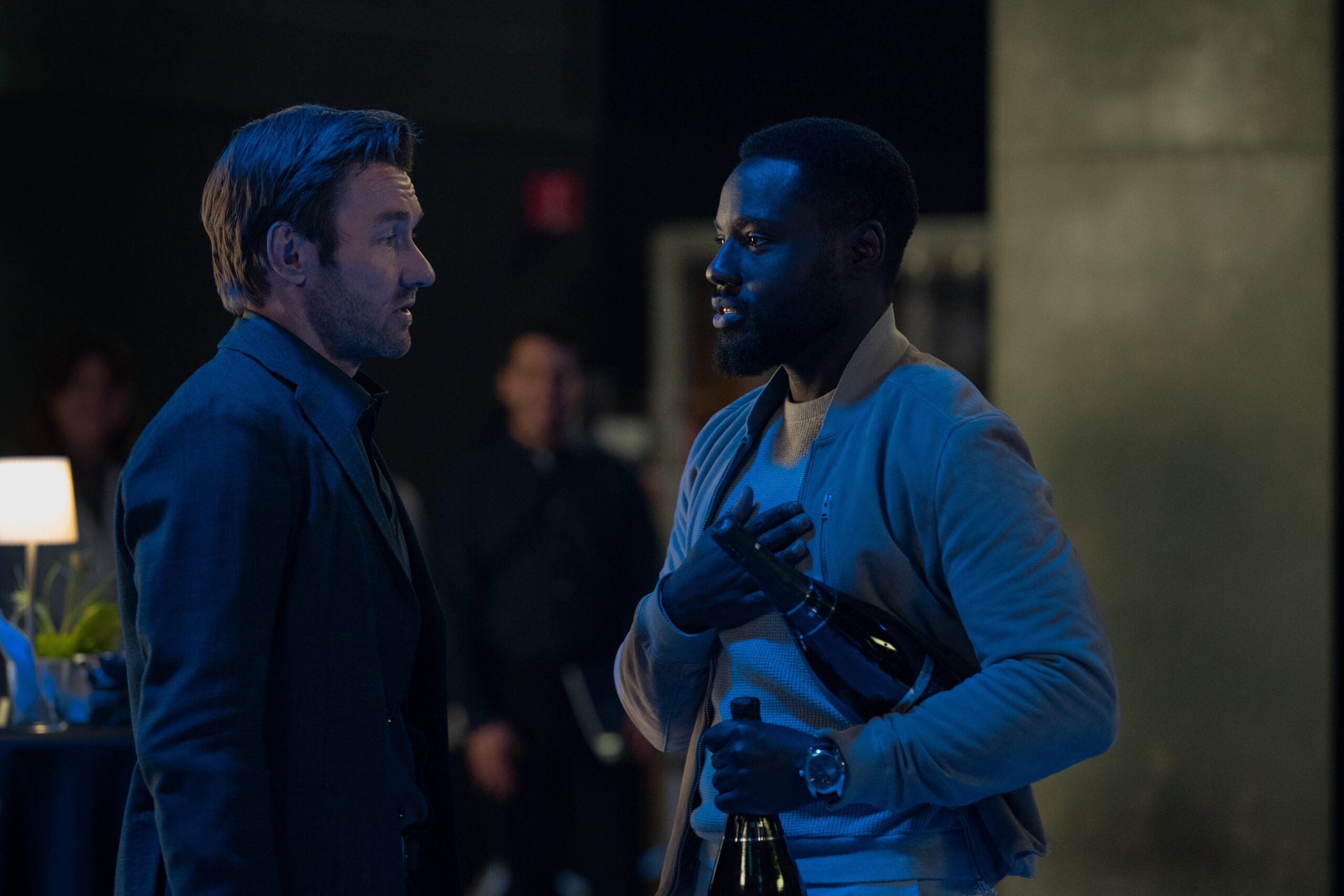
Edgerton: No, not there anymore, man.

Digital Trends: Really?

Edgerton: Well, look, you know, the thing about television is…the fans love it, then there’ll be more, and it means that we feel appreciated. We certainly all enjoy working with each other. It’s a really great atmosphere, and…I don’t feel like there’s squeaky wheels on Dark Matter too. 

Everybody rolls this, leaves up, and pitches in and works really hard and appreciates and looks after each other. So the feeling amongst the group is that we’re a big family and we enjoy that work experience. Then it’s over to you guys. It’s over to the fans, and if the fans love it and they call for more, then we’ll probably deliver it.

Digital Trends: Amazing. So is there anything else that you’d like to say to the fans? 

Connelly: I hope that fans enjoy it and have a great time. Yeah, we love making the show, and I had a great time working on it and collaborating with everyone, and we hope that the fans enjoy it. It’s always good to know. I think some of the feedback from fans in season 1 was really special, and I know Blake is very smart to be receptive to the response. 

Edgerton: And sometimes that means fans…they’ll let you know what they expect of certain characters. And I think it’s Blake’s job to kind of help deliver the expectations, but also surprise an audience. So these prize fans can often help activate the shaping of a show themselves with their own feedback.

Dark Matter season 2 premieres on Apple TV on August 28.

Best Sci-Fi and Horror Games Like Directive 8020


Blog | Games Like

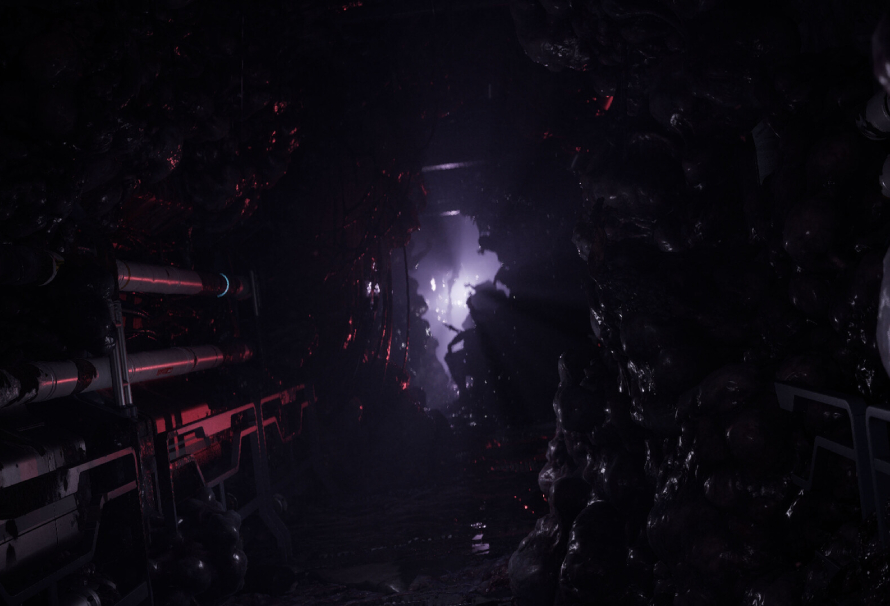
Directive 8020 brings Supermassive Games’ signature brand of cinematic horror into a more action-heavy, survival-horror-flavoured space. The studio has always had a knack for tense choices, grisly consequences, and making you deeply suspicious of every dark corridor, but this time, that familiar formula is heading into sci-fi territory.

So, we’ve rounded up the best games like Directive 8020, from choice-driven horror stories to sci-fi scares, lurking threats, and games where everything can go horribly wrong very, very quickly.


Silent Hill f on PC

1. Silent Hill f

Silent Hill f is an exceptional entry in one of horror’s most beloved series, and a great pick if what you’re after is lurking terror, unsettling imagery, and a story packed with twists and turns. You take control of Hinako as she explores her hometown, now swallowed by a strange fog that has warped everything into something deeply unpleasant. It’s eerie, stylish, and deeply unnerving, which makes it an easy recommendation for anyone after a strong dose of psychological horror.

  • Perfect For: Players who want psychological horror, unsettling storytelling, and the constant feeling that something is very, very wrong.

Alien Isolation on PC

2. Alien Isolation

Alien: Isolation is the perfect game if you want to spend every waking second fearing for your digital life. You play as Amanda Ripley, skulking through dark corridors and trying to survive while a relentless Xenomorph stalks you from the shadows. The game uses plenty of clever tricks to make sure you never feel safe for long, and while you’re desperately trying to stay alive, you’re also uncovering the truth about what happened to your mother. Lovely stuff, really, if your idea of lovely is constant terror.

  • Perfect For: Anyone who wants sci-fi horror, ruthless enemies, and the horrible knowledge that hiding under a desk might not actually save you.

The Quarry on PC

3. The Quarry

The Quarry is all about trying to keep yourself and a group of teenage counsellors alive in the very classic horror setup of a summer camp gone horribly wrong. It’s packed with choices, grisly outcomes, and the kind of “please don’t go into the dark woods alone” moments that make Supermassive’s games so much fun. It’s also playable with others, which adds a nice bit of chaos to the whole thing. Really, this is our stand-in for Supermassive’s wider catalogue, because if you want something like Directive 8020, it makes sense to start with another game from the same developer.

  • Perfect For: Fans of cinematic horror, branching choices, and trying very hard not to get a full cast of characters killed.

Resident Evil Requiem on PC

4. Resident Evil Requiem

Resident Evil Requiem is another strong choice from a long-running survival horror series, and it delivers that familiar mix of tension, action, and deeply unpleasant monsters. This one puts you in control of Grace Ashcroft and Leon S. Kennedy as they try to survive the horrors connected to the Umbrella Corporation. It’s a great pick if you like your horror with a bit more firepower, a lot of stress, and the occasional moment where you realise you probably should have saved those bullets.

  • Perfect For: Survival horror fans who want action, tension, iconic characters, and plenty of reasons to regret wasting ammo.

Prey on PC

5. Prey

Prey fits the bill nicely because it’s creepy, clever, and set in space, which is a pretty good starting point when looking for something in the same general orbit as Directive 8020. It’s also just a stunning game all-around, with a fantastic concept and loads of ways to approach its many problems using your growing set of strange tools and abilities. Also, sometimes mugs come to life and try to eat you, and frankly, there just aren’t enough games willing to commit to that bit. Then again, almost anything in Prey could be an alien, so you’re better off trusting absolutely nothing.

  • Perfect For: Players who like sci-fi horror, immersive problem-solving, and being suspicious of every single coffee cup in a room.

Detroit: Become Human on PC

6. Detroit Become Human

Quantic Dream games can be a little divisive, and Detroit: Become Human has moments where it lays things on a bit thick, but it’s still an excellent game if you want choice-driven storytelling with a sci-fi edge. It explores advanced androids, personhood, and what it means to be alive, all while giving you plenty of decisions that can send the story in different directions. It’s also a beautiful game to explore, and if you want to feel like every choice you make matters, this is still one of the better options out there.

  • Perfect For: Players who want cinematic sci-fi, branching narratives, and the pressure of knowing one bad decision can change everything.

Sherlock Holmes The Awakened on PC

7. Sherlock Holmes The Awakened

We’re finishing up with probably the biggest curveball on the list. Sherlock Holmes The Awakened comes from Frogwares, which means there’s plenty of investigating to do, a story that pulls you along, and, in this case, a thick layer of horror and tension. You take control of Mr Holmes himself as he dives into a mystery far stranger than his usual cases, with the Cthulhu Mythos creeping in and making everyone involved question absolutely everything they know. It might not seem like an obvious match at first, but if you’re here for mystery, dread, and a story that keeps getting weirder, it absolutely earns its place.

  • Perfect For: Players who want investigation, cosmic horror, and a mystery that becomes much stranger than anyone reasonably asked for.

Jason Coles

Jason likes to focus on roguelikes and co-op games; in a dream world he’d make a living writing about Dark Souls. As well as being a writer he also does personal training and accounting and can occasionally be seen on other people’s streams. Being a big fan of fluffy things means he has two cats, both of whom refuse to let him sleep, but at least they are cute.

Doctor Who’s stars and showrunner think Belinda’s right to want out


There are more Doctor Who companions than there have ever been Doctors, and while they’re all unique in their own ways, there’s still a familiar pattern: The Doctor as the mysterious alien with the keys to all of time and space, and the companion as the eager adventurer, ready to be whisked away to a life of glorious discovery and thrilling peril.

But this weekend’s premiere episode of the show’s newest season gives the usual formula a deliberate flip. To showrunner Russell T. Davies, it’s all about expanding the emotional range of Doctor Who. And for the actors playing the Doctor and his new companion Belinda Chandra, it was about partnership on screen and off.

[Ed. Note: This piece contains mild spoilers for the first episode of Doctor Who season 2 on Disney Plus, also known as Doctor Who series 15.]

In “The Robot Revolution,” Belinda is kidnapped by robots, wrapped up in an alien revolution, and between her own smarts and the Doctor’s, saves the day — and makes her position on it all very clear at the end of the episode. She’d like the Doctor to take her home. Now, please. She is not about this very dangerous life, and she has responsibilities at home.

That’s a surprising enough swerve on the usual Doctor/companion dynamic that we decided to ask Doctor Who’s stars and showrunner about it. Speaking Polygon via video chat, Davies said that the idea behind Belinda was absolutely to present a different kind of companion.

Varada Sethu on the set of the TARDIS as Belinda Chandra. She’s standing at the console, wearing a dark teal velvet jumpsuit.

Image: BBC/Disney Plus

“I think Belinda simply has an awful lot of common sense,” he said. “That’s why she’s older than Ruby. I wanted to extend the range of the show; in extending the range of the show, you extend the range of the Doctor as well, which is always crucial.” Davies raised the example of last season’s companion character (who will return for season 2 in a smaller role), Ruby Sunday, a 18-year-old foster child played by then-18-year-old actress Millie Gibson, who was very much on board with the adventure of it all.

“It’s great to swing the program around and say, ‘What if you’re not so enchanted? What if you’re Belinda?’ Belinda is right in looking at this man and sort of saying, You live a mad life, and a dangerous life.” Davies cited several of the dangers Belinda and the Doctor faced in “The Robot Revolution” and will face soon in the new season.

“I think Belinda’s right,” he said, to want to go home right away. “And I think the more you acknowledge that, the more you open the emotional range of the show, and then the more people can join in. There must be people at home sitting, going, ‘That man’s mad! I wouldn’t join up with him!’ I’d like to think I’d be Ruby Sunday. I suspect I’d actually be Belinda Chandra Going ‘Get me home right now!’”

Ncuti Gatwa and Varada Sethu on set in the Doctor Who TARDIS. He’s perched on a railing, wearing a pinstriped denim jeans, jumper, and skirt combination, while she’s standing in jeans and a white t-shirt.

Image: BBC/Disney Plus

In a separate video interview, Belinda’s actress, Varada Sethu, told Polygon that she found Belinda and the Doctor’s dynamic to be “really, really interesting,” because “it puts this friction that enriched the evolution of [their] whole relationship. There was this equal push element, back to the Doctor. The Doctor saying, ‘No, come on this adventure.’ She’s like, ‘No, I have my adventure. I want to go back to mine, not yours.’ The whole season is their relationship, basically, and the love and the trust and the deep friendship that they have, in learning to love and respect each other and wanting to get her home because that’s what she wants. It lends itself really easily to a good story and a good team when there’s just as much… What am I trying to say?”

“Power, I feel,” the Doctor actor Ncuti Gatwa supplied, with Sethu agreeing: “They’re real equals.”

Sethu said that she and Gatwa discovered that dynamic in last season’s episode, “Boom,” in which she guest starred as the futuristic Anglican Marine soldier Mundy Flynn.

“Even just in the three weeks that we were filming on ‘Boom,’” Sethu told Polygon, “I felt like we found our rhythm. Because Mundy and the Doctor have a similar kind of… antagonist…”

“Trajectory,” Gatwa suggested.

“Push pull kind of thing,” she agreed. “We found that rhythm. We had had that already.”

Gatwa said that the Doctor and Belinda’s equal narrative footing in the season was very reflective of he and Sethu’s working relationship and vice versa. “Everything bleeds into one another,” he said. “What happens on set bleeds into life, in life bleeds into the set. And so it just felt like we were partners throughout the whole thing, which was very cool.”

Doctor Who series 15 is currently airing on BBC One and, as season 2, on Disney Plus.

A show based on Philip K. Dick’s The Variable Man is in the works


According to , Humans writers Jonathan Brackley and Sam Vincent are working on an adaptation of Philip K. Dick’s 1953 novella, The Variable Man. The show is being produced by Motive Pictures in a partnership with Electric Shepherd Productions, which is run by the late author’s daughter, Isa Dick Hackett. The Variable Man follows a tinkerer turned accidental time traveler named Thomas Cole, who is transported from 1913 into the future and suddenly finds himself a reluctant player in an interplanetary conflict.

It’s being written for a UK broadcaster, according to Deadline, but there may be hope for a US release. “When you’ve got Sam and John doing what they did so brilliantly with Humans and exploring the modern world through a genre lens, it is something that can absolutely attract broadcasters in the US,” Motive CEO Simon Maxwell told the publication. I really enjoyed The Variable Man back when I read it and I’ll give any PKD adaptation a chance, so here’s hoping we get another good one in this series.

Sci-fi fans: Watch Foundation’s excellent season 2 while it’s free


Oh, you think that’s hyperbolic? Well I’m just getting started. Foundation (season 2) has one of Lee Pace’s best performances, has the best space ship designs this side of Villeneuve’s Dune, has the best romantic scoundrel Han Solo-type since Empire Strikes Back, and has the most bombastic television finale since the Red Wedding. It’s all backed up with an inexplicably lush costume, set, and CGI budget that can’t be explained as anything other than a nine figure tax write off. And you don’t need to have seen a single episode of the first season or read a page of the book to enjoy any of it!

Here’s the thing about Isaac Asimov’s Foundation: it’s a strange choice for a television series, one that requires a lot of modifications to function as episodic storytelling. There were clearly some kinks to work out, and it seems to have taken one mediocre season to iron out all those wrinkles. Luckily, the series also sort of functions like an anthology, with a cast of mostly new characters for the second (and upcoming third) season. All you need to know from the first season is that (spoiler warning) immortal clone emperor Lee Pace is big mad about a group of nerds (led by Ed Harris and his protege Lou Llobell) who keep saying his galactic empire is going to collapse (and they’re totally right, because math). There, I summarized the mediocre first season and now you’re ready for a prestige sci fi drama full of pulpy adventures, palace intrigue, steamy love stories (gay and not), and some really good explosions.

Still not convinced? Well there is that naked Lee Pace ninja fight in the season 2 premiere.

Now hurry up, you’ve got 10 incredible episodes to watch, you can thank me later!

Jeff VanderMeer returns to Area X


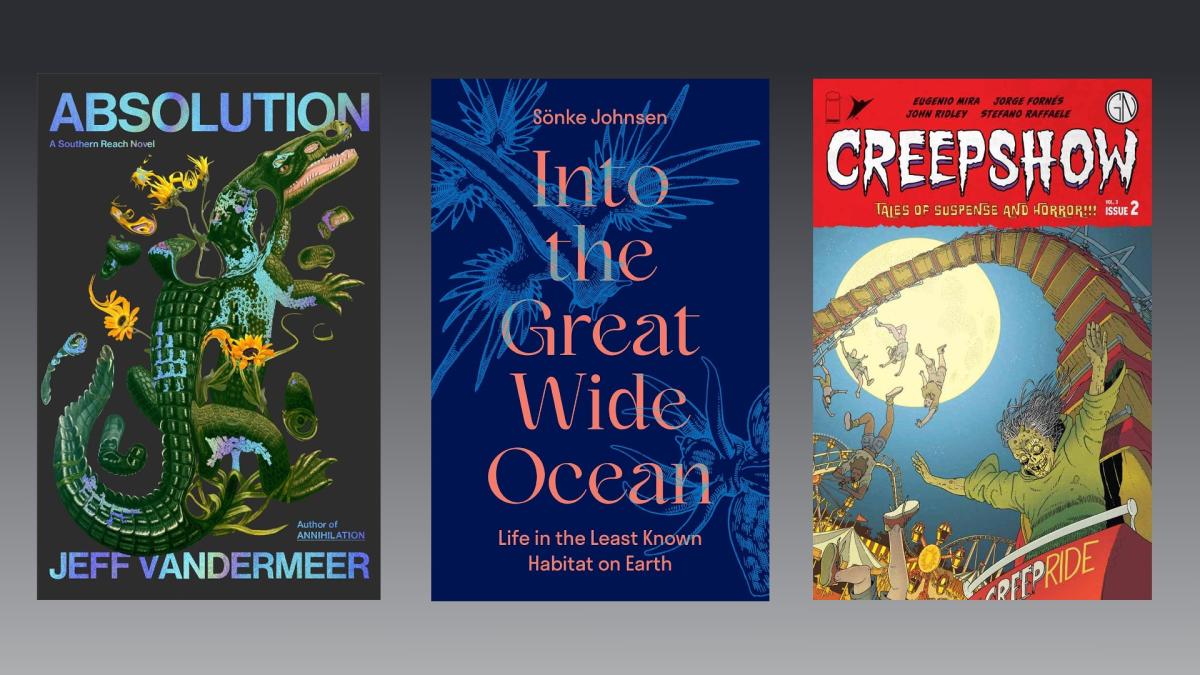
One thing I did not foresee happening this year was us getting a new entry in Jeff VanderMeer’s Southern Reach series. But the author announced exactly that back in April, and I’ve pretty much been counting down the days until the book’s release ever since. Absolution, the fourth novel in what previously stood as a trilogy, hit the shelves this week and it takes us back to the beginning of Area X and the ill-fated first expeditions to explore it.

For the uninitiated, the series deals with a strange coastal region in the US that’s inexplicably been shut off behind an invisible border and has returned to a wild state. A shady government agency has been tasked with studying it, but the people who set out on those exploration missions either never come back out, or come back different. The series includes Annihilation (which inspired the 2018 movie starring Natalie Portman), Authority and Acceptance.

Ten years after the series was originally released, a prequel feels like the perfect way to dive back into the mysteries of Area X and the Southern Reach. The trilogy concluded in a way that answered some questions but also left so much else up in the air. And while you probably shouldn’t expect Absolution to neatly wrap it all up, it does give us more insight on the early days of the anomaly and the perspective of key characters in that timeline, like Lowry. Absolution is hefty — it’s structured so there are three novella-like parts, and is nearly 500 pages long in all. Which is great, because I can’t get enough of Area X.

‘Absolution’ Excerpt: Read the Beginning of Jeff VanderMeer’s Newest Southern Reach Book


But then, too, there was the assurance, the confidence, in the accounts of the biologists as remedy to allay suspicion. Because Sergeant Rocker, too, had then taken to the waters and disappeared, the biologists using their tracking equipment to make sure they could follow the alligators in their new lives.

The Tyrant kept to herself, while the others remained in close proximity, for a while. None, at least overnight, seemed inclined to leave the area, and by the fourth day, Team Leader 1 put the most junior member of their party on the task of monitoring moments that might include a full day of basking in the same stretch of mud.

On day six they found Firestorm’s front leg, bobber wire wrapped around it, the whole prominently displayed on a mudbank with deep boot prints suggesting poachers. There was, one biologist wrote, “a bathetic or pathetic quality to the paleness of the leg, enraptured in the evidence of our experiment, lost so far from her home. I wept for an hour, but do not know if this was an appropriate response.”

(No, Old Jim did not believe it was an appropriate response, even as he himself wept at odd hours, for his own reasons, down in Central’s archives.)

Battlebee turned up dead and bloated and white, with a chunk ripped out of him postmortem by some creature, possibly Sergeant Rocker, speculation being that stress and the anesthetic had been too hard on him. Postmortem examination revealed stomach contents that included fish, a turtle, mud, and, inexplicably, a broken teacup.

She had also been pregnant, “a fact that surprised us,” Team Leader 2 wrote, “given her credentials identified her as a male,” amid some general confusion: “To be honest, I cannot now remember when we first took this project on, when we first encountered these subjects. The heat here is abysmal.”

Sergeant Rocker opted out of the project by shedding his harness in the water near the tent of Team Leader 1, indicating, as she absurdly put it, “A politeness on the part of Sergeant Rocker in keeping with his personality when I knew him best. I felt this loss much more deeply than expected.”

This sentimentality toward an alligator seen as an obligation just days before weighed on Old Jim, although he could not put a finger on why. Nor did he understand why the alligator experiment registered with the biologists in their reports as a great success, and they would even reference it with a kind of beautiful, all-consuming nostalgia when the mission began to sour. The myth of competence, perhaps. The myth of persistence. The myth of objectivity.

Perhaps, both he and the biologists would have been wiser to focus on how Sergeant Rocker had turned into an escape artist, for the harness was intact and still latched, with no tears anywhere. So how had the alligator possibly gotten free? Old Jim kept seeing the biologists by a trick of faulty video running away from the release site, only to re-form in their drinking circle.

He replayed the video so often that it became a disconcerting mess of light and shadow, of pixelated disembodied heads and legs and shapes that leapt out and sharpened, only to become subsumed into the past.

“All possible measures were taken but nothing could be done.”

Or had the outcome been exactly as intended?


Excerpted from Absolution: A Southern Reach Novel by Jeff VanderMeer. Published by MCD, an imprint of Farrar, Straus and Giroux. Copyright © 2024 by VanderMeer Creative, Inc. All rights reserved.

Matthew McConaughey narrates a spooky new Exodus game trailer


It’s been a while since we’ve seen much from Wizards of the Coast and Archetype Entertainment’s Exodus, the upcoming sci-fi role-playing game from former BioWare developers. Sure, the studio has been dropping lore and concept art since revealing Exodus at last year’s The Game Awards, but a new trailer for the game released Wednesday offers a much-needed reminder of Archetype’s upcoming project.

Archetype’s latest reveal for Exodus is timed to Spooky Season — and is thus appropriately terrifying. The game’s new cinematic trailer introduces the Mara-Yama, an alien threat that travels in fleshy ships and relentlessly pursues and overwhelms its victims. Think Star Trek’s the Borg, but instead of voyaging through space in black cubes, Exodus’ unrelenting predator species gets around in ships that use grotesque extremities like a physical tractor beam.

According to some moody narration, courtesy of actor Matthew McConaughey (Interstellar), the Mara-Yama “feed on fear, delight in cruelty, and revel in the agony of their prey. They aren’t just hunters — they are sadistic predators who savor every moment of psychological torment they inflict.” The name Mara-Yama is a reference to the deities Mara and Yama, representations of death and the underworld in Dharmic religions.

While these cosmic horrors may not be appealing, necessarily, they have stoked my interested in Exodus. I’m digging the coldness-and-cruelty-of-space-demons thing that McConaughey’s vibing about here.

Apparently, we’re going to be hearing a lot more from McConaughey; he’s portraying a character named C.C. Orlev for Exodus. The developer describes him as a “self-proclaimed spokesman” for Exodus, and an infamous character in the game’s fiction.

Exodus does not have a release date. It’s currently in development for PlayStation 5, Windows PC, and Xbox Series X, and, according to executive creative director James Ohlen, is just the start of a new universe.

Archetype’s debut title is part of a billion-dollar bet on internal game development at parent company Hasbro. In addition to Archetype Entertainment, Hasbro has Atomic Arcade, which is working on a G.I. Joe game starring Snake Eyes; Invoke Studios, which is developing a Dungeons & Dragons game; and Skeleton Key, which is working on “something spooky.”

‘Escaping Gravity’ Takes a Brutally Honest Look at NASA


Lori Garver served as deputy administrator of NASA from 2009-2013. Her new memoir Escaping Gravity, about the struggle to get her colleagues to embrace space entrepreneurs like SpaceX and Blue Origin, paints a deeply unflattering picture of the inner workings of NASA.

“I did tell an honest—some would say brutally honest—story about an agency that I do love,” Garver says in Episode 522 of the Geek’s Guide to the Galaxy podcast. “NASA has a clubby atmosphere. It’s a bit of a ‘the first rule of Fight Club is you don’t talk about Fight Club.’ I’m breaking the rules, for sure, by speaking out—the unwritten rules.”

In recent decades NASA has been plagued by missed deadlines and cost overruns. Garver says that in many cases the people who promoted those programs knew that their budgets were unrealistic. “I just don’t believe that the people who designed those programs believed that they could do them within those amounts,” she says. “I think they sold something that they thought someone else would buy, and that got their contracts flowing, and then no one wants to cancel contracts, because these are jobs in your district. It’s all a very cozy operation.”

Garver also describes an attitude of entitlement at NASA, with many in the organization being unwilling to ask hard questions about whether or not their costly programs serve the public interest. “People come to NASA who are engineers and scientists,” she says. “They don’t have any kind of background in public policy or economics, and they don’t really see why that matters. They’re like, ‘We want to walk on the moon. I grew up wanting to walk on the moon.’ OK, but does the public owe you that? Not questions they were used to hearing, nor did they like to hear them.”

Garver’s proposal to partner with SpaceX was eventually adopted, saving taxpayers billions of dollars, but she says that a lot of hard work still needs to be done. “We have done this thing at NASA, they were able to embrace change, which is very hard in a government system,” she says. “Not all of NASA is yet changed, and there are many programs in the government that could benefit from some of this tough love.”

Listen to the complete interview with Lori Garver in Episode 522 of Geek’s Guide to the Galaxy. And check out some highlights from the discussion below.

Miss Batman: The Animated Series? Try Justice League on Netflix


Nostalgia isn’t all it’s cracked up to be. This month’s Batman: The Caped Crusader was billed as the grownup version of beloved and groundbreaking ’90s show Batman: The Animated Series, made by B:TAS co-creator Bruce Timm, producers Matt Reeves and J.J. Abrams, liberated from Saturday morning cartoon censors, and backed by the talent of some all-time Batman comics writers.

And while the show certainly had the Animated Series look, it was neither a direct continuation nor a strong relaunch. Timm’s crew were free to say whatever they wanted, but didn’t have much to say in the end. Sometimes you just can’t go home again.

But what if I told you there’s already a more mature version of Batman: The Animated Series, with hour-long episodes like a live-action drama, multi-season plotting, and fresher animation than Caped Crusader. It’s episodic, but its characters keep a solid emotional continuity, and while its appropriate for kids, it’s got multiple layers and references for adult audiences to chew on.

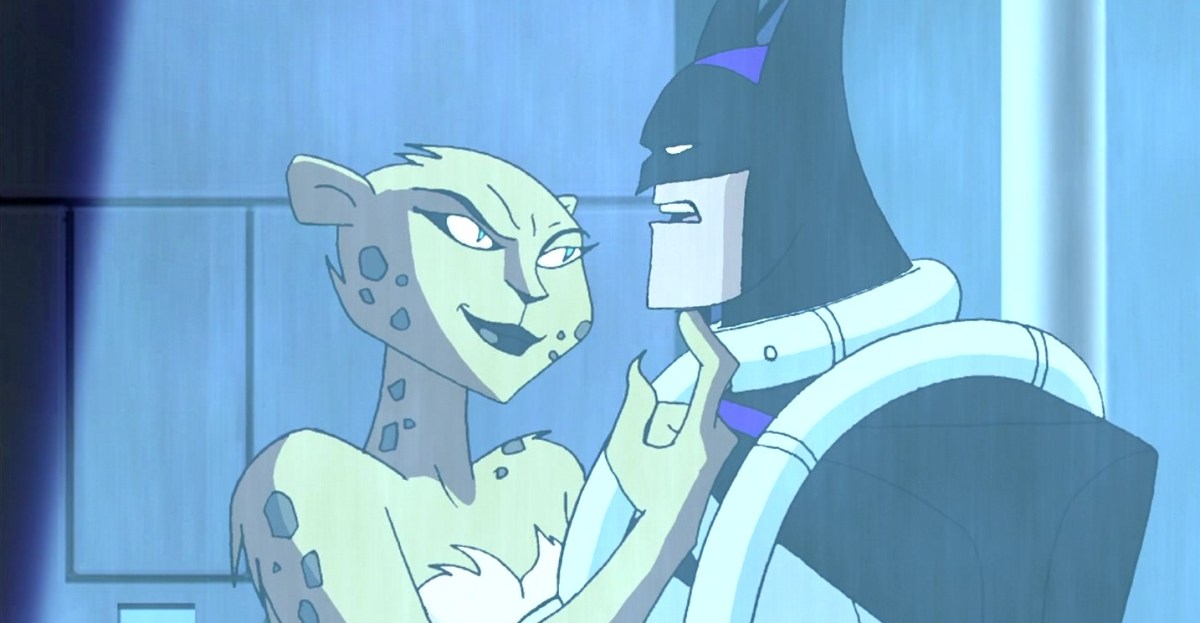
If you’re looking for a better Batman: The Caped Crusader, you should watch Justice League and Justice League Unlimited, which are available right now on Netflix for your marathon pleasure.

Superman, Wonder Woman, and The Flash stand on the bridge of the Watchtower, with outer space behind them, in Justice League Unlimited.

Image: Warner Bros. Animation

Premiering in 2001, Justice League was a direct continuation of the DC Animated Universe setting, which began with 1992’s Batman: The Animated Series and continued in Superman: The Animated Series, The New Batman Adventures, and Batman Beyond — and in large part, it had all the same talent working behind the scenes. Artist Bruce Timm, writer Paul Dini, producers Rich Fogel and Glen Murakami, voice actors Kevin Conroy, Mark Hamill, Clancy Brown, Ron Perlman, Arleen Sorkin, Michael Ironside, and Michael Dorn, all returned to reprise their various roles and duties.

But Justice League wasn’t a half hour, one-and-done episodic series hitting the waves at 9am on Saturday mornings. Airing in prime-time slots on Cartoon Network, every episode of the series was part of a two-part story — hacking the half-hour animated standard into an hour-long adventure series. The core cast began with Batman, Superman, Wonder Woman, Hawkgirl, the Martian Manhunter, Wally West’s Flash, and John Stewart’s Green Lantern, but two seasons into the show, Cartoon Network asked for a rebrand and expanded the mandate.

In Justice League Unlimited, the full breadth of DC Comics’ superhero roster was welcome on the Justice League, not just the founding seven. Episodes were knocked down to half hour slots again, but the show’s crew found a new way to think big. For the first and only time in the setting’s history, a DC Animated Universe show started delivering season-long story arcs; placing dominoes, foreshadowing reveals, and paying off setups from weeks before.

And while each episode was still appropriate for kids, the show writers were not immune to the thrill of including references that only adults would really pick up on — like 1950s gender and racial prejudice, a time-lost Martian Manhunter being brought before Nazi physician Josef Mengele for experimentation, or canonically establishing that the Flash is a more attentive lover than Lex Luthor.

Tala hangs on Lex Luthor’s shoulder in an intimate way, while he looks vaguely uncomfortable in Justice League Unlimited.

Image: Warner Bros. Animation

So if you want a Batman fix this weekend, queue up Justice League (2001) on Netflix. Now, you might have to give it a few episodes to get going, but if you can stick around through the early middle-weight stuff, the show will pay out dividends. Aquaman cutting his own hand off to save his infant son, an alt-timeline Superman who lobotomizes his opponents with laser vision, a collection of killer romantic subplots, the Batman of Justice League: Unlimited traveling through time and meeting the elderly Bruce Wayne and the future Batman of Batman Beyond, Lex Luthor’s season-long presidential campaign, and a direct adaptation of one of the greatest Superman stories ever told, “For the Man Who Has Everything.”

So maybe it’s not the spooky procedural that makes you feel just like you did when you watched Batman: The Animated Series for the first time. But, then again, neither is Batman: The Caped Crusader!