Who put all these videos in my games?


Welcome to Video Games Weekly on Engadget. Expect a new story every Monday or Tuesday, broken into two parts. The first is a space for short essays and ramblings about video game trends and related topics from me, Jess Conditt, a reporter who’s covered the industry for more than 13 years. The second contains the video game stories from the past week that you need to know about, including some headlines from outside of Engadget.

Please enjoy — and I’ll see you next week.


If I end up reading one more story about how fantastic Death Stranding 2 is so long as you skip the cutscenes, I’m gonna hurl. At what point during 10 hours of cinematic interstitials do we collectively put the controller down and say, actually, this isn’t a great game? Not because the game parts aren’t any good — they’re pretty fabulous, in fact — but because a significant portion of the experience isn’t actually interactive at all. When does it become more accurate to describe a Hideo Kojima project as a CGI movie with moments of interactivity, rather than as a video game first?

I’m not actually attempting to solve the “video game of Theseus” riddle right now, but it’s a conversation that’s been on my mind, given recent headlines. Death Stranding 2 reviews are in, Neil Druckmann is out at HBO and returning to Naughty Dog full-time, and Emmy nominations arrived with 18 nods for video game adaptations. Meanwhile, layoffs are rocking the gaming industry yet again, with thousands fired at Xbox this month, alongside multiple studio closures and game cancellations. One of the most surprising titles to get the ax was Project Blackbird, a promising-sounding MMO from Elder Scrolls studio ZeniMax Online. Blackbird was reportedly canceled in favor of allocating resources to the development of Fallout 5, a series with mainstream clout following the success of Amazon’s Fallout TV show in 2024.

The convergence of video games and Hollywood is not a new talking point — even for me — but it’s only grown more relevant with time. Sony in particular is leaning hard into a cross-media strategy with notable investments in television, anime and film adaptations of its video game franchises, and it just published Kojima Productions’ Death Stranding 2, which serves as a lightning rod for this entire conversation.

Kojima is easy to pick on because he’s been so vocal about his desire to make movies, and fittingly, his games have only grown more cinematic over the years. Death Stranding and its sequel are stacked with mainstream Hollywood actors (and Kojima’s favorite directors) across hours of drawn-out, non-interactive cutscenes. His next two projects, OD and Physint, are both described as having A-list casts and “blurring the boundaries between film and games.”

I’m a big fan of experimental horror games, and I deeply appreciate Kojima’s eye for building tension and sneaky action sequences, but I’m hesitant to get excited about OD and Physint. The deeper Kojima dives into the world of Hollywood, the more he loses me. I don’t download, install and boot up a video game to watch a movie instead, and I don’t find it impressive when an interactive product is defined by cinematic terms. The constraints of filmmaking are vastly different than those of video game development, and it sucks to watch a talented creator try to force video games to conform to the boundaries of movies or TV, rather than exploring the mechanics that make interactive art so uniquely powerful. I feel like Kojima sees cinema as the goal, not video games specifically, and this perspective breaks my little pixelated heart.

It’s particularly painful in an era of raging instability for the video game industry. It’s difficult to see so much money and creative talent being thrown at projects that end up feeling more like movies than games, at a time when it’s increasingly difficult for fresh and original AAA projects to make it to market. Video games have not been maxed out as an art form — there’s far more to discover in terms of mechanics, visuals, haptics and immersive interaction systems, and there are more stories that can only be told with these specific tools. Viewing game development through the lens of filmmaking diminishes everything that makes this medium so powerful. The only Hollywood trait the games industry should imitate is its powerful and functional unions.

I enjoy things that exist in the gray space between definitions; in fact, I often prefer them. What I don’t enjoy is misguided emulation that’s sold to an audience as innovation. In the end, I guess what I’m really saying is… I’m still not over PT.


One of the most eyebrow-raising details of Microsoft’s sweeping layoffs earlier this month was the fact that King, the studio behind Candy Crush, was included in the firings. King is historically a money-printing machine with high per-employee returns, which tends to insulate it from layoffs, but this time around at least 200 people were let go from the studio. As it turns out, a number of fired developers spent the past few years training AI systems to do their jobs, which just adds a layer of shittiness to an already crappy situation.

Has the FOMO gotten to you yet? After denying that you wanted a Switch 2 for a few noble and self-righteous weeks, have you cracked and admitted that you actually, really want one? Great — then get yourself to Best Buy on Thursday, July 17, when the company will restock its supply of Switch 2 consoles in all stores. This coincides with the release of Donkey Kong Banaza, too.

I’ve had my eye on Judas, the BioShocky FPS from Ken Levine’s Ghost Story Games, since it was revealed in 2022, and I lowkey love how little we still know about it today. That said, I’m happily devouring every bit of information about Judas, and the latest nugget comes from Levine himself in an interview with classic game publisher Nightdive Studios. With Judas, Ghost Story is focused on “telling the story and transporting the player somewhere,” rather than building live-service or microtransaction features, Levine said. As he put it, “You buy the game and you get the whole thing. There’s no online component. There’s no live service.”

There’s also no release date for Judas yet.

To view this content, you’ll need to update your privacy settings. Please click here and view the “Content and social-media partners” setting to do so.

The crazy kids at Summer Games Done Quick have done it once again and raised literal millions of dollars for Doctors Without Borders in a single weekend, simply by playing video games in silly ways without stopping. SGDQ 2025 wrapped up on Sunday with a total donation pool of $2,436,614. The organization’s next event is another edition of Flame Fatales, a speedrunning showcase featuring women and femmes that runs from September 7 to 14. We’ll see you there.

The well of Subnautica 2 drama runs deep. Earlier in July the heads of Subnatica 2 studio Unknown Worlds Entertainment — Charlie Cleveland, Ted Gill and Max McGuire — were ousted by the team’s parent company, Krafton, and the game’s early access release was delayed to 2026. What’s more, Bloomberg reported that the studio had been in line for a $250 million bonus if it had met certain financial goals by the end of the year, but those largely hinged on an early access release. Cleveland said on social media that Subnautica 2 was ready for early access, and Krafton responded to the whole shebang by accusing the fired developers of abandoning their responsibilities as studio heads. Cleveland and others are now apparently filing a lawsuit against Krafton. GamesIndustry.biz has a comprehensive timeline of the Subnautica 2 controversy right here.

Digimon Story: Time Stranger could top the new Pokemon game


If you think Digimon are a cheap Pokémon ripoff inspired by a virtual pet toy from the ’90s, you don’t know Digimon. From anime shows, webcomics, novels, an official trading card game, and now the buzzy new RPG out of Summer Game Fest, Digimon Story: Time Stranger, the Digimon franchise has expanded significantly since its introduction in 1997. Even so, its growth has always been followed by the shadow of Pokémon, with which everything Digimon-related is wrongly compared, scrutinized, and ignored.

Digimon Story: Time Stranger could change that. Or it should, even with Pokémon Legends: Z-A looming. Based on early gameplay and reveals, Bandai has at least aimed to produce a game for a wider audience that addresses past mistakes. From investing in making the world of Time Stranger feel alive with cities filled with digimon to giving a special attention when putting 450 creatures in the game by designing special animations for each of them, it’s also clear the company has never lost sight of how cool Digimon is.

Two characters followed by three digimon.

Image: Bandai via Polygon

I can’t blame anyone for seeing Digimon as a Pokémon knockoff; the first season of the Digimon anime aired in Brazil in July 2000, six months after Pokémon debuted, and I know we weren’t the only country that experienced the juxtaposition. Both shows had creatures who befriend kids and become stronger as they fight. But Pokémon made creature-taming part of the global zeitgeist. But the idea behind both couldn’t be more different; the games specifically play around with the idea that the real world and the DigiWorld exist in different instances. In some cases, humans are transported to the world of digimon, in others the digital leaks into the real.

In 1999, Bandai released the first game based on the creatures: Digimon World, a RPG in which we play as Mameo, a kid who finds himself in File Island and needs to help save the place from. Instead of a simple journey to become the best Digimon master, which would make it a true Pokemon Red/Blue rip, Mameo needs to become an equal partner for the Digimon. Training your Digimon became a thrill — and a gamble. They would feel hungry or need to go to the bathroom, which was hilariously indicated by the icon of a poop showing above the creature’s head. And even after hours preparing them to digivolve, there was a huge chance of getting a Numemon instead of a Greymon. But learning more about each Digimon and finally unlocking the forms you wanted the most made this game the epitome of the Digimon experience.

A Digimon Survive screenshot showing two digimon fighting

Image: Bandai via Polygon

While the Digimon World and subsequent Digimon Story games are more traditional RPGs, the franchise expanded greatly into the 2000s; the fighting game Digimon Rumble Arena and Digimon Digital Card Battle, a game based on the first Digimon TCG, both arrived in 2001. A decade later, Move Games brought the critters into the MMO space with Digimon Masters, and more recently Hyde developed the first Digimon Survive, a mix of visual novel and grid-based battles. And I won’t even start listing the Digimon mobile games released exclusively in certain Asian countries.

Most Digimon games are centered around the idea of fighting using the creatures, your mission is not to capture them. Instead, Digimon heavily emphasizes the bond between humans and digimon, working like partners. And even when entertaining our desire to have all the creatures, Digimon games follow their own logic and rules.

As a concept, DigiWorlds tend to force the boundaries between human and nonhuman, machine and organic. You’ll find cities ruled by digimon who are dictators; shops owned and run by digimon. There are factions, like the Royal Knights, who have internal disputes stemming from conflicting moral views.

The digimon Omegamon

Image: Bandai via Polygon

There are gems littered throughout Digimon’s gaming legacy. I will always make room for Digimon World 3 on every list of best RPGs. The ever-lasting grind of the Bandai’s game would test your patience by forcing long sessions of battles against low-level enemies so you could finally see Renamon digivolve to Kyubimon. In the meantime, players were compelled to investigate every corner to figure out the next step of the plot and keep playing, leading us into a confusing narrative, filled with twists and turns you couldn’t expect. Eventually, the story converged into a climax of world-conflict scale taking you to space. The unsuspecting difficulty was the charm.

Two of Bandai’s most recent titles, Digimon Story: Cyber Sleuth and Digimon Story: Hacker’s Memory, are among the franchise’s best. Although the latter is an improvement from the former, they both have updated the graphics in Digimon games and come with an intriguing narrative. While having a simple combat system and an engaging progressing system, Cyber Sleuth and Hacker’s Memory tell touching stories about childhood and accepting oneself amid a major crisis as the boundaries between the digital world and the real one fades.

A Digimon Survive screenshot showing Agumon

Image: Bandai via Polygon

In Digimon Story: Cyber Sleuth, unlocking powerful digivolutions requires going through a series of steps before you meet the minimum transformation requirements. You need to train them in farms and feed them special food to increase specific attributes. The process also involves de-digivolving a digimon to a previous form, leveling it up, and then digivolving it again to increase their stats and max level cap. It might seem like a lot of work — and it is! — but it is fun to watch your digimon getting stronger; learn all the possibilities you unlock by adjusting their stats; and recognize how the series remains true to its roots. Epic plot with emotional bits added to an intricate evolution system is peak RPG.

While the stories, battles, and digivolutions make these games great, they also have their issues. Many Digimon games take too many detours, too many hours to get where the storytellers want to go. Media.Vision, developer behind the last two Digimon Story games, has never quite nailed a good balance for combat, resulting in some unexpected and frustrating difficulty spikes. And yes, the whole process to digivolve a digimon is so long that I would leave Cyber Sleuth open while having my Switch in sleep mode so time would still run and my digimon would keep working while I was off.

All the mistakes and hits from these previous games cleared the way to Digimon Story: Time Stranger. It took eight years for the Media.Vision team and producer Ryosuke Hara to put this game together and the final product seems to be good enough to surprise people and be elected as one of the best games in 2025’s Summer Game Fest. The impression left by the demo and the conversation around it led many of who never touched other Digimon games to go after a copy of Cyber Sleuth or Hacker’s Memory. But the surprise was not unjustified.

According to Ryosuke Hara in an interview with RPG Site, there has been an effort to use these years of development to make the world setting for this game more “robust”. Time Stranger is bringing the Digital World: Iliad, a place no other game has fully explored, while giving us the chance to meet a legendary group of Digimon called Olympos XII. The game’s production value also is evident in beautiful visuals and attention to the systems we will interact with as shown in recent trailers released by Bandai. However, all this effort is being put upon what has been learned and developed throughout the years with the older games.

Time Stranger is the result of honoring one’s history while knowing when to change, and perhaps the perfect place to start exploring this great franchise and learning about what it has to offer. Like any franchise, Digimon has its flaws, just like there are great experiences to have playing them. But all of this will continue to be overlooked if people don’t stop to try fitting Digimon into the mold of Pokemon. It’s time we give the digital creatures room to show their own colors.

The 11 best new games for summer 2025


For video games, the summer season kicker off with a double-header: the release of the Nintendo Switch 2, smack amid the three-day slew of game reveals that comprise Summer Game Fest (and its surrounding press conferences). But the most exciting games of the summer aren’t all Switch 2 ports or massive studio tentpoles. In fact, it’s the smaller games — the indies and the AA gems — that have captured most of Polygon’s attention.

From a management sim about temperamental clones to an open-world adventure in which you bike your way to saving the world, here are 11 under-the-radar games to watch out for this summer.

The official banner from sci-fi game The Alters.

Image: 11 Bit Studios

Release date: June 13 (out now!)
Where to play: PlayStation 5, Windows PC, Xbox Series X

How well do you think you would enjoy working with a few radically different versions of yourself? That’s the question Jan Dolski is facing — that, and how he’s going to survive imminent death on a hostile world. In The Alters, Dolski is the sole survivor of a scientific expedition in search of a new element. Through survival and base-building gameplay, he, alongside the alternate versions of himself he brings to life, has to find a solution for survival while contending with how varied his life could have turned out if different choices were made.

The protagonist of BloodRush standing in front of a giant skeleton.

Image: Nuntius Games

Release date: July 1
Where to play: Windows PC

BloodRush: Undying Wish is like if Bloodborne met Crank, that offbeat 2006 Jason Statham action flick (stay with me here). It’s a hack-‘n’-slash roguelike where your character is constantly bleeding out during combat. You can increase your blood by killing enemies, so the gameplay is fast and frenetic; you’re constantly dashing around the battlefield like you need adrenaline to survive. So, Crank. BloodRush is a fun time with gorgeous pixel art to boot. Check out a demo on Steam ahead of its early access launch.

A group of bikers ride on a track in a screenshot from Wheel World

Image: Messhof/Annapurna Interactive

Release date: July 23
Where to play: PlayStation 5, Windows PC, Xbox Series X

In Wheel World, you play as a cyclist with the simplest of simple tasks: save the world. (You’ve got this!) With a customizable bike, complete with a ghost head accessorizing it, you’ll pedal and race around an open world as you set out to save it. Originally unveiled as Ghost Bike in 2023 with a somber narrative, Wheel World was rejiggered in fall 2024 with a new title and a lighter tone focused on “the joy and freedom of living around bikes,” developer Messhof wrote in an update on Steam.

Kenji and Kumori fight demons on the rooftop of a Japanese building in a screenshot from Ninja Gaiden: Ragebound

Image: The Game Kitchen/Dotemu, Koei Tecmo

Release date: July 31
Where to play: Nintendo Switch, PlayStation 4, PlayStation 5, Windows PC, Xbox One, Xbox Series X

It’s a big year for the Ninja Gaiden franchise. Ninja Gaiden 2 Black, a remaster of 2008’s Ninja Gaiden 2, was surprise dropped earlier this year alongside the reveal of Ninja Gaiden 4, the first new mainline entry in over a decade. Between those releases, fans will also have the chance to play Ninja Gaiden: Ragebound, a side-scrolling action-platformer. The Ninja Gaiden series started on NES, so Ragebound takes it back to its roots in a way with its pixel art aesthetic. You can play its Steam demo to get a feel for the challenge of Ninja Gaiden: Ragebound, which comes from the developers behind the Blasphemous games.

Combat in the roguelike Panta Rhei.

Image: Reignite Games

Release date: July 31
Where to play: Windows PC

Like in Prince of Persia: The Sands of Time, wielding time is a core tenet of Panta Rhei, a roguelike that casts you as Phi, who must protect the flow of time. Bend time to solve environmental puzzles as well as to save your skin in combat. Panta Rhei’s art style and orange and violet hues remind me of Annapurna’s excellent Cocoon, so it’s already starting off on the right foot. Get a taste of its roguelike combat via its demo on Steam.

Arkane ordering a snack in Artis Impact.

Image: Mas

Release date: Aug. 7
Where to play: Windows PC

Artis Impact follows Arkane and her AI companion, Bot, as they venture through a futuristic world full of murderous AI — and tasty potato croquettes. Its pixel art is great, and the manga-inspired comic panels that function as cutscenes are truly killer. Gameplay will be a mix of turn-based combat and regular life activities, like cooking or earning passive income. It may be set in a post-apocalyptic world, but it’s a cozy post-apocalyptic world.

Mobile bookshop parked in front of a cafe in Tiny Bookshop.

Image: neoludic games/Skystone Games

Release date: Aug. 7
Where to play: Windows PC

There are two things the world can never have enough of: books and bookshops. In Tiny Bookshop, head to a small coastal town to start your own bookstore. It’s a quiet and cozy game, one that’s divorced from the stress of working retail IRL. Tiny Bookshop instead lets you sit back and recommend great books to customers who’ll buy them up. Decorate your bookshop on wheels to your heart’s content and keep your shelves stocked by purchasing used books from classified ads like it’s 1998 all over again.

The character in Sword of the Sea using a sword as a skateboard.

Image: Giant Squid

Release date: Aug. 19
Where to play: PlayStation 5, Windows PC

Developer Giant Squid is known for stylish games Abzû and The Pathless, and Sword of the Sea looks to carry that stylish torch forward. Your big, cool sword isn’t needed for combat, but for traversal. Sword of the Sea’s gnarly movement is based on skateboarding, snowboarding, and surfboarding, and you’ll use your Hoversword to ride waves of sand. Over the course of the game, you’ll work to restore an ocean, and then catch its waves. Surf’s up, dude.

The Knightling using their shield to surf on water.

Image: Saber Interactive

Release date: Aug. 28
Where to play: Nintendo Switch, PlayStation 5, Windows PC, Xbox Series X

The Knightling ditches swords and maces for a shield as its titular hero’s weapon of choice. It’ll be used in combat Captain America style, of course, but also for traversing the game’s open world via some very sick-looking shield surfing. The Knightling gives off the vibe of a PS2-era platformer with modern-day visuals, and I can’t wait to check it out this August — good thing it’s got a demo on Steam!

Hiro walking through an origami world in Hirogami.

Image: Kakehashi Games

Release date: Sept. 3
Where to play: PlayStation 5, Windows PC

Set in an origami world, where seemingly everything has been created via the delicate Japanese craft, Hirogami is an action-platformer. Hiro can fold himself into different transformations, like an armadillo or a frog, to traverse the fragile world and battle digital creatures who are threatening it. Play the demo on Steam to get a feel for Hiro’s origami powers yourself.

Remi standing with a big glowing sword in Hell is Us.

Image: Rogue Factor/Nacon

Release date: Sept. 4
Where to play: PlayStation 5, Windows PC, Xbox Series X

Hell is Us wears the aesthetics of a Soulslike without some of the genre’s challenges; enemies stay dead, meaning your corpse runs won’t be as tenuous, and the game places a greater emphasis on exploration than combat. You’re cast as Remi as he enters and explores a war-torn country in search of his parents. Along the way, he encounters more than he bargained for in the way of some creepy enemies, and he’lll wield a big glowing sword to take them down.

Miss Batman: The Animated Series? Try Justice League on Netflix


Nostalgia isn’t all it’s cracked up to be. This month’s Batman: The Caped Crusader was billed as the grownup version of beloved and groundbreaking ’90s show Batman: The Animated Series, made by B:TAS co-creator Bruce Timm, producers Matt Reeves and J.J. Abrams, liberated from Saturday morning cartoon censors, and backed by the talent of some all-time Batman comics writers.

And while the show certainly had the Animated Series look, it was neither a direct continuation nor a strong relaunch. Timm’s crew were free to say whatever they wanted, but didn’t have much to say in the end. Sometimes you just can’t go home again.

But what if I told you there’s already a more mature version of Batman: The Animated Series, with hour-long episodes like a live-action drama, multi-season plotting, and fresher animation than Caped Crusader. It’s episodic, but its characters keep a solid emotional continuity, and while its appropriate for kids, it’s got multiple layers and references for adult audiences to chew on.

If you’re looking for a better Batman: The Caped Crusader, you should watch Justice League and Justice League Unlimited, which are available right now on Netflix for your marathon pleasure.

Superman, Wonder Woman, and The Flash stand on the bridge of the Watchtower, with outer space behind them, in Justice League Unlimited.

Image: Warner Bros. Animation

Premiering in 2001, Justice League was a direct continuation of the DC Animated Universe setting, which began with 1992’s Batman: The Animated Series and continued in Superman: The Animated Series, The New Batman Adventures, and Batman Beyond — and in large part, it had all the same talent working behind the scenes. Artist Bruce Timm, writer Paul Dini, producers Rich Fogel and Glen Murakami, voice actors Kevin Conroy, Mark Hamill, Clancy Brown, Ron Perlman, Arleen Sorkin, Michael Ironside, and Michael Dorn, all returned to reprise their various roles and duties.

But Justice League wasn’t a half hour, one-and-done episodic series hitting the waves at 9am on Saturday mornings. Airing in prime-time slots on Cartoon Network, every episode of the series was part of a two-part story — hacking the half-hour animated standard into an hour-long adventure series. The core cast began with Batman, Superman, Wonder Woman, Hawkgirl, the Martian Manhunter, Wally West’s Flash, and John Stewart’s Green Lantern, but two seasons into the show, Cartoon Network asked for a rebrand and expanded the mandate.

In Justice League Unlimited, the full breadth of DC Comics’ superhero roster was welcome on the Justice League, not just the founding seven. Episodes were knocked down to half hour slots again, but the show’s crew found a new way to think big. For the first and only time in the setting’s history, a DC Animated Universe show started delivering season-long story arcs; placing dominoes, foreshadowing reveals, and paying off setups from weeks before.

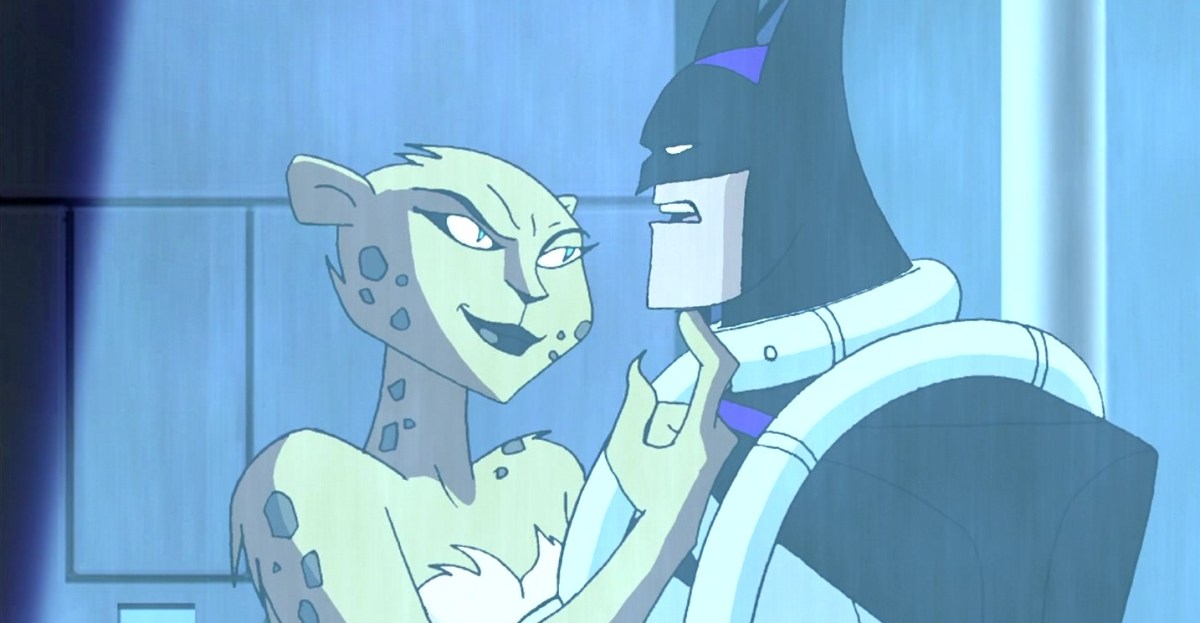
And while each episode was still appropriate for kids, the show writers were not immune to the thrill of including references that only adults would really pick up on — like 1950s gender and racial prejudice, a time-lost Martian Manhunter being brought before Nazi physician Josef Mengele for experimentation, or canonically establishing that the Flash is a more attentive lover than Lex Luthor.

Tala hangs on Lex Luthor’s shoulder in an intimate way, while he looks vaguely uncomfortable in Justice League Unlimited.

Image: Warner Bros. Animation

So if you want a Batman fix this weekend, queue up Justice League (2001) on Netflix. Now, you might have to give it a few episodes to get going, but if you can stick around through the early middle-weight stuff, the show will pay out dividends. Aquaman cutting his own hand off to save his infant son, an alt-timeline Superman who lobotomizes his opponents with laser vision, a collection of killer romantic subplots, the Batman of Justice League: Unlimited traveling through time and meeting the elderly Bruce Wayne and the future Batman of Batman Beyond, Lex Luthor’s season-long presidential campaign, and a direct adaptation of one of the greatest Superman stories ever told, “For the Man Who Has Everything.”

So maybe it’s not the spooky procedural that makes you feel just like you did when you watched Batman: The Animated Series for the first time. But, then again, neither is Batman: The Caped Crusader!

Furiosa: A Mad Max Saga’s smartest move is sidelining Immortan Joe


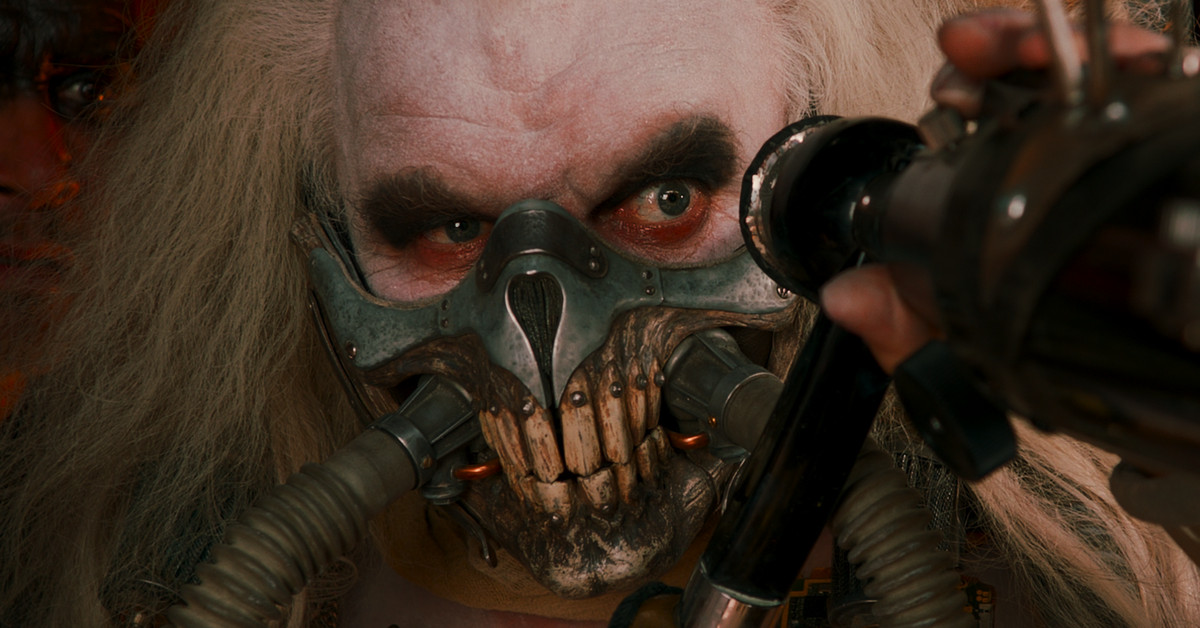
George Miller’s Furiosa: A Mad Max Saga complements and enhances the impact of his 2015 blockbuster Mad Max: Fury Road in a lot of ways, but there’s only one I can’t stop thinking about: How little the new movie has to say about Immortan Joe, the original movie’s iconic arch-villain.

Sure, Joe’s lack of interaction with Anya Taylor-Joy’s Furiosa could be simply because Hugh Keays-Byrne, the actor who first put Immortan Joe on the screen, died in 2020. Lachy Hulme assumes the role for Furiosa, but perhaps George Miller reduced it out of respect for Keays-Byrne, who he worked with for many years.

But I’m skeptical. Joe’s consistent secondary status in Furiosa’s origin story fits the overall themes of Furiosa too well to be a coincidence: Immortan Joe, the demon of Imperator Furiosa’s last stand, wasn’t her nemesis at all. In fact, he wasn’t her anything.

Furiosa (Anya Taylor-Joy), forehead smeared with greasepaint, drives the war rig in George Miller’s Furiosa

Image: Warner Bros. Entertainment/YouTube

This is in great contrast to Fury Road, where their beef seems deeply personal. Max Rockatansky wanders into somebody else’s narrative in Fury Road, as his stories usually go. This time, those somebodies are Furiosa (Charlize Theron) and Immortan Joe.

While Fury Road only subtly hints that Furiosa was once one of Joe’s captive harem of wives and incubators — the white wrappings of Furiosa’s top evoke the Wives’ impractical shifts — Theron confirmed that piece of her backstory in interviews. So Furiosa seems to have really personal reasons to hate Joe. And his response to her betrayal is presented as a towering rage, cresting mushroom cloud-like out of all proportion to her ability to withstand him.

Not to diminish the agency of the Five Wives in their own escape, but Joe considers them property that’s been stolen from him, not allies who betrayed him. Furiosa, however, he considers a traitor, worthy of his personal anger. And in the end, she’s the one who gets the honor of finally taking him down, underscoring her place on the same narrative level he occupies as Fury Road’s primary villain.

Which is why it’s so wild that Furiosa says, quietly and implacably throughout its entire run time, that Joe actually isn’t even a main character in her story. Sure, he buys her, but then he forgets she even existed. He didn’t take anything from her that hadn’t already been taken, didn’t teach her anything she hadn’t already learned from someone else, didn’t give her anything she hadn’t already taken for herself. When they do share scenes, and even trade dialogue, there’s no interpersonal ire or affection in either direction. In spite of their characters’ intensity, Hulme and Taylor-Joy keep a neutral distance of emotion.

It turns out, in Furiosa, that Furiosa’s life was actually framed by the completely different, utterly pathetic figure of Dementus, the Wasteland warlord who tortured her mother to death, sold Furiosa into slavery, killed her closest friend, and cost her her right arm. And just as emphatically, Furiosa says, Furiosa moved beyond revenge years before she ever stood against Joe.

What you saw in Fury Road, Furiosa says, was the furthest thing from personal to Furiosa. Immortan Joe was never The Guy. He was just the guy in the way. And the “guy” part might be the most important one.

l-r: Nathan Jones as Rictus Erectus and Hugh Keays-Byrne as Immortan Joe stand surrounded by War Boys and huge vehicles in Mad Max: Fury Road.

Photo: Jasin Boland/Warner Bros. Pictures via Everett Collection

The conversation that immediately surrounded Fury Road was about Immortan Joe as a Wasteland illustration of the death cult of capitalism and toxic masculinity. His very recognizable philosophy reduces all non-elites to things — women to Wives (sex slaves, forcibly impregnated) or Mothers (enslaved to produce breast milk for food), and men to War Boys (emphasis on boys), interchangeable cannon fodder addicted to the lie that they can only find purpose in violence for the True Leader.

This was all emphasized by the emasculating nature of Furiosa’s rebellion. After all, by the language of a country-and-Western song, she’s wounded him in the most devastating way a man can be wounded, by stealing his wife (Wives), his money (water), his car (the War Rig), and maybe even his dog (Nicholas Hoult’s hapless character Nux, if we want to stretch the metaphor a little bit).

Immortan Joe is an electrifying villain, and Furiosa doesn’t exactly skimp on him! A scene contrasting Dementus’ shaky appeal to the self-interest of the masses with the unshakable belief created by Joe’s death-cult propaganda is among the film’s most chilling. But there is an eternal risk in presenting such an operatic villain who also represents such a wide-ranging theme. If you’re not careful, making them powerful and capable enough to claim villain status also risks making them look aspirational. You can swing right around to making them seem cool.

Which is why it’s so damn smart of Furiosa to put this final nail in the coffin of Joe’s emasculation, by establishing that Fury Road’s sense of personal beef was all on Joe — on his fear, and his vulnerability, not on Furiosa’s. He isn’t even important to the woman who’s unmanning him.

In a cliche reversal for the cinematic ages, Immortan Joe was, for Furiosa, just Tuesday.

Civil War’s Jesse Plemons scene is the movie’s best and truest moment


Jesse Plemons is a brilliant actor. He’s also one of our most memeable stars. It’s not that he’s super expressive — quite the opposite, in fact. He’s usually quite placid, and almost hesitant in his line deliveries. He takes his time. But, whether he’s playing a timid everyman in The Power of the Dog or season 2 of Fargo or a stout lawman in Judas and the Black Messiah or Game Night, there’s always something going on behind his narrowed, watchful eyes. His stillness, his pauses, and his plain, unvarnished way of speaking act as a gravitational force, drawing the camera and other actors into his orbit. He’s also, in a low-key way, extremely funny.

A still image of Plemons in his ten-gallon Stetson in Killers of the Flower Moon, standing immovably in the doorway of Leonardo DiCaprio’s character’s house, has become internet shorthand for calmly and righteously calling bullshit. “I’ve been sent down from Washington D.C. to see about these murders.” “See what about ’em?” (A tiny pause, just long enough to be noticeable.) “See who’s doing it.”

That scene was used in the movie’s trailer, and Plemons’ masterful deadpan jolted it to life. Less than a year later, he was at it again in the first trailer for Alex Garland’s Civil War, with another pause, and another matter-of-fact line delivery, that lingered in the mind even longer than Garland’s stark, button-pushing imagery of America torn apart by war. Wearing military fatigues and a pair of bright red sunglasses with red lenses, and holding a rifle, Plemons is shown interrogating the film’s journalist heroes. “There’s some kind of misunderstanding here,” says Wagner Moura’s character, Joel. “We’re American, OK?”

“OK,” says Plemons, taking a second to scratch his stubbly cheek. “What kind of American are you?”

The full scene has much the same impact on the final movie, and the question posed by Plemons’ nameless character looms large over the whole enterprise long after the credits have rolled. For me, this was the moment Garland’s expertly made, thrilling, but somewhat withholding movie finally bared its teeth.

Civil War has come in for some criticism for not clearly articulating the root causes of the conflict it portrays, or for having its cake and eating it by marrying a fence-sitting political stance with deliberately provocative imagery. I’m not going to litigate the case for or against it here — Garland has laid out his reasoning for approaching the story this way very clearly in interviews, and the polarized reactions to the movie tend to say more about the viewers than the film.

Civil War is essentially a road movie that follows a team of journalists on a dangerous odyssey to meet America’s fascist president before he’s overthrown by an alliance of independent-minded states. As the ravaged landscape scrolls by, Garland stages a series of Apocalypse Now-style vignettes that underline the surreal horrors of war, and provoke questions about the role reporting plays in society: torture at a gas station, summary executions after an intense gun battle, a weirdly peaceful town ruled by a watchful militia. At every stage, he’s careful to avoid naming sides, or bringing any kind of political ideas into the mix.

That’s true for the Plemons scene too — up to a point. The scene occurs a little past the halfway mark; cub photojournalist Jessie (Cailee Spaeny) and Bohai, another reporter, have been separated from their friends and get captured by Plemons’ small militia team. The soldiers — it’s not clear which faction they belong to, if any — are dumping a truckful of bodies into a mass grave. Joel, Lee (Kirsten Dunst), and Tony (Nelson Lee) approach to try to negotiate their friends’ release. As an opener, Plemons’ character shoots Bohai dead. Then he poses his question.

Jesse Plemons, wearing military fatigues and red sunglasses and carrying a rifle, in Civil War

Image: A24

On a simple level, the scene works so well because it gives us a clear bad guy — perhaps the only one in the movie — played by a great, charismatic actor. That’s always been one of cinema’s purest pleasures. Plemons, who was cast only a week before filming after a different actor dropped out, is extremely menacing without breaking the movie’s muted, realist tone. His red sunglasses — a true stroke of genius from the costume department — give him an iconic pop on the screen. The scene is shocking and suspenseful, and it moves an already gripping film up a gear. It’s also a dramatic fulcrum for most of the film’s characters, none of whom is quite the same afterward.

But this is also the first and perhaps only moment in Civil War when its troubling subtext about our current time comes searingly to the surface. “What kind of American are you?” Is Plemons asking which side of the conflict the reporters belong to, or something else? Sensing the danger in the question, Joel replies that he’s from Florida. “Hmm, a central American,” Plemons replies, dubiously. Lee and Jessie are from Midwestern states, so they get a pass. Not coincidentally, they’re also white. “Now, that’s American.” Tony, crying with fear, admits he’s from Hong Kong, and is immediately shot in the head.

It’s racism; it always comes back to racism. With the truck and ditch full of noticeably nonwhite bodies in the background, Garland is pointing out that the evil of ethnic cleansing almost always follows on the heels of war. But the implications of Plemons’ interrogation are even broader and more frightening than that. While accepting Lee and Jessie’s heritage, he also mocks them for their rootless detachment from it. When a terrified Jessie admits she doesn’t know why they call her home state of Missouri the “Show-Me State,” Plemons responds with a chilling bark of derisive laughter. (The question was improvised; Spaeny really is from Missouri, and really doesn’t know why people call it that.)

When he asks “what kind of American,” Plemons’ character isn’t just insinuating about race. He’s posing a fundamental question of identity: How do you perceive your Americanness, and how deeply are you rooted in it? A reply that has any less than total conviction won’t pass muster. In this scene and this scene only, Garland gets to the heart of the matter — the scary, polarized essentialism that can push a country to tear itself apart, and that is all too easy to recognize in the current moment. All its threat and horror are contained in one of Jesse Plemons’ little pauses.