Deadpool & Wolverine review: This time, the MCU is the villain


Being a Deadpool defender can be difficult. In just about any media where he appears, the character is exactly what his strongest critics think he is: an anti-hero with a strong affinity for irreverent violence, and a juvenile, obnoxious vessel for meta asides and a bushel of dick jokes. (“A bushel of dicks” would be a pretty solid Deadpool-ism.) I wouldn’t begrudge anyone for finding all that off-putting, because it is. But there’s also more to the character. Deadpool comes with a deep pathos. When that’s used effectively, it’s resulted in endearingly odd stories about those who are deemed (or feel) unlovable. That’s a potent emotional space for a summer blockbuster to inhabit. Deadpool & Wolverine — the third movie in Ryan Reynolds’ Deadpool trilogy, and the first under the Disney banner — pays lots of lip service to that pathos. Then it punts it out of our multiverse, to Alioth-knows-where.

Look at that, I made a reference! Just like Deadpool! I can swear like him, too.

Deadpool & Wolverine has been billed as a Marvel Cinematic Universe story, but it isn’t, really. Apart from a brief gag scene early in the film, Deadpool never sets foot in the MCU’s Earth-616 for any Deadpool-y derring-do. Instead, the film is just MCU-aware — the mainline MCU is one more subject for Deadpool to joke about and pine for while he has a characteristically vulgar adventure somewhere else. In some ways, the MCU is more of a villain than the film’s actual villains.

But before all that, the story starts in Deadpool’s pre-existing corner of the multiverse, which is dying. Abducted by the Time Variance Authority from Loki, Wade Wilson/Deadpool (Reynolds) learns his universe is slowly fading away, due to Wolverine’s death at the end of 2017’s Logan. That’s because the former X-Man is an “anchor being” — someone so significant that their timeline falls apart without their presence. But TVA agent Mr. Paradox (Matthew Macfadyen) says his superiors have deemed Deadpool as special, and worth rescuing from his decaying timeline and bringing over to the MCU. Trouble is, the invite doesn’t extend to the found family Wade has built up (and time-traveled to resurrect) across his previous two films.

Wolverine pops his claws with his arms across his chest as Deadpool looks on sword in hand in a scene from Deadpool & Wolverine

Photo: Jay Maidment/20th Century Studios/Marvel Studios

This is Deadpool & Wolverine’s first problem: It arrives on screens already extremely pre-complicated and full of narrative baggage. This isn’t necessarily a problem if director/co-writer Shawn Levy and his script team just want to take the piss out of overly complex superhero films. But it is a problem when setting up that pathos that is also key to Deadpool as a character. It doesn’t particularly matter to me that I do not fully understand the mechanics of time and/or multiverse travel in this movie, or the chain of cause-and-effect that drives its plot. Frankly, I’m not sure the film’s five credited writers — Levy, Reynolds, returning Deadpool movie scribes Rhett Reese and Paul Wernick, and comics and TV writer Zeb Wells — care that much about those things either.

I do care, however, when that confusion extends to the film’s emotional stakes. Deadpool & Wolverine spends so little time establishing where Wade is in relation to his friends and relationships (for some barely explained reason, he’s on the outs with ex-girlfriend Vanessa, played by Morena Baccarin) that his driving need to do something that “matters” feels rootless. He’s static, not terribly different at the end of the film’s two hours and seven minutes than he was at the beginning.

Perhaps that’s because the film offloads much of its emotional weight to Wade’s co-star. Logan (Hugh Jackman) enters Deadpool & Wolverine as a part of Wade’s hairbrained scheme to save his universe. If Logan is his timeline’s anchor being, Wade’s logic goes, he’ll just scour other universes until he finds a new one. The Logan he winds up grabbing is even more damaged than the one we’ve seen in the X-movies, and a lot of the film’s non-joke runtime is devoted to unpacking that. This seems like a poor use of Wade’s time, and ours. Logan’s whole deal has gotten plenty of exposure in past X-movies, and while his presence here has lots of fun moments, his contribution to the film’s emotional arc feels a lot like stolen franchise valor à la Spider-Man: No Way Home.

Cassandra Nova lounges in a leather duster, khakis, and hunting boots in a scene from Deadpool & Wolverine.

Photo: Jay Maidment/20th Century Studios/Marvel Studios

It’s hard to take any of this seriously though, because Deadpool & Wolverine is much more interested in focusing on Deadpool’s relationship with the MCU. From the very first second of the film, Disney, Marvel, and Kevin Feige are established as the thematic butts of the film’s comedy. There is no need for character work to anchor any of the jokes here, because the MCU is that anchor. All that swearing and violence? It’s in a Disney movie, baby! Remember that time Wade got pegged in the first Deadpool movie? Mickey Mouse paid for a movie about a guy who gets pegged! Oh, and the film’s on-screen bad guys? All a result of Marvel’s corporate dominance.

This last bit is where Deadpool & Wolverine almost gets at something interesting. The bulk of the film takes place in The Void, a Mad-Max-style limbo where the TVA sends troublesome people they can’t really erase. Ruled by the powerful telepath (and evil twin sister of X-Men leader Charles Xavier) Cassandra Nova (Emma Corrin), The Void is an island of misfit toys full of heroes and villains from other movie studios, disposed of by the MCU powers-that-be after Disney bought up 20th Century Fox. If you’ve heard about Deadpool & Wolverine’s many cameos and guest appearances, this is where they come from: corporate consolidation spun as fodder for jokes.

In Logan and Wade’s struggle to defeat Cassandra and escape The Void, the pair are also trying to escape the ruins of, for example, the 20th Century Fox X-Men universe. Unfortunately, this plot, and the gags around it, only undercut Deadpool and the very narrow lane of pathos that makes him tick. Because as much as he constantly makes fun of the MCU, he can’t stop defining himself in relationship to it, calling himself “Marvel Jesus” throughout this movie. Regardless of the fate of his home universe, Wade wants to matter — which is a way of saying he wants to join the mainline MCU universe, and that it is the only thing in this continuum that does matter.

That’s more or less the ball game. It’s hard to buy this movie as a love letter to anything but Marvel Studios’ corporate conquests. That’s one of the fundamental miscalculations behind the film. Wade is worth getting behind because he’s an underdog. But in Deadpool & Wolverine, he isn’t representing the unloved or speaking truth to power: He’s sucking up to the undisputed champ of the box office, even though that champ has earned the potshots Deadpool throws its way. The Void is what Marvel has done to pop culture. It’s the call coming from in the house, the big fucking smoke dragon that assimilates everything into its morass of multiversal bullshit or relegates it to oblivion, stripped for parts. And in this movie, Deadpool doesn’t just love it, he wants with all of his being to be part of it.

Deadpool & Wolverine has made its hero the worst kind of comic-book character: one who doesn’t stand for anything. It’s a terrible irony. Fans worried that Disney’s corporate control and the MCU’s rigid narrative oversight would leech away Deadpool’s edge, the swearing, jocular violence. Turns out that part was fine. Instead, the MCU just took his fuckin’ heart.

I told you I could swear like that cheeky bastard.

Deadpool & Wolverine debuts in theaters July 25.

Lego Hill Climb Adventures is cute version of Trials


I played three video games in college: Halo 3 with my friends, Tom Clancy’s Ghost Recon Advanced Warfighter with my roommate and her dad, and Trials HD by myself. I have since opened my horizons to the possibilities of other video games. And when I want to feel nostalgic, there are plenty of games that give me the feeling of playing the multiplayer shooters of my youth — but nothing but Trials itself has ever compared. (Eventually, Trials Evolution set that bar even higher.) This week, I read a story on Pocket Tactics: “This iPhone Lego game is perfect for fans of Ubisoft’s Trials series.”

That game, which is actually available for free on iOS and Android devices, is Lego Hill Climb Adventures. Released at the end of May, Lego Hill Climb Adventures is a Lego version of the classic physics-based racing game Hill Climb Adventures, another game that’s been compared to Trials — but with cars. I never hit it off with Hill Climb Adventures, but the Lego reskin was too charming not to try. It’s not Trials, but it does give me a similar thrill in playing it. I can’t put it down.

There are a bunch of Lego cars to unlock and race through the adorable worlds, picking up new blueprints and meeting Minifigs as you go. You aren’t necessarily building your own Lego car, but there are a bunch of ways to customize the existing options. My favorite part about the aesthetic is the sound design: There’s just something so satisfying about the click of a Lego brick. (And something even more satisfying about ramming your car through a wall of Legos.)

Lego Hill Climb Adventures is a much more chill iteration of the physics racing game genre, so don’t come into it expecting a Trials HD difficulty level. But it does have levels that require knowing exactly when to swipe or tap your phone screen. Each of the different vehicles has a different feel, too, so there’s always something to mess around with. The majority of the levels require you to race or complete a course with obstacles like jumps, steep hills, or stuff to destroy. The game’s energy system — bottles of milk — means you can’t play these endlessly, though, unless you pay up or grind the exploration modes, which are basically the same courses but with no real objective besides gaining coins, levels, milk bottles, and bricks.

The monetization system is the biggest bummer of Lego Hill Climb Adventures, but it is a free mobile game. It’s entirely possible to play most of it without spending a cent, but you will have to grind. The thing is, though, that grinding is still fun — and there are plenty of ways to switch up the vehicle to create more variety.

Furiosa: A Mad Max Saga’s smartest move is sidelining Immortan Joe


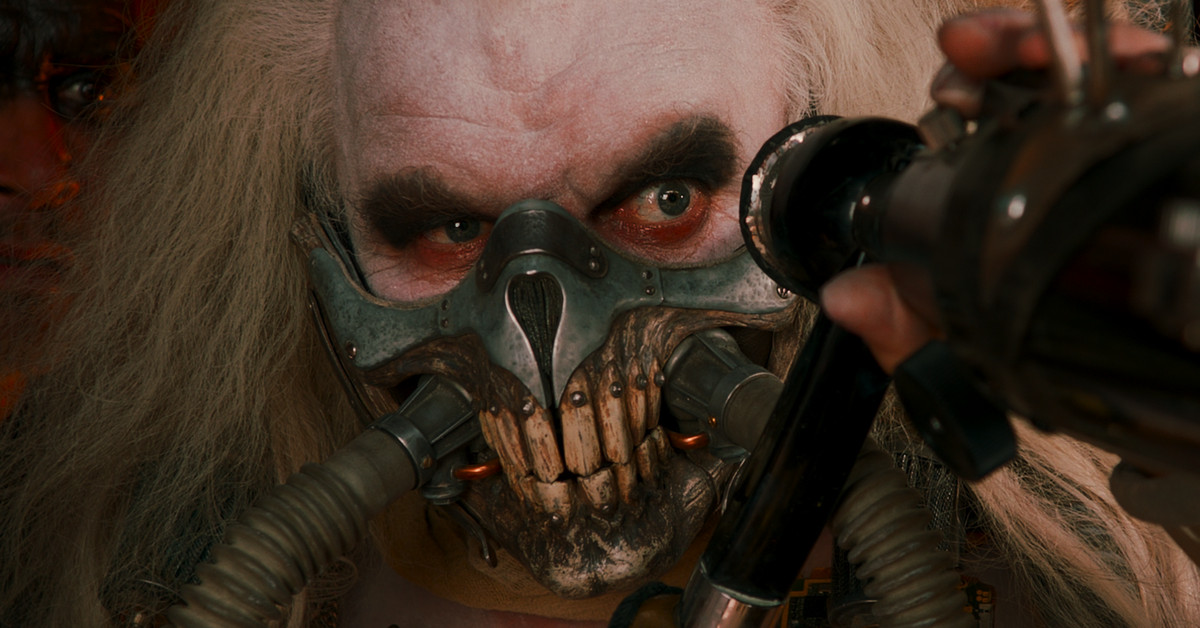
George Miller’s Furiosa: A Mad Max Saga complements and enhances the impact of his 2015 blockbuster Mad Max: Fury Road in a lot of ways, but there’s only one I can’t stop thinking about: How little the new movie has to say about Immortan Joe, the original movie’s iconic arch-villain.

Sure, Joe’s lack of interaction with Anya Taylor-Joy’s Furiosa could be simply because Hugh Keays-Byrne, the actor who first put Immortan Joe on the screen, died in 2020. Lachy Hulme assumes the role for Furiosa, but perhaps George Miller reduced it out of respect for Keays-Byrne, who he worked with for many years.

But I’m skeptical. Joe’s consistent secondary status in Furiosa’s origin story fits the overall themes of Furiosa too well to be a coincidence: Immortan Joe, the demon of Imperator Furiosa’s last stand, wasn’t her nemesis at all. In fact, he wasn’t her anything.

Furiosa (Anya Taylor-Joy), forehead smeared with greasepaint, drives the war rig in George Miller’s Furiosa

Image: Warner Bros. Entertainment/YouTube

This is in great contrast to Fury Road, where their beef seems deeply personal. Max Rockatansky wanders into somebody else’s narrative in Fury Road, as his stories usually go. This time, those somebodies are Furiosa (Charlize Theron) and Immortan Joe.

While Fury Road only subtly hints that Furiosa was once one of Joe’s captive harem of wives and incubators — the white wrappings of Furiosa’s top evoke the Wives’ impractical shifts — Theron confirmed that piece of her backstory in interviews. So Furiosa seems to have really personal reasons to hate Joe. And his response to her betrayal is presented as a towering rage, cresting mushroom cloud-like out of all proportion to her ability to withstand him.

Not to diminish the agency of the Five Wives in their own escape, but Joe considers them property that’s been stolen from him, not allies who betrayed him. Furiosa, however, he considers a traitor, worthy of his personal anger. And in the end, she’s the one who gets the honor of finally taking him down, underscoring her place on the same narrative level he occupies as Fury Road’s primary villain.

Which is why it’s so wild that Furiosa says, quietly and implacably throughout its entire run time, that Joe actually isn’t even a main character in her story. Sure, he buys her, but then he forgets she even existed. He didn’t take anything from her that hadn’t already been taken, didn’t teach her anything she hadn’t already learned from someone else, didn’t give her anything she hadn’t already taken for herself. When they do share scenes, and even trade dialogue, there’s no interpersonal ire or affection in either direction. In spite of their characters’ intensity, Hulme and Taylor-Joy keep a neutral distance of emotion.

It turns out, in Furiosa, that Furiosa’s life was actually framed by the completely different, utterly pathetic figure of Dementus, the Wasteland warlord who tortured her mother to death, sold Furiosa into slavery, killed her closest friend, and cost her her right arm. And just as emphatically, Furiosa says, Furiosa moved beyond revenge years before she ever stood against Joe.

What you saw in Fury Road, Furiosa says, was the furthest thing from personal to Furiosa. Immortan Joe was never The Guy. He was just the guy in the way. And the “guy” part might be the most important one.

l-r: Nathan Jones as Rictus Erectus and Hugh Keays-Byrne as Immortan Joe stand surrounded by War Boys and huge vehicles in Mad Max: Fury Road.

Photo: Jasin Boland/Warner Bros. Pictures via Everett Collection

The conversation that immediately surrounded Fury Road was about Immortan Joe as a Wasteland illustration of the death cult of capitalism and toxic masculinity. His very recognizable philosophy reduces all non-elites to things — women to Wives (sex slaves, forcibly impregnated) or Mothers (enslaved to produce breast milk for food), and men to War Boys (emphasis on boys), interchangeable cannon fodder addicted to the lie that they can only find purpose in violence for the True Leader.

This was all emphasized by the emasculating nature of Furiosa’s rebellion. After all, by the language of a country-and-Western song, she’s wounded him in the most devastating way a man can be wounded, by stealing his wife (Wives), his money (water), his car (the War Rig), and maybe even his dog (Nicholas Hoult’s hapless character Nux, if we want to stretch the metaphor a little bit).

Immortan Joe is an electrifying villain, and Furiosa doesn’t exactly skimp on him! A scene contrasting Dementus’ shaky appeal to the self-interest of the masses with the unshakable belief created by Joe’s death-cult propaganda is among the film’s most chilling. But there is an eternal risk in presenting such an operatic villain who also represents such a wide-ranging theme. If you’re not careful, making them powerful and capable enough to claim villain status also risks making them look aspirational. You can swing right around to making them seem cool.

Which is why it’s so damn smart of Furiosa to put this final nail in the coffin of Joe’s emasculation, by establishing that Fury Road’s sense of personal beef was all on Joe — on his fear, and his vulnerability, not on Furiosa’s. He isn’t even important to the woman who’s unmanning him.

In a cliche reversal for the cinematic ages, Immortan Joe was, for Furiosa, just Tuesday.

Civil War’s Jesse Plemons scene is the movie’s best and truest moment


Jesse Plemons is a brilliant actor. He’s also one of our most memeable stars. It’s not that he’s super expressive — quite the opposite, in fact. He’s usually quite placid, and almost hesitant in his line deliveries. He takes his time. But, whether he’s playing a timid everyman in The Power of the Dog or season 2 of Fargo or a stout lawman in Judas and the Black Messiah or Game Night, there’s always something going on behind his narrowed, watchful eyes. His stillness, his pauses, and his plain, unvarnished way of speaking act as a gravitational force, drawing the camera and other actors into his orbit. He’s also, in a low-key way, extremely funny.

A still image of Plemons in his ten-gallon Stetson in Killers of the Flower Moon, standing immovably in the doorway of Leonardo DiCaprio’s character’s house, has become internet shorthand for calmly and righteously calling bullshit. “I’ve been sent down from Washington D.C. to see about these murders.” “See what about ’em?” (A tiny pause, just long enough to be noticeable.) “See who’s doing it.”

That scene was used in the movie’s trailer, and Plemons’ masterful deadpan jolted it to life. Less than a year later, he was at it again in the first trailer for Alex Garland’s Civil War, with another pause, and another matter-of-fact line delivery, that lingered in the mind even longer than Garland’s stark, button-pushing imagery of America torn apart by war. Wearing military fatigues and a pair of bright red sunglasses with red lenses, and holding a rifle, Plemons is shown interrogating the film’s journalist heroes. “There’s some kind of misunderstanding here,” says Wagner Moura’s character, Joel. “We’re American, OK?”

“OK,” says Plemons, taking a second to scratch his stubbly cheek. “What kind of American are you?”

The full scene has much the same impact on the final movie, and the question posed by Plemons’ nameless character looms large over the whole enterprise long after the credits have rolled. For me, this was the moment Garland’s expertly made, thrilling, but somewhat withholding movie finally bared its teeth.

Civil War has come in for some criticism for not clearly articulating the root causes of the conflict it portrays, or for having its cake and eating it by marrying a fence-sitting political stance with deliberately provocative imagery. I’m not going to litigate the case for or against it here — Garland has laid out his reasoning for approaching the story this way very clearly in interviews, and the polarized reactions to the movie tend to say more about the viewers than the film.

Civil War is essentially a road movie that follows a team of journalists on a dangerous odyssey to meet America’s fascist president before he’s overthrown by an alliance of independent-minded states. As the ravaged landscape scrolls by, Garland stages a series of Apocalypse Now-style vignettes that underline the surreal horrors of war, and provoke questions about the role reporting plays in society: torture at a gas station, summary executions after an intense gun battle, a weirdly peaceful town ruled by a watchful militia. At every stage, he’s careful to avoid naming sides, or bringing any kind of political ideas into the mix.

That’s true for the Plemons scene too — up to a point. The scene occurs a little past the halfway mark; cub photojournalist Jessie (Cailee Spaeny) and Bohai, another reporter, have been separated from their friends and get captured by Plemons’ small militia team. The soldiers — it’s not clear which faction they belong to, if any — are dumping a truckful of bodies into a mass grave. Joel, Lee (Kirsten Dunst), and Tony (Nelson Lee) approach to try to negotiate their friends’ release. As an opener, Plemons’ character shoots Bohai dead. Then he poses his question.

Jesse Plemons, wearing military fatigues and red sunglasses and carrying a rifle, in Civil War

Image: A24

On a simple level, the scene works so well because it gives us a clear bad guy — perhaps the only one in the movie — played by a great, charismatic actor. That’s always been one of cinema’s purest pleasures. Plemons, who was cast only a week before filming after a different actor dropped out, is extremely menacing without breaking the movie’s muted, realist tone. His red sunglasses — a true stroke of genius from the costume department — give him an iconic pop on the screen. The scene is shocking and suspenseful, and it moves an already gripping film up a gear. It’s also a dramatic fulcrum for most of the film’s characters, none of whom is quite the same afterward.

But this is also the first and perhaps only moment in Civil War when its troubling subtext about our current time comes searingly to the surface. “What kind of American are you?” Is Plemons asking which side of the conflict the reporters belong to, or something else? Sensing the danger in the question, Joel replies that he’s from Florida. “Hmm, a central American,” Plemons replies, dubiously. Lee and Jessie are from Midwestern states, so they get a pass. Not coincidentally, they’re also white. “Now, that’s American.” Tony, crying with fear, admits he’s from Hong Kong, and is immediately shot in the head.

It’s racism; it always comes back to racism. With the truck and ditch full of noticeably nonwhite bodies in the background, Garland is pointing out that the evil of ethnic cleansing almost always follows on the heels of war. But the implications of Plemons’ interrogation are even broader and more frightening than that. While accepting Lee and Jessie’s heritage, he also mocks them for their rootless detachment from it. When a terrified Jessie admits she doesn’t know why they call her home state of Missouri the “Show-Me State,” Plemons responds with a chilling bark of derisive laughter. (The question was improvised; Spaeny really is from Missouri, and really doesn’t know why people call it that.)

When he asks “what kind of American,” Plemons’ character isn’t just insinuating about race. He’s posing a fundamental question of identity: How do you perceive your Americanness, and how deeply are you rooted in it? A reply that has any less than total conviction won’t pass muster. In this scene and this scene only, Garland gets to the heart of the matter — the scary, polarized essentialism that can push a country to tear itself apart, and that is all too easy to recognize in the current moment. All its threat and horror are contained in one of Jesse Plemons’ little pauses.