Thunderbolts*’ depression story has one painful flaw


The latest Marvel Cinematic Universe movie, Thunderbolts*, is baldly and emphatically about dealing with depression. It opens with state-assassin-turned-mercenary-assassin Yelena​​ Belova (Florence Pugh) in voiceover, musing about the “emptiness” that characterizes her life, how she can’t enjoy or connect to things the way she used to. The story repeatedly touches on different ways people self-medicate to survive the loss of hope, from alcohol and drugs to a variety of forms of emotional suppression. The action climax has the heroes physically battling a powerful, destructive manifestation of one character’s bottomless despair and self-hatred.​​ Trust a superhero movie to find a way to let someone punch depression in the face — a cathartic act for those of us who’ve gone through these particular mental health struggles, though not a practical solution outside of a fantasy setting.

Even in the middle of a long wave of horror movies that turn anxiety and PTSD into literal monsters, though, it’s strange to see Marvel turning mental health crisis management into a punch-’em-up, in a movie that’s as much cinematic therapy (and exploration of complex PTSD, exposure therapy, and cognitive behavioral therapy) as it is action-adventure story. And it’s even odder to get to the end of the film and see what’s missing. The Thunderbolts* writers, with director Jake Schreier, get some things right about this kind of mental illness. But having navigated depression myself, I squirmed at parts of the messaging, particularly at the movie’s climax. As much as the filmmakers want to leave viewers with positive, even actionable messages about mental health, parts of those messages land oddly for those of us who’ve been there.

[Ed. note: Major spoilers ahead for Thunderbolts*, including end spoilers.]

Bucky Barnes (Sebastian Stan) sits on a motorcycle, cool sunglasses and leather jacket on, in Thunderbolts*

Image: Chuck Zlotnick/Marvel Studios

For much of the movie, Yelena is the face of depression in the movie’s central metaphor. A lot of her arc throughout this film involves her analyzing and fighting her own hopelessness and weariness, then trying to connect with other people when she recognizes the same emotions in them. At times, she blows up at anyone trying to connect with her in return. One of the movie’s most purposefully painful scenes features her railing at her dad figure Red Guardian (David Harbour) about how guilt, grief, and isolation have taken over her life, and eventually turning on all the other heroes she’s been tentatively connecting with, doing everything she can to tear them down emotionally as well.

But the movie’s real conflict involves Bob (Lewis Pullman), an experimental test subject who Yelena and three other mercenaries — John Walker from The Falcon and the Winter Soldier, Ghost from Ant Man and The Wasp, and the ill-fated Taskmaster from Black Widow — meet in a bunker where they’ve all been set up to die. As the merc team tries to figure out how to escape the bunker alive, Bob says he has no value to them, and it would be better for everyone if he just remained locked up down below. Yelena immediately recognizes this as a self-destructive impulse akin to her own, and tries to counsel and comfort Bob, and help him see his own worth. In the process, she’s talking herself through her own depression as much as she’s trying to help him fight his.

Later, though, Bob gets a bigger jolt of self esteem from the movie’s villain, Valentina Allegra de Fontaine (Julia Louis-Dreyfus), who tries to set him up as Sentry, a hero completely under her control. That plan falls apart, unleashing the Void, a powerful force that drags everything around it into shadow. It’s about as literal a depiction of depression as you’re likely to see on screen — especially since the whole time the Void is blanketing Manhattan in darkness and blasting its inhabitants into dark smudges, it’s whispering bleak messages about the futility of struggle, the pointlessness of everything, and especially how laughable he considers Bob’s fleeting attempts at self worth.

The Void (Lewis Pullman) in Thunderbolts*, an all-black outline of a man, one arm raised with his fingers splayed

Image: Marvel Studios

Anyone who’s fought depression — clinical and ongoing, short-term and conditional, or anything in between — will recognize some of the Void’s toxic messaging, and will see it as a metaphor for that inner voice that whispers, You’ve messed everything up or Your friends don’t really care about you or You have no value or just Give up, there’s no point in trying. It’s easy to sympathize with Bob’s frustration with that voice, and his desire to pound it into submission. Thunderbolts*’ smartest insight is that his rage and frustration aren’t much use in fighting the Void: They give him the nerve and impetus to resist it, but they aren’t a solution on their own. The usual dynamics of superhero films aside,​​ violence isn’t the answer here.

Instead, the answer turns out to be a group hero-hug, a verbal reminder that Bob isn’t alone, and an admission that sometimes, the best we can hope for is company in misery. That can be a powerful idea: One of the worst parts of chronic depression is the feeling of being exiled, distanced from everyone else, locked into a poisonous little world where your thoughts run in circles, and every self-defeating impulse and thought feeds the next one. The group hug breaks the cycle for Bob, and lets him see outside the hallucinatory world he’s built for himself — a place where he both relives and hides from his most traumatizing memories. The Thunderbolts/New Avengers team hauls him back into the real world, where he can start healing.

That’s a solid metaphor, and an effective cinematic way of externalizing a largely internal conflict. (It works similarly well in Laika’s ParaNorman, another movie where a hero has to dive into a villain’s fantasy headspace, navigate their trauma, and break their cycle of misery with a simple “I understand your suffering and you aren’t alone.”) But it misses one big issue with depression, the aspect of the movie that most made me shrink in my seat in the theater: the sense of shame that comes with needing this kind of help, and with putting this much weight and demand on other people.

Yelena Belova (Florence Pugh) and Bob (Lewis Pullman) stand together in the dark, with her holding up a flashlight, in Thunderbolts*

Image: Chuck Zlotnick/Marvel Studios

There’s a comforting fantasy in the idea that even though everyone in Thunderbolts* is navigating major traumas of their own, they’re all capable of temporarily setting their personal issues aside to focus on comforting and supporting Bob. Granted, they don’t have much choice, given that he’s encompassing the world in nightmarish darkness. Still, the film frames that group hug as an act of caring and empathy, not desperation or grudging heroic obligation. His easy ability to absorb that comfort when it comes, though, to take on Yelena’s message of companionship as a real fix for his loneliness, and to do it without embarrassment — to me, that felt harder to believe than MCU multiverses or magic, and almost toxic itself in its lack of weight or complexity.

I’ve been through this kind of crisis myself, facing my own mental health struggles or trying to help friends navigate theirs. And shame is often a major factor, both as an ongoing part of the larger weight of depression and, in moments like these, where long-simmering melancholy reaches a boiling point. It’s hard to accept help. It’s hard to admit to problems. The societal view of depression holds that everyone should be strong, independent, and self-contained, and that it should be embarrassing to demand other people’s time, attention, or love.

More personally, when everyone around you is in crisis, it feels selfish to demand special attention or to compound the demands other people are facing. It makes sense that the Thunderbolts* filmmakers didn’t want to send Bob down a shame spiral when he returns to the real world, complicating the movie’s feel-good beat with a second breakdown. But their solution is to make him cheerfully oblivious about the trials he’s put the rest of the world through. That lack of self-awareness becomes even more awkward and unpleasant when his condition is played for comedy.

Hannah John-Kamen as Ghost, Lewis Pullman as Bob, Florence Pugh as Yelena, and Wyatt Russell as John Walker in Thunderbolts* leaning around a corner while in their superhero costumes

Photo: Chuck Zlotnick/Marvel Studios

By the end of the climactic battle in Thunderbolts*, the Void has been temporarily vanquished, and Bob is back in the real world as a mostly normal human. But he has no memory of anything he just went through, or any of the havoc his friends suffered because of him. Standing in the wreckage of the Manhattan block he destroyed minutes earlier, almost killing dozens of people with falling wreckage before almost obliterating millions with his powers, he’s blithely unaware of the trouble he’s caused. His memory lapse is treated like a gag, but it’s a horrific story beat. He hasn’t learned anything from his experiences. He isn’t capable of gratitude for what his friends just went through to help him. And he isn’t capable of returning their care, or offering support in return.

Some aspects of the final Bob confrontation felt entirely authentic to me — the specific undermining whispers the Void has for him, say, or Bob’s confused veering between anger and despair. There’s certainly wisdom in the admission that while no one can fill the gaping hole inside someone else, we can at least share our experiences, commiserate with other people, and work around that feeling of being alone.

Even so, I was shocked how uncomfortable I felt with the idea of him making his problem into everyone else’s problem, forcing all the other characters to drop everything to take care of him. The problem isn’t just that he needs help, because we all need help from time to time. It’s the way his need eclipses everyone else’s — and then the way that once his needs are met, he’s breezily happy and disengaged from the struggles all his friends are facing. It’s a bizarrely lighthearted transition away from the film’s heavier look at depression. And it’s certainly a harsh way to portray caretaking, as a crucial yet hilariously thankless and kind of unfulfilling job.

The obvious implication here is that Bob might return to being the Void at some point, and that in the meantime, the other members of his team will have to navigate their own crises without any meaningful input from him. They’re learning how to form a community and support each other, but he’s set up as an endless drag on their empathy and energy and resources, with nothing to contribute and no sense of self-awareness about it. For someone who’s had to ask others for help, this version of Bob is humiliating all on its own — a portrayal of depression as a kind of bottomless, oblivious selfishness.

The Thunderbolts stand together in a group, all looking various forms of alarmed and concerned, except Bob, who looks blank

Image: Chuck Zlotnick/Marvel Studios

For me, that image is more frightening than the Void itself. Possibly the only good things that come from navigating a mental health crisis are the ability to recognize the symptoms and navigate them more effectively the next time whenever they surface again, and the ability to see the signs in other people and connect with them. Maybe Bob’s value to the group is in serving as an example, training the team to trust each other more, showing them how to selflessly respond to and support each other through their various crises. Maybe it’s fine that he’s the guy who showed up at the potluck with an opened package of napkins, while everyone else spent hours whipping up homemade food, because it’s not his fault he doesn’t know how to feed himself, and there’s still enough food to go around.

Certainly I appreciate that Bob is able to hear and accept the message that he isn’t alone. In the real world, that kind of connection can be difficult to internalize, and difficult to believe or accept as help in the midst of a depressive episode. And I appreciate that the Thunderbolts* writers (original writer Eric Pearson and a rewrite team including Beef writer Lee Sung Jin and The Bear’s showrunner/co-creator Joanna Calo) have the sense to not portray the big hug-it-out moment as a permanent, magical fix to Bob’s problems: At best, it’s an interruption in the pattern, and a suggestion of a path forward for his friends, who are all facing their own mental health battles. It’s a sensible reminder that every depression episode is its own unique challenge, and sometimes just surviving the moment is enough.

But leaving Bob as a permanent broken stair in his friend group, the amiable, adorkable, hapless dude who just might explode at any moment, feels like a horror. Bob isn’t completely oblivious by the end of the movie — presumably his friends have filled him in on what they went through with him. He isn’t fixed, and he knows it. But he’s doing the work: reading a self-help book (Rick Rubin’s The Creative Act: A Way of Being), avoiding behavior he knows triggers his depression, expressing his needs to other people. (Not shown: therapy, medication, or learned therapeutic techniques like CBT.) He’s stable, for the moment, and he’s consciously practicing self-care. Certainly that’s more of a kindness than leaving him wallowing in shame and guilt over everything the Void nearly did.

Still, in a movie that’s so much about positive messaging — whispered counterarguments to the Void, parallel messages that say, You aren’t alone in this, other people have been here too and Your friends really do care about you, you just need to let them in — I don’t know what Bob’s shameless, comfortable complacency at the end really gets us, except a sense that it’s kind of funny to be needy, damaged, and destructive. Some of this response, I recognize, is my own Void still whispering back at me, identifying with the villainous parts of Bob instead of the human ones.

But I’ll stand by this as long as I’m fighting my own mental health fight: I’d rather be part of the team, fighting through my own embarrassment and pain to try to hug people and help them, than to be Bob, causing problems I don’t even see, and then walking away smiling afterward. I’ve known a lot of people fighting this kind of inner war, and I’ve fought it myself, for most of my life. None of us are as complacent about it as Bob, or as willing to let other people do all the work on our behalf. And it feels a wee bit cavalier to put him through this titanic battle — to go through the thoughtful work of humanizing mental health struggles and portraying them as a heroic battle against evil — and then robbing Bob of the chance to really process anything he’s experienced, or take a meaningful role in his own recovery.

Marvel’s Daredevil: Born Again season 2 will premiere sometime in 2026


Worried about the uncertain ending of Daredevil: Born Again, and wondering when, if ever, the show will return for a second season? With seven years between the final installment of Netflix’s Daredevil and this year’s Daredevil: Born Again, nobody would blame you for assuming the wait will be a long one.

Fortunately, Disney Plus’ more MCU-integrated Daredevil series will return almost unbelievably soon, as far as the realm of comic book TV shows goes. And… there’s maybe even a season 3 on the way?

Daredevil: Born Again season 2: When will it come out?

Daredevil/Matt Murdock stands in a dark and grimy room where the walls are covered in drawings of screaming an mutilated faces in Daredevil: Born Again.

Photo: Giovanni Rufino/Marvel Studios

Marvel Studios announced they were already planning a Daredevil: Born Again season 2 in August 2024 — not particularly surprising, as the show was initially conceived as a finite 18-episode series. While production was paused for the 2023 Hollywood strikes, Marvel execs made the decision to overhaul the show and rewrite and reshoot some of what had already been shot.

Speaking to The Reel Roundup in February, Marvel Studios head of streaming Brad Winderbaum said that shooting for Born Again season 2’s eight episodes would begin in the first week of March, with a plan to release the season in a year — placing the season premiere in early 2026.

“Hopefully,” Winderbaum concluded, “we’ll be able to expect a new Daredevil season annually.” Marvel Studios hasn’t made any official announcements about a Born Again season 3, however. Though it has announced that it’s working on a solo TV special for Jon Bernthal’s Punisher, also set to air in 2026, at least according to The Hollywood Reporter.

What will Daredevil: Born Again season 2 be about?

We can’t say for certain, but Charlie Cox (Daredevil), Vincent D’Onofrio (Kingpin), Deborah Ann Woll (Karen), Wilson Bethel (Bullseye), Clark Johnson (Cherry), Genneya Walton (BB Urich), and Michael Gandolfini (Fisk’s smarmy little Yes Man, Daniel) are all confirmed to return, so expect their plotlines to continue.

Also confirmed to return? Elden Henson (Foggy), despite his character’s death, curiously enough. Could be a flashback, could be a Catholic-guilt-laden dream or hallucination — heck, in the wide world of Marvel Comics Daredevil stories, it wouldn’t be unheard of for Matt to make a trip to literal hell to get Foggy back. We’ll have to wait and see.

[Ed. note: The rest of this piece contains spoilers for the end of Daredevil: Born Again season 1.]

How does Fisk leave office in the comics?

Vincent D’Onofrio as Kingpin/Wilson Fisk standing in his mayoral office in a gray suit in Daredevil: Born Again

Photo: Giovanni Rufino/Disney Plus

That’s the million-dollar question asked at the end of Daredevil: Born Again: How can Matt Murdock prevail against a man with criminal and institutional power? Not alone, the finale episode implies, but with the united front of all his allies, vigilantes and civilians alike.

But it’s likely left you wondering how this all turned out in the comics. Daredevil: Born Again is heavily influenced by writer Charles Soule’s 2015 run on Daredevil, in which Wilson Fisk became mayor and a mysterious serial killer/graffiti artist called Muse went on a killing spree. But when Soule left the book in 2018, Fisk was still in power!

In the comics, Wilson Fisk didn’t actually lose the mayoral seat until the Devil’s Reign story arc, from writer Chip Zdarsky and artist Marco Checchetto, in which a city attorney witnesses him beating Matt Murdock to death (it wasn’t actually Matt, it was a guy who looked just like him, but don’t worry about that). It doesn’t seem like Born Again is headed in exactly that direction, but a reputable and righteous witness to one of his acts of brutality would be one way Born Again could get him out of Gracie Mansion.

But if we go back to Soule’s Daredevil, there may be another answer. Fisk does not leave office during Soule’s work, but Matt is still able to use his resources as a district attorney and as Daredevil to dissuade Fisk from enacting his anti-superhuman registration act, eking out at least that win. That could be one direction that Born Again’s writers choose to go in, with Daredevil torpedoing Fisk’s plans to make Red Hook a haven from the law but in a way that leaves the Kingpin’s mayoralty intact.

We’ll find out in 2026!

Venom 3 Dances to a Decent Opening Weekend With Overseas Help


This weekend marks the end of an era and closes out the story of Sony’s Venom. Since 2018, Tom Hardy’s Eddie Brock has been a weirdo doing goofy-ass slapstick in ways that have upset some but delighted others, and Venom: The Last Dance promised to be a last ride of some kind for the duo before another iteration of Eddie (or another character entirely) puts on the alien skin suit. And audiences have responded to it with a bit of an “ehhhhhh…”

Per the Hollywood Reporter, the gooey threequel is looking at $51 million domestic box office at time of writing, well below the initial $65 projections placed upon it pre-release. For comparison, the first movie started at $80.2 million in North America (a then-record for October movies in 2018), and 2021’s Let There Be Carnage began at $90 million, impressive back then because of the pandemic. The international audience has come in clutchit’s apparently doing very well outside North America, and expected to pull in $124 million for a reported global total of $175 million.

Last Dance opened to negative reviews and spotty word of mouth, and it probably doesn’t help some folks are getting their Halloween party on. Still, it took the top spot for the weekend, happily knocking Smile 2 down to second place; the horror sequel made another $10.3 million domestically and $12.5 million overseas, bringing its global total to $83.7 million. And speaking of sequels to scary movies, Variety reports Terrifier 3 is pegged to make another $4.5 million and end the weekend at $44 million, triple the combined grosses of its predecessors.

Venom basically has next weekend all to himself, as far as big genre movies are concerned. Things truly kick in on week two with A24’s religious horror flick Heretic and the post-apocalyptic flick Elevation on November 8. The following weekends see the action Christmas flick Red One (November 15), Gladiator II and Wicked: Part I (November 22), and Moana 2 (November 27).

Got thoughts on Venom: The Last Dance? Let us know in the comments below.

Want more io9 news? Check out when to expect the latest Marvel, Star Wars, and Star Trek releases, what’s next for the DC Universe on film and TV, and everything you need to know about the future of Doctor Who.

All Venom: The Last Dance’s confusing comic book references, explained


Venom: The Last Dance may be one of those “You just had to be there” experiences. It feels cluttered, confused, and yet remarkably inconsequential. We’re told that the entire universe is at stake in this story, and yet nothing in the movie feels particularly threatening or even meaningful. So many different threads, ideas, and characters are introduced and then dispensed with, ignored, or contradicted, to the point where nothing lands — not even the supposed ending of this movie series.

As Polygon’s entertainment editor, I’ve learned that when a comic book movie baffles me this much, I’m probably missing something that was mangled from the source material. It’s always possible the story made more sense in its original form. So I turn to our resident comics super-expert Susana to help me unpack what I just saw. I asked her my big questions from Venom: The Last Dance to see if there’s any way bringing in some extra background lore could help save this messy, overstuffed, suspiciously goofy movie.

[Ed. note: Widespread spoilers ahead for Venom: The Last Dance.]

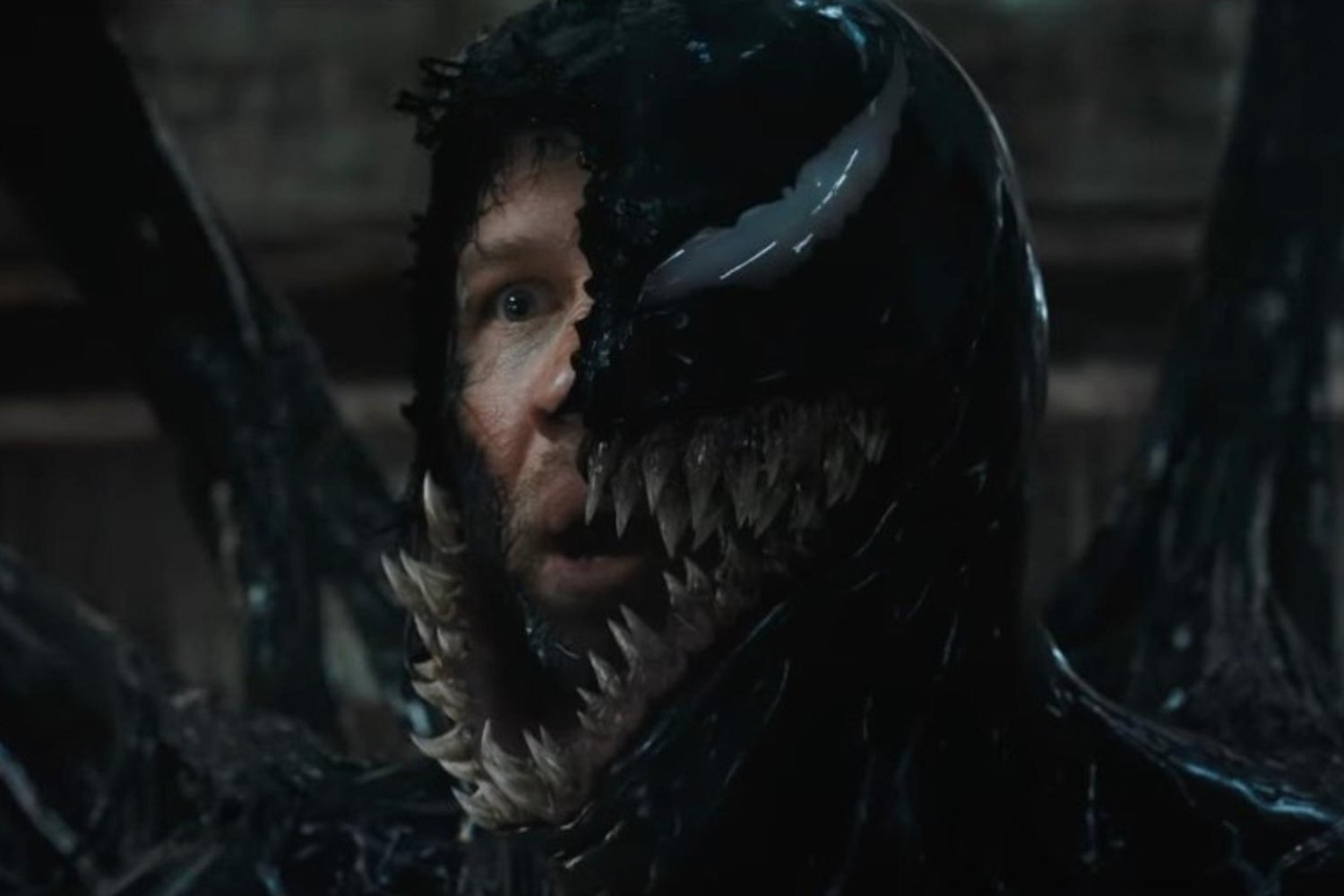
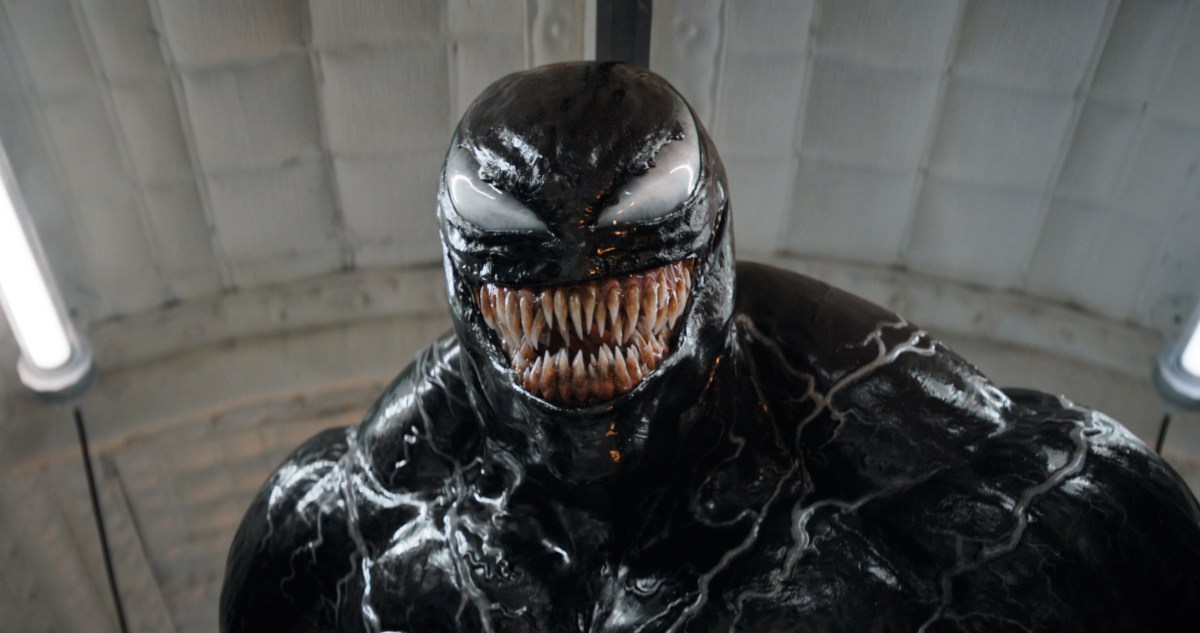
Venom in Columbia Pictures VENOM: THE LAST DANCE. Photo Courtesy: Sony Pictures

Venom in Columbia Pictures VENOM: THE LAST DANCE. Photo Courtesy: Sony Pictures
Image: Sony Pictures

Tasha: Susana, let’s start with the McGuffin at the center of this movie: The codex, a nigh-magical hoobajoo that only the Eddie Brock/Venom symbiote (both voiced by Tom Hardy) share, and that the movie’s villain, Knull (Andy Serkis) wants, for Reasons.

Did you follow any of that, Susana? We’re told Venom has a codex because Eddie died at some point in these movies, and the symbiote revived him. But the film pretty pointedly doesn’t explain what a codex is or why it would be so rare, much less why it would work as a key to break Knull out of cosmic prison.

Susana: That’s easy enough — the “codex” is an idea adapted from Donny Cates and Ryan Stegman’s 2018 run on Venom. In the comics, a “codex” is a little trace of symbiote stuff that symbiotes naturally leave behind in the bodies of their hosts, particularly the nervous system. In a pinch, it can be used to tap into the symbiote hivemind. (In the comics, all symbiotes are connected in a species-wide hivemind, natch.)

In comics, it isn’t one codex that’s the key to freeing Knull, but lots and lots of codexes. That’s the main difference here: In the comics, codexes are the furthest thing from rare. They literally happen any time a symbiote bonds with a host for more than a fleeting moment. And thanks to the Venomverse and Venomized events, which were based around symbiotes bonding with all your favorite characters so you can see how cool they look in a Venom-ized suit, basically everybody of note in the Marvel Comics universe has a codex.

Knull was freed in the Absolute Carnage event, in which a Knull-communing Carnage went on a spree of ripping out people’s spines and eating them, in order to connect their codexes up to Knull, which would allow the god to regain control of the symbiote hivemind.

Tasha: In a way! It at least tells me more than the movie does about what a codex is supposed to be or how one is formed. And I can see why people making a movie would want to switch the dynamic from “This thing is available all over the universe” to “Our protagonist is a unique and special snowflake, and his McGuffin means the action will follow him from scene to scene, wherever he goes.”

So why would a codex/a lot of codexes free Knull from alien space jail? And given that we get no information about him in this movie except “He’s the god of symbiotes, and also, they hate him,” is there a backstory to him that would make him make more sense? Like, why does he want to destroy the universe, and why would this rando death-metal-guitarist guy have the power to destroy the universe?

Susana: In Cates and Stegman’s comics, Knull is a primordial god of the void, who ruled over the formless black nothing that stretched between the destruction of the 6th Cosmos and the creation of the 7th (our current one). He sees anything that isn’t the darkness of empty space as an encroachment on his domain.

The Silver Surfer battles Knull at the dawn of time in Silver Surfer: Black (2019).

The Silver Surfer and Knull, wielding All-Black, the Necrosword, duke it out at the dawn of time in Silver Surfer: Black.
Image: Donny Cates, Tradd Moore/Marvel Comics

Tasha: That is the most metal thing you’ve ever said.

Susana: Oh, I’m just getting started. Being the Most Metal is what cosmic superhero comics are all about!

When the Celestials started making the 7th Cosmos, Knull took that as an insult. Bathed for the first time in the light of creation, the god of the void reached into his own shadow and created the first symbiote, in the form of the Celestial-killing blade All-Black, the Necrosword. (All-Black was invented by Jason Aaron and Esad Ribić for their series Thor: God of Thunder. Cates and Stegman retroactively gave it an origin with Knull.)

The Celestials cast Knull back into the void, but he spent his time manifesting symbiote life from pure darkness, creating a shape-shifting, parasitic horde species fully controlled by a hivemind linked with his own divine consciousness. Then he launched that horde into the universe to devour all that it found.

Eventually, Knull’s control momentarily lapsed after a big fight with a young Thor (immortalized by human storytellers as the epic of Beowulf), and his symbiote army bonded with mortal hosts, discovering the concepts of “honor” and “nobility,” as Knull put it. The freed symbiotes rose up and imprisoned Knull in a massive ball of their own bodies, which, until 2018’s Venom #4, had always been understood to simply be the symbiote home planet.

Knull stands against an army of freed symbiotes so large it reaches the horizon. Narration boxes say “Their horrid notions of honor… the lies of nobility and light and life, began seeping into the hive… their… infection… their poison… their venom…” in Venom #4 (2018).

Image: Donny Cates, Ryan Stegman/Marvel Comics

Tasha: OK, gross. And this is why the symbiotes in Venom: The Last Dance are willing to bond with any and every human, including the ones who imprisoned them in tubes in an underground bunker, if it helps them fight off his creatures?

Susana: By comics canon, yeah. The symbiotes hate him because he was a god-tyrant, and they don’t like being his slaves. He wants to kill the universe because it is anathema to him. And he can do it because he’s a primordial cosmic entity.

Tasha: And why does he have an army of unkillable CG mega-bugs?

Susana: Oh, those are from a completely unrelated Venom comic. I got nothin’.

Tasha: Speaking of unrelated Venom stuff, I assumed all those symbiotes who show up for the big battle at the end and have distinctive colors and powers are from the comics? That whole sequence smelled like fan-candy to me, apart from the fact that most of those characters immediately get mulched. Was there anyone in there that Venom fans would care about?

“No!” Spider-Man gulps in fear, “F-f-f-five Venoms!!!” as he beholds (LtR) the Riot, Scream, Phage, Agony, and Lasher symbiotes, in Venom: Lethal Protector #5 (1993).

Image: David Michelinie, Mark Bagley/Marvel Comics

Susana: It’s basically fan candy, but for just… an unspeakably small group of fans. The list of times Marvel Comics creators have tried to make a new symbiote/host hero or villain stick is longer than my arm, and most of them don’t rate more than a footnote. I’m checking wikis for all of these guys, but the ones on display seem to be based on Toxin (Officer Mulligan’s green form), and five more symbiotes roughly inspired by Venom: Lethal Protector. That 1993 miniseries, written by David Michelinie and drawn by several artists, introduced a litter of high-key toyetic offspring of the Venom symbiote.

Those five symbiotes were Riot (gray, turns his hands into hammers, etc.), Phage (brown, turns his limbs into spikes), Lasher (green, has extra back tentacles, attaches to the lady with a Christmas tree pin), Agony (purple, uses hair tentacles, attaches to Juno Temple’s Dr. Teddy Payne), and Scream (orange/yellow, also weaponized hair), and they seem to be the templates for Last Dance’s extra symbiotes. It’s complicated, though, because the movie doesn’t name any of them, and Riot was technically already used as the villain of 2018’s Venom (played by Riz Ahmed).

There’s also a two-headed symbiote at one point, but that one seems to be an original design, as best as I can research.

Tasha: How big a deal is Agony in the comics? Big enough to support her own movie? While The Last Dance’s post-credits scene leaves Sony a possible opening for a further Venom sequel, the film (title and all) seems to be aimed at shutting down the Tom Hardy Venom series, though Hardy has signaled he’d return if Venom got to fight Tom Holland’s Spider-Man in another Sony Spiderverse/MCU crossover.

So much of the way this movie treats Dr. Payne — as if her motivations and backstory are important, even though she doesn’t actually do much in the film, and as if her getting her own symbiote is a climactic, cathartic triumph for the story — only really makes sense if this movie is also being positioned as an Agony origin story that could be used to launch a new symbiote franchise. Which feels a lot like Sony trying to use Madame Web as a cinematic origin story for a bunch of new Spider-Women, but I digress. Clearly Agony doesn’t have Venom’s cultural cachet, but is there anything notable or interesting about her that could support a movie?

Susana: So, Teddy Payne appears to be a genderbent version of Dr. Thaddeus Paine, who featured as the villain of 1996’s Venom: The Hunger, by writer Len Kaminski and artist Ted Halsted. But his backstory has nothing in common with Dr. Payne’s other than a homophonic name and the fact that they’re both scientists, and he’s never merged with a symbiote in comics history. Payne is, in everything but name, an original character.

As for Agony, I’m going to be honest with you as a comics expert: If I’ve ever read a story with Agony in it, I don’t remember. Commenters are free to call that a gap in my knowledge, but I’m going to call it an indication of Agony’s lack of an established footprint in Marvel Comics canon.

Divers taze Venom in Venom: The Last Dance.

Venom in Columbia Pictures VENOM: THE LAST DANCE. Photo Courtesy: Sony Pictures
Image: Sony Pictures

Tasha: I mean, I’ve never read a Venom-centric comic, and I knew who Venom was well before the first movie, but I had to ask you who Agony was. I’m coming to all of this in ignorance, so I’m sure not going to claim you should know more about a character I’ve never heard of.

Speaking of characters I’ve never heard of, though, any idea who the mysterious guy in the control room is? The secretive silhouetted guy who’s so important that he can single-handedly shift control of the apparently massive government-run Imperium project from Dr. Payne to General Strickland on a moment’s notice? The guy who has somehow put up identical networked facial-recognition surveillance cameras all around the world, from downtown Vegas to random alleys in Mexico? Clearly this dude, whose presence and power and intentions and motives are never explained, is some really important and exciting comics reference, right?

Susana: I have no fucking idea who that man is. Maybe we’ll find out in Kraven the Hunter. Maybe it was just a dropped plotline.

Tasha: I admit that after seeing the first Kraven trailer in a theater last week, I have a really hard time believing the tone that movie seems to be going for could jibe at all with the hot-nonsense tone Venom: The Last Dance is keyed to. Speaking of which… A lot baffled me about this movie, including how the Venom symbiote is constantly abusing and overruling Eddie — literally ripping food out of his mouth or shoving food into it, grabbing and controlling his body, not to mention wrecking his career, his relationships, and his life. And yet Eddie calls the thing his best friend.

But the thing that alarmed me the most was when Eddie wants to leave Vegas ahead of the various threats coming after them, and the symbiote wants to hang out and dance with Mrs. Chen (Peggy Lu), who… really seems to have a thing for Venom. I mean, the whole “Dancing Queen” scene is clearly a goof, but it also involves kinda hentai levels of tentacle-caressing. (Completely apart from being a sequence that makes no sense, since the symbiote is clearly scared of the Xenophage coming after him and Eddie, and yet after an hour of avoiding merging into Venom because it’s dangerous, he drops that concern entirely in order to force Eddie into a dance sequence.) Is Venom… flirting? Do I have to consider Venom a sexual being now?

Eddie Brock (Tom Hardy) converses with the Venom symbiote’s gross goo head.

Image: Sony Pictures

Susana: Do you have to consider Venom a sexual being now? I don’t know if that’s my question to answer, Tasha. What a man and his goo-monster do in the privacy of their own home is none of my business.

I didn’t read that sequence as having a flirtatious vibe, but that might have been because I was furiously scribbling notes on how wild it was to cut to that scene from one of Dr. Payne sadly contemplating the childhood loss of her twin brother.

Tasha: I mean, what they do in the privacy of their own home is one thing, what they do in a Vegas penthouse is… well, even as I’m typing this, I’m realizing that what happens in Vegas stays in Vegas. I’m just saying, there are already so many consent problems around Eddie and his bestie and their merged Venom form, and this movie really seems like it’s aimed at feeding the fandom debates (and the fanfiction) about whether Eddie’s tolerance of the symbiote comes from some kind of submissive kink.

But the less said about that, the better. I have so many more questions for you here. Why does Area 51 demolish its buildings with vast tanks of acid? Why does acid that dissolves concrete and rebar into dust within seconds not have any effect on the ground or anything below it? Why is a giant never-ending dust waterfall considered a subtle cover-up for a secret base? Why do the acid-tank biometric controls apparently have settings for “some acid” and “more acid” which have to be activated separately?

And why does Eddie lie to that poor kid Leaf about aliens not being real? I get that he’s trying to be comforting in the moment, but this is a universe where not believing in aliens can get you killed extremely messily, and the lie doesn’t come across as helpful, just crass. And cowardly. And ironic. And obviously a setup for Eddie having to take it back 20 minutes later.

Susana: Some questions are beyond even the power of your friendly neighborhood comics expert.
The first Fortnite x Disney collaboration features a bunch of new skins


Fortnite Battle Royale Chapter 5 Season 4 – Absolute Doom | Official Season Trailer

Disney’s $1.5 billion investment in Epic Games’ Fortnite is starting to take shape. The battle royale game had a special showcase at this weekend’s D23 Expo (also streamed in Fortnite, of course) that revealed an upcoming season event and tons of skins.

Chapter 5, Season 4: Absolute Doom, launching on August 16, sees Doctor Doom, the longtime Marvel villain, as a new big bad. He opens Pandora’s Box, coating the map in green fog. He was also recently announced as the next grand foe in the Marvel Cinematic Universe, and is set to be played by Iron Man himself, Robert Downey Jr.

The cinematic trailer, which you can watch above, features a bunch of Marvel characters, including a whole batch of X-Men like Cyclops, Cable, and Colossus. The skins are a bit more varied. The Gwenpool skin will be unlocked right away, but you can also get War Machine, Emma Frost, Mysterio, and Shuri as Black Panther, along with the Fortnite-specific Peelverine and Captain Jonesy. You can also see a Meowscles Sabretooth in the trailer, although it’s not on the official skin list at the time of this writing.

Since this is a Doctor Doom-centric event, there’s a Doom skin that you can unlock via battle pass quests this September.

We know little else about Absolute Doom right now, but following D23 on Monday, Epic Games started teasing the map, which is coated in green fog. Eagle-eyed Fortnite players can really zoom in and see that some areas have been hit harder than others.

There are lot more Disney skins coming to Fortnite later this year. First up is a group of Disney villains this fall: Cruella de Vil, Captain Hook, and Maleficent. Then we’re set to get the first Pixar characters — Mr. Incredible, Elastigirl, and Frozone — also this fall.

Finally, there’s Star Wars, because there’s always Star Wars. We’ve had Star Wars in Fortnite before, and we didn’t get any details about specific skins or additions, but the trailer showed IG-11 and Moff Gideon from The Mandalorian, along with Grogu Back Bling (a previous version was available during Season 5).

When it was first announced that Disney was investing in the battle royale in February, we saw concept art that depicted multiple Disney universes inside the game, similar to one of the company’s theme parks. There hasn’t been any update on these plans just yet, but we can assume that the partnership will go beyond just some more fun skins and crossover events.


Marvel shows footage from Thunderbolts*, the MCU Suicide Squad, at SDCC


When Marvel Studios first announced Thunderbolts* at 2022’s San Diego Comic-Con as part of its ambitious lineup for Phase 5 and 6 of the Marvel Cinematic Universe franchise, the movie didn’t yet have that odd asterisk in the title. It didn’t come with many details, either, apart from a July 26, 2024 release date that shifted along with many other MCU projects in the wake of the 2023 WGA strike.

In the wake of the Thunderbolts* segment of 2024’s San Diego Comic-Con, we don’t know much more! The asterisk is still a mystery: Marvel Studios President Kevin Feige said at a CinemaCon appearance, “we won’t talk more about that until after the movie comes out,” and confirmed it again at Comic-Con.

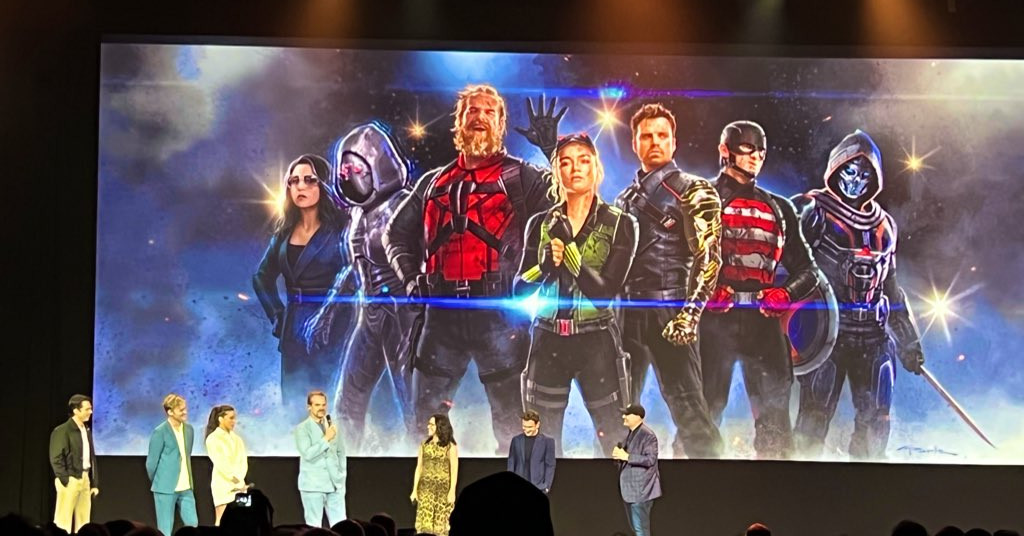
But as the core cast of Thunderbolts* took the stage, the Hall H audience was treated to a teaser in which all their characters came under fire from a mysterious foe who, according to Florence Pugh’s Yelena Belova, wants them all dead.

Traditionally in Marvel Comics, the Thunderbolts are a team-up of second-string villains or anti-heroes, though their membership and motives vary significantly depending which iteration you’re talking about. The MCU team is built of not-exactly-always-good characters introduced in previous films in the franchise: Ghost (Hannah John-Kamen, of Ant-Man and the Wasp), Red Guardian (David Harbour, Black Widow), the Winter Soldier (Sebastian Stan, the Captain America movies), U.S. Agent, aka John Walker (Wyatt Russell, Falcon and the Winter Soldier), and Taskmaster (Olga Kurylenko, Black Widow). Pugh’s Yelena, from Black Widow and Hawkeye, leads the team, with slimy mastermind Valentina Allegra de Fontaine (Julia Louis-Dreyfus, Falcon and the Winter Soldier) behind the scenes.

Who might want all those folks dead? What might those folks do to stay alive? And what the heck is that asterisk about after all? We’ll have to wait for the theatrical debut of Thunderbolts* on May 2, 2025, as the final movie in the MCU’s Phase 5.

You can find all Polygon’s coverage of SDCC 2024 news, trailers, and more here.

Deadpool & Wolverine review: This time, the MCU is the villain


Being a Deadpool defender can be difficult. In just about any media where he appears, the character is exactly what his strongest critics think he is: an anti-hero with a strong affinity for irreverent violence, and a juvenile, obnoxious vessel for meta asides and a bushel of dick jokes. (“A bushel of dicks” would be a pretty solid Deadpool-ism.) I wouldn’t begrudge anyone for finding all that off-putting, because it is. But there’s also more to the character. Deadpool comes with a deep pathos. When that’s used effectively, it’s resulted in endearingly odd stories about those who are deemed (or feel) unlovable. That’s a potent emotional space for a summer blockbuster to inhabit. Deadpool & Wolverine — the third movie in Ryan Reynolds’ Deadpool trilogy, and the first under the Disney banner — pays lots of lip service to that pathos. Then it punts it out of our multiverse, to Alioth-knows-where.

Look at that, I made a reference! Just like Deadpool! I can swear like him, too.

Deadpool & Wolverine has been billed as a Marvel Cinematic Universe story, but it isn’t, really. Apart from a brief gag scene early in the film, Deadpool never sets foot in the MCU’s Earth-616 for any Deadpool-y derring-do. Instead, the film is just MCU-aware — the mainline MCU is one more subject for Deadpool to joke about and pine for while he has a characteristically vulgar adventure somewhere else. In some ways, the MCU is more of a villain than the film’s actual villains.

But before all that, the story starts in Deadpool’s pre-existing corner of the multiverse, which is dying. Abducted by the Time Variance Authority from Loki, Wade Wilson/Deadpool (Reynolds) learns his universe is slowly fading away, due to Wolverine’s death at the end of 2017’s Logan. That’s because the former X-Man is an “anchor being” — someone so significant that their timeline falls apart without their presence. But TVA agent Mr. Paradox (Matthew Macfadyen) says his superiors have deemed Deadpool as special, and worth rescuing from his decaying timeline and bringing over to the MCU. Trouble is, the invite doesn’t extend to the found family Wade has built up (and time-traveled to resurrect) across his previous two films.

Wolverine pops his claws with his arms across his chest as Deadpool looks on sword in hand in a scene from Deadpool & Wolverine

Photo: Jay Maidment/20th Century Studios/Marvel Studios

This is Deadpool & Wolverine’s first problem: It arrives on screens already extremely pre-complicated and full of narrative baggage. This isn’t necessarily a problem if director/co-writer Shawn Levy and his script team just want to take the piss out of overly complex superhero films. But it is a problem when setting up that pathos that is also key to Deadpool as a character. It doesn’t particularly matter to me that I do not fully understand the mechanics of time and/or multiverse travel in this movie, or the chain of cause-and-effect that drives its plot. Frankly, I’m not sure the film’s five credited writers — Levy, Reynolds, returning Deadpool movie scribes Rhett Reese and Paul Wernick, and comics and TV writer Zeb Wells — care that much about those things either.

I do care, however, when that confusion extends to the film’s emotional stakes. Deadpool & Wolverine spends so little time establishing where Wade is in relation to his friends and relationships (for some barely explained reason, he’s on the outs with ex-girlfriend Vanessa, played by Morena Baccarin) that his driving need to do something that “matters” feels rootless. He’s static, not terribly different at the end of the film’s two hours and seven minutes than he was at the beginning.

Perhaps that’s because the film offloads much of its emotional weight to Wade’s co-star. Logan (Hugh Jackman) enters Deadpool & Wolverine as a part of Wade’s hairbrained scheme to save his universe. If Logan is his timeline’s anchor being, Wade’s logic goes, he’ll just scour other universes until he finds a new one. The Logan he winds up grabbing is even more damaged than the one we’ve seen in the X-movies, and a lot of the film’s non-joke runtime is devoted to unpacking that. This seems like a poor use of Wade’s time, and ours. Logan’s whole deal has gotten plenty of exposure in past X-movies, and while his presence here has lots of fun moments, his contribution to the film’s emotional arc feels a lot like stolen franchise valor à la Spider-Man: No Way Home.

Cassandra Nova lounges in a leather duster, khakis, and hunting boots in a scene from Deadpool & Wolverine.

Photo: Jay Maidment/20th Century Studios/Marvel Studios

It’s hard to take any of this seriously though, because Deadpool & Wolverine is much more interested in focusing on Deadpool’s relationship with the MCU. From the very first second of the film, Disney, Marvel, and Kevin Feige are established as the thematic butts of the film’s comedy. There is no need for character work to anchor any of the jokes here, because the MCU is that anchor. All that swearing and violence? It’s in a Disney movie, baby! Remember that time Wade got pegged in the first Deadpool movie? Mickey Mouse paid for a movie about a guy who gets pegged! Oh, and the film’s on-screen bad guys? All a result of Marvel’s corporate dominance.

This last bit is where Deadpool & Wolverine almost gets at something interesting. The bulk of the film takes place in The Void, a Mad-Max-style limbo where the TVA sends troublesome people they can’t really erase. Ruled by the powerful telepath (and evil twin sister of X-Men leader Charles Xavier) Cassandra Nova (Emma Corrin), The Void is an island of misfit toys full of heroes and villains from other movie studios, disposed of by the MCU powers-that-be after Disney bought up 20th Century Fox. If you’ve heard about Deadpool & Wolverine’s many cameos and guest appearances, this is where they come from: corporate consolidation spun as fodder for jokes.

In Logan and Wade’s struggle to defeat Cassandra and escape The Void, the pair are also trying to escape the ruins of, for example, the 20th Century Fox X-Men universe. Unfortunately, this plot, and the gags around it, only undercut Deadpool and the very narrow lane of pathos that makes him tick. Because as much as he constantly makes fun of the MCU, he can’t stop defining himself in relationship to it, calling himself “Marvel Jesus” throughout this movie. Regardless of the fate of his home universe, Wade wants to matter — which is a way of saying he wants to join the mainline MCU universe, and that it is the only thing in this continuum that does matter.

That’s more or less the ball game. It’s hard to buy this movie as a love letter to anything but Marvel Studios’ corporate conquests. That’s one of the fundamental miscalculations behind the film. Wade is worth getting behind because he’s an underdog. But in Deadpool & Wolverine, he isn’t representing the unloved or speaking truth to power: He’s sucking up to the undisputed champ of the box office, even though that champ has earned the potshots Deadpool throws its way. The Void is what Marvel has done to pop culture. It’s the call coming from in the house, the big fucking smoke dragon that assimilates everything into its morass of multiversal bullshit or relegates it to oblivion, stripped for parts. And in this movie, Deadpool doesn’t just love it, he wants with all of his being to be part of it.

Deadpool & Wolverine has made its hero the worst kind of comic-book character: one who doesn’t stand for anything. It’s a terrible irony. Fans worried that Disney’s corporate control and the MCU’s rigid narrative oversight would leech away Deadpool’s edge, the swearing, jocular violence. Turns out that part was fine. Instead, the MCU just took his fuckin’ heart.

I told you I could swear like that cheeky bastard.

Deadpool & Wolverine debuts in theaters July 25.

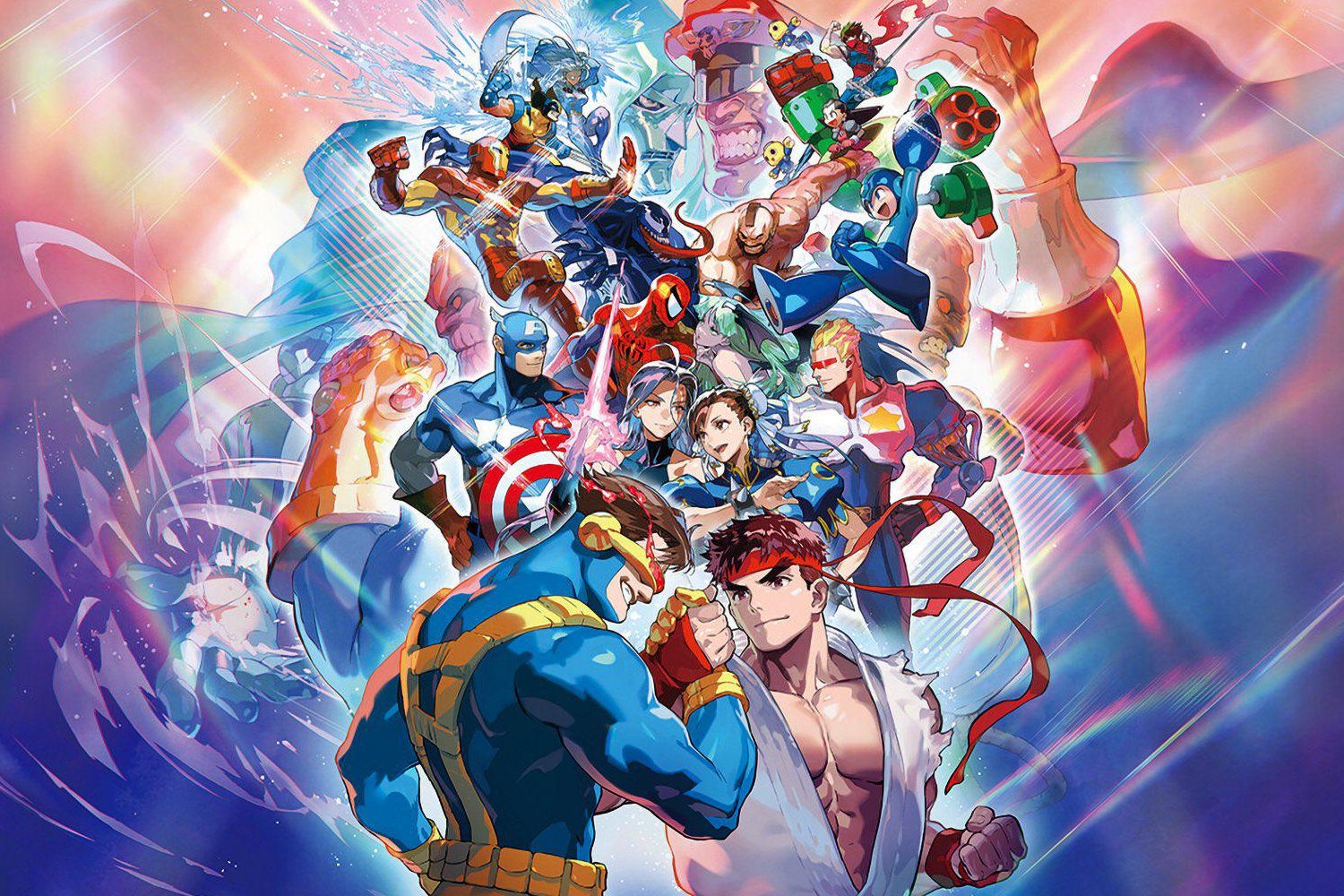
Marvel vs. Capcom is Training For a Potential Revival


Back in the day, the Marvel vs. Capcom games used to be all the rage, and a significant feather in the cap of the two franchises. Thre hasn’t been a new entry since Marvel vs. Capcom Infinite back in 2017, and that seemed to be the end of the fighting series’ story. But with a remastered collection of the earlier games due relatively soon, it may help herald a larger return for the legendary franchise.

Talking to Dexerto, Capcom producer Shuhei Mastumoto acknowledged the studio has “big dreams,” which includes reviving dormant fighting franchises like Marvel vs. and leading development on another crossover game with SNK. But it all depends on audience reponse to these remaster bundles. “We love these games. We hope that you do too,” he said, “In the future, if people get to familiarize themselves with these series, then there may be future opportunities to make bigger games.” While not promising anything, he stressed that Capcom and Marvel both want to bring back MvC, but they want to reintroduce the series first.

“What we can do now is at least reintroduce these past legacy games to a new audience, to people who may not have the opportunity to play it,” he explained. “We can show you that hey, these series exist. […] There’s a lot we’re looking forward to and big dreams, and now it’s a matter of timing and seeing what we can do one step at a time.” The collection features Marvel vs. Capcom: Clash of Super Heroes, Marvel Super Heroes, and Marvel vs. Capcom 2, and came to life thanks to the vibrant fighting game community and Ultimate Marvel vs. Capcom 3 specifically. Matsumoto had wanted a re-release for “years and years,” and now felt like the right time for it.

A Marvel vs. Capcom comeback almost feels like a sure thing: fighting game fans appear to be aware of how significant this collection is, both for the series and the larger FGC community. Not to mention, Capcom as a developer has had a really good streak of releases the past few years between key series like Resident Evil, Monster Hunter, and Street Fighter. (Even last year’s remasters of old Mega Man games were solid performers.) On Marvel’s side of things, no doubt it wants a big multiplayer game to tout as a success alongside its hot streak of successful (and expanding) single-player titles. And if the remasters do fail? Well, there’s always a potential guest spot (or four) in Street Fighter 6.

The Marvel vs. Capcom Fighting Collection hits Nintendo Switch, PlayStation 4, and PC later this year.

Want more io9 news? Check out when to expect the latest Marvel, Star Wars, and Star Trek releases, what’s next for the DC Universe on film and TV, and everything you need to know about the future of Doctor Who.