Nintendo is fighting the attention war, not the console war


As successful as the Nintendo Switch 2’s launch has been (and it has been very successful), it came with plenty of impatience. Its compact day one game lineup, led by Mario Kart World and Nintendo Switch 2 Welcome Tour, left some potential buyers a bit underwhelmed. It was a notable step down from the PlayStation 5’s packed 2020 launch lineup, which brought us Astro’s Playroom, Spider-Man: Miles Morales, Demon’s Souls, and Sackboy: A Big Adventure all at once. For the Switch 2, was one tentpole first-party game really enough to make a pricey system worth buying?

Not even two months later, the narrative is already shifting. Donkey Kong Bananza followed Mario Kart World’s opening jab with a strong right hook on July 17. The Game of the Year contender has reignited buzz around Nintendo, quickly wrenching the spotlight back from Death Stranding 2: On The Beach just as it felt like the Switch 2’s new console shine had faded. Did Nintendo narrowly avoid a strategic misfire? Should it have released both games on June 5? No, we’re just seeing a long-building strategy that was sharpened in the Switch era pay off. Nintendo is running its own monthly book club, and it’s working — for now.

Look at the Nintendo Switch’s release calendar from 2021 onward and you’ll start to notice a trend. Over the past few years, Nintendo has gotten closer and closer to releasing one first-party game each month. Sure, 2024 may have looked like a slow year for the publisher, but in reality, it dropped exactly 12 games, each carefully spaced a month apart (the only month not covered was April, as Endless Ocean: Luminous just missed the mark on May 2). Like clockwork, there was a new Nintendo game to play every few weeks, a feat made possible thanks to a few remakes and remasters filling in the gaps:

  • January 19: Another Code: Recollection
  • February 16: Mario vs. Donkey Kong
  • March 22: Princess Peach Showtime!
  • May 2: Endless Ocean: Luminous
  • May 23: Paper Mario: The Thousand-Year Door
  • June 27: Luigi’s Mansion 2 HD
  • July 18: Nintendo World Championships: NES Edition
  • August 29: Emio – The Smiling Man: Famicom Detective Club
  • September 26: The Legend of Zelda: Echoes of Wisdom
  • October 17: Super Mario Party Jamboree
  • November 7: Mario & Luigi: Brothership
  • December 5: Fitness Boxing 3: Your Personal Trainer
Princess Zelda stands before a wide landscape diorama with Hyrule Castle in the distance in The Legend of Zelda: Echoes of Wisdom

Image: Nintendo

I made a point to play nearly all of those games last year, even December’s Fitness Boxing 3: Your Personal Trainer. It felt like I was in a book club. One new watercooler conversation starter was delivered to my console each month on a tight schedule. As soon as I finished The Legend of Zelda: Echoes of Wisdom, Super Mario Party Jamboree was waiting for me. Then I was on to Mario & Luigi: Brothership. The quality of those games varied wildly, but I began to see each as an assignment. Skipping one meant missing out on the monthly discussion with diehard Switch owners. The social element was as important as the actual games.

That strategy is now in full swing in the Nintendo Switch 2’s early days, and it’s set to continue. June’s game of the month was Mario Kart World and July’s was Donkey Kong Bananza, both of which did their part in sparking conversation. The August stage is clear for Drag X Drive (but Kirby and the Forgotten Land’s Star-Crossed World will likely steal the microphone). While September is a mystery, Pokémon Legends: Z-A has October locked down. And with release dates for Metroid Prime 4: Beyond, Hyrule Warriors: Age of Imprisonment, and Kirby Air Riders yet to be revealed — all of which currently have broad 2025 or “winter” release windows — it’s very likely that the Switch 2 will have a first-party moment each month this year.

Will all of those games be hits? No, but they’ll keep us talking.

It’s the kind of reaction that media publishers dream of. Even since going all-in on original content, Netflix has fought to deliver a stream of “appointment viewing” moments — good and bad — from Birdbox to Squid Game. It has created its fair share of them in that time, but the glut of content often makes it hard to know what’s worth watching. Disney+ hit the same snag when making an overly aggressive push into Marvel and Star Wars TV series that became a chore to keep up with. (Marvel Studios boss Kevin Feige admitted as much during a recent press junket, according to The Hollywood Reporter.) The balancing act comes in remaining relevant with a consistent flow of new releases without leaving audiences with an always-expanding queue that’s impossible to chop down.

A pink Donkey Kong sits with Pauline on his shoulder in Donkey Kong Bananza.

Image: Nintendo EPD/Nintendo via Polygon

Nintendo’s “one at a time” approach is appealing because it’s manageable at a time when gaming is at its most overwhelming; it may not win the console war, or even partake that much in it, but it’s winning the attention war. Early adopters had enough time to not just play Mario Kart World, but digest it too. I spent June really digging into its free-roam mode and online Knockout Tour races, leading to more substantial conversations with friends about what worked and what didn’t. I had my fill of that by the time July 17 rolled around and I was ready to start that process with Donkey Kong Bananza. There was no pressure to rush through one to get to the other, but there would have been if I had a backlog to work through from my first day with a new console.

Though the Switch 2’s launch month had some itching for more right out the gate, the intent of that reserved rollout is already revealing itself thanks to a careful 1-2 punch. The momentum is unlikely to hold forever; there are bound to be holes if games like Drag X Drive end up landing as duds. But Nintendo’s first-party release cadence gives each new game room to breathe where so many others immediately launch into a cultural memory hole. Stop begging for the next game and join the book club. We meet on Wednesdays and we have a lot of thoughts about gorillas.

Xbox Game Pass ‘damaging’ the game industry, former Xbox dev says


Microsoft’s Game Pass subscription is likely the best deal around: For a fraction of the price of a full game, you get access to hundreds of titles every month, some of which are brand new. But when video games cost millions to make, and news of studio layoffs are constant, you don’t need to look at an Xbox balance sheet to know the numbers aren’t adding up for a service where the introductory price is a mere dollar. This dissonance is at the heart of a recent discussion on social media site X, where Raphael Colantonio, founder of Arkane Studios, has spent the last few days breaking down why the service is arguably doing more harm than good.

“I think Gamepass is an unsustainable model that has been increasingly damaging the industry for a decade, subsidized by MS’s ‘infinite money,’ but at some point reality has to hit,” Colantonio said in a reply to a post from a follower. “I don’t think GP can co-exist with other models, they’ll either kill everyone else, or give up.”

According to a Bloomberg report in 2024, Microsoft spends a billion dollars a year to get third-party games on its subscription service. That’s in addition to the billions the console-maker has spent acquiring marquee studios like Bethesda Softworks and Activision Blizzard.

For contrast, the most recent numbers for users set the tally at 35 million Game Pass subscriptions, some of which include the people who are only paying a dollar or otherwise bought the subscription through one of its periodic sales. The service went up in price a year ago, which means that up until somewhat recently, Game Pass was making even less money than it’s making now. At first blush, these numbers seem promising inasmuch as they suggest that the service is growing. In 2022, Game Pass had a reported 25 million subscribers. But it’s worth noting that in 2023, Microsoft shifted all existing Xbox Live Gold subscribers to a lower tier of Game Pass subscriptions. This would suggest that Game Pass has actually lost subscribers over the last few years, which coincides with an admission from Phil Spencer in 2022 that subscriptions are slowing down on console.

Though it may appear nonsensical, this approach is a tried and true model in the world of tech. Services like Uber, for example, spend years operating at a loss until they capture the entire market. Once the competition is obliterated, the product in question can move freely in ways that might hurt the consumer. Prices can go up, the service could get worse, and so on — but at that point, users already rely on the service and there are no other viable options. Similarly, while other companies have attempted their own versions of subscription models, none of them have managed to amass the userbase Game Pass has thus far. What appears to be a good deal now may, in fact, be a ticking time bomb.

Add in the fact that people are spending way less on games in 2025 than last year, and that Microsoft has undergone multiple rounds of layoffs that have shuttered entire studios and fired thousands of workers in the last year alone, and it starts to paint an ugly picture for an industry that’s already in crisis. It’s a worrying trend that might illuminate why publishers are greenlighting fewer games and taking fewer risks: A game can sell millions, and the studio still might be shut down. The mere existence of Game Pass cuts into those numbers, which could then motivate some studios to take deals with the service just to be safe. That’s guaranteed money and visibility over the murky uncertainty of releasing a game into the void.

Colantonio’s post has unsurprisingly lit a fuse on social media, where developers and gamers alike are chiming in. Some creatives in the industry agree with Colantonio’s assessment. “The infinite money thing never made any sense,” responded Larian Studios director of publishing Michael Douse.

But for the people on the other side of the equation — gamers — the Game Pass critique has gone down poorly. Some of the replies to Colantonio’s post have gotten ugly, but rather than presenting an actual argument, the exchange has devolved into potshots. Some point out that Colantonio has worked on titles that are available on Game Pass. It certainly doesn’t help that text-based social media strips away tone and makes it easy to dehumanize the person on the other side of the exchange.

Still, Colantonio has spent time trying to reason with people who are misreading his post as an attack on people who subscribe to the service. “I understand gamers like it: it’s a great deal, but the maths don’t work for GP, it only works because MS injects billions into it to make it a good deal for the players… for now,” he wrote in one thread.

“I understand, you can look at it just from your standpoint, but when a deal is too good, there is a reason that might reveal itself later and will hurt everyone including you,” he wrote in another. “At the moment you have access to a fair amount of good games for a fraction of the actual cost.”

Phil Spencer stands in front of the Xbox logo for the pre-recorded Xbox Games Showcase in 2024.

Image: Xbox

Part of what complicates this conversation is the knowledge that for all of its shortcomings, Game Pass has been a boon to some studios that might have otherwise had trouble finding funding or garnering an audience. Becoming available on the service puts you in front of millions of eyeballs, and guarantees mention on articles that detail what’s new and noteworthy on the service. Other times, being on Game Pass gives titles another shot at finding an audience. Games like Sea of Thieves and No Man’s Sky saw an influx of players after hitting Game Pass, for example, despite already being available beforehand and largely offering the same experience once there. I know that I’m more likely to give an indie game a try if it hits Game Pass.

Despite the trolls, there are definitely people who understand Colantonio is saying. But when games are starting to cost $79.99, the price of accessories is going up, and with no shortage of microtransactions to consider, it’s no wonder people feel so strongly about the value of Game Pass.

“I’m sure it isn’t good for devs but if my wage isn’t going up but my rent is and so are gas prices and groceries then I’ll look for the best deal,” one user said. “And if it stops being a good deal then I’ll find an alternative.” Colantonio’s response? The underlined 100 emoji.

Thunderbolts*’ depression story has one painful flaw


The latest Marvel Cinematic Universe movie, Thunderbolts*, is baldly and emphatically about dealing with depression. It opens with state-assassin-turned-mercenary-assassin Yelena​​ Belova (Florence Pugh) in voiceover, musing about the “emptiness” that characterizes her life, how she can’t enjoy or connect to things the way she used to. The story repeatedly touches on different ways people self-medicate to survive the loss of hope, from alcohol and drugs to a variety of forms of emotional suppression. The action climax has the heroes physically battling a powerful, destructive manifestation of one character’s bottomless despair and self-hatred.​​ Trust a superhero movie to find a way to let someone punch depression in the face — a cathartic act for those of us who’ve gone through these particular mental health struggles, though not a practical solution outside of a fantasy setting.

Even in the middle of a long wave of horror movies that turn anxiety and PTSD into literal monsters, though, it’s strange to see Marvel turning mental health crisis management into a punch-’em-up, in a movie that’s as much cinematic therapy (and exploration of complex PTSD, exposure therapy, and cognitive behavioral therapy) as it is action-adventure story. And it’s even odder to get to the end of the film and see what’s missing. The Thunderbolts* writers, with director Jake Schreier, get some things right about this kind of mental illness. But having navigated depression myself, I squirmed at parts of the messaging, particularly at the movie’s climax. As much as the filmmakers want to leave viewers with positive, even actionable messages about mental health, parts of those messages land oddly for those of us who’ve been there.

[Ed. note: Major spoilers ahead for Thunderbolts*, including end spoilers.]

Bucky Barnes (Sebastian Stan) sits on a motorcycle, cool sunglasses and leather jacket on, in Thunderbolts*

Image: Chuck Zlotnick/Marvel Studios

For much of the movie, Yelena is the face of depression in the movie’s central metaphor. A lot of her arc throughout this film involves her analyzing and fighting her own hopelessness and weariness, then trying to connect with other people when she recognizes the same emotions in them. At times, she blows up at anyone trying to connect with her in return. One of the movie’s most purposefully painful scenes features her railing at her dad figure Red Guardian (David Harbour) about how guilt, grief, and isolation have taken over her life, and eventually turning on all the other heroes she’s been tentatively connecting with, doing everything she can to tear them down emotionally as well.

But the movie’s real conflict involves Bob (Lewis Pullman), an experimental test subject who Yelena and three other mercenaries — John Walker from The Falcon and the Winter Soldier, Ghost from Ant Man and The Wasp, and the ill-fated Taskmaster from Black Widow — meet in a bunker where they’ve all been set up to die. As the merc team tries to figure out how to escape the bunker alive, Bob says he has no value to them, and it would be better for everyone if he just remained locked up down below. Yelena immediately recognizes this as a self-destructive impulse akin to her own, and tries to counsel and comfort Bob, and help him see his own worth. In the process, she’s talking herself through her own depression as much as she’s trying to help him fight his.

Later, though, Bob gets a bigger jolt of self esteem from the movie’s villain, Valentina Allegra de Fontaine (Julia Louis-Dreyfus), who tries to set him up as Sentry, a hero completely under her control. That plan falls apart, unleashing the Void, a powerful force that drags everything around it into shadow. It’s about as literal a depiction of depression as you’re likely to see on screen — especially since the whole time the Void is blanketing Manhattan in darkness and blasting its inhabitants into dark smudges, it’s whispering bleak messages about the futility of struggle, the pointlessness of everything, and especially how laughable he considers Bob’s fleeting attempts at self worth.

The Void (Lewis Pullman) in Thunderbolts*, an all-black outline of a man, one arm raised with his fingers splayed

Image: Marvel Studios

Anyone who’s fought depression — clinical and ongoing, short-term and conditional, or anything in between — will recognize some of the Void’s toxic messaging, and will see it as a metaphor for that inner voice that whispers, You’ve messed everything up or Your friends don’t really care about you or You have no value or just Give up, there’s no point in trying. It’s easy to sympathize with Bob’s frustration with that voice, and his desire to pound it into submission. Thunderbolts*’ smartest insight is that his rage and frustration aren’t much use in fighting the Void: They give him the nerve and impetus to resist it, but they aren’t a solution on their own. The usual dynamics of superhero films aside,​​ violence isn’t the answer here.

Instead, the answer turns out to be a group hero-hug, a verbal reminder that Bob isn’t alone, and an admission that sometimes, the best we can hope for is company in misery. That can be a powerful idea: One of the worst parts of chronic depression is the feeling of being exiled, distanced from everyone else, locked into a poisonous little world where your thoughts run in circles, and every self-defeating impulse and thought feeds the next one. The group hug breaks the cycle for Bob, and lets him see outside the hallucinatory world he’s built for himself — a place where he both relives and hides from his most traumatizing memories. The Thunderbolts/New Avengers team hauls him back into the real world, where he can start healing.

That’s a solid metaphor, and an effective cinematic way of externalizing a largely internal conflict. (It works similarly well in Laika’s ParaNorman, another movie where a hero has to dive into a villain’s fantasy headspace, navigate their trauma, and break their cycle of misery with a simple “I understand your suffering and you aren’t alone.”) But it misses one big issue with depression, the aspect of the movie that most made me shrink in my seat in the theater: the sense of shame that comes with needing this kind of help, and with putting this much weight and demand on other people.

Yelena Belova (Florence Pugh) and Bob (Lewis Pullman) stand together in the dark, with her holding up a flashlight, in Thunderbolts*

Image: Chuck Zlotnick/Marvel Studios

There’s a comforting fantasy in the idea that even though everyone in Thunderbolts* is navigating major traumas of their own, they’re all capable of temporarily setting their personal issues aside to focus on comforting and supporting Bob. Granted, they don’t have much choice, given that he’s encompassing the world in nightmarish darkness. Still, the film frames that group hug as an act of caring and empathy, not desperation or grudging heroic obligation. His easy ability to absorb that comfort when it comes, though, to take on Yelena’s message of companionship as a real fix for his loneliness, and to do it without embarrassment — to me, that felt harder to believe than MCU multiverses or magic, and almost toxic itself in its lack of weight or complexity.

I’ve been through this kind of crisis myself, facing my own mental health struggles or trying to help friends navigate theirs. And shame is often a major factor, both as an ongoing part of the larger weight of depression and, in moments like these, where long-simmering melancholy reaches a boiling point. It’s hard to accept help. It’s hard to admit to problems. The societal view of depression holds that everyone should be strong, independent, and self-contained, and that it should be embarrassing to demand other people’s time, attention, or love.

More personally, when everyone around you is in crisis, it feels selfish to demand special attention or to compound the demands other people are facing. It makes sense that the Thunderbolts* filmmakers didn’t want to send Bob down a shame spiral when he returns to the real world, complicating the movie’s feel-good beat with a second breakdown. But their solution is to make him cheerfully oblivious about the trials he’s put the rest of the world through. That lack of self-awareness becomes even more awkward and unpleasant when his condition is played for comedy.

Hannah John-Kamen as Ghost, Lewis Pullman as Bob, Florence Pugh as Yelena, and Wyatt Russell as John Walker in Thunderbolts* leaning around a corner while in their superhero costumes

Photo: Chuck Zlotnick/Marvel Studios

By the end of the climactic battle in Thunderbolts*, the Void has been temporarily vanquished, and Bob is back in the real world as a mostly normal human. But he has no memory of anything he just went through, or any of the havoc his friends suffered because of him. Standing in the wreckage of the Manhattan block he destroyed minutes earlier, almost killing dozens of people with falling wreckage before almost obliterating millions with his powers, he’s blithely unaware of the trouble he’s caused. His memory lapse is treated like a gag, but it’s a horrific story beat. He hasn’t learned anything from his experiences. He isn’t capable of gratitude for what his friends just went through to help him. And he isn’t capable of returning their care, or offering support in return.

Some aspects of the final Bob confrontation felt entirely authentic to me — the specific undermining whispers the Void has for him, say, or Bob’s confused veering between anger and despair. There’s certainly wisdom in the admission that while no one can fill the gaping hole inside someone else, we can at least share our experiences, commiserate with other people, and work around that feeling of being alone.

Even so, I was shocked how uncomfortable I felt with the idea of him making his problem into everyone else’s problem, forcing all the other characters to drop everything to take care of him. The problem isn’t just that he needs help, because we all need help from time to time. It’s the way his need eclipses everyone else’s — and then the way that once his needs are met, he’s breezily happy and disengaged from the struggles all his friends are facing. It’s a bizarrely lighthearted transition away from the film’s heavier look at depression. And it’s certainly a harsh way to portray caretaking, as a crucial yet hilariously thankless and kind of unfulfilling job.

The obvious implication here is that Bob might return to being the Void at some point, and that in the meantime, the other members of his team will have to navigate their own crises without any meaningful input from him. They’re learning how to form a community and support each other, but he’s set up as an endless drag on their empathy and energy and resources, with nothing to contribute and no sense of self-awareness about it. For someone who’s had to ask others for help, this version of Bob is humiliating all on its own — a portrayal of depression as a kind of bottomless, oblivious selfishness.

The Thunderbolts stand together in a group, all looking various forms of alarmed and concerned, except Bob, who looks blank

Image: Chuck Zlotnick/Marvel Studios

For me, that image is more frightening than the Void itself. Possibly the only good things that come from navigating a mental health crisis are the ability to recognize the symptoms and navigate them more effectively the next time whenever they surface again, and the ability to see the signs in other people and connect with them. Maybe Bob’s value to the group is in serving as an example, training the team to trust each other more, showing them how to selflessly respond to and support each other through their various crises. Maybe it’s fine that he’s the guy who showed up at the potluck with an opened package of napkins, while everyone else spent hours whipping up homemade food, because it’s not his fault he doesn’t know how to feed himself, and there’s still enough food to go around.

Certainly I appreciate that Bob is able to hear and accept the message that he isn’t alone. In the real world, that kind of connection can be difficult to internalize, and difficult to believe or accept as help in the midst of a depressive episode. And I appreciate that the Thunderbolts* writers (original writer Eric Pearson and a rewrite team including Beef writer Lee Sung Jin and The Bear’s showrunner/co-creator Joanna Calo) have the sense to not portray the big hug-it-out moment as a permanent, magical fix to Bob’s problems: At best, it’s an interruption in the pattern, and a suggestion of a path forward for his friends, who are all facing their own mental health battles. It’s a sensible reminder that every depression episode is its own unique challenge, and sometimes just surviving the moment is enough.

But leaving Bob as a permanent broken stair in his friend group, the amiable, adorkable, hapless dude who just might explode at any moment, feels like a horror. Bob isn’t completely oblivious by the end of the movie — presumably his friends have filled him in on what they went through with him. He isn’t fixed, and he knows it. But he’s doing the work: reading a self-help book (Rick Rubin’s The Creative Act: A Way of Being), avoiding behavior he knows triggers his depression, expressing his needs to other people. (Not shown: therapy, medication, or learned therapeutic techniques like CBT.) He’s stable, for the moment, and he’s consciously practicing self-care. Certainly that’s more of a kindness than leaving him wallowing in shame and guilt over everything the Void nearly did.

Still, in a movie that’s so much about positive messaging — whispered counterarguments to the Void, parallel messages that say, You aren’t alone in this, other people have been here too and Your friends really do care about you, you just need to let them in — I don’t know what Bob’s shameless, comfortable complacency at the end really gets us, except a sense that it’s kind of funny to be needy, damaged, and destructive. Some of this response, I recognize, is my own Void still whispering back at me, identifying with the villainous parts of Bob instead of the human ones.

But I’ll stand by this as long as I’m fighting my own mental health fight: I’d rather be part of the team, fighting through my own embarrassment and pain to try to hug people and help them, than to be Bob, causing problems I don’t even see, and then walking away smiling afterward. I’ve known a lot of people fighting this kind of inner war, and I’ve fought it myself, for most of my life. None of us are as complacent about it as Bob, or as willing to let other people do all the work on our behalf. And it feels a wee bit cavalier to put him through this titanic battle — to go through the thoughtful work of humanizing mental health struggles and portraying them as a heroic battle against evil — and then robbing Bob of the chance to really process anything he’s experienced, or take a meaningful role in his own recovery.
The 2024 Game Awards’ biggest Game of the Year snubs and surprises


The Game Awards aren’t known for much in the way of shock and surprise, and so it proved with the 2024 nominees — a fairly well-rounded list in which most of the year’s best-reviewed and best-loved games got some love.

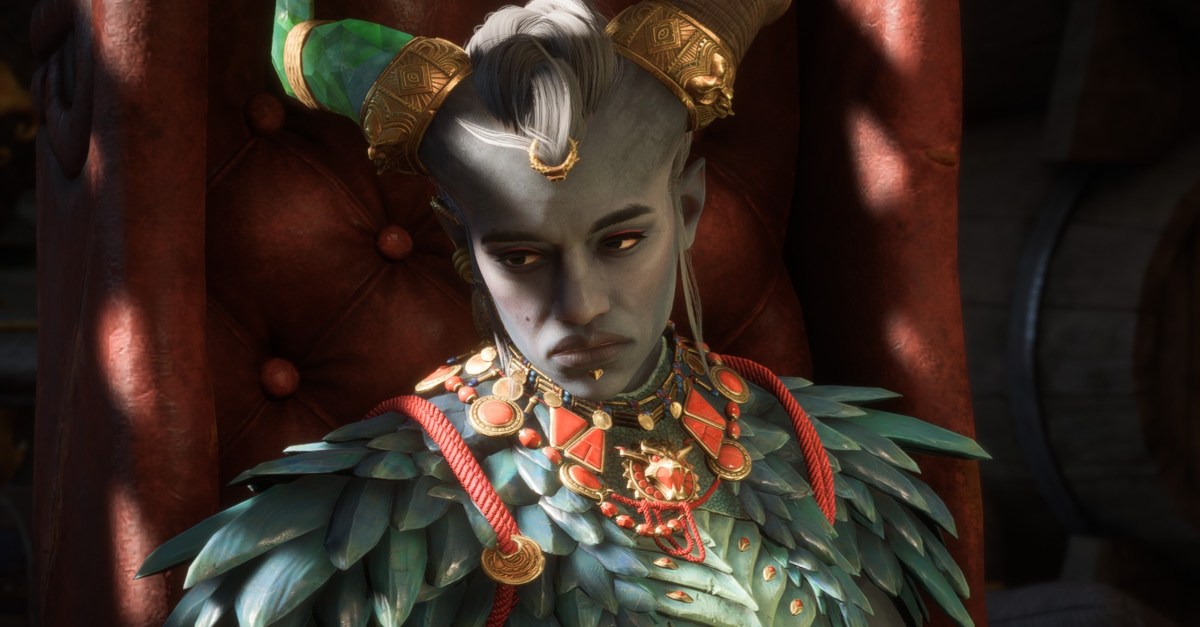
The Game Awards’ voting jury snubbed BioWare’s latest game in a series of key categories where it would have been expected to compete. It secured just one nomination, for Innovation in Accessibility, which is decided by a specialist jury.

Granted, the reception to The Veilguard has been mixed — and with its Metacritic rating settling at 82, a nomination for Game of the Year seemed beyond its reach (even though that is one point higher than Black Myth: Wukong, which did make the cut).

More tellingly, though, The Veilguard did not score nominations for Best Narrative or Best Performance, two areas where BioWare games tend to excel, and which are less review-dependent. It also missed out in Best Role-Playing Game. This was an exceptionally strong category this year: Three of the five nominees (Metaphor: ReFantazio, Final Fantasy 7 Rebirth, and Elden Ring: Shadow of the Erdtree) also secured nominations for Game of the Year, and the other two (Dragon’s Dogma 2 and Like a Dragon: Infinite Wealth) are unconventionally excellent. Even so, failing to join this company is surely not the result that BioWare or publisher EA wanted after a decade of development.

Were there any other snubs? Perhaps a few minor ones. It was a surprise not to see the much-loved EA Sports College Football 25 score a nomination in the Sports/Racing Game category, although this might be down to the broad international makeup of the jury. The Sim/Strategy Game category is missing two games with passionate fan bases and high review scores — Satisfactory and Tactical Breach Wizards — either of which might have taken the slot of the Age of Mythology remake, for example. But this was a strong category this year. Personally, I would have loved to see The Legend of Zelda: Echoes of Wisdom nominated for its fabulous music.

As ever, the intensely competitive indie categories cannot please everyone. But with 15 games nominated across Independent Game, Debut Indie Game, and Games for Impact, you have to dig down to some pretty deep cuts like Arco or 1000xResist before you find something to get upset about.

Other surprises? I don’t think anybody saw four nominations coming for Senua’s Saga: Hellblade 2, a game that has all but disappeared from the discourse since its release in May. Four nominations — including Game of the Year — for DLC, in the form of Shadow of the Erdtree, is without precedent. Black Myth: Wukong breaking through in Game of the Year despite its comparatively weak critical reputation is definitely noteworthy, as are the five nominations for one-man-band card game Balatro.

In the end, though, there’s not much in this set of nominees to ruffle any feathers — outside of BioWare’s offices, that is.