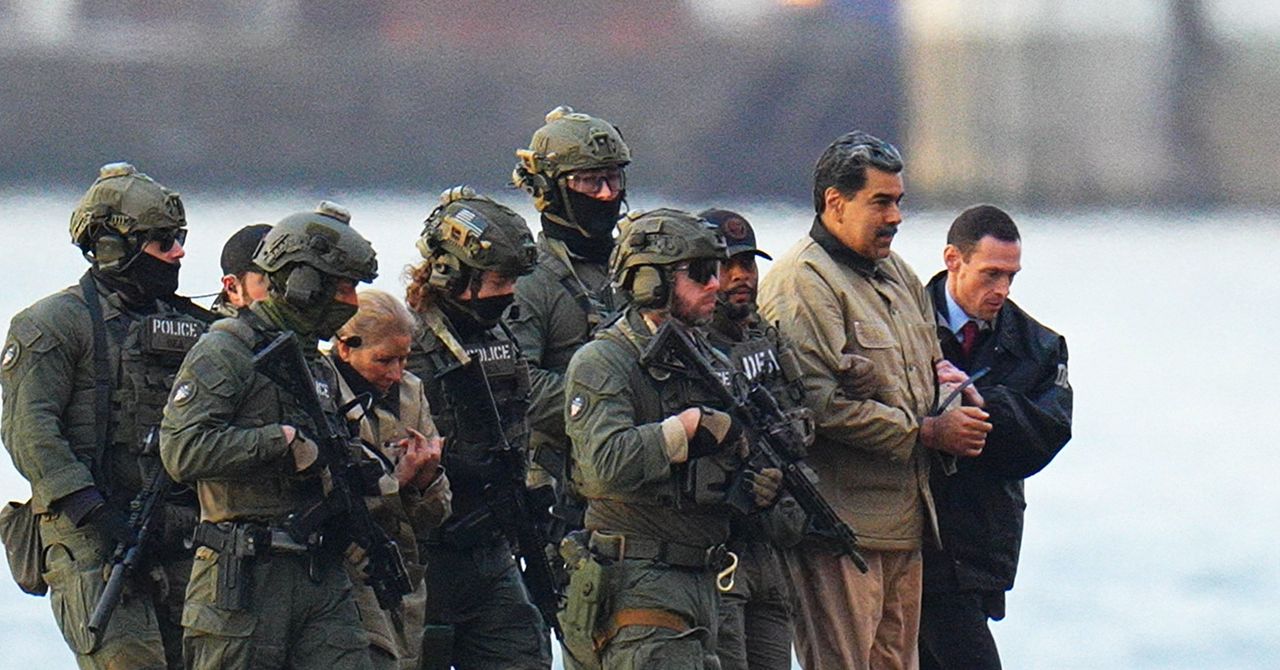
US Special Forces Soldier Arrested for Polymarket Bets on Maduro Raid


The Department of Justice announced Thursday that it arrested Gannon Ken Van Dyke, an enlisted member of the US Army’s special forces, for allegedly using “classified, nonpublic” information about the capture of Venezuelan president Nicolás Maduro to notch more than $400,000 in profits on Polymarket trades. A grand jury indicted him on five counts, including multiple violations of the Commodity Exchange Act.

Van Dyke is the first person to be charged with insider trading on a prediction market in the United States. Lawmakers have been voicing concerns for months about the high likelihood that politicians and public servants could use nonpublic information to profit from trades on leading industry platforms like Polymarket and Kalshi, which have exploded in popularity over the past year.

The arrest comes just weeks after Department of Justice prosecutors met with Polymarket about potential insider tradition violations. In February, Israeli authorities arrested two citizens, an army reservist and a civilian, for allegedly leaking classified information by making wagers on Polymarket related to military operations. Kalshi, Polymarket’s primary rival in the United States, recently fined three politicians for breaking its insider trading rules, but it did not flag the violations for further enforcement to the Commodity Futures Trading Commission (CFTC), the federal agency that oversees prediction markets.

After Van Dyke’s arrest was made public, Polymarket posted a statement to social media noting that it had “identified a user trading on classified government information” and “referred the matter to the DOJ & cooperated with their investigation.” The company declined to comment further.

According to court documents, Van Dyke has been an active duty US soldier since September 2008 and rose to the level of master sergeant in 2023. At the time of the alleged trading activity, he was stationed at Fort Bragg in Fayetteville, North Carolina, and assigned to the Army’s Special Operations Command Western Hemisphere Operations.

“I have been crystal clear that anyone who engages in fraud, manipulation, or insider trading in any of our markets will face the full force of the law,” CFTC chair Michael Selig said in a statement. “The defendant was entrusted with confidential information about US operations and yet took action that endangered US national security and put the lives of American service members in harm’s way.”

The complaint alleges that Van Dyke was involved in the planning and execution of Maduro’s arrest and that he was aware that he wasn’t authorized to share nonpublic information about US military operations. The complaint says that Van Dyke signed a nondisclosure agreement that forbade him from revealing sensitive or classified government information “by writing, word, conduct, or otherwise.” The complaint also alleges Van Dyke saved a screenshot to his Google account “displaying the results of an artificial intelligence query” outlining how the US Special Forces maintains many classified files including “operational details that are not available to the public.”

On December 26, Van Dyke allegedly opened an account on Polymarket and took out around $35,000 from his bank account before transferring it to a cryptocurrency exchange.

The following day, Van Dyke allegedly made his first Venezuela-related trade on Polymarket, putting a little less than $100 on a “YES” contract that US forces would be in Venezuela by January 31, 2026. Prosecutors accuse him of ultimately making 13 Venezuela-related transactions on the platform, seven of those—totaling hundreds of thousands of shares—on a “YES” contract for “Maduro out by … January 31, 2026.” In other words, Van Dyke allegedly stood to make an enormous profit if the Venezuelan leader wound up out of power by the end of the month.
Kalshi wins temporary pause in Arizona criminal case


Arizona Attorney General Kris Mayes’ case against prediction market Kalshi appears to have hit a snag.

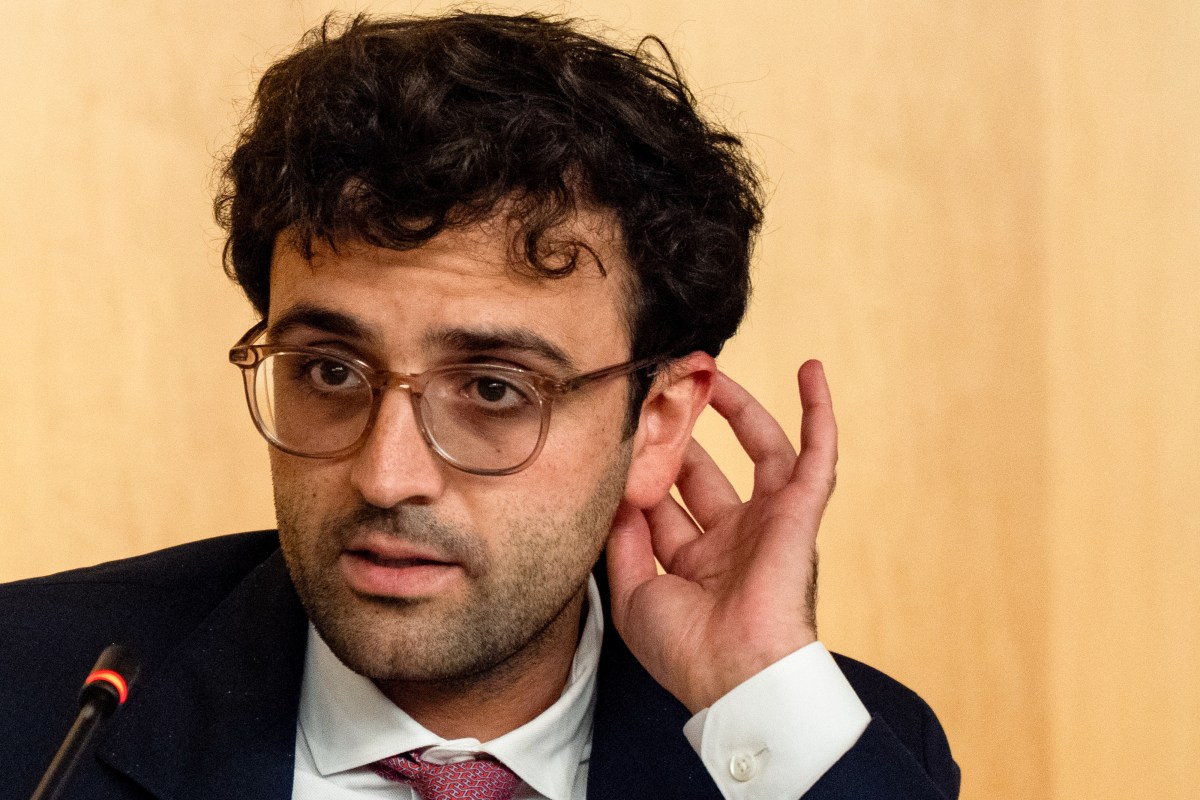
The Commodity Futures Trading Commission announced Friday that it has won a temporary restraining order preventing the state from pursuing its criminal case against Kalshi (whose CEO Tarek Mansour is pictured above).

“Arizona’s decision to weaponize state criminal law against companies that comply with federal law sets a dangerous precedent, and the court’s order today sends a clear message that intimidation is not an acceptable tactic to circumvent federal law,” said CFTC Chairman Michael S. Selig in a statement.

While the CFTC normally has five commissioners, Selig is currently the only one on the commission, following his confirmation in December and the departure of previous acting chairman Caroline Pham (who left to join crypto company MoonPay).

Arizona has filed charges against Kalshi accusing the company of operating an illegal gambling business in the state without a license. The announcement of the restraining order comes just a couple days after a federal judge allowed Arizona’s case to move forward, according to Bloomberg.

The CFTC also filed suits seeking to stop similar cases from moving forward in Connecticut and Illinois.

Kalshi’s legal troubles pile up, as Arizona files first ever criminal charges over ‘illegal gambling business’


Arizona attorney general Kris Mayes has filed criminal charges against prediction market platform Kalshi for allegedly operating an illegal gambling business in the state without a license and for election wagering.

The 20-count complaint, filed in Maricopa County court on Tuesday, accuses the company of engaging in unlicensed gambling activities, claiming that the site “accepted bets from Arizona residents on a wide range of events,” including state elections, a practice that is illegal in Arizona. The complaint charged Kalshi with four counts of election wagering for accepting bets from Arizona residents on the 2028 presidential race, the 2026 Arizona gubernatorial race, the 2026 Arizona Republican gubernatorial primary, and the 2026 Arizona secretary of state race.

This is the first time a state has pursued such charges against the company, according to the AZ Mirror, and marks a significant escalation in the battle between states and the prediction market industry.

“Kalshi may brand itself as a ‘prediction market,’ but what it’s actually doing is running an illegal gambling operation and taking bets on Arizona elections, both of which violate Arizona law,” Attorney General Mayes said in a statement. “No company gets to decide for itself which laws to follow.”

It’s worth noting that the charges are technically misdemeanors. They follow a small surge of cease-and-desist letters, lawsuits, and other official actions from states over Kalshi’s activities, in which numerous officials have complained that the company is skirting state gambling laws.

Conversely, prediction sites like Kalshi have argued that they are not in violation of state law because they are subject to federal regulation via the Commodity Futures Trading Commission.

Kalshi may be getting attacked left, right, and center, but the company has also taken its own, often preemptive, legal action.

Techcrunch event

San Francisco, CA
|
October 13-15, 2026

Kalshi sued Arizona’s Department of Gaming in federal court on March 12. The company’s lawsuit argued that Arizona’s regulatory attempts were intruding “into the federal government’s exclusive authority to regulate derivatives trading on exchanges.” Kalshi also recently sued Iowa and Utah on similar grounds.

Mayes’ office argues the company is merely trying to avoid accountability.

“Kalshi is making a habit of suing states rather than following their laws. In the last three weeks alone, the company has filed lawsuits against Iowa and Utah, and now Arizona,” Mayes said in a statement. “Rather than work within the legal frameworks that states like Arizona have established, Kalshi is running to federal court to try to avoid accountability.”

Elisabeth Diana, Kalshi’s head of communications, called the Arizona criminal charges “seriously flawed” and a matter of “gamesmanship” related to the company’s own litigation against the state.

“Four days after Kalshi filed suit in federal court, these charges were filed to circumvent federal court and short-circuit the normal judicial process,” Diana said. “They attempt to prevent federal courts from evaluating the case based on the merits — whether Kalshi is subject to exclusive federal jurisdiction. These charges are meritless, and we look forward to fighting them in court.”

Federal officials have signaled that they’re on the prediction industry’s side, setting up a potential regulatory showdown between states and the federal bureaucracy. Michael Selig, chair of the Commodity Futures Trading Commission, recently published an op-ed in the Wall Street Journal in which he accused state governments of having “waged legal attacks on the CFTC’s authority to regulate” such sites. Selig also claimed that his agency would no longer “sit idly by while overzealous state governments” undermined the agency’s “exclusive jurisdiction” over the industry.