US Special Forces Soldier Arrested for Polymarket Bets on Maduro Raid


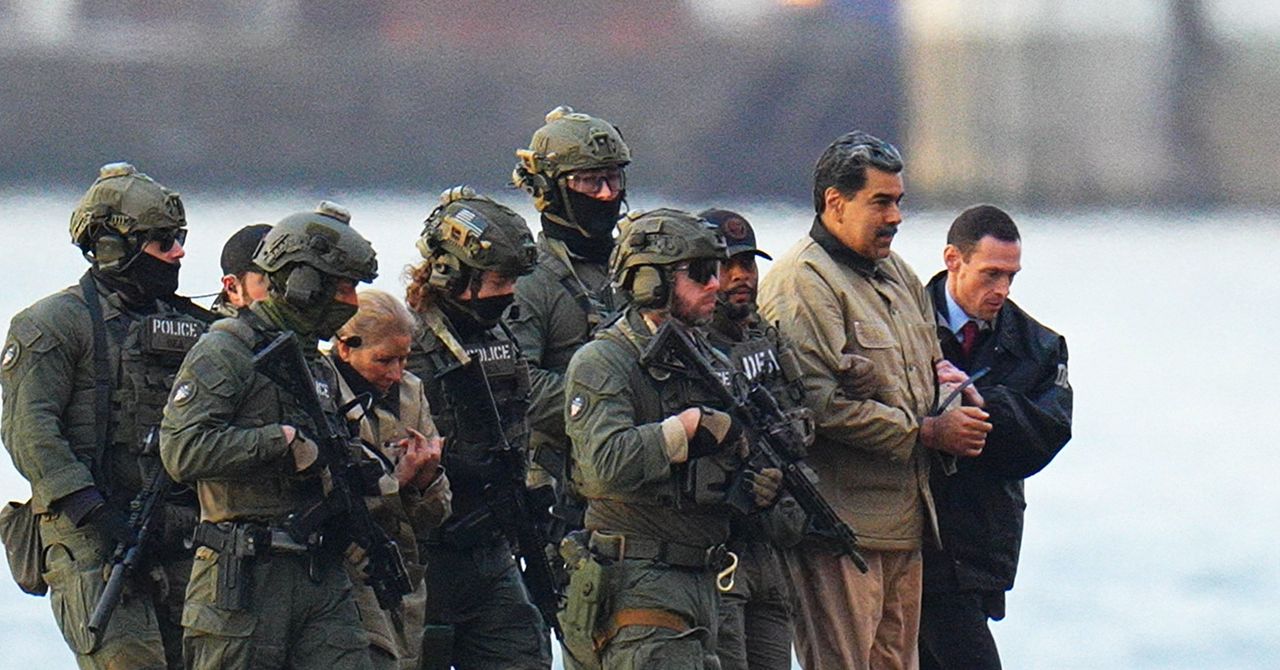
The Department of Justice announced Thursday that it arrested Gannon Ken Van Dyke, an enlisted member of the US Army’s special forces, for allegedly using “classified, nonpublic” information about the capture of Venezuelan president Nicolás Maduro to notch more than $400,000 in profits on Polymarket trades. A grand jury indicted him on five counts, including multiple violations of the Commodity Exchange Act.

Van Dyke is the first person to be charged with insider trading on a prediction market in the United States. Lawmakers have been voicing concerns for months about the high likelihood that politicians and public servants could use nonpublic information to profit from trades on leading industry platforms like Polymarket and Kalshi, which have exploded in popularity over the past year.

The arrest comes just weeks after Department of Justice prosecutors met with Polymarket about potential insider tradition violations. In February, Israeli authorities arrested two citizens, an army reservist and a civilian, for allegedly leaking classified information by making wagers on Polymarket related to military operations. Kalshi, Polymarket’s primary rival in the United States, recently fined three politicians for breaking its insider trading rules, but it did not flag the violations for further enforcement to the Commodity Futures Trading Commission (CFTC), the federal agency that oversees prediction markets.

After Van Dyke’s arrest was made public, Polymarket posted a statement to social media noting that it had “identified a user trading on classified government information” and “referred the matter to the DOJ & cooperated with their investigation.” The company declined to comment further.

According to court documents, Van Dyke has been an active duty US soldier since September 2008 and rose to the level of master sergeant in 2023. At the time of the alleged trading activity, he was stationed at Fort Bragg in Fayetteville, North Carolina, and assigned to the Army’s Special Operations Command Western Hemisphere Operations.

“I have been crystal clear that anyone who engages in fraud, manipulation, or insider trading in any of our markets will face the full force of the law,” CFTC chair Michael Selig said in a statement. “The defendant was entrusted with confidential information about US operations and yet took action that endangered US national security and put the lives of American service members in harm’s way.”

The complaint alleges that Van Dyke was involved in the planning and execution of Maduro’s arrest and that he was aware that he wasn’t authorized to share nonpublic information about US military operations. The complaint says that Van Dyke signed a nondisclosure agreement that forbade him from revealing sensitive or classified government information “by writing, word, conduct, or otherwise.” The complaint also alleges Van Dyke saved a screenshot to his Google account “displaying the results of an artificial intelligence query” outlining how the US Special Forces maintains many classified files including “operational details that are not available to the public.”

On December 26, Van Dyke allegedly opened an account on Polymarket and took out around $35,000 from his bank account before transferring it to a cryptocurrency exchange.

The following day, Van Dyke allegedly made his first Venezuela-related trade on Polymarket, putting a little less than $100 on a “YES” contract that US forces would be in Venezuela by January 31, 2026. Prosecutors accuse him of ultimately making 13 Venezuela-related transactions on the platform, seven of those—totaling hundreds of thousands of shares—on a “YES” contract for “Maduro out by … January 31, 2026.” In other words, Van Dyke allegedly stood to make an enormous profit if the Venezuelan leader wound up out of power by the end of the month.

Elon Musk’s X Appears to Be Violating US Sanctions by Selling Premium Accounts to Iranian Leaders


In recent weeks, Elon Musk has followed president Donald Trump’s lead, slamming Iranian government officials and supporting the thousands of protesters railing against the regime. He even provided free access to his Starlink satellites in the midst of a nationwide internet blackout.

But while publicly proclaiming his support of the protesters, Musk’s company X appears to be profiting from the very same government officials he railed against, potentially violating US sanctions in the process, according to a new report from the Tech Transparency Project (TTP) shared exclusively with WIRED.

TTP identified more than two dozen X accounts allegedly run by Iranian government officials, state agencies, and state-run news outlets which display a blue checkmark, indicating they have access to X’s premium service. These accounts were sharing state-sponsored propaganda at a time when ordinary Iranians had no access to the internet, and their messages appeared to be artificially boosted to increase reach and engagement, which is a key aspect of X’s premium service. An X Premium subscription, which is the only way to receive a blue checkmark, costs $8 a month, while a Premium+ subscription, which removes ads and boosts reach even further, costs $40 a month.

At a time when the Trump administration is threatening Iran with possible military action if it does not meet demands related to nuclear enrichment and ballistic missiles, X appears to be undermining those efforts by providing a social media bullhorn for the Iranian government to spread its message.

“The fact that Elon Musk is not just platforming these individuals, but taking their money to boost their content through these premium subscriptions and give them extra features also means he’s undermining the sanctions that the US and the Trump administration are actually applying,” Katie Paul, the director of the TTP, tells WIRED.

X did not respond to a request for comment, but within hours of WIRED flagging several X accounts belonging to Iranian officials, their blue checkmarks were removed. The rest of the accounts identified by TTP but not shared with X continue to display a blue checkmark.

The White House directed WIRED to the Treasury when asked for comment. A Treasury spokesperson said they do not comment on specific allegations but “we take allegations of sanctionable conduct extremely seriously.”

At the end of last year, protests broke out in the Iranian capital of Tehran on December 28 over the continuing devaluation of the Iranian rial against the dollar and a widespread economic crisis in the country. Over the following days, tens of thousands of protesters poured onto the streets in cities across the country, calling for regime change and the end of Supreme Leader Ayatollah Ali Khamenei’s 37-year reign.

In response, the regime brutally cracked down on protesters, arresting tens of thousands of people and killing thousands more. The true death toll is still unknown but could be much higher than currently reported.

Trump signaled his support for the protesters in a post on Truth Social on January 2, promising to come to their rescue. “We are locked and loaded and ready to go,” he wrote. Musk quickly followed Trump, calling Khamenei “delusional.”

On January 5, Gholamhossein Mohseni-Ejei, the head of Iran’s judiciary, who had a blue checkmark at the time, wrote in a post on X, “This time, we will show no mercy to the rioters.” Ejei was among the accounts whose blue checkmarks were removed on Wednesday after WIRED contacted the company.

A few days later, X changed the Iranian flag emoji on the platform to one used before the 1979 revolution, featuring a lion and sun. On January 14, Musk announced that anyone with a Starlink device would be free to access the internet in Iran without a subscription. At the time, Starlink devices were the only viable way of getting online after the government imposed a near total internet blackout.

ICE Agent’s ‘Dragging’ Case May Help Expose Evidence in Renee Good Shooting


Defense attorneys for a Minnesota man convicted in December of assaulting Immigration and Customs Enforcement officer Jonathan Ross are seeking access to investigative files related to the killing of Renee Nicole Good, after learning Ross was the same officer who shot and killed her during a targeted operation in Minneapolis last month.

Attorneys for Roberto Carlos Muñoz-Guatemala asked a federal judge on Friday to order prosecutors to turn over training records as well as investigative files related to Ross, the ICE agent who killed Good on January 7 during Operation Metro Surge and was also injured in a June 2025 incident in which Muñoz-Guatemala dragged him with his car.

A separate post-trial motion by the defense, filed in the US District Court in Minnesota, asks the judge to pause deadlines for a new-trial motion until the discovery motion is resolved.

Muñoz-Guatemala’s attorneys argue that even if the court ultimately decides that any newly discovered evidence doesn’t entitle their client to a new trial, he’s entitled to explore whether there are mitigating factors that could impact the length of his sentence, such as whether Ross’ injuries could have been, to some degree, brought upon him by his own behavior.

A jury convicted Muñoz-Guatemala on December 10 of assault on a federal officer with a dangerous weapon and causing bodily injury.

Court filings say that Ross and other agents were attempting to interview Muñoz-Guatemala last summer, and possibly process him for deportation, because he had an administrative warrant out for being in the country without authorization. They surrounded his Nissan Altima and attempted to remove him from the vehicle. Ross then used a tool to shatter the rear driver’s-side window before reaching inside. When the defendant accelerated away, Ross testified, he was dragged approximately 100 yards, during which time he repeatedly deployed a taser. Muñoz-Guatemala subsequently called 911 to report he’d been the victim of an assault.

During his trial, Muñoz-Guatemala said he didn’t understand that Ross—who according to his own testimony was wearing ranger green and gray and wore his badge on his belt—was a federal agent. (Ross testified that Muñoz-Guatemala had asked to speak to an attorney, which would suggest he knew Ross was acting as law enforcement, but an FBI agent who witnessed the incident said he didn’t hear this. According to court records, this claim did not come up in pretrial interviews, and prosecutors said they had not heard it before he made the claim in court.) Muñoz-Guatemala’s attorneys say now that had he been tried after Good’s killing, his defense may have also asserted that he was justified in resisting Ross, who they claim was the aggressor and used excessive force.

The argument is that the jury instructions essentially contained a two-part decision tree: Jurors could convict Muñoz-Guatemala if they believed he should have known Ross was law enforcement. They could also convict him if they believed driving away was not a reasonable response.

Muñoz-Guatemala’s conviction does not indicate which of these prongs the jury relied on. If it was the latter, the defense argues in the motion, the court should have access to evidence that may have bearing on Ross’ conduct, tactics, and whether he behaved aggressively—information that might indicate whether the agent has a history behaving recklessly in the field or contrary to his training.

Prosecutors have not yet filed a response to the motions. An email to an address associated with Ross in publicly available records did not result in an immediate response. The Department of Justice did not immediately respond to a request for comment. The Department of Homeland Security did not immediately respond to questions about Ross’ current duty status or the status of any departmental review.

Ross has been placed on administrative leave following the January 7 shooting of Good, a 37-year-old Minnesota poet and mother of three, a step DHS officials say is standard protocol after fatal use of force. Ross has not been charged in Good’s killing, and the Justice Department has said it will not pursue criminal charges.

RFK Jr. Says He’s Ending the War on Protein. It Doesn’t Exist


In a somewhat baffling directive, US Health Secretary RFK Jr. claims he’s “ending the war on protein.”

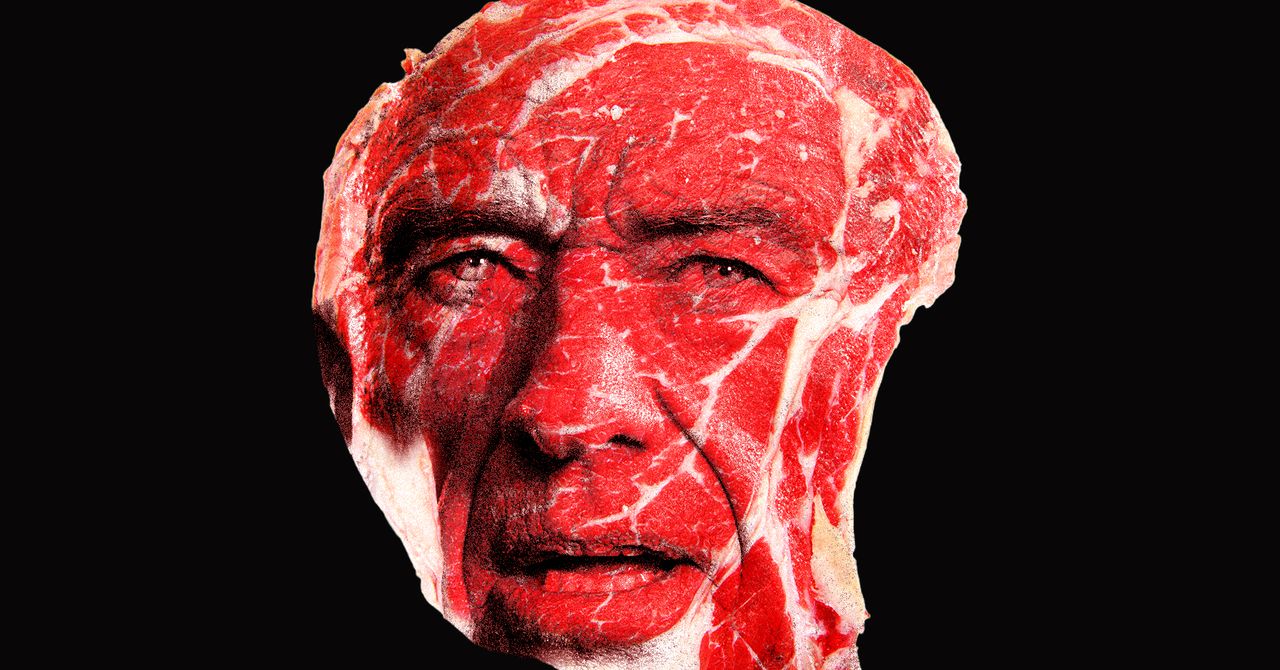
The announcement, posted to White House’s X account on January 11 alongside an ominously lit photo of Kennedy, came as part of the federal government’s 2025-2030 Dietary Guidelines, which now prioritize protein “at every meal.” Some of the advice—particularly the avoidance of ultra-processed foods and added sugars—has been well received by dietary experts and health organizations like the American Heart Association. But other aspects of it represent shake-ups that defy scientific consensus. For example, the recommendation of consuming saturated fats found in full-fat milk, butter, and beef tallow contradicts previous nutritional guidance, which generally advised limiting saturated fats.

But one of the biggest takeaways from the new food guide—which will influence everything from SNAP to school lunches—is that Americans should be consuming more protein, ideally from animals.

“Today the lies stop,” Kennedy, leader of MAGA’s brawnier and crunchier offshoot, the “Make America Healthy Again” movement, said in an announcement about the new guidance on January 7. “ Protein and healthy fats are essential and were wrongly discouraged in prior dietary guidelines.”

The thing is, there is no war on protein. If ever there was one, it was lost long ago. Americans have quite literally never been as obsessed with protein as they are today, with consumption levels in the United States reaching record highs, even as protein deficiency is nearly nonexistent.

Still, Kennedy’s screed makes sense in the context of a MAGA movement that has made body image, fitness, and masculinity central tenets.

“They’re trying to tie it into the war on masculinity, the war on warrior culture. All of this stuff is connected,” said Colin Davis, a personal trainer and political commentator who has been critical of MAGA’s encroachment into the fitness space.

In August, Kennedy and Defense Secretary Pete Hegseth posted videos online of themselves doing push-ups and pull-ups as part of what they called the “Pete and Bobby Fitness Challenge.” Hegseth also convened an unprecedented meeting of US generals in Quantico, Virginia, in September to accost them over the military’s fitness and grooming standards. “It’s completely unacceptable to see fat generals and admirals in the halls of the Pentagon,” Hegseth said to the hundreds of generals in attendance.

President Trump himself has connected his movement to fitness through his friendship with UFC CEO Dana White, orchestrating a number of campaign appearances at UFC events in 2024. These de facto rallies put the then-presidential candidate in close proximity to young, physically fit men who would sometimes launch into post-fight rants supporting him; Trump would go on to flip the young male vote by a nearly 30-point margin in his favor during the 2024 election. In June, the White House is hosting a UFC cage fight as part of America’s 250th anniversary celebrations, Trump has said.

Some experts say Kennedy’s reworking of the dietary guidelines is a continuation of that project, in particular the emphasis on animal proteins, projecting a form of idealized masculinity by playing into long-held and well-researched cultural perceptions around food and gender.

“ There’s a long-standing association of men with meat, fire, cooking outdoors,” said Charlotte Biltekoff, professor of food, wine and culture at the University of California, Davis. “And women with lighter food, dieting for weight loss, vegetables, fruits and salads.”

All of this serves to put the president and his broader political movement into the proximity of a kind of aspirational masculinity that is high agency, strong, physically attractive, and neatly situated within traditional gender roles.

San Francisco Mayor Daniel Lurie: ‘We Are a City on the Rise’


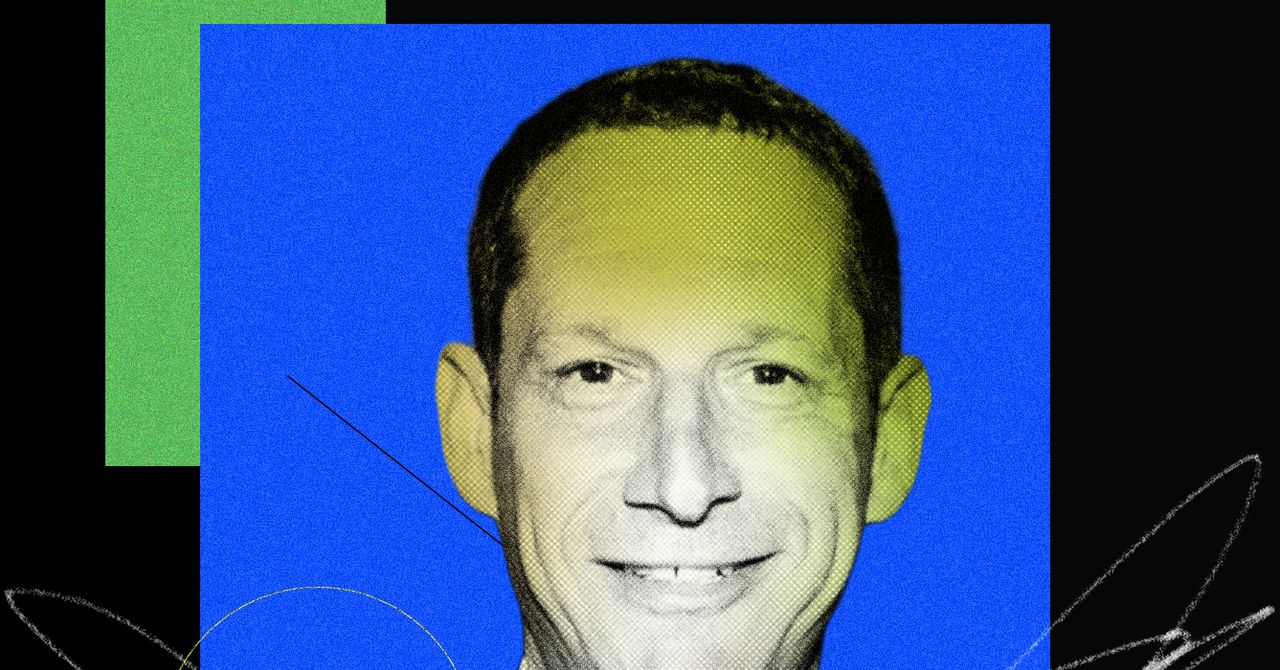
I first met Daniel Lurie, San Francisco’s newly minted mayor, about five minutes before we walked onstage at WIRED’s Big Interview event, held in his city last week.

Lurie’s team let me know ahead of time that his window for this conversation was tight: He’d just come from announcing a new city police chief, and had about half an hour for me before he needed to be on to the next thing. Which was? “No idea,” Lurie quipped, shortly before we were foisted from backstage and into our conversation in front of several hundred attendees—a local crowd, who, judging from their boisterous reactions to Lurie’s every word, are among the 73 percent of San Franciscans who approve of the job he’s done since taking office in January of this year.

To Lurie’s credit, the story of San Francisco right now is largely a positive one. The city is indisputably the global hub of AI innovation and the billions of dollars that accompany it, with companies like Anthropic and OpenAI, along with smaller startups, investors, and plenty of young, AI-focused technologists all calling San Francisco home. Yes, that means rents are up and housing stock remains precariously low. But office vacancy rates are dropping, retail outlets are coming back to the city’s downtown, and as Lurie’s office is quick to tout, several key metrics measuring municipal crime—including homicides and car break-ins—are at historic lows.

I wanted to talk to Lurie about all of that, but I was also curious about the bigger picture: his administration’s dynamic with the federal government, particularly in the context of President Trump’s October plan to send the National Guard into San Francisco—an endeavor that Lurie managed to thwart, according to The New York Times, by recruiting a powerful coterie of technology executives to work the phones in his favor.

Lurie wasn’t exactly forthcoming there, in keeping with his diligent efforts to focus conversations on San Francisco, and perhaps avoid attracting the attention, or the ire, of the current administration. It’s a different tack than other Democrats governing progressive parts of the country have taken, from New York City mayor-elect Zohran Mamdani to California governor Gavin Newsom. But if the response in the room last week was any indication, Lurie’s local fans don’t seem to mind his “say less” strategy—at least for now.

This interview has been edited for length and clarity.

KATIE DRUMMOND: Oh, wow. Some fans in the audience. Someone has a 70-something percent approval rating. Wow, god.

DANIEL LURIE: How are my socks? Oh, they’re black. I usually have more fun socks on.

Hasan Piker Will Never Run for Office


Are you gonna collaborate?

Yeah.

All right. What’s your favorite sandwich?

That’s a tough one because I love all of them. I would say a New Jersey sub from this institution called Sorrento’s around Freehold. A Number 14, which is a combination, I believe, of like Number 7 and Number 12. [Eds. note: Sorrento’s menu says the Number 14 is a combo of a Number 5 and a Number 12 called the Pig Special.] So an Italian sub from a real New Jersey institution, and if not that, then a Wawa Club sandwich.

I really appreciate how specific that was. Thank you. First video game you ever bought?

I pirated a lot because I was in Turkey growing up, so it was virtually impossible for us to get like a lot of video games. As far as purchase, it could be Metal Gear Solid 2 for the PlayStation 2, or I guess a Pokémon game.

So let’s rewind 34 years. You were born in New Jersey. You spent the majority of your childhood in Turkey.

Yeah.

You’ve talked before about that upbringing. You’ve characterized it as a very privileged one. How did that experience, now that you’re able to look back and reflect, affect your worldview? How does that turn you into the person that you are today?

There’s massive income inequality in Turkey that almost resembles America now, but that’s still far worse in Turkey. For that reason, if you’re above board, if you’re relatively affluent, you come across as very wealthy in comparison to the average person.

I’ve never sheltered people from that truth, but I did grow up fairly affluent. It was very positive in the sense that I didn’t have to worry about making ends meet or having to take on a job or anything like that. My parents’ main concern was to make sure that I wasn’t spoiled, so I didn’t get everything I wanted.

Outside of that, I would say that as a young boy I was sent to public school in Turkey. I think it was a good thing that my parents did that because it made me understand that there were very different income brackets with people living in very different conditions.

You moved to the United States for college, right? What was surprising to you about that transition?

When I came to college, this is literally what I wanted. Other people were like, “I want to be an astronaut,” “I want to be a teacher,” “I want to be a race car driver.” I was like, “I want to go to college in America.”

So I loved it. I was so stoked to be here, and I had all of these beliefs. You know, this is a land of freedom, land of prosperity, right?

Right.

This is where I’m gonna make a name for myself, make a career for myself.

Slowly but surely, experiences growing up or going to college and then onwards living in America, slowly chipped away at that dream. Piece by piece.

Yeah.

It’s interesting because in comparison to other fresh-off-the-boat immigrant stories, I did it. I am living the American dream, but I just realized that it’s not something that is readily accessible for all.

The Mysterious Shortwave Radio Station Stoking US-Russia Nuclear Fears


Since early this year, RIA-Novosti has published roughly one story per week on UVB-76, suggesting its coded messages are related to missile strikes on Iran, the war in Ukraine, and negotiations with Trump.

RT, which had once pooh-poohed the idea that UVB-76 was part of Moscow’s nuclear deterrence, began regularly posting its broadcasts on X, writing in April that the station often broadcasts “coded alerts pre-major events”—particularly around phone calls between Trump and Putin—and suggesting that it operates as a “nuke failsafe.”

Chatter about the station grew on Telegram, the messaging app popular in Russia. Channels claimed that UVB-76 grew active “during periods of escalation” of military activity and that it served as a kind of oracle, sending its coded messages “before global events.” Some of these channels, some with millions of subscribers, are themselves close to the Russian Ministry of Defense.

“In the time of tension between Russia and the West,” Goldmanis says, “such articles are ideal for mounting tension and fear.” There is some irony in the fact that Russians seem to be spooking themselves with tales of their own military communications network, but he argues that it speaks to a deeper fear in Russia: “Fear of losing the war, fear of the state collapse, fear of Western nuclear action, fear of their own government and military.”

All of this domestic shadowboxing, in turn, drove international headlines. The British tabloid The Sun proclaimed that Russia’s “doomsday radio station” had transmitted its “cryptic ‘nuke’ code.” Belgium’s Het Laatste Nieuws reported that the radio messages had caused “heightened alertness among military analysts worldwide.” Politika, a Serbian daily newspaper, penned a lengthy article that claimed that UVB-76 “put fear in the hearts of NATO generals and the Pentagon,” which have been powerless to crack its code. (That article was republished in Russian by RT’s foreign translation service.)

Amid this new attention, Moscow’s communications regulator Roskomnadzor—responsible for monitoring, regulating, and censoring all mass media, including both shortwave radio and the internet—commented on UVB-76 for the first time. A spokesperson for the agency didn’t say much, telling RT that information about the frequency and its purpose “is not publicly available.”

As public interest increased, UVB-76 kept churning out messages. On May 23, an operator read out the code “БЕЗЗЛОБИЕ,” roughly translated to “the absence of malice,” and “ХРЮКОСТЯГ,” or “oink,” followed by a series of numbers. This message, in particular, caught the attention of Dmitry Medvedev.

Medvedev has served as both president and prime minister of Russia and now serves on the hawkish Security Council of Russia as deputy chairman. Analysts at the Institute for the Study of War say Medvedev is frequently deployed by the Kremlin to “inflammatory rhetoric, often including nuclear blackmail, into the information space to spread fear among Western decision-makers and discourage future military aid to Ukraine.”

“Doomsday Radio: May’s ‘lack of malice’ has been replaced by a fierce ‘oink,’” Medvedev wrote on his Telegram channel. Invoking a wave of Ukrainian drone attacks that had roiled Moscow, Medvedev levied thematic insults against the Ukrainians and their backers in Europe: “Pigs,” “hogs,” and “boars.” He ended the post: “Password: ‘БЕЗЗЛОБИЕ.’ Answer: ‘ХРЮКОСТЯГ,’” the two UVB-76 codewords.

“Spasms of the Dead Hand”

Coincidental or intentional, Russia’s new fascination with UVB-76 comes just as it attempts to ratchet up fear of nuclear armageddon. To do that, Moscow is turning to that bit of Cold War lore: The Dead Hand.

Throughout the Cold War, there was a pervasive idea that the Soviets had built some kind of doomsday device. Popularized by films like Fail Safe and Dr. Strangelove, the idea went that Moscow had developed the ability to launch its ballistic missiles, even if all the Communist Party leadership were dead. Such a response could effectively end life on Earth.

It’s the Economy, Donald | WIRED


If economic trends continue, tariffs—which amount, despite the president’s insistence otherwise, to taxes on US companies and ultimately on US consumers—coupled with rising unemployment could be a ticking time bomb.

“If this experiment fails, it’s gonna fail horribly, and I think we’ll begin to see the impacts of that sooner than later,” says a second Trumpworld strategist.

Not Rocket Science

There’s plenty of cope going around in the GOP and the Trump White House.

“I think we’ve shown that the inflation bit has been resolved,” a White House official tells me. “When the private sector is willing to work with us, and is understanding and appreciative of our mandate to reshore manufacturing, we have shown time and time again we are willing to meet with them halfway.”

Could there be more concern about the jobs numbers, particularly given a decline in the labor participation rate and revisions bringing job growth from the hundreds of thousands this spring to the tens of thousands?

“No,” a Republican member of Congress close to the president tells me in a text message when asked if they’re worried about the labor market. “Not at all. Revenue from tariffs have been good. Plus big tax cuts just passed. More to come with potential massive trade deal on 15th.” (August 15th was the day Trump met with Russian president Vladimir Putin in Alaska; no such trade deal materialized.)

Economists I talked to, though, aren’t buying it.

“All signs look pretty pessimistic on the inflation front,” James Angel, a finance professor at Georgetown University, tells me in an email. “You don’t have to be a rocket scientist to figure out that tariffs will increase the prices we pay for imported goods. No amount of spin will change that.”

Justin Wolfers, an economist at the University of Michigan, says the labor market is looking grim even before the tariffs have fully kicked in. There’s “no question job growth has slowed,” he says.

Wolfers adds that one of Trumpworld’s biggest justifications for the tariffs not being a big deal for American consumers simply doesn’t hold up. As the first Trumpworld strategist pointed out, some companies—most notably American automakers like General Motors—have shown in their earnings reports that they’re willing to eat the cost of the tariffs at the expense of their own profits.

“That’s what you would normally expect to happen in the short run, because businesses don’t change their prices minute-by-minute every time the president opens his mouth,” Wolfers says. “Now that the tariffs are set, and they’re seeing margin compression, that’s the point at which you’d expect businesses to start to think about repricing.”

Wolfers says consumers should expect to feel more pain “in the second half of this year.”

Angel says that even a continuation of the status quo with perpetually delayed tariffs could still have devastating consequences.

“The economic chaos with on-again, off-again tariffs has caused business and consumer expectations to drop,” the Georgetown professor explains. “That in itself is likely to cause a recession.”

Citizen Cope

Trump’s vendetta against Federal Reserve chairman Jerome Powell doesn’t calm my sources’ jitters, as Trump has made clear that he would like Powell’s eventual replacement to cut interest rates, even if doing so conflicts with the Fed’s dual mandate of keeping prices stable and employment full.

It also doesn’t help, sources tell me, that Trump fired the head of the Bureau of Labor Statistics after the most recent job numbers showed significant revisions and a slowdown in hiring over the past several months. (EJ Antoni, Trump’s pick to lead the BLS, has little relevant experience beyond being the Heritage Foundation’s chief economist; as WIRED reported, a now-deleted Twitter account using his name showed a fixation on red-pilled conspiracy theories.)

The Middle East Has Entered the AI Group Chat


Donald Trump’s jaunt to the Middle East featured an entourage of billionaire tech bros, a fighter-jet escort, and business deals designed to reshape the global landscape of artificial intelligence.

On the final stop of the tour in Abu Dhabi, the US president announced that unnamed US companies would partner with the United Arab Emirates to create the largest AI datacenter cluster outside of America.

Trump said that the US companies will help G42, an Emirati company, build five gigawatts of AI computing capacity in the UAE.

Sheikh Tahnoon bin Zayed Al Nahyan, who leads the UAE’s Artificial Intelligence and Advanced Technology Council and is in charge of a $1.5 trillion fortune aimed at building AI capabilities, said the move will strengthen the UAE’s position “as a hub for cutting-edge research and sustainable development, delivering transformative benefits for humanity.”

A few days earlier, as Trump arrived in Riyadh, Saudi Arabia announced Humain, an AI investment firm owned by the kingdom’s Public Investment Fund. The Saudi firm launched with blockbuster deals already inked with Nvidia, AMD, Qualcomm, and AWS—US tech giants capable of building the infrastructure needed to train and power cutting-edge AI models.

Trump said in a speech in Riyadh that US and Saudi companies would do deals worth hundreds of billions of dollars, with a focus on infrastructure, tech, and defense.

The deals forged in the Middle East this week are meant to strengthen the global importance of American silicon and AI, but they will also help nations like Saudi Arabia play a more significant role in the global race to develop and distribute cutting-edge technology.

“It will help the Saudis and the UAE become bigger players in providing AI infrastructure,” says Paul Triolo, a partner at DGA-Albright Stonebridge Group, a geopolitical consulting group. “It’s a big deal to get access to these GPUs.”

Saudi Arabia’s deal with Nvidia, which dominates the market for AI training hardware, will amount to 500 megawatts of capacity and involve “several hundred thousand of Nvidia’s most advanced GPUs over the next five years,” the company said in a statement.

According to one estimate, this could translate to around 250,000 of Nvidia’s most advanced chips, which are four times better at training and 30 times better at inference (running models that have already been trained) than the next-best offering. This capacity could lead Saudi Arabia to create frontier AI models.

AWS and Humain said they would jointly invest $5 billion in infrastructure in Saudi Arabia. AWS said in March that it will build an AI infrastructure zone in the country, investing more than $5.3 billion. Humain and AMD said they would spend $10 billion on AI infrastructure in Saudi Arabia and the US over the next five years.

Saudi Arabia, the UAE, and other nations in the region have vast quantities of oil money, access to plenty of power, and a strong desire to shift toward more high-tech economies by building out cutting-edge tech infrastructure. The countries also, however, have significant business ties to China, which sells technology to the region, placing them at the nexus of a growing geopolitical rivalry over the future of AI.

Diffusion Rule

A few days before Trump’s visit to the Middle East, his administration reversed a major Biden-era ruling that would have limited the sale of cutting-edge chips globally. The directive created tiers of nations with different access to cutting edge chips, and sought to limit how many chips Saudi Arabia and the UAE could buy. Critics of the rule suggested it might push some countries to buy Chinese technology instead.

In a statement announcing the change, the US Bureau of Industry and Security said the Biden rule “would have stifled American innovation and saddled companies with burdensome new regulatory requirements” and “undermined U.S. diplomatic relations with dozens of countries by downgrading them to second-tier status.”

Apple Deadnamed the Gulf of America and Conservatives Are Triggered


Rep. Dan Crenshaw (R-TX) is upset that Apple Maps still calls the Gulf of America the Gulf of Mexico. So upset that he tagged Apple CEO Tim Cook on X and said he’d filed a complaint. “Hey @tim_cook, just noticed Apple Maps still calls it the Gulf of Mexico. Sent a report through the app, but thought you’d want to know!” said the former Navy Seal.

It seems that Crenshaw is upset, triggered if you will, that Big Tech isn’t changing as fast as he’d like it to. He’s so upset that he did a cringe post in the style of a suburbanite upset at Target. Crenshaw’s whining typifies a behavior I’ve seen in right-wing pundits and politicians in the last few years, the rise of a kind of post and style once attributed to the left in online spaces.

Crenshaw is posting cringe and doubling down on the culture war. They’re obsessed with identity politics, attempting to cancel their enemies, policing gender norms, and demanding that the culture bend to their whims despite the culture not being interested. This is all the stuff they’ve long accused the left of doing.

Less than 24 hours ago, as of this writing, Trump signed an executive order titled “Restoring Names that Honor American Greatness.” Along with a host of other changes, the order said that the U.S. would henceforth call the Gulf of Mexico the Gulf of America. Google and Apple haven’t updated the name.

These things take time. But just because Trump says the name is different doesn’t make it so. It’s a body of water that’s not exclusively used by the U.S. and Mexico, and the rest of the world will still call it the Gulf of Mexico. A lot of people who don’t live in the U.S. use Google and Apple Maps and it’s a good bet that the name won’t change for them.

Wikipedia also hasn’t changed the name on its entry for the Gulf. “Even if it was official, America does not get to own Wikipedia entries. [It] stays the Gulf of Mexico as the rest of the world calls it,” said an unnamed Wikipedia editor in the editing history of the page.

“This is a modern version of the Freedom fries jingoism, having nothing to do with geography and everything to do with politics,” another Wikipedia editor said, referring to a post-9/11 attempt by conservatives to rename french fries. “We have the same sort of thing as a perennial complaint with British Isles from a series of Irish editors. This nothing new or special, and can be documented on its own and with simple passing mention in the article if and when it becomes more than a sound bite at a news conference.”

But Conservatives like Crenshaw will publicly make the demand, posting cringe and embarrassing themselves. Ignoble in victory, they now exhibit the traits they’ve long accused their opponents of having.

The American right has control over the Supreme Court, the presidency, and the legislature. That kind of total political victory isn’t enough. They want you to like them too. They want you to laugh at their jokes, take their memes seriously, and call the Gulf of Mexico the Gulf of America.

The pinned post on Crenshaw’s X account is a “Conservative Guide to the Culture Wars” from 2021. The second item on the list is the claim that a “victor mentality is better than a victim mentality.”

Over the next four years, I suspect we’ll see a lot more cringe posts from Crenshaw and others as the victors twist themselves into victims when every little thing doesn’t go their way. Or when it doesn’t go their way quite as fast as they’d want.