Iran-Linked Hackers Are Sabotaging US Energy and Water Infrastructure


As US President Donald Trump threatens wholesale demolition of Iran’s infrastructure in the midst of an escalating war, Iran now appears to have already reciprocated with its own form of infrastructure sabotage: A hacking campaign hitting industrial control systems across the United States, including energy and water utilities, that US agencies say has had disruptive and costly effects.

In a joint advisory published Tuesday, a group of US agencies including the FBI, the National Security Agency, the Department of Energy, and the Cybersecurity and Infrastructure Security Agency warned that a group of hackers affiliated with the Iranian government has targeted industrial control devices used in a series of critical infrastructure targets including in the energy sector, water and wastewater utilities, and unspecified “government facilities.” According to the agencies, the hackers have targeted programmable logic controllers (PLCs)—a type of device designed to allow digital control of physical machinery—in those facilities, including those sold by industrial tech firm Rockwell Automation, with the apparent intention of sabotaging their systems.

By compromising those PLCs, the advisory warns, the hackers sought to change information on the displays of industrial control systems, which can in some scenarios cause system downtime, damage, or even dangerous conditions. “In a few cases, this activity has resulted in operational disruption and financial loss,” it reads.

When WIRED reached out to Rockwell Automation, a company spokesperson responded in a statement that it “takes seriously the security of its products and solutions and has been closely coordinating with government agencies in connection with” Tuesday’s advisory, and pointed to documents it has published for customers on how to better secure their PLCs.

Though the advisory doesn’t specify a particular group responsible for the hacking campaign, it notes that the attacks are similar to those carried out in by the Iran-linked group known as CyberAv3ngers, or the Shahid Kaveh Group, starting in late 2023. That team of hackers, believed to work in the service of the Iranian Revolutionary Guard Corps, inflicted several waves of attacks against Israeli and US targets in recent years, including gaining access to more than a hundred devices sold by industrial control system technology firm Unitronics and most commonly used in water and wastewater utilities.

This is a developing story, please check back for updates.
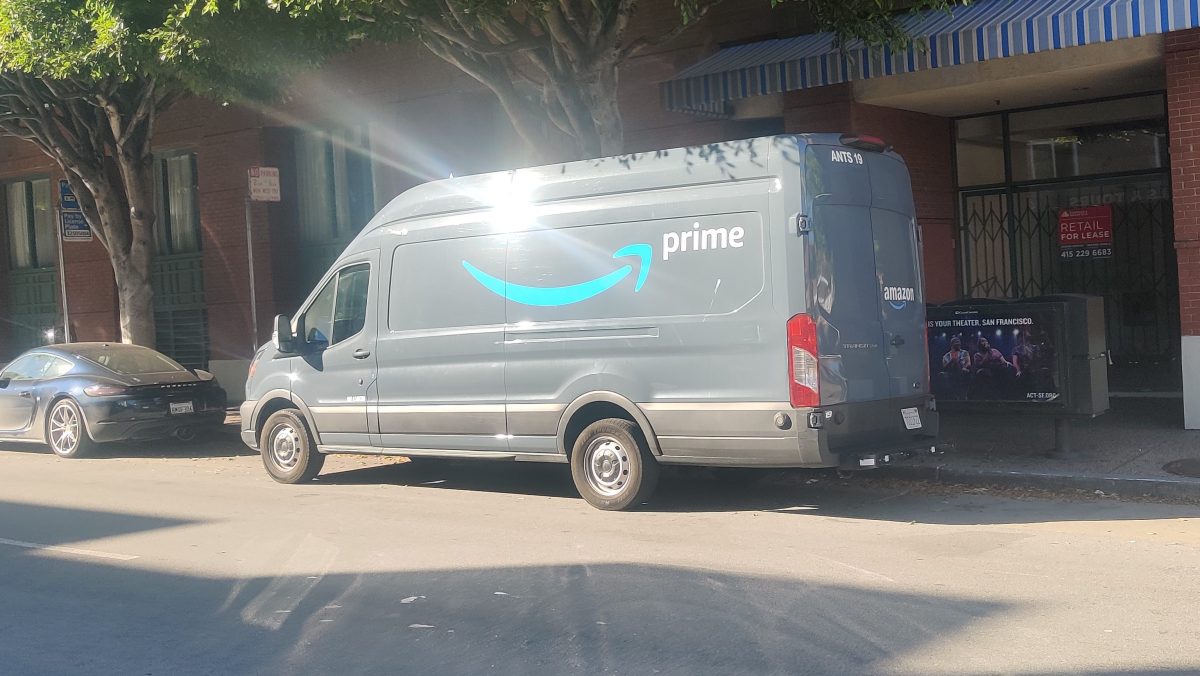
Amazon hits sellers with ‘fuel surcharge’ as Iran war roils global energy markets


The war in Iran has hammered global oil markets, with gas prices in the U.S. spiking significantly. Amid the rise in transportation costs, Amazon has instituted a new 3.5% fuel surcharge for sellers that use its distribution network. The policy has the potential to inflict significant new costs on the untold merchants that rely on the e-commerce giant to sell their products.

Amazon told TechCrunch that the surcharge would be in place for the foreseeable future, although the company said it will continue to evaluate a potential policy shift as market conditions evolve. The news was originally reported by Bloomberg.

“Elevated costs in fuel and logistics have increased the cost of operating across the industry,” a spokesperson said. “We have absorbed these increases so far, but similar to other major carriers, when costs remain elevated we implement temporary surcharges to partially recover these costs.” The spokesperson added that the surcharge was “meaningfully lower than surcharges applied by other major carriers.”

The new policy will take effect on April 17 and will impact sellers who use the company’s Fulfillment by Amazon service, Bloomberg writes. Fulfillment by Amazon, commonly known as FBA, allows companies to send their products to Amazon’s warehouses, where they are packed and shipped to buyers. Amazon doesn’t disclose how many merchants use FBA, but the program underpins the vast majority of third-party sales on its platform.

Amazon first instituted this type of surcharge in 2022 — which, not so coincidentally, was the last time crude oil traded over $100 a barrel. What was happening in 2022? Russia had just invaded Ukraine, sending energy markets haywire. Today, the war in Iran — spurred by the Trump administration and the Israeli government’s assassination of the nation’s Supreme Leader — has similarly rocked markets.

Iran is strategically located along the northern border of the Strait of Hormuz — a narrow but critical shipping lane for global oil supplies through which roughly 20% of the world’s oil supply passes — and the country has sought to block shipping lanes there, a move that has majorly impacted energy prices throughout the world.

Techcrunch event

San Francisco, CA
|
October 13-15, 2026

Elon Musk’s X Appears to Be Violating US Sanctions by Selling Premium Accounts to Iranian Leaders


In recent weeks, Elon Musk has followed president Donald Trump’s lead, slamming Iranian government officials and supporting the thousands of protesters railing against the regime. He even provided free access to his Starlink satellites in the midst of a nationwide internet blackout.

But while publicly proclaiming his support of the protesters, Musk’s company X appears to be profiting from the very same government officials he railed against, potentially violating US sanctions in the process, according to a new report from the Tech Transparency Project (TTP) shared exclusively with WIRED.

TTP identified more than two dozen X accounts allegedly run by Iranian government officials, state agencies, and state-run news outlets which display a blue checkmark, indicating they have access to X’s premium service. These accounts were sharing state-sponsored propaganda at a time when ordinary Iranians had no access to the internet, and their messages appeared to be artificially boosted to increase reach and engagement, which is a key aspect of X’s premium service. An X Premium subscription, which is the only way to receive a blue checkmark, costs $8 a month, while a Premium+ subscription, which removes ads and boosts reach even further, costs $40 a month.

At a time when the Trump administration is threatening Iran with possible military action if it does not meet demands related to nuclear enrichment and ballistic missiles, X appears to be undermining those efforts by providing a social media bullhorn for the Iranian government to spread its message.

“The fact that Elon Musk is not just platforming these individuals, but taking their money to boost their content through these premium subscriptions and give them extra features also means he’s undermining the sanctions that the US and the Trump administration are actually applying,” Katie Paul, the director of the TTP, tells WIRED.

X did not respond to a request for comment, but within hours of WIRED flagging several X accounts belonging to Iranian officials, their blue checkmarks were removed. The rest of the accounts identified by TTP but not shared with X continue to display a blue checkmark.

The White House directed WIRED to the Treasury when asked for comment. A Treasury spokesperson said they do not comment on specific allegations but “we take allegations of sanctionable conduct extremely seriously.”

At the end of last year, protests broke out in the Iranian capital of Tehran on December 28 over the continuing devaluation of the Iranian rial against the dollar and a widespread economic crisis in the country. Over the following days, tens of thousands of protesters poured onto the streets in cities across the country, calling for regime change and the end of Supreme Leader Ayatollah Ali Khamenei’s 37-year reign.

In response, the regime brutally cracked down on protesters, arresting tens of thousands of people and killing thousands more. The true death toll is still unknown but could be much higher than currently reported.

Trump signaled his support for the protesters in a post on Truth Social on January 2, promising to come to their rescue. “We are locked and loaded and ready to go,” he wrote. Musk quickly followed Trump, calling Khamenei “delusional.”

On January 5, Gholamhossein Mohseni-Ejei, the head of Iran’s judiciary, who had a blue checkmark at the time, wrote in a post on X, “This time, we will show no mercy to the rioters.” Ejei was among the accounts whose blue checkmarks were removed on Wednesday after WIRED contacted the company.

A few days later, X changed the Iranian flag emoji on the platform to one used before the 1979 revolution, featuring a lion and sun. On January 14, Musk announced that anyone with a Starlink device would be free to access the internet in Iran without a subscription. At the time, Starlink devices were the only viable way of getting online after the government imposed a near total internet blackout.