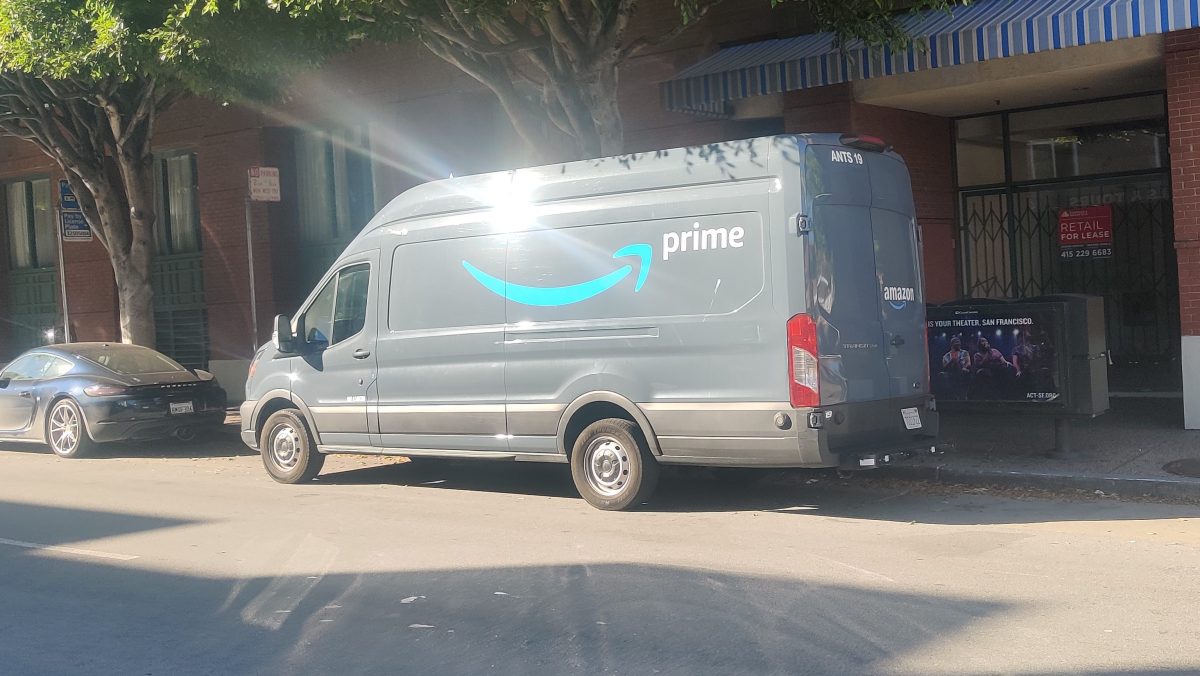
The war in Iran has hammered global oil markets, with gas prices in the U.S. spiking significantly. Amid the rise in transportation costs, Amazon has instituted a new 3.5% fuel surcharge for sellers that use its distribution network. The policy has the potential to inflict significant new costs on the untold merchants that rely on the e-commerce giant to sell their products.
Amazon told TechCrunch that the surcharge would be in place for the foreseeable future, although the company said it will continue to evaluate a potential policy shift as market conditions evolve. The news was originally reported by Bloomberg.
“Elevated costs in fuel and logistics have increased the cost of operating across the industry,” a spokesperson said. “We have absorbed these increases so far, but similar to other major carriers, when costs remain elevated we implement temporary surcharges to partially recover these costs.” The spokesperson added that the surcharge was “meaningfully lower than surcharges applied by other major carriers.”
The new policy will take effect on April 17 and will impact sellers who use the company’s Fulfillment by Amazon service, Bloomberg writes. Fulfillment by Amazon, commonly known as FBA, allows companies to send their products to Amazon’s warehouses, where they are packed and shipped to buyers. Amazon doesn’t disclose how many merchants use FBA, but the program underpins the vast majority of third-party sales on its platform.
Iran is strategically located along the northern border of the Strait of Hormuz — a narrow but critical shipping lane for global oil supplies through which roughly 20% of the world’s oil supply passes — and the country has sought to block shipping lanes there, a move that has majorly impacted energy prices throughout the world.
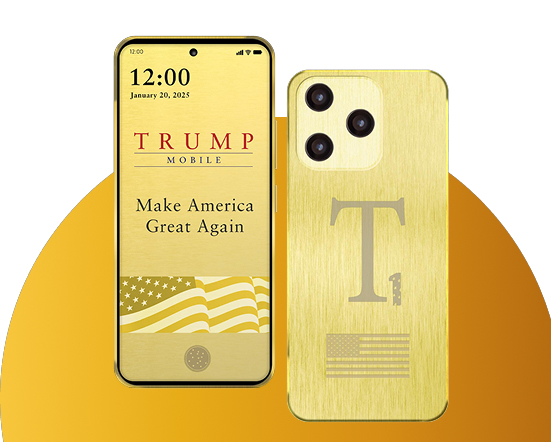
Not content with a real estate empire and the presidency of the United States, the Trump family is wading into the phone wars like it’s 2011 with a shiny gold monstrosity called the T1, the marketing of which leans extensively on the narrowest idea of patriotism. Beyond the immediate question — why do this, like, at all? — the T1 invites a question that’s perhaps easier to interrogate: How can any modern smartphone claim to be made in the US?
Over the last 40 years America has led a massive globalization effort that allows companies to pick and choose where they develop and build hardware that finds its way back to the US. The best chips to run your phone are built in Taiwan — regardless of the phone maker. The best phones are built in China, India or Vietnam. The displays are often produced in Korea. The glass is actually made in America. The sand that will eventually become the silicon wafers chips are made of is sourced here too. But most phones, and virtually all smartphones found in America, are globally produced devices. An all-American golden Trump phone is about as fantastical as the big, beautiful bill’s promise to make all Americans rich.
The phone has reasonable specs for the $499 price tag. There’s a 6.8-inch AMOLED display with a punch hole for the 16MP front camera, 12GB of RAM, 256GB of storage. Its rear array of cameras includes a 50MP main camera, a 2MP depth sensor and a 2MP macro lens. Notably lacking in the spec list is the processor. Perhaps that’s a typo, or perhaps that’s because nearly all smartphone processors are made overseas.
Multiple analysts have suggested the Trump T1 is actually a reskinned Revvl 7. That’s a $200 Android phone currently offered by T-Mobile in the US and manufactured by Wingtech, a (partially) state-owned Chinese phone maker and semiconductor manufacturer. However the specs and outer appearance better align with the €180 (also about $200) Coolpad X100, which is mentioned as a “related phone” to the T1 on the smartphone database GSMArena. Similarly, that phone has a 6.8-inch AMOLED display, 256GB of internal storage and up to 12GB of RAM, but its cameras are significantly higher resolution and it has a flash built into its camera module. It, like the Revvl 7, is manufactured in China by a Chinese company.
Don Jr and Eric Trump haven’t said if the T1 is a reskin of the Revvl 7 — or any other existing phone for that matter — instead insisting their device will eventually be made in the US. (Note that word “eventually.” It is doing a lot of work.) The Trump brothers have chosen their words like lawyers are watching, likely because the Made in America claim they’re making isn’t just marketing, it’s enforceable by the Federal Trade Commission. You can’t just slap it on a crummy Chinese phone and call it a day.
“The FTC actually has very strict regulations on how you label products and country of origin,” Todd Weaver, CEO and Founder of Purism, told me. Purism is an American company that produces its own operating system to compete with iOS and Android and is the only company in the US which can actually use any part of the “Made in America” claim for its phones. In our call he sounded a little irritated about the T1’s claims, but was eager to explain how the labeling works.
The Purism Liberty Phone. (Purism)
“I don’t make that claim and I manufacture all the electronics in the US,” Weaver said. Purism had to go with a non-phone processor for the Liberty phone because no company based in America makes phone processors (yet). Even with a non-standard chip, Purism’s processor comes from its supplier’s fabrication in South Korea. He found it financially challenging to source a chassis in the US as well. An unqualified Made in America claim would mean that a phone was not just assembled here, but every single part of the device was manufactured here as well. That’s an essentially impossible task for phone makers. It’s why Purism’s phone has the label Made in America Electronics instead. Weaver could get a lot, but not all of the parts manufactured in the US.
While it’s certainly theoretically possible the Trump brothers could take all the wealth they’ve been amassing since their father reentered the Oval Office to brute force a more American phone, it isn’t happening any time soon. The Trump T1, which they claim will be sold in September, cannot carry that label, at least not legally. (Whether the current FTC would prosecute the president’s sons for misrepresenting the T1 is another story entirely.) We’ve reached out to the FTC for comment and as of publishing have not heard back.
So what about other pro-American manufacturing labels? The Trump Brothers have hinted that the phones will be assembled here — even if the Revvl 7 (or Coolpad X100) is currently not. Those labels are also governed by the FTC and they’re not easy to get around. A simple “screwdriver” operation (importing almost entirely foreign parts and fitting them together in the States) is even provided by the FTC as a straightforward example of consumer deception.
That’s a lesson we all learned when Apple promised to start building computers domestically again. In 2019 it announced a big factory in Texas under pressure from the Trump administration to bring more manufacturing jobs to America. But even though people are putting screws into Mac Pros stateside, those can’t carry the label “Assembled in America.” Instead they’re “Designed in America” and a “Product of Thailand” with “Final Assembly in America.” It’s a global device.
Electronics are global devices and no amount of gold gilding or misleading claims from the sons of American presidents can change that. The best estimates from manufacturing experts claim it will be half a decade, minimum, before Apple or Samsung could be building phones in the US.
Weaver has already mused about reporting the Trump brothers for claiming their gold-gilded T1 is Made in America, and noted that anyone (even you, dear reader) could do the same.
If you buy something through a link in this article, we may earn commission.
Rep. Dan Crenshaw (R-TX) is upset that Apple Maps still calls the Gulf of America the Gulf of Mexico. So upset that he tagged Apple CEO Tim Cook on X and said he’d filed a complaint. “Hey @tim_cook, just noticed Apple Maps still calls it the Gulf of Mexico. Sent a report through the app, but thought you’d want to know!” said the former Navy Seal.
It seems that Crenshaw is upset, triggered if you will, that Big Tech isn’t changing as fast as he’d like it to. He’s so upset that he did a cringe post in the style of a suburbanite upset at Target. Crenshaw’s whining typifies a behavior I’ve seen in right-wing pundits and politicians in the last few years, the rise of a kind of post and style once attributed to the left in online spaces.
Crenshaw is posting cringe and doubling down on the culture war. They’re obsessed with identity politics, attempting to cancel their enemies, policing gender norms, and demanding that the culture bend to their whims despite the culture not being interested. This is all the stuff they’ve long accused the left of doing.
Hey @tim_cook, just noticed Apple Maps still calls it the Gulf of Mexico. Sent a report through the app, but thought you’d want to know! pic.twitter.com/fA7cWtOGY1
Less than 24 hours ago, as of this writing, Trump signed an executive order titled “Restoring Names that Honor American Greatness.” Along with a host of other changes, the order said that the U.S. would henceforth call the Gulf of Mexico the Gulf of America. Google and Apple haven’t updated the name.
These things take time. But just because Trump says the name is different doesn’t make it so. It’s a body of water that’s not exclusively used by the U.S. and Mexico, and the rest of the world will still call it the Gulf of Mexico. A lot of people who don’t live in the U.S. use Google and Apple Maps and it’s a good bet that the name won’t change for them.
Wikipedia also hasn’t changed the name on its entry for the Gulf. “Even if it was official, America does not get to own Wikipedia entries. [It] stays the Gulf of Mexico as the rest of the world calls it,” said an unnamed Wikipedia editor in the editing history of the page.
“This is a modern version of the Freedom fries jingoism, having nothing to do with geography and everything to do with politics,” another Wikipedia editor said, referring to a post-9/11 attempt by conservatives to rename french fries. “We have the same sort of thing as a perennial complaint with British Isles from a series of Irish editors. This nothing new or special, and can be documented on its own and with simple passing mention in the article if and when it becomes more than a sound bite at a news conference.”
But Conservatives like Crenshaw will publicly make the demand, posting cringe and embarrassing themselves. Ignoble in victory, they now exhibit the traits they’ve long accused their opponents of having.
The American right has control over the Supreme Court, the presidency, and the legislature. That kind of total political victory isn’t enough. They want you to like them too. They want you to laugh at their jokes, take their memes seriously, and call the Gulf of Mexico the Gulf of America.
The pinned post on Crenshaw’s X account is a “Conservative Guide to the Culture Wars” from 2021. The second item on the list is the claim that a “victor mentality is better than a victim mentality.”
Over the next four years, I suspect we’ll see a lot more cringe posts from Crenshaw and others as the victors twist themselves into victims when every little thing doesn’t go their way. Or when it doesn’t go their way quite as fast as they’d want.
Just months away from being banned in the U.S., the Federal Trade Commission (FTC) appears to be putting some salt in TikTok’s wound. The agency has issued a bizarre message about referring a complaint about the social media app to the Department of Justice (DOJ).
Will Banning TikTok Solve Privacy Issues? | Future Tech
The FTC issued a statement on Tuesday saying its investigations “uncovered reason to believe” that TikTok and its parent company ByteDance, are “violating or are about to violate the law.” The commission says the violations (or would-be violations) are of the Children’s Online Privacy Protection Act (“COPPA”) and the FTC Act but didn’t provide specifics. Also, the statement mentions how making this action public is something the FTC doesn’t normally do, but it determined that it was in the public’s interest to release the statement. So, we’re letting you know that they think you should know.
A DOJ spokesperson says they can’t comment on the substance of the referral, but the department did consult with the FTC in advance and is considering the claim.
In the statement, the FTC mentions how its investigation began in 2019 with Musical.ly, the predecessor of TikTok. Back then, the commission did find that the company was “aware that a significant percentage of users were younger than 13 and received thousands of complaints from parents” and issued a fine of $5.7 million. It’s unclear if this complaint against TikTok is related or if the investigation found other violations.
TikTok says it has been working with the FTC for more than a year to address concerns it may have.
“We’re disappointed the agency is pursuing litigation instead of continuing to work with us on a reasonable solution,” a TikTok spokesperson said in an emailed statement Tuesday. “We strongly disagree with the FTC’s allegations, many of which relate to past events and practices that are factually inaccurate or have been addressed. We’re proud of and remain deeply committed to the work we’ve done to protect children and we will continue to update and improve our product.”
TikTok is not in the best spot right now, although it’s still incredibly popular. In April, President Joe Biden signed a bill requiring the divestment of TikTok or else face a U.S. ban. The social app is on the 270-day clock to figure out something, or it could wait for the upcoming presidential election and hope Trump wins as he’s suddenly come around to support TikTok. Maybe he found a dance that he liked watching on the app.