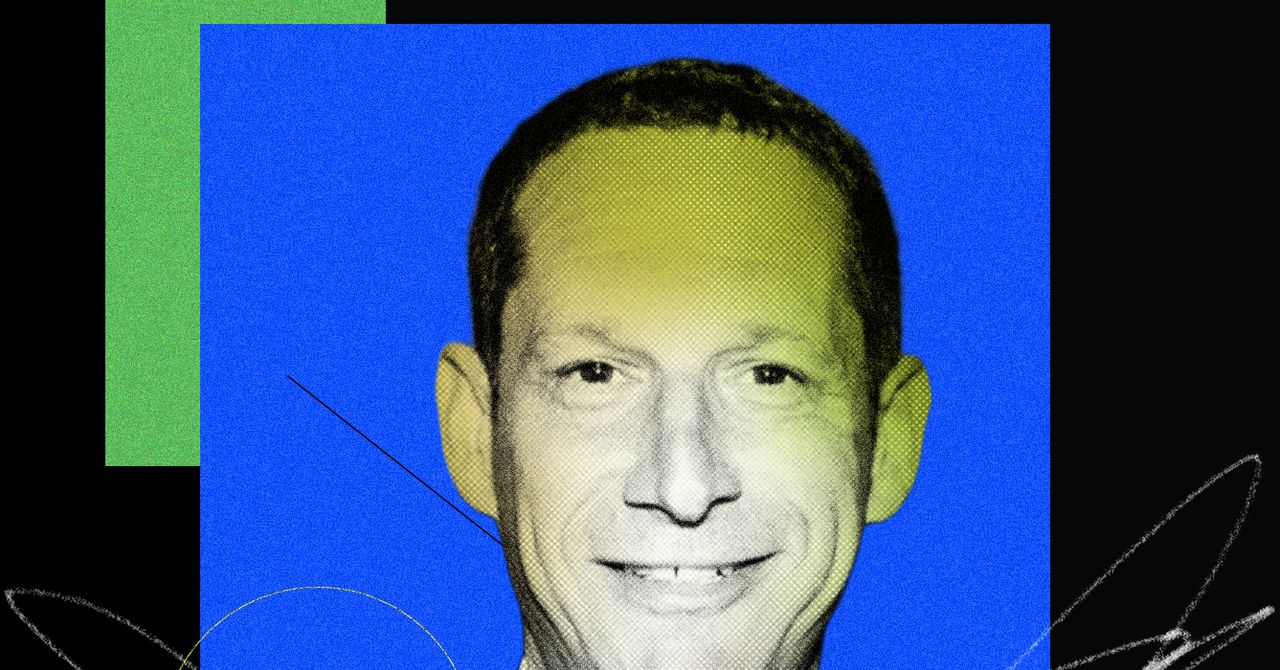
San Francisco Mayor Daniel Lurie: ‘We Are a City on the Rise’


I first met Daniel Lurie, San Francisco’s newly minted mayor, about five minutes before we walked onstage at WIRED’s Big Interview event, held in his city last week.

Lurie’s team let me know ahead of time that his window for this conversation was tight: He’d just come from announcing a new city police chief, and had about half an hour for me before he needed to be on to the next thing. Which was? “No idea,” Lurie quipped, shortly before we were foisted from backstage and into our conversation in front of several hundred attendees—a local crowd, who, judging from their boisterous reactions to Lurie’s every word, are among the 73 percent of San Franciscans who approve of the job he’s done since taking office in January of this year.

To Lurie’s credit, the story of San Francisco right now is largely a positive one. The city is indisputably the global hub of AI innovation and the billions of dollars that accompany it, with companies like Anthropic and OpenAI, along with smaller startups, investors, and plenty of young, AI-focused technologists all calling San Francisco home. Yes, that means rents are up and housing stock remains precariously low. But office vacancy rates are dropping, retail outlets are coming back to the city’s downtown, and as Lurie’s office is quick to tout, several key metrics measuring municipal crime—including homicides and car break-ins—are at historic lows.

I wanted to talk to Lurie about all of that, but I was also curious about the bigger picture: his administration’s dynamic with the federal government, particularly in the context of President Trump’s October plan to send the National Guard into San Francisco—an endeavor that Lurie managed to thwart, according to The New York Times, by recruiting a powerful coterie of technology executives to work the phones in his favor.

Lurie wasn’t exactly forthcoming there, in keeping with his diligent efforts to focus conversations on San Francisco, and perhaps avoid attracting the attention, or the ire, of the current administration. It’s a different tack than other Democrats governing progressive parts of the country have taken, from New York City mayor-elect Zohran Mamdani to California governor Gavin Newsom. But if the response in the room last week was any indication, Lurie’s local fans don’t seem to mind his “say less” strategy—at least for now.

This interview has been edited for length and clarity.

KATIE DRUMMOND: Oh, wow. Some fans in the audience. Someone has a 70-something percent approval rating. Wow, god.

DANIEL LURIE: How are my socks? Oh, they’re black. I usually have more fun socks on.

Is Congestion Pricing Working? The MTA’s Revamped Data Team Is Figuring It Out


For the New York City Metropolitan Transportation Authority’s data and analytics team, January 5, 2025, felt a lot like kismet.

Three and a half years earlier, New York state legislators had passed a law requiring the MTA to release “easily accessible, understandable, and usable” data to the public; by January 2022, MTA chair and CEO Janno Lieber officially announced the new team’s formation. Meanwhile, New York City’s controversial congestion pricing program, which tolls cars entering Manhattan’s busiest streets, officially kicked off in 2019 but was chugging through a lengthy setup process, with the transit agency and state fighting lawsuits, politicians, and vocal naysayers along the way.

So when the program finally started in January, the MTA’s data and analytics team had prepared. They could see the moment the tolling started right in the spreadsheets. “The day that it turned on, one field changed from ‘no revenue collection’ to ‘revenue,’” says Andy Kuziemko, the deputy chief of the data and analytics team.

A few days later, the team was pumping out data on vehicle entries into the zone in 10-minute increments, and posting the data on its website, so that New Yorkers themselves could decide whether the congestion program was actually reducing traffic on city streets. The agency has been doing it since. You—yes, you—can view and download the MTA’s data right here.

The online web pages aren’t flashy, but they represent a rare and comprehensive public transit win for open-data advocates, who argue that access to well-maintained public datasets is crucial to government transparency and efficiency.

Since 2022, the MTA’s data and analytics team has grown to 26 full-time employees, who spend their workdays centralizing information that was once scattered through the entire MTA. The agency, to be clear, is big. The nation’s largest, it carries some 5.9 million riders on subways, buses, commuter railways, and through tunnels and bridges every day. That’s a lot of numbers to track.

Really a lot; MTA now publishes more than 180 datasets. Recent additions include more than a decade’s worth of data on the time MTA employees spend on “productive tasks,” a new dataset on subway-delay-causing incidents; and bus speeds on Manhattan’s most crowded downtown roads. Kuziemko says 30 more datasets are becoming publicly available “in the near future.”

Counter Intelligence

In an interview, Kuziemko and MTA chief of strategic initiatives Jon Kaufman credited a new culture of intra-agency data sharing for the renewed program. In 2023, leadership encouraged managers across the agency to allow their data to be ingested into the MTA’s “data lake,” which can be refined, stripped of identifying information, and eventually published openly. (Some of the MTA’s data contains the personally identifiable information of commuters; the agency says this specific data is not published for the public.) The agency has also started using new in-house software and tools, which give them technical capabilities they didn’t have before. “We have paid for zero hours of consulting time, which is a thing we’re really proud of—that we actually built in-house expertise in the public sector,” says Kuziemko. “It’s really cool.”

“It’s rare for a government agency to share this level of data granularity,” says Sarah Kaufman, who directs the NYU Rudin Center for Transportation and once led the agency’s open-data program. In fact, it’s something like an about-face for the MTA, which before 2009 made a habit of legally pursuing developers who scraped system timetable and route data to build rider-friendly apps.

Cities: Skylines 2’s console port has been delayed indefinitely


Cities: Skylines 2, the follow-up to the popular city builder developed by Colossal Order, just can’t catch a break. Following a post by the official Cities: Skylines account on publisher Paradox Interactive’s Cities: Skylines 2 forum, the console release for Cities: Skylines 2 has been postponed indefinitely. The game was originally targeting a launch on Xbox and PlayStation sometime in October.

“While we are making slow but steady progress, there are still unresolved issues impacting the game in ways that harm the player experience we want to deliver. We expect to receive a new [release candidate], which will undergo a thorough review in August. This evaluation will determine whether we can begin the submission process and provide a solid release date, or if further issues need to be addressed,” the post reads.

A screenshot from Cities: Skylines 2 showing a fully-built city with skyscrapers and rolling hills in the distance

Image: Colossal Order/Paradox Interactive

Despite Paradox Interactive publishing multiple pieces of downloadable content for the game, Cities: Skylines 2 has been plagued with performance and stability issues since its PC launch in October 2023, prompting an apology from the developers in April. The prompt cancellation of the Sims-competitor Life by You following an indefinite delay doesn’t inspire much confidence in Paradox’s intention to deliver on this promised release.

Colossal Order has managed to hit all of its goals outlined in the publicly available year-one roadmap for Skylines 2. However, persistent issues and a lack of mod support have left players clinging to the original Cities: Skylines for the time being.

An image displaying the year-one post-launch roadmap for Cities: Skylines 2. The San Fransisco Set and Deluxe Relax radio station are available at laiunch. The Modern Architecture Creator Pack, Urban Promenades Creator Packs, and Soft Rock Radio Station are set to launch in Q2 of 2024. Three more Creator Packs and Radio stations are slated for Q4 of 2024, while a Bridges & Ports Expansion and Cold Wave Radio Station are targeting a Q1 2025 launch.

The roadmap for the first year of post-launch content for Cities: Skylines 2
Image: Colossal Order/Paradox Interactive