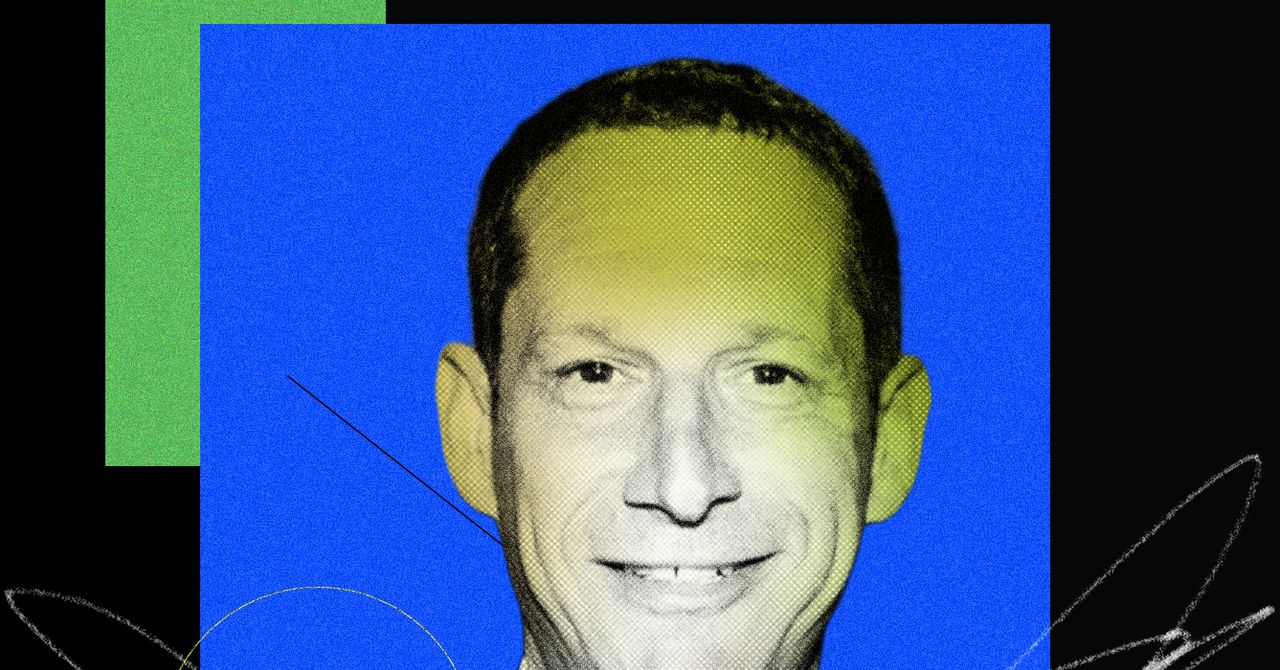
San Francisco Mayor Daniel Lurie: ‘We Are a City on the Rise’


I first met Daniel Lurie, San Francisco’s newly minted mayor, about five minutes before we walked onstage at WIRED’s Big Interview event, held in his city last week.

Lurie’s team let me know ahead of time that his window for this conversation was tight: He’d just come from announcing a new city police chief, and had about half an hour for me before he needed to be on to the next thing. Which was? “No idea,” Lurie quipped, shortly before we were foisted from backstage and into our conversation in front of several hundred attendees—a local crowd, who, judging from their boisterous reactions to Lurie’s every word, are among the 73 percent of San Franciscans who approve of the job he’s done since taking office in January of this year.

To Lurie’s credit, the story of San Francisco right now is largely a positive one. The city is indisputably the global hub of AI innovation and the billions of dollars that accompany it, with companies like Anthropic and OpenAI, along with smaller startups, investors, and plenty of young, AI-focused technologists all calling San Francisco home. Yes, that means rents are up and housing stock remains precariously low. But office vacancy rates are dropping, retail outlets are coming back to the city’s downtown, and as Lurie’s office is quick to tout, several key metrics measuring municipal crime—including homicides and car break-ins—are at historic lows.

I wanted to talk to Lurie about all of that, but I was also curious about the bigger picture: his administration’s dynamic with the federal government, particularly in the context of President Trump’s October plan to send the National Guard into San Francisco—an endeavor that Lurie managed to thwart, according to The New York Times, by recruiting a powerful coterie of technology executives to work the phones in his favor.

Lurie wasn’t exactly forthcoming there, in keeping with his diligent efforts to focus conversations on San Francisco, and perhaps avoid attracting the attention, or the ire, of the current administration. It’s a different tack than other Democrats governing progressive parts of the country have taken, from New York City mayor-elect Zohran Mamdani to California governor Gavin Newsom. But if the response in the room last week was any indication, Lurie’s local fans don’t seem to mind his “say less” strategy—at least for now.

This interview has been edited for length and clarity.

KATIE DRUMMOND: Oh, wow. Some fans in the audience. Someone has a 70-something percent approval rating. Wow, god.

DANIEL LURIE: How are my socks? Oh, they’re black. I usually have more fun socks on.

Hasan Piker Will Never Run for Office


Are you gonna collaborate?

Yeah.

All right. What’s your favorite sandwich?

That’s a tough one because I love all of them. I would say a New Jersey sub from this institution called Sorrento’s around Freehold. A Number 14, which is a combination, I believe, of like Number 7 and Number 12. [Eds. note: Sorrento’s menu says the Number 14 is a combo of a Number 5 and a Number 12 called the Pig Special.] So an Italian sub from a real New Jersey institution, and if not that, then a Wawa Club sandwich.

I really appreciate how specific that was. Thank you. First video game you ever bought?

I pirated a lot because I was in Turkey growing up, so it was virtually impossible for us to get like a lot of video games. As far as purchase, it could be Metal Gear Solid 2 for the PlayStation 2, or I guess a Pokémon game.

So let’s rewind 34 years. You were born in New Jersey. You spent the majority of your childhood in Turkey.

Yeah.

You’ve talked before about that upbringing. You’ve characterized it as a very privileged one. How did that experience, now that you’re able to look back and reflect, affect your worldview? How does that turn you into the person that you are today?

There’s massive income inequality in Turkey that almost resembles America now, but that’s still far worse in Turkey. For that reason, if you’re above board, if you’re relatively affluent, you come across as very wealthy in comparison to the average person.

I’ve never sheltered people from that truth, but I did grow up fairly affluent. It was very positive in the sense that I didn’t have to worry about making ends meet or having to take on a job or anything like that. My parents’ main concern was to make sure that I wasn’t spoiled, so I didn’t get everything I wanted.

Outside of that, I would say that as a young boy I was sent to public school in Turkey. I think it was a good thing that my parents did that because it made me understand that there were very different income brackets with people living in very different conditions.

You moved to the United States for college, right? What was surprising to you about that transition?

When I came to college, this is literally what I wanted. Other people were like, “I want to be an astronaut,” “I want to be a teacher,” “I want to be a race car driver.” I was like, “I want to go to college in America.”

So I loved it. I was so stoked to be here, and I had all of these beliefs. You know, this is a land of freedom, land of prosperity, right?

Right.

This is where I’m gonna make a name for myself, make a career for myself.

Slowly but surely, experiences growing up or going to college and then onwards living in America, slowly chipped away at that dream. Piece by piece.

Yeah.

It’s interesting because in comparison to other fresh-off-the-boat immigrant stories, I did it. I am living the American dream, but I just realized that it’s not something that is readily accessible for all.

AI Chatbots Are Running for Office Now


Victor Miller [Archival audio clip]: She’s asking what policies are most important to you, VIC?

VIC [Archival audio clip]: The most important policies to me focus on transparency, economic development, and innovation.

Leah Feiger: That is so bizarre. I got to ask, could VIC be exposed to other sources of information other than these public records? Say, email from a conspiracy theorist who wants VIC to do something not so good with elections that would not represent its constituents.

Vittoria Elliott: Great question. I asked Miller, “Hey, you’ve built this bot on top of ChatGPT. We know that sometimes there’s problems or biases in the data that go into training these models. Are you concerned that VIC could imbibe some of those biases or there could be problems?” He said, “No, I trust OpenAI. I believe in their product.” You’re right. He decided, because of what’s important to him as someone who cares a lot about Cheyenne’s governance, to feed this bot hundreds, and hundreds, and hundreds of pages of what are called supporting documents. The kind of documents that people will submit in a city council meeting. Whether that’s a complaint, or an email, or a zoning issue, or whatever. He fed that to VIC. But you’re right, these chatbots can be trained on other material. He said that he actually asked VIC, “What if someone tries to spam you? What if someone tries to trick you? Send you emails and stuff.” VIC apparently responded to him saying, “I’m pretty confident I could differentiate what’s an actual constituent concern and what’s spam, or what’s not real.”

Leah Feiger: I guess I would just say to that, one-third of Americans right now don’t believe that President Joe Biden legitimately won the 2020 election, but I’m so glad this robot is very, very confident in its ability to decipher dis and misinformation here.

Vittoria Elliott: Totally.

Leah Feiger: That was VIC in Wyoming. Tell us a little more about AI Steve in the UK. How is it different from VIC?

Vittoria Elliott: For one thing, AI Steve is actually the candidate.

Leah Feiger: What do you mean actually the candidate?

Vittoria Elliott: He’s on the ballot.

Leah Feiger: Oh, OK. There’s no meat puppet?

Vittoria Elliott: There is a meat puppet, and that Steve Endicott. He’s a Brighton based business man. He describes himself as being the person who will attend Parliament, do the human things.

Leah Feiger: Sure.

Vittoria Elliott: But people, when they go to vote next month in the UK, they actually have the ability not to vote for Steve Endicott, but to vote for AI Steve.

Leah Feiger: That’s incredible. Oh my God. How does that work?

Vittoria Elliott: The way they described it to me, Steve Endicott and Jeremy Smith, who is the developer of AI Steve, the way they’ve described this is as a big catchment for community feedback. On the backend, what happens is people can talk to or call into AI Steve, can have apparently 10,000 simultaneous conversations at any given point. They can say, “I want to know when trash collection is going to be different.” Or, “I’m upset about fiscal policy,” or whatever. Those conversations get transcribed by the AI and distilled into these are the policy positions that constituents care about. But to make sure that people aren’t spamming it basically and trying to trick it, what they’re going to do is they’re going to have what they call validators. Brighton is about an hour outside of London, a lot of people commute between the two cities. They’ve said, “What we want to do is we want to have people who are on their commute, we’re going to ask them to sign up to these emails to be validators.” They’ll go through and say, “These are the policies that people say that are important to AI Steve. Do you, regular person who’s actually commuting, find that to actually be valuable to you?” Anything that gets more than 50% interest, or approval, or whatever, that’s the stuff that real Steve, who will be in Parliament, will be voting on. They have this second level of checks to make sure that whatever people are saying as feedback to the AI is checked by real humans. They’re trying to make it a little harder for them to game the system.