Meta launches ‘Plus’ plans for Instagram, Facebook, and WhatsApp


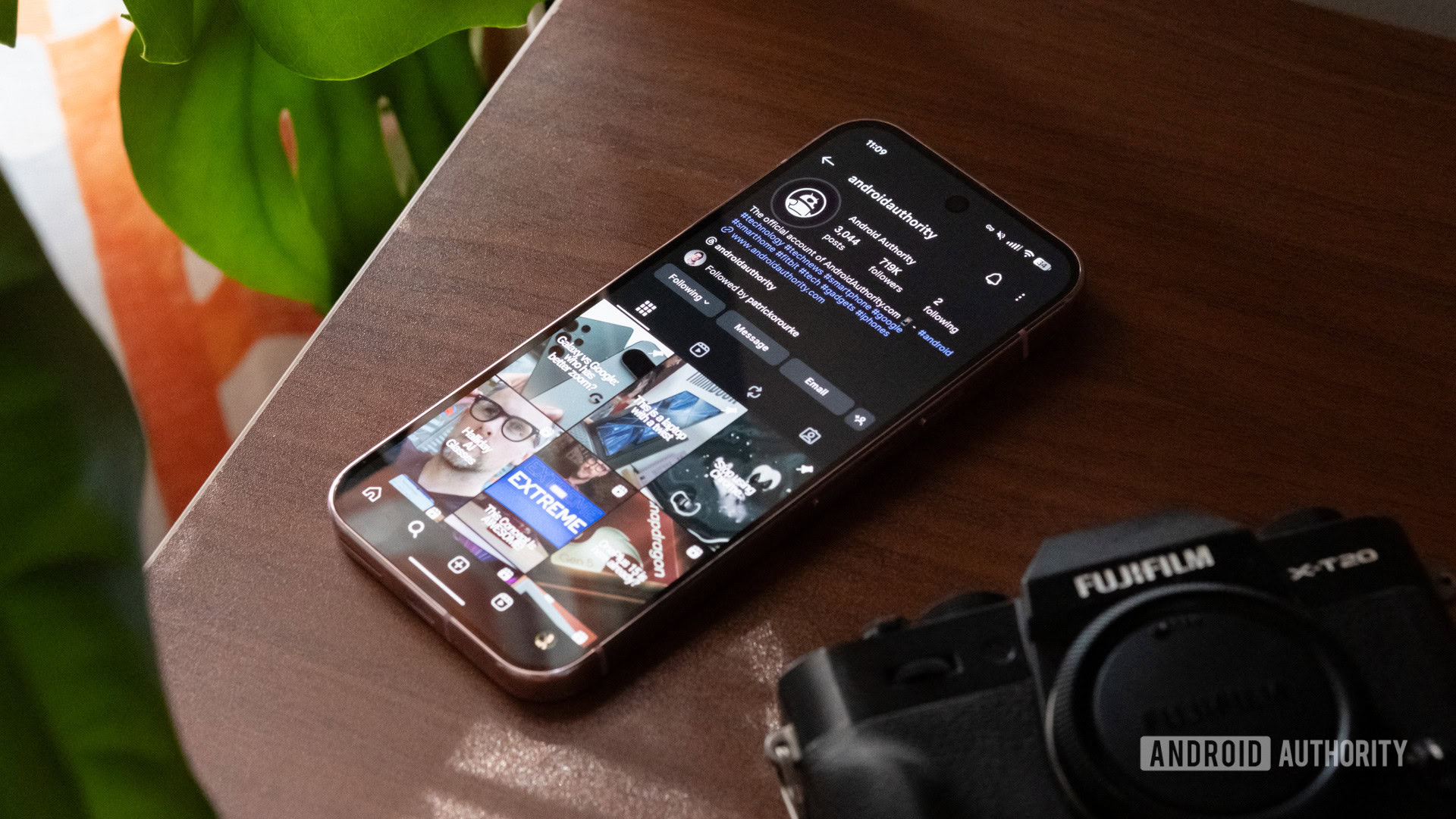
A Google Pixel 9 Pro on a desk, showing the Instagram app.

Taylor Kerns / Android Authority

TL;DR

  • Meta has announced plans for several new paid subscriptions.
  • Facebook Plus, Instagram Plus, and WhatsApp plus offer additional functionality for $3 to $4 per month.
  • Paid plans featuring additional AI functionality and tools for audience growth are also being tested.

Meta is rolling out a handful of new paid subscription plans for several of its services. The company’s announced new Facebook Plus, Instagram Plus, and WhatsApp Plus plans that add more features to each app. It’s also testing paid subscriptions for Meta AI.

As reported by TechCrunch, Meta Head of Product Naomi Gleit announced the new offerings in a video published this afternoon. Gleit doesn’t get into pricing details, but TechCrunch‘s report says plans for Meta’s individual apps cost $3 to $4 per month, while the company will test AI plans that cost $8 to $20 per month.

Don’t want to miss the best from Android Authority?

google preferred source badge light@2xgoogle preferred source badge dark@2x

Instagram Plus and Facebook Plus will each cost $4 per month in the US. According to the report, the subscriptions will be geared toward power users, allowing subscribers more granular control over who sees which of their content, as well as better insight into who their posts are reaching. The $3 WhatsApp Plus plan “focuses on personalization and messaging,” with additional themes, exclusive stickers, and more slots for pinned conversations.

These plans will not replace Meta’s Verified program, which offers identity verification and impersonation protection (among other features) for between $15 and $500 per month.

In Singapore, Guatemala, and Bolivia, Meta AI will begin testing plans called Meta One Plus and Meta One Premium next month. The two plans, which will reportedly cost $8 and $20 per month in the US, respectively, apparently come with the same features, though the Premium offering features higher usage limits. Basic Meta AI functionality will remain free for now.

Later this week, Meta’s also planning to launch public testing for two additional Meta One plans, Essential and Advanced, in some markets outside the US. The plans seem tailored to profiles looking to build influence, and include both Verified status as well as exclusive features to help grow audiences.

Thank you for being part of our community. Read our Comment Policy before posting.


Meta’s Oversight Board is looking into transparency around disabling accounts


Meta has a lot of work to do when it comes to limiting hate speech on its platforms. Now, its Oversight Board is looking into the company’s decision to ban an account for, among other things, posting visual violent threats and harassment against a journalist — and it wants the public’s advice.

In the year prior to the ban, Meta referred five posts due to violations of its hateful conduct, bullying and harassment, violence and incitement and adult nudity and sexual activity community standards. In addition to the posts harassing the woman journalist, the user also shared “anti-gay slurs against prominent politicians and content depicting a sex act, alleging misconduct against minorities.”

Meta’s internal review experts decided to permanently disable the account due to the consistent violations and calls for violence. This action was taken despite the number of strikes not reaching the ban threshold — Meta’s guidance states that even seven strikes only get users a one-day ban. However, its account integrity page lays out examples of when it will disable accounts, including violating its community standards through “risk of imminent harm” to an individual.

The Board is now looking for insight from the public until 11:59PM PT on Tuesday, February 3. The Board is specifically seeking comments from individuals who can “contribute valuable perspectives” on the following topics:

  • How best to ensure due process and fairness to people whose accounts are penalized or permanently disabled.

  • The effectiveness of measures used by social media platforms to protect public figures and journalists from accounts engaged in repeated abuse and threats of violence, in particular against women in the public eye.

  • Challenges in identifying and considering off-platform context when assessing threats against public figures and journalists.

  • Research into the efficacy of punitive measures to shape online behaviors, and the efficacy of alternative or complementary interventions.

  • Good industry practices in transparency reporting on account enforcement decisions and related appeals.

This instance marks the first time the Board has looked into Meta permanently disabling an account. It stated that this “represents a significant opportunity to provide users with greater transparency on Meta’s account enforcement policies and practices, make recommendations for improvement, and expand the types of cases the Board can review.”

A Simple WhatsApp Security Flaw Exposed 3.5 Billion Phone Numbers


WhatsApp’s mass adoption stems in part from how easy it is to find a new contact on the messaging platform: Add someone’s phone number, and WhatsApp instantly shows whether they’re on the service, and often their profile picture and name, too.

Repeat that same trick a few billion times with every possible phone number, it turns out, and the same feature can also serve as a convenient way to obtain the cell number of virtually every WhatsApp user on earth—along with, in many cases, profile photos and text that identifies each of those users. The result is a sprawling exposure of personal information for a significant fraction of the world population.

One group of Austrian researchers have now shown that they were able to use that simple method of checking every possible number in WhatsApp’s contact discovery to extract 3.5 billion users’ phone numbers from the messaging service. For about 57 percent of those users, they also found that they could access their profile photos, and for another 29 percent, the text on their profiles. Despite a previous warning about WhatsApp’s exposure of this data from a different researcher in 2017, they say, the service’s parent company, Meta, still failed to limit the speed or number of contact discovery requests the researchers could make by interacting with WhatsApp’s browser-based app, allowing them to check roughly a hundred million numbers an hour.

The result would be “the largest data leak in history, had it not been collated as part of a responsibly conducted research study,” as the researchers describe it in a paper documenting their findings.

“To the best of our knowledge, this marks the most extensive exposure of phone numbers and related user data ever documented,” says Aljosha Judmayer, one of the researchers at the University of Vienna who worked on the study.

The researchers say they warned Meta about their findings in April and deleted their copy of the 3.5 billion phone numbers. By October, the company had fixed the enumeration problem by enacting a stricter “rate-limiting” measure that prevents the mass-scale contact discovery method the researchers used. But until then, the data exposure could have also been exploited by anyone else using the same scraping technique, adds Max Günther, another researcher from the university who cowrote the paper. “If this could be retrieved by us super easily, others could have also done the same,” he says.

In a statement to WIRED, Meta thanked the researchers, who reported their discovery through Meta’s “bug bounty” system, and described the exposed data as “basic publicly available information,” since profile photos and text weren’t exposed for users who opted to make it private. “We had already been working on industry-leading anti-scraping systems, and this study was instrumental in stress-testing and confirming the immediate efficacy of these new defenses,” writes Nitin Gupta, vice president of engineering at WhatsApp. Gupta adds, “We have found no evidence of malicious actors abusing this vector. As a reminder, user messages remained private and secure thanks to WhatsApp’s default end-to-end encryption, and no non-public data was accessible to the researchers.”

Is Wall Street losing faith in AI?


A rough week for tech stocks might signal a loss of investor confidence in artificial intelligence.

The Wall Street Journal reports that the Nasdaq Composite Index was down 3% — making this its worst week since President Donald Trump announced his sweeping tariff plan in April.

Tech companies that have otherwise performed well this year were among those hardest hit, with Palantir’s stock price falling 11% this week, Oracle declining by 9%, and Nvidia losing 7%. These drops also come after earnings reports in which Meta and Microsoft indicated that they plan to continue spending heavily on AI (both companies were down about 4%). 

“Valuations are stretched,” Cresset Capital’s Jack Ablin told the WSJ. “Just the slightest bit of bad news gets exaggerated … and good news is just not enough to move the needle because expectations are already pretty high.”

Economic factors like the ongoing government shutdown, declining consumer sentiment, and widespread layoffs are also likely dragging down the stock market. But the less tech-heavy S&P 500 and Dow Jones Industrial Average didn’t do quite as badly, with declines of 1.6% and 1.2%, respectively.

Thinking Machines Lab co-founder Andrew Tulloch heads to Meta


Thinking Machines Lab, the AI startup led by former OpenAI CTO Mira Murati, has lost one of its co-founders to Meta.

The Wall Street Journal reports that AI researcher Andrew Tulloch announced his departure to employees in a message on Friday. A Thinking Machine Labs spokesperson confirmed Tulloch’s departure to the WSJ, saying he “has decided to pursue a different path for personal reasons.”

Back in August, the WSJ reported that Mark Zuckerberg’s aggressive AI recruiting blitz included an offer to acquire Thinking Machines Lab — and when that failed, Zuckerberg reportedly tried to lure Tulloch with a compensation package that could have been worth up to $1.5 billion over at least six years. (At the time, a Meta spokesperson said that the WSJ’s description of the offer was “inaccurate and ridiculous.”)

Tulloch previously worked at OpenAI and Facebook’s AI Research Group.

Meta Horizon TV is an entertainment hub for VR headsets


After revealing his company’s latest augmented reality and smart glasses at Meta Connect this year, Mark Zuckerberg has introduced a new entertainment hub for its Quest headsets called Horizon TV. Zuckerberg said Meta believes watching video content is going to be a huge category for both virtual reality headsets and glasses in the future. Meta has already teamed up with several major streaming services to provide shows and movies you can enjoy in VR. One of those partners is Disney+, which will give users access to the Marvel Cinematic Universe on their headsets, as well as to content from ESPN and Hulu.

Based on the interface Zuckerberg showed on the event, which had a lineup of streaming apps that will be available on the hub, Meta also teamed up with Prime Video, Spotify, Peacock and Twitch. That will allow you to watch shows, such as The Boys and Fallout on your virtual reality devices. Meta also partnered with Universal Pictures and iconic horror company Blumhouse, so that you can watch horror flicks like M3GAN and The Black Phone on your Quest “with immersive special effects you won’t find anywhere else.”

The Horizon TV hub supports Dolby Atmos for immersive sounds, with Dolby Vision arriving later this year for richer colors and crisper details. For a limited time, you’ll be able to watch an exclusive 3D clip of Avatar: Fire and Ash on Horizon TV, as well, as part of Meta’s partnership with James Cameron’s Lightstorm Vision.

Meta reportedly hires four more researchers from OpenAI


Looks like Meta isn’t done poaching talent from OpenAI.

Earlier this week, TechCrunch reported that Meta had hired influential OpenAI researcher Trapit Bansal, and according to The Wall Street Journal, it also hired three other researchers from the company.

Now The Information is reporting four more Meta hires from OpenAI: Researchers Shengjia Zhao, Jiahui Yu, Shuchao Bi, and Hongyu Ren.

This hiring spree comes after the April launch of Meta’s Llama 4 AI models, which reportedly did not perform as well as CEO Mark Zuckerberg had hoped. (The company was also criticized over the version of Llama that it used for a popular benchmark.)

There’s been some back-and-forth between the two companies, with OpenAI CEO Sam Altman suggesting that Meta was offering “$100 million signing bonuses” while adding that “so far, none of our best people” have left. Meta CTO Andrew Bosworth then told employees that while senior leaders may have been offered that kind of money, “the actual terms of the offer” were more complex than a simple one-time signing bonus.

How to set up a WhatsApp account without Facebook or Instagram


There’s no shortage of reasons to stay off the Meta ecosystem, which includes Facebook and Instagram, but there are some places where WhatsApp remains the main form of text-based communication. The app is a great alternative to SMS, since it offers end-to-end encryption and was one of the go-to methods to send uncompressed photos and videos between iPhone and Android users before Apple adopted RCS. Even though Facebook, which later rebranded to Meta, acquired WhatsApp in 2014, it doesn’t require a Facebook or Instagram account to get on WhatsApp — just a working phone number.

To start, you need to download WhatsApp on your smartphone. Once you open the app, you can start the registration process by entering a working phone number. After entering your phone number, you’ll receive a unique six-digit code that will complete the registration process. From there, you can sort through your contacts on your attached smartphone to build out your WhatsApp network, but you won’t have to involve Facebook or Instagram at any point.

Alternatively, you can request a voice call to deliver the code instead. Either way, once you complete the registration process, you have a WhatsApp account that’s not tied to a Facebook or Instagram account.

If you change your mind and want more crossover between your Meta apps, you can go into the app’s Settings panel to change that. In Settings, you can find the Accounts Center option with the Meta badge on it. Once you hit it, you’ll see options to “Add Facebook account” and “Add Instagram account.” Linking these accounts means Meta can offer more personalized experiences across the platforms because of the personal data that’s now interconnected.

You can always remove your WhatsApp account from Meta’s Account Center by going back into the same Settings panel. However, any previously combined info will stay combined, but Meta will stop combining any personal data after you remove the account.

Meta plans to automate many of its product risk assessments


An AI-powered system could soon take responsibility for evaluating the potential harms and privacy risks of up to 90% of updates made to Meta apps like Instagram and WhatsApp, according to internal documents reportedly viewed by NPR.

NPR says a 2012 agreement between Facebook (now Meta) and the Federal Trade Commission requires the company to conduct privacy reviews of its products, evaluating the risks of any potential updates. Until now, those reviews have been largely conducted by human evaluators.

Under the new system, Meta reportedly said product teams will be asked to fill out a questionaire about their work, then will usually receive an “instant decision” with AI-identified risks, along with requirements that an update or feature must meet before it launches.

This AI-centric approach would allow Meta to update its products more quickly, but one former executive told NPR it also creates “higher risks,” as “negative externalities of product changes are less likely to be prevented before they start causing problems in the world.”

In a statement, Meta seemed to confirm that it’s changing its review system, but it insisted that only “low-risk decisions” will be automated,  while “human expertise” will still be used to examine “novel and complex issues.”

Threads tops 350M monthly users after adding 30M in the quarter


Instagram Threads, Meta’s X competitor, has now grown to over 350 million monthly active users, CEO Mark Zuckerberg revealed during the company’s Q1 2025 earnings call on Wednesday. That’s an increase of 30 million users since the prior quarter, where Meta reported that Threads had 320 million users.

The new figure represents increased growth, as Threads added 30 million in the first quarter of this year, compared with 20 million in Q4 2024. It’s also worth noting that in a single quarter, Threads added nearly the same number of users to its network as one of its newer competitors, Bluesky. The latter, a decentralized social app, today has roughly 35 million users.

While Threads is still small in comparison to Meta’s other social apps — Facebook, Instagram, Messenger, and WhatsApp — its growth is helping to cement its place in the microblogging app ecosystem. In total, Meta says that more than 3.4 billion people now use at least one of Meta’s apps daily.

On Wednesday’s call, Zuckerberg told investors that the growth indicates Threads “continues to be on track to become our next major social app.”