Meta launches ‘Plus’ plans for Instagram, Facebook, and WhatsApp


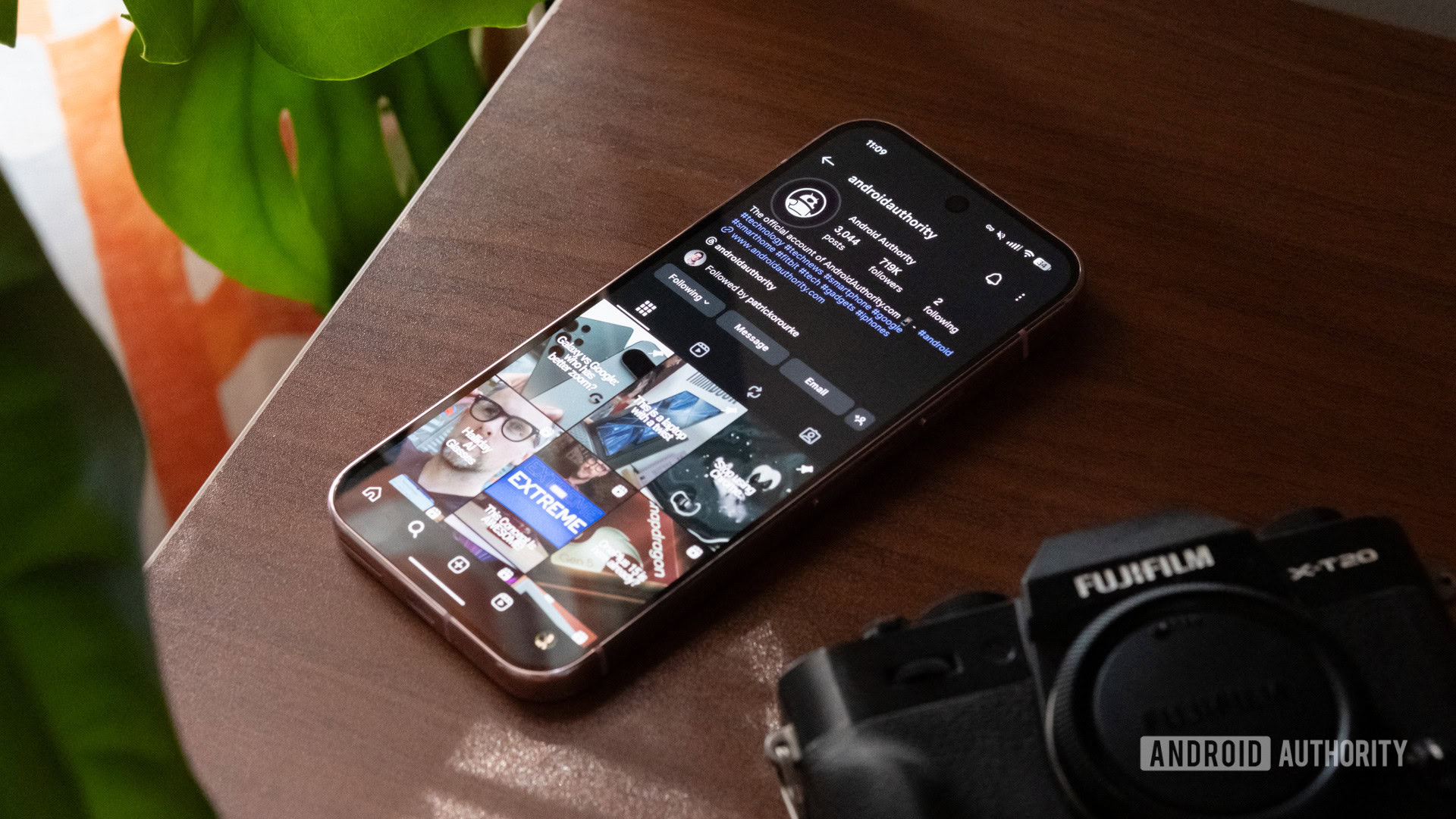
A Google Pixel 9 Pro on a desk, showing the Instagram app.

Taylor Kerns / Android Authority

TL;DR

  • Meta has announced plans for several new paid subscriptions.
  • Facebook Plus, Instagram Plus, and WhatsApp plus offer additional functionality for $3 to $4 per month.
  • Paid plans featuring additional AI functionality and tools for audience growth are also being tested.

Meta is rolling out a handful of new paid subscription plans for several of its services. The company’s announced new Facebook Plus, Instagram Plus, and WhatsApp Plus plans that add more features to each app. It’s also testing paid subscriptions for Meta AI.

As reported by TechCrunch, Meta Head of Product Naomi Gleit announced the new offerings in a video published this afternoon. Gleit doesn’t get into pricing details, but TechCrunch‘s report says plans for Meta’s individual apps cost $3 to $4 per month, while the company will test AI plans that cost $8 to $20 per month.

Don’t want to miss the best from Android Authority?

google preferred source badge light@2xgoogle preferred source badge dark@2x

Instagram Plus and Facebook Plus will each cost $4 per month in the US. According to the report, the subscriptions will be geared toward power users, allowing subscribers more granular control over who sees which of their content, as well as better insight into who their posts are reaching. The $3 WhatsApp Plus plan “focuses on personalization and messaging,” with additional themes, exclusive stickers, and more slots for pinned conversations.

These plans will not replace Meta’s Verified program, which offers identity verification and impersonation protection (among other features) for between $15 and $500 per month.

In Singapore, Guatemala, and Bolivia, Meta AI will begin testing plans called Meta One Plus and Meta One Premium next month. The two plans, which will reportedly cost $8 and $20 per month in the US, respectively, apparently come with the same features, though the Premium offering features higher usage limits. Basic Meta AI functionality will remain free for now.

Later this week, Meta’s also planning to launch public testing for two additional Meta One plans, Essential and Advanced, in some markets outside the US. The plans seem tailored to profiles looking to build influence, and include both Verified status as well as exclusive features to help grow audiences.

Thank you for being part of our community. Read our Comment Policy before posting.



A Simple WhatsApp Security Flaw Exposed 3.5 Billion Phone Numbers


WhatsApp’s mass adoption stems in part from how easy it is to find a new contact on the messaging platform: Add someone’s phone number, and WhatsApp instantly shows whether they’re on the service, and often their profile picture and name, too.

Repeat that same trick a few billion times with every possible phone number, it turns out, and the same feature can also serve as a convenient way to obtain the cell number of virtually every WhatsApp user on earth—along with, in many cases, profile photos and text that identifies each of those users. The result is a sprawling exposure of personal information for a significant fraction of the world population.

One group of Austrian researchers have now shown that they were able to use that simple method of checking every possible number in WhatsApp’s contact discovery to extract 3.5 billion users’ phone numbers from the messaging service. For about 57 percent of those users, they also found that they could access their profile photos, and for another 29 percent, the text on their profiles. Despite a previous warning about WhatsApp’s exposure of this data from a different researcher in 2017, they say, the service’s parent company, Meta, still failed to limit the speed or number of contact discovery requests the researchers could make by interacting with WhatsApp’s browser-based app, allowing them to check roughly a hundred million numbers an hour.

The result would be “the largest data leak in history, had it not been collated as part of a responsibly conducted research study,” as the researchers describe it in a paper documenting their findings.

“To the best of our knowledge, this marks the most extensive exposure of phone numbers and related user data ever documented,” says Aljosha Judmayer, one of the researchers at the University of Vienna who worked on the study.

The researchers say they warned Meta about their findings in April and deleted their copy of the 3.5 billion phone numbers. By October, the company had fixed the enumeration problem by enacting a stricter “rate-limiting” measure that prevents the mass-scale contact discovery method the researchers used. But until then, the data exposure could have also been exploited by anyone else using the same scraping technique, adds Max Günther, another researcher from the university who cowrote the paper. “If this could be retrieved by us super easily, others could have also done the same,” he says.

In a statement to WIRED, Meta thanked the researchers, who reported their discovery through Meta’s “bug bounty” system, and described the exposed data as “basic publicly available information,” since profile photos and text weren’t exposed for users who opted to make it private. “We had already been working on industry-leading anti-scraping systems, and this study was instrumental in stress-testing and confirming the immediate efficacy of these new defenses,” writes Nitin Gupta, vice president of engineering at WhatsApp. Gupta adds, “We have found no evidence of malicious actors abusing this vector. As a reminder, user messages remained private and secure thanks to WhatsApp’s default end-to-end encryption, and no non-public data was accessible to the researchers.”

How to set up a WhatsApp account without Facebook or Instagram


There’s no shortage of reasons to stay off the Meta ecosystem, which includes Facebook and Instagram, but there are some places where WhatsApp remains the main form of text-based communication. The app is a great alternative to SMS, since it offers end-to-end encryption and was one of the go-to methods to send uncompressed photos and videos between iPhone and Android users before Apple adopted RCS. Even though Facebook, which later rebranded to Meta, acquired WhatsApp in 2014, it doesn’t require a Facebook or Instagram account to get on WhatsApp — just a working phone number.

To start, you need to download WhatsApp on your smartphone. Once you open the app, you can start the registration process by entering a working phone number. After entering your phone number, you’ll receive a unique six-digit code that will complete the registration process. From there, you can sort through your contacts on your attached smartphone to build out your WhatsApp network, but you won’t have to involve Facebook or Instagram at any point.

Alternatively, you can request a voice call to deliver the code instead. Either way, once you complete the registration process, you have a WhatsApp account that’s not tied to a Facebook or Instagram account.

If you change your mind and want more crossover between your Meta apps, you can go into the app’s Settings panel to change that. In Settings, you can find the Accounts Center option with the Meta badge on it. Once you hit it, you’ll see options to “Add Facebook account” and “Add Instagram account.” Linking these accounts means Meta can offer more personalized experiences across the platforms because of the personal data that’s now interconnected.

You can always remove your WhatsApp account from Meta’s Account Center by going back into the same Settings panel. However, any previously combined info will stay combined, but Meta will stop combining any personal data after you remove the account.

WhatsApp’s new feature will let Meta AI edit your photos for you


WhatsApp logo on smartphone next to everyday accessories Stock photo 1

TL;DR

  • WhatsApp beta version 2.24.14.20 has a new feature that allows users to share photos with Meta AI.
  • The AI chatbot will analyze uploaded images and provide information or context about the content.
  • Users may be able to request specific edits to their photos directly through Meta AI, though the extent of this feature is still unknown.

As the battle for AI dominance heats up, Meta is adding a new trick to its AI chatbot, Meta AI, which is already part of Facebook, Instagram, and WhatsApp. While Meta AI already has impressive text capabilities, such as replying to questions, suggesting captions, and holding conversations, users cannot currently share or upload photos to the Meta AI chat.

WaBetaInfo has uncovered the exciting new feature in the WhatsApp beta for Android version 2.24.14.20. This feature will allow Meta AI to interact with photos shared by users, reply to photos, and even edit them.

Meta AI image editing on WhatsApp beta feature screenshot

As shown in the attached screenshot, WhatsApp is testing a new camera button in the Meta AI chat, designed to function similarly to the camera button in regular chats. This addition will allow users to manually share photos with Meta AI, a capability that is currently unavailable.

With this new functionality, users will be able to ask questions about their photos, presumably allowing users to ask the AI to identify objects or locations or provide context about the photo’s content. Moreover, the screenshot suggests that Meta AI will also offer the option to edit photos, enabling users to make changes to their images directly within the chat by sharing a prompt.

The exact scope of this image editing feature remains unclear, leaving us to wonder if it will be limited to simple tweaks or if it will unleash a powerful AI-driven photo editing suite. The possibilities are both exciting and intriguing, and this feature could definitely be a big hit, especially if it performs as promised.

While this new image-sharing feature would mean Meta will analyze and face-scan the photos you upload, the screenshot includes a disclaimer indicating that users will have the option to delete their photos whenever they want.

As of now, it seems that the feature is still in development, so it might be some time before we finally get to see it roll out publicly. Recently, we also reported about WhatsApp working on an “Imagine Me” feature that would allow Meta AI to generate AI avatars of you based on a set of your photos.

Got a tip? Talk to us! Email our staff at news@androidauthority.com. You can stay anonymous or get credit for the info, it’s your choice.

Instagram, WhatsApp, and Facebook Suffer Service Disruptions Reported Worldwide


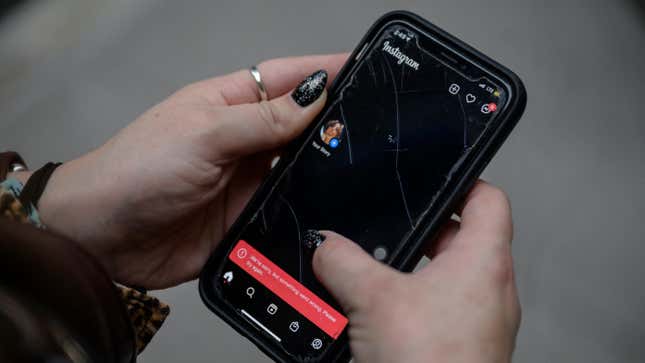
File photo of a woman checking her phone during an Instagram outage in 2021.

File photo of a woman checking her phone during an Instagram outage in 2021.
Photo: Ed Jones (Getty Images)

Meta platforms Facebook, WhatsApp, and Instagram are experiencing a global outage with thousands of reports of the app not working properly since roughly 2 p.m. ET Wednesday.WhatsApp appears to have gone down first, with Instagram and Facebook following suit about 30 minutes later.

Image and media uploads appear to be struggling the most on the platforms, according to internet monitoring service Netblocks, which also notes there are no indications of “country-level internet disruptions or filtering.”

Social media apps have experienced a number of notable outages in recent months, with LinkedIn struggling last month just days after Facebook and Instagram went down for hours.

It appears that some users on WhatsApp are still able to send messages right now, but those messages aren’t being delivered, according to the Verge.

Some X users celebrated as news of Meta’s platforms struggling spread on Wednesday afternoon.

Meta didn’t immediately respond to questions emailed on Wednesday, but the official X account for WhatsApp tweeted, “We know some people are experiencing issues right now, we’re working on getting things back to 100% for everyone as quickly as possible.” Gizmodo will update this post if we hear back.