What Is Cloud Scalability? Types, Benefits & AI-Era Strategies


Quick Summary – What is cloud scalability and why is it crucial today?
Answer: Cloud scalability refers to the capability of a cloud environment to expand or reduce computing, storage and networking resources on demand. Unlike elasticity, which emphasizes short‑term responsiveness, scalability focuses on long‑term growth and the ability to support evolvin                                                                                     g workloads and business objectives. In 2024, public‑cloud infrastructure spending reached $330.4 billion, and analysts expect it to increase to $723 billion in 2025. As generative AI adoption accelerates (92 % of organizations plan to invest in GenAI), scalable cloud architectures become the backbone for innovation, cost efficiency and resilience. This guide explains how cloud scalability works, explores its benefits and challenges, examines emerging trends like AI supercomputers and neoclouds, and shows how Clarifai’s platform enables enterprises to build scalable AI solutions.

Introduction: Why Cloud Scalability Matters for AI‑Native Enterprises

Cloud computing has become the default foundation of digital transformation. Enterprises no longer buy servers for peak loads; they rent capacity on demand, paying only for what they consume. This pay‑as‑you‑go flexibility—combined with rapid provisioning and global reach—has made the cloud indispensable. However, the real competitive advantage lies not just in moving workloads to the cloud but in architecting systems that scale gracefully.

In the AI era, cloud scalability takes on a new meaning. AI workloads—especially generative models, large language models (LLMs) and multimodal models—demand massive amounts of compute, memory and specialized accelerators. They also generate unpredictable spikes in usage as experiments and applications proliferate. Traditional scaling strategies built for web apps cannot keep pace with AI. This article examines how to design scalable cloud architectures for AI and beyond, explores emerging trends such as AI supercomputers and neoclouds, and illustrates how Clarifai’s platform helps customers scale from prototype to production.

Quick Digest: Key Takeaways

  1. Definition & Difference: Cloud scalability is the ability to increase or decrease IT resources to meet demand. It differs from elasticity, which emphasizes rapid, automatic adjustments for short‑term spikes.
  2. Strategic Importance: Public‑cloud infrastructure spending reached $330.4 billion in 2024, with Q4 contributing $90.6 billion, and is projected to rise 21.4 % YoY to $723 billion in 2025. Scalability enables organizations to harness this spending for agility, cost control and innovation, making it a board‑level priority.
  3. Types of Scaling: Vertical scaling adds resources to a single instance; horizontal scaling adds or removes instances; diagonal scaling combines both. Choosing the right model depends on workload characteristics and compliance needs.
  4. Technical Foundations: Auto‑scaling, load balancing, containerization/Kubernetes, Infrastructure as Code (IaC), serverless and edge computing are key building blocks. AI‑driven algorithms (e.g., reinforcement learning, LSTM forecasting) can optimize scaling decisions, reducing provisioning delay by 30 % and increasing resource utilization by 22 %.
  5. Benefits & Challenges: Scalability delivers cost efficiency, agility, performance and reliability but introduces challenges such as complexity, security, vendor lock‑in and governance. Best practices include designing stateless microservices, automated scaling policies, rigorous testing and zero‑trust security.
  6. AI‑Driven Future: Emerging trends like AI supercomputing, cross‑cloud integration, private AI clouds, neoclouds, vertical and industry clouds, serverless, edge and quantum computing will reshape the scalability landscape. Understanding these trends helps future‑proof cloud strategies.
  7. Clarifai Advantage: Clarifai’s platform provides end‑to‑end AI lifecycle management with compute orchestration, auto‑scaling, high‑performance inference, local runners and zero‑trust options, enabling customers to build scalable AI solutions with confidence.

Cloud Scalability vs. Elasticity: Understanding the Core Concepts

At first glance, scalability and elasticity may appear interchangeable. Both involve adjusting resources, but their timescales and strategic purposes differ.

  • Scalability addresses long‑term growth. It is about designing systems that can handle increasing (or decreasing) workloads without performance degradation. Scaling may require architectural changes—such as moving from monolithic servers to distributed microservices—and careful capacity planning. Many enterprises adopt scalability to support sustained growth, expansion into new markets or new product launches. For example, a healthcare provider may scale its AI‑powered imaging platform to support more hospitals across regions.
  • Elasticity, by contrast, emphasizes short‑term, automatic adjustments to handle instantaneous spikes or dips. Auto‑scaling rules (often measured in CPU, memory or request counts) automatically spin up or shut down resources. Elasticity is vital for unpredictable workloads like event‑driven microservices, streaming analytics or marketing campaigns.

A useful analogy from our research compares scalability to hiring permanent staff and elasticity to hiring seasonal workers. Scalability ensures your business has enough capacity to support growth year over year, while elasticity allows you to handle holiday rushes.

Expert Insights

  • Purpose & Implementation: Flexera and ProsperOps emphasize that scalability deals with planned growth and may involve upgrading hardware (vertical scaling) or adding servers (horizontal scaling). Elasticity handles real‑time auto‑scaling for unplanned spikes. A table comparing purpose, implementation, monitoring requirements and cost is essential.
  • AI’s Role in Elasticity: Research shows that reinforcement learning‑based algorithms can reduce provisioning delay by 30 % and operational costs by 20 %. LSTM forecasting improves demand forecasting accuracy by 12 %, enhancing elasticity.
  • Clarifai Perspective: Clarifai’s auto‑scaler monitors model inference loads and automatically adds or removes compute nodes. Paired with the local runner, it supports elastic scaling at the edge while enabling long‑term scalability through cluster expansion.

Why Cloud Scalability Matters in 2026

Scalability isn’t a niche technical detail; it’s a strategic imperative. Several factors make it urgent for leaders in 2026:

  1. Explosion in Cloud Spending: Cloud infrastructure services reached $330.4 billion in 2024, with Q4 alone accounting for $90.6 billion. Gartner expects public‑cloud spending to rise 21.4 % year over year to $723 billion in 2025. As budgets shift from capital expenditure to operational expenditure, leaders must ensure that their investments translate into agility and innovation rather than waste.
  2. Generative AI Adoption: A survey cited by Diamond IT notes that 92 % of companies intend to invest in generative AI within three years. Generative models require enormous compute resources and memory, making scalability a prerequisite.
  3. Boardroom Priority: Diamond IT argues that scalability is not about adding capacity but about ensuring agility, cost control and innovation at scale. Scalability becomes a growth strategy, enabling organizations to expand into new markets, support remote teams, integrate emerging technologies and transform adaptability into a competitive advantage.
  4. AI‑Native Infrastructure Trends: Gartner highlights AI supercomputing as a key trend for 2026. AI supercomputers integrate specialized accelerators, high‑speed networking and optimized storage to process massive datasets and train advanced generative models. This will push enterprises toward sophisticated scaling solutions.
  5. Risk & Resilience: Forrester predicts that AI data‑center upgrades will trigger at least two multiday cloud outages in 2026. Hyperscalers are shifting investments from traditional x86 and ARM servers to GPU‑centric data centers, which can introduce fragility. These outages will prompt enterprises to strengthen operational risk management and even shift workloads to private AI clouds.
  6. Rise of Neoclouds & Private AI: Forrester forecasts that neocloud providers (GPU‑first players like CoreWeave and Lambda) will capture $20 billion in revenue by 2026. Enterprises will increasingly consider private clouds and specialized providers to mitigate outages and protect data sovereignty.

These factors underscore why scalability is central to 2026 planning: it enables innovation while ensuring resilience amid an era of rapid AI adoption and infrastructure volatility.

Expert Insights

  • Industry Advice: CEOs should treat scalability as a growth strategy, not just a technical requirement. Diamond IT advises aligning IT and finance metrics, automating scaling policies, integrating cost dashboards and adopting multi‑cloud architectures.
  • Clarifai’s Market Role: Clarifai positions itself as an AI‑native platform that delivers scalable inference and training infrastructure. Leveraging compute orchestration, Clarifai helps customers scale compute resources across clouds while maintaining cost efficiency and compliance.

Types of Scaling: Vertical, Horizontal & Diagonal

Scalable architectures typically employ three scaling models. Understanding each helps determine which fits a given workload.

Vertical Scaling (Scale Up)

Vertical scaling increases resources (CPU, RAM, storage) within a single server or instance. It’s akin to upgrading your workstation. This approach is straightforward because applications remain on one machine, minimizing architectural changes. Pros include simplicity, lower network latency and ease of management. Cons involve limited headroom—there’s a ceiling on how much you can add—and cost can increase sharply as you move to higher tiers.

Vertical scaling suits monolithic or stateful applications where rewriting for distributed systems is impractical. Industries such as healthcare and finance often prefer vertical scaling to maintain strict control and compliance.

Horizontal Scaling (Scale Out)

Horizontal scaling adds or removes instances (servers, containers) to distribute workload across multiple nodes. It uses load balancers and often requires stateless architectures or data partitioning. Pros include near‑infinite scalability, resilience (failure of one node doesn’t cripple the system) and alignment with cloud‑native architectures. Cons include increased complexity—state management, synchronization and network latency become challenges.

Horizontal scaling is common for microservices, SaaS applications, real‑time analytics, and AI inference clusters. For example, scaling a computer‑vision inference pipeline across GPUs ensures consistent response times even as user traffic spikes.

Diagonal Scaling (Hybrid)

Diagonal scaling combines vertical and horizontal scaling. You scale up a node until it reaches an economical limit and then scale out by adding more nodes. This hybrid approach offers both quick resource boosts and the ability to handle large growth. Diagonal scaling is particularly useful for unpredictable workloads that experience steady growth with occasional spikes.

Best Practices & EEAT Insights

  • Design for statelessness: HPE and ProsperOps recommend building services as stateless microservices to facilitate horizontal scaling. State data should be stored in distributed databases or caches.
  • Use load balancers: Load balancers distribute requests evenly and route around failed instances, improving reliability. They should be configured with health checks and integrated into auto‑scaling groups.
  • Combine scaling models: Most real‑world systems employ diagonal scaling. For instance, Clarifai’s inference servers may vertically scale GPU memory when fine‑tuning models, then horizontally scale out inference nodes during high‑traffic periods.

Technical Approaches & Tools to Achieve Scalability

Building a scalable cloud architecture requires more than selecting scaling models. Modern cloud platforms offer powerful tools and techniques to automate and optimize scaling.

Auto‑Scaling Policies

Auto‑scaling monitors resource usage (CPU, memory, network I/O, queue length) and automatically provisions or deprovisions resources based on thresholds. Predictive auto‑scaling uses forecasts to allocate resources before demand spikes; reactive auto‑scaling responds when metrics exceed thresholds. Flexera notes that auto‑scaling improves cost efficiency and performance. To implement auto‑scaling:

  1. Define metrics & thresholds. Choose metrics aligned with performance goals (e.g., GPU utilization for AI inference).
  2. Set scaling rules. For instance, add two GPU instances if average utilization exceeds 70 % for five minutes; remove one instance if it falls below 30 %.
  3. Use warm pools. Pre‑initialize instances to reduce cold‑start latency.
  4. Test & monitor. Conduct load testing to validate thresholds. Auto‑scaling should not trigger thrashing (rapid, repeated scaling).

Clarifai’s compute orchestration includes auto‑scaling policies that monitor inference workloads and adjust GPU clusters accordingly. AI‑driven algorithms further refine thresholds by analyzing usage patterns.

Load Balancing

Load balancers ensure even distribution of traffic across instances and reroute traffic away from unhealthy nodes. They operate at various layers: Layer 4 (TCP/UDP) or Layer 7 (HTTP). Use health checks to detect failing instances. In AI systems, load balancers can route requests to GPU‑optimized nodes for inference or CPU‑optimized nodes for data preprocessing.

Containerization & Kubernetes

Containers (Docker) package applications and dependencies into portable units. Kubernetes orchestrates containers across clusters, handling deployment, scaling and management. Containerization simplifies horizontal scaling because each container is identical and stateless. For AI workloads, Kubernetes can schedule GPU workloads, manage node pools and integrate with auto‑scaling. Clarifai’s Workflows leverage containerized microservices to chain model inference, data preparation and post‑processing steps.

Infrastructure as Code (IaC)

IaC tools like Terraform, Pulumi and AWS CloudFormation allow you to define infrastructure in declarative files. They enable consistent provisioning, version control and automated deployments. Combined with continuous integration/continuous deployment (CI/CD), IaC ensures that scaling strategies are repeatable and auditable. IaC can create auto‑scaling groups, load balancers and networking resources from code. Clarifai provides templates for deploying its platform via IaC.

Serverless Computing

Serverless platforms (AWS Lambda, Azure Functions, Google Cloud Functions) execute code in response to events and automatically allocate compute. Users are billed for actual execution time. Serverless is ideal for sporadic tasks, such as processing uploaded images or running a scheduled batch job. According to the CodingCops trends article, serverless computing will extend to serverless databases and machine‑learning pipelines in 2026, enabling developers to focus entirely on logic while the platform handles scalability. Clarifai’s inference endpoints can be integrated into serverless functions to perform on‑demand inference.

Edge Computing & Distributed Cloud

Edge computing brings computation closer to users or devices to reduce latency. For real‑time AI applications (e.g., autonomous vehicles, industrial robotics), edge nodes process data locally and sync back to the central cloud. Gartner’s distributed hybrid infrastructure trend emphasises unifying on‑premises, edge and public clouds. Clarifai’s Local Runners allow deploying models on edge devices, enabling offline inference and local data processing with periodic synchronization.

AI‑Driven Optimization

AI models can optimize scaling policies. Research shows that reinforcement learning, LSTM and gradient boosting machines reduce provisioning delays (by 30 %), improve forecasting accuracy and reduce costs. Autoencoders detect anomalies with 97 % accuracy, increasing allocation efficiency by 15 %. AI‑driven cloud computing enables self‑optimizing and self‑healing ecosystems that automatically balance workloads, detect failures and orchestrate recovery. Clarifai integrates AI‑driven analytics to optimize compute usage for inference clusters, ensuring high performance without over‑provisioning.

Benefits of Cloud Scalability

Cost Efficiency

Scalable cloud architectures allow organizations to match resources to demand, avoiding over‑provisioning. Pay‑as‑you‑go pricing means you only pay for what you use, and automated deprovisioning eliminates waste. Research indicates that vertical scaling may require costly hardware upgrades, while horizontal scaling leverages commodity instances for cost‑effective growth. Diamond IT notes that companies see measurable efficiency gains through automation and resource optimization, strengthening profitability.

Agility & Speed

Provisioning new infrastructure manually can take weeks; scalable cloud architectures allow developers to spin up servers or containers in minutes. This agility accelerates product launches, experimentation and innovation. Teams can test new AI models, run A/B experiments or support marketing campaigns with minimal friction. The cloud also enables expansion into new geographic regions with few barriers.

Performance & Reliability

Auto‑scaling and load balancing ensure consistent performance under varying workloads. Distributed architectures reduce single points of failure. Cloud providers offer global data centers and content delivery networks that distribute traffic geographically. When combined with Clarifai’s distributed inference architecture, organizations can deliver low‑latency AI predictions worldwide.

Disaster Recovery & Business Continuity

Cloud providers replicate data across regions and offer disaster‑recovery tools. Automated failover ensures uptime. CloudZero highlights that cloud scalability improves reliability and simplifies recovery. Example: An e‑commerce startup uses automated scaling to handle a 40 % increase in holiday transactions without slower load times or service interruptions.

Support for Innovation & Remote Work

Scalable clouds empower remote teams to access resources from anywhere. Cloud systems enable distributed workforces to collaborate in real time, boosting productivity and diversity. They also provide the compute needed for emerging technologies like VR/AR, IoT and AI.

Challenges & Best Practices

Despite its advantages, scalability introduces risks and complexities.

Challenges

  • Complexity & Legacy Systems: Migrating monolithic applications to scalable architectures requires refactoring, containerization and re‑architecting data stores.
  • Compatibility & Vendor Lock‑In: Reliance on a single cloud provider can result in proprietary architectures. Multi‑cloud strategies mitigate lock‑in but add complexity.
  • Service Interruptions: Upgrades, misconfigurations and hardware failures can cause outages. Forrester warns of multiday outages due to hyperscalers focusing on GPU‑centric data centers.
  • Security & Compliance: Scaling across clouds increases the attack surface. Identity management, encryption and policy enforcement become more challenging.
  • Cost Control: Without proper governance, auto‑scaling can lead to over‑spending. Lack of visibility across multiple clouds hampers optimization.
  • Skills Gap: Many organizations lack expertise in Kubernetes, IaC, AI algorithms and FinOps.

Best Practices

  1. Design Modular & Stateless Services: Break applications into microservices that don’t maintain session state. Use distributed databases, caches and message queues for state management.
  2. Implement Auto‑Scaling & Thresholds: Define clear metrics and thresholds; use predictive algorithms to reduce thrashing. Pre‑warm instances for latency‑sensitive workloads.
  3. Conduct Scalability Tests: Perform load tests to determine capacity limits and optimize scaling rules. Use monitoring tools to spot bottlenecks early.
  4. Adopt Infrastructure as Code: Use IaC for repeatable deployments; version‑control infrastructure definitions; integrate with CI/CD pipelines.
  5. Leverage Load Balancers & Traffic Routing: Distribute traffic across zones; use geo‑routing to send users to the closest region.
  6. Monitor & Observe: Use unified dashboards to track performance, utilization and cost. Connect metrics to business KPIs.
  7. Align IT & Finance (FinOps): Integrate cost intelligence tools; align budgets with usage patterns; allocate costs to teams or projects.
  8. Adopt Zero‑Trust Security: Implement identity‑centric, least‑privilege access; use micro‑segmentation; employ AI‑driven monitoring.
  9. Prepare for Outages: Design for failure; implement multi‑region, multi‑cloud deployments; test failover procedures; consider private AI clouds for critical workloads.
  10. Cultivate Skills & Culture: Train teams in Kubernetes, IaC, FinOps, security and AI. Encourage cross‑functional collaboration.

AI‑Driven Cloud Scalability & the GenAI Era

AI is both driving demand for scalability and providing solutions to manage it.

AI Supercomputing & Generative AI

Gartner identifies AI supercomputing as a major trend. These systems integrate cutting‑edge accelerators, specialized software, high‑speed networking and optimized storage to train and deploy generative models. Generative AI is expanding beyond large language models to multimodal models capable of processing text, images, audio and video. Only AI supercomputers can handle the dataset sizes and compute requirements. Infrastructure & Operations (I&O) leaders must prepare for high‑density GPU clusters, advanced interconnects (e.g., NVLink, InfiniBand) and high‑throughput storage. Clarifai’s platform integrates with GPU‑accelerated environments and uses efficient inference engines to deliver high throughput.

AI‑Driven Resource Management

The research paper “Enhancing Cloud Scalability with AI‑Driven Resource Management” demonstrates that reinforcement learning (RL) can minimize operational costs and provisioning delay by 20–30 %, LSTM networks improve demand forecasting accuracy by 12 %, and GBM models reduce forecast errors by 30 %. Autoencoders detect anomalies with 97 % accuracy, enhancing allocation efficiency by 15 %. These techniques enable predictive scaling, where resources are provisioned before demand spikes, and self‑healing, where the system detects anomalies and recovers automatically. Clarifai’s auto‑scaler incorporates predictive algorithms to pre‑scale GPU clusters based on historical patterns.

Private AI Clouds & Neoclouds

Forrester predicts that AI data‑center upgrades will cause multiday outages, prompting at least 15 % of enterprises to deploy private AI on private clouds. Private AI clouds allow enterprises to run generative models on dedicated infrastructure, maintain data sovereignty and optimize cost. Meanwhile, neocloud providers (GPU‑first players backed by NVIDIA) will capture $20 billion in revenue by 2026. These providers offer specialized infrastructure for AI workloads, often at a lower cost and with more flexible terms than hyperscalers.

Cross‑Cloud Integration & Geopatriation

I&O leaders must also consider cross‑cloud integration, which allows data and workloads to operate collaboratively across public clouds, colocations and on‑premises environments. Cross‑cloud integration enables organizations to avoid vendor lock‑in and optimize cost, performance and sovereignty. Gartner introduces geopatriation, or relocating workloads from hyperscale clouds to local providers due to geopolitical risks. Combined with distributed hybrid infrastructure (unifying on‑prem, edge and cloud), these trends reflect the need for flexible, sovereign and scalable architectures.

Vertical & Industry Clouds

The CodingCops trend list highlights vertical clouds—industry‑specific clouds preloaded with regulatory compliance and AI models (e.g., financial clouds with fraud detection, healthcare clouds with HIPAA compliance). As industries demand more customized solutions, vertical clouds will evolve into turnkey ecosystems, making scalability domain‑specific. Industry cloud platforms integrate SaaS, PaaS and IaaS into complete offerings, delivering composable and AI‑based capabilities. Clarifai’s model zoo includes pre‑trained models for industries like retail, public safety and manufacturing, which can be fine‑tuned and scaled across clouds.

Edge, Serverless & Quantum Computing

Edge computing reduces latency for mission‑critical AI by processing data close to devices. Serverless computing, which will expand to include serverless databases and ML pipelines, allows developers to run code without managing infrastructure. Quantum computing as a service will enable experimentation with quantum algorithms on cloud platforms. These innovations will introduce new scaling paradigms, requiring orchestration across heterogeneous environments.

Implementation Guide: Building a Scalable Cloud Architecture

This step‑by‑step guide helps organizations design and implement scalable architectures that support AI and data‑intensive workloads.

1. Assess Workloads and Requirements

Start by identifying workloads (web services, batch processing, AI training, inference, data analytics). Determine performance goals (latency, throughput), compliance requirements (HIPAA, GDPR), and forecasted growth. Evaluate dependencies and stateful components. Use capacity planning and load testing to estimate resource needs and baseline performance.

2. Define a Clear Cloud Strategy

Develop a business‑driven cloud strategy that aligns IT initiatives with organizational goals. Decide which workloads belong in public cloud, private cloud or on‑premises. Plan for multi‑cloud or hybrid architectures to avoid lock‑in and improve resilience.

3. Choose Scaling Models

For each workload, determine whether vertical, horizontal or diagonal scaling is appropriate. Monolithic, stateful or regulated workloads may benefit from vertical scaling. Stateless microservices, AI inference and web applications often use horizontal scaling. Many systems employ diagonal scaling—scale up to an optimal size, then scale out as demand grows.

4. Design Stateless Microservices & APIs

Refactor applications into microservices with clear APIs. Use external data stores (databases, caches) for state. Microservices enable independent scaling and deployment. When designing AI pipelines, separate data preprocessing, model inference and post‑processing into distinct services using Clarifai’s Workflows.

5. Implement Auto‑Scaling & Load Balancing

Configure auto‑scaling groups with appropriate metrics and thresholds. Use predictive algorithms to pre‑scale when necessary. Employ load balancers to distribute traffic across regions and instances. For AI inference, route requests to GPU‑optimized nodes. Use warm pools to reduce cold‑start latency.

6. Adopt Containers, Kubernetes & IaC

Containerize services with Docker and orchestrate them using Kubernetes. Use node pools to separate general workloads from GPU‑accelerated tasks. Leverage Kubernetes’ Horizontal Pod Autoscaler (HPA) and Vertical Pod Autoscaler (VPA). Define infrastructure in code using Terraform or similar tools. Integrate infrastructure deployment with CI/CD pipelines for consistent environments.

7. Integrate Edge & Serverless

Deploy latency‑sensitive workloads at the edge using Clarifai’s Local Runners. Use serverless functions for sporadic tasks such as file ingestion or scheduled clean‑up. Combine edge and cloud by sending aggregated results to central services for long‑term storage and analytics. Explore distributed hybrid infrastructure to unify on‑prem, edge and cloud.

8. Adopt Multi‑Cloud Strategies

Distribute workloads across multiple clouds for resilience, performance and cost optimization. Use cross‑cloud integration tools to manage data consistency and networking. Evaluate sovereignty requirements and regulatory considerations (e.g., storing data in specific jurisdictions). Clarifai’s compute orchestration can deploy models across AWS, Google Cloud and private clouds, offering unified control.

9. Embed Security & Governance (Zero‑Trust)

Implement zero‑trust architecture: identity is the perimeter, not the network. Use adaptive identity management, micro‑segmentation and continuous monitoring. Automate policy enforcement with AI‑driven tools. Consider emerging technologies such as blockchain, homomorphic encryption and confidential computing to protect sensitive workloads across clouds. Integrate compliance checks into deployment pipelines.

10. Monitor, Optimize & Evolve

Collect metrics across compute, network, storage and costs. Use unified dashboards to connect technical metrics with business KPIs. Continuously refine auto‑scaling thresholds based on historical usage. Adopt FinOps practices to allocate costs to teams, set budgets and identify waste. Conduct periodic architecture reviews and incorporate emerging technologies (AI supercomputers, neoclouds, vertical clouds) to stay ahead.

Security & Compliance Considerations

Scalable architectures must incorporate robust security from the ground up.

Zero‑Trust Security Framework

With workloads distributed across public clouds, private clouds, edge nodes and serverless platforms, the traditional network perimeter disappears. Zero‑trust security requires verifying every access request, regardless of location. Key elements include:

  • Identity & Access Management (IAM): Implement least‑privilege policies, multi‑factor authentication and role‑based access control.
  • Micro‑Segmentation: Use network policies (e.g., Kubernetes NetworkPolicies) to isolate workloads.
  • Continuous Monitoring & AI‑Driven Detection: Research shows that integrating AI‑driven monitoring and policy enforcement improves threat detection and compliance while incurring minimal performance overhead. Autoencoders and deep‑learning models can detect anomalies in real time.
  • Encryption & Confidential Computing: Encrypt data in transit and at rest; use confidential computing to protect data during processing. Emerging technologies such as blockchain, homomorphic encryption and confidential computing are listed as enablers for secure, scalable multi‑cloud architectures.
  • Zero‑Trust for AI Models: AI models themselves must be protected. Use model access controls, secure inference endpoints and watermarking to detect unauthorized use. Clarifai’s platform supports authentication tokens and role‑based access to models.

Compliance & Governance

  • Regulatory Requirements: Ensure cloud providers meet industry regulations (HIPAA, GDPR, PCI DSS). Vertical clouds simplify compliance by offering prebuilt modules.
  • Audit Trails: Capture logs of scaling events, configuration changes and data access. Use centralized logging and SIEM tools for forensic analysis.
  • Policy Automation: Automate policy enforcement using IaC and CI/CD pipelines. Ensure that scaling actions do not violate governance rules or misconfigure networks.

Future Trends & Emerging Topics

Looking beyond 2026, several trends will shape cloud scalability and AI deployments.

  1. AI Supercomputers & Specialized Hardware: Purpose‑built AI systems will integrate cutting‑edge accelerators (GPUs, TPUs, AI chips), high‑speed interconnects and optimized storage. Hyperscalers and neoclouds will offer dedicated AI clusters. New chips like NVIDIA Blackwell, Google Axion and AWS Graviton4 are set to power next‑gen AI workloads.
  2. Geopatriation & Sovereignty: Geopolitical tensions will drive organizations to move workloads to local providers, giving rise to geopatriation. Enterprises will evaluate cloud providers based on sovereignty, compliance and resilience.
  3. Cross‑Cloud Integration & Distributed Hybrid Infrastructure: Customers will avoid dependence on a single cloud provider by adopting cross‑cloud integration, enabling workloads to operate across multiple clouds. Distributed hybrid infrastructures unify on‑prem, edge and public clouds, enabling agility.
  4. Industry & Vertical Clouds: Industry cloud platforms and vertical clouds will emerge, offering packaged compliance and AI models for specific sectors.
  5. Serverless Expansion & Quantum Integration: Serverless computing will extend beyond functions to include serverless databases and ML pipelines, enabling fully managed AI workflows. Quantum computing integration will provide cloud access to quantum algorithms for cryptography and optimization.
  6. Neoclouds & Private AI: Specialized providers (neoclouds) will offer GPU‑first infrastructure, capturing significant market share as enterprises seek flexible, cost‑effective AI platforms. Private AI clouds will grow as companies aim to control data and costs.
  7. AI‑Powered AIOps & Data Fabric: AI will automate IT operations (AIOps), predicting failures and remediating issues. Data fabric and data mesh architectures will be key to enabling AI‑driven insights by providing a unified data layer.
  8. Sustainability & Green Cloud: As organizations strive to reduce their carbon footprint, cloud providers will invest in energy‑efficient data centers, renewable energy and carbon‑aware scheduling. AI can optimize energy usage and predict cooling needs.

Staying informed about these trends helps organizations build future‑proof strategies and avoid lock‑in to dated architectures.

Creative Examples & Case Studies

To illustrate the principles discussed, consider these scenarios (names anonymized for confidentiality):

Retail Startup: Handling Holiday Traffic

A retail start‑up running an online marketplace experienced a 40 % increase in transactions during the holiday season. Using Clarifai’s compute orchestration and auto‑scaling, the company defined thresholds based on request rate and latency. GPU clusters were pre‑warmed to handle AI‑powered product recommendations. Load balancers routed traffic across multiple regions. As a result, the startup maintained fast page loads and processed transactions seamlessly. After the promotion, auto‑scaling scaled down resources to control costs.

Expert insight: The CTO noted that automation eliminated manual provisioning, freeing engineers to focus on product innovation. Integrating cost dashboards with scaling policies helped the finance team monitor spend in real time.

Healthcare Platform: Scalable AI Imaging

A healthcare provider built an AI‑powered imaging platform to detect anomalies in X‑rays. Regulatory requirements necessitated on‑prem deployment for patient data. Using Clarifai’s local runners, the team deployed models on hospital servers. Vertical scaling (adding GPUs) provided the necessary compute for training and inference. Horizontal scaling across hospitals allowed the system to support more facilities. Autoencoders detected anomalies in resource usage, enabling predictive scaling. The platform achieved 97 % anomaly detection accuracy and improved resource allocation by 15 %.

Expert insight: The provider’s IT director emphasized that zero‑trust security and HIPAA compliance were integrated from the outset. Micro‑segmentation and continuous monitoring ensured that patient data remained secure while scaling.

Manufacturing Firm: Predictive Maintenance with Edge AI

A manufacturing company implemented predictive maintenance for machinery using edge devices. Sensors collected vibration and temperature data; local runners performed real‑time inference using Clarifai’s models, and aggregated results were sent to the central cloud for analytics. Edge computing reduced latency, and auto‑scaling in the cloud handled periodic data bursts. The combination of edge and cloud improved uptime and reduced maintenance costs. Using RL‑based predictive models, the firm reduced unplanned downtime by 25 % and decreased operational costs by 20 %.

Research Lab: Multi‑Cloud, GenAI & Cross‑Cloud Integration

A research lab working on generative biology models used Clarifai’s platform to orchestrate training and inference across multiple clouds. Horizontal scaling across AWS, Google Cloud and a private cluster ensured resilience. Cross‑cloud integration allowed data sharing without duplication. When a hyperscaler outage occurred, workloads automatically shifted to the private cluster, minimizing disruption. The lab also leveraged AI supercomputers for model training, enabling multimodal models that integrate DNA sequences, images and textual annotations.

AI Start‑up: Neocloud Adoption

An AI start‑up opted for a neocloud provider offering GPU‑first infrastructure. This provider offered lower cost per GPU hour and flexible contract terms. The start‑up used Clarifai’s model orchestration to deploy models across the neocloud and a major hyperscaler. This hybrid approach provided the benefits of neocloud pricing while maintaining access to hyperscaler services. The company achieved faster training cycles and reduced costs by 30 %. They credited Clarifai’s orchestration APIs for simplifying deployment across providers.

Clarifai’s Solutions for Scalable AI Deployment

Clarifai is a market leader in AI infrastructure and model deployment. Its platform addresses the entire AI lifecycle—from data annotation and model training to inference, monitoring and governance—while providing scalability, security and flexibility.

Compute Orchestration

Clarifai’s Compute Orchestration manages compute clusters across multiple clouds and on‑prem environments. It automatically provisions GPUs, CPUs and memory based on model requirements and usage patterns. Users can configure auto‑scaling policies with granular controls (e.g., per‑model thresholds). The orchestrator integrates with Kubernetes and container services, enabling horizontal and vertical scaling. It supports hybrid and multi‑cloud deployments, ensuring resilience and cost optimization. Predictive algorithms reduce provisioning delay and minimize over‑provisioning, drawing on research‑backed techniques.

Model Inference API & Workflows

Clarifai’s Model Inference API provides high‑performance inference endpoints for vision, NLP and multimodal models. The API scales automatically, routing requests to available inference nodes. Workflows allow chaining multiple models and functions into pipelines—for example, combining object detection, classification and OCR. Workflows are containerized, enabling independent scaling. Users can monitor latency, throughput and cost metrics in real time. The API supports serverless integrations and can be invoked from edge devices.

Local Runners

For customers with data residency, latency or offline requirements, Local Runners deploy models on local hardware (edge devices, on‑prem servers). They support vertical scaling (adding GPUs) and horizontal scaling across multiple nodes. Local runners sync with the central platform for updates and monitoring, enabling consistent governance. They integrate with zero‑trust frameworks and support encryption and secure boot.

Model Zoo & Fine‑Tuning

Clarifai offers a Model Zoo with pre‑trained models for tasks like object detection, face analysis, optical character recognition (OCR), sentiment analysis and more. Users can fine‑tune models with their own data. Fine‑tuned models can be packaged into containers and deployed at scale. The platform manages versioning, A/B testing and rollback.

Security & Governance

Clarifai incorporates role‑based access control, audit logging and encryption. It supports private cloud and on‑prem installations for sensitive environments. Zero‑trust policies ensure that only authorized users and services can access models. Compliance tools help meet regulatory requirements, and integration with IaC allows policy automation.

Cross‑Cloud & Hybrid Deployments

Through its compute orchestrator, Clarifai enables cross‑cloud deployment, balancing workloads across AWS, Google Cloud, Azure, private clouds and neocloud providers. This not only enhances resilience but also optimizes cost by selecting the most economical platform for each task. Users can define rules to route inference to the nearest region or to specific providers for compliance reasons. The orchestrator handles data synchronization and ensures consistent model versions across clouds.

Frequently Asked Questions

Q1. What is cloud scalability?
A: Cloud scalability refers to the ability of cloud environments to increase or decrease computing, storage and networking resources to meet changing workloads without compromising performance or availability.

Q2. How does scalability differ from elasticity?
A: Scalability focuses on long‑term growth and planned increases (or decreases) in capacity. Elasticity focuses on short‑term, automatic adjustments to sudden fluctuations in demand.

Q3. What are the main types of scaling?
A: Vertical scaling adds resources to a single instance; horizontal scaling adds or removes instances; diagonal scaling combines both.

Q4. What are the benefits of scalability?
A: Key benefits include cost efficiency, agility, performance, reliability, business continuity and support for innovation.

Q5. What challenges should I expect?
A: Challenges include complexity, vendor lock‑in, security and compliance, cost control, latency and skills gaps.

Q6. How do I choose between vertical and horizontal scaling?
A: Choose vertical scaling for monolithic, stateful or regulated workloads where upgrading resources is simpler. Choose horizontal scaling for stateless microservices, AI inference and web applications requiring resilience and rapid growth. Many systems use diagonal scaling.

Q7. How can I implement scalable AI workloads with Clarifai?
A: Clarifai’s platform provides compute orchestration for auto‑scaling compute across clouds, Model Inference API for high‑performance inference, Workflows for chaining models, and Local Runners for edge deployment. It supports IaC, Kubernetes and cross‑cloud integrations, enabling you to scale AI workloads securely and efficiently.

Q8. What future trends should I prepare for?
A: Prepare for AI supercomputers, neoclouds, private AI clouds, cross‑cloud integration, industry clouds, serverless expansion, quantum integration, AIOps, data mesh and sustainability initiatives

Top 10 Code Generation Model APIs for IDEs & AI Agents


Quick summaryWhat are code‑generation model APIs and which ones should developers use in 2026?
Answer: Code‑generation APIs are AI services that generate, complete or refactor code when given natural‑language prompts or partial code. Modern models go beyond autocomplete; they can read entire repositories, call tools, run tests and even open pull requests. This guide compares leading APIs (OpenAI’s Codex/GPT‑5, Anthropic’s Claude, Google’s Gemini, Amazon Q, Mistral’s Codestral, DeepSeek R1, Clarifai’s StarCoder2, IQuest Coder, Meta’s open models and multi‑agent platforms like Stride 100×) on features such as context window, tool integration and cost. It also explores emerging research – diffusion language models, recursive language models and code‑flow training – and shows how to integrate these APIs into your IDE, agentic workflows and CI/CD pipelines. Each section includes expert insights to help you make informed decisions.

The explosion of AI coding assistants over the past few years has changed how developers write, test and deploy software. Instead of manually composing boilerplate or searching Stack Overflow, engineers now leverage code‑generation models that speak natural language and understand complex repositories. These services are available through APIs and IDE plug‑ins, making them accessible to freelancers and enterprises alike. As the landscape evolves, new models emerge with larger context windows, better reasoning and more efficient architectures. In this article we’ll compare the top 10 code‑generation model APIs for 2026, explain how to evaluate them, and highlight research trends shaping their future. As a market‑leading AI company, Clarifai believes in transparency, fairness and responsible innovation; we’ll integrate our own products where relevant and share practices that align with EEAT (Expertise, Experience, Authoritativeness and Trustworthiness). Let’s dive in.

Quick Digest – What You’ll Learn

  • Definition and importance of code‑generation APIs and why they matter for IDEs, agents and automation.
  • Evaluation criteria: supported languages, context windows, tool integration, benchmarks, cost and privacy.
  • Comparative profiles for ten leading models, including proprietary and open‑source options.
  • Step‑by‑step integration guide for IDEs, agentic coding and CI/CD pipelines.
  • Emerging trends: diffusion models, recursive language models, code‑flow training, RLVR and on‑device models.
  • Real‑world case studies and expert quotes to ground theoretical concepts in practice.
  • FAQs addressing common concerns about adoption, privacy and the future of AI coding.

What Are Code‑Generation Model APIs and Why Do They Matter?

Quick summary – What do code‑generation APIs do?
These APIs allow developers to offload coding tasks to AI. Modern models can generate functions from natural‑language descriptions, refactor legacy modules, write tests, find bugs and even document code. They work through REST endpoints or IDE extensions, returning structured outputs that can be integrated into projects.

Coding assistants began as autocomplete tools but have evolved into agentic systems that read and edit entire repositories. They integrate with IDEs, command‑line interfaces and continuous‑integration pipelines. In 2026, the market offers dozens of models with different strengths—some excel at reasoning, others at scaling to millions of tokens, and some are open‑source for self‑hosting.

Why These APIs Are Transforming Software Development

  • Time‑to‑market reduction: AI assistants automate repetitive tasks like scaffolding, documentation and testing, freeing engineers to focus on architecture and product features. Studies show that developers adopting AI tools reduce coding time and accelerate release cycles.
  • Quality and consistency: The best models incorporate training data from diverse repositories and can spot errors, enforce style guides and suggest security improvements. Some even integrate vulnerability scanning into the generation process.
  • Agentic workflows: Instead of writing code line by line, developers now orchestrate fleets of autonomous agents. In this paradigm, a conductor works with a single agent in an interactive loop, while an orchestrator coordinates multiple agents running concurrently. This shift empowers teams to handle large projects with fewer engineers, but it requires new thinking around prompts, context management and oversight.

Expert Insights – What the Experts Are Saying

  • Plan before you code. Google Chrome engineering manager Addy Osmani urges developers to start with a clear specification and break work into small, iterative tasks. He notes that AI coding is “difficult and unintuitive” without structure, recommending a mini waterfall process (planning in 15 minutes) before writing any code.
  • Provide extensive context. Experienced users emphasize the need to feed AI models with all relevant files, documentation and constraints. Tools like Claude Code support importing entire repositories and summarizing them into manageable prompts.
  • Mix models for best results. Clarifai’s industry guide underscores that there is no single “best” model; combining large general models with smaller domain‑specific ones can improve accuracy and reduce cost.

How to Evaluate Code‑Generation APIs (Key Criteria)

Supported Languages & Domains

Models like StarCoder2 and Codestral are trained on over 600 programming languages. Others specialize in Python, Java or JavaScript. Consider the languages your team uses, as models may handle dynamic typing differently or lack proper indentation for certain languages.

Context Window & Memory

A longer context means the model can analyze larger codebases and maintain coherence across multiple files. Leading models now offer context windows from 128 k tokens (Claude Sonnet, DeepSeek R1) up to 1 M tokens (Gemini 2.5 Pro). Clarifai’s experts note that contexts of 128 k–200 k tokens enable end‑to‑end documentation summarization and risk analysis.

Agentic Capabilities & Tool Integration

Basic completion models return a snippet given a prompt; advanced agentic models can run tests, open files, call external APIs and even search the web. For example, Claude Code’s Agent SDK can read and edit files, run commands and coordinate subagents for parallel tasks. Multi‑agent frameworks like Stride 100× map codebases, create tasks and open pull requests autonomously.

Benchmarks & Accuracy

Benchmarks help quantify performance across tasks. Common tests include:

  • HumanEval/EvalPlus: Measures the model’s ability to generate correct Python functions from descriptions and handle edge cases.
  • SWE‑Bench: Evaluates real‑world software engineering tasks by editing entire GitHub repositories and running unit tests.
  • APPS: Assesses algorithmic reasoning with complex problem setsx

Note that a high score on one benchmark doesn’t guarantee general success; look at multiple metrics and user reviews.

Performance & Cost

Large proprietary models offer high accuracy but may be expensive; open‑source models provide control and cost savings. Clarifai’s compute orchestration lets teams spin up secure environments, test multiple models simultaneously and run inference locally with on‑premises runners. This infrastructure helps optimize cost while maintaining security and compliance.

Expert Insights – Recommendations from Research

  • Smaller models can outperform larger ones. MIT researchers developed a technique that guides small language models to produce syntactically valid code, allowing them to outperform larger models while being more efficient.
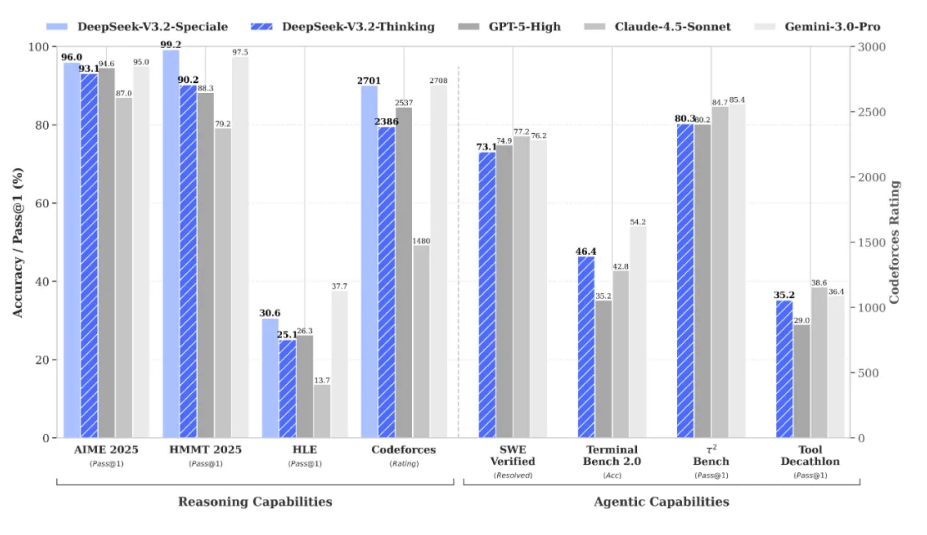
  • Reasoning models dominate the future. DeepSeek R1’s use of Reinforcement Learning with Verifiable Rewards (RLVR) demonstrates that reasoning‑oriented training significantly improves performance.
  • Diffusion models enable bidirectional context. JetBrains researchers show that diffusion language models can generate out of order by conditioning on past and future context, mirroring how developers revise code.

Quick summary – What should developers look for when choosing a model?
Look at supported languages, context window length, agentic capabilities, benchmarks and accuracy, cost/pricing, and privacy/security features. Balancing these factors helps match the right model to your workflow.


Which Code‑Generation APIs Are Best for 2026? (Top Models Reviewed)

Below we profile the ten most influential models and platforms. Each section includes a quick summary, key capabilities, strengths, limitations and expert insights. Remember to evaluate models in the context of your stack, budget and regulatory requirements.

1. OpenAI Codex & GPT‑5 – Powerful Reasoning and Massive Context

Quick summary – Why consider Codex/GPT‑5?
OpenAI’s Codex models (the engine behind early GitHub Copilot) and the latest GPT‑5 family are highly capable across languages and frameworks. GPT‑5 offers context windows of up to 400 k tokens and strong reasoning, while GPT‑4.1 provides balanced instruction following with up to 1 M tokens in some variants. These models support function calling and tool integration via the OpenAI API, making them suitable for complex workflows.

What They Do Well

  • Versatile generation: Supports a wide range of languages and tasks, from simple snippets to full application scaffolding.
  • Agentic integration: The API allows function calling to access external services and run code, enabling agentic behaviors. The models can work through IDE plug‑ins (Copilot), ChatGPT and command‑line interfaces.
  • Extensive ecosystem: Rich set of tutorials, plug‑ins and community tools. Copilot integrates directly into VS Code and JetBrains, offering real‑time suggestions and AI chat.

Limitations

  • Cost: Pricing is higher than many open‑source alternatives, especially for large context usage. The pay‑as‑you‑go model can lead to unpredictable expenses without careful monitoring.
  • Privacy: Code submitted to the API is processed by OpenAI’s servers, which may be a concern for regulated industries. Self‑hosting is not available.

Expert Insights

  • Developers find success when they structure prompts as if they were pair‑programming with a human. Addy Osmani notes that you should treat the model like a junior engineer—provide context, ask it to write a spec first and then generate code piece by piece.
  • Researchers emphasize that reasoning‑oriented post‑training, such as RLVR, enhances the model’s ability to explain its thought process and produce correct answers.

2. Anthropic Claude Sonnet 4.5 & Claude Code – Safety and Instruction Following

Quick summary – How does Claude differ?
Anthropic’s Claude Sonnet models (v3.7 and v4.5) emphasize safe, polite and robust instruction following. They offer 128 k context windows and excel at multi‑file reasoning and debugging. The Claude Code API adds an Agent SDK that grants AI agents access to your file system, enabling them to read, edit and execute code.

What They Do Well

  • Extended context: Supports large prompts, allowing analysis of entire repositories.
  • Agent SDK: Agents can run CLI commands, edit files and search the web, coordinating subagents and managing context.
  • Safety controls: Anthropic places strict alignment measures on outputs, reducing harmful or insecure suggestions.

Limitations

  • Availability: Not all features (e.g., Claude Code SDK) are widely available. There may be waitlists or capacity constraints.
  • Cost: Paid tiers can be expensive at scale.

Expert Insights

  • Anthropic recommends giving agents enough context—whole files, documentation and tests—to achieve good results. Their SDK automatically compacts context to avoid hitting the token limit.
  • When building agents, think about parallelism: subagents can handle independent tasks concurrently, speeding up workflows.

3. Google Gemini Code Assist (Gemini 2.5 Pro) – 1 M Token Context & Multimodal Intelligence

Quick summary – What sets Gemini 2.5 Pro apart?
Gemini 2.5 Pro extends Google’s Gemini family into coding. It offers up to 1 M tokens of context and can process code, text and images. Gemini Code Assist integrates with Google Cloud’s CLI and IDE plug‑ins, providing conversational assistance, code completion and debugging.

What It Does Well

  • Massive context: The 1 M token window allows entire repositories and design docs to be loaded into a prompt—ideal for summarizing codebases or performing risk analysis.
  • Multimodal capabilities: It can interpret screenshots, diagrams and user interfaces, which is valuable for UI development.
  • Integration with Google’s ecosystem: Works seamlessly with Firebase, Cloud Build and other GCP services.

Limitations

  • Private beta: Gemini 2.5 Pro may be in limited release; access may be restricted.
  • Cost and data privacy: Like other proprietary models, data must be sent to Google’s servers.

Expert Insights

  • Clarifai’s industry guide notes that multimodal intelligence and retrieval‑augmented generation are major trends in next‑generation models. Gemini leverages these innovations to contextualize code with documentation, diagrams and search results.
  • JetBrains researchers suggest that models with bi‑directional context, like diffusion models, may better mirror how developers refine code; Gemini’s long context helps approximate this behavior.

4. Amazon Q Developer (Formerly CodeWhisperer) – AWS Integration & Security Scans

Quick summary – Why choose Amazon Q?
Amazon’s Q Developer (formerly CodeWhisperer) focuses on secure, AWS‑optimized code generation. It supports multiple languages and integrates deeply with AWS services. The tool suggests code snippets, infrastructure‑as‑code templates and even policy recommendations.

What It Does Well

  • AWS integration: Provides context‑aware recommendations that automatically configure IAM policies, Lambda functions and other AWS resources.
  • Security and licensing checks: Scans code for vulnerabilities and compliance issues, offering remediation suggestions.
  • Free tier for individuals: Offers unlimited usage for one user in certain tiers, making it accessible to hobbyists and small startups.

Limitations

  • Platform lock‑in: Best suited for developers deeply invested in AWS. Projects hosted elsewhere may see less benefit.
  • Boilerplate bias: May emphasize AWS‑specific patterns over general solutions, and suggestions can feel generic.

Expert Insights

  • Reviews emphasize using Amazon Q when you are already within the AWS ecosystem; it shines when you need to generate serverless functions, CloudFormation templates or manage IAM policies.
  • Keep in mind the trade‑offs between convenience and vendor lock‑in; evaluate portability if you need multi‑cloud support.

5. Mistral Codestral – Open Weights and Fill‑in‑the‑Middle

Quick summary – What makes Codestral unique?
Codestral
is a 22 B parameter model released by Mistral. It is trained on 80+ programming languages, supports fill‑in‑the‑middle (FIM) and has a dedicated API endpoint with a generous beta period.

What It Does Well

  • Open weights: Codestral’s weights are freely available, enabling self‑hosting and fine‑tuning.
  • FIM capabilities: It excels at infilling missing code segments, making it ideal for refactoring and partial edits. Developers report high accuracy on benchmarks like HumanEval.
  • Integration into popular tools: Supported by frameworks like LlamaIndex and LangChain and IDE extensions such as Continue.dev and Tabnine.

Limitations

  • Context size: While robust, it may not match the 128 k+ windows of newer proprietary models.
  • Documentation and support: Being a newer entrant, community resources are still developing.

Expert Insights

  • Developers praise Codestral for offering open weights and competitive performance, enabling experimentation without vendor lock‑in.
  • Clarifai recommends combining open models like Codestral with specialized models through compute orchestration to optimize cost and accuracy.

6. DeepSeek R1 & Chat V3 – Affordable Open‑Source Reasoning Models

Quick summary – Why choose DeepSeek?
DeepSeek R1
and Chat V3 are open‑source models renowned for introducing Reinforcement Learning with Verifiable Rewards (RLVR). R1 matches proprietary models on coding benchmarks while being cost‑effective.

What They Do Well

  • Reasoning‑oriented training: RLVR enables the model to produce detailed reasoning and step‑by‑step solutions.
  • Competitive benchmarks: DeepSeek R1 performs well on HumanEval, SWE‑Bench and APPS, often rivaling larger proprietary models.
  • Cost and openness: The model is open weight, allowing for self‑hosting and modifications. Context windows of up to 128 k tokens support large codebases.

Limitations

  • Ecosystem: While growing, DeepSeek’s ecosystem is smaller than those of OpenAI or Anthropic; plug‑ins and tutorials may be limited.
  • Performance variance: Some developers report inconsistencies when moving between languages or domains.

Expert Insights

  • Researchers emphasize that RLVR and similar techniques show that smaller, well‑trained models can compete with giants, thereby democratizing access to powerful coding assistants.
  • Clarifai notes that open‑source models can be combined with domain‑specific models via compute orchestration to tailor solutions for regulated industries.

7. Clarifai StarCoder2 & Compute Orchestration Platform – Balanced Performance and Trust

Quick summary – Why pick Clarifai?
StarCoder2‑15B is Clarifai’s flagship code‑generation model. It is trained on more than 600 programming languages and offers a large context window with robust performance. It is accessible through Clarifai’s platform, which includes compute orchestration, local runners and fairness dashboards.

What It Does Well

  • Performance and breadth: Handles diverse languages and tasks, making it a versatile choice for enterprise projects. The model’s API returns consistent results with secure handling.
  • Compute orchestration: Clarifai’s platform allows teams to spin up secure environments, run multiple models in parallel and monitor performance. Local runners enable on‑premises inference, addressing data‑privacy requirements.
  • Fairness and bias monitoring: Built‑in dashboards help detect and mitigate bias across outputs, supporting responsible AI development.

Limitations

  • Parameter size: At 15 B parameters, StarCoder2 may not match the raw power of 40 B+ models, but it strikes a balance between capability and efficiency.
  • Community visibility: As a newer entrant, it may not have as many third‑party integrations as older models.

Expert Insights

  • Clarifai experts advocate for mixing models—using general models like StarCoder2 alongside domain‑specific small models to achieve optimal results.
  • The company highlights emerging innovations such as multimodal intelligence, chain‑of‑thought reasoning, mixture‑of‑experts architectures and retrieval‑augmented generation, all of which the platform is designed to support.

8. IQuest Coder V1 – Code‑Flow Training and Efficient Architectures

Quick summary – What’s special about IQuest Coder?
IQuest Coder comes from the AI research arm of a quantitative hedge fund. Released in January 2026, it introduces code‑flow training—training on commit histories and how code evolves over time. It offers Instruct, Thinking and Loop variants, with parameter sizes ranging from 7 B to 40 B.

What It Does Well

  • High benchmarks with fewer parameters: The 40 B variant achieves 81.4 % on SWE‑Bench Verified and 81.1 % on LiveCodeBench, matching or beating models with 400 B+ parameters.
  • Reasoning and efficiency: The Thinking variant employs reasoning‑driven reinforcement learning and a 128 k context window. The Loop variant uses a recurrent transformer architecture to reduce resource usage.
  • Open source: Full model weights, training code and evaluation scripts are available for download.

Limitations

  • New ecosystem: Being new, IQuest’s community support and integrations are still emerging.
  • Licensing constraints: The license includes restrictions on commercial use by large companies.

Expert Insights

  • The success of IQuest Coder underscores that innovation in training methodology can outperform pure scaling. Code‑flow training teaches the model how code evolves, leading to more coherent suggestions during refactoring.
  • It also highlights that industry outsiders—such as hedge funds—are now building state‑of‑the‑art models, hinting at a broader democratization of AI research.

9. Meta’s Code Llama & Llama 4 Code / Qwen & Other Open‑Source Alternatives – Massive Context & Community

Quick summary – Where do open models like Code Llama and Qwen fit?
Meta’s Code Llama and Llama 4 Code offer open weights with context windows up to 10 M tokens, making them suitable for huge codebases. Qwen‑Code and similar models provide multilingual support and are freely available.

What They Do Well

  • Scale: Extremely long contexts allow analysis of entire monorepos.
  • Open ecosystem: Community‑driven development leads to new fine‑tunes, benchmarks and plug‑ins.
  • Self‑hosting: Developers can deploy these models on their own hardware for privacy and cost control.

Limitations

  • Lower performance on some benchmarks: While impressive, these models may not match the reasoning of proprietary models without fine‑tuning.
  • Hardware requirements: Running 10 M‑token models demands significant VRAM and compute; not all teams can support this.

Expert Insights

  • Clarifai’s guide highlights that edge and on‑device models are a growing trend. Self‑hosting open models like Code Llama may be critical for applications requiring strict data control.
  • Using mixture‑of‑experts or adapter modules can extend these models’ capabilities without retraining the whole network.

10. Stride 100×, Tabnine, GitHub Copilot & Agentic Frameworks – Orchestrating Fleets of Models

Quick summary – Why consider agentic frameworks?
In addition to standalone models, multi‑agent platforms like Stride 100×, Tabnine, GitHub Copilot, Cursor, Continue.dev and others provide orchestration and integration layers. They connect models, code repositories and deployment pipelines, creating an end‑to‑end solution.

What They Do Well

  • Task orchestration: Stride 100× maps codebases, creates tasks and generates pull requests automatically, allowing teams to manage technical debt and feature work.
  • Privacy & self‑hosting: Tabnine offers on‑prem solutions for organizations that need full control over their code. Continue.dev and Cursor provide open‑source IDE plug‑ins that can connect to any model.
  • Real‑time assistance: GitHub Copilot and similar tools offer inline suggestions, doc generation and chat functionality.

Limitations

  • Ecosystem differences: Each platform ties into specific models or API providers. Some offer only proprietary integrations, while others support open‑source models.
  • Subscription costs: Orchestration platforms often use seat‑based pricing, which can add up for large teams.

Expert Insights

  • According to Qodo AI’s analysis, multi‑agent systems are the future of AI coding. They predict that developers will increasingly rely on fleets of agents that generate code, review it, create documentation and manage tests.
  • Addy Osmani distinguishes between conductor tools (interactive, synchronous) and orchestrator tools (asynchronous, concurrent). The choice depends on whether you need interactive coding sessions or large automated refactors.

How to Integrate Code‑Generation APIs into Your Workflow

Quick summary – What’s the best way to use these APIs?
Start by planning your project, then choose a model that fits your languages and budget. Install the appropriate IDE extension or SDK, provide rich context and iterate in small increments. Use Clarifai’s compute orchestration to mix models and run them securely.

Step 1: Plan and Define Requirements

Before writing a single line of code, brainstorm your project and write a detailed specification. Document requirements, constraints and architecture decisions. Ask the AI model to help refine edge cases and create a project plan. This planning stage sets expectations for both human and AI partners.

Step 2: Choose the Right API and Set Up Credentials

Select a model based on the evaluation criteria above. Register for API keys, set usage limits and determine which model versions (e.g., GPT‑5 vs GPT‑4.1; Sonnet 4.5 vs 3.7) you’ll use.

Step 3: Install Extensions and SDKs

Most models offer IDE plug‑ins or command‑line interfaces. For example:

  • Clarifai’s SDK allows you to call StarCoder2 via REST and run inference on local runners; the local runner keeps your code on‑prem while enabling high‑speed inference.
  • GitHub Copilot and Cursor integrate directly into VS Code; Claude Code and Gemini have CLI tools.
  • Continue.dev and Tabnine support connecting to external models via API keys.

Step 4: Provide Context and Guidance

Upload or reference relevant files, functions and documentation. For multi‑file refactors, provide the entire module or repository; use retrieval‑augmented generation to bring in docs or related issues. Claude Code and similar agents can import full repos into context, automatically summarizing them.

Step 5: Iterate in Small Chunks

Break the project into bite‑sized tasks. Ask the model to implement one function, fix one bug or write one test at a time. Review outputs carefully, run tests and provide feedback. If the model goes off track, revise the prompt or provide corrective examples.

Step 6: Automate in CI/CD

Integrate the API into continuous integration pipelines to automate code generation, testing and documentation. Multi‑agent frameworks like Stride 100× can generate pull requests, update READMEs and even perform code reviews. Clarifai’s compute orchestration enables running multiple models in a secure environment and capturing metrics for compliance.

Step 7: Monitor, Evaluate and Improve

Track model performance using unit tests, benchmarks and human feedback. Use Clarifai’s fairness dashboards to audit outputs for bias and adjust prompts accordingly. Consider mixing models (e.g., using GPT‑5 for reasoning and Codestral for infilling) to leverage strengths.


Emerging Trends & Future Directions in Code Generation

Quick summary – What’s next for AI coding?
Future models will improve how they edit code, manage context, reason about algorithms and run on edge devices. Research into diffusion models, recursive language models and new reinforcement learning techniques promises to reshape the landscape.

Diffusion Language Models – Out‑of‑Order Generation

Unlike autoregressive models that generate token by token, diffusion language models (d‑LLMs) condition on both past and future context. JetBrains researchers note that this aligns with how humans code—sketching functions, jumping ahead and then refining earlier parts. d‑LLMs can revisit and refine incomplete sections, enabling more natural infilling. They also support coordinated multi‑region updates: IDEs could mask multiple problematic regions and let the model regenerate them coherently.

Semi‑Autoregressive & Block Diffusion – Balancing Speed and Quality

Researchers are exploring semi‑autoregressive methods, such as Block Diffusion, which combine the efficiency of autoregressive generation with the flexibility of diffusion models. These approaches generate blocks of tokens in parallel while still allowing out‑of‑order adjustments.

Recursive Language Models – Self‑Managing Context

Recursive Language Models (RLMs) give LLMs a persistent Python REPL to manage their context. The model can inspect input data, call sub‑LLMs and store intermediate results. This approach addresses context rot by summarizing or externalizing information, enabling longer reasoning chains without exceeding context windows. RLMs may become the backbone of future agentic systems, allowing AI to manage its memory and reasoning.

Code‑Flow Training & Evolutionary Data

IQuest Coder’s code‑flow training teaches the model how code evolves across commit histories, emphasizing dynamic patterns rather than static snapshots. This approach results in smaller models outperforming large ones on complex tasks, indicating that quality of data and training methodology can trump sheer scale.

Reinforcement Learning with Verifiable Rewards (RLVR)

RLVR allows models to learn from deterministic rewards for code and math problems, removing the need for human preference labels. This technique powers DeepSeek R1’s reasoning abilities and is likely to influence many future models.

Edge & On‑Device Models

Clarifai predicts significant growth in edge and domain‑specific models. Running code‑generation models on local hardware ensures privacy, reduces latency and enables offline development. Expect to see more slimmed‑down models optimized for mobile and embedded devices.

Multi‑Agent Orchestration

The future of coding will involve fleets of agents. Tools like Copilot Agent, Stride 100× and Tabnine orchestrate multiple models to handle tasks in parallel. Developers will increasingly act as conductors and orchestrators, guiding AI workflows rather than writing code directly.


Real‑World Case Studies & Expert Voices

Quick summary – What do real users and experts say?
Case studies show that integrating AI coding assistants can dramatically improve productivity, but success depends on planning, context and human oversight.

Stride 100× – Automating Tech Debt

In one case study, a mid‑sized fintech company adopted Stride 100× to handle technical debt. Stride’s multi‑agent system scanned their repositories, mapped dependencies, created a backlog of tasks and generated pull requests with code fixes. The platform’s ability to open and review pull requests saved the team several weeks of manual work. Developers still reviewed the changes, but the AI handled the repetitive scaffolding and documentation.

Addy Osmani’s Coding Workflow

Addy Osmani reports that at Anthropic, around 90 % of the code for their internal tools is now written by AI models. However, he cautions that success requires a disciplined workflow: start with a clear spec, break work into iterative chunks and provide abundant context. Without this structure, AI outputs can be chaotic; with it, productivity soars.

MIT Research – Small Models, Big Impact

MIT’s team developed a probabilistic technique that guides small models to adhere to programming language rules, enabling them to beat larger models on code generation tasks. This research suggests that the future may lie in efficient, domain‑specialized models rather than ever‑larger networks.

Clarifai’s Platform – Fairness and Flexibility

Companies in regulated industries (finance, healthcare) have leveraged Clarifai’s compute orchestration and fairness dashboards to deploy code‑generation models securely. By running models on local runners and monitoring bias metrics, they were able to adopt AI coding assistants without compromising privacy or compliance.

IQuest Coder – Efficiency and Evolution

IQuest Coder’s release shocked many observers: a 40 B‑parameter model beating much larger models by training on code evolution. Competitive programmers report that the Thinking variant explains algorithms step by step and suggests optimizations, while the Loop variant offers efficient inference for deployment. Its open‑source release democratizes access to cutting‑edge techniques.


Frequently Asked Questions (FAQs)

Q1. Are code‑generation APIs safe to use with proprietary code?
Yes, but choose models with strong privacy guarantees. Self‑hosting open‑source models or using Clarifai’s local runner ensures code never leaves your environment. For cloud‑hosted models, read the provider’s privacy policy and consider redacting sensitive data.

Q2. How do I prevent AI from introducing bugs?
Treat AI suggestions as drafts. Plan tasks, provide context, run tests after every change and review generated code. Splitting work into small increments and using models with high benchmark scores reduces risk.

Q3. Which model is best for beginners?
Beginners may prefer tools with strong instruction following and safety, such as Claude Sonnet or Amazon Q. These models offer clearer explanations and guard against insecure patterns. However, always start with simple tasks and gradually increase complexity.

Q4. Can I combine multiple models?
Absolutely. Using Clarifai’s compute orchestration, you can run several models in parallel—e.g., using GPT‑5 for design, StarCoder2 for implementation and Codestral for refactoring. Mixing models often yields better results than relying on one.

Q5. What’s the future of code generation?
Research points toward diffusion models, recursive language models, code‑flow training and multi‑agent orchestration. The next generation of models will likely generate code more like humans—editing, reasoning and coordinating tasks across multiple agents


Final Thoughts

Code‑generation APIs are transforming software development. The 2026 landscape offers a rich mix of proprietary giants, innovative open‑source models and multi‑agent frameworks. Evaluating models requires considering languages, context windows, agentic capabilities, benchmarks, costs and privacy. Clarifai’s StarCoder2 and compute orchestration provide a balanced, transparent solution with secure deployment, fairness monitoring and the ability to mix models for optimized results.

Emerging research suggests that future models will generate code more like humans—editing iteratively, managing their own context and reasoning about algorithms. At the same time, industry leaders emphasize that AI is a partner, not a replacement; success depends on clear planning, human oversight and ethical usage. By staying informed and experimenting with different models, developers and companies can harness AI to build robust, secure and innovative software—while keeping trust and fairness at the core.


Top 10 Open-source Reasoning Models in 2026


Introduction 

AI in 2026 is shifting from raw text generators to agents that act and reason. Experts predict a focus on sustained reasoning and multi-step planning in AI agents. In practice, this means LLMs must think before they speak, breaking tasks into steps and verifying logic before outputting answers. Indeed, recent analyses argue that 2026 will be defined by reasoning-first LLMs-models that intentionally use internal deliberation loops to improve correctness. These models will power autonomous agents, self-debugging code assistants, strategic planners, and more. 

At the same time, real-world AI deployment now demands rigor: “the question is no longer ‘Can AI do this?’ but ‘How well, at what cost, and for whom?’”. Thus, open models that deliver high-quality reasoning and practical efficiency are critical.

Reasoning-centric LLMs matter because many emerging applications- from advanced QA and coding to AI-driven research-require multi-turn logical chains. For example, agentic workflows rely on models that can plan and verify steps over long contexts. Benchmarks of 2025 show that specialized reasoning models now rival proprietary systems on math, logic, and tool-using tasks. In short, reasoning LLMs are the engines behind next-gen AI agents and decision-makers.

In this blog, we will explore the top 10 open-source reasoning LLMs of 2026, their benchmark performance, architectural innovations, and deployment strategies.

What Is a Reasoning LLM?

Reasoning LLMs are models tuned or designed to excel at multi-step, logic-driven tasks (puzzles, advanced math, iterative problem-solving) rather than one-shot Q&A. They typically generate intermediate steps or thoughts in their outputs.

For instance, answering “If a train goes 60 mph for 3 hours, how far?” requires computing distance = speed×time before answering-a simple reasoning task. A true reasoning model would explicitly include the computation step in its response. More complex tasks similarly demand chain-of-thought. In practice, reasoning LLMs often have thinking mode: either they output their chain-of-thought in text, or they run hidden iterations of inference internally.

Modern reasoning models are those refined to excel at complex tasks best solved with intermediate steps, such as puzzles, math proofs, and coding challenges. They typically include explicit reasoning content in the response. Importantly, not all LLMs need to be reasoning LLMs: simpler tasks like translation or trivia don’t require them. In fact, using a heavy reasoning model everywhere can be wasteful or even “overthinking.” The key is matching tools to tasks. But for advanced agentic and STEM applications, these reasoning-specialist LLMs are essential.

Architectural Patterns of Reasoning-First Models

Reasoning LLMs often employ specialized architectures and training:

  • Mixture of Experts (MoE): Many high-end reasoning models use MoE to pack trillions of parameters while activating only a fraction per token. For example, Qwen3-Next-80B activates only 3B parameters via 512 experts, and GLM-4.7 is 355B total with ~32B active. Moonshot’s Kimi K2 uses ~1T total parameters (32B active) across 384 experts. Nemotron 3 Nano (NVIDIA) uses ~31.6B total (3.2B active, via a hybrid MoE Transformer). MoE allows huge model capacity for complex reasoning with lower per-token compute.
  • Extended Context Windows: Reasoning tasks often span long dialogues or documents. Thus many models natively support huge context sizes (128K-1M tokens). Kimi K2 and Qwen-coder models support 256K (extensible to 1M) contexts. LLaMA 3.3 extends to 128K tokens. Nemotron-3 supports up to 1M context length. Long context is crucial for multi-step plan tracking, tool history, and document understanding.
  • Chain-of-Thought and Thinking Modes: Architecturally, reasoning LLMs often have explicit “thinking” modes. For example, Kimi K2 only outputs in a “thinking” format with <think>…</think> blocks, enforcing chain-of-thought. Qwen3-Next-80B-Thinking automatically includes a <think> tag in its prompt to force reasoning mode. DeepSeek-V3.2 exposes an endpoint that by default produces an internal chain of thought before final answers. These modes can be toggled or controlled at inference time, trading off latency vs. reasoning depth.
  • Training Techniques: Beyond architecture, many reasoning models undergo specialized training. OpenAI’s gpt-oss-120B and NVIDIA’s Nemotron all use RL from feedback (often with math/programming rewards) to boost problem-solving. For example, DeepSeek-R1 and R1-Zero were trained with large-scale RL to directly optimize reasoning capabilities. Nemotron-3 was fine-tuned with a mix of supervised fine-tuning (SFT) on reasoning data and multi-environment RL . Qwen3-Next and GPT-OSS both adopt “thinking” training where the model is explicitly trained to generate reasoning steps. Such targeted training yields markedly better performance on reasoning benchmarks.
  • Efficiency and Quantizations: To make these large models practical, many use aggressive quantization or distillation. Kimi K2 is natively INT4-quantized. Nemotron Nano was post-quantized to FP8 for faster throughput. GPT-OSS-20B/120B are optimized to run on commodity GPUs. Moonshot’s MiniMax also emphasizes an “efficient design”: only 10B activated parameters (with ~230B total) to fit complex agent tasks.

Collectively, these patterns – MoE scaling, huge contexts, chain-of-thought training, and careful tuning – define today’s reasoning LLM architectures.

1. GPT-OSS-120B

GPT-OSS-120B is a production-ready open-weight model released in 2025.  It uses a Mixture-of-Experts (MoE) design with 117B total / 5.1B active parameters. 

GPT-OSS-120B achieves near-parity with OpenAI’s o4-mini on core reasoning benchmarks, while running on a single 80GB GPU. It also outperforms other open models of similar size on reasoning and tool use.


It also comes in a 20B version optimized for efficiency: the 20B model matches o3-mini and can run on just 16GB of RAM, making it ideal for local or edge use. Both models support chain-of-thought with <think> tags and full tool integration via APIs. They support high instruction-following quality and are fully Apache-2.0 licensed.

Key specs: 

Variant

Total Params

Active Params

Min VRAM (quantized)

Target Hardware

Latency Profile

gpt-oss-120B

117B

5.1B

80GB

1x H100/A100 80GB

180-220 t/s ​

gpt-oss-20B

21B

3.6B

16GB

RTX 4070/4060 Ti

45-55 t/s ​


Strengths and Limits

  • Pros: Near-proprietary reasoning (AIME/GPQA parity), single-GPU viable, full CoT/tool APIs for agents.
  • Cons: 120B deploy still needs tensor-parallel for <80GB setups; community fine-tunes nascent; no native image/vision.

Optimized for latency

  •  GPT-OSS-120B can run on 1×A100/H100 (80GB), and OSS-20B on a 16GB GPU.
  •  Strong chain-of-thought & tool use support.

2. GLM-4.7

GLM-4.7  is a 355B-parameter open model with task-oriented reasoning enhancements. It was designed not just for Q&A but for end-to-end agentic coding and problem-solving. GLM-4.7 introduces “think-before-acting” and multi-turn reasoning controls to stabilize complex tasks. For example, it implements “Interleaved Reasoning”, meaning it performs a chain-of-thought before every tool call or response. It also has “Retention-Based” and “Round-Level” reasoning modes to keep or skip inner monologue as needed. These features let it adaptively trade latency for accuracy.

Performance‑wise,  GLM‑4.7 leads open-source models across reasoning, coding, and agent tasks. On the Humanity’s Last Exam (HLE) benchmark with tool use, it scores ~42.8 %, a significant improvement over GLM‑4.6 and competitive with other high-performing open models. In coding, GLM‑4.7 achieves ~84.9 % on LiveCodeBench v6 and ~73.8 % on SWE-Bench Verified, surpassing earlier GLM releases.

The model also demonstrates robust agent capability on benchmarks such as BrowseComp and τ²‑Bench, showcasing multi-step reasoning and tool integration. Together, these results reflect GLM-4.7’s broad capability across logic, coding, and agent workflows, in an open-weight model released under the MIT license.

Key Specs

  • Architecture: Sparse Mixture-of-Experts
  • Total parameters: ~355B (reported)
  • Active parameters: ~32B per token (reported)
  • Context length: Up to ~200K tokens
  • Primary use cases: Coding, math reasoning, agent workflows
  • Availability: Open-weight; commercial use permitted (license varies by release)

Strengths

  • Strong performance in multi-step reasoning and coding
  • Designed for agent-style execution loops
  • Long-context support for complex tasks
  • Competitive with leading open reasoning models

Weaknesses

  • High inference cost due to scale
  • Advanced reasoning increases latency
  • Limited English-first documentation

3. Kimi K2 Thinking

Kimi K2 Thinking is a trillion-parameter Mixture-of-Experts model designed specifically for deep reasoning and tool use. It features approximately 1 trillion total parameters but activates only 32 billion per token across 384 experts. The model supports a native context window of 256K tokens, which extends to 1 million tokens using Yarn. Kimi K2 was trained in INT4 precision, delivering up to 2x faster inference speeds.

The architecture is fully agentic and always thinks first. According to the model card, Kimi K2-Thinking only supports thinking mode, where the system prompt automatically inserts a <think> tag. Every output includes internal reasoning content by default.

Kimi K2 Thinking leads across the shown benchmarks, scoring 44.9% on Humanity’s Last Exam, 60.2% on BrowseComp, and 56.3% on Seal-0 for real-world information collection. It also performs strongly in agentic coding and multilingual tasks, achieving 61.1% on SWE-Multilingual, 71.3% on SWE-bench Verified, and 83.1% on LiveCodeBench V6.

Overall, these results show Kimi K2 Thinking outperforming GPT-5 and Claude Sonnet 4.5 across reasoning, agentic, and coding evaluations.

Key Specs

  • Architecture: Large-scale MoE
  • Total parameters: ~1T (reported)
  • Active parameters: ~32B per token
  • Experts: 384
  • Context length: 256K (up to ~1M with scaling)
  • Primary use cases: Deep reasoning, planning, long-context agents
  • Availability: Open-weight; commercial use permitted

Strengths

  • Excellent long-horizon reasoning
  • Very large context window
  • Strong tool-use and planning capability
  • Efficient inference relative to total size

Weaknesses: 

  • Truly enormous scale (1T) means daunting training/inference overhead. 
  • Still early (new release), so real-world adoption/tooling is nascent.

4. MiniMax-M2.1

MiniMax-M2.1 is another agentic LLM geared toward tool-interactive reasoning. It uses a 230B total param design with only 10B activated per token, implying a large MoE or similar sparsity. 

The model supports interleaved reasoning and action, allowing it to reason, call tools, and react to observations across extended agent loops. This makes it well-suited for tasks involving long sequences of actions, such as web navigation, multi-file coding, or structured research tasks.

MiniMax reports strong internal results on agent benchmarks such as SWE-Bench, BrowseComp, and xBench. In practice, M2.1 is often paired with inference engines like vLLM to support function calling and multi-turn agent execution.

Key Specs

  • Architecture: Sparse, agent-optimized LLM
  • Total parameters: ~230B (reported)
  • Active parameters: ~10B per token
  • Context length: Long context (exact size not publicly specified)
  • Primary use cases: Tool-based agents, long workflows
  • Availability: Open-weight (license details limited)

Strengths

  • Purpose-built for agent workflows
  • High reasoning efficiency per active parameter
  • Strong long-horizon task handling

Weaknesses

  • Limited public benchmarks and documentation
  • Smaller ecosystem than peers
  • Requires optimized inference setup

5. DeepSeek-R1-Distill-Qwen3-8B

DeepSeek-R1-Distill-Qwen3-8B represents one of the most impressive achievements in efficient reasoning models. Released in May 2025 as part of the DeepSeek-R1-0528 update, this 8-billion parameter model demonstrates that advanced reasoning capabilities can be successfully distilled from massive models into compact, accessible formats without significant performance degradation.

The model was created by distilling chain-of-thought reasoning patterns from the full 671B parameter DeepSeek-R1-0528 model and applying them to fine-tune Alibaba’s Qwen3-8B base model. This distillation process used approximately 800,000 high-quality reasoning samples generated by the full R1 model, focusing on mathematical problem-solving, logical inference, and structured reasoning tasks. The result is a model that achieves state-of-the-art performance among 8B-class models while requiring only a single GPU to run.

Performance-wise, DeepSeek-R1-Distill-Qwen3-8B delivers results that defy its compact size. It outperforms Google’s Gemini 2.5 Flash on AIME 2025 mathematical reasoning tasks and nearly matches Microsoft’s Phi 4 reasoning model on HMMT benchmarks. Perhaps most remarkably, this 8B model matches the performance of Qwen3-235B-Thinking on certain reasoning tasks—a 235B parameter model. The R1-0528 update significantly improved reasoning depth, with accuracy on AIME 2025 jumping from 70% to 87.5% compared to the original R1 release.

The model runs efficiently on a single GPU with 40-80GB VRAM (such as an NVIDIA H100 or A100), making it accessible to individual researchers, small teams, and organizations without massive compute infrastructure. It supports the same advanced features as the full R1-0528 model, including system prompts, JSON output, and function calling—capabilities that make it practical for production applications requiring structured reasoning and tool integration.

Key Specs

  • Model type: Distilled reasoning model
  • Base architecture: Qwen3-8B (dense transformer)
  • Total parameters: 8B
  • Training approach: Distillation from DeepSeek-R1-0528 (671B) using 800K reasoning samples
  • Hardware requirements: Single GPU with 40-80GB VRAM
  • License: MIT License (fully permissive for commercial use)
  • Primary use cases: Mathematical reasoning, logical inference, coding assistance, resource-constrained deployments

Strengths

  • Exceptional performance-to-size ratio: matches 235B models on specific reasoning tasks at 8B size
  • Runs efficiently on single consumer-grade GPU, dramatically lowering deployment barriers
  • Outperforms much larger models like Gemini 2.5 Flash on mathematical reasoning
  • Fully open-source with permissive MIT licensing enables unrestricted commercial use
  • Supports modern features: system prompts, JSON output, function calling for production integration
  • Demonstrates successful distillation of advanced reasoning from massive models to compact formats

Weaknesses

  • While impressive for its size, still trails the full 671B R1 model on the most complex reasoning tasks
  • 8B parameter limit constrains multilingual capabilities and broad domain knowledge
  • Requires specific inference configurations (temperature 0.6 recommended) for optimal performance
  • Still relatively new (May 2025 release) with limited production battle-testing compared to more established models

6. DeepSeek-V3.2 Terminus

DeepSeek’s V3 series (codename Terminus”) builds on the R1 models and is designed for agentic AI workloads. It uses a Mixture-of-Experts transformer with ~671B total parameters and ~37B active parameters per token.

DeepSeek-V3.2 introduces a Sparse Attention architecture for long-context scaling. It replaces full attention with an indexer-selector mechanism, reducing quadratic attention cost while maintaining accuracy close to dense attention.

As shown in the below figure, the attention layer combines Multi-Query Attention, a Lightning Indexer, and a Top-K Selector. The indexer identifies relevant tokens, and attention is computed only over the selected subset, with RoPE applied for positional encoding.

The model is trained with large-scale reinforcement learning on tasks such as math, coding, logic, and tool use. These skills are integrated into a shared model using Group Relative Policy Optimization.

                                  Fig- Attention-architecture of deepseek-v3.2

DeepSeek reports that V3.2 achieves reasoning performance comparable to leading proprietary models on public benchmarks. The V3.2-Speciale variant is further optimized for deep multi-step reasoning.

DeepSeek-V3.2 is MIT-licensed, available via production APIs, and outperforms V3.1 on mixed reasoning and agent tasks.

Key specs

  • Architecture: MoE transformer with DeepSeek Sparse Attention
  • Total parameters: ~671B (MoE capacity)
  • Active parameters: ~37B per token
  • Context length: Supports extended contexts up to ~1M tokens with sparse attention
  • License: MIT (open-weight)
  • Availability: Open weights + production API via DeepSeek.ai

Strengths

  • State-of-the-art open reasoning: DeepSeek-V3.2 consistently ranks at the top of open-source reasoning and agent tasks.
  • Efficient long-context inference: DeepSeek Sparse Attention (DSA) reduces cost growth on very long sequences relative to standard dense attention without significantly hurting accuracy.
  • Agent integration: Built-in support for thinking modes and combined tool/chain-of-thought workflows makes it well-suited for autonomous systems.
  • Open ecosystem: MIT license and API access via web/app ecosystem encourage adoption and experimentation. 

Weaknesses

  • Large compute footprint: Despite sparse inference savings, the overall model size and training cost remain significant for self-hosting.
  • Complex tooling: Advanced thinking modes and full agent workflows require expertise to integrate effectively.
  • New release: As a relatively recent generation, broader community benchmarks and tooling support continue to mature.

7. Qwen3-Next-80B-A3B

Qwen3-Next is Alibaba’s next-gen open model series emphasizing both scale and efficiency. The 80B-A3B-Thinking variant is specially designed for complex reasoning: it combines hybrid attention (linearized + sparse mechanisms) with a high-sparsity MoE. Its specs are striking: 80B total parameters, but only ~3B active (512 experts with 10 active). This yields very fast inference. Qwen3-Next also uses multi-token prediction (MTP) during training for speed.

Benchmarks show Qwen3-Next-80B performing excellently on multi-hop tasks. The model card highlights that it outperforms earlier Qwen-30B and Qwen-32B thinking models, and even outperforms the proprietary Gemini-2.5-Flash on several benchmarks. For example, it gets ~87.8% on AIME25 (math) and ~73.9% on HMMT25, better than Gemini-2.5-Flash’s 72.0% and 73.9% respectively. It also shows strong performance on MMLU and coding tests.

Key specs: 80B total, 3B active. 48 layers, hybrid layout with 262K native context. Fully Apache-2.0 licensed.

Strengths: Excellent reasoning & coding performance per compute (beats larger models on many tasks); huge context; extremely efficient (10× speed up for >32K context vs older Qwens).

Weaknesses: As a MoE model, it may require specific runtime support; “Thinking” mode adds complexity (always generates a <think> block and requires specific prompting).

8. Qwen3-235B-A22B

Qwen3-235B-A22B represents Alibaba’s most advanced open reasoning model to date. It uses a massive Mixture-of-Experts architecture with 235 billion total parameters but activates only 22 billion per token, achieving an optimal balance between capability and efficiency. The model employs the same hybrid attention mechanism as Qwen3-Next-80B (combining linearized and sparse attention) but scales it to handle even more complex reasoning chains.

The “A22B” designation refers to its 22B active parameters across a highly sparse expert system. This design allows the model to maintain reasoning quality comparable to much larger dense models while keeping inference costs manageable. Qwen3-235B-A22B supports dual-mode operation: it can run in standard mode for quick responses or switch to “thinking mode” with explicit chain-of-thought reasoning for complex tasks.

Performance-wise, Qwen3-235B-A22B excels across mathematical reasoning, coding, and multi-step logical tasks. On AIME 2025, it achieves approximately 89.2%, outperforming many proprietary models. It scores 76.8% on HMMT25 and maintains strong performance on MMLU-Pro (78.4%) and coding benchmarks like HumanEval (91.5%). The model’s long-context capability extends to 262K tokens natively, with optimized handling for extended reasoning chains.

The architecture incorporates multi-token prediction during training, which improves both training efficiency and the model’s ability to anticipate reasoning paths. This makes it particularly effective for tasks requiring forward planning, such as complex mathematical proofs or multi-file code refactoring.

Key Specs

  • Architecture: Hybrid MoE with dual-mode (standard/thinking) operation
  • Total parameters: ~235B
  • Active parameters: ~22B per token
  • Context length: 262K tokens native
  • License: Apache-2.0
  • Primary use cases: Advanced mathematical reasoning, complex coding tasks, multi-step problem solving, long-context analysis

Strengths

  • Exceptional mathematical and logical reasoning performance, surpassing many larger models
  • Dual-mode operation allows flexibility between speed and reasoning depth
  • Highly efficient inference relative to reasoning capability (22B active vs. 235B total)
  • Native long-context support without requiring extensions or special configurations
  • Comprehensive Apache-2.0 licensing enables commercial deployment

Weaknesses

  • Requires MoE-aware inference runtime (vLLM, DeepSpeed, or similar)
  • Thinking mode adds latency and token overhead for simple queries
  • Less mature ecosystem compared to LLaMA or GPT variants
  • Documentation primarily in Chinese, with English materials still developing

9. MiMo-V2-Flash

MiMo-V2-Flash represents an aggressive push toward ultra-efficient reasoning through a 309 billion parameter Mixture-of-Experts architecture that activates only 15 billion parameters per token. This 20:1 sparsity ratio is among the highest in production reasoning models, enabling inference speeds of approximately 150 tokens per second while maintaining competitive performance on mathematical and coding benchmarks.

The model uses a sparse gating mechanism that dynamically routes tokens to specialized expert networks. This architecture allows MiMo-V2-Flash to achieve remarkable cost efficiency, operating at just 2.5% of Claude’s inference cost while delivering comparable performance on specific reasoning tasks. The model was trained with a focus on mathematical reasoning, coding, and structured problem-solving.

MiMo-V2-Flash delivers impressive benchmark results, achieving 94.1% on AIME 2025, placing it among the top performers for mathematical reasoning. In coding tasks, it scores 73.4% on SWE-Bench Verified and demonstrates strong performance on standard programming benchmarks. The model supports a 128K token context window and is released under an open license permitting commercial use.

However, real-world performance reveals some limitations. Community testing indicates that while MiMo-V2-Flash excels on mathematical and coding benchmarks, it can struggle with instruction following and general-purpose tasks outside its core training distribution. The model performs best when tasks closely match mathematical competitions or coding challenges but shows inconsistent quality on open-ended reasoning tasks.

Key Specs

  • Architecture: Ultra-sparse MoE (309B total, 15B active)
  • Total parameters: ~309B
  • Active parameters: ~15B per token (20:1 sparsity)
  • Context length: 128K tokens
  • License: Open-weight, commercial use permitted
  • Inference speed: ~150 tokens/second
  • Primary use cases: Mathematical competitions, coding challenges, cost-sensitive deployments

Strengths

  • Exceptional efficiency with 15B active parameters delivering strong math and coding performance
  • Outstanding cost profile at 2.5% of Claude’s inference cost
  • Fast inference at 150 t/s enables real-time applications
  • Strong mathematical reasoning with 94.1% AIME 2025 score
  • Recent release represents cutting-edge MoE efficiency techniques

Weaknesses

  • Instruction-following can be inconsistent on general-purpose tasks
  • Performance is strongest within math and coding domains, less reliable on diverse workloads
  • Limited ecosystem maturity with sparse community tooling and documentation
  • Best suited for narrow, well-defined use cases rather than general reasoning agents

10. Ministral 14B Reasoning

Mistral AI’s Ministral 14B Reasoning represents a breakthrough in compact reasoning models. With only 14 billion parameters, it achieves reasoning performance that rivals models 5-10× its size, making it the most efficient model in this top-10 list. Ministral 14B is part of the broader Mistral 3 family and inherits architectural innovations from Mistral Large 3 while optimizing for deployment in resource-constrained environments.

The model employs a dense transformer architecture with specialized reasoning training. Unlike larger MoE models, Ministral achieves its efficiency through careful dataset curation and reinforcement learning focused specifically on mathematical and logical reasoning tasks. This targeted approach allows it to punch well above its weight class on reasoning benchmarks.

Remarkably, Ministral 14B achieves approximately 85% accuracy on AIME 2025, a leading result for any model under 30B parameters and competitive with models several times larger. It also scores 68.2% on GPQA Diamond and 82.7% on MATH-500, demonstrating broad reasoning capability across different problem types. On coding benchmarks, it achieves 78.5% on HumanEval, making it suitable for AI-assisted development workflows.

The model’s small size enables deployment scenarios impossible for larger models. It can run effectively on a single consumer GPU (RTX 4090, A6000) with 24GB VRAM, or even on high-end laptops with quantization. Inference speeds reach 40-60 tokens per second on consumer hardware, making it practical for real-time interactive applications. This accessibility opens reasoning-first AI to a much broader range of developers and use cases.

Key Specs

  • Architecture: Dense transformer with reasoning-optimized training
  • Total parameters: ~14B
  • Active parameters: ~14B (dense)
  • Context length: 128K tokens
  • License: Apache-2.0
  • Primary use cases: Edge reasoning, local development, resource-constrained environments, real-time interactive AI

Strengths

  • Exceptional reasoning performance relative to model size (~85% AIME 2025 at 14B)
  • Runs on consumer hardware (single RTX 4090 or similar) with strong performance
  • Fast inference speeds (40-60 t/s) enable real-time interactive applications
  • Lower operational costs make reasoning AI accessible to smaller teams and individual developers
  • Apache-2.0 license with minimal deployment barriers

Weaknesses

  • Lower absolute ceiling than 100B+ models on the most difficult reasoning tasks
  • Limited context window (128K) compared to million-token models
  • Dense architecture means no parameter efficiency gains from sparsity
  • May struggle with extremely long reasoning chains that require sustained computation
  • Smaller model capacity limits multilingual and multimodal capabilities

Model Comparison Summary


Model

Architecture

Params (Total / Active)

Context Length

License

Notable Strengths

GPT-OSS-120B 

Sparse / MoE-style

~117B / ~5.1B

~128K

Apache-2.0

Efficient GPT-level reasoning; single-GPU feasibility; agent-friendly

GLM-4.7 (Zhipu AI)

MoE Transformer

~355B / ~32B

~200K input / 128K output

MIT

Strong open coding + math reasoning; built-in tool & agent APIs

Kimi K2 Thinking (Moonshot AI)

MoE (≈384 experts)

~1T / ~32B

256K (up to 1M via Yarn)

Apache-2.0

Exceptional deep reasoning and long-horizon tool use; INT4 efficiency

MiniMax-M2.1

MoE (agent-optimized)

~230B / ~10B

Long (not publicly specified)

MIT

Engineered for agentic workflows; strong long-horizon reasoning

DeepSeek-R1 (distilled)

Dense Transformer (distilled)

8B / 8B

128K

MIT

Matches 235B models on reasoning; runs on single GPU; 87.5% AIME 2025

DeepSeek-V3.2 (Terminus)

MoE + Sparse Attention

~671B / ~37B

Up to ~1M (sparse)

MIT

State-of-the-art open agentic reasoning; long-context efficiency

Qwen3-Next-80B-Thinking

Hybrid MoE + hybrid attention

80B / ~3B

~262K native

Apache-2.0

Extremely compute-efficient reasoning; strong math & coding

Qwen3-235B-A22B

Hybrid MoE + dual-mode

~235B / ~22B

~262K native

Apache-2.0

Exceptional math reasoning (89.2% AIME); dual-mode flexibility

Ministral 14B Reasoning

Dense Transformer

~14B / ~14B

128K

Apache-2.0

Best-in-class efficiency; 85% AIME at 14B; runs on consumer GPUs

MiMo-V2-Flash

Ultra-sparse MoE

~309B / ~15B

128K

MIT

Ultra-efficient (2.5% Claude cost); 150 t/s; 94.1% AIME 2025


Conclusion

Open-source reasoning models have advanced quickly, but running them efficiently remains a real challenge. Agentic and reasoning workloads are fundamentally token-intensive. They involve long contexts, multi-step planning, repeated tool calls, and iterative execution. As a result, they burn through tokens rapidly and become expensive and slow when run on standard inference setups.

The Clarifai Reasoning Engine is built specifically to address this problem. It is optimized for agentic and reasoning workloads, using optimized kernels and adaptive techniques that improve throughput and latency over time without compromising accuracy. Combined with Compute Orchestration, Clarifai dynamically manages how these workloads run across GPUs, enabling high throughput, low latency, and predictable costs even as reasoning depth increases.

These optimizations are reflected in real benchmarks. In evaluations published by Artificial Analysis on GPT-OSS-120B, Clarifai achieved industry-leading results, exceeding 500 tokens per second with a time to first token of around 0.3 seconds. The results highlight how execution and orchestration choices directly impact the viability of large reasoning models in production.

In parallel, the platform continues to add and update support for top open-source reasoning models in the community. You can try these models directly in the Playground or access them through the API and integrate them into their own applications. The same infrastructure also supports deploying custom or self-hosted models, making it easy to evaluate, compare, and run reasoning workloads under consistent conditions.

As reasoning models continue to evolve in 2026, the ability to run them efficiently and affordably will be the real differentiator.


How to Use Kimi K2 API with Clarifai


Have you ever wanted to work with a trillion-parameter language model but hesitated because of infrastructure complexity, unclear deployment options, or unpredictable costs? You are not alone. As large language models become more capable, the operational overhead of running them often grows just as fast.

Kimi K2 changes that equation.

Kimi K2 is an open-weight Mixture-of-Experts (MoE) language model from Moonshot AI, designed for reasoning-heavy workloads such as coding, agentic workflows, long-context analysis, and tool-based decision making. 

Clarifai makes Kimi K2 available through the Playground and an OpenAI-compatible API, allowing you to run the model without managing GPUs, inference infrastructure, or scaling logic. The Clarifai Reasoning Engine is designed for high-demand agentic AI workloads and delivers up to 2× higher performance at roughly half the cost, while handling execution and performance optimization so you can focus on building and deploying applications rather than operating model infrastructure.

This guide walks through everything you need to know to use Kimi K2 effectively on Clarifai, from understanding the model variants to benchmarking performance and integrating it into real systems.

What Exactly Is Kimi K2?

Kimi K2 is a large-scale Mixture-of-Experts transformer model released by Moonshot AI. Instead of activating all parameters for every token, Kimi K2 routes each token through a small subset of specialized experts.

At a high level:

  • Total parameters: ~1 trillion
  • Active parameters per token: ~32 billion
  • Number of experts: 384
  • Experts activated per token: 8

This sparse activation pattern allows Kimi K2 to deliver the capacity of an ultra-large model while keeping inference costs closer to a dense 30B-class model.

The model was trained on a very large multilingual and multi-domain corpus and optimized specifically for long-context reasoning, coding tasks, and agent-style workflows.

Kimi K2 on Clarifai: Available Model Variants

Clarifai provides two production-ready Kimi K2 variants through the Reasoning Engine. Choosing the right one depends on your workload.

Kimi K2 Instruct

Kimi K2 Instruct is instruction-tuned for general developer use.

Key characteristics:

  • Up to 128K token context
  • Optimized for:
    • Code generation and refactoring
    • Long-form summarization
    • Question answering over large documents
    • Deterministic, instruction-following tasks
  • Strong performance on coding benchmarks such as LiveCodeBench and OJBench

This is the default choice for most applications.

Kimi K2 Thinking

Kimi K2 Thinking is designed for deeper, multi-step reasoning and agentic behavior.

Key characteristics:

  • Up to 256K token context
  • Additional reinforcement learning for:
    • Tool orchestration
    • Multi-step planning
    • Reflection and self-verification
  • Exposes structured reasoning traces (reasoning_content) for observability
  • Uses INT4 quantization with quantization-aware training for efficiency

This variant is better suited for autonomous agents, research assistants, and workflows that require many chained decisions.

Why Use Kimi K2 Through Clarifai?

Running Kimi K2 directly requires careful handling of GPU memory, expert routing, quantization, and long-context inference. Clarifai abstracts this complexity.

With Clarifai, you get:

  • A browser-based Playground for rapid experimentation
  • A production-grade OpenAI-compatible API
  • Built-in GPU compute orchestration
  • Optional local runners for on-prem or private deployments
  • Consistent performance metrics and observability via Control Center

You focus on prompts, logic, and product behavior. Clarifai handles infrastructure.

Trying Kimi K2 in the Clarifai Playground

Before writing code, the fastest way to understand how Kimi K2 behaves is through the Clarifai Playground.

Step 1: Sign in to Clarifai

Create or log in to your Clarifai account. New accounts receive free operations to start experimenting.

Step 2: Select a Kimi K2 Model

From the model selection interface, choose either:

  • Kimi K2 Instruct
  • Kimi K2 Thinking

The model card shows context length, token pricing, and performance details.

Step 3: Run Prompts Interactively

Enter prompts such as:

Review the following Python module and suggest performance improvements.

You can adjust parameters like temperature and max tokens, and responses stream token-by-token. For Kimi K2 Thinking, reasoning traces are visible, which helps debug agent behavior.

Running Kimi K2 via API on Clarifai

Clarifai exposes Kimi K2 through an OpenAI-compatible API, so you can use standard OpenAI SDKs with minimal changes.

API Endpoint

https://api.clarifai.com/v2/ext/openai/v1

Authentication

Use a Clarifai Personal Access Token (PAT):

Authorization: Key YOUR_CLARIFAI_PAT

Python Example

import os

from openai import OpenAI

client = OpenAI(

    base_url=“https://api.clarifai.com/v2/ext/openai/v1”,

    api_key=os.environ[“CLARIFAI_PAT”],

)

response = client.chat.completions.create(

    model=“https://clarifai.com/moonshotai/kimi/models/Kimi-K2-Instruct”,

    messages=[

        {“role”: “system”, “content”: “You are a senior backend engineer.”},

        {“role”: “user”, “content”: “Design a rate limiter for a multi-tenant API.”}

    ],

    temperature=0.3,

)

print(response.choices[0].message.content)

Switching to Kimi K2 Thinking only requires changing the model URL.

Node.js Example

import OpenAI from “openai”;

const client = new OpenAI({

  baseURL: “https://api.clarifai.com/v2/ext/openai/v1”,

  apiKey: process.env.CLARIFAI_PAT

});

const response = await client.chat.completions.create({

  model: “https://clarifai.com/moonshotai/kimi/models/Kimi-K2-Thinking”,

  messages: [

    { role: “system”, content: “You reason step by step.” },

    { role: “user”, content: “Plan an agent to crawl and summarize research papers.” }

  ],

  max_completion_tokens: 800,

  temperature: 0.25

});

console.log(response.choices[0].message.content);

Benchmark Performance: Where Kimi K2 Excels

Kimi K2 Thinking is designed as a reasoning-first, agentic model, and its benchmark results reflect that focus. It consistently performs at or near the top of benchmarks that measure multi-step reasoning, tool use, long-horizon planning, and real-world problem solving.

Unlike standard instruction-tuned models, K2 Thinking is evaluated in settings that allow tool invocation, extended reasoning budgets, and long context windows, making its results particularly relevant for agentic and autonomous workflows.

Agentic Reasoning Benchmarks

Kimi K2 Thinking achieves state-of-the-art performance on benchmarks that test expert-level reasoning across multiple domains.

Humanity’s Last Exam (HLE) is a closed-ended benchmark composed of thousands of expert-level questions spanning more than 100 academic and professional subjects. When equipped with search, Python, and web-browsing tools, K2 Thinking achieves:

  • 44.9% on HLE (text-only, with tools)
  • 51.0% in heavy-mode inference

These results demonstrate strong generalization across mathematics, science, humanities, and applied reasoning tasks, especially in settings that require planning, verification, and tool-assisted problem solving.

Agentic Search and Browsing

Kimi K2 Thinking shows strong performance in benchmarks designed to evaluate long-horizon web search, evidence gathering, and synthesis.

On BrowseComp, a benchmark that measures continuous browsing and reasoning over difficult-to-find real-world information, K2 Thinking achieves:

  • 60.2% on BrowseComp
  • 62.3% on BrowseComp-ZH

For comparison, the human baseline on BrowseComp is 29.2%, highlighting K2 Thinking’s ability to outperform human search behavior in complex information-seeking tasks.

These results reflect the model’s capacity to plan search strategies, adapt queries, evaluate sources, and integrate evidence across many tool calls.

Coding and Software Engineering Benchmarks

Kimi K2 Thinking delivers strong results across coding benchmarks that emphasize agentic workflows rather than isolated code generation.

Notable results include:

  • 71.3% on SWE-Bench Verified
  • 61.1% on SWE-Bench Multilingual
  • 47.1% on Terminal-Bench (with simulated tools)

These benchmarks evaluate a model’s ability to understand repositories, apply multi-step fixes, reason about execution environments, and interact with tools such as shells and code editors.

K2 Thinking’s performance indicates strong suitability for autonomous coding agents, debugging workflows, and complex refactoring tasks.

Cost Considerations on Clarifai

Pricing on Clarifai is usage-based and transparent, with charges applied per million input and output tokens. Rates vary by Kimi K2 variant and deployment configuration.

Current pricing is as follows:

  • Kimi K2 Thinking
    • $1.50 per 1M input tokens
    • $1.50 per 1M output tokens
  • Kimi K2 Instruct
    • $1.25 per 1M input tokens
    • $3.75 per 1M output tokens

For the most up-to-date pricing, always refer to the model page in Clarifai.

In practice:

  • Kimi K2 is significantly cheaper than closed models with comparable reasoning capabilities
  • INT4 quantization improves both throughput and cost efficiency
  • Long-context usage should be paired with disciplined prompting to avoid unnecessary token spend

Advanced Techniques and Best Practices

Prompt Economy

  • Keep system prompts concise
  • Avoid unnecessary verbosity in instructions
  • Explicitly request structured outputs when possible

Long-Context Strategy

  • Use full context windows only when needed
  • For very large corpora, combine chunking with summarization
  • Avoid relying exclusively on 256K context unless necessary

Tool Calling Safety

When using Kimi K2 Thinking for agents:

  • Define idempotent tools
  • Validate arguments before execution
  • Add rate limits and execution guards
  • Monitor reasoning traces for unexpected loops

Performance Optimization

  • Use streaming for interactive applications
  • Batch requests where possible
  • Cache responses for repeated prompts

Real-World Use Cases

Kimi K2 is well suited for:

  1. Autonomous coding agents
    Bug triage, patch generation, test execution
  2. Research assistants
    Multi-paper synthesis, citation extraction, literature review
  3. Enterprise document analysis
    Policy review, compliance checks, contract comparison
  4. RAG pipelines
    Long-context reasoning over retrieved documents
  5. Internal developer tools
    Code search, refactoring, architectural analysis

Conclusion

Kimi K2 represents a major step forward for open-weight reasoning models. Its MoE architecture, long-context support, and agentic training make it suitable for workloads that previously required expensive proprietary systems.

Clarifai makes Kimi K2 practical to use in real applications by providing a managed Playground, a production-ready OpenAI-compatible API, and scalable GPU orchestration. Whether you are prototyping locally or deploying autonomous systems in production, Kimi K2 on Clarifai gives you control without infrastructure burden.

The best way to understand its capabilities is to experiment. Open the Playground, run real prompts from your workload, and integrate Kimi K2 into your system using the API examples above.

Try  Kimi K2 models here


What Is Medallion Architecture? Bronze, Silver & Gold Explained


Introduction: Why We Need a Layered Approach to Data

Quick Summary: What is medallion architecture?
Medallion architecture is a layered data engineering pattern that progressively transforms raw data into highly trusted, business‑ready assets. It leverages bronze, silver and gold layers (and sometimes pre‑bronze and platinum) to enable traceability, scalability and analytics at scale. This article explores its purpose, benefits and challenges, compares it with data mesh and data fabric, and explains how Clarifai’s AI platform can enhance medallion pipelines. We’ll also look at emerging trends like real‑time analytics and AI‑ready pipelines, providing actionable guidance for data teams.

Quick Digest

  • Medallion architecture organises data into layers—bronze (raw), silver (cleaned), gold (business‑ready)—to improve quality and governance.
  • The bronze layer ingests raw data with minimal transformation, capturing duplicates and metadata.
  • The silver layer cleans, deduplicates and standardises data using modeling techniques like Data Vault; it ensures data quality with schema enforcement and DataOps practices.
  • The gold layer aggregates and enriches data into dimensional models for analytics and machine learning.
  • An optional platinum layer enables real‑time analytics and advanced AI models.
  • Medallion architecture complements data mesh and data fabric; hybrid approaches can balance domain ownership and layered quality.
  • Challenges include complexity, potential duplication and latency; real‑time use cases may need additional architectures.
  • Clarifai’s compute orchestration and local runners can support AI models across medallion layers, reducing compute costs by up to 90% and enabling offline development.

What Is Medallion Architecture?

Medallion architecture is a data engineering pattern that divides your data lake or lakehouse into distinct layers. Originally popularised by Databricks and other modern data platforms, it allows teams to incrementally improve data quality as it moves from raw ingestion to analytics. The naming is inspired by Olympic medals—bronze, silver and gold—to symbolise progressively increasing value and trust. Some modern implementations introduce a pre‑bronze staging layer for high‑velocity ingestion and a platinum layer for advanced analytics and real‑time AI.

The architecture’s design is motivated by several core needs:

  • Trust and Quality. Raw data often contains errors, missing values and inconsistent formats. By moving through layers of cleansing, standardisation and enrichment, the data becomes more reliable and ready for consumption.
  • Modularity and Traceability. Layered pipelines isolate tasks and make it easier to trace lineage from input to output. This modularity also helps teams manage complex transformations, roll back errors and maintain governance.
  • Scalability and Reproducibility. Each layer can be engineered for parallel processing and automated with orchestration tools. Research shows that medallion architecture reduces redundancy and enhances reproducibility in AI pipelines.
  • Compliance and Auditability. Storing raw data in bronze preserves full fidelity for auditing; subsequent layers maintain metadata and lineage needed for regulatory compliance—crucial in healthcare, finance and other highly regulated industries.

Beyond these benefits, medallion architecture aligns with MLOps principles: it allows data scientists, ML engineers and business analysts to collaborate on a shared pipeline. In the next sections, we explore each layer in depth.

Bronze Layer – Raw Data Ingestion

The bronze layer is the foundation of the medallion architecture. It collects and stores data from a variety of sources—transactional systems, sensors, logs, CRM platforms, social media and more. Importantly, the bronze layer applies minimal transformation, preserving the raw state of the data for two reasons: fidelity and future reprocessing.

Key Functions

  1. Ingestion from Multiple Sources. Data engineers use tools like Azure Data Factory, AWS Glue, Kafka or Delta Live Tables to ingest data in real time or batch. Sources range from structured relational data to semi‑structured logs and fully unstructured files.
  2. Schema Inference and Metadata Capture. While the bronze layer doesn’t enforce a strict schema, it should record metadata about the data—source, timestamp, ingestion method—to support lineage tracking and replay.
  3. Change Data Capture (CDC). Modern platforms enable CDC to capture incremental changes from source systems. This reduces ingestion load and speeds up downstream processing.
  4. Pre‑Bronze Staging (Optional). For high‑velocity IoT or streaming data, some architectures introduce a pre‑bronze stage that temporarily stores raw events before normalizing. This stage addresses extreme throughput scenarios like clickstream analytics or sensor telemetry.

Expert Insights

  • Data engineers emphasise that the bronze layer should capture duplicates and retain context because downstream layers may need to reconcile or revisit historical records.
  • Research indicates that the bronze layer’s flexible schema supports versioning and evolution of data models, which is essential for long‑lived analytical applications.
  • A case study in healthcare shows that having a complete raw record allowed investigators to re‑examine outliers in clinical trial data; without such a layer, the anomalies would have been lost, compromising patient safety.

Creative Example

Imagine a genomics company collecting raw sequence data from lab instruments. The bronze layer stores each file exactly as it appears—fastq sequences, metadata tags, instrument logs—without filtering anything out. The team then uses this data later to reconstruct experiments if a problem arises.

Silver Layer – Cleansing & Transformation

Once raw data resides in bronze, the silver layer performs data cleansing, integration and standardisation. Its goal is to transform messy data into a unified and trustworthy dataset suitable for business consumption and machine learning.

Core Responsibilities

  1. Data Cleaning. Remove duplicates, fix missing values and enforce data types. Tools like dbt, Spark and SQL scripts apply rules based on data contracts.
  2. Integration and Harmonization. Join data from multiple bronze sources, align on common keys and derive canonical forms. Many organisations implement Data Vault modeling here, which stores historical changes in hubs, links and satellites.
  3. Quality Gates and Expectations. Use frameworks like Pandera or Great Expectations to define expectations for each column (e.g., uniqueness, range checks, anomaly detection). Data contracts encode these rules and alert stakeholders when violations occur.
  4. Schema Enforcement and ACID Transactions. Platforms like Delta Lake provide ACID guarantees, enabling safe concurrent writes and reads while ensuring that each transaction is atomic and consistent.
  5. Change Data Processing. Implement incremental updates using CDC logs or streaming; avoid full reloads to speed up transformations and reduce cost.
  6. Historisation. For slowly changing dimensions (like product attributes or patient demographics), maintain history in satellites so that analytics can reproduce states as of a specific date.

Expert Insights

  • A research paper introduces hub‑star modeling for the silver layer, combining hubs and star schema design to simplify modeling and support large‑scale analytics.
  • Data quality experts argue that data contracts and validation frameworks are key to preventing downstream errors; missing quality controls can lead to misinformed decisions and financial losses.
  • In a biotech scenario, silver layer transformations unify patient records from multiple hospitals into a FHIR‑compatible format. This ensures interoperability and enables AI models to train on standardised patient data.
  • The IJSRP case study claims that implementing medallion architecture with Delta Lake and CDC reduced ETL latency by 70% and cut costs by 60%.

Creative Example

Consider a retail company with data from online orders, physical stores and call centers. The silver layer merges these sources, ensures that “Customer ID” refers to the same person across systems, removes duplicates and fills missing addresses. It then standardises data types so that analytics queries can join on consistent keys.

Gold Layer – Business‑Ready & Analytical

The gold layer is where data becomes business ready. It delivers curated, high‑value datasets to analysts, data scientists and end‑user applications.

What Happens in the Gold Layer?

  1. Dimensional Modeling. Transform data into star or snowflake schemas, with fact tables capturing transactions and dimension tables storing attributes. This structure improves query performance and readability.
  2. Aggregations and Summaries. Calculate metrics and key performance indicators (KPIs) like sales by region, average patient length of stay or gene expression statistics.
  3. Data Products. Create domain‑specific data marts or semantic layers that business users can consume via dashboards, BI tools or machine‑learning notebooks. The gold layer often underpins Power BI, Tableau or Looker models.
  4. Machine‑Learning Ready Data. Provide clean, feature‑rich datasets for training ML models. For example, in biotech, aggregated gene expression data may feed into AI algorithms for drug discovery.

Expert Insights

  • Studies show that the gold layer drastically reduces time to insight and increases trust in data. Financial institutions report improved governance and faster analytics after adopting medallion architecture.
  • However, some experts warn that repeated transformations across layers can lead to latency and cost overhead, especially when data volumes are high.
  • A healthcare case study found that a well‑designed gold layer reduced data analysis time from days to hours, enabling rapid clinical trial analyses and improved patient outcomes.
  • Another study reports that the gold layer supports advanced AI tasks like predicting patient readmissions or fraud detection due to its consistent and curated format.

Creative Example

Imagine an investment bank tracking transactions across thousands of accounts. The gold layer aggregates data into a customer 360° view, summarising assets, liabilities and trading activity. This enables risk analysts to detect anomalies quickly and regulators to audit the bank’s compliance. Machine‑learning models also feed on this gold data to predict credit risk.

Platinum Layer & Real‑Time Analytics

As data teams push the boundaries of analytics, many organisations introduce an optional platinum layer. While medallion architecture is historically a three‑tier model, modern demands (e.g., high‑frequency trading, autonomous vehicles, IoT) require low‑latency access to curated data. The platinum layer is where real‑time intelligence emerges.

What Is the Platinum Layer?

  1. Real‑Time Analytics. It combines streaming data from sensors or events with the curated context from bronze, silver and gold. For instance, a financial trading system might merge streaming quotes with gold‑layer portfolio data to compute real‑time risk metrics.
  2. Advanced Transformations. The platinum layer may host predictive models, cross‑domain aggregations and AI applications that require rapid feedback loops.
  3. Multiple Entry Points. Data may flow directly from bronze, silver or gold into the platinum layer depending on the use case, enabling flexible pipelines.

Debates on the Platinum Layer

  • Proponents argue that real‑time analytics can’t wait for batch‑oriented silver or gold refreshes. The platinum layer provides an action layer where streaming meets context, enabling operational decisions like fraud detection or industrial automation.
  • Critics caution that adding another layer duplicates data, increases complexity and may create silos. They recommend using event‑driven architectures or micro‑layers instead.
  • Some experts note that pre‑bronze staging combined with the platinum layer provides a balanced approach: high‑velocity data is buffered before normalisation, then integrated for real‑time analytics.

Creative Example

A logistics company uses sensors to track truck locations every second. The platinum layer merges these streams with gold‑layer delivery schedules to detect delays in real time and automatically reroute shipments. Predictive algorithms then anticipate traffic patterns and optimize fuel usage, reducing emissions and saving costs.

Medallion vs. Data Mesh vs. Data Fabric

As the data ecosystem evolves, alternative architectural patterns have emerged. To choose the right approach, it’s important to compare medallion architecture with data mesh and data fabric.

Data Mesh

Data mesh is a decentralised, domain‑oriented approach. Instead of a central data platform, each domain (e.g., marketing, finance, operations) owns its data products and exposes them via well‑defined interfaces. Governance is federated, and teams manage their own pipelines and quality controls.

  • Strengths: Promotes domain ownership, scalability and agility. Encourages cross‑functional collaboration and reduces central bottlenecks.
  • Weaknesses: Requires a mature organisation with clear roles; can lead to inconsistent quality if governance is weak.

Data Fabric

Data fabric is an integration paradigm that connects disparate data sources (databases, SaaS applications, cloud storages) through a unified access layer. It uses metadata management, semantic models and automation to deliver data across environments without physically moving it.

  • Strengths: Simplifies integration, accelerates time to insight, and supports multi‑cloud/hybrid architectures. Ideal for organisations dealing with complex data landscapes.
  • Weaknesses: May not provide the same level of incremental quality improvement as medallion layers; requires investment in metadata and integration technology.

Medallion Architecture

  • Strengths: Provides structured approach to progressively improve quality, ensuring trust and traceability. Works well within a lakehouse or data lake environment and can integrate with both data mesh and data fabric.
  • Weaknesses: Can be complex and sometimes slower for real‑time use cases; may duplicate data across layers and require careful cost management.

When to Use Each

Use Case

Recommended Pattern

Centralised analytics requiring trust and governance

Medallion Architecture

Large organisation with multiple domain teams and autonomy

Data Mesh

Real‑time integration across heterogeneous systems

Data Fabric

Hybrid scenario with domain ownership and layered quality

Federated Medallion + Data Mesh

Some practitioners combine these approaches. For example, each domain implements its own medallion layers (bronze, silver, gold), while a data fabric connects them across the organisation, and a federated governance model ensures consistency. Microsoft Fabric’s OneLake service exemplifies this synergy: it leverages medallion layers within domains and uses central governance to connect them.

Implementing Medallion Architecture in Modern Platforms

Implementing medallion architecture is more than a conceptual exercise—it requires careful selection of platforms, tools and processes. Below we outline a typical implementation, using Databricks and Microsoft Fabric as examples.

Step 1: Set Up a Lakehouse Environment

Choose a platform that supports ACID transactions, schema enforcement and time travel. Databricks with Delta Lake is a popular choice; Microsoft Fabric offers OneLake and Lakehouses with similar capabilities; Snowflake provides dynamic tables and Streams/Tasks for continuous ingestion.

Step 2: Design the Medallion Layers

  • Define data models for bronze, silver and gold. Use data engineering best practices like contracts before code, modularization and replay/chaos engineering to increase resilience.
  • Decide whether to include pre‑bronze or platinum layers based on streaming needs.

Step 3: Ingest Data into Bronze

Use ingestion tools (Data Factory, Glue, Kafka) to load raw data. Change Data Capture is recommended to minimize reprocessing costs and support incremental updates.

Step 4: Transform Data in Silver

  • Use dbt, Spark or Delta Live Tables to clean and integrate data.
  • Implement Data Vault modeling or hub‑star modeling for historisation.
  • Apply quality gates and expectations with frameworks like Pandera.

Step 5: Aggregate and Model Data in Gold

  • Build star schemas and aggregated tables for consumption.
  • Create data products accessible via Power BI or your preferred BI tool.
  • Provide feature stores for machine learning.

Step 6: Orchestrate and Monitor

  • Use orchestration tools such as Azure Data Factory, Airflow, Databricks Workflows or Microsoft Fabric pipelines to schedule and monitor jobs.
  • Implement observability, lineage and cost monitoring to track pipeline health.

Step 7: Consume Data & Enable AI

  • Feed gold or platinum data into ML models, dashboards or applications.
  • Integrate with MLOps platforms like Clarifai to orchestrate AI models across your compute environments.
  • Use local runners or serverless compute to deploy AI inference within the platform.

Case Studies & Research

  • An industry report found that adopting medallion architecture on Microsoft Fabric reduced report development time by 60% and increased data ownership within domains.
  • A research review concluded that containerisation and low‑code orchestration reduced deployment time by 30%, demonstrating that tools like dbt and Delta Live Tables accelerate adoption.
  • Snowflake’s Streams and Tasks make implementing bronze→silver→gold pipelines easier; dynamic tables allow near real‑time data flows with minimal overhead.

Data Quality & Governance Across Layers

Data quality is the backbone of medallion architecture. Without strong governance and validation, layering only propagates bad data downstream.

Key Concepts

  1. Data Contracts. Formal agreements between data producers and consumers specify schema, acceptable ranges, units and update frequency. Breaking contracts triggers alerts and stops pipeline execution.
  2. Quality Gates & Expectations. Tools like Pandera assert constraints (e.g., age > 0, not null, unique id) at each layer. Failures are logged and triaged.
  3. Metadata Management & Lineage. Capture data lineage from source to gold layer, including transformations and business logic. Metadata catalogs (e.g., Azure Purview, Databricks Unity Catalog) enable discovery and compliance.
  4. DataOps & Continuous Improvement. Borrowing from DevOps, DataOps emphasises version control, CI/CD pipelines for data and micro‑releases. It encourages continuous improvement of data quality and automates testing, deployment and rollback.

Expert Insights

  • Research indicates that robust metadata management and lineage support audit readiness and schema versioning. This is vital in regulated industries where regulators might ask for a reconstruction of past states.
  • Combining Data Vault modeling with medallion architecture enhances provenance and reproducibility.
  • Data quality frameworks must also handle privacy and PII. Ensure PII is masked or encrypted at the bronze layer and carefully propagated to downstream layers.

Creative Example

A pharmaceutical company uses medallion architecture for clinical trial data. In the silver layer, they merge patient records, apply quality checks and remove duplicates. At each transformation, metadata logs note the transformation rules. Later, when regulators audit the trial, the company can reconstruct exactly how each aggregated metric was derived, demonstrating compliance.

Challenges & Limitations of Medallion Architecture

Like any architectural pattern, medallion architecture has trade‑offs.

Complexity & Engineering Effort

  • Waterfall Delays. Critics argue that medallion architecture encourages batch processing and sequential handoffs, leading to waterfall delays. Real‑time use cases may suffer because each layer adds latency.
  • Heavy Transformations. The silver layer often requires significant engineering to deduplicate, standardise and integrate data. This demands skilled engineers and may slow iteration.
  • Duplication & Storage Costs. Each layer stores its own copy of the data. For massive datasets, this duplication can become expensive.
  • Risk of Stale Data. If gold layers are refreshed infrequently, insights may be outdated.
  • Platinum Layer Controversy. Some argue that introducing a platinum layer adds complexity and creates silos, increasing cost and decreasing collaboration.

When Medallion Might Not Fit

  • Real‑Time & Event‑Driven Use Cases. Streaming architectures like Lambda or Kappa patterns may be better suited.
  • Small, Agile Teams. For small companies with limited engineering bandwidth, medallion architecture might be overkill. Simpler pipelines or data mesh can suffice.
  • Domain‑Focused Organisations. Data mesh emphasises domain ownership and may better align with cross‑functional teams.

Mitigation Strategies

  • Automate & Orchestrate. Use low‑code tools, dynamic tables and workflows to reduce manual overhead and refresh frequency.
  • Hybrid Architectures. Combine medallion with streaming frameworks or domain‑driven patterns to achieve both quality and agility.
  • Cost Management. Use object storage with compression and choose long‑term retention policies to manage duplication costs.
  • Training & Documentation. Invest in training engineers and documenting pipelines to avoid misconfiguration and reduce errors.

Emerging Trends – AI‑Ready Pipelines & Generative AI

The data landscape is evolving rapidly, with AI‑first organisations demanding pipelines that are not just analytics ready but AI ready. Here are key trends impacting medallion architecture.

Generative AI & Synthetic Data

Generative AI models like GPT and Diffusion require high‑quality data to learn patterns. Medallion architecture provides a structured pipeline to deliver such data. However, generative models also produce synthetic data which can be fed back into the pipeline, creating a loop. Data teams must ensure that synthetic data is labelled and validated.

A notable example is the AI‑designed drug rentosertib, which improved lung function by about 98 mL in interstitial pulmonary fibrosis patients during phase 2a trials. This shows the potential for AI models to accelerate drug discovery, but they rely on meticulously curated training data—a job for the medallion pipeline.

Compute Sustainability & Efficiency

The compute demands of AI are skyrocketing. According to a report, meeting AI compute demand could require 200 GW of new power and $2.8 trillion in infrastructure investments by 2030. Data pipelines must therefore be cost‑ and energy‑efficient.

Clarifai’s compute orchestration addresses this by enabling dynamic autoscaling, GPU fractioning and vendor‑agnostic deployments. The platform reduces compute costs by up to 90% and increases utilization 3.7×.

Federated & Hybrid Architectures

Multi‑cloud and hybrid deployments are becoming the norm. Medallion pipelines must accommodate data sovereignty, cross‑region replication and regional compliance. Combining data mesh with medallion layers ensures that each domain can manage its own pipeline while still benefiting from central governance.

Privacy & Security by Design

With stricter regulations (GDPR, HIPAA), data architectures must embed privacy features. Medallion architecture facilitates privacy by isolating raw data with restricted access (bronze) and propagating only necessary fields to downstream layers.

Domain‑Driven & Model‑Driven Design

Modern design trends encourage aligning data modeling with domain contexts (data mesh) and using model‑driven design (Data Vault, hub‑star) to bridge raw and curated data. These concepts are gaining traction in 2025.

Clarifai’s Role in Medallion Architecture & AI Pipelines

Clarifai is a market leader in AI and provides a comprehensive platform for building, deploying and orchestrating AI models. Its products align closely with medallion architecture and AI‑ready pipelines.

Compute Orchestration

Clarifai’s compute orchestration allows users to deploy any AI model on any compute environment—cloud, on‑premises, edge or multi‑site. This is particularly valuable for medallion pipelines because each layer may require different compute resources. Key features include:

  • Vendor‑Agnostic Deployments. Models can run on NVIDIA, Intel or AMD GPUs and across AWS, Azure or GCP clouds.
  • Dynamic Autoscaling & GPU Fractioning. The platform automatically scales compute resources up or down based on workload, reducing cost and energy consumption; GPU fractioning allows multiple models to share a GPU.
  • Serverless & On‑Prem Options. Users can run compute as a fully managed service (shared SaaS), as a dedicated VPC, or self‑managed. This flexibility suits companies with strict security or compliance needs.
  • Cost Efficiency. By optimising resource usage, Clarifai reduces compute costs by up to 90% and increases throughput, handling over 1.6 million requests per second.

Local Runners

Clarifai’s local runners enable developers to run models on local or on‑premise hardware while still benefiting from Clarifai’s API and compute plane. This is particularly useful in medallion pipelines for bronze and silver layers, where sensitive data may need to remain on‑premise due to regulatory requirements.

  • Development Flexibility. Engineers can test models on local data, iterate quickly and push to production once validated.
  • Edge & Air‑Gapped Environments. Local runners support running inference in air‑gapped networks or at the edge, making them suitable for remote facilities or regulated industries.
  • Integration with Medallion Layers. Models can ingest raw data from bronze, transform features in silver and output predictions to gold. The local runner ensures that compute is close to data, reducing latency.

Reasoning Engine & Generative AI

Clarifai’s reasoning engine powers generative AI tasks with high efficiency—544 tokens/sec and costs as low as $0.16 per million tokens. For organisations adopting medallion architecture, this means they can embed generative AI models into the platinum layer or gold layer for real‑time summarisation, Q&A or content generation.

How Clarifai Fits into Medallion Pipelines

  1. Bronze Layer: Use Clarifai’s local runners to preprocess raw images or video streams (e.g., classify samples, detect anomalies) before storing them in the bronze layer.
  2. Silver Layer: Deploy compute orchestration to run data cleansing models (e.g., OCR extraction, de‑duplication) across distributed compute resources while maintaining data governance.
  3. Gold & Platinum Layers: Use Clarifai’s reasoning engine and high‑throughput inference to generate insights from curated data—predict patient risk, summarise documents or generate synthetic data for training.
  4. Monitoring & Optimization: Clarifai’s platform includes dashboards to monitor model performance, compute usage and costs, aligning with the medallion principle of continuous improvement.

Through these integrations, Clarifai extends the medallion architecture into a full‑stack AI environment. It offers the flexibility and cost efficiency required to scale AI across industries while staying compliant and secure.

Conclusion & Actionable Takeaways

Medallion architecture has emerged as a powerful framework for building trustworthy, scalable and AI‑ready data pipelines. By progressively transforming data from raw to business‑ready states, it addresses quality, governance and analytics requirements in a structured way. However, it also introduces complexity and may not suit every scenario.

Key Takeaways:

  • Medallion architecture divides the data journey into bronze, silver and gold layers to incrementally improve quality. An optional platinum layer supports real‑time analytics and AI.
  • Each layer has distinct roles—raw ingestion, cleansing, enrichment and analytics—and benefits from tools like Delta Lake, Data Vault modeling and quality gates.
  • The architecture must be customised to organisational needs; it can be complemented by data mesh or data fabric to support domain ownership and real‑time integration.
  • Challenges include complexity, data duplication and latency, but automation, orchestration and hybrid patterns mitigate these issues.
  • Emerging trends like generative AI and compute sustainability drive the need for AI‑ready pipelines and efficient compute orchestration.

Next Steps:

  1. Assess Your Needs. Determine whether your organisation requires a layered approach or a domain‑driven model. A hybrid solution may work best.
  2. Start Small & Scale. Begin with a bronze and silver layer to address basic quality issues. Gradually implement gold and optional platinum as your team matures.
  3. Adopt DataOps Practices. Implement data contracts, quality gates and version control to ensure reliability.
  4. Integrate AI. Use platforms like Clarifai to orchestrate AI models across layers. Leverage compute orchestration for cost efficiency and local runners for secure development.
  5. Plan for the Future. Stay informed about trends in generative AI, data mesh and hybrid architectures; continuously evolve your pipeline to meet new demands.

By following these steps and leveraging the strengths of medallion architecture, data teams can build a robust foundation for analytics and AI. With Clarifai’s technology, they can further accelerate AI deployment, manage compute costs and innovate responsibly. As data continues to grow in volume and complexity, this combination of structured architecture and adaptive AI will be essential for organisations seeking to remain competitive.

Frequently Asked Questions

Q: What’s the difference between a bronze layer and a pre‑bronze layer?
A: The bronze layer stores raw data with minimal transformations, while a pre‑bronze layer (optional) is a transient staging area for extremely high‑velocity data (e.g., IoT streams). Pre‑bronze buffers events before normalising and writing them into bronze.

Q: Do I always need a gold layer?
A: Not necessarily. Small teams or early‑stage projects may choose to stop at silver and build analytics on cleansed data. A gold layer becomes essential when you need curated, performance‑optimized datasets for BI or machine learning.

Q: Is medallion architecture compatible with data mesh?
A: Yes. You can implement a federated medallion architecture where each domain manages its own bronze, silver and gold layers while a central governance framework ensures consistency.

Q: How does Clarifai integrate with medallion architecture?
A: Clarifai’s compute orchestration can run AI models across different layers and infrastructure, reducing costs and complexity. Local runners allow offline development and secure deployments. The reasoning engine offers efficient generative AI capabilities.

Q: What are the alternatives to medallion architecture?
A: Alternatives include data mesh (domain‑driven ownership) and data fabric (integrated data access layer). Real‑time streaming architectures like Kappa and Lambda may be better for event‑driven scenarios. Each has trade‑offs; you may need a hybrid approach.

By understanding the medallion architecture and its nuances—and by leveraging AI platforms like Clarifai—you can build resilient, efficient data pipelines that power next‑generation analytics and AI.


Performance Metrics in Machine Learning: Accuracy, Fairness & Drift


Machine‑learning systems have moved far beyond academic labs and into mission‑critical applications like medical diagnostics, credit decisions, content moderation, and generative search. These models power decision‑making processes, generate text and images, and react to dynamic environments; however, they are only as trustworthy as their performance. Selecting the right performance metrics is fundamental to building reliable and equitable AI. Metrics tell us whether a model is doing its job, where it might be biased, and when it needs to be retrained. In this guide we go deep into the world of ML performance metrics, covering core concepts, advanced measures, fairness, interpretability and even green AI considerations. Wherever relevant, we will highlight how Clarifai’s platform helps practitioners monitor, evaluate and improve models.

Quick summary

What are performance metrics in machine learning and why do they matter? Performance metrics are quantitative measures used to evaluate how well a machine‑learning model performs a specific task. They capture different aspects of model behaviour—accuracy, error rates, fairness, explainability, drift and even energy consumption—and enable practitioners to compare models, choose suitable thresholds and monitor deployed systems. Without metrics, we can’t know whether a model is useful, harmful or simply wasting resources. For high‑impact domains, robust metrics also support regulatory compliance and ethical obligations.

Quick digest of this guide

This article follows a structured approach:

  • Importance of metrics: We start by explaining why metrics are essential and why relying on a single measure like accuracy can be misleading.
  • Classification metrics: We demystify accuracy, precision, recall, F1‑score and the ROC–AUC, showing when to use each. The trade‑offs between false positives and false negatives are highlighted with real examples.
  • Regression and forecasting metrics: We explore error metrics (MAE, MSE, RMSE), the coefficient of determination, and time‑series metrics like MAPE, sMAPE, MASE and CRPS, showing how they impact forecasting.
  • Generative and LLM metrics: We cover perplexity, BLEU, ROUGE, BERTScore, METEOR, GPTScore and FID—metrics tailored to generative text and image models—and discuss RAG‑specific evaluation like faithfulness.
  • Explainability and fairness: We dive into interpretability metrics such as LIME and SHAP, as well as fairness metrics like demographic parity and equalized odds. We examine why fairness evaluations are essential and how biases can creep in.
  • Model drift and monitoring: We discuss data drift, concept drift and prediction drift, along with statistical tests and monitoring strategies to detect them early.
  • Energy and sustainability: We introduce energy‑efficiency metrics for AI models, an emerging area of responsible AI.
  • Best practices and tools: Finally, we provide evaluation best practices, describe Clarifai’s solutions, and survey emerging research and regulatory trends, then conclude with FAQs.

Let’s start by understanding why we need metrics in the first place.

Understanding performance metrics: importance and context

Machine‑learning models learn patterns from historical data, but their real purpose is to generalize to future data. Performance metrics quantify how closely a model’s outputs match desired outcomes. Without appropriate metrics, practitioners risk deploying systems that appear to perform well but fail when faced with real‑world complexities or suffer from unfair biases.

Why metrics matter

  • Model selection and tuning: During development, data scientists experiment with different algorithms and hyperparameters. Metrics allow them to compare models objectively and choose the approach that best meets requirements.
  • Business alignment: A “good” model is not solely defined by high accuracy. Decision‑makers care about business impact metrics like cost savings, revenue increase, user adoption and risk reduction. A model with 95 % accuracy that saves 10 hours per week may be more valuable than a 99 % accurate model that is difficult to use.
  • Stakeholder trust and compliance: In regulated industries, metrics ensure models meet legal requirements. For example, fairness metrics help avoid discriminatory outcomes, and explainability metrics support transparency.
  • Monitoring deployed systems: Once in production, models encounter data drift, concept drift and changing environments. Continuous monitoring metrics help detect degradation early and trigger retraining or replacement..
  • Ethical and societal considerations: Metrics can expose bias and facilitate corrective action. They also inform energy consumption and environmental impact in the era of Green AI.

Pitfalls of a single metric

One of the biggest mistakes in ML evaluation is relying on a single metric. Consider a binary classifier used to screen job applicants. If the dataset is highly imbalanced (1 % positive, 99 % negative), a model that labels everyone as negative will achieve 99 % accuracy. However, such a model is useless because it never selects qualified candidates. Similarly, a high precision model might reject too many qualified applicants, whereas a high recall model could accept unqualified ones. The right balance depends on the context.

Clarifai’s holistic evaluation philosophy

Clarifai, a market leader in AI, advocates a multi‑metric approach. Its platform provides out‑of‑the‑box dashboards for accuracy, recall and F1‑score, but also tracks fairness, explainability, drift and energy consumption. With compute orchestration, you can deploy models across cloud and edge environments and compare their metrics side by side. Its model inference endpoints automatically log predictions and metrics, while local runners allow evaluation on‑premises without data leaving your environment.

Classification metrics – accuracy, precision, recall, F1 & ROC‑AUC

Classification models predict categorical labels: spam vs. ham, cancer vs. healthy, or approved vs. denied. Several core metrics describe how well they perform. Understanding these metrics and their trade‑offs is crucial for choosing the right model and threshold.

Accuracy

Accuracy is the proportion of correct predictions out of all predictions. It’s intuitive and widely used but can be misleading on imbalanced datasets. In a fraud detection system where only 0.1 % of transactions are fraudulent, a model that flags none will be nearly 100 % accurate yet miss all fraud. Accuracy should be supplemented with other metrics.

Precision and recall

Precision measures the proportion of positive predictions that are actually positive. It answers the question: When the model says “yes,” how often is it right? A spam filter with high precision rarely marks a legitimate email as spam. Recall (also called sensitivity or true positive rate) measures the proportion of actual positives that are captured. In medical diagnostics, a high recall ensures that most disease cases are detected. Often there is a trade‑off between precision and recall: improving one can worsen the other.

F1‑score

The F1‑score combines precision and recall using the harmonic mean. It is particularly useful when dealing with imbalanced classes. The harmonic mean penalizes extreme values; thus a model must maintain both decent precision and recall to achieve a high F1. This makes F1 a better indicator than accuracy in tasks like rare disease detection, where the positive class is much smaller than the negative class.

ROC curve and AUC

The Receiver Operating Characteristic (ROC) curve plots the true positive rate against the false positive rate at various threshold settings. The Area Under the ROC Curve (AUC) quantifies the overall ability of the model to distinguish between classes. An AUC of 1.0 indicates perfect discrimination, whereas 0.5 suggests random guessing. AUC is particularly useful when classes are imbalanced or when thresholds may change after deployment.

Additional classification metrics

  • Specificity (true negative rate): measures how well the model identifies negative cases.
  • Matthews correlation coefficient (MCC): a balanced measure that considers all four confusion matrix categories.
  • Balanced accuracy: the average of recall for each class, useful for imbalanced data.

Expert insights

  • Contextual trade‑offs: In medical testing, false negatives could be life‑threatening, so recall takes priority; in spam filtering, false positives annoy users, so precision may be more important.
  • Business impact metrics: Technical metrics must be mapped to business outcomes, such as cost of errors and user satisfaction. A model that slightly reduces accuracy but halves manual review time may be preferable.
  • Clarifai advantage: The Clarifai platform automatically logs confusion matrices and computes precision‑recall curves. Built‑in dashboards help you identify the right operating threshold and evaluate models on new data slices without coding.

Regression metrics – MAE, MSE, RMSE & R²

Regression models predict continuous values such as housing prices, temperature or credit risk scores. Unlike classification, there is no “correct class”; instead we measure errors.

Mean Absolute Error (MAE)

MAE is the average absolute difference between predicted and actual values. It is easy to interpret because it is expressed in the same units as the target variable. MAE treats all errors equally and is robust to outliers.

Mean Squared Error (MSE) & Root Mean Squared Error (RMSE)

MSE is the average of squared errors. Squaring penalizes larger errors more heavily, making MSE sensitive to outliers. RMSE is simply the square root of MSE, returning the metric to the original units. RMSE is often preferred in practice because it is interpretable yet emphasizes large deviations.

Coefficient of determination (R²)

measures the proportion of variance in the dependent variable that is predictable from the independent variables. An R² of 1 means the model explains all variability; 0 means it explains none. Adjusted R² accounts for the number of predictors and penalizes adding variables that do not improve the model. Although widely used, R² can be misleading if the data violate linear assumptions.

When to use each metric

  • MAE is robust and useful when outliers should not overly influence the model.
  • MSE/RMSE are better when large errors are undesirable (e.g., energy load forecasting where big underestimates can cause failures). RMSE is often easier to interpret.
  • is useful for comparing models with the same dependent variable, but it should not be the sole metric. Low R² values can still be acceptable if predictions are close enough for the task.

Expert insights

  • Multiple metrics: Practitioners should use a combination of MAE, RMSE and R² to capture different perspectives. This helps avoid overfitting to a single metric.
  • Domain relevance: In finance, a few large errors may be catastrophic, so RMSE is important; in budgeting applications where each dollar counts, MAE might suffice.
  • Clarifai integration: Clarifai allows you to define custom metrics; regression endpoints return prediction logs that you can pipe into dashboards. Integration with data warehouses and business intelligence tools lets you overlay business metrics (e.g., revenue) with error metrics.

Forecasting & time‑series metrics – MAE, MAPE, sMAPE, MASE, CRPS

Time‑series forecasting introduces additional challenges: seasonality, trend shifts and scale variations. Metrics must account for these factors to provide meaningful comparisons. presents a concise summary of forecasting metrics.

Mean Absolute Percentage Error (MAPE)

MAPE expresses the error as a percentage of the actual value. It is scale‑invariant, making it useful for comparing forecasts across different units. However, it fails when actual values approach zero, producing extremely large errors or undefined values.

Symmetric MAPE (sMAPE)

sMAPE adjusts MAPE to treat over‑ and under‑predictions symmetrically by normalizing the absolute error by the average of the actual and predicted values. This prevents the metric from ballooning when actual values are near zero.

Mean Absolute Scaled Error (MASE)

MASE scales the MAE by the in‑sample MAE of a naïve forecast (e.g., previous period). It enables comparison across series and indicates whether the model outperforms a simple benchmark. A MASE less than 1 means the model is better than the naïve forecast, while values greater than 1 indicate underperformance.

Continuous Ranked Probability Score (CRPS)

Traditional metrics like MAE and MAPE work on point forecasts. CRPS evaluates probabilistic forecasts by integrating the squared difference between the predicted cumulative distribution and the actual outcome. CRPS rewards both sharpness (narrow distributions) and calibration (distribution matches reality), providing a more holistic measure.

Expert insights

  • Forecasting decisions: In demand forecasting, MAPE and sMAPE help businesses plan inventory; a high error could result in stockouts or overstock. sMAPE is better when data contain zeros or near‑zero values.
  • Probabilistic models: As probabilistic forecasting (e.g., quantile forecasts) becomes more common, CRPS is increasingly important. It encourages models to produce well‑calibrated distributions.
  • Clarifai’s support: Clarifai’s platform can orchestrate time‑series models and compute these metrics at run time. With compute orchestration, you can run forecasting models on streaming data and evaluate CRPS automatically.

Generative AI & language model metrics – Perplexity, BLEU, ROUGE, BERTScore & FID

Generative models have exploded in popularity. Evaluating them requires metrics that capture not just correctness but fluency, diversity and semantic alignment. Some metrics apply to language models, others to image generators.

Perplexity

Perplexity measures how “surprised” a language model is when predicting the next word. Lower perplexity indicates that the model assigns higher probabilities to the actual sequence, implying better predictive capability. A perplexity of 1 means the model perfectly predicts the next word; a perplexity of 10 suggests the model is essentially guessing among ten equally likely options. Perplexity does not require a reference answer and is particularly useful for evaluating unsupervised generative models.

BLEU

The Bilingual Evaluation Understudy (BLEU) score compares a generated sentence with one or more reference sentences, measuring the precision of n‑gram overlaps. It penalizes shorter outputs via a brevity penalty. BLEU is widely used in machine translation but may not correlate well with human perception for long or open‑ended texts.

ROUGE

ROUGE (Recall‑Oriented Understudy for Gisting Evaluation) measures recall rather than precision. Variants like ROUGE‑N and ROUGE‑L evaluate overlapping n‑grams and the longest common subsequence. ROUGE is popular for summarization tasks.

METEOR, WER, BERTScore & GPTScore

  • METEOR improves upon BLEU by considering synonym matches and stemming, offering higher correlation with human judgments.
  • Word Error Rate (WER) measures transcription accuracy by computing the number of insertions, deletions and substitutions.
  • BERTScore uses contextual embeddings from a pretrained language model to compute semantic similarity between generated and reference texts. Unlike n‑gram metrics, it captures deeper meaning.
  • GPTScore (also known as LLM‑as‑a‑Judge) uses a large language model to evaluate another model’s output. It shows promise but raises questions about reliability and biases.

Fréchet Inception Distance (FID)

For generative images, the FID compares the distribution of generated images to that of real images by computing the difference between their mean and covariance in a feature space extracted by an Inception network. Lower FID scores indicate closer alignment with the real image distribution. FID has become the standard metric for evaluating generative image models.

RAG‑specific metrics

Retrieval‑Augmented Generation (RAG) models rely on a retrieval component to provide context. Evaluation metrics include faithfulness (does the model stay true to retrieved sources), contextual relevance (is the retrieved information relevant) and hallucination rate (how often the model invents facts). These metrics are still evolving and often require human or LLM‑based judgments.

Expert insights

  • Beyond n‑grams: N‑gram metrics like BLEU and ROUGE can discourage creative or diverse generation. Embedding‑based metrics such as BERTScore address this by capturing semantic similarity.
  • Limitations of perplexity: Perplexity assumes access to model probabilities; it is less useful when working with black‑box APIs.
  • FID adoption: FID is widely used in research competitions because it correlates well with human judgments.
  • Clarifai’s capabilities: Clarifai’s generative platform provides evaluation pipelines for text and image models. You can compute BLEU, ROUGE, FID and BERTScore directly through the dashboard or via API. Clarifai also offers RAG pipelines with metrics for hallucination and context relevance, helping you improve retrieval strategies.

Explainability & interpretability metrics – LIME, SHAP and beyond

Model interpretability is critical for trust, debugging and regulatory compliance. It answers the question “Why did the model make this prediction?” While accuracy tells us how well a model performs, interpretability tells us why. Two popular methods for generating feature importance scores are LIME and SHAP.

Local Interpretable Model‑agnostic Explanations (LIME)

LIME creates local surrogate models by perturbing inputs around a prediction and fitting a simple, interpretable model (e.g., linear regression or decision tree) to approximate the complex model’s behaviour. Strengths:

  • Model agnostic: Works with any black‑box model.
  • Produces intuitive explanations for a single prediction.
  • Supports different data types (text, images, tabular).

Limitations:

  • Local explanations may not generalize globally.
  • Sensitive to how the neighborhood is defined; different perturbations can lead to different explanations.
  • Instability makes repeated runs produce different explanations.

SHapley Additive exPlanations (SHAP)

SHAP assigns each feature an importance value by calculating its average contribution across all possible feature orderings, grounded in cooperative game theory. Strengths:

  • Provides both local and global explanations.
  • Theoretically consistent—features with larger contributions receive higher scores.
  • Produces effective visualizations (e.g., summary plots).

Limitations:

  • Computationally expensive, particularly with many features.
  • Assumes feature independence, which may not hold in real data.

Other interpretability measures

  • Integrated gradients and DeepLIFT compute attribution scores for deep networks using path integrals.
  • Grad‑CAM produces heatmaps for convolutional networks.
  • Counterfactual explanations suggest minimal changes to flip the prediction.

Expert insights

  • Interpretability is contextual: A doctor may require different explanations than a data scientist. Explanations must be tailored to the domain and user.
  • Beware of oversimplification: Local approximations like LIME can oversimplify complex models and may mislead if treated as global truths. Practitioners should combine local and global explanations.
  • Clarifai’s explainability features: Clarifai provides built‑in explanation tools that leverage both SHAP and integrated gradients. Visual dashboards highlight which input features influenced a prediction, and API endpoints allow users to generate explanations programmatically.

Fairness & ethical metrics – demographic parity, equalized odds & beyond

Even highly accurate models can cause harm if they systematically disadvantage certain groups. Fairness metrics are essential for identifying and mitigating bias.

Why bias occurs

Bias can enter at any stage: measurement bias (faulty labels), representation bias (underrepresented groups), sampling bias (non‑random sampling), aggregation bias (combining groups incorrectly) and omitted variable bias. For example, a facial recognition system trained on predominantly lighter‑skinned faces may misidentify darker‑skinned individuals. A hiring model trained on past hiring data may perpetuate historical inequities.

Demographic parity

Demographic parity requires that the probability of a positive outcome is independent of sensitive attributes. In a resume screening system, demographic parity means equal selection rates across demographic groups. Failing to meet demographic parity can generate allocation harms, where opportunities are unevenly distributed.

Equalized odds

Equalized odds is stricter than demographic parity. It demands that different groups have equal true positive rates and false positive rates. A model may satisfy demographic parity but produce more false positives for one group; equalized odds avoids this by enforcing equality on both types of errors. However, it may lower overall accuracy and can be challenging to achieve.

Equal opportunity and the Four‑Fifths rule

Equal opportunity is a relaxed version of equalized odds, requiring equal true positive rates across groups but not equal false positive rates. The Four‑Fifths rule (80 % rule) is a heuristic from U.S. employment law. It states that a selection rate for any group should not be less than 80 % of the rate for the highest‑selected group. Although frequently cited, the Four‑Fifths rule can mislead because fairness must be considered holistically and within legal context.

Fairness evaluation research

Recent research proposes k‑fold cross‑validation with t‑tests to evaluate fairness across protected attributes. This approach provides statistical confidence intervals for fairness metrics and avoids spurious conclusions. Researchers emphasize that fairness definitions should be context‑dependent and adaptable.

Expert insights

  • No one‑size‑fits‑all: Demographic parity may be inappropriate when base rates differ legitimately (e.g., disease prevalence). Equalized odds may impose undue costs on some groups. Practitioners must collaborate with stakeholders to choose metrics.
  • Avoid misuse: The Four‑Fifths rule, when applied outside its legal context, can give a false sense of fairness. Fairness is broader than compliance and should focus on harm reduction.
  • Regulatory landscape: Policies like the EU AI Act and Algorithmic Accountability Act emphasise transparency and fairness. Keeping abreast of these regulations is vital.
  • Clarifai’s fairness tooling: Clarifai’s platform lets you define sensitive attributes and compute demographic parity, equalized odds and other fairness metrics. It offers dashboards to compare models across demographic segments and supports fairness constraints during model training.

Model drift & monitoring – tracking data, concept & prediction drift

Model performance isn’t static. Real‑world data shift over time due to evolving user behaviour, market trends or external shocks. Model drift is a catch‑all term for these changes. Continuous monitoring is essential to detect drift early and maintain model reliability.

Types of drift

  • Data drift (covariate shift): The distribution of input features changes while the relationship between input and output remains the same. For example, a recommendation system may see new customer demographics.
  • Concept drift: The relationship between features and the target variable changes. During the COVID‑19 pandemic, models predicting sales based on historical patterns failed as consumer behaviour shifted dramatically.
  • Prediction drift: The distribution of predictions changes, possibly indicating issues with input distribution or concept drift.

Detecting drift

Several statistical tests help detect drift:

  • Jensen–Shannon divergence measures the similarity between two probability distributions; larger values indicate drift.
  • Kolmogorov–Smirnov (KS) test compares the cumulative distribution functions of two samples to assess whether they differ significantly.
  • Population Stability Index (PSI) quantifies distributional change over time; values above a threshold signal drift.
  • Proxy metrics: When labels are delayed or unavailable, unsupervised drift metrics act as proxies.

Monitoring techniques

  • Holdout testing: Evaluate the model on a reserved set not used in training.
  • Cross‑validation: Partition data into folds and average performance across them.
  • Stress testing: Probe the model with edge cases or synthetic shifts to identify fragility.
  • A/B testing: Compare the current model with a new model on live traffic.

Expert insights

  • Early detection matters: In production, labels may arrive weeks later. Drift metrics provide early warning signals to trigger retraining.
  • Use multiple indicators: Combining distributional tests with performance metrics improves detection reliability.
  • Clarifai’s monitoring: Clarifai’s Model Monitor service tracks data distributions and outputs. It alerts you when PSI or JS divergence exceeds thresholds. Integration with compute orchestration means you can retrain or swap models automatically.

Energy & sustainability metrics – measuring AI’s environmental impact

Large models consume significant energy. As awareness of climate impact grows, energy metrics are emerging to complement traditional performance measures.

AI Energy Score

The AI Energy Score initiative establishes standardized energy‑efficiency ratings for AI models, focusing on controlled benchmarks across tasks and hardware. The project uses star ratings from 1 to 5 to indicate relative energy efficiency: 5 stars for the most efficient models and 1 star for the least efficient. Ratings are recalibrated regularly as new models are evaluated.

Methodology

  • Benchmarks focus on inference energy consumption rather than training, as inference presents more variability.
  • Tasks, hardware (e.g., NVIDIA H100 GPUs) and configurations are standardized to ensure comparability.
  • Efficiency should be considered alongside performance; a slower but more accurate model may be acceptable if its energy cost is justified.

Expert insights

  • Green AI movement: Researchers argue that energy consumption should be a first‑class metric. Energy‑efficient models lower operational costs and carbon footprint.
  • Best practices: Use model compression (e.g., pruning, quantization), choose energy‑efficient hardware and schedule heavy tasks during low‑carbon periods.
  • Clarifai’s sustainability features: Clarifai optimizes compute scheduling and supports running models on energy‑efficient edge devices. Energy metrics can be integrated into evaluation pipelines, enabling organizations to track carbon impact.

Best practices for evaluating ML models – lifecycle & business considerations

Evaluation isn’t a one‑time event. It spans the model lifecycle from ideation to retirement. Here are best practices to ensure robust evaluation.

Use appropriate validation techniques

  • Train/test split: Divide data into training and testing sets. Ensure the test set represents future use cases.
  • Cross‑validation: Perform k‑fold cross‑validation to reduce variance and better estimate generalization.
  • Evaluation on unseen data: Test the model on data it has never encountered to gauge real‑world performance.
  • Temporal splits: For time‑series, split chronologically to avoid leakage.

Align metrics with business goals

Metrics must capture what matters to stakeholders: cost, risk, compliance and user experience. For example, cost of errors, time savings, revenue impact and user adoption are crucial business metrics.

Balance multiple objectives

No single metric can represent all facets of model quality. Combine accuracy, fairness, interpretability, drift resilience and sustainability. Use multi‑objective optimization or scoring systems.

Set thresholds and calibrate

Determine decision thresholds using metrics like precision‑recall curves or cost–benefit analysis. Calibration ensures predicted probabilities reflect actual likelihoods, improving decision quality.

Document and communicate

Maintain transparent documentation of datasets, metrics, biases and assumptions. Communicate results in plain language to stakeholders, emphasizing limitations.

Continuous improvement

Monitor models in production, track drift and fairness metrics, and retrain or update when necessary. Establish feedback loops with domain experts and end‑users.

Expert insights

  • Holistic evaluation: Experts emphasise that evaluation should consider the entire sociotechnical context, not just algorithmic performance.
  • Stakeholder collaboration: Engage legal, ethical and domain experts to choose metrics and interpret results. This builds trust and ensures compliance.
  • Clarifai’s MLOps: Clarifai provides versioning, lineage tracking and compliance reporting. You can run experiments, compare metrics, and share dashboards with business stakeholders.

Tools & platforms for metric tracking – Clarifai and the ecosystem

Modern ML projects demand tools that can handle data management, model training, evaluation and deployment in an integrated way. Here’s how Clarifai fits into the ecosystem.

Clarifai’s product stack

  • Compute orchestration: Orchestrate models across cloud, on‑prem and edge. This ensures consistent evaluation environments and efficient resource utilization.
  • Model inference endpoints: Deploy models via RESTful APIs; automatically log predictions and ground truth to compute metrics like accuracy, precision and recall.
  • Local runners: Run models in secure environments without sending data to external servers; important for privacy‑sensitive industries.
  • Dashboards and analytics: Visualize metrics (confusion matrices, ROC curves, fairness dashboards, drift charts, energy usage) in real time. Drill down by feature, demographic group or time window.

Integrations with the wider ecosystem

Clarifai integrates with open‑source libraries and third‑party tools:

  • Fairlearn: Use Fairlearn metrics for demographic parity, equalized odds and equal opportunity. Clarifai can ingest the outputs and display them on fairness dashboards.
  • Evidently: Monitor drift using PSI, JS divergence and other statistical tests; Clarifai’s Model Monitor can call these functions automatically. The Evidently guide emphasises concept and data drift’s impact on ML systems.
  • Interpretability libraries: Clarifai supports SHAP and integrated gradients; results appear in the platform’s explainability tab.

Case studies and examples

  • Retail demand forecasting: A retailer uses Clarifai to orchestrate time‑series models on edge devices in stores. Metrics like MAPE and sMAPE are calculated on streaming sales data and displayed in dashboards. Alerts trigger when error exceeds thresholds.
  • Healthcare diagnosis: A hospital deploys an image classifier using Clarifai’s endpoints. They monitor precision and recall separately to minimise false negatives. Fairness dashboards show equalized odds across patient demographics, helping satisfy regulatory requirements.
  • Generative search: A media company uses Clarifai’s generative pipeline to summarize articles. BLEU, ROUGE and BERTScore metrics are computed automatically. RAG metrics track hallucination rate, and energy metrics encourage efficient deployment.

Expert insights

  • Unified platform benefits: Consolidating data ingestion, model deployment and evaluation reduces the risk of misaligned metrics and ensures accountability. Clarifai provides an all‑in‑one solution.
  • Custom metrics: The platform supports custom metric functions. Teams can implement domain‑specific metrics and integrate them into dashboards.

Emerging trends & research – from RAG metrics to fairness audits

The ML landscape evolves rapidly. Here are some trends shaping performance measurement.

RAG evaluation and LLMs as judges

As retrieval‑augmented generation becomes mainstream, new metrics are emerging:

  • Faithfulness: Measures whether the generated answer strictly follows retrieved sources. Lower faithfulness indicates hallucinations. Often evaluated via human annotators or LLMs.
  • Contextual relevance: Assesses whether retrieved documents are pertinent to the query. Non‑relevant context can lead to irrelevant or incorrect answers.
  • Hallucination rate: The percentage of generated statements not grounded in sources. Reducing hallucinations is critical for trustworthy systems.

Large language models themselves are used as judges—LLM‑as‑a‑Judge—to rate outputs. This technique is convenient but raises concerns about subjective biases in the evaluating model. Researchers stress the need for calibration and cross‑model evaluations.

Fairness audits and statistical testing

Research advocates rigorous fairness audits using k‑fold cross‑validation and statistical t‑tests to compare performance across groups. Audits should involve domain experts and affected communities. Automated fairness evaluations are complemented with human review and contextual analysis.

Energy metrics and Green AI

With increasing climate awareness, energy consumption and carbon emission metrics are expected to be integrated into evaluation frameworks. Tools like AI Energy Score provide standardized comparisons. Regulators may require disclosure of energy usage for AI services.

Regulations and standards

Regulatory frameworks like the EU AI Act and the Algorithmic Accountability Act emphasise transparency, fairness and safety. Industry standards (e.g., ISO/IEC 42001) may codify evaluation methods. Staying ahead of these regulations helps organisations avoid penalties and maintain public trust.

Clarifai’s research initiatives

Clarifai participates in industry consortia to develop RAG evaluation benchmarks. The company is exploring faithfulness metrics, improved fairness audits and energy‑efficient inference in its R&D labs. Early access programs allow customers to test new metrics before they become mainstream.

Conclusion & FAQs – synthesizing lessons and next steps

Performance metrics are the compass that guides machine‑learning practitioners through the complexity of model development, deployment and maintenance. There is no single “best” metric; rather, the right combination depends on the problem, data, stakeholders and ethical considerations. As AI becomes ubiquitous, metrics must expand beyond accuracy to encompass fairness, interpretability, drift resilience and sustainability.

Clarifai’s platform embodies this holistic approach. It offers tools to deploy models, monitor a wide range of metrics and integrate open‑source libraries, allowing practitioners to make informed decisions with transparency. Whether you are building a classifier, forecasting demand, generating text, or deploying an LLM‑powered application, thoughtful measurement is key to success.

Frequently asked questions

Q: How do I choose between accuracy and F1‑score?
A: Accuracy is suitable when classes are balanced and false positives/negatives have similar costs. F1‑score is better for imbalanced datasets or when precision and recall trade‑offs matter.

Q: What is a good ROC‑AUC value?
A: A ROC‑AUC of 0.5 means random guessing. Values above 0.8 generally indicate good discrimination. However, interpret AUC relative to your problem and consider other metrics like precision–recall curves.

Q: How can I detect bias in my model?
A: Compute fairness metrics such as demographic parity and equalized odds across sensitive groups. Use statistical tests and consult domain experts. Tools like Clarifai and Fairlearn can automate these analyses.

Q: What is the FID score and why does it matter?
A: FID (Fréchet Inception Distance) measures the similarity between generated images and real images in a feature space. Lower FID scores indicate more realistic generations.

Q: Do I need energy metrics?
A: If your organisation is concerned about sustainability or operates at scale, tracking energy efficiency is advisable. Energy metrics help reduce costs and carbon footprint.

Q: Can Clarifai integrate with my existing MLOps stack?
A: Yes. Clarifai supports API‑based integrations, and its modular design allows you to plug in fairness libraries, drift detection tools, or custom metrics. You can run models on Clarifai’s cloud, your own infrastructure or edge devices.

Q: How often should I retrain my model?
A: There is no one‑size‑fits‑all answer. Monitor drift metrics and business KPIs; retrain when performance drops below acceptable thresholds or when data distribution shifts.

By embracing a multi‑metric approach and leveraging modern tooling, data teams can build AI systems that are accurate, fair, explainable, robust and sustainable. As you embark on new AI projects, remember that metrics are not just numbers but stories about your model’s behaviour and its impact on people and the planet.


Meta Acquires AI Wearable Startup Limitless. What Does This Mean for User Privacy?


Meta made another major move in the race to own the future of AI wearables, acquiring Limitless AI, a startup best known for its AI-powered pendant that records and transcribes real-time conversations. Continue reading “Meta Acquires AI Wearable Startup Limitless. What Does This Mean for User Privacy?”

What Is Cloud Optimization? Practical Guide to Optimizing Cloud Usage


Quick Digest

Question

Answer

What is cloud optimization?

Cloud optimization is the continuous practice of matching the right resources to each workload to maximize performance and value while eliminating waste. Instead of simply buying compute or storage at the lowest rate, it looks at how much you actually need and when, then right-sizes deployments, automates scaling and leverages techniques like containers, serverless functions and spot capacity to reduce cost and carbon footprint.

Why does it matter now?

In 2025, organizations face rapidly growing AI workloads, rising energy costs and intense scrutiny over sustainability. Studies show 90 % of enterprises over‑provision compute resources and 60 % under‑utilize network capacity. At the same time, AI budgets are rising 36 % year‑over‑year, but only about half of firms can quantify ROI. Optimizing cloud usage ensures you get the most out of your spend while addressing environmental and regulatory pressures.

How do you optimize usage?

Start with visibility and tagging, then adopt a FinOps culture that brings engineers, finance and product teams together. Key tactics include rightsizing instances, shutting down idle resources, autoscaling, using spot or reserved capacity, containerization, lifecycle policies for storage and automating deployments. Modern platforms like Clarifai’s compute orchestration automate many of these tasks with GPU fractioning, intelligent batching and serverless scaling, enabling you to run AI workloads anywhere at a fraction of the cost.

What about sustainability?

Sustainability moved from a long‑term aspiration to an immediate operational constraint in 2025. AI‑driven growth intensified pressure on power, water and land resources, leading to new design models and more transparent carbon reporting. Strategies such as optimizing water usage effectiveness (WUE), adopting renewable energy, using colocation and even exploring small modular reactors (SMRs) are emerging.

This article dives deep into what cloud optimization really means, why it matters more than ever, and how to implement it effectively. Each section includes expert insights, real data, and forward‑looking trends to help you build a resilient, cost‑efficient, and sustainable cloud strategy.

Understanding Cloud Optimization

How does cloud optimization differ from simply cutting costs?

Cloud optimization is about aligning resource usage with actual demand, not just negotiating better pricing. Traditional cost reduction focuses on lowering the rate you pay (through long‑term commitments or discounts), while usage optimization ensures you don’t pay for capacity you don’t need. ProsperOps distinguishes between these two approaches—rate optimization (e.g., reserved instances) can reduce per‑unit cost by up to 72 %, but only when workloads are right‑sized and efficiently scheduled. Usage optimization goes further by matching provisioned resources to workload requirements, removing idle assets, and automating scale‑down.

Expert Insights

  • ProsperOps: Emphasizes that rate and usage optimization must work together; long‑term discounts can save up to 72% when workloads are right‑sized.
  • FinOps Foundation: Lists opportunities such as storage optimization, autoscaling, containerization, spot instances, network optimization, scheduling, and automation as essential tactics.
  • Clarifai’s Compute Orchestration: Provides GPU fractioning, batching, and serverless autoscaling to optimize AI workloads across clouds and on‑premises, cutting compute costs by over 70%

Why Cloud Optimization Matters in 2025

Why is optimization critical now?

The year 2025 marks a turning point for cloud usage. Rapid AI adoption and macroeconomic pressures have led to unprecedented scrutiny of cloud spend and sustainability:

  • Widespread inefficiencies: Research shows 60% of organizations underutilize network resources and 90% overprovision compute. Idle resources and sprawl lead to waste.
  • Surging AI costs: A survey of engineering teams revealed that AI budgets are set to rise 36 % in 2025, yet only about half of organizations can measure the return on those investments. Without optimization, these costs will spiral.
  • Growing environmental impact: Data centers already consume about 1.5% of global electricity and 1 % of total CO₂ emissions. Training state‑of‑the‑art models can use the same energy as tens of thousands of homes and hundreds of thousands of liters of water. In 2025, sustainability is no longer optional; regulators and communities demand action.
  • C‑suite involvement: Rising cloud prices and regulatory scrutiny have brought finance leaders into cloud decisions. Forrester notes that CFOs now influence cloud strategy and governance.

Expert Insights

  • CloudKeeper report: Finds that AI and automation can reduce unexpected cost spikes by 20 % and improve rightsizing by 15–30 %. It also notes that multi‑cloud modernization (e.g., ARM‑based processors) can cut compute costs by 40 %.
  • CloudZero research: Reports that AI budgets will rise 36 % and only half of organizations can assess ROI—a clear call for better monitoring and measurement.
  • Data Center Knowledge: Describes how sustainability became an operational constraint, with AI workloads stressing power, water and land resources, leading to new design models and policies.

Core Strategies for Usage Optimization

What are the key tactics to eliminate waste?

Optimizing cloud usage is a multi‑disciplinary discipline involving engineering, finance and operations. The following tactics—grounded in industry best practices—form the basis of any optimization program:

  1. Visibility and Tagging: Create a single source of truth for cloud resources. Accurate tagging and cost allocation enable accountability and granular insights.
  2. Rightsizing Compute and Storage: Match instance sizes and storage tiers to workload requirements. Rightsizing can involve downsizing over‑provisioned instances, scaling to zero during idle periods, and moving infrequently accessed data to cheaper tiers.
  3. Shutting Down Idle Resources: Schedule or automate shutdown of development, staging or experiment environments when not in use. Tools can detect idle VMs, unused snapshots, or unattached volumes and decommission them.
  4. Autoscaling and Load Balancing: Use managed services and autoscaling policies to scale out when demand spikes and scale back in when demand drops. Combine horizontal scaling with load balancing to spread traffic efficiently.
  5. Serverless and Containers: Move episodic or event‑driven workloads to serverless functions and run microservices in containers or Kubernetes clusters. Containers allow dense packing of workloads, while serverless eliminates idle capacity.
  6. Spot and Commitment Discounts: Use spot/preemptible instances for batch and fault‑tolerant workloads and pair them with reserved or savings plans for baseline usage. Dynamic portfolio management yields significant savings.
  7. Data Transfer and Network Optimization: Optimize data egress and ingress by placing workloads in the same region, using edge caches and compressing data. For network heavy workloads, choose providers or colocation partners with predictable egress pricing.
  8. Scheduling and Orchestration: Use cron‑based or event‑driven schedulers to start and stop resources automatically. Clarifai’s compute orchestration can scale down to zero and batch inference requests to minimize idle time.
  9. Automation and AI: Implement automated cost anomaly detection, continuous monitoring and predictive analytics. Modern FinOps platforms use machine learning to forecast spend and generate actionable recommendations.

Expert Insights

  • FinOps Foundation: Recommends storage optimization, serverless computing, autoscaling, containerization, spot instances, scheduling and network optimization as high‑impact areas.
  • Flexential research: Emphasizes the importance of visibility, governance and continuous optimization and outlines tactics such as rightsizing, shutting down idle resources, using reserved instances and tiered storage.
  • Clarifai compute orchestration: Offers an automated control plane that orchestrates GPU fractioning, batching, autoscaling and spot instances across any cloud or on‑prem hardware, enabling cost‑efficient AI deployments.

Rightsizing and Compute Optimization

How do you right‑size compute resources?

Rightsizing is the practice of tailoring compute and memory resources to the actual demand of your applications. The process involves continuous measurement, analysis and adjustment:

  1. Collect metrics: Monitor CPU, memory, storage and network utilization at granular intervals. Tag resources properly and use observability tools to correlate metrics with workloads.
  2. Identify under‑utilized instances: Use FinOps tools or providers’ recommendations to find VMs running at low utilization. CloudKeeper notes that 90 % of compute resources are over‑provisioned.
  3. Resize or migrate: Downgrade to smaller instance sizes, consolidate workloads using container orchestration, or move to more efficient architectures (e.g., ARM‑based processors) that can cut costs by 40 %.
  4. Schedule non‑production environments: Turn off dev/test environments outside working hours, and use “scale to zero” functions for serverless or containerized workloads.
  5. Leverage spot and reserved capacity: For baseline workloads, commit to reserved capacity. For bursty or batch jobs, use spot instances with automation to handle interruptions.
  6. Use GPU fractioning and batching: For AI workloads, Clarifai’s compute orchestration splits GPUs among multiple jobs, packs models efficiently and batches inference requests, delivering 70 %+ cost savings.

Expert Insights

  • CloudKeeper: Reports that modernization strategies like adopting ARM‑based compute and serverless architectures reduce costs by up to 40 %.
  • Flexential: Advocates for rightsizing compute and storage and shutting down idle resources to achieve continuous optimization.
  • Clarifai: Notes that GPU fractioning and time slicing in its compute orchestration platform enable customers to cut compute costs by over 70 % and run AI workloads on any hardware.

Storage and Data Transfer Optimization

How can you reduce storage and network costs?

Storage and data transfer often hide large amounts of waste. An effective strategy addresses both capacity and egress:

  1. Tiered storage and lifecycle policies: Move infrequently accessed data to cheaper storage classes (e.g., infrequent access, cold storage) and set automated lifecycle rules to archive or delete old snapshots.
  2. Snapshot and volume cleanup: Delete outdated snapshots and detach unused volumes. The FinOps Foundation highlights storage optimization as one of the first actions in usage optimization.
  3. Data compression and deduplication: Use compression algorithms and deduplication to reduce data footprint before storage or transfer.
  4. Optimize data egress: Place compute and data in the same regions to minimize egress charges, use CDN/edge caches for frequently accessed content, and minimize cross‑cloud data movement.
  5. Network and transfer choices: Evaluate different providers’ network pricing structures. In multi‑cloud environments, use direct connections or colocation facilities to reduce egress fees and latency.

Expert Insights

  • FinOps Foundation: Lists removing snapshots and unattached volumes, using lifecycle policies and leveraging tiered storage as high‑impact actions.
  • Flexential: Advises adopting tiered storage, lifecycle management and data egress optimization as part of continuous cost governance.
  • Data Center Knowledge: Notes that water and energy usage of AI data centers is pushing operators to look at efficient cooling and resource stewardship, which includes optimizing storage density and data placement.

Modernization: Serverless, Containers & Predictive Analytics

How does modernization drive optimization?

Modern application architectures minimize idle resources and enable fine‑grained scaling:

  • Serverless computing: This model charges only for execution time, eliminating the cost of idle capacity. It is ideal for event‑driven workloads like API calls, IoT triggers and data processing. Serverless also improves scalability and reduces operational complexity.
  • Containerization and orchestration: Containers package applications and dependencies, enabling high density and portability across clouds. Kubernetes and container orchestrators handle scaling, scheduling, and resource sharing, improving utilization.
  • Predictive cost analytics: Using historical data and machine learning to forecast spending helps teams allocate resources proactively. Predictive analytics can identify cost anomalies before they occur and suggest rightsizing actions.
  • Modernization guidance and AI agents: Major cloud providers are rolling out AI‑driven tools to help modernize applications and reduce costs. For example, application modernization guidance uses AI agents to analyze code and recommend cost‑efficient architecture changes.

Expert Insights

  • Ternary blog: Explains that serverless computing reduces infrastructure costs, improves scalability and enhances operational efficiency, especially when combined with FinOps monitoring. Predictive cost analytics improves budget forecasting and resource allocation.
  • FinOps X 2025 announcements: Cloud providers announced AI agents for cost optimization and application modernization guidance that offload complex tasks and accelerate modernization.
  • DEV community article: Highlights multi‑cloud Kubernetes and AI‑driven cloud optimization as key trends, along with observability and CI/CD pipelines for multi‑cloud deployments.

Multi‑Cloud & Hybrid Strategies

Why choose multi‑cloud?

Multi‑cloud strategies, once seen as sprawl, are now purposeful plays. Using multiple providers for different workloads improves resilience, avoids vendor lock‑in and allows organizations to match workloads to the most cost‑effective or specialized services. Key considerations:

  • Flexibility and independence: Multi‑cloud strategies offer vendor independence, improved performance and high availability. They allow teams to use one provider for compute‑intensive tasks and another for AI services or backup.
  • Modern orchestration tools: Tools like Kubernetes, Terraform and Clarifai’s compute orchestration manage workloads across clouds and on‑premises. Multi‑cloud Kubernetes simplifies deployment and scaling.
  • Challenges: Complexity, security and cost management are major hurdles. Accurate tagging, unified observability and cross‑cloud monitoring are essential.
  • Strategic portfolio approach: Forrester notes that multi‑cloud is now muscle, not fat—enterprises intentionally separate workloads across providers for sovereignty, performance and strategic independence.

Implementation Steps

  1. Define strategy: Assess business needs and select providers accordingly. Consider data locality, compliance and service specialization.
  2. Use infrastructure as code (IaC): Tools like Terraform or Pulumi declare infrastructure across providers.
  3. Implement CI/CD pipelines: Integrate continuous deployment across clouds to ensure consistent rollouts.
  4. Set up observability: Use Prometheus, Grafana or cloud‑native monitoring to collect metrics across providers.
  5. Plan for connectivity and security: Leverage cloud transit gateways, secure VPNs or colocation hubs; adopt zero trust principles and unified identity management.
  6. Automate cost allocation: Adopt the FinOps Foundation’s FOCUS specification for multi‑cloud cost data. FinOps X 2025 announced expanded support from major providers for FOCUS 1.0 and upcoming versions.

Expert Insights

  • DEV community article: Suggests that multi‑cloud strategies enhance resilience, avoid vendor lock‑in and optimize performance, but require robust orchestration, monitoring and security.
  • Forrester (trends 2025): Notes that multi‑cloud has become strategic, with clouds separated by workload to exploit different architectures and mitigate dependency.
  • FinOps X 2025: Providers are adopting FOCUS billing exports and AI‑powered cost optimization features to simplify multi‑cloud cost management.

AI & Automation in Cloud Optimization

How is AI reshaping cloud cost management?

Artificial intelligence is no longer just a workload—it’s also a tool for optimizing the infrastructure it runs on. AI and machine learning help predict demand, recommend rightsizing, detect anomalies and automate decisions:

  • Predictive analytics: FinOps platforms analyze historical usage and seasonal patterns to forecast future spend and identify anomalies. AI can consider holiday seasons, new workload migrations or sudden traffic spikes.
  • AI agents for cost optimization: At FinOps X 2025, major providers unveiled AI‑powered agents that analyze millions of resources, rationalize overlapping savings opportunities and provide detailed action plans. These agents simplify decision‑making and improve cost accountability.
  • Automated recommendations: New tools recommend I/O optimized configurations, cost comparison analyses and pricing calculators to help teams model what‑if scenarios and plan migrations.
  • Cost anomaly detection and AI‑powered remediation: Enhanced FinOps hubs highlight resources with low utilization (e.g., VMs at 5 % usage) and send optimization reports to engineering teams. AI also supports automated remediation across container clusters and serverless services.
  • Clarifai’s AI orchestration: Clarifai’s compute orchestration automatically packs models, batches requests and scales across GPU clusters, applying machine‑learning algorithms to optimize inference throughput and cost. Its Local Runners allow organizations to run models on their own hardware, preserving data privacy while reducing cloud spend.

Expert Insights

  • SSRN paper: Notes that AI‑driven strategies, including predictive analytics and resource allocation, help organizations reduce costs while maintaining performance.
  • FinOps X 2025: Describes new AI agents, FOCUS billing exports and forecasting enhancements that improve cost reporting and accuracy.
  • Clarifai: Offers agentic orchestration for AI workloads—automated packaging, scheduling and scaling to maximize GPU utilization and minimize idle time.

Sustainability & Green Cloud

How does sustainability influence optimization strategies?

As AI demands soar, sustainability has become a defining factor in where and how data centers are built and operated. Key themes:

  • Energy efficiency: Running workloads in optimized cloud environments can be 4.1 times more energy efficient and reduce carbon footprint by up to 99 % compared with typical enterprise data centers. Using purpose‑built silicon can further reduce emissions for compute‑heavy workloads.
  • Water and cooling: Sustainability pressures in 2025 highlight water use effectiveness (WUE) and cooling innovations. Data centers must balance performance with resource stewardship and adopt strategies like heat reuse and liquid cooling.
  • Renewable energy and carbon reporting: Providers and enterprises are investing in renewable power (solar, wind, hydro), and carbon emissions reporting is becoming standard. Reporting mechanisms use region‑specific emission factors to calculate footprints.
  • Colocation and edge: Shared colocation facilities and regional edge sites can lower emissions through multi‑tenant efficiencies and shorter data paths.
  • Public and policy pressure: Communities and policymakers are scrutinizing AI data centers for water use, noise, and grid impact. Policies around emissions, water rights and land use influence site selection and investment.

Expert Insights

  • Data Center Knowledge: Reports that sustainability moved from aspiration to operational constraint in 2025, with AI growth stressing power, water and land resources. It highlights strategies like optimizing WUE, renewable energy, and colocation to meet climate goals.
  • AWS study: Shows that migrating workloads to optimized cloud environments can reduce carbon footprint by up to 99 %, especially when paired with purpose‑built processors.
  • CloudZero sustainability report: Points out that generative AI training uses huge amounts of electricity and water, with training large models consuming as much power as tens of thousands of homes and hundreds of thousands of liters of water.

Clarifai’s Approach to Cloud Optimization

How does Clarifai help optimize AI workloads?

Clarifai is known for its leadership in AI, and its Compute Orchestration and Local Runners products offer concrete ways to optimize cloud usage:

  • Compute Orchestration: Clarifai provides a unified control plane that orchestrates AI workloads across any environment—public cloud, on‑premises, or air‑gapped. It automatically deploys models on any hardware and manages compute clusters and node pools for training and inference. Key optimization features include:
    • GPU fractioning and time slicing: Splits GPUs among multiple models, increasing utilization and reducing idle time. Customers have reported cutting compute costs by more than 70 %.
    • Batching and streaming: Batches inference requests to improve throughput and supports streaming inference, processing up to 1.6 million inputs per second with five‑nines reliability.
    • Serverless autoscaling: Automatically scales clusters up or down to match demand, including the ability to scale to zero, minimizing idle costs.
    • Hybrid & multi‑cloud support: Deploys across public clouds or on‑premises. You can run compute in your own environment and communicate outbound only, improving security and allowing you to use pre‑committed cloud spend.
    • Model packing: Packs multiple models into a single GPU, reducing compute usage by up to 3.7× and achieving 60–90 % cost savings depending on configuration.
  • Local Runners: Clarifai’s Local Runners allow you to run AI models on your own hardware—laptops, servers or private clouds—while maintaining unified API access. This means:
    • Data remains local, addressing privacy and compliance requirements.
    • Cost savings: You can leverage existing hardware instead of paying for cloud GPUs.
    • Easy integration: A single command registers your hardware with Clarifai’s platform, enabling you to combine local models with Clarifai’s hosted models and other tools.
    • Use case flexibility: Ideal for token‑hungry language models or sensitive data that must stay on‑premises. Supports agent frameworks and plug‑ins to integrate with existing AI workflows.

Expert Insights

  • Clarifai customers: Report cost reductions of over 70 % from GPU fractioning and autoscaling.
  • Clarifai documentation: Highlights the ability to deploy compute anywhere at any scale and achieve 60–90 % cost savings by combining serverless autoscaling, model packing and pre‑committed spend.
  • Local Runners page: Notes that running models locally reduces public cloud GPU costs, keeps data private and enables rapid experimentation.

Future Trends & Emerging Topics

What’s next for cloud optimization?

Looking beyond 2025, several trends are shaping the future of cloud cost management:

  • AI agents and FinOps automation: The emergence of AI agents that analyze usage and generate actionable insights will continue to grow. Providers announced AI agents that rationalize overlapping savings opportunities and offer self‑service recommendations. FinOps platforms will become more autonomous, capable of self‑optimizing workloads.
  • FOCUS standard adoption: The FinOps Open Cost & Usage Specification (FOCUS) standardizes cost reporting across providers. At FinOps X 2025, major providers committed to supporting FOCUS and launched exports for BigQuery and other analytics tools. This will improve multi‑cloud cost visibility and governance.
  • Zero trust and sovereign clouds: As regulations tighten, organizations will adopt zero trust architectures and sovereign cloud options to ensure data control and compliance across borders. Workload placement decisions will balance cost, performance and jurisdictional requirements.
  • Supercloud and seamless edge: The concept of supercloud, in which cross‑cloud services and edge computing converge, will gain traction. Workloads will move seamlessly between clouds, on‑premises and edge devices, requiring intelligent orchestration and unified APIs.
  • Autonomic and sustainable clouds: The future includes self‑optimizing clouds that monitor, predict and adjust resources automatically, reducing human intervention. Sustainability strategies will incorporate renewable energy, water stewardship, liquid cooling, circular procurement and potentially small modular nuclear reactors.
  • Sustainability reporting: Carbon reporting and water usage metrics will become standardized. Tools will integrate emissions data into cost dashboards, enabling users to optimize for both dollars and carbon.
  • AI ROI measurement: As AI budgets grow, organizations will invest in tooling to measure ROI and unit economics, linking cloud spend directly to business outcomes. Clarifai’s analytics and third‑party FinOps tools will play a key role.

Expert Insights

  • Forrester (cloud trends): Predicts that multi‑cloud strategies and AI‑native services will reshape cloud markets. CFOs will play a larger role in cloud governance.
  • FinOps X 2025: Illustrates how AI agents, FOCUS support and carbon reporting are evolving into mainstream features.
  • Data Center Knowledge: Notes that sustainability pressures, water scarcity and policy interventions will dictate where data centers are built and what technologies (renewables, SMRs) are adopted.

Frequently Asked Questions (FAQs)

Is cloud optimization only about cutting costs?

No. While reducing spend is a key benefit, cloud optimization is about maximizing business value. It encompasses performance, scalability, reliability and sustainability. Properly optimized workloads can accelerate innovation by freeing budgets and resources, improve user experience and ensure compliance. For AI workloads, optimization also enables faster inference and training.

How often should I revisit my optimization strategy?

Cloud environments and business needs change rapidly. Adopt a continuous optimization mindset—monitor usage daily, review rightsizing and reserved capacity monthly, and conduct deep assessments quarterly. FinOps culture encourages ongoing collaboration between engineering, finance and product teams.

Do I need to adopt multi‑cloud to optimize costs?

Multi‑cloud is not mandatory but can be advantageous. Use it when you need vendor independence, specialized services or regional resilience. However, multi‑cloud increases complexity, so evaluate whether the added benefits justify the overhead.

How does Clarifai handle data privacy when running models locally?

Clarifai’s Local Runners allow you to deploy models on your own hardware, meaning your data never leaves your environment. You still benefit from Clarifai’s unified API and orchestration, but you retain full control over data and compliance. This approach also reduces reliance on cloud GPUs, saving costs.

What metrics should I track to gauge optimization success?

Key metrics include cost per workload, waste rate (unused or over‑provisioned resources), percentage of spend under committed pricing, variance against budget, carbon footprint per workload and service‑level objectives. Clarifai’s dashboards and FinOps tools can integrate these metrics for real‑time visibility.


By embracing a holistic cloud optimization strategy—combining cultural changes, technical best practices, AI‑driven automation, sustainability initiatives and innovative tools like Clarifai’s compute orchestration and local runners—organizations can thrive in the AI‑driven era. Optimizing usage is no longer optional; it’s the key to unlocking innovation, reducing environmental impact and preparing for the future of distributed, intelligent cloud computing.