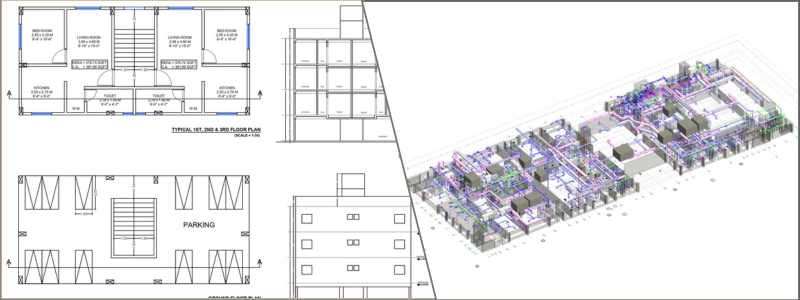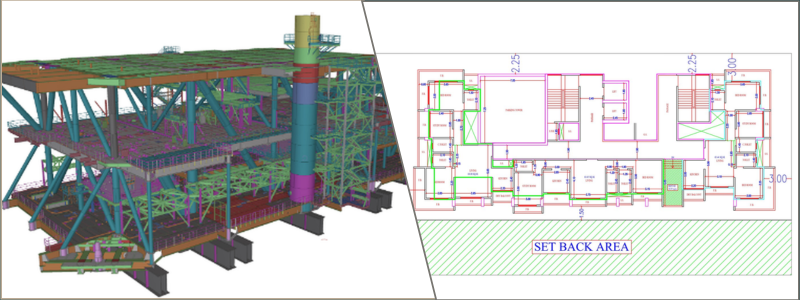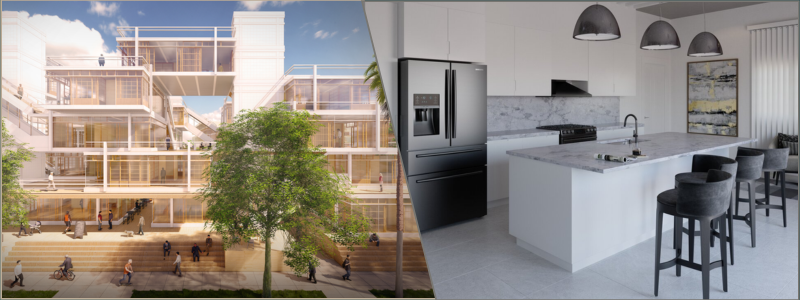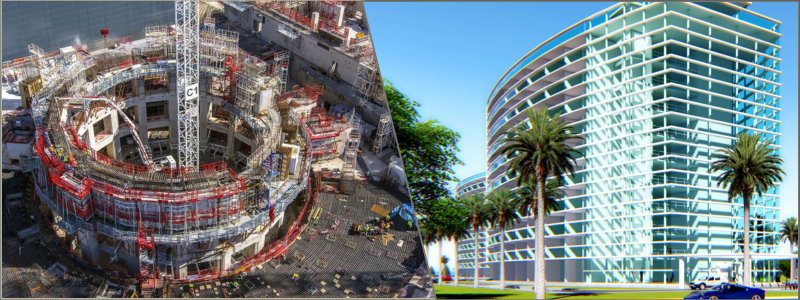
ArchiCAD is an all-in-one software package to help professionals in the AEC industry tackle the entire phase of architectural projects, from the conceptual phase and design to actual construction. More than just visualization software, ArchiCAD is a data-rich BIM (Building Information Modeling) software that provides computer-aided solutions in a digital environment for just about every aspect of architectural projects, big and small, including but not limited to building exterior, interior layout, structural engineering, and cost estimation.
It’s a professional tool with all the advanced features you need to plan, manage, and monitor an architectural project. But just like any other tool, you can only utilize the software to its full potential if you manage to find the right person to use it. ArchiCAD designer is a highly specialized profession, and this is where an AEC-focused freelancing platform like Cad Crowd comes in handy. With hundreds of thousands of architects, engineers, designers, drafters, and technicians in its network, Cad Crowd has become the go-to platform where you can find expert AEC freelancers at affordable rates. For more on the freelancing platforms and job boards where you can find and hire ArchiCAD designers, please take a look at the list below.
RELATED: Leading Home Design & Modeling 3D Technology for Builders, Companies, and Firms
AEC-focused freelancing platforms
The best thing about AEC-focused freelancing platforms is that they maintain a massive network of professionals with domain-specific expertise. These platforms have in their database nothing but freelancers with expertise and experience in the AEC industry. No matter the size of your project, the skill levels you expect, and the scope of work involved, chances are specialized platforms can connect you with the right talents to handle the jobs. Among the best AEC-focused talent marketplaces are as follows.
1. Cad Crowd
Nothing beats Cad Crowd when it comes to a talent marketplace for ArchiCAD designers or even AEC freelancers in general. About 15 years ago, Cad Crowd became the go-to platform to hire professionals of the architecture industry for all sorts of projects, from the relatively simple 2D floor plan and photorealistic visualization to complex structural engineering services and BIM coordination. As far as the hiring process itself, Cad Crowd is like many other platforms where you can browse professionals based on their specialization, post public or private projects, and launch design contests. Cad Crowd can also function as a project manager in case you need on-demand assistance for long-term ArchiCAD projects.
Website: Cadcrowd.com
2. GoPillar
A crowdsourcing platform, GoPillar, facilitates architectural design competitions with the promise of giving you dozens of submissions from architects all around the world. GoPillar claims to maintain a network of over 70,000 architects with various specializations, meaning it can take on design projects of any size and complexity level while maintaining professional-quality submissions.
The design competition form is also pretty straightforward, containing a series of clear questions to help make sure that you give all the necessary details before the contest launch. It even gives you the option to choose the kind of resources you want to obtain for any given architectural design project. While this is not a traditional freelancing platform, the crowdsourcing model can be the start of a broader talent-hunting scope.
Website: Gopillar.com
RELATED: BIM vs. CAD: Which is Better for Modern Architectural Design Services Companies
3. Formwork Marketplace
Thanks to a rigorous vetting process and dedicated support, Formwork Marketplace makes for an excellent platform to help you connect with freelance architectural design professionals and engineers for your next ArchiCAD design projects. It also promises to deliver affordability while providing guaranteed high-quality results. You can navigate the marketplace without even logging in, but certain features, such as posting projects and direct messaging, are only available to registered members.
Formwork Marketplace places emphasis on helping architects find (temporary) junior designers to handle project documentation and drafting, so they can focus on the more critical tasks in an architectural project. General contractors and subcontractors can also use the platform to discover emerging BIM experts. You get the options to either post a project and wait for young professionals to apply for the job or connect directly with the specialists you need.
Website: Formworkmarketplace.com

4. Aedifico
Focusing on the construction and commercial real estate industry, Aedifico gives you direct access to AEC professionals with the right expertise for ArchiCAD design projects. The nature of direct, flexible connections between clients and professionals becomes part of Aedifico’s vision to play an active role in transforming the construction sector from a company-centric model into a project-based business facilitated by the Internet at large.
Aedifico welcomes specialists of all sorts, from strategic advisors to technical experts, to join the platform and engage in direct communication with potential clients. And if you’re in need of architectural detailing professionals, Aedifico caters to every project size, including one-off gigs and long-term partnerships. Creating an account is free, but some features are available only to premium members. The platform is still in its early stages of development, and at the moment, it operates as an invitation-only professional network.
Website: Aedifico.ai

5. BuildingConnected
A no-nonsense freelancing platform of the AEC industry, BuildingConnected provides access to the contact information and portfolio of hundreds of thousands of subcontractors, and comes with a user-friendly interface to help you find them easily. The platform says that every contact information is up to date with the latest available details, such as the list of trades and service areas, to speed up your search and help manage your bids. BuildingConnected offers a range of great features to make it easier for you to collaborate on every step of a project, from design drawings to the construction phase, and everything else in between. You can also send out invites to prospective architectural drafting professionals and monitor progress from a single dashboard.
Website: Buildingconnected.com
RELATED: What Types of 3D Rendering Do Architectural Design Studios & CAD Freelancers Use?

6. Arcbazar
Somewhat similar to GoPillar, the architectural projects posted to Arcbazar is set as a contest. The projects can be anything from a small renovation or remodeling of an existing residential building to a complete new design of a commercial space. To start the design contest, you need to provide basic information such as dimensions, images for design references, and a short description of the objective. Once all the required information is provided, the project gets enlisted in the platform’s competition page. You also set the project timeline and the amount of award money to be distributed to the top three design submissions. Arcbazar says that every competition is verified before it gets enlisted, but it doesn’t provide details about the verification process itself.
Website: Arcbazar.com

7. ArchDaily Professionals Search
Unlike a typical freelancing platform, where you can post a project or purchase pre-defined service packages from professionals, ArchDaily Professionals Search looks more like a directory of architectural rendering firms rather than a talent marketplace. The directory contains more than 74,000 firms from all around the world; if you narrow down the scope to the United States only, there are still over 9,600 architectural companies ready to take part in your next design projects. Mind you that most (if not all) of them are not individual freelancers, but established firms with experience working in high-profile architectural projects in many different countries worldwide.
Website: Archdaily.com
Specialized job boards
In addition to AEC-focused freelancing platforms, there are also specialized job boards where everyone is welcome to post ArchiCAD design jobs or any other architecture-related projects. Some of the most popular job boards in the industry are listed below.

8. Archinect jobs
A single job listing on the platform costs $125, for which the project remains online for 90 days or until you find an ArchiCAD designer to fill the position, whichever comes first. You can get discounts for multiple listings, and there are additional features to increase exposure. Archinect Jobs warns that every submission is instantaneous, so make sure all the information and details are correct before you post. Archinect says the job seekers on the site tend to be more technically proficient and design-savvy compared to those you encounter in general job boards, and that the platform has the highest traffic of all architecture-related sites across the web. Besides the usual job posting option, Archinect also has a Talent Finder feature.
Website: Archinect.com
RELATED: How to Choose the Best Freelance Architecture Visualization Services and Designers

9. Dezeen Jobs
With more than 100,000 visitors every month, Dezeen Jobs is one of the most popular architecture and design job sites in the world. It currently has over 95,000 registered job seekers from 135 countries, and there are, on average 12,000 job applications circulating through the site per month. Dezeen also has quite a following on social media, with thousands of 3D design professionals subscribing to every job announcement on Twitter, Instagram, and Facebook. A single job posting on Dezeen costs £150 or about US $200, for which the posting remains active for 28 days and is attached to the platform’s daily newsletter for greater exposure.
Website: Dezeenjobs.com

10. Architizer
It’s a premium job board with a bold claim of having an audience that consists of a million architects, 3D designers, technicians, and students. Architizer doesn’t explicitly mention anything about the designers exclusively using ArchiCAD software, but it’s safe to assume that at least a good number of them are proficient at the tool. A single job posting on Architizer costs $95, for which the post remains online for 30 days. With the “Feature” add-on, which costs an additional $300, the job post will be highlighted on the platform’s job board homepage and included in the weekly newsletter sent out to more than 170,000 subscribers for as long as the post remains active.
Website: Architizer.com
11. ConstructionJobs
There’s a lot to like about ConstructionJobs. In addition to having an easy-to-use interface that allows for practical job post management, it also offers a range of advertising solutions for every budget. And as the name suggests, everything about the platform focuses on the construction industry; therefore, your job post will reach professionals with domain-specific expertise. But this doesn’t mean the platform only has a limited number of active job seekers. ConstructionJobs maintains a vast network of 2D and 3D drafting professionals that consists of thousands of qualified, skilled, and experienced candidates for various architecture-related jobs. A single job post costs $325, for which the post remains online for 30 days.
Website: Constructionjobs.com
RELATED: New Advances in Architectural Rendering Software

12. RIBA Architecture
Claiming to be one of the most popular job boards specializing in the architecture and design industry, RIBA sets a pretty steep price of £375 (a little more than US $500) for a single standard package job post. Your advert will remain online for 30 days and can be attached to the company profile as well as corporate branding. RIBA Architecture says only relevant candidates will receive the job alerts in their emails, so it does seem that the price also includes a targeted campaign feature. All applications are sent directly to your email or website, too. RIBA Architecture offers discounts for first-time users/clients.
Website: Jobs.architecture.com

13. AIA Career Center
The American Institute of Architects (AIA) has a “Career Center” feature where companies and firms can post contract and freelance roles for architects. A single job post costs $305, for which it will remain online for 30 days, and you get a Resume Search access. The platform currently has more than 1,500 candidates with searchable resumes. Keep in mind that only AIA members can post jobs and search the resume database, and the membership itself isn’t free. The exact cost of the membership fee is determined by your profession and location.
Website: Careercenter.aia.org
14. ArchGee
There are five major job categories listed in ArchGee, including architect, urban planner, interior designer, landscape architect, and BIM Specialists. Every job post will be shared on the platform’s social media profiles on LinkedIn, Facebook, and Instagram for increased exposure. The only pricing information available from the website is that job seekers can use the platform to find employment opportunities for free, whereas clients used to” be able to post jobs for free until June 30, 2024, as a limited-time offer. Details about the pricing have not been updated. Whether or not clients can still post jobs for free is unclear.
Website: Archgee.com
RELATED: The Power of Architectural CAD Services

15. AJ Jobs
Architects’ Journal (AJ) Jobs offers a few different options to promote your post. The standard option, costing £300 (about US $400), gives you unlimited wording in the post and online application management feature. At that price, the job post remains on the website for 28 days. The premium job package costs around £400 (a little more than US $540) for which you get all the benefits that come with the standard option and increased visibility. You can download candidates’ CVs in PDF format with full contact details, but this is also a paid feature, starting at £100 (around US $135) for 10 CV downloads.
Website: Architectsjournaljobs.com
General freelancing platforms and job boards
With generalized platforms, you have an assurance that there’s going to be a architecture design freelancer for every kind of job, including ArchiCAD design or even the more complex BIM management. A potential issue is the low barrier to entry. That being said, you can always check the freelancers’ project records, clients’ reviews, and ratings before you decide to hire anyone.

16. Kolabtree
The biggest selling point of Kolabtree is that nearly every freelancer registered to the platform has a PhD and many of them have also published research papers in various studies. Kolabtree primarily focuses on providing scientific writing services, but you can still find professionals specializing in the architecture and design industry, such as sustainable construction, commercial architectural drafting services, urban design, architectural engineering, industrial architecture, and more. Most freelancers on Kolabtree use an hourly rate pricing method. For the most part, however, Kolabtree is just like any other freelancing platform.
You can post projects and wait for the applications to come in or browse for professionals and invite them to submit proposals. Kolabtree gives an assurance that you will receive quotes from professionals within just 24 hours of posting a project. The platform also provides a dedicated account manager for every active project. Furthermore, you get the option to request for profile verification before hiring. With all those features, most people would assume Kolabtree is a premium platform, but it’s actually the exact opposite; Kolabtree is free to use for clients and you don’t even have to pay any payment processing fees for every completed project.
Website: Kolabtree.com
RELATED: 30 Architecture Design Inspiration Resources

17. Toptal
One thing that separates Toptal from most general freelancing platforms is the big claim that it only accepts just about 3% of all the thousands of freelancers registering on the site every month. The idea behind such a low acceptance rate is that you always get top-quality CAD design freelancers in their respective fields of expertise, regardless of who you end up hiring. Toptal has six major profession categories, including Designers, Project Managers, Product Managers, Developers, Management Consultants, and Marketing Experts. According to the latest available data from the platform itself, there are currently more than 2.7 million registered talents.
Not every single one of them is an ArchiCAD designer, of course, but you have the option to contact the Toptal team and provide detailed information about the specific talent you need, whether a single freelancer of a team of up to ten professionals. Bear in mind that Toptal is a premium freelancing platform with a flat monthly subscription fee of $79 to gain access to all its features. It’s good to know that Toptal offers a no-risk trial period, with which you won’t be liable for any payment in case you’re not 100% satisfied with everything it has to offer.
Website: Toptal.com

18. Freelancer.com
With more than 83 million registered members (clients and freelancers) and a record of over 24 million job postings, Freelancer.com is without a doubt one of the leading talent marketplaces all across the web. This is a general freelancing platform, so it’s safe to assume that the massive number of freelancers is composed of job seekers from diverse educational backgrounds, not just ArchiCAD designers. You can post projects, receive bids from design & drafting freelancers, and review their profiles on the platform free of charge. However, there’s a small processing fee of 3% or $3 (whichever corresponds to a higher dollar amount, based on the project value) billed to the client. Freelancer.com offers a Live Chat feature to help you communicate with freelancers and a mobile app to monitor progress.
Website: Freelancer.com
RELATED: 5 ADU Design Tips To Make Spaces Feel Larger with Architectural Services & Design Firms

19. Upwork
A massive talent marketplace with a broad range of skill categories and millions of freelancers from all around the world, Upwork appears to be the one-platform-fits-all choice for clients and job seekers alike. Upwork doesn’t charge a monthly subscription fee, but it takes a commission of anywhere between 3% and 10% (depending on project value) on every payment you make to the architectural drafting freelancer you hire. There’s also a contract initiation fee from $0.99 to $14.99 if the project is worth $100 or less.
Clients have three membership options: Marketplace, Business Plus, and Enterprise. Only if you opt for the Enterprise option will the contract initiation and commission fees be waived. Every membership account allows you to post projects and wait for applicants to place a bid or purchase pre-packaged services from freelancers. Like many other general freelancing platforms, make sure to use the filtering options to sort the candidates based on their skills or specializations.
Website: Upwork.com

20. Truelancer
You can manage all your projects, including the bids you receive and progress, as well as communication with freelancers, in the ‘Workflow” dashboard on Truelancer. You can post jobs and view freelancers’ profiles for free on the platform, but there is a processing fee of anywhere between 2% and 3.9% on every completed project. All the fees will be refunded 100% if you’re using a back transfer in USD. Truelancer is a general freelancing platform; the site currently has over 2 million registered CAD drafting services and freelancers from more than 120 countries, categorized into thousands of specific skills.
Website: Truelancer.com

21. We Work Remotely
A pretty straightforward job board, We Work Remotely comes with a user-friendly interface and several premium features to increase job post exposure. But it’s quite pricey, with a base price of $299 for a single standard job listing. The add-on options alone cost anywhere between $69 and $159. You don’t have to purchase any of the add-ons, but the platform promises greater visibility, partly because the listing is distributed to the partner sites. Considering the relatively high price tag, it’s good to know that WWR doesn’t entirely rely on AI to screen the applicants. Instead, the platform says that all the applications are reviewed by human to verify their qualifications and credibility.
Website: Weworkremotely.com
RELATED: Best 50+ Freelance Jobs Sites for Architects and Finding Remote Work for Architectural Designers

22. Fiverr
Known for its gig-based freelancing, Fiverr is like a stripped-down version of a general talent marketplace where clients cannot even post projects and let 3D architectural modeling freelancers make their bids. You hire someone on the platform by purchasing pre-defined service packages (or Gigs) set by the freelancers themselves. In short, you browse for freelancers’ profiles to verify their qualifications, review their service packages to see if they provide the services you need, and make the purchase.
Fiverr allows you to communicate directly with the freelancers (via the platform’s messaging feature, nonetheless) and ask for a custom package if needs be. It seems limiting at first, but the option to ask for a custom offer makes it a little bit more flexible. The standard service fee is 5.5% of the project value and there’s an additional $3.5 fee if you place an order of less than $100.
Website: Fiverr.com
Other platforms you may want to consider:

23. SimplyHired / Indeed
The job posting feature in SimplyHired is available free of charge. It’s mainly a job search engine, and when you want to post a project, you’ll be redirected to Indeed website. You can boost the job posting visibility by purchasing the “Sponsored Jobs” option, although the platform doesn’t explicitly mention how it gives additional exposure.
Websites: Simplyhired.com / Indeed.com

24. Wellfound
The site focuses on providing small businesses and startup companies a place to look for reliable yet affordable architectural design talent. Wellfound also has a built-in ATS to help you monitor the job posts and manage the incoming applications. The platform takes pride in its AI-powered recruitment service, said to have the capabilities to scan over 500 million job seekers based on your project requirements.
Website: Wellfound.com
RELATED: Ten Questions to Ask a Structural Engineer Before Hiring a Architectural Design Firm

25. Braintrust
the ATS dashboard from Braintrust gives you direct access to more than a million talents from all around the world. The platform won’t be directly involved in the hiring process as it leaves the screening task partly to the built-in AI system (for candidate matching). Braintrust claims the method is up to 70% more efficient than using traditional staffing agencies to find freelancers.
Website: Usebraintrust.com

26. Contra
You’ll find that Braintrust and Contra have a thing or two in common, for example,both aren’t necessarily a traditional job board, but ATS with which you can manage your job post, review the applicants’ profiles, monitor progress of your projects, and make payments to freelancers you hire. Contra currently maintains a database containing over a million freelancers with more than 500 different specializations.
Website: Contra.com

27. Workana
The vast majority of job seekers registered to Workana are based in Latin American countries. The platform only has two major professional categories: developers and freelancers. The former specializes in the creation and development of apps and software, while the latter is filled with a broad range of other skillsets, including ArchiCAD design.
Website: Workana.com
RELATED: How Architectural Design Services are Creating Sustainable Architecture

28. Guru
The platform works more or less the same way as other general freelancing platforms, like Upwork and Truelancer. One of the biggest differences is that Guru allows you to post as many projects as you want for free. There’s a 2.9% processing fee on every completed project, but the fee will be refunded if you’re using wire transfer or eCheck to make the payment.
Website: Guru.com

29. PeoplePerHour
Much of the hiring workflow in PeoplePerHour is basically the same as what you find in Guru. You get to post projects and review the incoming proposals from 3D architectural visualization freelancers or contact the freelancers directly and ask them to place bids on your project. PeoplePerHour provides a “project stream” dashboard to help you to monitor progress and manage payment.
Website: Peopleperhour.com

30. All Remote
A job board that operates like a staffing agency, All Remote is deeply involved in the candidate hiring and screening processes. The platform collaborates with you to prepare the questions for the interview and the technical assessments in accordance with your project requirements. It can even help you gauge the freelancers’ skill levels and negotiate a salary with the shortlisted candidates.
Website: Allremote.jobs
31. Worksome Omni-Channel Sourcing
There are plenty of freelancer management tools from Worksome, and the Omni-Channel Sourcing feature is the one that most closely resembles a job board. It’s a central hub where you can post jobs and tap into the database of staffing agencies, talent marketplaces, and even private talent pools. The hub also comes with a communication tool and advanced filtering options.
Website: Worksome.com

32. RemoteHub
A combination of a traditional job and a freelancing platform, RemoteHub allows you to post projects and purchase services directly from architectural visualization freelancers in its database. Job posting is free, and the platform currently has more than 120,000 professionals grouped into over 100 skill categories.
Website: Remotehub.com
Online communities
Apart from specialized and general freelancing platforms, online communities might serve as useful resources to help you discover ArchiCAD designers.

33. BIMCommunity
With a big claim of being the first global social network for AEC professionals, BIMCommunity has the potential to be a true one-stop platform to connect clients with the architecture industry at large. The platform promises to create an environment where BIM modeling professionals can engage in productive interactions within the community to help develop their careers. The community is also meant for architecture companies to broaden their reach into the workforce as part of the strategy to achieve their business goals. As a client, you can register to BIMCommunity to gain access to more than 10,000 professionals and companies, and immediately start your search for ArchiCAD designers.
Website: Bimcommunity.com
RELATED: The 10 Best Architectural Rendering Software for Designers

34. Reddit
People don’t usually turn to Reddit to look for ArchiCAD professionals or freelancers of any sort, but this doesn’t mean the platform isn’t any good either. As far as online communities are concerned, Reddit is in fact one of the busiest across the entire web, frequented by millions of people from all kinds of backgrounds. While not every single one of them is an ArchiCAD designer, Reddit has several subforums dedicated to AEC professionals, including drafters, render artists, engineers, and even architects. Get to the specific subforums such as r/ArchiCAD, r/architecture, or r/freelance_forhire to begin your search. Bear in mind that some subforums don’t actually allow job posts, but you can always use the direct messaging feature. Also, Reddit is free to use.
Website: Reddit.com

35. LinkedIn
You can say that LinkedIn is more like a social network rather than an online community, but everything about the platform seems to have been built around the idea of connecting companies and employers with professionals and job seekers alike. This social network focuses heavily on professional networking, where members likely connect with people they already know or are introduced to by someone else in the business circle.
For talent-finding purposes, LinkedIn Jobs offers a range of features to help you post projects and engage job seekers with targeted campaigns and management tools. You get to set your own budget for the campaign and control the spending as well. But for the most part, LinkedIn Jobs works like many other generalized online job boards out there.
Website: Linkedin.com
RELATED: 3 Steps to Hiring a Reliable Architecture Firm & Freelance Services Architects
Takeaway
ArchiCAD comes with powerful features not only to transform a mere concept into photorealistic visualizations, but also to plan the whole construction project with as many details as you need, from the structural engineering aspect to model-based cost estimation. Furthermore, ArchiCAD runs on open standards, meaning it can integrate the files and data seamlessly into a BIM workflow even if you must collaborate with a architectural planning and design team that uses different software. ArchiCAD is admittedly not the be-all and end-all software for all your architectural projects, but it’s such an invaluable project planning and management tool to improve workflow and cost efficiency a great deal.
How Cad Crowd can help
To make sure that you’re using ArchiCAD in the most effective way possible, you need a professional with the right skills and experience in the trade. Cad Crowd comes at the top of the list for the simple reason that it has become the hub where top ArchiCAD professionals offer their services and expertise for affordable rates to clients worldwide. Contact us for a free quote.