Understanding Architect Fees and Hiring Options for Your Firm with Cad Crowd


In case you haven’t noticed, an architect is one of the few professions legally qualified to design a built environment. Today’s post helps you understand architect fees and hiring options for your firm at Cad Crowd. Related professions, such as engineers, designers, and contractors, are likely more involved in the construction process, but everything they do must be based on plans prepared and approved by an architect. Producing an architectural plan may seem like a simple, one-phase task, but it entails significant technical and aesthetic challenges.

In addition to structural integrity, an architect must consider safety, environmental impacts, project timeline, and cost efficiency, among other constraints. Not every project requires an architect. That said, hiring one is almost a guarantee of a durable, aesthetically pleasing structure with a highly functional layout. It is certainly possible to undertake an architectural project (whether a new construction or renovation) without involving an architect.

However, this also means that the project is running without their expertise in design, building regulations, construction management, and budget estimation. Hiring an architect doesn’t have to be prohibitively expensive. AEC-specialized freelancing platform Cad Crowd can help you connect with hundreds of licensed architects from all over the world to handle your residential, commercial, industrial, and civil projects at an affordable cost.

RELATED: 3 Steps to Hiring a Reliable Architecture Firm & Freelance Services Architects

Architect fee structures

With most professions, the cost for hiring their services is typically determined by the scope of work, complexity of the tasks, and the time required to do the job. Architects are no different for the most part. Broadly speaking, architects may calculate their fees using any of the following three methods.

Percentage of construction cost

Think of this percentage-based fee as a sliding scale that puts the size and complexity of a project in direct relationship with the estimated total construction (as opposed to project) cost. As the cost slide moves up, the architect’s fee increases accordingly. The most common percentage is anywhere between 8% and 20% of the cost. Say a renovation project has a construction budget of $80,000, and the architect’s fee is set at 15%. Remember that the percentage isn’t subtracted from the construction cost; it’s added to it. This means the actual project cost will be the sum of $80,000 plus $12,000 (15% of the amount) for a total of $92,000.

Architectural designers are more likely to use percentage-based fees when they’re hired to provide full architectural services, which typically entail five phases, including schematic, design development, construction documentation, bidding and negotiation, and contract administration (construction). Keep in mind that the percentage is calculated based on the definitive construction cost instead of the initial estimate. If, at the end of the project, the construction cost exceeded the estimate, the architect’s fee would be the same percentage of the adjusted cost (rather than the initial estimate).

RELATED: Architectural Plans, CAD Drawing Costs & Architect Service Pricing: Full Breakdown

For clients, a percentage-based fee is ideal when the project is reasonably large, but the scope of work isn’t clearly defined. It allows them to secure the architect’s fee early on, yet still leaves room for negotiation later on as the specifics become known. It’s worth noting that a percentage-based method may be used to include or exclude additional project-related services and consultant fees, such as structural and MEP (mechanical, electrical, and plumbing) engineering.

Lump sum

As simple as it can get, a lump sum is a fixed fee. It’s a practical way to compensate an architectural drafting expert for the services provided, as you don’t have to handle percentage calculations, cost adjustments, or additional expenses that may arise during construction. However, you must understand that architects are only willing to use the fee structure if the scope of work is clearly defined. In other words, they will not throw around a fixed fee unless they’ve already calculated the work hours, construction timeline, the design complexity, and other variables with a reasonable degree of accuracy – not to mention the knowledge that major changes are highly unlikely during the project.

In the rare instances of major changes to project parameters beyond the architect’s control, the “fixed” fee must be adjusted to reflect any additional services rendered. Clients like the lump sum method because it’s straightforward. Following a negotiation at the very beginning of a project to determine the architect’s fee, the amount that both parties agree to is (in the vast majority of cases) the money the client ends up paying to the architect when the project concludes. At the same time, the method feels somewhat reassuring because it may incentivize the architect to work as efficiently as possible, since the pay is fixed regardless of the number of hours they spend on the project.

RELATED: How Much Does an Architect or Architectural Firm Cost for Home Design?

Of course, the biggest challenge with a lump sum for a client is that you cannot afford to have any hint of uncertainty about what the project requires. It’s important to know what CAD drafting and design services you need, how long the project should be, all the expenses, and the overall construction budget; otherwise, you might not be able to negotiate the fee effectively. 

architect fees explained

Hourly rate

Among the most common fee structures across professions is the hourly rate. As the name implies, the fee is calculated by multiplying the base “fee per hour rate” by the total number of work hours an architect spent on a project. Bear in mind that the base rate may vary significantly depending on such factors as the architect’s experience, project complexity, and location. In the United States, for example, architects’ rates range from $80 to $250 per hour. It’s admittedly a massive gap, but it’s true nonetheless: high-profile architects in big cities with a higher cost of living may warrant rates at the upper end of the spectrum.

Some people even consider that an hourly rate between $175 and $250 perfectly acceptable. For the client, the biggest advantage of an hourly rate is flexibility. If you have only the slightest idea of what architectural plans design services the project requires, the hourly rate affords you the freedom to adjust or amend the scope of work without fee renegotiation. On the other hand, flexibility comes with uncertainty; the open-ended nature of the fee structure makes it a good practice to ask the architect for an accurate estimate of how much time they need to finish every stage of the project.

RELATED: Hiring an Architect for New Construction & Renovation? Ask These Questions First

In any case, an hourly rate makes sense for architectural services that are not well-specified, conceptual design, small-scale renovation projects, specialist expertise (design consultant, analysis, etc.), or anything else that requires only a little involvement of an architect, such as representation with permit-issuing authorities.

Hybrid structure

It’s not uncommon for architects to use a combination of multiple fee structures rather than a single method of compensation throughout an entire project. This makes sense because different stages of a construction project are best served by different payment models as well; the idea is to offer the utmost cost efficiency to the client without sacrificing a healthy rate for the architectural detailing expert. For instance, during the process of acquiring building permits from the authority, the scope of work might be indeterminate in terms of complexity, but with a pretty clear timeline, which makes an hourly rate a sensible choice. As the project moves along and reaches the documentation stage, a fixed fee is ideal as it comes with a very specific scope of work.

Hiring options from Cad Crowd

Things are very different when you hire an architect through a freelancing marketplace. There are dozens of platforms you can use, but Cad Crowd sets a fine example of how to bridge a collaboration between clients and architectural planning and design professionals in ways that benefit both. Unlike the more generalized platforms, Cad Crowd specializes in the AEC industry with more than 15 years of experience connecting architects, engineers, and construction professionals with clients from all over the world. Cad Crowd offers three primary hiring models as follows:



RELATED: Complete Billable Rates for Architect Design Services, Architectural Costs & Hourly Fees

Direct hire

Presumably, the most straightforward way to hire an architect on the platform, the direct hire model, is the closest you can get to the hourly rate fee structure. You start the process by posting a project, which can be as broad or specific as you want, and get matched with the most qualified architect for the job. For example, the brief may say “create a permit-ready floor plan and convert it into a 3D visualization” or simply “build an architectural plan for a residential home.”

Once Cad Crowd identifies several qualified candidates, you can discuss the project further with the architectural drafting experts regarding the rate. When you’re ready to start the project, you can purchase a block of 10 hours at the agreed-upon hourly rate. While the entire “price negotiation” matter is basically the same everywhere, Cad Crowd plays the role of a hub here to help filter through hundreds of available candidates, making the process much quicker.


Managed services

A small yet notable difference between Direct Hire (Hourly Services) and Managed Services is the scope of work. Cad Crowd makes this distinction that Managed Services are reserved for short-term projects with well-defined scope and budget. Also, any project under this service is completely confidential, meaning only you and the pre-qualified expert get to see the project brief and deliverables. Everything else is pretty much the same between the two hiring options. You can communicate directly with the architect via email, Skype, or TeamViewer.


RELATED: Architectural Detailing Services: Top 31 Sites to Hire Freelance Architects & Drafters

Contest

Built on the idea of crowdsourcing, a design contest is excellent for conceptual, ideation, styling, or visualization phases. It’s also a great idea in case you need to hire a design engineering expert to help solving an engineering problem. As usual, you start by posting a project brief that best describes the services and the deliverables you need. You must set a prize money this time to attract the experts; a bigger prize attracts a bigger crowd. Although the platform offers private and invite-only contests where the project is visible only to select architects, it’s best to have it publicly accessible to try to receive as many submissions as possible. Pick the best design and give the reward to the winner.

How Cad Crowd can help

Cad Crowd gives you the peace of mind that the architect you end up hiring is indeed the best you can get for the project and the money. There might be some additional cost involved, such as the 3% platform fee and the 20% service fee for hourly and fixed-rate projects, but you get a guarantee of quality in addition to the 24/7 support team. Considering that Cad Crowd has some of the world’s most experienced and talented architects in the network, the quality of both the work and the service is worth every penny you spend. Contact us for a quote.

author avatar

MacKenzie Brown is the founder and CEO of Cad Crowd. With over 18 years of experience in launching and scaling platforms specializing in CAD services, product design, manufacturing, hardware, and software development, MacKenzie is a recognized authority in the engineering industry. Under his leadership, Cad Crowd serves esteemed clients like NASA, JPL, the U.S. Navy, and Fortune 500 companies, empowering innovators with access to high-quality design and engineering talent.

Connect with me: LinkedInXCad Crowd

Overcoming Errors in Architectural Drafting with Outsourcing Design Services


A happy blue pencil on an architectural plan truly is a beautiful thing. It reflects that everyone is on the same page as everyone else. It reflects that no corners will be cut for no reason, that no corners will be frayed. But it’s hard not to chuckle at someone who wants an empire and ends up with more frayed corners than a bad pair of sweatpants. It’s because architectural plans are a unique blend of precision and creativity. That’s because creativity dons its hard hat, and the fact about structure becomes some sort of undeniable truth for architectural design firms.

It’s also because there could be some sort of stray line on some sort of misplaced mark, and some measurement that decides it needs an extra inch on some sort of journey that it never meant to take. It’s a familiar sight for someone who has drafted some sort of architectural plan at two A.M. on some sort of whim and meant something, but meant something, but ended up with some house that looked somehow similar to some sort of mythological labyrinth.

Nevertheless, fortunately, today’s architects have something that architects and pyramid and temple builders never had before: outsourcing. To talk about it, if there is an architect and/or a group of engineers who would like some assistance with either solving problems or preventing problems with some designs, there are some very capable people who would more than gladly parachute into that project with some new knowledge and an air of curious detachment about some unorthodox designs.

And hands-down, Cad Crowd is the best source for these people, with a global talent pool that can parachute into a project before a small problem becomes a giant problem. Architectural drafting work mistakes, what drives them, and ways and means of invalidating them through outsourcing will be discussed in this article. It will offer a healthy dose of laughs, as anyone who tried to recreate a drafted floor plan three times within an average morning period deserves so.


🚀 Table of contents


Even architectural design experts can have weaknesses when carrying out architectural drafting. But these should not impact an entire project. Moreover, to achieve perfection and complete an architectural drafting task as quickly as possible, an architect might outsource architectural design. It will be highly advantageous for architects, as they will be able to carry out architectural design work without spending a single moment on technical sections. 

And for people who may be interested in accessing very competent draftsmen, we would recommend Cad Crowd as one of the best sources they could refer to. It would enable architects to access very competent freelance draftsmen who can optimize designs and assist with all procedures involved in the design process. And thus, we would recommend that anyone who wishes to have better designs for their architecture should check out Cad Crowd and look for freelance artists they could hire.

RELATED: What to look for in residential architect freelancers & hiring services companies

Common drafting mistakes

Architectural drafting mistakes occur at all levels and degrees. Small architectural drafting mistakes are so minute that they can’t be viewed with the naked eye. Architectural drafting and design firm mistakes are so unbelievable and so bizarre at times that they’d make a specialist wonder, with more serious implications, ‘How on earth can that happen!’ Architectural drafting mistakes occur oatall varying levels. Young interns make architectural drafting mistakes. Experienced individuals make architectural drafting mistakes. Many very intelligent architects might have made an error or two, but there was no proof.

Dimension problems might be an extremely common source of hiccups. It might be no more than realizing that a room will be expanding and contracting because it just keeps on going. It would have something to say about its own size. And then there would be something different about what the ceiling would have to say about it. And then there would be something about the wall that would be doing its best with these two opposite facts. The next source of problems with hiccups would be scale problems. There would just be some furniture that would have a scale better suited for a house belonging to giants. A staircase would be nowhere near a position that would be preferred.

Layer misuse would then be the next common issue. A wall drawn on an inappropriate layer would translate to an invisible wall. But as soon as the assignment began, clicking on a measurement on an invisible wall, it would appear as if it were a blushing ghost. The words would sometimes wander here and there on the plans as wandering spirits. The symbols would sometimes act on their own and hide in some corners. All these would eventually result in coffee breaks.

Why do these errors continue to be committed even among experienced practitioners?

It is a very complex process and requires several cycles. Even highly competent technicians will experience mental fatigue after a period spent displaying lines, entering dimension descriptions, viewing layers, nudging objects, and checking shapes for various purposes. Yet, as very advanced from a functionality viewpoint as our capabilities are at present for drafts by architectural planning and design firms, we do not have any safeguard against the possibility of deceptive click behavior, misleading alignment on snaps, and elusive hide and unhide attributes for layers.

There exist several architectural groups with deadlines, and there are also several opportunities for missing observation detail. It will be very hard to be completely correct with a loud clock and an even louder email box. Interruptions will also be a source of inaccuracies. A phone call at some specific moment, while an architect emphasizes a certain imperative detail, might spoil the chain of thoughts. It will take some time for completion. At that moment, the cursor on the software will be waiting for input, and the mind will be blank about what it was doing.

It would also seem that there would be an understanding and an admission that we have to believe our eyes. There would almost seem to be an understanding that “the design itself will appear fine,” and it would because “the brain itself will fill gaps that aren’t there.” A fresh pair of eyes would see things that an exhausted mind would refuse to see. It would be within these very parameters that outsourcing would become an absolutely necessary solution for architects.

RELATED: How 3D artists elicit emotions with stunning architectural rendering & visualization services

Changes: The hidden costs

Blueprint errors start with something small. Something can escalate based on problems. A problem with a measurement can result in problems at worksites. A problem with understanding layers can result in a group incorrectly interpreting. A wrong icon can result in an inspector being confused. And so on, because architects and engineers have an experience they want to put aside. Cost implications may be at play. Redrawing and changes entail the consumption of time. Time is equivalent to billable hours. Should there be changes that are not stipulated within planning and included in the construction plan, these changes will, in turn, influence materials, manpower, and timetables.

3D architectural animation designers

A loss of confidence may result from the client, considering they get a chance to review a number of changes within a set of drawings for architectural drawing firms. However, there is also a cost involved with an issue that has an emotional side. None of these architects will want to have it on their conscience that, because they have an insignificant issue on their side, they will have to resubmit a whole week’s work. It is just so stressful.

It is here, exactly, that the outsourcing solution for design talent becomes an attractive alternative. The outsourcing of draft preparation may be viewed as a consequence of weakness and loss of expertise. It may be an astoundingly clever move. The technicians who concentrate on draft preparation have an attentiveness and speed that would be very hard to maintain on the part of internal people who have a lot on their hands. The freelancer acts as a quality controller, polishing drafts to an optimal level of transparency.

The greatest benefit that may be derived from here is skills. There are several fields associated with drafters from which skills can be obtained. These people would have the opportunity to be exposed to a strong set of skills and problem-solving. It would be common for these people to have some experience with almost all forms of error. Deletion, correction, and recreation of graphics would be an easy task for these people. Misaligned graphics would be noticed immediately by these people. Amynta would have problems with wandering symbols and runaway layers.

The people who will interact with freelance CAD outsourcing will bring some new ideas as well. It will be people with some knowledge of a plan who will not be affected by an internal forecast. It will be an unbiased judgment about blueprints. Their unbiased nature will serve as a filter, increasing the accuracy of the results.

When outsourcing saves the day

Perhaps there may be an architectural firm with an immediate deadline. The employees have been staying late. You know, people are a bit fuzzy. A large business customer requires an absolutely coordinated set of drawings for the morning. The set of drawings is nearly complete, but something doesn’t quite ring true. Walls are correct, but perhaps not quite so. Sizes are correct but perhaps not exactly so. Something isn’t quite right.

But it is at this level that outsourcing becomes an unsung hero. It is at this stage that a good freelance draftsman will be introduced and will analyze these documents. The freelance draftsman will then analyze various layers, perform some linework, locate annotation marks at specific spots, focus on some elevation work for perfection, and address some scale issues. It is at this stage that these documents will no longer appear as if they have been worked on for so long.

RELATED: Pricing factors for architectural visualization and hourly 3D rendering rates for your firm’s projects

Competitive benefits for architecture businesses

The process associated with document draft preparation and outsourcing continues beyond error correction. It still poses challenges and drives the paradigm shifts required for architectural practices to continue as usual. As some pressure will be removed with document draft preparation, there will be more opportunities for creative designs, customer service, conceptual planning through concept design experts, and project judgment.

Organizations have more flexibility. It shows that, based on projects, outsourcing will soon allow an organization to extend its scope without having to hire employees. No costs are assigned for employees who were not working before and after the peak season. Article writing can be done very quickly.

3D architectural rendering designers

Thirdly, there is evidence that validates that it can be done faster through outsourcing. Tech writers mix well with other tech writers, as all they do is tech writing. It would have taken several days for people working within an organization to do it, but they would do it faster, which would be very helpful shortly after the deadlines.

Finally, there will be an accuracy upgrade with outsourcing. All documents sent out will have a document drafter working in the background. There will be an upgrade with every document. There will be no more findings overlooked and will be addressed. There will be no uncertainties and misalignments. There will be an upgrade.

The future of architectural drafting service through outsourcing

Its complexity multiplies as technology advances. The standards continuously develop. The amount and type of information needed from the client continuously increase. The degree of accuracy due to human limitations requires an accuracy level on the screen from start to finish, as high as the error margins. And outsourcing will be an integral part of coping with all of this.

The global reach for freelance work allows architects to hire qualified architectural drafters with different expertise. The presence of different time zones is very convenient. Architects are working on designs while people on the other side of the planet are asleep. People on the opposite side of the planet have already worked on an architectural draft.

The future outlook projects a collaborative world, with architecture and outsourcing as complementary processes that address needs before they arise and improve capabilities in document design.

RELATED: Why is 3D modeling used in building architectural projects with freelance designers and firms?

Conclusion

Even architects can have weaknesses when drafting. But these should not impact an entire project. Moreover, to achieve perfection and complete an architectural drafting task as quickly as possible, an architect might outsource architectural design. It will be highly advantageous for architects, as they will be able to carry out architectural design work without spending a single moment on technical sections. 

And for people who may be interested in accessing very competent draftsmen, we would recommend Cad Crowd as one of the best sources they could refer to. It would enable architects to access very competent freelance draftsmen who can optimize designs and assist with all procedures involved in the design process. And thus, we would recommend that anyone who wishes to have better designs for their architecture should check out Cad Crowd and look for freelance artists they could hire. Request a free quote today.

author avatar

MacKenzie Brown is the founder and CEO of Cad Crowd. With over 18 years of experience in launching and scaling platforms specializing in CAD services, product design, manufacturing, hardware, and software development, MacKenzie is a recognized authority in the engineering industry. Under his leadership, Cad Crowd serves esteemed clients like NASA, JPL, the U.S. Navy, and Fortune 500 companies, empowering innovators with access to high-quality design and engineering talent.

Connect with me: LinkedInXCad Crowd

Top 37 Platforms to Hire Freelance EPLAN Engineers & Designers for Automation & Mechatronics


Nowadays, finding EPLAN engineers has become the hardest part of starting any projects. It is like looking for a pin in a bin of circuit boards, with tangled octopus-wired PLC cables. However, technological innovation lead to the rise of mechanics, smart factories, and smart products which enable us to include necessary professionals such as CAD experts to fulfill our goal.

Whether it’s a conveyor system or an intelligent packaging machine, the correct single EPLAN freelancer can be the difference between a humming production line and a project that falters halfway through. That’s why we’ve scoured the internet to provide you with this hand-picked list of 37 sites that are actually worth your time.

RELATED: Top 33 Websites to Hire Creo Design Freelancers & Engineers for 3D CAD Design Services

cadcrowd-logo

1. Cad Crowd

Cad Crowd is, hands down, the real gold standard when it comes to hiring freelance EPLAN engineers for mechatronics and automation. The website isn’t just full of talent-it’s designed for beautiful, engineering-driven projects that require precision. If you need to clean up your control panel layout, develop EPLAN macros, or incorporate intricate wiring schematics, Cad Crowd presents you with screened experts who have industry automation experience. You can post your project, hire directly, or initiate confidential design competitions. Their project managers even assist you with the quoting and hiring process, so it’s a top option for clients who desire quality and hassle-free results.

Website: Cadcrowd.com

Engineering.com

2. Engineering.com freelancers

Engineering.com is not only where engineering design experts go to keep current on the latest trends-it’s also where the best electrical talent gets hired. Their freelance platform is specifically designed for engineering professionals, making it a go-to hub for locating EPLAN-qualified subcontractors. Do you need assistance with ECAD documentation, control panel design, or flat-out automation planning? Freelancers who live on Pro Panel and fluid engineering breakfast descend upon this site. Whether you’re a gritty little startup or an old-school OEM, advertising your project here is an assurance of finding engineers who actually understand your specs. It’s a website created by and for the engineering community-accurate, technical, and totally dedicated to real industrial results.

Website: Engineering.com

EPLAN

3. EPLAN forum job board

The EPLAN Forum is not merely a site to trade software tips-it’s an underground gem to find better freelance professionals. Buried in its job board are seasoned EPLAN engineers who are presently seeking contract work, whether a control cabinet layout or complex pneumatic circuits. Why is it gold? All parties here already speak the EPLAN language both technically and interactively. You won’t waste your time spelling out the basics-most are already up on the new version improvements. For businesses looking to draw upon a talent pool of CAD drafting experts who know and breathe their EPLAN, this forum quietly offers just what you’re looking for.

Website: Eplan.proboards.com

RELATED: Top 51 Websites to Hire Freelance Eagle PCB Designers & CAD Engineers for Electronics Design

Toptal-logo

4. Toptal

Toptal is not your average freelance site-it’s more like an exclusive club for high-end engineering experts. Only the top 3% pass their notoriously demanding screening process, so what you’re hiring here is someone who’s battle-hardened. Think of engineers who’ve designed robotic weld lines or massive water treatment control systems. These are not CAD designers alone; many possess good PLC programming know-how. Sure, it’s more expensive than the average gig site, but the reward is fewer headaches, fewer reworks, and quicker project completion. For serious mechatronics work, Toptal is a smart, high-confidence bet.

Website: Toptal.com

kolabtree logo

5. Kolabtree

When your project calls for both hardware expertise and deep automation research, Kolabtree offers something different. This isn’t just another freelance platform-it’s where you’ll find EPLAN design engineering experts with serious academic credentials and real R&D chops. Most have PhDs or years of experience in industrial laboratories, perfecting control systems and electrical CAD design. Whatever you need – a comprehensive schematic check, help with checking control logic for validity, or someone to document a process properly in a regulated world – Kolabtree can do it. Its science edge is perfect for projects straddling the fence between theory and engineering. Kolabtree offers that rare coupling of accuracy and insight for high-risk, research-driven work.

Website: Kolabtree.com

Fieldengineer

6. FieldEngineer

FieldEngineer may have started in the telecom and IT space, but it’s quickly become a hidden gem for automation pros and EPLAN specialists. If you’re facing a field challenge-be it on-site troubleshooting, quick EPLAN edits, or remote electrical panel this platform delivers. It’s especially valuable when time isn’t on your side. Think same-day hires during a production line emergency or last-minute support for a machine install. The real-time job-matching website introduces you to qualified EPLAN design engineering freelancers who are experienced with complex systems. For OEMs and machine builders working through crunch periods, FieldEngineer is not only an option-it’s a lifeboat.

Website: Fieldengineer.com

RELATED: Best 51 Platforms to Hire Freelance Autodesk Inventor Designers, Engineers & 3D Modelers

guru.com-logo

7. Guru

When people talk about finding reliable automation and EPLAN professionals, Guru often gets overlooked despite being one of the most dependable platforms out there. The platform doesn’t make a lot of noise about itself, but that’s actually part of what makes it work so well. What really sets Guru apart is how organized everything feels – teams can actually communicate effectively, and projects tend to stay on track with their deadlines.

The talent pool there is pretty impressive, too. Many of these engineering design freelancers bring serious experience with Allen-Bradley systems and Siemens TIA Portal alongside their EPLAN expertise, which means clients get access to a much broader skill set than they might expect. This kind of variety really helps when you’re dealing with complex automation projects that cross multiple disciplines.

There’s something to be said for working in an environment that isn’t constantly chaotic. Whether someone needs help with sophisticated industrial control systems or detailed technical documentation, Guru tends to deliver that quiet competence that experienced engineers appreciate. The platform might not be flashy, but when technical precision matters, that’s often exactly what you want.

Website: Guru.com

RELATED: Secrets of Creative Brainstorming & Tips from Product Design & Engineering Services Firms

Cadmatic

8. CADMATIC marketplace

While CADMATIC is not a niche EPLAN platform, its freelancer section definitely intersects with the electrical design and automation community. Most of the experts here are seasoned CAD engineers who’ve migrated organically into control systems and EPLAN electrical planning. It’s a secret gem for those working in niche areas such as marine engineering, plant engineering, and shipbuilding areas where instrumentation and electrical layout jobs tend to require EPLAN proficiency. What makes CADMATIC different is its crowd’s rich technical expertise and inter-disciplinary proficiency. If you’re looking for pros who understand both the mechanical and electrical sides of complex systems, this platform is worth digging into.

Website: Cadmatic.com

Dassault

9. Dassault Systèmes 3Dexperience marketplace

This sophisticated B2B platform is a hidden gem for companies looking to get into robotics or high-tech manufacturing. Here, freelancers frequently have substantial experience in automation-intensive programs like EPLAN, SolidWorks Electrical, and CATIA design, so it’s not only about CAD design. What makes it stand out, though, is the versatility of its talent pool: hybrid engineers conversant in both control panel automation and design-for-manufacture languages. It’s perfect for firms that need more than pretty blueprints-actual engineering know-how. And with built-in NDA contracts and encrypted data exchange, all of it is secure straight on the platform, letting companies sleep soundly on day one.

Website: Discover.3ds.com

grabcad

10. GrabCAD talent network

GrabCAD is perhaps most famous for its vault of 3D models, but there’s more to it. Tucked into its engineering-rich community are electrical engineering freelancers with serious chops in automation and electrical design, especially those who know their way around EPLAN and control cabinet layouts. It’s not all mechanical CAD here. You’ll find designers who speak the language of BOMs, safety protocols, and industrial standards fluently. The platform doesn’t come across as quite so generic, marketplace-like, and more as a niche group of engineers who themselves know what your project entails. Whether accuracy, technical competency, and collaboration matter, GrabCAD is a platform to look at.

Website: Grabcad.com

RELATED: Top 35 Sites to Hire Freelance ANSYS Designers & Engineers for CAD Design & CFD Engineering

Siemens

11. Siemens xcelerator marketplace

This platform is a treasure trove if you’re completely overwhelmed by industrial automation and require someone who fully understands the peculiarities of Siemens systems. The majority of the engineers here have developed practical skills using tools like S7, TIA Portal, and even EPLAN in addition to experimenting. They have done from panel construction to SCADA integration to factory automation. What distinguishes them is their smooth platform transition, which makes them incredibly adaptable for labor-intensive projects. Whether you’re optimizing a plant or designing control systems, here you’ll find access to electrical instrumentation experts who share the same technical language and can jump right in.

Website: Excelerator.siemens.com

rockwell group logo

12. Rockwell automation partner network

If you require some high-quality EPLAN experts, Rockwell’s PartnerNetwork might be more than you’re looking for. While it’s no freelance platform per se, the majority of listed contractors offer specialized consulting services within EPLAN design and automation. These are seasoned professionals who know their way around high-voltage wiring, understand NFPA standards inside and out, and are deeply experienced with Rockwell control systems. It’s not as plug-and-play as hiring through a gig site-you’ll likely reach out to companies or individual engineers directly-but the upside? You’re tapping into a pool of top-tier experts trusted by one of the biggest names in industrial automation.

Website: Rockwellautomation.com

NI

13. NI (National Instruments) Partner Directory

While some of the NI partners are experts at LabVIEW, a very significant number also deliver top-shelf EPLAN electrical circuit design services as part of end-to-end automation packages. These aren’t your run-of-the-mill installations-they’re building everything from high-accuracy test rigs to single industrial control cabinets and lightning-fast automation lines. If you’re in the market for contract talent with the skill sets to bridge software and electrical design, the NI partner database is a good starting point. It’s loaded with integrators and consultants who understand practical systems and aren’t afraid to get their hands dirty. Whether you need help with planning, wiring, or integration, you’ll have qualified professionals standing by to assist.

Website: Ni.com

RELATED: Top 10 Benefits of Reverse Engineering Services at Product Design & Development Companies

Malt logo

14. Malt (France)

Top-tier European 3D engineering freelancers have made Malt their home, and EPLAN specialists are particularly abundant there. You won’t be disappointed by this platform if you’re searching for professionals from EPLAN-heavy nations like France, Germany, or Switzerland. These countries hold the gospel of electrical design to be EPLAN, so you can be sure that the talent pool here is rich. Whatever you need to build – sophisticated automation lines, the replacement of packaging installations, or complex electrical installations – Malt has got your experts. And hiring is also trouble-free with built-in legal compliance tools facilitating cross-border cooperation, easy and trouble-free in the EU. It’s a major plus for engineering teams who want to grow.

Website: Malt.com

Freelancede

15. Freelance.de (Germany)

EPLAN was conceived and developed in Germany, so it makes sense Freelance.de is full of professionals who know EPLAN Electric P8, Pro Panel, and Harness proD inside and out. This site is known to draw serious technical design engineering professionals with real-world experience working with automotive, factory automation, and machine tooling industries. It’s best suited for medium to large-sized automation jobs, where customers simply can’t afford to wait or have high learning costs. What stands out is the depth of practical experience on offer. You’re not just hiring freelancers-you’re getting engineers who’ve lived and breathed EPLAN for years, ready to plug into your project from day one.

Website: Freelance.de

twago logo

16. Twago (Germany/Europe)

Twago is an ideal choice for businesses operating in Europe, particularly those in industries with a high-tech content. It matches businesses with top freelancers, like EPLAN designers who know their way around CE directives and EU electrical standards. That’s a big plus if your projects require strict regulatory compliance. Twago differs from other sites in one major respect: it has a multi-lingual setup-it’s set up for cross-border collaboration, whether you’re Berlin-bound, Barcelona-based, or Brussels-bound. It’s employing people who speak your language, literally and technically. It is especially valuable for export-focused businesses where accuracy, communication, and expertise are important. Twago simplifies the process and keeps quality surprisingly good.

Website: Talent-pool.com

RELATED: Best 35 Sites for Engineering Design Challenges and Contests for Crowdsourcing Design

peopleperhour

17. PeoplePerHour

PeoplePerHour takes a curated approach to its pool of automation and electrical CAD specialists. While you won’t find tons of people who only do EPLAN work, what’s there tends to be solid – engineers with real experience in control panel design, industry standards, and schematic development. The interesting thing about their freelancers is how they package their skills. Most of them offer EPLAN as part of a broader control systems design service rather than as a standalone specialty.

This actually works out well for many projects because you’re getting someone who understands the bigger picture of how electrical design fits into overall system architecture. This approach particularly benefits smaller teams or projects that need to move quickly. Instead of hiring multiple specialists, you can work with someone who handles both the EPLAN documentation and understands the control systems context around it. The platform gives you that flexibility to access deeper design expertise without the complexity of traditional hiring processes.

Website: Peopleperhour.com

Worksome logo

18. Worksome

Worksome is generating buzz as a single-platform destination for companies in need of high-quality freelance talent within technical fields. While EPLAN is not the focal point in this instance, many of the automation engineers on the site include it among their areas of expertise-often coupled with offerings like Rockwell Studio 5000 and AutoCAD drafting and design services. It’s particularly a great option when in a time crunch or working to get through a project backlog. It’s either because of a commissioning time crunch or you simply need some extra help temporarily. Worksome gives quick access to veteran pros who’ve worked on it all with automation design. It’s cost-effective, agile, and packed with unseen EPLAN treasures.

Website: Worksome.com

RELATED: How Much Do Mechanical Engineer Services Typically Charge for Rates & Firms?

hubs logo

19. Hubs (by Protolabs)

What makes Hubs stand out is how it brings together professionals who can handle both the design side and the manufacturing reality of projects. This isn’t just another platform for quick prototype work. The real strength here lies in their global network of AutoCAD electrical engineers who know EPLAN inside and out, but more importantly, they understand how automation projects actually come together beyond just wiring diagrams.

These freelancers can tackle the bigger picture – things like mechatronic system integration, custom enclosure development, and CNC control panel creation. What you’re getting are people who think like solution providers rather than just technical drafters. They grasp how electrical CAD translates into real-world production challenges. For teams that need to move fast without cutting corners, Hubs tends to connect the right people with the right projects.

Website: Hubs.com

DesignCrowd logo

20. Designcrowd

DesignCrowd isn’t necessarily the go-to for full-fledged EPLAN workflows, but it’s still present in the electrical design space, most notably if you’re looking for creativity and diversity. Even though the site leans heavily towards design over pure engineering, it occasionally has EPLAN or electrical CAD contests tied to industrial projects. Having trouble envisioning a cabinet layout or looking for creative wiring schematics? This is where DesignCrowd shines. Put your project in, and you get all sorts of entries from global designers, each bringing their unique perspective. It’s not intended for full schematic design, but for visual concepts and design flair, it’s rather handy.

Website: Designcrowd.com

RELATED: Top 30 Recruiters for Electrical Engineers, Staffing Agencies, And Recruiting Companies for US Engineers

Cadcoder

21. Cad Coder

This expert website is the biggest secret among engineers who speak both CAD and code. It’s built for the tech-savvy CAD automation engineering freelancer who doesn’t just wire schematics in EPLAN Electric P8 but also forges into Python to simulate PLC logic or choreograph robot movement. The real magic happens in hybrid projects where design meshes with intelligence, like systems with sensor feedback operating in real-time machine operation. Customers who want deep integration between schematics and automation love this space. It’s where electrical design meets software, especially for script-and-circuit problem solvers. If you’re combining CAD and code, this is the sweet spot.

Website: Cadcoder.com

EEVblog

22. EEVblog forum jobs

The EEVblog Electronics Forum might not be at the forefront of mind when looking for freelance skills-but that’s what makes it so special. This tight-knit forum attracts some amazingly smart minds in automation, embedded systems, and control electronics design services. Tucked inside its job board, you’ll occasionally stumble upon EPLAN pros with hands-on experience in industrial wiring, smart actuators, and even edge device design. It’s a space where electrical and electronic systems meet in wonderfully geeky harmony. Whether you’re building a custom automation rig or refining an industrial control setup, the talent here tends to be both specialized and refreshingly grounded.

Website: Eevblog.com

wellfound logo

23. Angellist talent (now Wellfound)

If you’re launching a robotics or industrial automation company, Wellfound (formerly AngelList Talent) may be your little secret. It’s a platform with freelance EPLAN engineers who are not just in it for the paycheck, willing to take equity-based or hybrid payments, which is perfect if you’re bootstrapping or in the early stages of funding. The talent pool is technically biased, tending towards performing well in high-volume R&D settings. Whether you’re building a prototype or ironing out a proof-of-concept, this is where you’ll find prototype building expert designers attuned to startup speed and willing to build something from scratch. It’s not just a job board-it’s an area for co-founder discoveries.

Related: Wellfound.com

RELATED: How Do Engineers Evaluate Different Design Ideas?

IndieHackers logo

24. Indiehackers talent community

One of the top platforms for freelance engineers is IndieHackers due to the large pool of talent in automation and control systems. Although they specialize in software developers, they can also cater to companies focusing on hardware, EPLAN, and other automation platforms. Indiehackers is best for people who have bootstrapped endeavors or people who need to see their innovative and weird plan into a single-build tangible product.

Website: Indiehackers.com

ResearchGate logo

25. Researchgate consulting

ResearchGate is mostly known for sharing academic studies, but it’s also a treasure trove for companies seeking freelance electrical 2D drafting firms with legitimate qualifications. Some of the EPLAN-expert members on the forum engage part-time as consultants or freelance automation projects-more so those requiring bulletproof documentation and research-level methodology. Here, you’ll get engineers who’ve published peer-reviewed papers, come up with complex automation systems, and solved complex design problems in aerospace, pharmaceutical, and energy sectors. If your project is more technical and you need a lot of technical precision, then hiring through ResearchGate could be the smartest, least known move you make.

Website: Researchgate.net

Behance.net-logo

26. Behance (industrial design section)

Whether you believe it or not, Behance isn’t the only graphic design platform, it is also recommended for people who are obsessed with automation. Behance also has industrial designers who are experts in EPLAN and electric layout design, which makes sure to present your plan with elegance and purposeful form. Most of the time, the experts in Behance give a beautiful electrical cabinet design that is both functional and aesthetically pleasing. If you’re looking for an aesthetically pleasing design with functionality, this is the best site for you. Instead of browsing through job boards, you get to discover real talent through their showcase work. You can message them privately and initiate a conversation. For innovative, top-notch EPLAN professionals, Behance might be the surprise in waiting.

RELATED: What Are The Main Prototypes Used By Companies in Industrial Design Prototyping?

Hays Engineering

27. Hays engineering contractors

Hays takes a different approach to the EPLAN specialist search. Instead of wading through endless freelancer profiles, they’ve built a system that actually narrows things down intelligently. Their global network focuses specifically on automation, which means they’re connecting clients with control engineers, panel designers, and plant automation specialists who have the right background for the work.

What works well here is their flexibility around engagement length – particularly for those short to mid-term projects that need experienced hands quickly. Whether the work needs to happen on-site or remotely, their contractors seem to adapt without losing quality. The selective screening process means less time sorting through candidates and more time working with people who actually understand the requirements.

Website: Hays.de

NES-Fircroft

28. NES Fircroft

NES Fircroft made an interesting pivot into freelancing after years in traditional engineering recruitment. They’ve positioned themselves as connectors between qualified ECAD professionals and companies in manufacturing, oil and gas, and renewable energy sectors. The focus spans automation work, electrical design, and EPLAN development across these industries.

RELATED: Best 50 Sites to Hire Freelance Mechanical Engineers & Mechanical Designers for Your Company 

Where they add real value is in handling the administrative complexity that often bogs down freelance arrangements. Complete onboarding, HR management, regulatory compliance – they take care of the paperwork so engineers can focus on the technical work and clients can focus on their projects. With decades of industry connections and international reach, they’ve made freelance engineering feel less risky for both sides of the equation.

Website: Nesfircroft.com

Wevolver

29. Wevolver experts

If you’re looking for design services for the Internet of Things (IoT) products and experts in EPLAN, E-CAD, mechanical firmware and machine control, wevolver is the best site for you. They focus on electrical parts, software and automation which utilizes IoT hardware and industrial systems. Especially in building smart factories, and pioneering 4.0 Industry tech. Wevolver, no doubt has a pool of talent that can give you tangible results. They aren’t just freelancers, but inventors who understand the strings of interconnected devices and intelligent automation. Idea to prototype, Wevolver’s crowd makes cutting-edge mechatronics reality that is as simple as it is brilliant and futuristic.

Website: Wevolver.com

hacksterio logo

30. Hackster.io pro services

Pro services from the freelancers from Hacksters offer automation background and expertise. They showcase custom builds using microcontrollers, PLCs, an EPLAN integration to any design. Whether be it from sleek automation cells to hands-on training, you can never go wrong with a combination of both ingenuity and knowledge. What makes them stand out, are the wide open source of components from their wide pool of automation design talents, and the reliability in collaborations and innovation. If you need a single prototype or a single project, Hackster is the perfect fit for your choice.

Website: Hackster.io

RELATED: How to Integrate CAD Seamlessly into Your Firm’s Workflow of Engineering, Design & Services

RemoteOK logo

31. Remote OK

Remote OK doesn’t necessarily scream “engineering,” but it’s a hidden gem for companies looking for freelance engineers within automation and electrical design. You’ll typically find listings calling for EPLAN expertise, especially for time-zone-bickering remote-first organizations. It’s a top destination if your company thrives through global collaboration and needs help with 3D design services or wiring schematics. Engineers working here are used to async workflows and tools that cut distance. Whether you require someone to do short-term schematics or full systems design, Remote OK introduces you to individuals familiar with complex schematics who can get it done without ever stepping inside your office.

Website: Remoteok.com

FlexJobs logo

32. FlexJobs

Popular with telecommuters and freelance work seekers, FlexJobs does carry electrical engineering jobs that involve EPLAN. Candidates are usually weeded out for professionalism and work ethic, making it a less likely bet than some more general job sites. Fewer candidates sometimes higher quality.

Website: Flexjobs.com

cadcrowd-logo

33. Cad Crowd contests

Cad Crowd gets another shout here for its contest site, which allows you to crowdsource electrical panel layout ideas, schematic checking, or bespoke automation cabinet concepts. Unlike typical CAD contests, some of the people here are EPLAN specialists or industrial engineers who understand what it takes to build for real factory environments.

Website: Cadcrowd.com/projects

RELATED: Outsourcing PLC Programming and Automation Services for Your Manufacturing Company

EPLAN

34. WerkenbijEPLAN (Netherlands)

Not actually a freelance portal, WerkenbijEPLAN matches clients with EPLAN-proficient engineers for limited-term assignments. The Netherlands is an automation hotbed, and this portal is an intermediary between Dutch companies and global EPLAN contractors, some of whom provide freelance services via third-party websites.

Website: Eplan.nl

jobspresso logo

35. Jobspresso (Tech-Focused Remote Roles)

Mostly for software development, Jobspresso’s remote engineering positions sometimes overlap with automation, robotics, and electrical CAD. You may not have a large number of EPLAN-only engineers, but you will have hybrid candidates combining mechatronics, control design, and remote system architecture-ideal for connected device projects or IIoT deployments.

Website: Jobspresso.co

Upwork-logo

36. Upwork

Upwork is still one of the freelance titans-and for EPLAN engineers, it doesn’t disappoint. You’ll have from low-level draughtsmen to seasoned CAD automation engineering specialists who are more than happy to tackle difficult control system projects. The beauty of Upwork is openness: reviews, history of work done, and time tracking allow you to keep the quality and price controls. Naturally, posting a plea for assistance means that you will receive plenty of generalists as well. It is a goldmine, but you just need to dig in a bit to strike the right talent. With some shrewd screening, though, you can pick up a top-notch EPLAN expert.

Website: Upwork.com

freelancercom

37. Freelancer.com

Freelancer.com is a mixed bag sometimes, but it’s still a hotbed of global EPLAN designers. The bidding system can be overwhelming initially, but it tends to result in competitive prices, particularly for minor schematic conversions or quick automation fixes. It’s a great place if you’re budget-conscious but still want professional results. Just be smart: use the milestone payment system to keep things secure and transparent. The integrated chat and file-sharing features are useful for smoothing out project specifications and keeping it all in line. With the proper finesse, this site can really get the job done.

Website: Freelancer.com

RELATED: The Future of Electronic Design Engineering: Innovations and Trends for CAD Services Companies

Connecting your next project to success

Dead leads, missed deadlines, and incomplete control panels don’t have to be a problem while trying to find the top EPLAN engineers.  Electrical gurus, schematic geniuses, and automation wizards truly gather on these sites, and they are ready to inspire your next project. Just like any multinational company that wants an organized streamlined manufacturing factory, or a startup company dealing with robots, an expert EPLAN is needed to improve the quality, and increase your sales.

How Cad Crowd can help

Cad Crowd has access to a vast network of electrical engineers, EPLAN engineers, and design engineering specialists to assist you with your design needs. Contact us for a free quote today.

author avatar

MacKenzie Brown is the founder and CEO of Cad Crowd. With over 18 years of experience in launching and scaling platforms specializing in CAD services, product design, manufacturing, hardware, and software development, MacKenzie is a recognized authority in the engineering industry. Under his leadership, Cad Crowd serves esteemed clients like NASA, JPL, the U.S. Navy, and Fortune 500 companies, empowering innovators with access to high-quality design and engineering talent.

Connect with me: LinkedInXCad Crowd

Overcoming Errors in Outsourcing with Architectural Drafting Services Firms


Outsourcing architectural drafting services that form part of the industry leader Cad Crowd can seem a little like giving your beloved secret recipe to a stranger halfway around the world. You want to receive exactly the flavor, texture, and presentation, but there’s always this creeping fear: What if the end dish is not right? Or worse, what if the mistakes creep in and ruin your whole project timeline? Whilst outsourcing has proved to be a useful leverage for architecture firms to expand, economize, and access specialized expertise, it’s also full of pitfalls if not carefully managed.

But let’s get one thing straight: mishaps in outsourcing architectural drafting are not a given. They are problems waiting to be addressed with the right attitude, approach, and communication. If you’ve ever been stuck in the frustration of lost details, misaligned plans, or expensive reworks from outsourced drafting services, buckle up. We’re going deep on how you can outwit these mistakes and make outsourcing a winning proposition.


🚀 Table of contents


The allure and difficulty of outsourcing architectural drafting

Offshoring architectural drafting work presents a tempting combination of benefits: specialized skill, faster turnarounds, and usually a less costly financial impact than your own staff. You have access to worldwide talent pools where CAD coordinators and BIM experts provide innovative ideas and usually more current technical expertise. And, it releases your key architects to concentrate on design creativity instead of the drudgery of line work and documentation.

But here’s where it gets interesting. In contrast to working side by side, outsourcing introduces layers of complexity, distance, cultural subtleties, communication barriers, and time zone variations that can misplace or distort information. A misplaced dimension here, a misnamed layer there, and what was originally a simple drawing can turn into a mess.

So, what is the secret ingredient to getting past mistakes? Spoiler: It has nothing to do with eliminating outsourcing in general, but doing it right.

RELATED: 3 steps to hiring a reliable architecture firm & freelance services architects

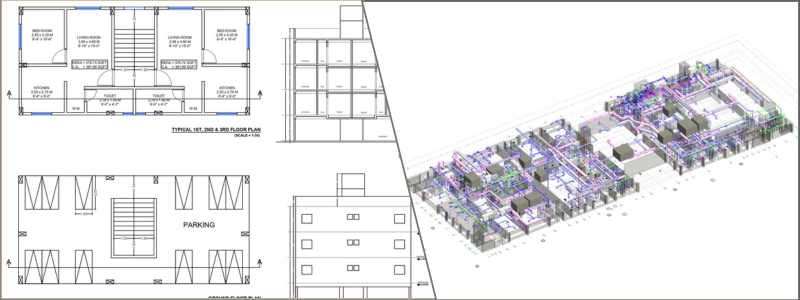
Floor plan drafting and MEP services example design by Cad Crowd experts

Communication: The key to effective outsourcing

If there’s one word that can rescue your outsourcing endeavor, that word would be communication. Not mere communication, but clear-as-day, regular, and collective communication. Without it, even the most skilled drafting group will struggle.

Think of it as a handoff in a relay race. If the hand is sloppy, the team trips. When you outsource drafting, you’re handing over key architectural information to another team, usually at a distance. You have to be clear about what you expect, what you require, and what your goals are.

Most architectural design companies err by believing the drafting team ‘just knows’ what they need. In fact, assumptions are the source of all errors. A misplaced wall thickness or an ambiguous note on structural support can snowball into costly reworks.

Instead, create detailed briefs that do not leave any scope for assumption. Add annotated sketches, 3D models, reference standards, and even video, if necessary. Be prepared to answer queries in a timely manner, and arrange frequent check-ins to monitor progress. Video conferencing or screen-sharing sessions can establish rapport and clarify details more quickly than round-the-clock emails.

Choosing the right architectural drafting partner

Not all outsourcing companies are the same, and selecting a good drafting service provider is deciding upon a co-pilot for your project flight. Experience is important, but so are processes, technology competence, and cultural alignment.

Be cautious of companies that offer low prices but lack strong quality control or industry expertise. A drafting company that is familiar with your area’s building codes, design requirements, and software applications (such as AutoCAD, Revit, and ArchiCAD) will provide fewer mistakes and quicker revisions.

Ask future partners about their quality control processes. Do they use multi-layered review procedures? Double-check drawings versus original specs? How do they manage revisions and client comments? These questions speak volumes about how seriously they take accuracy.

Also, think about their communication responsiveness and style. The best architectural planning and design partner is proactive, open about issues, and accommodating enough to work with as your project changes.

Clear standards and documentation: The architect’s shield against errors

One such underestimated aspect of outsourcing mistakes is that there are no clear drafting standards and documentation. Picture every project as a rich language, and without a common dictionary, the misunderstandings accumulate.

Having a complete drafting standards manual for your outsourcing partner is a game-changer. This manual should define layer naming conventions, rules for dimensioning, line weights, symbols, annotation styles, and file formats.

In addition to that, specify examples of desired deliverables, timelines, and revision procedures. The aim is to ensure your architectural vision flows smoothly into the drafting language.

When everyone is literally on the same page, the likelihood of mistakes diminishes significantly, including those that might affect collaborators such as mechanical engineering experts. It also accelerates onboarding new drafting crews or rotating personnel in the outsourcing company.

Using technology to overcome distance

Technology is your friend when it comes to working remotely with architectural drafting. Real-time file sharing, change tracking, and version control are available through cloud-based collaboration platforms such as Autodesk Docs, Trimble Connect, or BIM 360.

No more emailing huge CAD files between each other, with the possibility of working with old versions. Everyone has the latest model, and comments or markups appear on the screen instantly.

Moreover, most companies have project management software like Asana or Trello to manage tasks and deadlines and create transparency regarding project status.

Using Building Information Modeling (BIM) software, where the model combines architectural, structural, and MEP services, allows clashes to be detected early, before any drafting starts. This minimizes mistakes downstream and keeps all the stakeholders aligned.

RELATED: Top design & drafting tasks to outsource for architects and architectural services firms

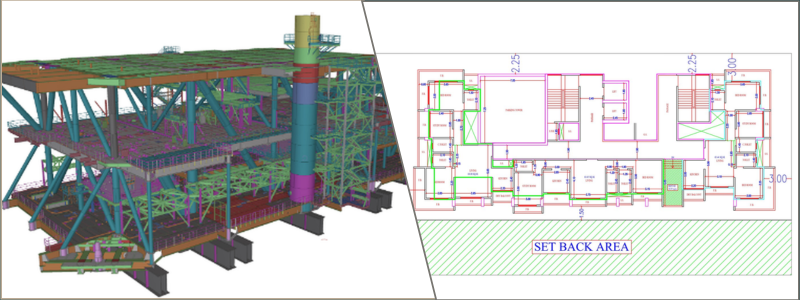
Structural engineering and floor plan drafting design services by Cad Crowd experts

Training and relationship building: Outsourcing as a partnership, not a transaction

Too often, outsourcing is treated as a cost-cutting transactional activity and not as a co-operative relationship. This approach will plant seeds of neglect, poor communication, and ultimately mistakes.

Rather, view your outsourcing company as an extension of your very own staff. Take the time to train them on your business culture, project details, and feedback system.

This could mean virtual workshops or sharing recorded sessions on your design philosophy and quality expectations. The more aligned your partner is with your vision, the fewer surprises you’ll face.

Building relationships takes effort, but it pays dividends in trust and reliability. A trusted drafting partner will flag potential errors early, suggest improvements, and champion your project’s success.

Vigilant quality control: Catching errors before they catch you

Despite the best communication and standards, errors still do get through. The best way to deal with this is by catching them early through strong quality control procedures.

Before signing off on any outsourced drawing, have your internal team thoroughly review it against the original design documents. Utilize checklists that are specific to your project complexity, involving dimensions, annotations, layer compliance, and regulatory needs.

Some architectural design experts also have third-party reviewers or use computer programs that automatically review for drafting errors or code compliance.

Don’t hurry this process. A slight holdup here may save weeks of expensive rework on-site. Get your drafting partner to provide iterative review drafts instead of waiting till the last minute.

Managing time zones without losing time

One significant challenge in outsourcing architectural drafting services abroad is managing time zones. While your staff is waking up, your drafting firm might be closing down, and this window can hamper communication.

The key is astute scheduling and overlapping times. Determine periods in the day when both staff are working and make the most of that time for live communications.

Also, utilize asynchronous communication using emails, recorded video walkthroughs, and shared documents that enable every team to work effectively according to their schedule without relying on instant response.

You will find a rhythm over time that makes time zones a strength rather than a weakness, basically making your project a 24-hour shop.

Embracing flexibility and continuous improvement

Architectural projects are living things. Requirements evolve, regulations change, and design tweaks happen frequently. Outsourcing drafting services needs to embrace this flexibility.

Avoid rigid contracts that punish changes or revisions. Instead, build in scope flexibility and encourage ongoing feedback loops.

After each project phase, conduct post-mortems with your outsourcing firm. What worked? What errors crept in? What processes can be improved?

Sustained improvement is a hallmark of high-performing partnerships, resulting in fewer errors over the long term.

Real-world stories: Learning from outsourcing mishaps

The best lessons sometimes result from real-world anecdotes. One small architectural design and planning firm outsourced its drawings to a low-cost provider who was unfamiliar with local fire safety standards. The plans omitted necessary escape routes, leading to significant project delays and redesign expenses.

Conversely, another company spent big on ramping up their outsourcing partner, exchanging detailed CAD standards, having weekly video conferences, and creating a collaborative digital workspace. The payoff? Smooth drafting deliveries, negligible revisions, and an 18% quicker project cycle.

These anecdotes highlight the value of selecting the proper partner and spending in communication and standards from the outset.

RELATED: How architects embrace innovation for modern home design services with companies

Conclusion: Outsourcing mistakes aren’t a destiny

Outsourcing architectural drawing services doesn’t have to be a gamble filled with errors and headaches. It’s about approach, seeing your outsourcing partner as a collaborator, investing in clear communication and standards, leveraging technology, and rigorously managing quality.

Imagine it as cultivating a garden. You can’t simply sow seeds and wait for things to happen. You water, trim, and pamper the plants so they grow well. Likewise, by caring for your outsourcing relationships, you’ll reap precision, effectiveness, and success in your architecture projects.

Partner with Cad Crowd now!

So the next time you are inclined to turn away from outsourcing drafting due to tales of woe about mistakes, keep in mind, it’s not the tool that breaks, it’s how it is used. At Cad Crowd, the leading platform for freelance engineering and design services, we’re here to help you. With these tactics under your belt, you’re better than equipped to use them like a pro.

Call Cad Crowd and ask for a quote for free.

author avatar

MacKenzie Brown is the founder and CEO of Cad Crowd. With over 18 years of experience in launching and scaling platforms specializing in CAD services, product design, manufacturing, hardware, and software development, MacKenzie is a recognized authority in the engineering industry. Under his leadership, Cad Crowd serves esteemed clients like NASA, JPL, the U.S. Navy, and Fortune 500 companies, empowering innovators with access to high-quality design and engineering talent.

Connect with me: LinkedInXCad Crowd