Architect vs. Draftsperson: Who Should You Hire for Your Construction Project?


Architect vs. draftsperson: who should you hire for your next construction project? The short answer is: it depends, on quite a lot of things really, but mostly it all comes down to how big or complex the project is and the range of skills necessary to get the job done. An architect is, of course, a licensed professional in the sense that nobody can randomly call themselves an “architect” unless they have at least a bachelor’s degree in architecture, completed a lengthy paid internship, and passed a qualifying exam. On the other hand, the requirement to be a draftsperson does not include any of the above.

An associate’s degree is often enough to become one. Some draftspersons also earn a diploma or certificate to tell everyone that they actually know what they’re doing. Before we delve deeper into answering the question, let us first make clear that we’re not in any way implying that an architect is in every case a “better” hire than an unlicensed architectural drafting professional for a construction project. There is indeed a pretty substantial gap in the educational and legal requirements between an architect and a draftsperson. In terms of general design talent and architectural knowledge, though, you’ll be pleased to know that many draftspersons are no slouches either.

An architect is more qualified, alright, but sometimes hiring one can only be a good waste of money when a draftsperson has what it takes to get the job done. At Cad Crowd, we have both licensed architects and professional draftspersons for a wide range of construction projects, from small-scale remodeling and renovations to brand-new construction. Here is another thing to make clear: an architect, having passed the qualifying exam and all, is likely capable of doing everything that a draftsperson can, but not the other way around.

RELATED: What to Look for in Residential Architect Freelancers & Hiring Services Companies

This is why that colleague of yours, whose distant cousin happens to be an architect, always says that spending more to hire an architect is a safe bet, no matter the construction project. In this economy, however, sometimes you just want to spend exactly on what you need. To be certain that you hire the right professional for the right amount of money to handle the right kind of project, you need to get a grasp of the difference to begin with.

What’s what

Although data from the BLS or any statistics, for that matter, can be confusing at times, the site has done a pretty good job of making the distinction between architects and drafters. Here’s a quick summary of what it says about the two occupations.

  • Architects: people who plan and design buildings and other structures. A reasonably straightforward definition, until you get to the part where the BLS mentions what an architect typically does in a project. An architect’s duties and services include client consultations, cost estimates, construction schedules, structural specifications, contract documents, construction management, and scaled drawings, among others.
  • Draftsperson: Some architects refer to a draftsperson as a “CAD operator” because they like to use big words for everything. An architectural draftsperson serves a very specific purpose: to convert an architect’s design into a technical drawing. A draftsperson may work as an independent professional or under the supervision of an architect. Either way, the job of producing a technical drawing often involves enhancing an architectural plan with additional details such as utility systems layout, construction materials, timeframe, accurate measurements, assemblies, sections, and more.

Many types of construction projects require an architect because they call for all (or at least most) of the services only an architect can legally provide. That said, there are situations where hiring one is almost definitely overkill, and a draftsperson is plenty adequate.

RELATED: Architectural Plans, CAD Drawing Costs & Architect Service Pricing: Full Breakdown
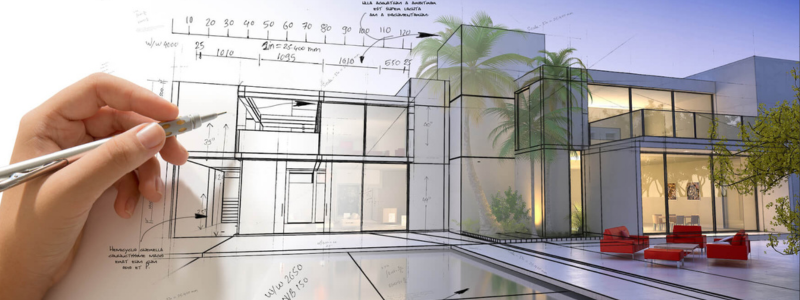
architectural drafting services

Hiring who?

We’re sorry to disappoint, but there isn’t really any easy answer. As mentioned earlier, it depends on the type of construction project you have and the scope of work it entails. Still, to make an informed (and the right) decision, you have to see things from both legal and design viewpoints.

Legal perspective

Every state has its own rules and regulations about the matter. For example, the California Architects Board determines that only four professions are legally qualified to provide construction and design services. They include architects, civil engineers, and structural engineers. The fourth type is uninterestingly referred to as “unlicensed persons” for some reason.

Here is the important bit. Since drafters are not categorized under the first three professions, they must be in the “unlicensed persons” group, obviously. Any of these unlicensed persons, according to the board, are allowed to handle the following construction projects without worries that someone in uniform may stop by and ask them to produce a license:

  • A single-family dwelling, so long as it has no more than two stories and a basement. Also, the building can only be a wood-frame building.
  • Multiple dwellings that contain up to four units. It needs to be a wood-frame house with no more than two stories and a basement.
  • Garages of wood frame construction, with no more than two stories and a basement.
  • Ranches and agricultural buildings of wood frame construction, unless the local authorities say otherwise, because of potential risks to public health and safety.
  • Nonstructural interior modifications.

RELATED: American Institute of Architects Designated Freelancers & Contractors

The design limitation for licensed architects is much simpler. The CAB grants them the legal right to design any type of building, except the structural portion of a hospital. Civil engineers cannot design public schools and hospitals, whereas structural engineers practically have no design limitations. There you have it. If your construction project fits into the above criteria, an unlicensed draftsperson is probably all you need. A draftsperson is also likely more affordable than an architect, so it’s a good way to save money without cutting corners.

Design perspective

This is going to be a much trickier viewpoint. If you look only at the educational differences between a licensed architect and a draftsperson, the former is always seen as the better option. To reiterate, an architect has to have at least a bachelor’s degree in architecture, followed by a paid internship. Say the degree takes five years, and the internship runs for three, for a total of eight years. As if that’s not enough, an architect has to pass a licensing exam, which consists of at least six divisions. All in, it typically takes anywhere from 9 to 12 years for someone to become a licensed architect.

Let’s not forget about the mandatory post-licensure education to maintain that licensure. When it comes to design qualification, the long journey that a licensed architect has to go through in the career should result in an accumulation of knowledge and skills in such subjects as space planning, construction methods and techniques, MEP systems, material specifications, site design, bidding evaluation, passive heating and cooling systems, sustainable architecture, building code, zoning laws, and possibly many other specialties. An architect is certainly qualified to handle just about any construction project, regardless of scale.

The problem is that a licensed architect can be overqualified for a small project, meaning you’ll be spending money on things you don’t really need. Meanwhile, a draftsperson isn’t even a designer. Professional CAD drafters are typically people who provide, as you’ve probably expected, drafting services. The job mainly involves translating or converting design sketches into technical drawings that a contractor can understand, and acquiring permits. They DO NOT usually offer design services, but draftspersons can definitely develop the skills to become a capable designer. They learn the trades by either taking design courses or working under an architect.

RELATED: Creating Exterior Renderings Using 3D Exterior Rendering Services for Architects

Drafters with years of experience working with clients on many different projects should have nurtured the ability to turn any simple design sketch into construction drawings. In some cases, the sketches aren’t even made by architects; the clients themselves make them. While your colleague is right about an architect being a safe bet, there’s a good chance that your project actually needs a much simpler approach that an experienced draftsperson can handle just fine. Just remember: if you decide to hire a draftsman instead of an architect for your construction project, be certain that nothing violates the “design limitations by unlicensed persons” regulations in your state.

Takeaway

Not every construction project needs a licensed architect. There are times when hiring a CAD draftsperson is the right choice, especially if you already have a clear idea of what the design will be. Always seek further information from the local authorities about the design limitations for architectural professionals. But manage your expectations. A draftsperson, even an experienced one, might not be able to offer suggestions beyond the basics of a design. These “basics” are usually much more in-depth than what the average client might think, yet still reasonably shallow compared to what an architect can come up with.

How Cad Crowd can help

Regardless of what you decide at the end of the day, Cad Crowd is here to help you connect with the right professional for your project, be it a licensed architect or an experienced draftsperson. If you find yourself indecisive, as many other clients do, Cad Crowd can provide all the guidance you need and match the project with the most qualified professional based on the project requirements, including scale, schedule, and budget. Contact us for a quote today!

author avatar

MacKenzie Brown is the founder and CEO of Cad Crowd. With over 18 years of experience in launching and scaling platforms specializing in CAD services, product design, manufacturing, hardware, and software development, MacKenzie is a recognized authority in the engineering industry. Under his leadership, Cad Crowd serves esteemed clients like NASA, JPL, the U.S. Navy, and Fortune 500 companies, empowering innovators with access to high-quality design and engineering talent.

Connect with me: LinkedInXCad Crowd

Understanding Architect Fees and Hiring Options for Your Firm with Cad Crowd


In case you haven’t noticed, an architect is one of the few professions legally qualified to design a built environment. Today’s post helps you understand architect fees and hiring options for your firm at Cad Crowd. Related professions, such as engineers, designers, and contractors, are likely more involved in the construction process, but everything they do must be based on plans prepared and approved by an architect. Producing an architectural plan may seem like a simple, one-phase task, but it entails significant technical and aesthetic challenges.

In addition to structural integrity, an architect must consider safety, environmental impacts, project timeline, and cost efficiency, among other constraints. Not every project requires an architect. That said, hiring one is almost a guarantee of a durable, aesthetically pleasing structure with a highly functional layout. It is certainly possible to undertake an architectural project (whether a new construction or renovation) without involving an architect.

However, this also means that the project is running without their expertise in design, building regulations, construction management, and budget estimation. Hiring an architect doesn’t have to be prohibitively expensive. AEC-specialized freelancing platform Cad Crowd can help you connect with hundreds of licensed architects from all over the world to handle your residential, commercial, industrial, and civil projects at an affordable cost.

RELATED: 3 Steps to Hiring a Reliable Architecture Firm & Freelance Services Architects

Architect fee structures

With most professions, the cost for hiring their services is typically determined by the scope of work, complexity of the tasks, and the time required to do the job. Architects are no different for the most part. Broadly speaking, architects may calculate their fees using any of the following three methods.

Percentage of construction cost

Think of this percentage-based fee as a sliding scale that puts the size and complexity of a project in direct relationship with the estimated total construction (as opposed to project) cost. As the cost slide moves up, the architect’s fee increases accordingly. The most common percentage is anywhere between 8% and 20% of the cost. Say a renovation project has a construction budget of $80,000, and the architect’s fee is set at 15%. Remember that the percentage isn’t subtracted from the construction cost; it’s added to it. This means the actual project cost will be the sum of $80,000 plus $12,000 (15% of the amount) for a total of $92,000.

Architectural designers are more likely to use percentage-based fees when they’re hired to provide full architectural services, which typically entail five phases, including schematic, design development, construction documentation, bidding and negotiation, and contract administration (construction). Keep in mind that the percentage is calculated based on the definitive construction cost instead of the initial estimate. If, at the end of the project, the construction cost exceeded the estimate, the architect’s fee would be the same percentage of the adjusted cost (rather than the initial estimate).

RELATED: Architectural Plans, CAD Drawing Costs & Architect Service Pricing: Full Breakdown

For clients, a percentage-based fee is ideal when the project is reasonably large, but the scope of work isn’t clearly defined. It allows them to secure the architect’s fee early on, yet still leaves room for negotiation later on as the specifics become known. It’s worth noting that a percentage-based method may be used to include or exclude additional project-related services and consultant fees, such as structural and MEP (mechanical, electrical, and plumbing) engineering.

Lump sum

As simple as it can get, a lump sum is a fixed fee. It’s a practical way to compensate an architectural drafting expert for the services provided, as you don’t have to handle percentage calculations, cost adjustments, or additional expenses that may arise during construction. However, you must understand that architects are only willing to use the fee structure if the scope of work is clearly defined. In other words, they will not throw around a fixed fee unless they’ve already calculated the work hours, construction timeline, the design complexity, and other variables with a reasonable degree of accuracy – not to mention the knowledge that major changes are highly unlikely during the project.

In the rare instances of major changes to project parameters beyond the architect’s control, the “fixed” fee must be adjusted to reflect any additional services rendered. Clients like the lump sum method because it’s straightforward. Following a negotiation at the very beginning of a project to determine the architect’s fee, the amount that both parties agree to is (in the vast majority of cases) the money the client ends up paying to the architect when the project concludes. At the same time, the method feels somewhat reassuring because it may incentivize the architect to work as efficiently as possible, since the pay is fixed regardless of the number of hours they spend on the project.

RELATED: How Much Does an Architect or Architectural Firm Cost for Home Design?

Of course, the biggest challenge with a lump sum for a client is that you cannot afford to have any hint of uncertainty about what the project requires. It’s important to know what CAD drafting and design services you need, how long the project should be, all the expenses, and the overall construction budget; otherwise, you might not be able to negotiate the fee effectively. 

architect fees explained

Hourly rate

Among the most common fee structures across professions is the hourly rate. As the name implies, the fee is calculated by multiplying the base “fee per hour rate” by the total number of work hours an architect spent on a project. Bear in mind that the base rate may vary significantly depending on such factors as the architect’s experience, project complexity, and location. In the United States, for example, architects’ rates range from $80 to $250 per hour. It’s admittedly a massive gap, but it’s true nonetheless: high-profile architects in big cities with a higher cost of living may warrant rates at the upper end of the spectrum.

Some people even consider that an hourly rate between $175 and $250 perfectly acceptable. For the client, the biggest advantage of an hourly rate is flexibility. If you have only the slightest idea of what architectural plans design services the project requires, the hourly rate affords you the freedom to adjust or amend the scope of work without fee renegotiation. On the other hand, flexibility comes with uncertainty; the open-ended nature of the fee structure makes it a good practice to ask the architect for an accurate estimate of how much time they need to finish every stage of the project.

RELATED: Hiring an Architect for New Construction & Renovation? Ask These Questions First

In any case, an hourly rate makes sense for architectural services that are not well-specified, conceptual design, small-scale renovation projects, specialist expertise (design consultant, analysis, etc.), or anything else that requires only a little involvement of an architect, such as representation with permit-issuing authorities.

Hybrid structure

It’s not uncommon for architects to use a combination of multiple fee structures rather than a single method of compensation throughout an entire project. This makes sense because different stages of a construction project are best served by different payment models as well; the idea is to offer the utmost cost efficiency to the client without sacrificing a healthy rate for the architectural detailing expert. For instance, during the process of acquiring building permits from the authority, the scope of work might be indeterminate in terms of complexity, but with a pretty clear timeline, which makes an hourly rate a sensible choice. As the project moves along and reaches the documentation stage, a fixed fee is ideal as it comes with a very specific scope of work.

Hiring options from Cad Crowd

Things are very different when you hire an architect through a freelancing marketplace. There are dozens of platforms you can use, but Cad Crowd sets a fine example of how to bridge a collaboration between clients and architectural planning and design professionals in ways that benefit both. Unlike the more generalized platforms, Cad Crowd specializes in the AEC industry with more than 15 years of experience connecting architects, engineers, and construction professionals with clients from all over the world. Cad Crowd offers three primary hiring models as follows:

RELATED: Complete Billable Rates for Architect Design Services, Architectural Costs & Hourly Fees

Direct hire

Presumably, the most straightforward way to hire an architect on the platform, the direct hire model, is the closest you can get to the hourly rate fee structure. You start the process by posting a project, which can be as broad or specific as you want, and get matched with the most qualified architect for the job. For example, the brief may say “create a permit-ready floor plan and convert it into a 3D visualization” or simply “build an architectural plan for a residential home.”

Once Cad Crowd identifies several qualified candidates, you can discuss the project further with the architectural drafting experts regarding the rate. When you’re ready to start the project, you can purchase a block of 10 hours at the agreed-upon hourly rate. While the entire “price negotiation” matter is basically the same everywhere, Cad Crowd plays the role of a hub here to help filter through hundreds of available candidates, making the process much quicker.

Managed services

A small yet notable difference between Direct Hire (Hourly Services) and Managed Services is the scope of work. Cad Crowd makes this distinction that Managed Services are reserved for short-term projects with well-defined scope and budget. Also, any project under this service is completely confidential, meaning only you and the pre-qualified expert get to see the project brief and deliverables. Everything else is pretty much the same between the two hiring options. You can communicate directly with the architect via email, Skype, or TeamViewer.

RELATED: Architectural Detailing Services: Top 31 Sites to Hire Freelance Architects & Drafters

Contest

Built on the idea of crowdsourcing, a design contest is excellent for conceptual, ideation, styling, or visualization phases. It’s also a great idea in case you need to hire a design engineering expert to help solving an engineering problem. As usual, you start by posting a project brief that best describes the services and the deliverables you need. You must set a prize money this time to attract the experts; a bigger prize attracts a bigger crowd. Although the platform offers private and invite-only contests where the project is visible only to select architects, it’s best to have it publicly accessible to try to receive as many submissions as possible. Pick the best design and give the reward to the winner.

How Cad Crowd can help

Cad Crowd gives you the peace of mind that the architect you end up hiring is indeed the best you can get for the project and the money. There might be some additional cost involved, such as the 3% platform fee and the 20% service fee for hourly and fixed-rate projects, but you get a guarantee of quality in addition to the 24/7 support team. Considering that Cad Crowd has some of the world’s most experienced and talented architects in the network, the quality of both the work and the service is worth every penny you spend. Contact us for a quote.

author avatar

MacKenzie Brown is the founder and CEO of Cad Crowd. With over 18 years of experience in launching and scaling platforms specializing in CAD services, product design, manufacturing, hardware, and software development, MacKenzie is a recognized authority in the engineering industry. Under his leadership, Cad Crowd serves esteemed clients like NASA, JPL, the U.S. Navy, and Fortune 500 companies, empowering innovators with access to high-quality design and engineering talent.

Connect with me: LinkedInXCad Crowd

3 Steps to Hiring a Reliable Architecture Firm & Freelance Services Architects


Selecting the appropriate architecture company or independent architect to design your project can be a daunting process, but it needn’t be. When you’re creating your dream house, a business building, or a remodeling project, professional help plays a significant role in guaranteeing success for your project.

Being one of the top names in the business right now, Cad Crowd has some of the most trustworthy architecture firms and freelance architects who are qualified to turn your projects into a reality, regardless of their scope and magnitude.

Architects are the professionals who can make your imagination come to life, creating functional and stunning spaces. That is why choosing the right one needs to be accomplished with extra vigilance.

In this article, we will discuss the three easy steps that will help you know how to hire a trustworthy architecture firm or freelance architect. This way, you can be certain that you’re making the correct decision for your project’s specifications, timeline, and budget.


🚀 Table of contents


Step 1: Define your project’s specific needs and scope

Even before you begin searching for architects, you must determine what you want them to do. Step one is discovering how big and complex your project will be. Are you constructing a new building from scratch, or are you renovating a building? Is your project of moderate size, or are you undertaking a huge, complex design?

Determine the type of architect you need

Depending on the project’s size and complexity, you might need an architectural design firm or a contract architect. Both have pros and cons, but having knowledge of what kind of experience your project will need can help you make the most informed choice.

Architecture firms Freelance architects
An architecture firm would generally consist of a group of designers and architects with various experience areas such as commercial, residential, sustainable design, or urban planning. Firms are better for large projects needing multi-disciplinary staff. Firms also provide help with permits, codes, and general planning. If your project is very complex or needs a lot of coordination, an architecture firm can offer a level of expertise and service that independent contractors cannot offer. Or, freelance architects are ideal for small jobs, homes, or if you have a small budget. Freelancers provide flexibility, affordability, and a better personal experience. A talented freelance architect can provide you with the same level of high-quality design experience as a big firm, but with more immediate access and control of the process.

Know your budget and timeline

The second thing to keep in mind is familiarizing yourself with your timeline and budget. A larger company will cost more, but they can deliver more detailed work with faster timelines due to the resources they have available. Freelancers, being cheaper, will probably have less ability to produce on tight timelines, depending on the amount of work.

Consider the overall cost profile of your project. Do you require much project management, or are you primarily looking for architectural design? Be realistic with yourself regarding what you can pay, and be willing to articulate this to potential architects.

Project design and style

You also need to set your style and design goals. Do you want a clean-lined contemporary look, or something that is more sympathetic to the heritage aesthetic? Will sustainability be a primary goal, employing passive house theory, or environmentally friendly building products? The clearer you are about these matters, the simpler it will be to find an architectural design and planning service that practices your preferred style.

RELATED: Top design & drafting tasks to outsource for architects and architectural services firms

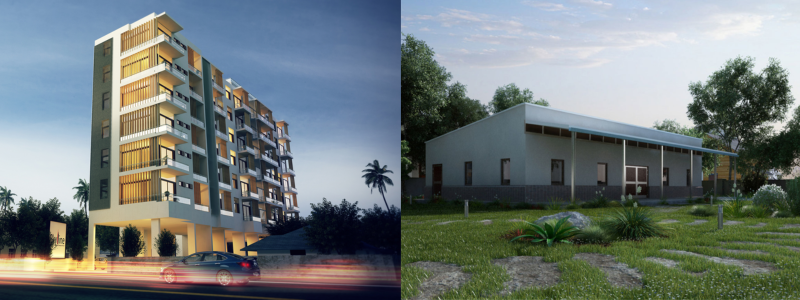
3d rendering of a residential building and school

Step 2: Research and shortlist potential candidates

Once you know what you require and what you can manage to pay, the subsequent task is to look for potential architects to shortlist from. Given that there are numerous architectural firms out there, your task is to screen for potential candidates who qualify to fit your requirements, your preferred style, and your project budget.

Where to look for architects

Begin searching for architects through the appropriate channels. Start with online searches of websites specializing in the field of architecture, including the American Institute of Architects (AIA), the Royal Institute of British Architects (RIBA), or regional listing websites within your area for architects. Such websites normally screen professionals by standards of good practice.

You can also seek referrals from relatives, friends, or colleagues who have previously worked with architects. If your own friend had a positive experience, there is a chance that you will have the same.

Don’t forget to also scour the internet for architect portfolios or websites. Cad Crowd, Archinect, Houzz, or Behance are excellent resources where you can browse through architect profiles, read examples of past work, and see reviews from customers. Most architects should have professional blogs or case studies on a project, which may better inform you regarding their specialization and process.

Evaluating portfolio and competence

Once you’ve compiled a list of potential candidates, take the time to review their portfolios carefully. Look at the types of projects they’ve worked on and whether their design style aligns with your vision. Be sure to assess the quality of their work and pay attention to the details that matter most to you. Does the architect have a history of completing the kind of project you are planning, e.g., a home project or a commercial project? Have they completed projects of similar size or complexity?

For independent workers, you will notice more of an individual style to the portfolio. The independent worker might not necessarily have as high a number of projects in his or her portfolio as a big agency, but you can still make a qualitative assessment based on style, technique, and feedback from previous clients.

Checking references

Regardless of how wonderful an architect’s portfolio is, never skip the vital step of calling up references. Inquire with previous clients about what went on, the communication type, and the project outcome eventually. Pose specific queries as to the kind of problem-solving approach employed by the architect, within the budget and timeline, and the responsiveness rate in the process.

You may also look up the reputation of architectural design and drafting services on review websites, social media, or professional websites. Look at how long they have been around and what kind of clients they are usually dealing with. This will determine whether you go for their professionalism and reliability.

RELATED: Using 3D visualization services to communicate design intent to clients and firms

Step 3: Interview and select your architect

You’ve whittled down your list; now it’s time to interview your potential architects and make the final decision. Regardless of whether you’re hiring a firm or one individual freelancer, interviews are part of the process of deciding who is best for your project.

The interview process

Develop an agenda of interview questions to pose in order to discover the architect’s style, process, and personality. A few of the most important issues to discuss in your interview include:

  • Experience and expertise: Question the architect about the extent to which they’ve had experience with projects similar to yours. Request that they explain their design process, what they do if the client makes a change, and how they stay on track with the project.
  • Project timeline and communication: What are you seeing with timelines and communications? How frequently is your project discussion meeting conducted? How much time do you see that you will leave it with at the point of implementation? What are they going to do if delays or unexpected setbacks occur?
  • Budget control: Can they control expenses and remain within budget limits? How do they respond to cost estimating, and how will they prevent themselves from costing themselves more than they wish to spend?
  • Cooperation: How does the architect work with other specialists like contractors, engineers, and freelance interior designers? Will you work directly with these groups, or will you have to deal with the relations?
  • Sustainability and design principles: If sustainability is a high priority for your project, ask to work with sustainable design, energy-efficient materials, or passive house standards. How does the firm incorporate sustainability into its design process?

Assessing compatibility

When you’re interviewing, you’re not just trying to find the best architect, but one you’d like to work with. Communication is everything throughout the project, so it’s essential that you make sure the architect’s working style will mesh with yours. Are they good listeners? Are they proactive about providing suggestions and feedback? Do you feel comfortable that you can be sure they’ll be able to cope with any issues that arise?

3d rendering of a living room and hospital reception

RELATED: Commercial 3D rendering rates for buildings, services costs, and pricing for architectural firms

Making your decision

After finishing the interviews, take a little time to weigh your choices. Look at all the elements of the project, such as experience, communication, compatibility, and cost. Don’t be in a hurry with this choice, as choosing the right architect is one of the most crucial phases in ensuring success in your project.

Once you’ve selected your architect, make sure you have a good written agreement detailing the work to be done, time, cost, and other conditions. This will prevent future misunderstandings.

Conclusion

Selecting the appropriate architecture firm or single architect to hire may be a challenging task initially, but by following these three crucial steps, which are determining what you require, researching and narrowing down your choices, and interviewing, you can make it convenient and easy for yourself to come to an informed decision that you would never regret in the future. Cad Crowd makes this easy for companies and individuals alike with our vetting and hiring process as one of the top freelancing platforms for architects, designers, and engineers.

With the best architect at your side, you can turn your dream into reality and build a place that is functional and inspiring. Call Cad Crowd today and see the list of the best in the nation. Request a quote now! Happy building!

author avatar

MacKenzie Brown is the founder and CEO of Cad Crowd. With over 18 years of experience in launching and scaling platforms specializing in CAD services, product design, manufacturing, hardware, and software development, MacKenzie is a recognized authority in the engineering industry. Under his leadership, Cad Crowd serves esteemed clients like NASA, JPL, the U.S. Navy, and Fortune 500 companies, empowering innovators with access to high-quality design and engineering talent.

Connect with me: LinkedInXCad Crowd