4 Benefits of Moving to a Cloud Based CAD Software!


This past year has seen a lot of change in the way we work as designers. Some of us have transitioned to fully remote positions like myself, while many are working on a hybrid Office/Home schedule and even fewer it seems, have returned to the office full time. Regardless of working location, one of the best things to come from the last few years of online collaboration, remote work, and advances in software for CAD Design are our options for Cloud-Based CAD software.

Over the last few months, I’ve had the chance to really get to use and learn about Onshape, a browser-based 3d modelling software. I’m excited to share my thoughts and in particular, some of the biggest benefits of making the switch to online design software whether it’s Onshape or any of the browser-based CAD options out there.

If you haven’t already checked out my recent videos on learning Onshape, be sure to watch them here to see what all the hype is about (Onshape Modeling Tutorial)

I wanted to thank Onshape for sponsoring this post!
To learn more and get a free Pro Onshape Trial be sure to visit them here: https://onshape.pro/cadintentions

4 Benefits of Moving to a Cloud-Based CAD Software:

1: No Install or Setup Time

One of the first things that stands out when using browser-based software is just how easy it is to get up and running. Simply open a browser on practically any device and just log in to the website to get started.

There are literally no install or wait times and I’ve found myself using different devices based on my location and how I’m feeling that day. This makes software like Onshape perfect for remote designers since we can log in from anywhere without having to worry about annoying VPN servers, lugging around workstations, or network licenses.


2: Simple & Streamlined Collaboration

Perhaps the biggest change from traditional desktop-based CAD software is the fact that our files are stored in the cloud. This makes collaboration, sharing, and review of files much more streamlined and simple. Simply sharing a link/filling out a sharing form allows colleagues and clients to view, edit and review our models instantly and while we are still able to work on them.


This completely eliminates issues like software compatibility when sharing files as well as common things like broken references and links within the model files after sending them for review or additional work to be done on them.

By working on the cloud collaboration is a breeze with instant live updates and the ability to have multiple users working on the same models simultaneously.


3. Minimal Hardware & Cost Requirements

I know many software decisions ultimately come down to cost. This is especially true for smaller firms, freelancers, and hobbyists. Don’t worry though, since making the switch to cloud-based software will likely save you money. Since the heavy lifting is being done by the software servers like Onshapes, the need for high-end workstation Laptops with expensive GPUs is no longer there. I’ve been pleasantly surprised by just how well Onshape has run and worked for me regardless of the hardware I log in on.

In addition to being able to use basically any laptop, tablet, or even phone, we also no longer require the expense and upkeep of a modeling file server, all of our models are stored on the cloud automatically for us. Further reducing the costs required to get up and running with a truly powerful CAD modeling software.


4. Increased Security and Peace of Mind

Having all of our models stored on a cloud server provides quite a few benefits over the traditional methods of saving files locally when working remotely or needing to use a VPN to access a server. VPN access can be difficult to get set up while working remotely and can be slow depending on file sizes and internal traffic.

Plus, the added peace of mind that if your laptop or device is lost, broken, or stolen, all of your files and projects will be safe and instantly accessible after logging in on a new device. Imagine losing a laptop while working remotely in another city or country and being able to simply log in on another laptop and continue working minutes later. No time-consuming setup, installation, or networking. Just internet access and a sign-in account.

I’ve found this to be one of my favorite features and benefits of Onshape these last few months. I’ve even logged in while camping on a new laptop with only my cellphone as a wi-fi hotspot.


I hope you enjoyed my overview of just a few of the benefits and features of Onshape and any Cloud-Based CAD Software. If you’d like to learn even more including a walkthrough of learning Onshape be sure to check out one of my Videos here:

 That’s all for today’s post, as always thank you all so much for reading, and let me know in the comments what you think of Cloud/Browser Base CAD Software?

Lastly, I wanted to Thank Onshape again for sponsoring this post and helping to support the content I make here!!
Don’t forget to check them out and get a free Pro Onshape Trial here: https://onshape.pro/cadintentions


PS. Thank you again for visiting and don’t forget to subscribe to the newsletter to keep up to date on new CAD news, tutorials and tricks: Subscribe here

The following two tabs change content below.

Brandon is a Civil Designer, Aspiring Blogger/Creator, Husband, Father to two Amazing Kids and Tech Aficionado from a small town in Canada. He has been obsessed with design and technology since he can remember and working as a Civil Designer for nearly as long. Brandon’s blog and Youtube channel, CADIntentions.com has been his outlet and excuse for keeping up with new tech and trends in the CAD design world for the last 10 years growing to more than 60,000 subscribers and over 15,000,000 views, while also being the source of many great friendships and unique opportunities.

If you would like to Sponsor CAD Intentions or Work together in some way, Please visit my About Page and send me an email: http://cadintentions.com/about-me/


AutoCAD Text Arrows/Leaders Tips, Tricks & Styles! Multi Leader Tutorial


Hey Everybody,

Brandon here and this week we are looking at how to work with and use MultiLeaders or MLeaders in AutoCAD.

Whether you’re new to AutoCAD or just looking for a refresher, this video will help get you up to speed when adding arrows or leaders to our text.

If you’re unfamiliar, an MLeader is a piece of MText (Multi Line Text ie text that spans multiple lines in AutoCAD) that has a Leader (Line with an Arrow or other block at the end of it) and Arrow (or other shape) pointing to something in a drawing. MLeaders are typically used to callout or bring attention to a specific item, object or area of a drawing allowing additional detail to be added in the multiline text portion while accurately pointing to the specific object.

In today’s video, we walk through how to use and add an MLeader to a drawing along with how to choose and modify the various settings that go along with them. Everything from changing up the properties of the leader like the landing distance to adjusting the style, sizes, and much more!

We also get to try out a few cool tricks to keep your drawings looking organized and clean!

Master these great MultiLeader tricks to Save Time in AutoCAD. Draft faster and Smarter!

Check out: AutoCAD Text Arrows/Leaders Tips, Tricks & Styles! Multi Leader Tutorial | 2 Minute Tuesday

That’s all for today’s post, I hope you all were able to take something away from it and able to add a new tool to your CAD toolbox!

Be sure to subscribe and follow on Twitter @cadintentions to keep up to date and be the first to get updates on the newest videos, posts, and downloads.

As always, thank you so much for reading and watching, I am super excited to be back and posting regularly on the blog and hope you all will follow along.
Cheers and happy Drafting!

PS. In case you missed out or are interested in the brand new AutoCAD Fundamentals & Workflows Course, check it out here (Available for Instant Download NOW): https://gum.co/learnautocad


The following two tabs change content below.

Brandon is a Civil Designer, Aspiring Blogger/Creator, Husband, Father to two Amazing Kids and Tech Aficionado from a small town in Canada. He has been obsessed with design and technology since he can remember and working as a Civil Designer for nearly as long. Brandon’s blog and Youtube channel, CADIntentions.com has been his outlet and excuse for keeping up with new tech and trends in the CAD design world for the last 10 years growing to more than 60,000 subscribers and over 15,000,000 views, while also being the source of many great friendships and unique opportunities.

If you would like to Sponsor CAD Intentions or Work together in some way, Please visit my About Page and send me an email: http://cadintentions.com/about-me/


AutoCAD Scaling Tips & Best Practices!


Arguably one of the more confusing topics in AutoCAD to newer designers and those that learned prior to paper space/annotative text is scaling within AutoCAD.

I can’t remember how many times I’ve been asked about setting up scales, fixing viewports, annotative text, what size to draw things in model space, and so much more…

Today I wanted to share a few best practice tips when it comes to scale and designing in AutoCAD.

While there are always exceptions to every rule, if you can follow these tips, your drawings are going to be off to a great start!


This one is pretty straightforward but not always followed. It’s best practice to do all of your drawing and design work within model space in AutoCAD. (Learn about the difference between Model/Layout Spaces)

Layout tabs or paper space are there to create our drawings and model space is for our model and design.

Whether you’re doing floor plans, simple details, detailed design drawings, or schematics, there’s no reason or benefit to not use model space when drawing.


  • Only draw/ design at 1:1 scale aka real size.

Similar to the last tip, there’s no benefit or reason not to draw everything in AutoCAD at one-to-one or full scale.
You’re not going to run out of room and you can always adjust and change up the scale by using your viewports later on.

Doing all of your design work at one to one. Can eliminate issues later on, especially if someone else starts working on your drawings and doesn’t realize you’ve scaled things.
It can also eliminate issues and errors by accidentally scaling incorrectly, as well as make things easier when getting quantities, areas, etc.


To show different scales and areas of your design, use multiple viewports in your layouts to convey the different details required for your drawing.
Viewports allow you to easily show different areas or scales at any point and can be created quickly without the need to scale or redraw anything in your model space or design.


  • Use annotative text and dimensions when labeling your design.

These pieces of text and dimensions when set up properly will automatically adjust their size to be consistent across all of your drawings and viewports regardless of the scale of your viewport.
Annotative elements in AutoCAD are dynamic and will save you time and headache if you’re drawing size or scale ever needs to change down the road.


  • Add your Notes & Tables in Layouts


Depending on the drawing type and situation, tables (Dynamic Excel Table in AutoCAD), drawing lists (Make Dynamic Drawing Lists in AutoCAD) and general notes can be added directly to your layout tabs, this can help keep your model space from getting cluttered with a lot of notes. It can also make copying general note sheets and title sheets from another project easier since the text is already on them and not in model space.


That’s all for today’s post, I hope you all were able to take something away from it, and if you have any questions be sure to leave a comment or reach out on Twitter @cadintentions.

As always, thank you so much for reading, I am excited to be back and posting regularly on the blog and hope you all will follow along.

Cheers and happy Drafting!

PS. If you are looking to learn more about AutoCAD and jump start your learning, be sure to check out my AutoCAD Fundamentals & Workflows Course (Available for Instant Download NOW): https://gum.co/learnautocad
I’ve packed over 15 years of tips, tricks, and experience into easy to follow videos that I’m sure you will enjoy!


Also published on Medium.

The following two tabs change content below.

Brandon is a Civil Designer, Aspiring Blogger/Creator, Husband, Father to two Amazing Kids and Tech Aficionado from a small town in Canada. He has been obsessed with design and technology since he can remember and working as a Civil Designer for nearly as long. Brandon’s blog and Youtube channel, CADIntentions.com has been his outlet and excuse for keeping up with new tech and trends in the CAD design world for the last 10 years growing to more than 60,000 subscribers and over 15,000,000 views, while also being the source of many great friendships and unique opportunities.

If you would like to Sponsor CAD Intentions or Work together in some way, Please visit my About Page and send me an email: http://cadintentions.com/about-me/


8 Must-know AutoCAD Viewport Tips & Tricks – How to Create, Scale, and Master Viewports! Examples


Hey Everybody!

I hope your week is going well so far and you’ve been able to enjoy some of the nice weather lately!

Around here it’s been hot and luckily not too smoky from forest fires, and we have some rain in the forecast which is much needed.

A few weeks ago my family and I went out on a bit of an exploring mission to find a lake we had never been to and I happened to bring along my drone to get a few pictures.

 
After getting home and taking a look at them, I’m always amazed at how easy technology can make it to
get more information and data than we’ve ever had available for our designs or hobbies. In my case, I use a DJI Mini but there are so many different options that make getting images easy!

This brings me to the sponsor of today’s video as well as the topic of the video (viewports in AutoCAD) which we will touch on next.

Today’s video is sponsored by Plex Earth. Plex Earth allows you to instantly import recent and historical imagery, terrain data, and contours directly into our AutoCAD drawings. They even have the option to order and schedule a drone flight for your project area within the app if you need even more up-to-date imagery!

If you haven’t given Plex Earth a try yet, I highly recommend them. If you use the link down below, you can get a free trial of Plex earth pro for cad intentions viewers.
Try Plex Earth Now: http://cadintentions.com/plex_ci

Now let’s jump in, this week I wanted to dive deep into some of my favorite tips and tricks for Creating Viewports and working with them quickly!

As I’m sure you’re probably aware, viewports and layouts tend to be the most confusing and asked-about topics when it comes to AutoCAD or Civil 3d.

I completely understand the frustration and can sympathize with those that tend to just ignore or avoid using them entirely.

But after being a major part of AutoCAD/Civil 3D and the drawing creation process for years, I wanted to help and share today’s video where we walk through the process of creating a Site/Key plan drawing using multiple viewports and using a handful of must-know Viewport tips & tricks in the process!

By following these steps and using the commands and tips in the video, you’ll be able to easily create multiple viewports, understand the locking and unlocking of views, how to cycle between them, what to do if you get stuck in a viewport, and much more!

Don’t miss today’s video: 8 Must-know AutoCAD Viewport Tips & Tricks

That’s all for today, I hope you were able to take something away from the tutorial, and if you have any questions be sure to leave a comment or reach out on Twitter @cadintentions.

As always, thank you so much for reading, I am excited to be back and posting regularly on the blog and hope you all will follow along.

Cheers, and happy Drafting!

PS. If you liked today’s video or any of my videos/tutorials and you want to learn over 15 years of AutoCAD Tips & Tricks in a hurry, you can use this link to get my AutoCAD Fundamentals Course and join 100’s of members of the course, get started right now!


Also published on Medium.

The following two tabs change content below.

Brandon is a Civil Designer, Aspiring Blogger/Creator, Husband, Father to two Amazing Kids and Tech Aficionado from a small town in Canada. He has been obsessed with design and technology since he can remember and working as a Civil Designer for nearly as long. Brandon’s blog and Youtube channel, CADIntentions.com has been his outlet and excuse for keeping up with new tech and trends in the CAD design world for the last 10 years growing to more than 60,000 subscribers and over 15,000,000 views, while also being the source of many great friendships and unique opportunities.

If you would like to Sponsor CAD Intentions or Work together in some way, Please visit my About Page and send me an email: http://cadintentions.com/about-me/


AutoCAD SHEET SETS Explained! The Best Tool to Save You TIME Instantly


Hi All,

Happy Thursday!

I hope you’re having a great week so far and enjoying some warm weather and time outside this spring.

I’m excited to share this week’s video and if you haven’t checked out last week’s video yet you can watch it here (Get Started with SOLIDWORKS Online). I’ve also got some new 3d modeling/design tutorial videos coming where we will walk through the process of designing something for the real world!

Jumping into this week’s video, we are getting into how sheet sets work in AutoCAD.

I’ve long talked about how Sheet Sets are one of the most underused yet highly helpful tools in AutoCAD. I think the steep learning curve and general confusion about how Sheet Sets work have unfortunately kept many users from using them, but this is a huge hindrance to productivity, especially on large projects!

In the video, I wanted to explain and simplify sheet sets as much as possible, things like what is a sheet set, how to set up a sheet set, tips, tricks, and useful automation when using sheet sets, and more!

Watch this week’s video now: AutoCAD SHEET SETS Explained! The Best Tool to Save You TIME Instantly

That’s all for today, I hope you enjoyed this week’s email and I would love to hear what you think, do you use Sheet Sets regularity? If not, Why?
 
Be sure to let me know by hitting reply or on twitter @cadintentions

As always, thank you so much for reading and watching, I am super excited for the rest of the year, growing the content, tutorials, and blog with you all. 

Cheers and happy Drafting!

PS. If you liked today’s video or any of my videos/tutorials and you want to learn over 15 years of AutoCAD Tips & Tricks in a hurry, you can use this link to get my AutoCAD Fundamentals Course and join 100’s of fellow drafters/designers and get started right now!

The following two tabs change content below.

The following two tabs change content below.

Brandon is a Civil Designer, Aspiring Blogger/Creator, Husband, Father to two Amazing Kids and Tech Aficionado from a small town in Canada. He has been obsessed with design and technology since he can remember and working as a Civil Designer for nearly as long. Brandon’s blog and Youtube channel, CADIntentions.com has been his outlet and excuse for keeping up with new tech and trends in the CAD design world for the last 10 years growing to more than 60,000 subscribers and over 15,000,000 views, while also being the source of many great friendships and unique opportunities.

If you would like to Sponsor CAD Intentions or Work together in some way, Please visit my About Page and send me an email: http://cadintentions.com/about-me/


AutoCAD How To Insert Drawings – 3 Simple Tricks To Import, Add & Reference DWGs


I hope you’ve had a great week so far, and were able to enjoy some time off to recharge over the weekend.

For us, last weekend the weather cooperated and made for a perfect time to relax and spend time with friends/family, including a day trip to the lake and some time on a secluded beach to hang out, swim, and skip rocks!

It’s been a busy month or two here with lots going on at work, with the family, and on the blog/channel, I want to thank everyone who joined and has been participating in the CAD Support Community/Forum!

It’s been awesome and I’m excited to grow it even more in the coming weeks/months. The first group of spots filled up in just 3 days, which is so great! We’ve been getting to know each other and answering questions already, and today’s video is even based on one of the early requests!

If you missed out on joining the Community or want to learn more, you can check out this link here (http://cadintentions.com/cadsupport) to take part in the 2nd Enrollment open now!

With that, let’s jump into this weeks video below:

In this week’s video, I’m answering and expanding on a question from our CAD Support Discord.

In it, we’re going over 3 simple methods and tricks for inserting or importing DWGs into our drawings!

Depending on your situation and the type of drawing you’re creating, each of these different methods of bringing drawing data into our drawing can be super helpful. Whether you just want bits and pieces of a drawing inserted, a live linked reference of say a floor plan, or you just want to insert everything to make changes, today’s video has you covered with all the options!

These are all really must-know commands and tricks for creating drawings and building out a detailed and accurate design that every designer should know.

Check it out now: AutoCAD How to Insert Drawings – 3 Simple Tricks to Import, Add & Reference DWGs

That’s all for today, I hope you were able to take something away from the tutorial, and if you have any questions be sure to leave a comment or reach out on Twitter @cadintentions.

As always, thank you so much for reading, I am excited to be back and posting regularly on the blog and hope you all will follow along.

Cheers, and happy Drafting!

PS. If you liked today’s video or any of my videos/tutorials and you want to learn over 15 years of AutoCAD Tips & Tricks in a hurry, you can use this link to get my AutoCAD Fundamentals Course and join 100’s of members of the course, get started right now!

The following two tabs change content below.

Brandon is a Civil Designer, Aspiring Blogger/Creator, Husband, Father to two Amazing Kids and Tech Aficionado from a small town in Canada. He has been obsessed with design and technology since he can remember and working as a Civil Designer for nearly as long. Brandon’s blog and Youtube channel, CADIntentions.com has been his outlet and excuse for keeping up with new tech and trends in the CAD design world for the last 10 years growing to more than 60,000 subscribers and over 15,000,000 views, while also being the source of many great friendships and unique opportunities.

If you would like to Sponsor CAD Intentions or Work together in some way, Please visit my About Page and send me an email: http://cadintentions.com/about-me/


Must-Know AutoCAD Site Plan Tips! – Secret Viewport Tools: North Arrows, Scalebars & Text Automation


Hope you’re having a great day and week so far, it’s been a busy one here but I’m excited to share a new video and build on a previous video where we created a Site Plan/Location plan drawing using multiple viewports. If you haven’t seen the Viewport Tips video you can check it out here.

I’ve really enjoyed sharing and creating videos about land-based drawings like site maps, property layouts, and civil design drawings in general and they’re something I work on almost every day and get asked about often.

Especially as more of you have taken my Civil 3D Crash course over time, it’s apparent many of us are in similar industries and have a need for tutorials about these types of drawings.

It also blends and fit’s in well with our regular sponsorPlex Earth.


Plex Earth allows you to instantly import recent and historical imagery, terrain data, and contours directly into our AutoCAD drawings. They even have the option to order and schedule a drone flight for your project area within the app if you need even more up-to-date imagery!

If you haven’t given Plex Earth a try yet, I highly recommend them. If you use the link down below, you can get a free trial to Plex earth pro for cad intentions viewers.
Try Plex Earth Now: http://cadintentions.com/plex_ci

Now let’s jump right into today’s video:

In this week’s video, I wanted to build on the viewport/site plan drawing we made a few weeks ago and share some awesome, somewhat hidden/secret tools in AutoCAD to make your Site Plans better and easier to create!

By following these steps and using the commands and tips in the video, we will take advantage of the AutoCAD free Map Toolset and utilize some “hidden” tools that will allow us to easily add dynamic north arrows, scalebars, and text in a matter of seconds!

Almost every drawing you create as a Civil designer or drafter will need a North Arrow and Scalebar. I just recently helped my Dad with some site plans for the City where we live in order for him to apply to subdivide a property and the submission requires a Scaled Plan which is made much easier when you understand viewports and scales in AutoCAD. 

Don’t miss today’s video, click the link and learn how we can quickly make a drawing more accurate and dynamic in just a few minutes! 

Must-Know AutoCAD Site Plan Tips! – Secret Viewport Tools: North Arrows, Scalebars & Text Automation

That’s all for today, I hope you were able to take something away from the tutorial, and if you have any questions be sure to leave a comment below or reach out on Twitter @cadintentions.

As always, thank you so much for reading, I am excited to be back and posting regularly on the blog and hope you all will follow along.

Cheers, and happy Drafting!

PS. If you liked today’s video or any of my videos/tutorials and you want to learn over 15 years of AutoCAD Tips & Tricks in a hurry, you can use this link to get my AutoCAD Fundamentals Course and join 100’s of fellow drafters/designers and get started right now!


Also published on Medium.

The following two tabs change content below.

Brandon is a Civil Designer, Aspiring Blogger/Creator, Husband, Father to two Amazing Kids and Tech Aficionado from a small town in Canada. He has been obsessed with design and technology since he can remember and working as a Civil Designer for nearly as long. Brandon’s blog and Youtube channel, CADIntentions.com has been his outlet and excuse for keeping up with new tech and trends in the CAD design world for the last 10 years growing to more than 60,000 subscribers and over 15,000,000 views, while also being the source of many great friendships and unique opportunities.

If you would like to Sponsor CAD Intentions or Work together in some way, Please visit my About Page and send me an email: http://cadintentions.com/about-me/


AutoCAD XREFs Explained! External Reference Tutorial & Must-Know Tips


To start today, I want to thank everyone who joined and has been participating in the CAD Support Community/Forum! we had some new members join over the last few days and I couldn’t be more excited for the group to grow and answer all of your CAD related questions!


It’s been awesome to meet everyone and looking forward to meeting/welcoming more of you in the coming weeks/months.


If you haven’t had a chance to take a look or you missed out on the initial announcement or want to learn more, you can check out this link here (http://cadintentions.com/cadsupport) to get all the info and join the current enrollment which I’ll keep open for a bit longer since I’ve had a few more questions come in through email.

If you had any questions about the CAD Support group please let me know how I can help!


XREFs are the building blocks of almost all AutoCAD drawings, particularly production drawings as they become more detailed and complicated. Xrefs allow use to keep track of different elements of the drawing and ensure everything stays up to date.


Using and understanding xrefs (External references) is not only helpful but typically a necessity of creating a complete drawing.


Not only do they help keep our drawings organized, but they also help to keep file sizes smaller and drawings easier to work on in teams.

In this week’s video, I wanted to go over a bit of everything XREFs.

How xrefs work in AutoCAD?

What an xref or external reference is?


Along with some great tips & tricks to save you time when working with them!


Once again, if you haven’t had a chance to take a look or want to learn more, you can check out this link here (http://cadintentions.com/cadsupport) to get all the info and join now!

That’s all for today, I hope you were able to take something away from the tutorial, and if you have any questions be sure to leave a comment below or reach out on Twitter @cadintentions.


As always, thank you so much for reading, I am excited to be back and posting regularly on the blog and hope you all will follow along.


Cheers, and happy Drafting!

PS. If you liked today’s video or any of my videos/tutorials and you want to learn over 15 years of AutoCAD Tips & Tricks in a hurry, you can use this link to get my AutoCAD Fundamentals Course and join 100’s of fellow drafters/designers and get started right now!

The following two tabs change content below.

Brandon is a Civil Designer, Aspiring Blogger/Creator, Husband, Father to two Amazing Kids and Tech Aficionado from a small town in Canada. He has been obsessed with design and technology since he can remember and working as a Civil Designer for nearly as long. Brandon’s blog and Youtube channel, CADIntentions.com has been his outlet and excuse for keeping up with new tech and trends in the CAD design world for the last 10 years growing to more than 60,000 subscribers and over 15,000,000 views, while also being the source of many great friendships and unique opportunities.

If you would like to Sponsor CAD Intentions or Work together in some way, Please visit my About Page and send me an email: http://cadintentions.com/about-me/


Tips To Prevent Burnout and Stay Engaged as a CAD Designer, Engineer, Remote Worker, etc..


I’ve spent the majority of my career as a Designer, working at a desk either in an office or remotely for 95% of my last 16 years working.

Being a Designer/Drafter/Engineer can be quite a sedentary and repetitive career.

To stay engaged, healthy, and happy, it’s essential to make an effort to keep active & learn consistently. Over our careers, we’ll go through periods of boredom, low energy, and doubt…

Tasks become familiar, repetitive, and unchallenging.

Days can feel like they’re dragging on.

Health and energy levels feel like they’re always taking a back seat.

Spending every day sitting at a desk can be draining.

All of these thoughts has gone through my mind over my career and some can still crop up, but years ago I made an effort to fix and change many of them for the better.

I’ve gotten tips and advice from mentors as well as learned along the way and in the end the solutions are pretty straightforward.

Here is some of the best advice & tips I’ve learned so far:

  • Make health a priority
    Scheduling workouts, activities, and eating healthier not only improves how you feel every day but also sets us up for less issues as we get older. Exercise and activities help us relieve stress, keep our energy levels consistent and reduce our odds of getting sick.

    Take breaks throughout the day, go for a walk, do a quick workout, and meet up with friends or co-workers for lunchtime activities. It’s easy to skip these but the improvement to your day and overall health is worth it tenfold!

    Also, try to keep a large bottle of water at your desk and finish it at least once or twice throughout the day, I’m 100% guilty of not drinking enough water and instead drinking coffee all day. But having enough water can improve our days in so many ways including added energy and improved overall health.

  • Continue to learn and explore new things
    I try to learn something new as often as possible. Whether it’s through reading, courses, videos or podcasts, it’s easy now to stay curious and engaged.
    Depending on your work/office space, try to listen to podcasts while doing drawing productions, data processing etc.
    Any tasks that are somewhat trivial or repetitive, as long as you can still complete the work while listening, I highly recommend listening to audiobooks (Audible is my go to, you can get a free trial now using my link here: https://amzn.to/3PCpN08), podcasts or music.
    Not only does it help time go by quicker but I can also tend to get into a focused/flow-state and breeze through projects while also listening to my current Fiction Book or learning something new.

    In addition to listening while working, it’s also important to always be learning when it comes to getting ahead and staying ahead in our industry. Taking the initiative to take a course on a new software package (Like say learning Civil 3D, cough, my civil 3d crash course can be found here) can be a great way to justify a raise or promotion to your supervisor come review time. It can also be highly beneficial for your career to learn about other aspects of the job, taking voluntary courses on Health & Safety, project management, leadership, or engineering courses can help progress your career in addition to helping with your daily tasks.

  • Take your vacation and make time for family & friends
    When work is busy, it can feel like you shouldn’t take your holidays or leave the office at a decent time. When I was younger I definitely skipped vacations/weekends etc to the detriment of my relationships with friends and family.
    It’s important not only for our health but also for the longevity of our careers to keep a good work/life balance. Burnout is real and can seem to come out of nowhere but it can typically be traced back to not listening to our body and minds. Sometimes we just need to get out of the office and take a hike, ride a bike, fish, etc.. taking a break is not a bad thing and many times can increase our engagement when we do get back and even help us come up with new ideas/solutions by freeing up our headspace.

    I know now that taking time away from the office isn’t going to cause a disaster or major project issue.
    The energy & overall engagement is always better after taking some time away to disconnect and recharge, even if it’s just an afternoon off to spend extra time with the kids.

That’s all for today, I hope you were able to take something away from today’s post and I would love if you let me know your thoughts and tips! Lets continue the conversation on Twitter here: https://twitter.com/cadintentions/status/1688955992703377408

As always, thank you so much for reading, I am excited to be back and posting regularly on the blog and hope you all will follow along.
Cheers, and happy Drafting!

PS. If you liked today’s post and want to stay up to date, join the CAD Intentions newsletter on the right at the top of the page or here: cadintentions.com/signup

The following two tabs change content below.

Brandon is a Civil Designer, Aspiring Blogger/Creator, Husband, Father to two Amazing Kids and Tech Aficionado from a small town in Canada. He has been obsessed with design and technology since he can remember and working as a Civil Designer for nearly as long. Brandon’s blog and Youtube channel, CADIntentions.com has been his outlet and excuse for keeping up with new tech and trends in the CAD design world for the last 10 years growing to more than 60,000 subscribers and over 15,000,000 views, while also being the source of many great friendships and unique opportunities.

If you would like to Sponsor CAD Intentions or Work together in some way, Please visit my About Page and send me an email: http://cadintentions.com/about-me/


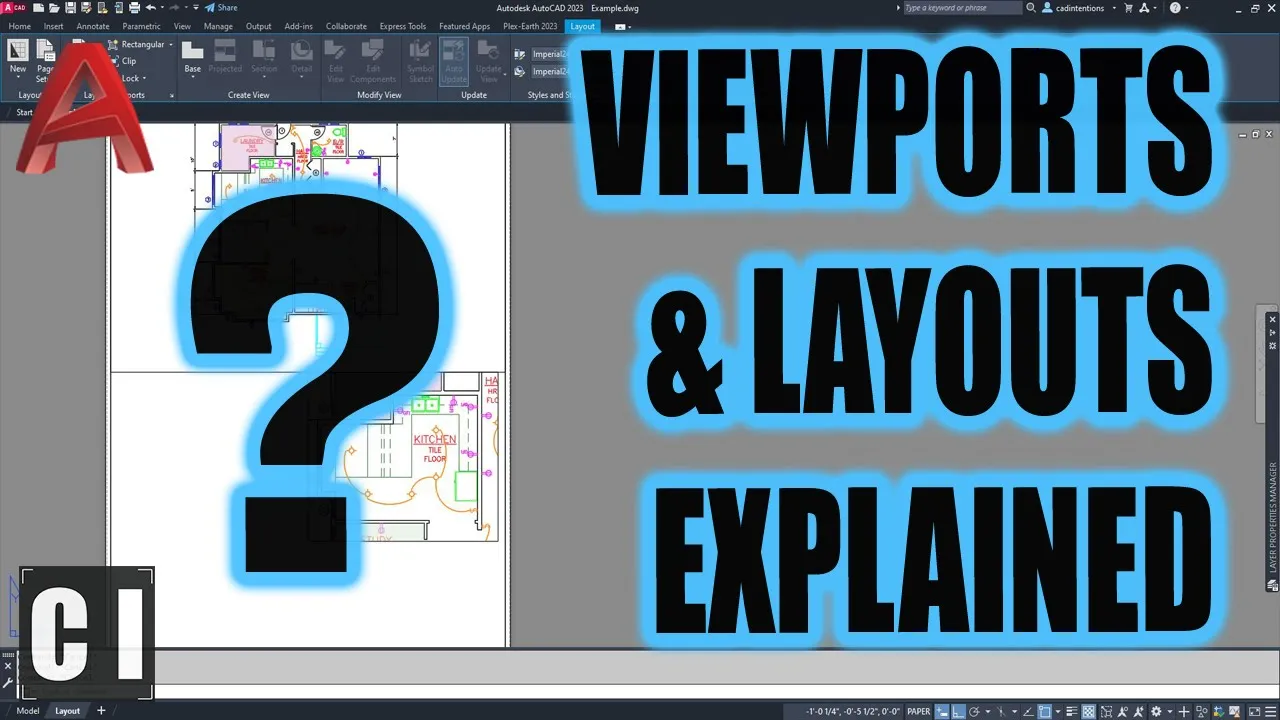
AutoCAD Viewports Explained! Layout / Paper Space Tutorial & Must-Know Tips


Hey All!

I hope you’re off to a great week so far and getting some good weather in you’re area. It’s already warming up here and we’re back to an unusually warm “winter”.

This week, I wanted to share a new video where we are diving into how viewports work in AutoCAD.

Easily one of the most common questions and sticking points when learning AutoCAD is the difference and use for Model space versus Paper or Layout Space.

A big part of the confusion or learning curve is many users have difficulty fully understanding what or how a viewport is used. Along with what it can do for us as designers!

In today’s video we take a look at many of the common questions that come up when learning to create drawings/sheets in AutoCAD, including; what is a viewport? what’s the difference between model space and paper/layout space? How do we create viewports? How to lock/unlock them? How to move them? How to make multiple viewports and much more!

Check out this week’s video below or here: https://youtu.be/5QheAJYcd9o

That’s all for today, I hope you were able to take something away from the tutorial, and if you have any questions be sure to leave a comment below or reach out on Twitter @cadintentions.

As always, thank you so much for reading, I am excited to be back and posting regularly on the blog and hope you all will follow along.

Cheers, and happy Drafting!

PS. If you liked today’s video or any of my videos/tutorials and you want to learn over 15 years of AutoCAD Tips & Tricks in a hurry, you can use this link to get my AutoCAD Fundamentals Course and join 100’s of fellow drafters/designers and get started right now!

The following two tabs change content below.

Brandon is a Civil Designer, Aspiring Blogger/Creator, Husband, Father to two Amazing Kids and Tech Aficionado from a small town in Canada. He has been obsessed with design and technology since he can remember and working as a Civil Designer for nearly as long. Brandon’s blog and Youtube channel, CADIntentions.com has been his outlet and excuse for keeping up with new tech and trends in the CAD design world for the last 10 years growing to more than 60,000 subscribers and over 15,000,000 views, while also being the source of many great friendships and unique opportunities.

If you would like to Sponsor CAD Intentions or Work together in some way, Please visit my About Page and send me an email: http://cadintentions.com/about-me/