‘Heads Will Roll’ walkthrough, Yaya or Mitsumune choice in AC Shadows


Heads Will Roll” is the final quest in the hunt for The Wounded, one of the targets in Assassin’s Creed Shadowsmain story questline. It ends with the assassination of Wada Koretake, and asks you to make a choice that could potentially anger Yaya, someone you can recruit as an ally.

In this Assassin’s Creed Shadows guide, we’ll walk you through how to complete the main “Heads Will Roll” quest and whether or not you should side with Yaya or Mitsumune when it comes to sparing or killing Nobunaga’s soldiers.

‘Heads Will Roll’ walkthrough in Assassin’s Creed Shadows

Naoe sneaks around killing snipers in Assassin’s Creed Shadows

Image: Ubisoft Quebec/Ubisoft via Polygon

To start the quest, follow the marker on your map until you reach an Animus portal. Interact with it.

After a lengthy cutscene, you’ll be dropped into a castle to assassinate Koretake. Your allies will fight a battle against Koretake’s soldiers on the ground, and you’ll start on the rooftops with one goal: kill the snipers at the gates. You’ll get markers on your screen for the locations of all six of these snipers, so work your way across the castle rooftops and take them out.

While you can assassinate many of these snipers to instantly kill them, you don’t need to remain incognito to progress. Because they’re snipers, they’re pretty simple to fight, as they don’t really have any good close-range combat options. They’ll also be distracted by your allies, allowing you to sneak up on them.

Once you kill them all, head to the main courtyard, which has all the yellow flags and curtains. Stay on the rooftops to the left and watch for more archers and snipers.

How to assassinate Wada Koretake in ‘Heads Will Roll’

Naoe perches above Karotake in Assassin’s Creed Shadows

Image: Ubisoft Quebec/Ubisoft via Polygon

Climb along the rooftops to the back part of the courtyard, behind a small building that Wada Koretake walks up to and pauses at on his loop. Assassinate the snipers and scouts in the area to reduce the likelihood that you’ll get caught. Beware that a beefy castle guard tends to roam here even if you stay stealthy.

Once the enemies are taken care of, climb up the small building and perch on the point overlooking the courtyard. When Wada Koretake gets close enough, assassinate him from your perch. This will bring you into a cutscene that will end the mission and lead to a choice.

Should you side with Yaya or Mitsumune?

Naoe decides whether to spare or kill enemy soldiers in Assassin’s Creed Shadows

Image: Ubisoft Quebec/Ubisoft via Polygon

With Koretake dead, your allies have gathered all of his soldiers in the courtyard area. Mitsumune is looking to execute all of the soldiers, while Yaya and Kyonyo want to prove that they are different than Nobunaga and his goons.

Partway through the cutscene, you’ll get two dialogue options:

  • “Justice must be served” (kill the soldiers, side with Mitsumune)
  • “Killing them isn’t justice” (spare the soldiers, side with Yaya)

The game warns you that “this [choice] will impact Yaya,” but doesn’t give you any additional information. After playing the mission twice, we can tell you that Yaya wants the soldiers spared, and she’ll be pissed if you decide to support their execution. However, you won’t see how the decision impacts Yaya until later in the game — and it’s unclear how much of an impact it really makes, outside of her attitude in dialogue — though if you want to recruit her as an ally, go with “killing them isn’t justice.”

Regardless of your choice, Mitsumune and his goons will execute a soldier, and the cutscene will play out almost identically. The only difference is whether Yaya and Kyonyo blame you and Mitsumune, or just Mitsumune. Mitsumune is cold to you either way. Sparing the soldiers will make the fewest people mad at you — specifically Yaya, who is the only character the game explicitly calls out as being impacted by this choice long-term.

For more Assassin’s Creed Shadows guides, see our running lists of Lost Pages, Kuji-kiri, and armor locations. Or see our full Assassin’s Creed Shadows walkthrough, and our guides on how to get all companions and romance options.

What is the max level cap in Assassin’s Creed Shadows?


The max level cap in Assassin’s Creed Shadows is so high you might not even need to worry about it.

In general, your level determines the equipment you can use, the in addition to the rating of your base stats, like health. The weapons and armor you find — plus the enemies you run into — will scale in level alongside Naoe and Yasuke. Thankfully, at least the two share experience points and level progress, so you only need to keep track of one experience meter!

Here’s what the max level cap is in Assassin’s Creed Shadows, and a rundown on what we learned during our playtime regarding leveling up.

What is the max level in Assassin’s Creed Shadows?

The max level cap in Assassin’s Creed Shadows appears to be 60, based on how Forge upgrades work at your Hideout.

You can upgrade rooms at your Hideout. As described in the game, when your Forge is upgraded to its highest rank, it allows you to upgrade weapons and armor to level 60, indicating that’s the highest level in the game. This number tracks contextually with how much of the game we’ve played so far, as of this writing, and is aligned with other players who’ve reported a similar max level.

An Assassin’s Creed Shadows Hideout menu shows the Forge indicating the max level cap

Image: Ubisoft Quebec/Ubisoft via Polygon

Getting to level 60 is no small feat, though. After 62 hours, we’ve finished the main story, completed a bunch of optional activities (like Lost Pages and Kuji-kiri), and still only reached level 50. As a result, it stands to reason it’d take you a considerable amount of time to reach level 50. At this point, the regions have scaled to level 46, and equipment at level 51 and level 52 has started to appear.

By level 50, it takes around 18,000 experience points to level up. Naoe’s flat stats are 945 Health and 492 Attack Damage, while Yasuke’s are 2,211 Health and 985 Attack Damage. Moreover, equipped with a gear set and weapons around this level, Naoe reaches 3,947 Health and 1,969 Attack Damage, while Yasuke gets 9,104 Health and 3,784 Attack Damage.

A menu shows Naoe rocking level 50 gear in Assassin’s Creed Shadows

Image: Ubisoft Quebec/Ubisoft via Polygon

So far, we’ve earned 294 mastery points, but this is also the result of a focus on clearing castles. Each castle features a number of Samurai Daisho; you’ll get one mastery points for every Samurai Daisho you assassinate. Because of that, the numbers may vary depending on how much time you spend clearing castles.

Completing castles is great for leveling up, though, since they generally give you a lot of experience (and, as a bonus, reward you with rare gear). But the biggest source of experience in the game is hunting all of the targets in one single board of your Objectives menu. Doing so involves completing a final quest. In the end, you may earn around 10,000 experience points.

But if you want some quick missions to complete and earn a little bit of experience, you should consider taking advantage of Contracts and Anomalies — not just for experience, but for bonus materials and mon as well.

Just starting Assassin’s Creed Shadows? Beyond our full Assassin’s Creed Shadows walkthrough, here are explainers on how long to beat the game and when you unlock Yasuke, plus if you should play canon, immersive, or guided exploration modes.

All treasure maps and rewards in Avowed


Treasure maps are optional objectives in Avowed that come with terrific rewards in exchange for solving head-scratching puzzles.

Each treasure map is less a “map” and more a hastily and inscrutably sketched drawing pointing toward a vague location. If you find out where the treasure map points to and then head to that exact spot, you’ll find a chest containing a unique piece of gear.

What follows is our guide to all treasure maps in Avowed, broken up by each region, from Dawnshore through Galawain’s Tusks. We’ve also listed the rewards you get for completing each one.

How many treasure maps are there in Avowed?

There are 12 treasure maps in Avowed, three in each of the following regions: Dawnshore, Emerald Stair, Shatterscarp, and Galawain’s Tusks. If you solve all 12 maps, you’ll earn the “Pathfinder” achievement (and get some of the best gear in the game along the way).

Read on for details about all treasure maps in Avowed, or use this table of contents to navigate to the treasure maps of a specific region.

There are three treasure maps in Dawnshore: Captain Henqua’s Spoils, Intimidating Feline Codpiece, and Woedica’s Inheritance. Below, see details about their general locations and what rewards you get, or click through for more detailed walkthroughs for their respective solutions.

Captain Henqua’s Spoils

Captain Henqua’s Spoils treasure map in Avowed

Image: Obsidian Entertainment/Xbox Game Studios via Polygon

The Captain Henqua’s Spoils treasure map points toward a cave underwater on the riverbank north of Paradis. When completed, you’ll get the Wind and Wave shield.

See our Captain Henqua’s Spoils walkthrough for a guide on how to solve this treasure map.

Intimidating Feline Codpiece

The Intimidating Feline Codpiece treasure map in Avowed

Image: Obsidian Entertainment/Xbox Game Studios via Polygon

The Intimidating Feline Codpiece map points toward a cliff abutting the river going north of Paradis. When completed, you’ll get the Stelgaer’s Pride armor set.

See our Intimidating Feline Codpiece walkthrough for a guide on how to solve this treasure map.

Woedica’s Inheritance treasure map in Avowed

Image: Obsidian Entertainment/Xbox Game Studios via Polygon

The Woedica’s Inheritance treasure map points to a location tucked away on the eastern wall of Paradis. When completed, you’ll get the Strangler’s Gloves clothing item.

See our Woedica’s Inheritance walkthrough for a guide on how to solve this treasure map.

Emerald Stair treasure maps

There are three treasure maps in Emerald Stair: Earthly Aegis, Painter’s Regret, and Practical Pockets. Below, see details about their general locations and what rewards you get, or click through for more detailed walkthroughs for their respective solutions.

Earthly Aegis treasure map in Avowed

Image: Obsidian Entertainment/Xbox Game Studios via Polygon

The Earthly Aegis treasure map points to a sinkhole in the western forests of Emerald Stair. When completed, you’ll get the Nature’s Ward shield.

See our Earthly Aegis walkthrough for a guide on how to solve this treasure map.

Painter’s Regret treasure map in Avowed

Image: Obsidian Entertainment/Xbox Game Studios via Polygon

The Painter’s Regret treasure map points toward a river mouth west of Fior mes Ivèrno, sort of near the Waterfall Cave. When completed, you’ll get the Painter’s Brush trinket.

See our Painter’s Regret walkthrough for a guide on how to solve this treasure map.

Practical Pockets treasure map in Avowed

Image: Obsidian Entertainment/Xbox Game Studios via Polygon

The Practical Pockets treasure map points toward a cave near the Ranger Headquarters. When solved, you’ll get the Hjilde’s Handy Hide armor set.

See our Practical Pockets walkthrough for a guide on how to solve this treasure map.

Shatterscarp treasure maps

There are three treasure maps in Shatterscarp: Dead Man’s Mail, Robe of the Arcane Cheater, and Seafarer’s Boots. Below, see details about their general locations and what rewards you get, or click through for more detailed walkthroughs for their respective solutions.

Dead Man’s Mail treasure map in Avowed

Image: Obsidian Entertainment/Xbox Game Studios via Polygon

The Dead Man’s Mail treasure map points toward the Shark’s Teeth fortress in the east of Shatterscarp. When completed, you’ll get the the Necropants armor set.

See our Dead Man’s Mail walkthrough for a guide on how to solve this treasure map.

Robe of the Arcane Cheater

Avowed’s Robe of the Arcane Cheater treasure map

Image: Obsidian Entertainment/Xbox Game Studios via Polygon

The Robe of the Arcane Cheater treasure map points toward a cave on the Ancient Lakebed. When completed, you’ll get the Robes of Surpassing Brilliance armor set.

See our Robe of the Arcane Cheater walkthrough for a guide on how to solve this treasure map.

Image: Obsidian Entertainment/Xbox Game Studios via Polygon

The Seafarer’s Boots treasure map points toward a creek near the Sulfur Miner’s Basecamp. When found, you’ll get the Wavebinder’s Boots clothing item.

See our Seafarer’s Boots walkthrough for a guide on how to solve this treasure map.

Galawain’s Tusks treasure maps

There are three treasure maps in Galawain’s Tusks: Ancient Arrowhead, The Blade that Hungers, and My Loyal Shield. Below, see details about their general locations and what rewards you get, or click through for more detailed walkthroughs for their respective solutions.

Ancient Arrowhead treasure map art in Avowed

Image: Obsidian Entertainment/Xbox Game Studios via Polygon

The Ancient Arrowhead treasure map points toward a cluster of mountains south of Solace Keep. When found, you’ll get the Scout’s Reach trinket.

See our Ancient Arrowhead walkthrough for a guide on how to solve this treasure map.

Blade that Hungers treasure map in Avowed

Image: Obsidian Entertainment/Xbox Game Studios via Polygon

The Blade that Hungers treasure map points toward a tunnel north of the Ash Forest Outpost. When found, you’ll get the Umbral Needle dagger.

See our Blade that Hungers walkthrough for a guide on how to solve this treasure map.

My Loyal Shield treasure map in Avowed

Image: Obsidian Entertainment/Xbox Game Studios via Polygon

The My Loyal Shield treasure map points toward an Ekida ruin south of the Outcast Tower Camp. When found, you’ll get the Time’s Tarnish shield.

See our My Loyal Shield walkthrough for a guide on how to solve this treasure map.

For more Avowed guides, here’s where to find all pieces of the Totem of Rightful Rulership and Totem of Defiance. Or see our full Avowed walkthrough.

Civilization 7 is supposed to be confusing


There is a lot going on during every turn of Civilization 7. Each time you hit “next turn,” the computer is calculating the moves of other civilizations, factoring in your difficulty setting, proposing new wars, collecting new resources, selecting new items off the tech tree, and so on. Basically, math is always happening in Civilization 7. Why else did you think the turns take so damn long to calculate?

All of that behind-the-scenes complex machinery is what makes Civilization Civilization, and it’s what veterans come to the series for — a way to build out what actually feels like an empire from scratch. But all of those moving pieces can make for a very stressful first-time experience. Worse, it can make you feel like you don’t understand the game. It could even make you feel like you shouldn’t play it.

That feeling of a lack of understanding propelled me away from past Civilization games, even though I enjoyed the few matches I spent with them. But I’ve learned something after bouncing off more than one Civilization game before Civilization 7: You’re supposed to be confused.

As I mentioned before, the Civilization series is complex, and there are a lot of moving pieces happening every single turn. Confusion is a completely natural feeling when faced with a thousand potentially important pieces of information in front of you. “What does Production do? How much Science do I need to research something? What does Happiness even do? Why can my unit move two spaces sometimes and one space other times? What do you mean they’re declaring war on me?!” I get it. But those questions are normal, and the way you feel is okay. You’re definitely doing a ton of stuff “wrong,” but I have excellent news for you: You can still win at Civ if you’re doing almost everything wrong, but doing one thing right.

The Age Progress menu showing all the different types of victory types

Image: Firaxis/2K Games via Polygon

Civilization 7 is a video game in which you learn by doing. Guides are extremely helpful for answering your specific questions, especially when the Civilopedia in-game can be less than helpful. (And to that end, you don’t want to miss our Civilization 7 guides.) But nothing teaches Civilization better than actually playing Civilization.

When you’re first starting out, you want to pick a leader that means something to you, and a civilization that you have some affinity for. You’re going to be seeing a lot of your leader, and you’re going to be working on evolving your civ, so make sure if you pick Confucius, it’s because you’ve read one of his biographies or something like that. Connections and a desire to see Rome succeed (or wherever your extended family might be from) will pull you through when the deep confusion hits.

Once you’re in the game, pick an advisor and stick with them. This will basically determine what victory path you’re going to go on. Maybe you like the idea of ruling the world by conquering it and you want to go for a Military Victory. Or maybe you’re fascinated by some of the incredible wonders of our world, or are interested in religion. Then follow the culture advisor to reach a Culture Victory.

After you’ve selected a direction for your civilization, it really is as simple as boosting that one aspect as much as possible. If you’re looking to complete the Manhattan Project and win a Science Victory, get your Science up as high as it can go. Do whatever your Science advisor says. If you don’t understand why your units are moving weird or why you’re suddenly losing a battle you thought you would win, just know that you don’t need to understand that. You just need more Science.

A map menu showing buildings in Civ 7

Image: Firaxis/2K Games via Polygon

On the default difficulty, following your advisor is potentially enough to win the entire game, and you’ll walk out the other side understanding how to win that kind of victory in the future. Then, pick another civilization, another leader, and another victory condition for your next match. As the turns go by, you’ll begin to understand the things that confused you the last time around, and you can then compound that knowledge with what you now know about Science civilizations or whatever you did the first time.

Like the cities in Civilization 7, knowledge about the game is built up, paved over, and rebuilt over time. You cannot read the Civilopedia or even our guides to fully grasp the game. You must read and play, or otherwise risk overloading yourself with information. The best and biggest advice I can give for coming into Civilization 7 is to resist that urge to restart your game because it isn’t going well. There are lessons to be learned every turn in Civilization, even ones where you lose entire armies or even cities. And even if you feel like you’re not learning as you play, I promise you are. Every turn, every age, and every match will get you that much closer to that “I think I finally get it,” moment. With enough practice, you might even fully understand it in time for Civilization 8.

Fortnite OG Season 2 new map and weapon loot pool


Fortnite OG Chapter 1 Season 2 allows you to go “full tilt” as Tilted Towers makes its return to Fortnite.

Tilted Towers isn’t the only returning point of interest as Junk Junction, Shifty Shafts, and more are coming back. Additionally, you’ll find familiar items back in the loot pool like the small shield potion and boogie bomb.

With there being a new OG season, there is a new OG Pass for you to complete — full of new takes on classic outfits.

Below, we explain the map and loot pool changes for Fortnite OG Chapter 1 Season 2 and some of the new skins you can get in the OG Pass.

Fortnite OG Season 2 map changes

The OG Chapter 1 Season 2 map is reintroducing five points of interest from the original Chapter 1 Season 2 — Haunted Hills, Junk Junction, Shifty Shafts, Snobby Shores, and Tilted Towers. Check out the map with the returning locations below:

Fortnite OG Season 2 weapon loot pool

In OG Chapter 1 Season 2, the loot pool will grow as the season progresses. Here are all of the weapons that’ll be added:

Fortnite OG Season 2 pass skins

The OG Pass for OG Chapter 1 Season 2 features 45 tiers of rewards with the major rewards being revamped versions of fan favorite skins from the past. Cuddle Team Leader, Black Knight, and Sparkle Specialist are receiving a new look and coming back as Cuddle Team Specialist, Knight Conqueror, and Sparkle Diva. Alongside the new outfits, each outfit has an alternate style that is available to unlock in the OG Pass.

The Chapter 1 Season 2 OG Pass is available until March 25 at 3:30 a.m. EST, which will lead to the Chapter 1 Season 3 OG Pass shortly after.

‘Kindled Inspiration New Bloom’s Outfit’ solution in Infinity Nikki


Kindled Inspiration: New Bloom’s Outfit” is one of the limited-time random quests in Infinity Nikki, and this one requires you to inspire an NPC by showing them a specific article of clothing. While the NPC does give hints as to what they’re looking for (in this case, a “paper crane-themed accessory”), if you don’t have an encyclopedic knowledge of all of the clothes in Infinity Nikki, then you may struggle to find a solution.

Note that this random quest is part of the “Companion’s Day” event, and it’ll only be available until the event ends on Feb. 25.

Below, we explain the solution for the “Kindled Inspiration: New Bloom’s Outfit” quest in Infinity Nikki, as well as where to get the required item and what the quest rewards.

Where to find the ‘Kindled Inspiration: New Bloom’s Outfit’ quest

You can find Yayin on the boat docked by Florawish. You’ll need to complete the nearby quest “Sailing Through Lens” in order for her to show up here, though.

‘Kindled Inspiration: New Bloom’s Outfit’ quest solution

Yayin is looking for a “paper crane-themed accessory.” There are actually multiple pieces that will work. The easiest one to get is the “Paired Flight” earrings, which you very likely already have. All you have to do is wear the earrings — the rest your outfit doesn’t matter.

You can also use the “Star of Wishes” necklace that you get from Giovanni in the chapter 7 story quest, according to Lisa Juliette on YouTube. It’s possible that you may also be able to use accessories from the “Wings of Wishes” outfit that was just in the gacha banner last patch, since they have a paper crane motif. (However, we haven’t been able to confirm this ourselves, since you can only submit one answer for this quest.)

Where to get the ‘Paired Flight’ necklace

You very likely already have these earrings in your inventory, as you get the sketch for the “Paired Flight” earrings as a reward for completing the “Accident at the Clothing Store” main quest, which is pretty early in the game.

‘Kindled Inspiration: New Bloom’s Outfit’ quest rewards

As a reward, you’ll get 30 Diamonds, the sketch for the “Cloudborn Cranes” bracelet accessory, 120 Shiny Bubbles, and 30,000 Bling.

Marvel Rivals tier list for season 1


The Marvel Rivals tier list is proof of an inherent truth: not every hero (or villain) is built equally. In the competitive shooter’s season 1 (which added two characters, two maps, a battle pass, and skins), every character is technically viable, but there are some who are obviously more powerful than the rest.

Below, we’ve compiled a tier list showing the current Marvel Rivals meta (as of the release of season 1), giving each character a rank from “best of the best” (S-tier) to “avoid at all costs” (F-tier). Read on for the full Marvel Rivals tier list for season 1.

Complete tier list for Marvel Rivals season 1

A tier list for season 1 for Marvel Rivals

Image: Tiermaker via Polygon

Season 1 of Marvel Rivals sees the game in quite a healthy spot, with only six characters falling in C-tier or below. For a game with 35 heroes (soon to be 37, when the Thing and Human Torch join the roster in late February), you’re hard-pressed to find a “bad” one.

While the tier list above (which we constructed in Tiermaker) showcases a general view of the season 1 launch, we’ve broken down each rank in tables below, including brief explanations for why each character belongs in the tier we’ve placed them.

Finally, it’s worth noting here that tiers can look different at different ranks, with some high rank heroes barely being played in low ranks, and some low rank dominators falling off significantly at higher elo levels. As it’s still early in season 1, this list is likely to change within a week or so, as the meta won’t cement for a few more weeks.

S-tier characters in Marvel Rivals season 1

Doctor Strange poses in the character screen of Marvel Rivals

Image: NetEase Games via Polygon

As a rule, S-tier heroes are those that you should absolutely know how to play if you main their given role. Understanding how your Team-Up abilities work with all of these heroes is crucial to success — you’ll be seeing a lot of them in your games.

Character

Role

Why they’re S tier

Doctor Strange Vanguard Doctor Strange is one of the hardest-to-kill heroes in Marvel Rivals, and is exceptional at shielding his allies from big blasts. Paired with his unique portal and extremely powerful ultimate, he’s a hard pick to beat for top tank.
Hulk/Bruce Banner Vanguard Hulk is extremely mobile and very difficult to kill in Marvel Rivals. He’s a menace in the backline with massive damage and is able to protect his own supports with shields.
Luna Snow Strategist Luna Snow has the best healing ultimate in Marvel Rivals, making all combat stop the moment she hits it. On top of this, she has great healing, damage, and stuns.
Mantis Strategist Mantis both helps her team deal loads of damage with her boost and keeps them healthy with heals over time. Paired with the second best healing ultimate, she’s a great choice.
Hawkeye Duelist Hawkeye requires accurate aim, but he’s the only hero capable of regularly one-shotting squishy targets. That alone is enough for a top rank.
Hela Duelist Hela is one of the most consistent damage dealers in the game if you’re capable of hitting your shots. She can take down target after target and has some great Team-Ups.
Iron Man Duelist On his own, Iron Man is a great hero who can dish out lots of damage, with a powerful ultimate that can shut down Luna Snow. But paired with his Hulk Team-Up, his damage is unmatched.
Psylocke Duelist Psylocke is able to dive into the backline of the enemy team to get kills or attack from range, which makes her very versatile. Her ultimate is also extremely powerful and can shut down objective areas.
Storm Duelist Storm has one of the most powerful ultimates for a duelist in the game, and can guarantee kills or an empty objective zone. Paired with her quasi support abilities and season 1 buffs, she’s become a menace overnight.

A-tier characters in Marvel Rivals season 1

Cloak and Dagger pose in the character screen of Marvel Rivals

Image: NetEase Games via Polygon

Generally, A-tier heroes are great. They’re not the best heroes, nor do they come out on top in the. meta, but they’re extremely solid. All of these are heroes that anyone should be thankful to have on their team, but likely won’t catch a ban as you reach the higher ranks.

Character

Role

Why they’re A tier

Magneto Vanguard Magneto is the definition of a consistent tank. He’s very hard to kill when he’s playing selfishly, but can extend some of that safety to allies to make them much tankier during big moments.
Groot Vanguard Groot can technically do more damage than any other tank in the game with his powerful walls. But his real value is as a frontline beast with a ton of health and powerful crowd control.
Adam Warlock Strategist Adam Warlock is a very technical strategist, capable of dealing big damage and keeping his allies alive. His normal play is great, but his ultimate is capable of swinging entire games on its own.
Cloak & Dagger Strategist Cloak & Dagger offer very powerful heals and some pretty decent damage, all in a relatively easy-to-play package. They were good at launch, but their buffed ultimate in season 1 helps kick them up a notch.
Invisible Woman Strategist Invisible Woman can pump out a lot of healing and control the battlefield with her various crowd control moves. Even better, her invisibility makes her difficult to lockdown and kill.
Rocket Raccoon Strategist Rocket Raccoon is able to automatically revive players with his B.R.B. device, which is a very powerful effect. Paired with decent healing and decent damage, he’s a great pick when the S-tiers are unavailable.
Black Panther Duelist Black Panther is both fast and consistent, which is what you want in a duelist. He’s also much easier to play than most of the other duelists.
Magik Duelist Magik is both slippery and great at dealing with multiple backline targets at once. This makes her a real menace for duelists and strategists, and she basically requires a tank to help their team deal with her.
Namor Duelist Namor and his pets can deal massive amounts of damage from afar, rivaling characters like Hela. But what makes Namor so great is his immunity bubble, which lets him survive divers.
Star Lord Duelist Star Lord can dish out a lot of damage in a short amount of time, and he’s very fast. That’s a potent combo, and paired with his ultimate, it makes him a great choice for duelist players.
Winter Soldier Duelist Winter Soldier is best known for his ultimate, which he can repeat multiple times to wipe teams. However, his hook and powerful primary fire make him a menace even while charging his ultimate.
Wolverine Duelist Wolverine is the ultimate tank buster character, and is able to abduct high health targets and kill them away from their team. He strikes fear into the hearts of all tank mains.

B-tier characters in Marvel Rivals season 1

Iron Fist poses in the character screen of Marvel Rivals

Image: NetEase Games via Polygon

The B-tier heroes bring a lot to the table, but are situational and niche. Some of these heroes can be A- or S-tier in the right situation, but they just aren’t of the same caliber as the heroes above them in a general setting.

Character

Role

Why they’re B tier

Peni Parker Vanguard Peni Parker is a very potent tank in the right situation. On defensive maps, she’s able to hold the zone better than almost any other character.
Thor Vanguard Thor is a fantastic bully tank, and can deal massive damage if he’s given the support he needs to survive the enemy.
Venom Vanguard Venom is a highly mobile dive tank, and is able to quickly reach the backline. He doesn’t deal a ton of damage, but acts as a powerful distraction for his enemies.
Loki Strategist Loki is a lot of work to get right, but in the right hands, he is nearly impossible to kill and pumps out a lot of healing. His ultimate is also the best in the game, as it allows him to mirror any other character.
Iron Fist Duelist Iron Fist has extremely high burst potential and is very slippery. He does take a bit of practice to fully understand, but a good Iron Fist can destroy your backline in seconds.
Moon Knight Duelist Moon Knight has a ton of area damage, making him capable of wiping and entire team if they’re not careful. His Ankhs are easy to shutdown, but they’re on a low enough cooldown that he’s always getting decent damage out.
Squirrel Girl Duelist Squirrel Girl is a very simple character, but her explosive nuts deal a lot of damage with very little effort. Her reworked ultimate in season 1 is also quite strong and can hunt down enemies.
The Punisher Duelist The Punisher is the shooter character in Marvel Rivals, and is able to shred through enemies with his two guns. His kit is a little limited, but he has what he needs to succeed in most situations.

C-tier characters in Marvel Rivals season 1

Jeff poses in the character screen of Marvel Rivals

Image: NetEase Games via Polygon

The C-tier heroes are ones that just don’t seem worth playing when you compare them to the other options. However, they’re still playable, and viable on some teams or when used by certain players. You could really surprise the enemy team with a C-tier pocket pick, but you’d probably be better off learning a better hero altogether.

Character

Role

Why they’re C tier

Captain America Vanguard Captain America doesn’t have much of an identity in Marvel Rivals. He’s able to bully the backline fine, but he struggles to protect his team in the process.
Jeff the Land Shark Strategist Jeff has decent support capabilities with his normal kit, but the lack of a good healing ult really hurts him. Even so, his ultimate can win games if enemy players aren’t paying attention.
Mister Fantastic Duelist Mister Fantastic is a hybrid damage dealer and tank, but he’s a bit too hybrid at the moment, so he isn’t great at either role.

D-tier characters in Marvel Rivals season 1

Image: NetEase Games via Polygon

Heroes in the D-tier are, quite frankly, pretty subpar. Not so bad that you’re going to automatically lose if you have one on your team, but bad enough that you should probably be picking a better option.

Character

Role

Why they’re D tier

Scarlet Witch Duelist Scarlet Witch does very low damage over time, even if that damage is reliable because it doesn’t require aim. When paired with an ultimate that’s powerful but very easy to counter, she just doesn’t bring enough value to a team.
Spider-Man Duelist Spider-Man is capable of dishing out a lot of damage and destroying a backline, but he takes so much more work than any other dive character in the game for no additional benefit.

F-tier characters in Marvel Rivals season 1

Image: NetEase Games via Polygon

Heroes in the F-tier are bad and you shouldn’t play them. And while you should never flame your teammates in games like Marvel Rivals, you should be concerned if someone picks one of these heroes, as it’s a little too close to playing 4v5.

Character

Role

Why they’re F tier

Black Widow Duelist Black Widow can’t one-shot targets, she struggles to have awareness around here because she’s forced into first-person, and her ultimate is worthless. Black Widow requires a lot of buffs or a rework in order to even be viable for all but the best players.

For more Marvel Rivals guides, here’s a list of all known codes, all Team-Up abilities, all maps and modes, and a look at the game’s roadmap.

Elden Ring soft caps for all stats in 2025


Understanding soft caps are key to how to level up stats and runes in Elden Ring. That way, if you know the soft cap breakpoints, you’ll be able to get the optimal return from the runes you’ve spent — as opposed to receiving diminishing returns from excessive stats.

If that sounds a bit complex, don’t worry; in this guide, we’ll explain everything there is to know about soft caps in Elden Ring.

What are soft caps in Elden Ring?

If you’re no stranger to the Lands Between and Shadow of the Erdtree’s Realm of Shadow, you probably know the drill: defeat enemies, receive runes, and use the runes to level your stats at a Site of Grace. Each individual stat can be leveled from 1 to 99, with 99 being the “hard cap” — the limit.

Beware, however, that there’s a difference between leveling a stat from level 30 to level 31 or from level 50 to level 51, as you’ll receive less benefits once you’ve crossed a certain threshold. This threshold is called a “soft cap” or a “breakpoint” in Elden Ring. When you start leveling a stat, the returns will initially remain the same or even improve with every new level, but after reaching a certain breakpoint, the stat will be soft-capped and the returns will become less and less.

A menu shows the stats that have soft caps in Elden Ring.

Image: FromSoftware/Bandai Namco via Polygon

  • If you level your Vigor from level 3 to level 4, your HP will increase from 312 to 322.
  • If you level your Vigor from level 4 to level 5, your HP increases from 322 to 334.

As you can see, the returns per level have improved; instead of 10 HP points, you received 12 HP points the second time. These growing returns will reach their peak when leveling Vigor from level 39 to level 40, with a whopping 48 HP points gained (from 1402 HP to 1450 HP).

If you continue to level your Vigor from level 40 to level 41, though, your HP will improve from 1450 to 1476; a return of 26 HP points. It’s still an improvement, but obviously not nearly as great as the previous 48 HP points. From this point onwards, the amount of HP gained from additional Vigor levels will steadily decline. Level 40 is therefore called the first soft cap for Vigor.

And that’s not all; every Elden Ring stat has at least two soft cap points, up to as many as four. For Vigor, the amount of HP gained from higher levels will drop significantly after level 60, as you will only get between 3 and 6 HP points per level afterwards. Level 60 is therefore named the second soft cap for this stat.

An Elden Ring player visits Rennala to upgrade soft caps.

Image: FromSoftware/Bandai Namco via Polygon

The existence of soft caps in Elden Ring doesn’t mean you should stop leveling a stat after reaching such a breakpoint, but it does mean that you need to mind your stat point allocation. Leveling Vigor from 40 to 60 can still be a great choice, but you might need to prioritize other stats before you do so, as the returns from those upgrades may be far greater. If you’d like to respec your current stats, visit Rennala in the Raya Lucaria library and select “Rebirth”.

Elden Ring soft caps in 2025

Before we dive into the details, here’s a quick overview of all soft cap breakpoints per stat type in Elden Ring:

  • Vigor: 40, 60
  • Mind: 50, 60
  • Endurance: 30, 50 (equipment load 60)
  • Strength: 60, 80
  • Dexterity: 60, 80
  • Intelligence: 50, 60, 80
  • Faith: 50, 60, 80
  • Arcane: 60, 80

Let’s delve into each stat, one-by-one:

An Elden Ring player stands in a field showing off their vigor soft caps.

Image: FromSoftware/Bandai Namco via Polygon

  • Level 1-40: growing returns, up to +48 HP per level.
  • Level 41-60: diminishing returns, between 27 and 13 HP per level.
  • Level 61-99: diminishing returns, between 6 and 3 HP per level.

Vigor improves HP, fire resistance, and immunity. As mentioned in the example above, Vigor has growing returns before reaching the first soft cap at level 40. This is amazing, as it means you’ll receive more and more HP with every level up until that point. Sadly, the drop-off is rather steep, going from 48 HP to 26 HP points — and even down to only 6 per level after the second soft cap at level 60.

Having a high HP is extremely useful for almost any Elden Ring build – it’s hard enough to stay alive without giving every enemy the possibility to one-shot you. We therefore recommend to hit the first soft cap of level 40, and continue to level 60 if your playstyle needs it (frontline melee builds, for example). Anything above level 60 is a waste of runes.

An Elden Ring player casts a spell with their mind soft caps.

Image: FromSoftware/Bandai Namco via Polygon

  • Level 1-15: between 3 and 4 FP per level.
  • Level 16-35: between 5 and 6 FP per level.
  • Level 36-50: between 6 and 7 FP per level.
  • Level 51-60: diminishing returns, between 4 and 6 FP per level.
  • Level 60+: diminishing returns, between 2 and 3 FP per level.
  • Focus: only starts to improve from Mind level 31 onwards, with soft cap at level 40.

Mind improves your FP and Focus. Focus is a nice defensive stat to have (protects against sleep and madness) but FP, also known as “mana,” is far more important as it’s needed to cast spells. With that in mind, you really only need as much Mind as you require FP to cast your magic. With a fully upgraded Flask of Cerulean Tears, you can restore 220 FP — one full FP bar at Mind level 38. Therefore, Mind at +38 is therefore the “sweet spot” before hitting the FP soft cap at level 50 and Focus soft cap at level 40.

An Elden Ring player runs through a dark pond chasing after Endurance soft caps.

Image: FromSoftware/Bandai Namco via Polygon

  • Stamina level 1-30: between 1 and 2 points per level, but usually 2.
  • Stamina level 31-50: diminishing returns, between 1 and 2 points per level, but usually 1.
  • Stamina level 50+: diminishing returns, between 0 and 1 point per level.
  • Equipment load level 9-25: only starts to improve from Endurance level 9 onwards, with +1.6 points per level up to level 25.
  • Equipment load level 26-45: adds between 1 and 1.4 points.
  • Equipment load level 46-60: adds between 1.4 and 1.5 points.
  • Equipment load level 60+: soft cap with a huge drop-off, down to 1 point.
  • Robustness: only starts to improve from Endurance level 31 onwards, with soft cap at level 40.

Endurance improves stamina, maximum equipment load (allowing you to stay within the “medium load” range while wearing heavier armor, for example), and robustness (resistance to bleed and frostbite). The amount of stamina you’ll need depends on how much you consume; if you’re using a melee build, you’ll typically want at least +34 Endurance, a stamina and equipment load sweet spot that also offers some robustness.

If you’re an endgame player with lots of runes to spend, you may keep going until the equipment load soft cap at level 60, as this allows you to equip far better armor sets while remaining in a below-heavy load range.

Strength and Dexterity soft caps

An Elden Ring player wields a giant club because of their strength soft caps.

Image: FromSoftware/Bandai Namco via Polygon

  • Strength armaments: soft caps are usually at level 20, 60, and 80.
  • Physical defense: improves at levels 30 and 40, peaking at 60. Diminishing returns after level 60.
  • Dexterity armaments: soft caps are usually at level 20, 60, and 80.
  • Incantations: soft caps at level 30 and 45.

Strength and Dexterity improve the damage dealt with armaments (weapons) scaling with these stats (usually physical/melee weapons). Although the breakpoints and minimum stats required depend on the individual armament, the physical damage soft caps are typically at level 20, 60, and 80.

At the start of your Elden Ring game, should you decide to wield a strength- or dexterity-scaling weapon, try to reach soft cap level 20 as soon as possible. Go up to 60 as you progress further (don’t forget your Vigor, Endurance, and Mind soft caps), but there’s no need to proceed past the level 80 soft cap.

Intelligence, Faith, and Arcane soft caps

An Elden Ring player stands in front of ruins while rocking Intelligence soft caps.

Image: FromSoftware/Bandai Namco via Polygon

  • Intelligence armaments: soft caps are usually at level 20, 50, and 80.
  • Intelligence sorceries: usually level 60 and 80.
  • Magic defense: best benefits until level 20 and slightly less until level 35. Soft cap at level 35 and soft cap with steep drop-off at level 60.
  • Faith armaments: usually level 20, 50, and 80.
  • Faith incantations: usually level 60 and 80.
  • Arcane armaments: usually level 20, 60, and 80.
  • Arcane buildup: usually level 40 and 60.
  • Arcane incantations: soft caps at level 30 and 45.
  • Arcane vitality and holy defense: hit their first soft cap at level 15 and 20 respectively. Final soft caps are level 60 for both.

Besides improving armaments that scale with these stats, Intelligence boosts the power of your sorceries, Faith increases the power of incantations, and Arcane improves status buildup (for Arcane-scaling weapons).

Similar to Strength and Dexterity, the exact scaling depends on the armament you’re using, but you typically need to hit level 20 for the best gains in early game. Try to eventually hit the soft cap around level 50, but it’s not worth it to go beyond level 80.

The defensive attributes (vitality, magic defense, etc.) hit a very steep drop-off after level 60.

Monster Hunter Now monster list


Monsters in Monster Hunter Now are, as with every entry in the series, the main focus of the game, giving you new challenges to face and weapon and armor types to craft.

Starting with just a handful of large monsters to begin with, the further you progress through the main story quest, the more species you unlock.

For those who prefer to discover these at their own pace, the following page contains spoilers for the monster list in Monster Hunter Now — including whether there are original monsters coming to the series.

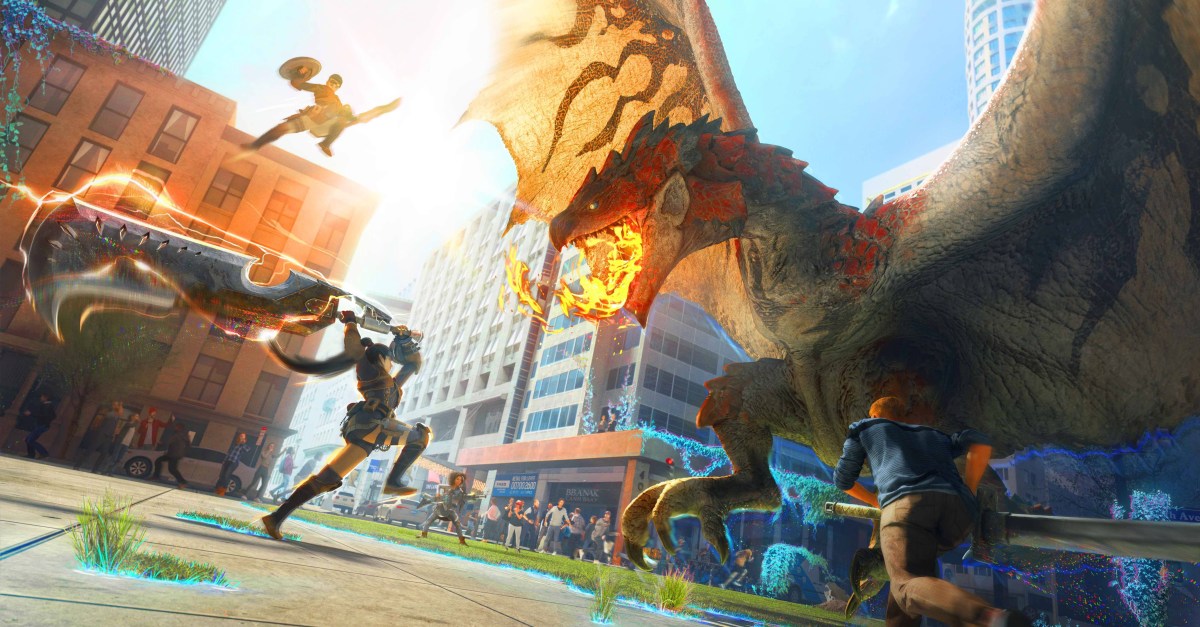
Latest update (Dec. 12): The Season 4 “Roars from the Winterland” update introduces four new monsters — Tigrex, Lagombi, Volvidon, and Somnacanth — both in the wild and as part of the seasonal storyline.

How many monsters are there in Monster Hunter Now?

Monster Hunter Now monster roster displayed on a blank background

Monster Hunter Now’s launch monster line-up.
Image: Niantic / Capcom

A total of 33 monsters have been released in Monster Hunter Now, some of which are temporary spawns, or require completing specific storylines or activity types such as Invasions or Elder Dragon Interceptions to unlock.

Complicating things further is the game’s seasonal model, meaning some monsters will only appear at some times of year, or require additional seasonal story complication to access.

Remember, if you come across a monster on the map you cannot fight there and then, using a paintball allows you to save that encounter for later.

Monster Hunter Now monster list

Here is every monster in Monster Hunter Now released to date, including their availability as of the latest season:

Monster

First appearance

Availability / unlock requirement

Great Jagras Launch Main story unlock
Kulu-Ya-Ku Launch Main story unlock
Pukei-Pukei Launch Main story unlock
Barroth Launch Main story unlock
Great Girros Launch Main story unlock
Tobi-Kadachi Launch Main story unlock
Paolumu Launch Main story unlock
Jyuratodus Launch Main story unlock
Anjanath Launch Main story unlock
Rathian Launch Main story unlock
Legiana Launch Main story unlock
Diablos Launch Main story unlock
Rathalos Launch Main story unlock
Black Diablos “Diablos Invasion” event in Sept. 2023 Hunt-a-thons and rare wild spawn (after seasonal story encounter)
Pink Rathian “Rathian & Pink Rathian Week” event in Oct. 2023 Hunt-a-thons and rare wild spawn (after seasonal story encounter)
Azure Rathalos “Descent of the Azure King” event in Jan. 2024 Hunt-a-thons and rare wild spawn (after seasonal story encounter)
Radobaan “Fulminations in the Frost”” in Dec. 2023 Not in the wild in season 3, hunt-a-thons and events only
Banbaro “Fulminations in the Frost”” in Dec. 2023 Not in the wild in season 3, hunt-a-thons and events only
Barioth “Fulminations in the Frost”” in Dec. 2023 Not in the wild in season 3, hunt-a-thons and events only
Zinogre “Fulminations in the Frost”” in Dec. 2023 Hunt-a-thons and rare wild spawn (after seasonal story encounter)
Odogaron Season 1 ”“The Vernal Invader”” in March 2024 Not in the wild in season 3, hunt-a-thons and events only
Tzitzi-Ya-Ku Season 1 ”“The Vernal Invader”” in March 2024 Not in the wild in season 3, hunt-a-thons and events only
Devilijho Season 1 ”“The Vernal Invader”” in March 2024 Hunt-a-thons and Invasions only
Coral Pukei-Pukei ”“Spring forward with Coral Pukei-Pukei”” event in March 2024 Hunt-a-thons and rare wild spawn (after seasonal story encounter)
Khezu “Season 2 ”“Dancing in the Tempest”” in June 2024 Not in the wild in season 3, hunt-a-thons and events only
Basarios “Season 2 ”“Dancing in the Tempest”” in June 2024 Not in the wild in season 3, hunt-a-thons and events only
Kushala Daora “Season 2 ”“Dancing in the Tempest”” in June 2024 Elder Dragon Interceptions (last appearance Aug. 2024)
Mizutsune Summer Hunt 2024: Bubbling Festival in July 2024 Wild spawn after encountered in seasonal story
Nightshade Paolumu Summer Hunt 2024: Dark Daydreams (paid event) Rare wild spawn (after seasonal story encounter)
Teostra “Howls of the Flaming King” event in Aug. 2024 Elder Dragon Interceptions (on-going)
Aknosom Season 3 “Curse of the Wandering Flames” in Sept. 2024 Wild spawn
Magnamalo Season 3 “Curse of the Wandering Flames” in Sept. 2024 Wild spawn
Rajang Season 3 “Curse of the Wandering Flames” in Sept. 2024 Wild spawn after encountered in seasonal story
Silver Rathalos Nov. 2024’s Carnival 2024 (paid event) Event only
Gold Rathalos Nov. 2024’s Carnival 2024 (paid event) Event only
Nergigante Nov. 2024’s Carnival 2024 (paid event) Event only
Tigrex Season 4 “Roars from the Winterland” in Dec. 2024 Wild spawn
Lagombi Season 4 “Roars from the Winterland” in Dec. 2024 Wild spawn
Volvidon Season 4 “Roars from the Winterland” in Dec. 2024 Wild spawn
Somnacanth Season 4 “Roars from the Winterland” in Dec. 2024 Wild spawn

When will new monsters release in Monster Hunter Now?

New monsters — alongside new story quests and weapon types — are introduced to the game as part of a seasonal model alongside a major update each quarter.

Monster Hunter Now 2024 to 2025 roadmap infographic

Image: Niantic / Capcom

For example, the first seasonal update in Dec. 2023, “Fulminations in the Frost”, introduced Radobaan, Banbaro, Barioth, and Zinogre. From there, new seasons have been given three new monsters on their debut; we saw Odogaron, Tzitzi-Ya-Ku, and Devilijho in March 2024’s season 1, and Khezu, Basarios, and Elder Dragon Kushala Daora in season 2.

Monster Hunter Now Fulminations in the Frost teaser image, showing Hunters fighting Zinogre.

Zinogre in the “Fulminations in the Frost” update.
Image: Niantic / Capcom

Outside of these major updates, there are monsters which debut in events, such as Black Diablos during September 2023’s “Diablos Invasion,” and Pink Rathian in October 2023’s “Rathian & Pink Rathian Week.”

These subspecies are more powerful versions of Diablos and Rathian, but since they come with their own armor and weapon sets, can be considered unique monsters in their own right. At first, these monsters only appeared for a limited time, but have since become wild spawns once defeated as part of a seasonal storyline.

We imagine future subspecies will follow a similar pattern — debuting for a limited time with a mid-season event, before appearing as spawns with the rollout of a new season months later.

Coral Pukei-Pukei attacks a hunter beneath a bridge in Monster Hunter Now.

Coral Pukei-Pukei debuted in a mid-season event for a limited time.
Image: Niantic / Capcom

For those expecting original monsters which debut first in Monster Hunter Now, so far the roster consists of creatures that have appeared elsewhere in the series. However, the developers have said they would “love to include unique monsters in the game in the future” — so perhaps we can expect something eventually.

This is not the first Niantic game to contribute to the canon of a wider series — Pokemon Go introduced Meltan and Melmetal, for example — and it’ll be interesting to see what impact Monster Hunter Now has on the main series over time.

Until then — looking for more advice? Our Monster Hunter Now tips and tricks page can give you some extra pointers.

Honkai: Star Rail codes for November 2024


Honkai: Star Rail is Hoyoverse’s latest title added to their mobile (and PC) game lineup, which means that yes, the game has codes that you can redeem for premium currency.

In this case, Honkai: Star Rail codes reward Stellar Jade and the usual other goodies — money, EXP, and the like.

Below we list out the currently active Honkai: Star Rail redemption codes as of November 2024 and explain how to redeem codes.

Honkai: Star Rail codes for November 2024

The active Honkai: Star Rail reward codes as of writing this are as follows, in order from newest to oldest:

How to redeem codes in Honkai: Star Rail

You can redeem the codes in game by opening the menu and tapping on the ellipses in the top right corner. A “redemption code” option will come up that you can select.

You can also redeem them online through the Honkai: Star Rail code redeem website. You’ll need to select your correct server and login through the website in order to get rewards. You will also need to have a working UID for Honkai: Star Rail. If you’ve never logged into Honkai: Star Rail in any form using your Hoyoverse account, it will not work.