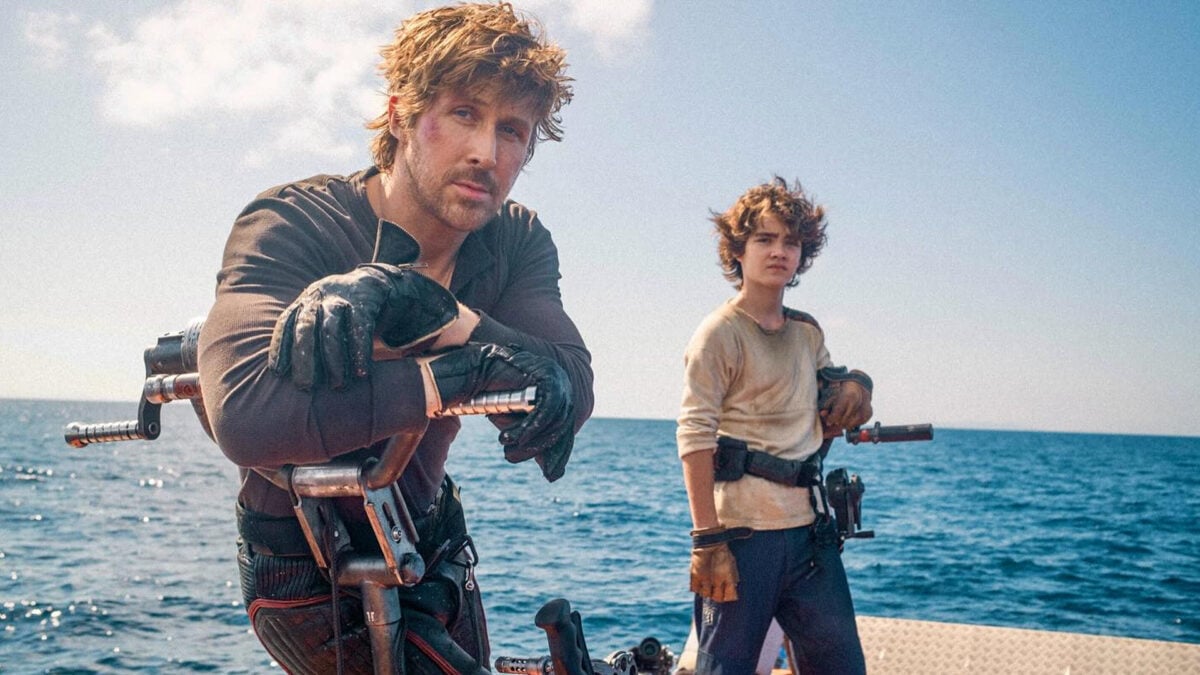
It’s been months and months since we got a good look at Star Wars‘ return to cinemas for the first time since 2019’s The Rise of Skywalker, to the point that the conversation about the film has become more about that than whatever Din Djarin and his little green ward are going to be up to. But now, at long last, we have a better picture about just that.
Today Lucasfilm and Disney finally dropped a new trailer for The Mandalorian and Grogu, the first extensive footage of the film released since the vibes-heavy teaser trailer from September last year. And while this one still keeps its cards close to its chest, it certainly gives us a bigger look at what to expect out of Din and Grogu’s next big adventure.
The Mandalorian and Grogu, which also stars Sigourney Weaver as Colonel Ward, Steve Blum as returning Rebels hero Zeb Orellios, and The Bear‘s Jeremy Allen White as Jabba’s son Rotta the Hutt from the 2008 Clone Wars movie, hits theaters May 22.
It’s official. Kathleen Kennedy is leaving Lucasfilm. And, in a new interview talking about the decision, the producer offered updates on several Star Wars movies that may, or may not, be coming in the future.
“Jim Mangold and Beau Willimon wrote an incredible script, but it is definitely breaking the mold, and it’s on hold,” Kennedy told Deadline. “Taika [Waititi] has turned in a script that I think is hilarious and great. It’s not just my decision, especially when I’ve got a foot out the door. Donald Glover has turned in a script. And as you have read, Steve Soderbergh and Adam Driver turned in a script written by Scott Burns. It was just great. Anything’s a possibility if somebody’s willing to take a risk.”
Oddly, two films that Kennedy doesn’t mention are the Sharmeen Obaid-Chinoy Rey movie and the Dave Filoni Heir to the Empire movie, both of which were announced along with Mangold’s film in 2023. That’s very, very discouraging.
More encouraging is what she has to say about Simon Kinberg’s new trilogy which, though being reworked, is still moving ahead. “[Kinberg] is working right now,” Kennedy said. “He wrote something that we read in August, and it was very good, but not there. We’ve pretty much upended the story, and then spent a great deal of time on the treatment, which he finished literally about four weeks ago. And it’s a very detailed treatment, like 70 pages. And so he is expected to give us something in March.”
So with The Mandalorian and Grogu coming out this year, and Star Wars: Starfighter (which Kennedy says was meant to be a standalone but could, potentially, be sequalized) out next year, what movie is coming next? It won’t be Kennedy’s call anymore, but there are additional thoughts. “Mangold’s is really on the back burner as is Soderbergh’s,” she said. “I think the ones by Taika and Donald are still somewhat alive. That’s going to really be up to the new team to figure out. I know that [new Lucasfilm heads] Dave [Filoni] and Lynwen [Brennan] are very much on board with what Simon’s doing, and that would be a new trilogy. In the timeline of things, that takes you well into 2030 plus. So that’s really what’s up next.”
It seems like it’s good news for fans of Taika Waititi and Donald Glover, but bad news for fans of James Mangold and Rey Skywalker. What do you make of the quotes?
Andor‘s final batch of episodes had to walk a steady balancing act, tying together myriad swirling character arcs into the overarching looming shadow of not just the events of Rogue One, but the events of Star Wars itself. In navigating those final climactic days where Andor could be itself as well as the passer of the torch, the show managed to give us and its characters alike the endings that perhaps mattered most.
It’s impossible to talk about the final arc of Andor without talking about the ending it gets out of the way first. Luthen’s long-awaited confrontation with Dedra is tragic in many ways, not just because of his choice to sacrifice himself to deny her the information she craves, but because, in contrast to the other rebellious stories we see climax here, it’s so incredibly lonely. There is no grand exit, no long goodbye—he gets a brief moment with Kleya when he sends her away, and of course, Dedra’s attempts to keep him alive make the actual moment of his end occur after the course of episode 10, “Make It Stop.” He dies quietly, he dies unable to really know just what an impact he’s about to have on the people he knew, the people he loved, the Rebellion, and the fate of the galaxy itself.
But Luthen’s final moment standing, before he takes the knife to himself, as sad as it is, is also a beautiful one—one that thematically then ties the endings of the rest of the rebels across Andor‘s final act together brilliantly. “The Rebellion isn’t here anymore, it’s flown away,” he tells Dedra. “It’s everywhere now… there’s a whole galaxy out there, waiting to disgust you.” The work Luthen did may have been isolatory by design, playing cells and operatives off each other, the paranoia of all the secrets he helped keep. But as he burns brightly, for that sunrise he knew he’d never see, he is defiantly steadfast that what he has helped create has connected voices all over the galaxy. That there are, as his agents’ code phrase said, friends everywhere.
It is this particular thematic throughline sparked by Luthen’s words that also defines the endings of our Imperial antagonists across the arc in stark contrast. We’ll get to Dedra separately, but it’s interesting that the endings we get for Andor‘s ISB apparatus—represented by her, Partagaz, and Heert in these episodes, and to a lesser extent double-agent Lonni—are lonely for very different reasons than Luthen’s was. Syril’s death on Ghorman laid the blueprint here: Andor‘s vision of the Empire is defined in equal parts the abuse of its systems for personal glorification, and the deadly threat of that system subsuming even its most ardent supports and benefactors, because that’s exactly what the Empire is designed to do.
Lonni might die at Luthen’s hands, it’s implied, but he dies because his use as a tool of the system he’d turned on is over. Heert’s grand chase of Kleya—a mirror to Dedra’s obsession with Axis that he’d sneered at her for—is rewarded with K2 tossing his lifeless body around as a meatshield, crumpled and forgotten. Partagaz’s is perhaps the most deliciously bitter, not just for the system he helped create crashing down around him, but because, again, his final moments are spent realizing that the rebellion is so much bigger than the “disease” he thought he could contain and sterilize. He’s alone in a room, committing suicide, after hearing Nemik’s manifesto: he has no idea who it is. He just knows, again, that it’s getting out everywhere.
Kleya’s end is not so much an end, but a continuation of a legacy that she’s followed her whole life. Luthen’s sacrifice gives her a chance to flee and tell the Rebellion about the Death Star, but it also pushes her out from under his lonely world of cloak and daggers, in a way. In the flashbacks that are woven throughout her solo mission to lay Luthen to rest before the Empire can pull him from the brink, we see her story start alone and afraid and angry—and in choosing to save this orphaned child and help her point that anger somewhere as she grows up, Luthen’s final gift to Kleya is to give her something bigger to be part of. Perhaps it’s a story we’ll revisit someday, of Kleya’s life in the Rebellion, but in this moment that set of facts doesn’t really matter, it’s that she gets to carry on his spirit as the Rebellion flourishes.
It’s fitting and so telling then, that Kleya and Dedra’s final moments on-screen in Andor are side-by-side. If Kleya wakes up to on the new dawn of being part of the thing her mentor helped build, then Dedra—clad in those white-and-orange scrubs of the Imperial prison system—is to witness the structure that she helped build and champion chew her up and spit her out into some forgotten hole. We know from season one’s arc on Narkina-5 that the Empire has now designed these facilities to never really grant freedom. There’s a fascinating parallel to Syril’s own death in her ultimate punishment, the idea that her obsession with Axis, as his was with Cassian, pushed her and pushed her to a point where the Empire itself could turn on her and discard her, and she’d be too blinkered to notice it until it was too late.
It’s not just that Dedra’s hoarding of information she shouldn’t have lands her in Krennic’s crosshairs, it’s her drive to get Luthen, to keep him alive once he mortally wounds himself, in the hopes that she will be rewarded regardless of any transgression she’s made to get there. That the Imperial system she believed in will work for her, rather than her for it. But the Empire exists to consume even its most loyal adherents, and so her punishment for championing it so ardently is as satisfying to watch as it was inevitable.
If any of Andor‘s endings might prove controversial, it’s perhaps its very last one. In some ways, Bix’s isolation from the final act of Andor (a decision she makes, but one that still takes her out of the broader fight she had previously yearned to be part of), only for her to part the series with the revelation that she’s given birth to Cassian’s child—a child he’ll never know—treats her story as less her own, and more in the service of Cassian’s. But it’s likewise also compelling that Bix is the rare character who ends the series given the chance of peace, of not having to fight and struggle. Many of the journeys that close out Andor are ones that we know will continue, and more specifically that continue in the sense that their fight isn’t over yet. That she is the final vision we have the show feels, in part, that this is what it was all for: to be free to live life with loved ones, a generation that can grow up in the hope that they in turn don’t have to fight and struggle to maintain that peace.
But wait! Bail Organa’s journey doesn’t end in Andor. He’s in Rogue One! He’s technically in A New Hope, or at least very, very tiny atomized parts of him are!
But while those stories are, chronologically speaking, Bail’s last moments in the Star Wars saga, it feels like Andor actually gives the man himself a proper sendoff—more proper than the hasty one he gets in Rogue One to go meet his explosive destiny—in his brief chat with Cassian. It’s short and sweet but laden with meaning, to give Bail a little teeth, and a moment of bonding with Cassian after their initial disagreements. We don’t ever get to see Bail’s final moments from his own perspective on screen (they’re retold, if you’re interested, in the From a Certain Point of View anthology), but giving him a goal to go out swinging feels like a fitting coda.
But for all the above stories that Andor wraps up in its last act, there’s just as many—and it’s just as important—that it leaves so many paths open. There’s characters we just simply don’t see again, like Leida after her wedding, or even further flung characters like Kino Loy from season one. There’s characters for who the story just continues elsewhere, like Cassian and K2 themselves, or Mon Mothma, last seen chatting to Vel amid the hubbub of Yavin IV, or Saw, staring down the Imperial occupation of Jedha. Some of these are famous Star Wars figures, and we know where they end up, but just as important is getting flashes like Wilmon and Dreena sharing food, or, in a grimly hilarious fashion, a drunken Perrin hanging off the arm of Davro Sculden’s wife.
Perhaps most fitting then is an end we glimpse, but never get: when Cassian wakes from his slumber to go on his mission to Kafrene, he dreams of his long-missing sister. Andor‘s first major story thread, the focus of its opening scenes to put this whole story into motion, never gets resolved. Some people may be frustrated by that, in an age when Star Wars fans and Star Wars itself, at times, is obsessed with checking off the facts and details of its world. But we get everything we need to know: Cassian still thinks about her. He dies never getting the answer. We will, perhaps rightfully, never learn ourselves.
Not all ends definitively. Life goes on. Even as we know the broad strokes of what’s about to go down in this moment in Star Wars, some answers are just never found. But there’s a whole texture of existence beneath that sweeping saga and those big questions, and that’s what Andor was always reminding us of.
Star Wars fans love only one more thing than a mystery: speculating about how that mystery could have connections to other parts of the galaxy far, far away. But for as much as the franchise does indeed share that love of keeping it all connected, it’s not always actually planning on doing that.
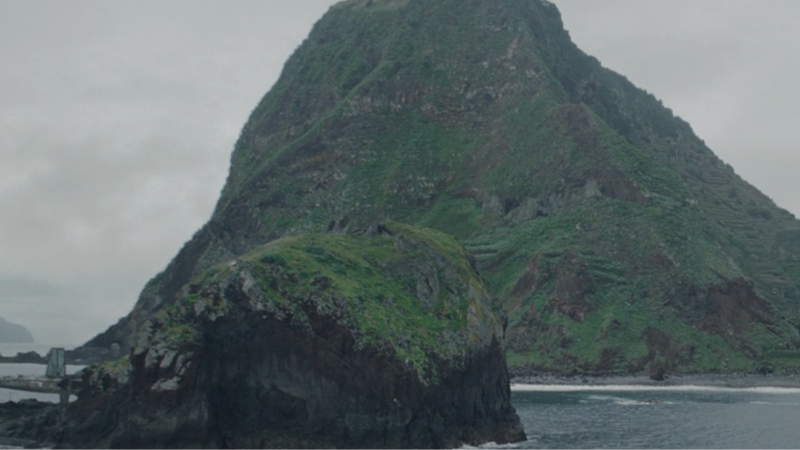
Ever since we’ve seen its cluster of islands on The Acolyte, the unknown planet that the Sith Stranger calls home has been speculated by fans as potentially being another key locale: the planet Ahch-To from The Last Jedi. It certainly looks very similar, given the vast oceans and lush, mountainous island outcroppings—although location filming for the planet took place on the Portuguese island of Madeira, rather than Skellig Michael, the Irish island used to film Ahch-To in the Star Wars sequel trilogy. In the latest episode we learned it even has its own Porg-esque local wildlife in the form of the Skura, little beings that look like a mashup of a duck and an anteater. Plus, there would be something incredibly Sith about the idea of dark side users hiding in the shadows where the Jedi would least expect it: the home planet of the first Jedi Temple.
But alas, Star Wars fans craving connection, according to showrunner Leslye Headland, the planet is very much not Ahch-To. “It’s not Ahch-To. I know it’s similar, and it was intentionally supposed to be similar in terms of terrain and feeling isolated and surrounded by water and less lush green and more rocky,” Headland recently confirmed in an interview with Collider. “But the idea is that cortosis is mined on this planet, so I don’t think that’s the case with Ahch-To. Part of the reason this is his home base is that cortosis is a very rare metal. I don’t think we say it explicitly in the show, but that’s a reason it’s not Ahch-To.”
Headland further noted that explicitly only identifying the world as “Unknown Planet” in The Acolyte‘s location cards was an intentional nod to the series’ primary perspective being that of the Jedi Order and the Republic. “It’s an uncharted planet that they haven’t [mapped],” Headland added, touching on an element of the High Republic setting that’s not come up often in The Acolyte, but serves as a major piece of worldbuilding in the transmedia book and comics initiative that established the era: that this is a time period where the Republic and its allies are still expanding territory and charting the galaxy. Just because it’s unknown to them, doesn’t mean people like the Stranger didn’t know about it already—and in knowing it, he got access to a tool like cortosis he could wield against his enemies.
Whether or not the world will remain unknown by the end of The Acolyte‘s first season remains to be seen—the presence of cortosis deposits has had as many fans as those speculating it could be Ahch-To speculating that the world could instead possibly be a canonical version of Bal’demnic, a cortosis-rich ocean world that acted as a base of operations for Darth Plagueis and his master, Tenebrous, in the EU novel Plagueis. For now, sometimes a planet just looks like another planet.