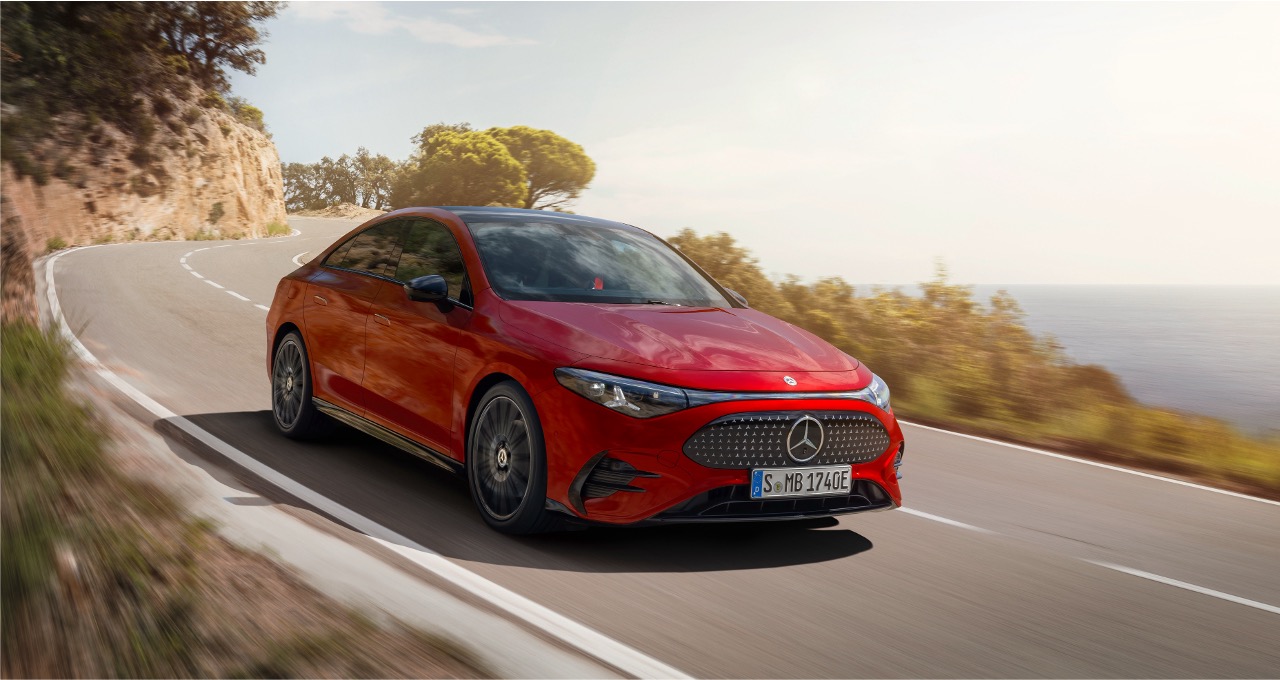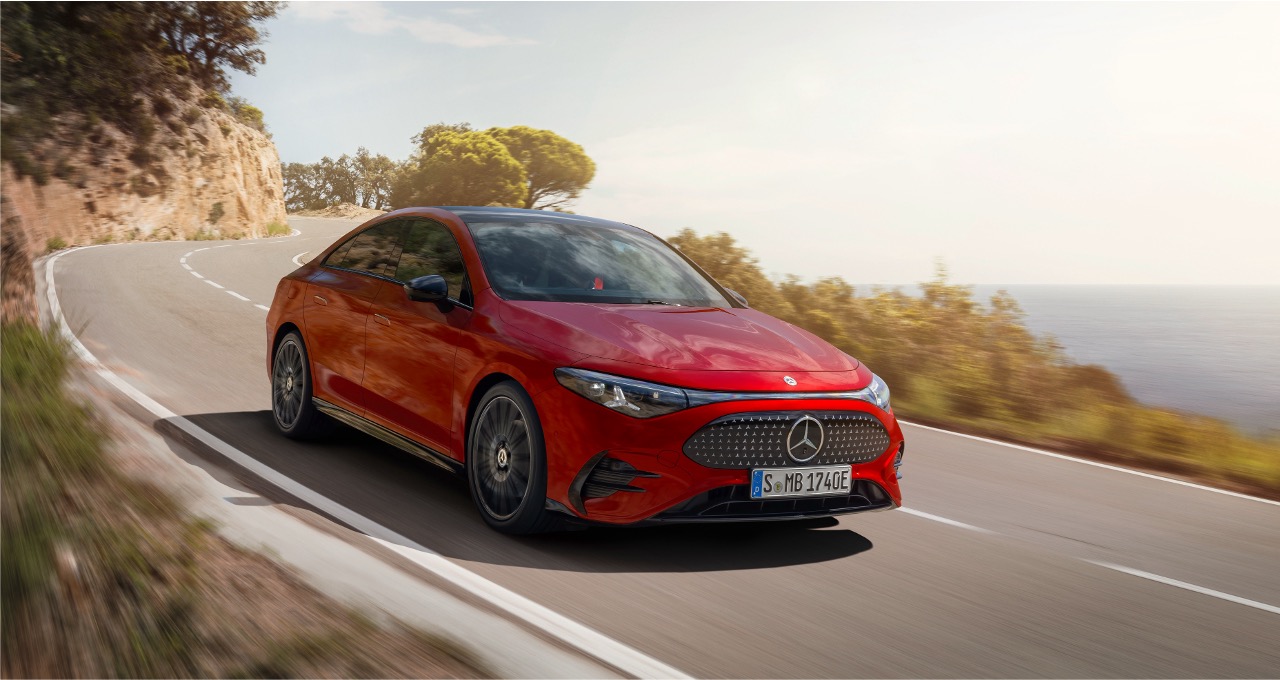
Mercedes-Benz is marking 140 years of automotive innovation with a new S-Class built for the AI era, bringing together automotive safety and NVIDIA’s advanced autonomous driving platform to enable a level 4-ready architecture designed for trust.
The new S-Class with MB.OS, which will be equipped with the NVIDIA DRIVE Hyperion architecture and full-stack NVIDIA DRIVE AV L4 software, is designed to support future robotaxi operations — delivering safety-first autonomy with the NVIDIA Halos system and end-to-end AI and classical driving stacks running in parallel to ensure reliable operation.
The S-Class enables a premium, chauffeur-style autonomous experience. As part of NVIDIA’s previously announced partnership with Uber, the companies will work together to make these autonomous vehicles available to riders through Uber’s mobility network.
It showcases how legacy automakers and AI pioneers can work together to build vehicles that are safer, smarter and increasingly autonomous — without compromising the high standards of quality and safety customers expect.
“Mercedes-Benz has set the standard in the automotive market, building cars defined by exquisite craftsmanship and safety engineering,” said Jensen Huang, founder and CEO of NVIDIA, in the above video celebrating the S-Class launch. “Five years ago, NVIDIA began working with Mercedes-Benz to help carry that legacy into the AI era.”
L4-Ready Architecture Powered by NVIDIA DRIVE AV
Traditional autonomous driving approaches often rely on predefined rules or learned responses to familiar situations. But real-world driving is filled with rare and complex edge cases — from unpredictable pedestrian behavior and debris to unusual road conditions and aggressive cut-ins.
NVIDIA DRIVE AV provides Mercedes-Benz’s new S-Class with a full-stack automated driving system designed to handle this long tail of driving scenarios, while remaining anchored to a safety-first architecture.
NVIDIA DRIVE AV is trained at scale on NVIDIA DGX systems and designed to be validated using high-fidelity simulation with NVIDIA Omniverse NuRec libraries and NVIDIA Cosmos world models.
Built on NVIDIA’s broader AI foundation — including advanced perception, planning and reasoning technologies — NVIDIA DRIVE AV is optimized, validated and distilled to run reliably in production vehicles, tailored to Mercedes-Benz’s vehicle platforms and sensor configurations.
NVIDIA DRIVE AV enables the system to analyze complex environments — rather than simply reacting to known patterns — evaluate multiple options and select the safest possible outcome in real time.
Diversity by Design With NVIDIA DRIVE Hyperion for Real-World Mobility
For level 4 autonomy, safety depends on more than simple redundancy. Vehicles must remain operational in the face of hardware faults, sensor degradation and unexpected software behavior.
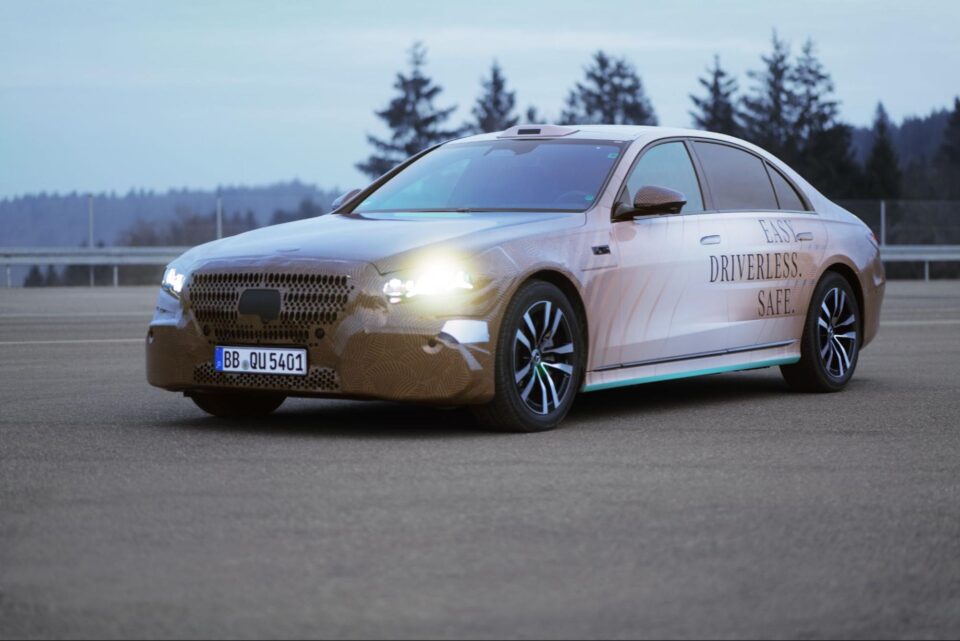
The new S-Class will be built on NVIDIA DRIVE Hyperion, a reference architecture that integrates sensor diversity and hardware redundancy into a unified platform, to serve as a robotaxi.
DRIVE Hyperion is designed based on defense-in-depth principles:
- Redundant compute to help maintain operation if one processing element fails.
- Multimodal sensor diversity — spanning cameras, radar and lidar — to support robust perception.
- Software stack diversity, pairing AI-driven decision-making with a parallel classical safety stack to keep the vehicle operating within safe boundaries.
Developed in accordance with NVIDIA Halos safety system, NVIDIA DRIVE Hyperion helps eliminate single points of failure and provides the foundation needed for L4-ready systems.
This safety-first, resilient platform is mainly designed for premium robotaxi and chauffeured mobility services — enabling reliable, large-scale deployment in real-world environments.
From AI Foundations to Production-Ready Autonomy
NVIDIA’s broader AI ecosystem — including the NVIDIA Alpamayo family of open models, simulation tools and datasets for autonomous vehicles — enables developers and partners to advance autonomous driving research and build their own driving software.
Within NVIDIA DRIVE AV, these AI capabilities are further refined, optimized and engineered for production. It ensures reliable operation on automotive-grade hardware, with NVIDIA Halos applying strict safety standards to the AI pipeline, as well as seamless integration with Mercedes-Benz’s specific sensor and vehicle architectures.
This production-grade approach — combining large-scale training, high-fidelity simulation, rigorous safety validation and deep system integration — is what allows NVIDIA DRIVE AV to support both level 2 point-to-point and level 4-ready automated driving systems in customer vehicles.
Building on this foundation, Mercedes-Benz and NVIDIA are partnering to deliver an L4-ready version of the new S-Class, bringing advanced AI and safety-focused autonomy to the road.
At the core of this work is NVIDIA Alpamayo, which enables vehicles to drive smoothly and naturally like a human driver while reasoning step by step through complex situations to choose the safest possible action — since safety is paramount.
Bringing Safety Engineering Into the Autonomous Driving Era
As AI becomes central to vehicle intelligence, the definition of “the safest car” is evolving. Beyond protecting occupants in a crash, modern vehicles are increasingly designed to help prevent accidents in the first place.
Built on NVIDIA DRIVE Hyperion and full-stack NVIDIA DRIVE AV software, the next-generation S-Class extends Mercedes-Benz’s long-standing safety leadership into the AI era. Its L4-ready architecture combines end-to-end AI with parallel classical driving stacks, delivering predictable, reliable operation through a diverse, multi-layered system design.
This approach reflects a broader shift toward active, intelligent safety — a trend already recognized by independent testing, including the Mercedes-Benz CLA’s designation as Euro NCAP’s Best Performer of 2025.
Together, Mercedes-Benz and NVIDIA are demonstrating how legacy automakers and AI pioneers can collaborate to deliver vehicles that are safer, smarter and increasingly autonomous — without compromising the craftsmanship, comfort and quality customers expect.