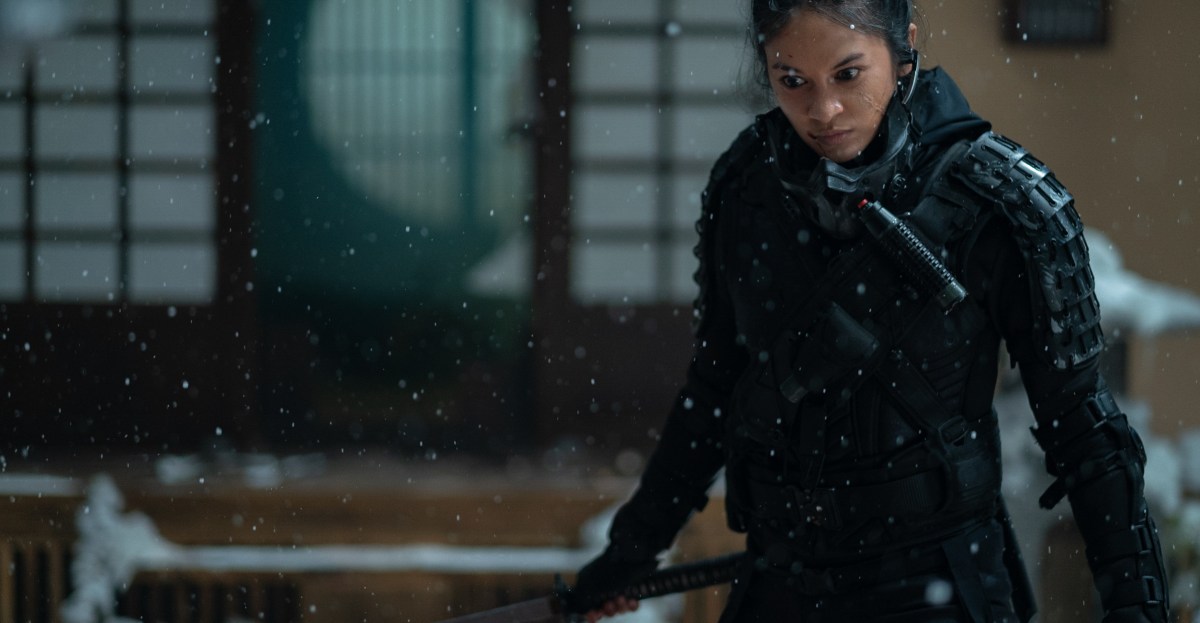
Shadow Strays’ director: Graphic movie violence respects real violence


With his blood-soaked tales of violence and vengeance like The Night Comes for Us and Headshot, Timo Tjahjanto earned a reputation as one of the world’s goriest action directors. But he doesn’t see himself that way.

Tjahjanto began his filmmaking career making slasher movies as half of the Mo brothers, teaming up with his longtime friend Kimo Stamboel. Since the end of their formal partnership, the Mo brothers have largely worked on their own projects, with Stamboel working in the horror genre and Tjahjanto primarily (but not exclusively) making violent action movies.

Tjahjanto took the action world by storm with 2018’s The Night Comes for Us, a brutal thriller led by two of Indonesian cinema’s foremost martial arts stars, Iko Uwais and Joe Taslim. The movie occasionally gets labeled as “action horror,” in spite of its fairly conventional crime-thriller narrative, because of how unflinchingly Tjahjanto depicts extreme, bone-breaking, blood-soaked violence. The stylish, carnage-filled fight sequences left a mark on action cinema other directors are still scrambling to match.

Aurora Ribero doing push-ups in The Shadow Strays

Star Aurora Ribero in The Shadow Strays
Image: Netflix

His new movie, The Shadow Strays, premiered at the Toronto International Film Festival in September, and finally dropped on Netflix on Oct. 17. It follows a teenage soldier who is being trained as a member of an elite group of top-secret assassins called the Shadows. When a mission goes wrong, she’s sidelined by the Shadows and gets entangled in a dispute between her young neighbor and local gangsters. Like most Tjahjanto projects, the film features several decapitations and “gallons” of blood. (The director estimated 85% of the blood was practical — like many splatter fans, the man loves squibs.) It’s also one of 2024’s best action movies.

But Tjahjanto doesn’t consider himself a particularly gory filmmaker — he sees his movies as a way to be honest about real-world consequences of violence. A self-described “indulgent” filmmaker, Tjahjanto — wearing a Nine Inch Nails shirt and feeling “exhausted and relieved” after recently wrapping filming on the upcoming Nobody 2 — spoke with Polygon about his approach to gore in action, his cinematic influences, and sticking with practical blood when the rest of the industry is moving to CG effects.

This interview has been edited for concision and clarity.

Polygon: I think of you as one of the gorier action directors working today. Do you see yourself that way?

Timo Tjahjanto: I don’t know. I don’t really think so. Granted, I haven’t seen them — not because I don’t want to see them, but just because of the timing of it all and the accessibility of it all — but I’ve heard there are films like Kill and Project Wolf Hunting that seem to be doing quite OK in that department. From what little clips I’ve seen, they seem to be way bloodier.

I think there was a phase in my life — when I just started as a filmmaker, I did this little film with Kimo [Stamboel], my friend. It’s called Macabre, one of the first Indonesian slasher films. And I think at the time, our goal was like, Let’s be the goriest Indonesian flick ever. But weirdly, after The Night Comes for Us and everything, I just don’t feel like I was necessarily aiming for gore. I think it’s just that there needs to be a certain, weirdly enough, respect to violence and what it can do to the human body. I feel like we have to, in some way, hold ourselves accountable as filmmakers to show just how traumatizing violence can be.

In The Night Comes For Us, three bloody men (and one small girl) hold bloody knives and look towards the camera

The Night Comes for Us
Image: Netflix

We live in a violent world. If you see what’s on the internet, what’s on formerly known as Twitter, X, just the accessibility of violent content — people from a lot of parts of America, for example, there’s a lot of people getting riled up and start beating each other up for nothing. Not that I’m saying America is the only violent place. I think the world generally has become a much more violent place, or much more exposed to the media. It’s weird when people see my films like, Holy shit, that’s so gory and violent! I’m like, Man, have you seen the real world? It’s so fucking crazy out there that I feel like sometimes my film is a PG version of it.

I’m glad you brought up the respect for violence, because one of the reasons I’m drawn to your approach to gore in action is because it feels more honest. If you’re not showing that level of destruction, you’re sanitizing the violence, and not being honest with the viewer about the actual effects of what’s happening.

That’s what I always try to do. I think the human body is weirdly fragile and resilient at the same time. If any of your bones have been broken, or if you’ve ever had a deep cut, it’s so weird how biology reacts to it all.

But beyond that, gore can also add stakes to a scene, it can add excitement, it can add humor. How do you balance those elements?

Well, that’s the thing. I think at a certain level, violence has to become funny. And I learned this from, or I copied this from, the great Takashi Miike. I think he’s always walking that line, realizing that the world is a crazy, fucked-up place, and one way you can deal with it is by using a lot of humor. If you watch something like Ichi the Killer, for example, that thing is dark, man. In Takashi Miike’s world, everything is fair and square. Women, men, we are both capable of violence, and we are both capable of being the victim. And I try to do that in my films.

A fight in The Shadow Strays — one man, wearing a suit, has a sword, while another person in all-black armor blocks the sword with their armored forearm

The Shadow Strays
Image: Netflix

One example I think is interesting is The Big 4, which has a tonal difference from your other movies.

Well, I think just because it’s gory doesn’t necessarily mean it has to be a feel-bad movie. I think that works quite well. Bad Boys can be a feel-good experience, and it has its moments of violence. And gore, especially if you’re talking about Bad Boys II — Michael Bay really pushes the limit to what kinetic violence can be. And I always feel like, you can make a less violent film and it becomes a much gloomier film, but you can also make a much more splattery and “head getting blown off by a shotgun” movie, and it still in the end has a heartwarming quality to it. Look at Shaun of the Dead, one of my favorites. And that thing is the ultimate feel-good film… depending on how you look at it.

You brought up Macabre earlier. Do you think your horror roots have an impact in terms of your perception of gore in action?

Kind of, yes. But having said that, I think it’s also childishness. Look, part of the beauty in horror is, you don’t necessarily need to be gory in terms of the approach to thrills. And as much as I would love to say, “Oh, I’m very well-versed in horror,” I think right now I’m only well-versed in a specific type of horror, which is one that is often violent. I think a lot of that comes from me growing up on Friday the 13th and Texas Chain Saw Massacre. Texas Chain Saw Massacre has such a huge impact on me in terms of how I look at violence, which is relentless.

I probably watch it maybe once or twice a year. It never ceases to amaze me. When you’re in your teens and you watch it, you think it’s the bloodiest film ever. And then when you watch it again after you’ve grown up, there’s hardly any blood in it. It is pure terror and it’s pure viscerality without actually showing you anything. And there lies the genius of Tobe Hooper making this film. So yeah, I’m just a little bit less disciplined than people like Tobe Hooper.

Timo Tjahjanto and Aurora Ribero smiling and laughing on set of the Shadow Strays

Tjahjanto and Ribero on the set of The Shadow Strays
Image: Netflix

I loved what you had to say to some critics of The Shadow Strays about how filmmaking is an indulgent act, and I really appreciate that you see it that way, that making art is something that you do for yourself, and the hope is that other people are on board with you.

I think that’s the thing. I don’t mean that to attack a critique: I think when I saw the critique, I was like, Oh, well, I agree with a lot of it. I think honestly, I’m the kind of filmmaker who always goes for character first and plotting later. So that’s why my plots tend to be simplistic. And I do admit that I feel, well, most stories have been told. For me, it’s better to rely on the humanity of the characters and hope that the audience can hold onto that.

But when people say, “Hey, too much self-indulgence can be too much of a good thing,” I feel like, Well, no. Because here I am given enough freedom, thankfully, by Netflix to do almost everything that I want to do, and I think I have to sort of indulge in it rather than restrain myself, even though I am still restraining myself. If I went full indulgence, I think you’d see a lot of kinkier shit in it, and all these sick sort of violent images that I have. I always feel like, a movie-watching experience, you have to be able to give everything you’ve got to the audience. It’s not like a series, it’s not like The Boys, where you might fail in the first episode or second episode, but you can make it up in the eighth episode.

I just feel like, Well, I have this many hours, and I just want to give my audience the shit that they want. Look at RRR — that film is self-indulgent as fuck, and it’s one of the best films ever made in the world. I just feel there’s a time for self-restraint, but action is one of those genres where you just need to keep on pulling the trigger. Someday I’ll be a better writer and I’ll probably do better plotting, but for now, I’m still learning.

A woman with a sword stands over a decapitated body which has leaked blood onto the snow in a cropped poster for The Shadow Strays

The Shadow Strays
Image: Netflix

The depiction of blood and gore has changed over time, with new technology leading a lot of productions to move away from practical blood and squibs and over to VFX blood. What’s your philosophy on that?

It’s weird. I saw that there was a critique [of The Shadow Strays] that says, Oh, the use of CGI blood. Weirdly, Shadow Strays is like 85% practical blood. I think that it’s just because of the technology that I use, which is a lot of blood tubing and all that stuff. It does look excessive to the point that you think it’s actually CGI. I pride myself in taking a lot of time for The Shadow Strays. Things can get long in the shooting process, just because placing all those squibs and blood tubes takes time.

That’s what I always hear, is how much it expands the budget and your time just from cleaning up between takes.

Exactly. And costumes, and all those little things. Fortunately, making films in Indonesia, I can sort of afford it. So I actually indulge the fuck out of making all those things. Watching The Shadow Strays so many times through editing, I had the suspicion people are going to think this is actually CGI blood, even though it’s actually meticulous condom use and timed blood tubes and all that stuff. I’m a proponent of using as many squibs as possible. I know that’s cumbersome. But actors react better to it. They react, they feel the pain. They feel like, Oh shit, blood’s really spurting out of me. And that always helps.

There are some enhancements, just because sometimes the blood doesn’t redirect the way it should. But man, we were having fun. There were always gallons of blood behind the camera where we pump it up there. Especially for the first sequence — that whole Japanese sequence is me being inspired by Takeshi Kitano’s Zatoichi, but he was using CGI blood. I was thinking, I want to be like Kitano, when he just completely goes batshit with blood, but I’m going to try to use practical blood tubes. So that’s what we did, man.

Aurora Ribero, wearing a purple hoodie, holds a bloody knife in what looks like a dance club in The Shadow Strays

The Shadow Strays
Image: Netflix

You’ve mentioned Kitano, you’ve mentioned Miike, you’ve mentioned Tobe Hooper. Are there any other big figures for you when it comes to depicting violence on screen and their use of gore?

Martin Scorsese. When he’s shooting violence, it’s almost like he sometimes reverts back to being a young filmmaker. And I think he always has that spirit of being a young filmmaker. That’s the beauty of him. He can be 89 and he still shoots like a 35-year-old Sam Peckinpah on coke and LSD. One of the best violent scenes that I think is often overlooked is actually in The Departed, when Jack Nicholson and Ray Winstone got ambushed. Just like this fucking crash zoom lands and [there’s] fucking blood and [mimics the blood spraying everywhere] and all that shit. And I was like, Man, that’s fucking beautiful! I want to steal that shit. But I still don’t have enough skill to do it. Someday!

Do you have a favorite spot of gore in The Shadow Strays?

Aurora [Ribero], who plays 13, I always said to her, “You are skilled, but you are also clumsy. That’s the whole point of your character. You have a lot of endurance because you are young,” as she is truly in real life, “but you are often clumsy in your fighting. But once we hand you a sharp-edge weapon, you go berserk.” Whenever she’s given any weapon of sharp edge, be it a kitchen knife, be it a fucking screwdriver, she just goes crazy. I always loved that.

By the end of shooting, she became so good at it. It’s so fucking cool. She never had any martial arts experience, and whenever she does the stabbing, it’s almost like somebody who’s been living in prison for 30 years and is a master shanker. She’s so good. And there’s a whole sequence later in the film, when she fights a certain somebody and she just uses a screwdriver to go crazy — I think that’s one of my favorites, just because of how ridiculous it looked with the blood and everything, and just how well it makes sense, because at this point she doesn’t have anything to lose. She’s just going crazy, and I love that.

The Shadow Strays is on Netflix now.
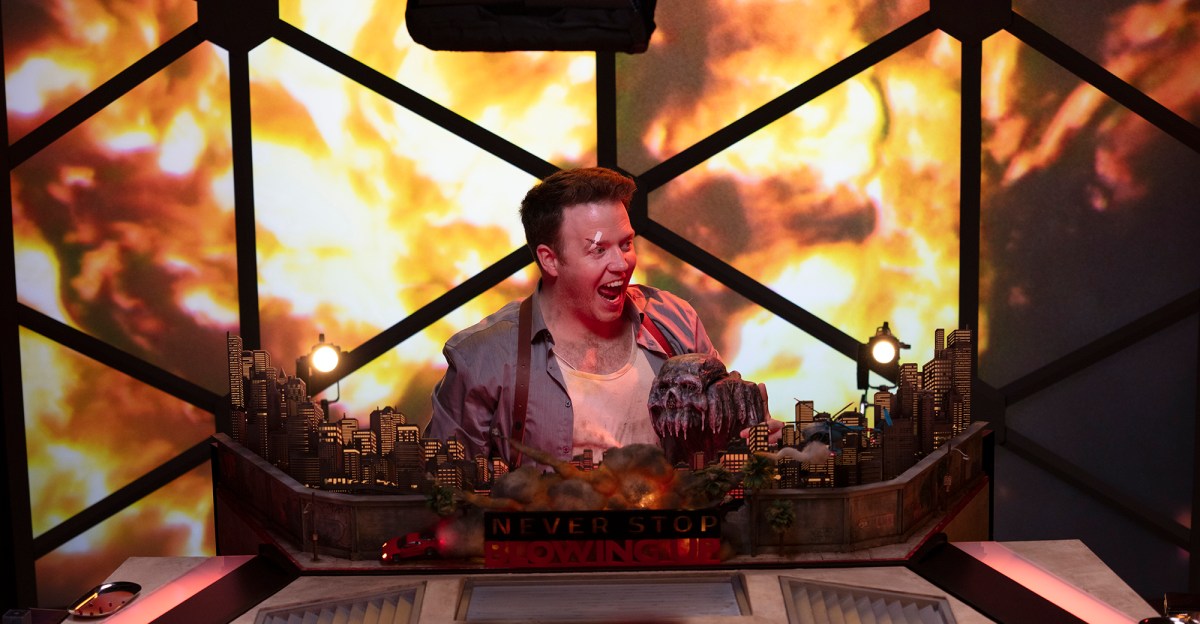
Brennan Lee Mulligan talks ‘freedom’ of Dimension 20’s Never Stop Blowing Up


Never Stop Blowing Up was always going to be one of Dimension 20’s most outrageous series.

The homebrew game designed for the occasion combined Kids on Bikes with a simple yet compelling dice game. It was a starting place that guaranteed hijinks — the system encourages players to go for ridiculous checks, on the chance that they “blow up” their dice and instantly get stronger.

Then you have the over-the-top ’80s action movie setting, embracing the excesses of a genre where just about anything goes — cars that reach 5,000 miles per hour, gangs that travel via super fast backflipping, a White House that takes off like a jet plane, a talking jaguar named Tony.

Throw in six of Dropout’s funniest cast members, each of whom seems to be trying to top the rest in their efforts to do The Most Ridiculous Thing Possible? Pure gold.

The trials and tribulations of the employees of Dave’s Video Store who got pulled into the ridiculous, fast-paced world of the fictional movie Never Stop Blowing Up entertained Dropout fans for the past two months, with a 10-episode season that earned its place in the pantheon of Dimension 20’s greatest hits.

Polygon caught up with game master Brennan Lee Mulligan about the season. Mulligan went deep with us about the cast, the themes of the season, whether you can expect to play Never Stop Blowing Up at home anytime soon, and the chances of a second season. We also talked to the cast of the show — you can expect that chat later this week.

This interview has been lightly edited for length and clarity.

[Ed. note: We talk about major plot points from Never Stop Blowing Up, including the ending.]

Brennan Lee Mulligan smiles while talking on a fake walkie-talkie, with makeup to look like a battered action hero, in Never Stop Blowing Up

Image: Dropout

Polygon: Well, Brennan, what a fun season of Dimension 20, and what an incredible cast. What was it about the makeup of the cast that you were most excited about?

Brennan Lee Mulligan: We wanted to find a group of people that had a love for this genre, had the ability as improvisers to take fearless, bold, enormous swings, and people who can fully jump the tracks in terms of tone and comedy and mood, and pirouette 20 times in midair, and then land on another set of tracks somewhere else. And so we just found these six improvisational all-stars who are just deeply beloved at Dropout, and it was a joy and a privilege to work with all of them.

Everyone in the cast had at least some experience with a Dimension 20 season besides Jacob Wysocki. What did Jacob bring to the dome in his first time?

It’s very fun to be blown away by somebody and then also be like, Of course, of course you’re this. You know, Jacob’s reputation precedes him. He is such a brilliant performer in a season that was all about big swings and goofiness. What really stuck out to me about Jacob was for someone whose training is very [much in] long-form improv comedy, he locked in to the heart of his character in so many ways. Dang stays as this emotional core of the season who is, in many ways, the most affected and grows as a character throughout the season. That scene with Wolfman Ann, which Jacob very much called for — Jacob was like, I am having an emotional low point now — I just thought was so special, and I was very grateful for his dedication to not only the big comedic swings, but having this point of view, an emotional North Star that kept his character’s journey grounded even while the most outrageous stuff was happening around him.

Jacob Wysocki smiles and laughs in a still from Never Stop Blowing Up

Image: Dropout

He’s obviously very funny, but Jacob’s also a very gifted physical actor as well. And I was struck by how much he was able to work that into the season, despite it being a setting where you’re all sitting around a table.

That monologue where he’s like, “My mind is not deep. Wide, not deep. There’s 15 governments, and they’re bad.” [Mulligan does Jacob’s hand motions while quoting this.] To see the joy of someone struggling with the convoluted action movie plot of, The people that hired us are betraying us. It was a double blind but they’ve been betrayed by the betrayers. And you’re like, What the hell? Like, it seems like you’re just trying to set up a car chase in Monte Carlo. That’s fine. He played that so well from that character point of view.

You brought it full circle there with the extra copy of the Never Stop Blowing Up VHS under his chair. How’d that come together, and was it always going to be Jacob’s chair?

It was always gonna be his chair. That was from [producers] Rick Perry, Carlos Luna, Michael Schaubach, and me talking. We’re an incredibly collaborative set. So at some point that VHS is floating in the ether. I think Schaubach had already maybe shot the mini or the insert of it. And then we went, “Rashab! Him! Under the chair.” And he pulled it out. It was just such a fun moment for Jacob, as a character who, in some ways, it was like his life had been so stalled out. And then to be like, “You were right!”

You talked about the big comedic presences this season. How would you describe trying to wrangle this group as a GM? Because there were a lot of situations where things went a little off the rails, and sometimes you leaned into it.

That’s a very funny thing. There’s different strategies, right? I enjoyed seeing the moments where I had to pull up and be like, We are moving on. What’s so funny is if I’m looking at my own boundaries, what I realized was I fully surrendered as GM Brennan, and then producer Brennan was the one who had to come in. GM Brennan was like, I’m in the craziness with you! We’re not going down the rabbit hole. We’re being fired from a cannon through the rabbit hole at top speed. I’ll be just as crazy as you! Backflipping Sidewinders, let’s go! I was so ready to meet them there. And then every once in a while, a version of Brennan would lock in and be like, We have to leave this scene, this scene we’ve been in for 40 minutes. It’s time to go. And that was the one who came in, and I can’t believe I’m saying this, and told my (at the time) pregnant wife to shut up, on camera. A real low point for me. Izzy was laughing through it, but I look back at myself and I’m like, Well, when I have my soul weighed against a feather at the end of my life, this is going to be one of the lowlight moments for sure. So that was a fun moment.

Ally Beardsley reacts with surprise as Ify Nwadiwe and Rekha Shankar laugh in a still from Never Stop Blowing Up

Image: Dropout

The point was not to wrangle anybody. I think that the fact that the cast is feeling limitless joy and is in that place of play is a success of the show. And if that means I need to be the one to load everyone back on the tour bus and go to the next place, so be it, right? Like, great. Everyone’s having such a ball that no one’s got an eye on the clock but me. Cool, that’s perfect. That’s exactly where we need to be. That is my job, right?

In terms of making the decisions about how far people can go, you had some tough choices in terms of DC checks for some of the more ridiculous things that happen. Thinking back on it, how do you weigh Usha’s attempt to throw G13’s oily shirt in front of the car to speed it up versus Kingskin’s manual brain surgery on G13? How do you make those decisions of what is possible if the dice roll the right way?

There’s a very funny ongoing game that me and Rekha Shankar have with each other. What’s funny is a lot of Rekha’s choices that I will set an impossibly high DC for, once you’re going 5,000 miles per hour in a car, what is logic or consistency? It’s more about a fun character game that I think me and Rekha have about tone and moments of Rekha having a gremlin energy, of wanting to introduce a component into the genre of the world that I have to balk at. So in other words, if Rekha had gone like, “I want to make the car faster, I’m going to find a hidden button that, like, splits an atom made out of other split atoms, and it creates a super atom,” I would probably set that DC at, like, a 20. But it’s the fact that Reika goes like, “Can I get my shirt off like a Donkey Kong banana?” …Pete, correct me if I’m wrong. Even in cartoon logic…

I don’t think Roadrunner would get away with that.

I don’t think Roadrunner would get away with that! What I’m saying is, in what cartoon does taking a slippy thing and throwing it in front of a car make it go uncomplicatedly faster? You know what I’m saying? That’s like, I hit you in the face with a banana cream pie, and you’re cleaner than you were a second ago. Let me just fully describe to your readers. I move away from the camera, shake my fists and go “Rekha!!!!” That’s the relationship that me and Rekha have. It’s the fun of Rekha doing things that feel like an active fun butting of heads in the genre about the choices that are being made.

Set design for Dropout’s Never Stop Blowing Up, with a sports car, a city skyline, and explosions

Image: Dropout

What did you enjoy the most about the setting of the over-the-top ’80s action movie, as a GM?

I think that there is a freedom and a joy. The last episode of Never Stop Blowing Up is our 250th episode of Dimension 20. And I think you want to set new creative challenges for yourself all the time, just to keep things fresh. And looking at the programming slate, you know, we were coming off Fantasy High: Junior Year, which is our first threequel. It’s our first third installment in a core season. And you know that Junior Year, of course, has totally outlandish things. I mean, my god, Blimey, you know? But it also was dealing with these themes of stress and rage, and there’s a groundedness to Elmville and the Aguefort Adventuring Academy.

Especially shooting the season with Izzy being eight months pregnant, I was preparing. We shot 50 episodes of Dimension 20 in nine months because I was trying to shoot out before my paternity leave. So I think that from a programming level, it’s like a photographer being like, “All right, do a fun one, do a crazy one,” right? And for me as a GM, I was gearing up for this sprint before paternity leave. As a creative challenge, let’s set ourselves up for something that embraces chaos and fun and honoring as many huge swings as possible, for the timing, for the production team’s bandwidth. Let’s not do a tactical mini season. Let’s do a season where we’re doing hand props and makeup and these fun looks. And so there are the creative choices that go into selecting a concept for a season that are made holistically within the umbrella of the entire show, to present new things to our audience, to keep the anthology fresh, to give people a flavor they’ve never had before. That was really a lot of what went into Never Stop Blowing Up.

One of the season’s more surprising mechanics was the ability for players to jump in the GM chair. What sparked that idea, and how do you feel about the result?

I loved the result! The players were so generous and exciting, and I couldn’t ask for a better leader of that vanguard than Ify — his contributions were so fun, and he’s such an exciting storyteller. Also a dream to have Rekha and Izzy, and our unborn child, sit in the hot seat! What a dream!

Isabella Roland gesticulates while filling in as a temporary GM on Never Stop Blowing Up, as a clock counts down behind her

Image: Dropout

The players made a lot of big choices throughout the season, but were there any that particularly surprised you?

Every player surprised me! From Ify’s establishing of Vic as a guardian spirit, to Rekha elaborating on that with the menace of G13 — Jacob’s emotional depth with Dang and Wolfman Ann, to Alex’s awesome turn with Liv wanting to do her own thing! Was such a joy to watch Ally take the lead as a plot hound, and Iz to run both the divorce storylines side by side!

What would you adjust with the Never Stop Blowing Up system for the 2.0 you talked about throughout filming, and will there be a release of the game itself?

We would love to. We’re exploring that right now. We would probably close the infinite token loophole that Ify found, tighten that up a little bit, clean up one or two other things, maybe clean up some of the group abilities a little bit. But probably we would want to release it to people. And then not do a full revamp until some playtesting. The funny thing about even running this stuff on camera is that actual plays are not a big enough sample size. Every game master, Dungeon Master, storyteller knows this, the balance required for your table actually does require way less scrutiny than the balance for published material.

As a case in point, you have two different character builds. One of them is more powerful than the other, but the more powerful one is being played by a newer player who has less ability to make optimal choices than a theoretically worse build being played by a veteran player. And so you don’t need to adjust that, you’re like, Actually, the balance of these encounters come out in the wash pretty even, people feel like they’re doing awesome stuff, people are really happy with their builds and their characters. So the standard for published material is just on a totally different level than the tomebrew that a GM or a DM is bringing to their table because of the sample size. How many encounters, even in a long home game, are you really going to play? We would probably want to do a full revamp, actually, after an alpha playtest where we released it to a lot of people and got feedback.

The ending leaves open the possibility of the characters returning to the world of Never Stop Blowing Up. Would you be interested in that for a future D20 season?

I love this world so much — would be delighted to play with everybody again as often as they’ll let me!

Never Stop Blowing Up is available to watch on Dropout.