How Borderlands 4 Levels Up The Looter Shooter Like Never Before


Blog | Editorial

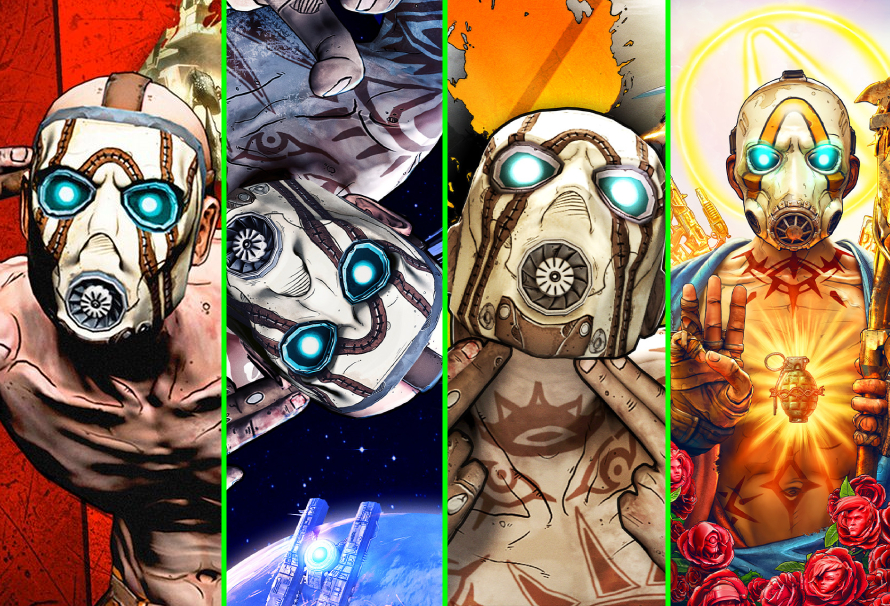
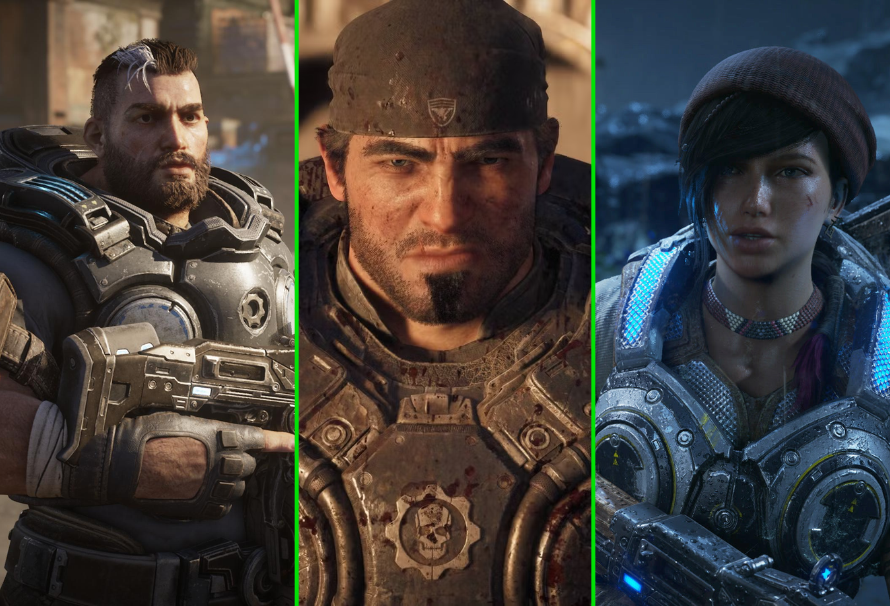
Long before Bungie’s Destiny suited up and took players on a looter shooter odyssey across the universe, there was Borderlands from Gearbox Software. A delirious exercise in abundance with more quips, comical eye-winks, enemies, missions and weapons than you could shake a hairy stick at, Gearbox Software’s raucous looter shooter set a new standard for the genre when it debuted all the way back in 2009, and it’s one that the series has been iterating on ever since. Now in the year of our lord 2025, Gearbox Software is back at it again with Borderlands 4, the latest entry in its looter shooter series that aims to level up the genre like never before. Here’s how Borderlands 4 does just that.

Gun And Loot Customisation, Which Reaches New Heights

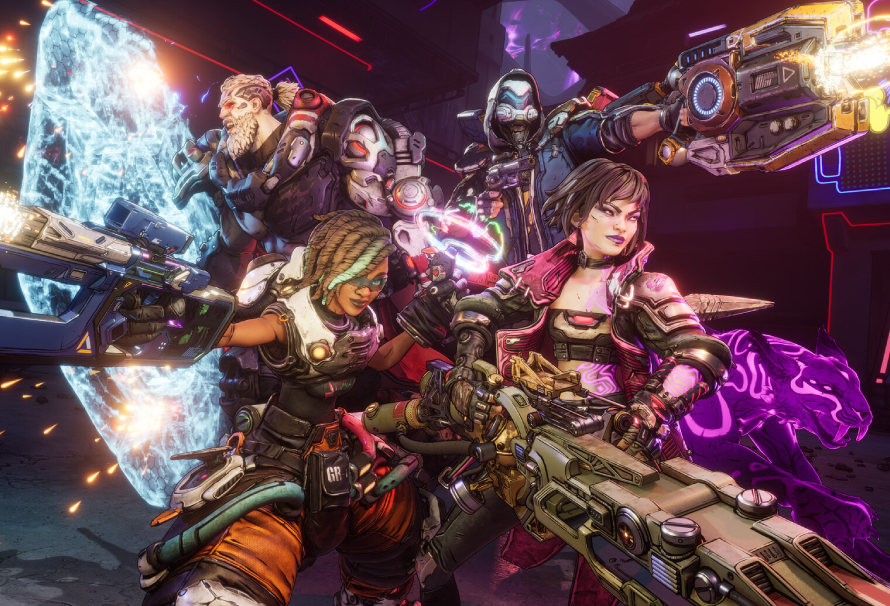
A point of pride for the Borderlands franchise has arguably been the sheer amount of loot, weapons and other gear it encourages players to scoop up. With more than a billion (that’s not a typo) weapons in Borderlands 4, it’s clear that developer Gearbox Software wanted to make its fourquel stand out even further in this regard. Longtime fans will no doubt be cheered to discover that many of the series’ usual weapons manufacturers make a return here. This means eager run-and-gunners will encounter gear from the familiar likes of Jakobs, Maliwan, Tediore and more as they blast and tear their way across Borderlands 4’s new planetary setting of Kairos. In addition to a trio of new weapons manufacturers (Daedalus, Ripper and Order) that have made their way onto the scene, Borderlands 4 also makes legendary guns feel more, well, legendary, by making them much more powerful but also far less common to find. Y’know, as it should be.

By far, though, the biggest departure that Borderlands 4 makes from previous entries in the series is the new ‘Licensed Parts’ system. Essentially enabling a modular level of customisation, the Licensed Parts system provides players with the ability to incorporate gun parts from different manufacturers to create all-new firearms in the process, which in turn carry a hybrid of the weapon traits unique to each of those manufacturers into the bargain. Put simply, you aren’t going to run out of guns in Borderlands 4, or indeed the parts to make them.

Borderlands 4

The Largest And Most Seamless Game World To Date

One of the unsung heroes of the Borderlands series has undoubtedly been the sprawling worlds of every stripe and hue that players were encouraged to blast their way across. In Borderlands 4, it’s certainly fair to say that the game world itself has seen quite the upgrade, because now not only have loading times been almost completely removed as you travel from one zone to another, but so too has the introduction of a new vehicle known as a ‘Digirunner’ made traversal that much more effortless.

A quick word about Kairos, which serves as the game world for Borderlands 4. A mysterious planet that has been hidden in secret for millennia by the Timekeeper, the big bad of Borderlands 4, Kairos is a vast interconnected hub of massively varied areas that dwarfs the maps seen in previous games. From snow-capped mountains to lava-scorched ruins, verdant forests, and all the usual frontier-style towns, shacks, labs, and buildings you’d expect from Borderlands, Kairos is packed with variety. The game encourages players to explore every nook and cranny just as much as it pushes them to mow down throngs of bad guys across its surface.

Of course, there isn’t much point in having such a tantalising expanse as Kairos if you aren’t also going to sufficiently empower the player to fully explore it, and wouldn’t you know that Borderlands 4 has ticked all the bingo boxes on the traversal front too. Not content to allow Borderlands 4 to just be another run and jump looter shooter, Gearbox Software’s latest offering allows players to double-jump, glide, dash, swim and use a grappling hook to reach places and various crevices which would normally be completely inaccessible. To say that Borderlands 4 leaves the series’ previous entries in the dust when it comes to traversal would be putting it mildly.

The Greatest Character Build Diversity Seen In The Series So Far

When it comes to build diversity improvements in Borderlands 4, let’s just acknowledge the excessively large elephant in the room first – Borderlands 4 has more skills for each of its Vault Hunters than those available in Borderlands 2 and Borderlands 3 combined. Woof. Beyond a veritable avalanche of new skills, which in turn greatly expands the possibilities for build customisation in the first instance, one of the key changes that Borderlands 4 brings to progression (and gunplay more broadly) is the implementation of the new Ordnance system.

You see, the new Ordnance system accommodates both grenades and weapons on a shared cooldown. This means that rather than having a finite supply of either grenades or heavy weapon ammo, you just wait for the cooldown to end before unleashing heck with either of the two – allowing you to stay in the fight for longer without having to sweep around the place looking for ammo for each. As you might well expect, some stackable bonuses and buffs can improve the use of Ordnance too, adding yet another layer of depth to Borderlands 4’s progression system in the process.

Finally, supplementing the Ordnance system is the new Enhancements mechanic, which replaces the Artifacts system seen in previous games. In the series’ latest entry, these Enhancements are realised as specific bonuses unique to each weapons manufacturer. This means that in addition to a deep tailoring of your skills and abilities, carefully mixing and matching the right weapons manufacturer is also now a key part of fashioning build synergies as well.

Borderlands 4

Reinvigorated And Refined Cooperative Play

Ask anybody who has ever played a Borderlands game, and they will quite rightly tell you that the whole experience, from top to toe, is best enjoyed with mates. With Borderlands 4, of course, cooperative play in both local and online modes features prominently, but it’s the changes that have been under the hood that Gearbox Software have made here that really raise eyebrows.

The first and arguably biggest change that has been made to cooperative play is the way that loot works. Now entirely instanced, this now means that each player in a coop scenario essentially gets their own loot, rather than having to share it with other players. Elsewhere, Borderlands 4 also introduces the idea of dynamic level scaling, which means that players of vastly different levels can still band together to take on missions and enemies appropriate to their average level, rather than being excluded from cooperative play because one or more players involved do not meet the level requirements to take part. More of this, please, looter shooter developers.

Borderlands 4 isn’t just another sequel; it’s a game that levels up the looter shooter like never before. With an unprecedented variety of weapons and modular gun customisation, the sprawling, fully traversable world of Kairos, and an avalanche of character builds and abilities, Gearbox has taken everything fans love about the series and pushed it to new heights. Cooperative play is smarter and more rewarding than ever, making it perfect for teaming up with friends of any skill level. Whether you’re exploring every nook of the planet, experimenting with over-the-top weapon combos, or tearing through hordes of enemies, Borderlands 4 delivers a chaotic, endlessly fun experience that proves the looter shooter genre still has room to grow – and Gearbox is leading the charge.


John-Paul Jones

Scribbling about videogames since 2005, John-Paul Jones first stoked his love for the industry with the Atari 65XE at the age of four before proceeding onto the ZX Spectrum, Amiga and beyond. These days, he finds himself unreasonably excited about Sega’s Yakuza franchise, foreign cinema and generally trying to keep his trio of sausage dogs from burning his house down. Clearly, he is living his best life right now.

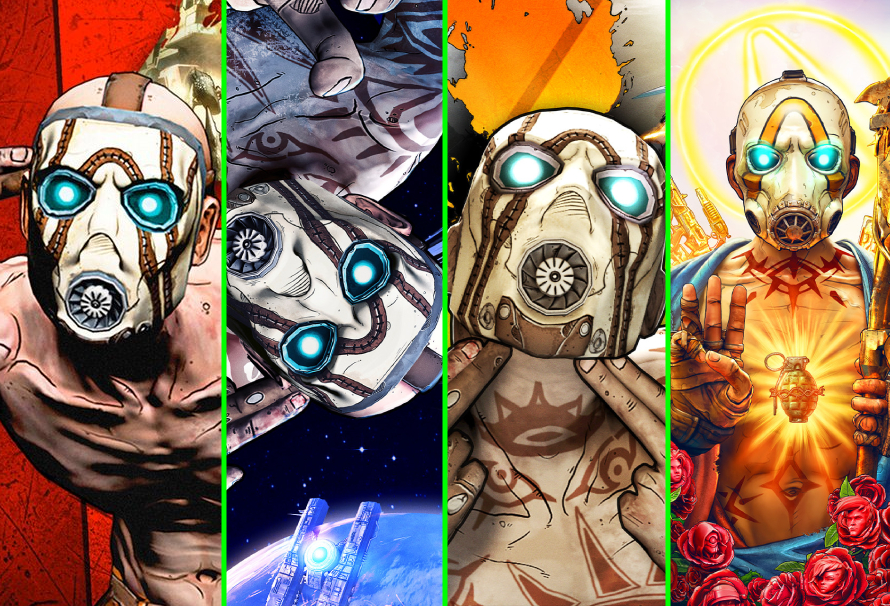
Borderlands Series Timeline: Every Game & Story in Order


Blog | Feature

The Borderlands series has evolved dramatically since its debut, transforming from a gritty looter-shooter defined by its endless arsenal of weapons into a full-blown, TTRPG-inspired, tongue-in-cheek adventure. Through it all, the franchise has never lost its trademark sense of humour. While some entries have proven more divisive than others, fans continue to return for the blend of chaotic gunplay, quirky storytelling, and larger-than-life characters that define the series.

Whether you’re a long-time Vault Hunter looking for a refresher or a newcomer eager to dive into the mayhem for the first time, it’s always useful to revisit how the Borderlands timeline fits together. You can certainly play the games in release order and have a blast – but if you’re curious about the story as it unfolds chronologically, here’s a breakdown of the series from start to finish.

Be aware, this guide contains spoilers for the full Borderlands timeline.


Borderlands

Borderlands

The very first Borderlands entry not only launched the franchise but also marked the starting point of the story in chronological order. This game introduces players to the original team of Vault Hunters (Brick, Lilith, Mordecai, and Roland) as they scour the lawless planet of Pandora in search of the fabled Vault. At the outset, the Vault is portrayed as a one-of-a-kind treasure trove, rumoured to hold unimaginable riches and advanced alien technology.

However, when the team finally succeeds in opening it, the reality is far more unsettling. Instead of endless loot, the Vault contains a monstrous, tentacled creature known as the Destroyer. This twist not only upends the characters’ expectations but also shatters the idea that there’s only a single Vault in existence. In fact, it sets the stage for one of the series’ most important revelations: Pandora – and the wider galaxy – is littered with hidden Vaults, each holding its dangers and secrets.


Borderlands: The Pre-Sequel

Borderlands: The Pre-Sequel

Borderlands: The Pre-Sequel may have released after Borderlands 2, but its story takes place between the events of the first two games – hence its tongue-in-cheek title. This instalment shifts the focus to a brand-new lineup of Vault Hunters: Athena the Gladiator, Claptrap the Fragtrap, Nisha the Lawbringer, and Wilhelm the Enforcer. Unlike the original crew, this group finds themselves working under the command of a then-unknown Hyperion programmer named Jack, who, over the course of the game, slowly transforms into the infamous Handsome Jack.

Set primarily on Pandora’s moon, Elpis, the game explores new environments with lower gravity, oxygen mechanics, and laser-based weaponry, distinguishing it from the previous entries. The Vault Hunters’ mission is to secure the Helios space station for Jack, gradually cementing Hyperion’s dominance. By the end of the story, their success directly paves the way for Jack’s rise to power, bridging the narrative between the original Borderlands and the fan-favourite Borderlands 2.


Borderlands 2

Borderlands 2

By the time Borderlands 2 begins, Handsome Jack has fully cemented his role as the ruthless head of Hyperion. With his newfound power, he wastes no time declaring himself the self-appointed ruler of Pandora. Jack claims credit for discovering the Vault, painting himself as a heroic saviour, while simultaneously outlawing Vault Hunters altogether. This puts him in direct conflict with the game’s new roster of playable characters – Axton the Commando, Maya the Siren, Salvador the Gunzerker, and Zer0 the Assassin – who find themselves ambushed aboard a train in one of the series’ most iconic openings.

From there, the Vault Hunters fight to survive Jack’s tyranny while uncovering the truth behind his lies and manipulation. The campaign takes players across Pandora in a battle to dismantle Hyperion’s grip on the planet, while also peeling back Jack’s descent into villainy. By the game’s conclusion, the Vault Hunters succeed in defeating Handsome Jack, toppling his empire, and restoring a fragile sense of balance to Pandora, though, as always in the Borderlands universe, the story is far from over.


Tales from the Borderlands

Tales from the Borderlands

Tales from the Borderlands stands out in the series as a more narrative-driven and emotionally resonant experience, focusing on characters rather than pure combat. The story centres on Rhys, a Hyperion employee with big ambitions, Fiona, a cunning con artist, and Sasha, Fiona’s unpredictable partner in crime. The three unlikely allies are initially drawn together when Rhys attempts to purchase a fake Vault Key, but circumstances quickly force them to cooperate in pursuit of an entirely new Vault filled with secrets and untold wealth.

Throughout the episodic adventure, players are faced with critical choices that shape the outcome of the story. One of the most pivotal moments comes when Handsome Jack returns in a digital form, attempting to seize control of Rhys. Players must then decide whether to trap Jack within a cybernetic eye or destroy him entirely – choices that carry lasting consequences for both Rhys and the other characters. By the game’s conclusion, Rhys and Fiona find themselves inside a Vault, setting the stage for future adventures and leaving fans with one of the most memorable narrative experiences in the Borderlands timeline.


Tiny Tina's Wonderlands

Tiny Tina’s Wonderlands

Tiny Tina’s Wonderlands takes place chronologically between Borderlands 2 and Borderlands 3, serving as a whimsical side adventure within the larger timeline. While the events of this game don’t have a major impact on the overarching Borderlands canon, it offers fans plenty of memorable moments – particularly those featuring the unpredictable and hilarious Tiny Tina.


Borderlands 3

Borderlands 3

Borderlands 3 introduces yet another fresh roster of Vault Hunters – Amara the Siren, FL4K the Beastmaster, Moze the Gunner, and Zane the Operative – who join forces with returning fan-favourite Lilith to confront a dangerous new threat. This time, the antagonists are the Children of the Vault, a fanatical cult led by the charismatic and manipulative twins Tyreen and Troy Calypso. Their ultimate goal is to locate the fabled Great Vault, said to be larger and more powerful than any Vault discovered before.

As the story unfolds, players learn that the twins are the children of Typhon DeLeon, the original Vault Hunter. The siblings’ obsession with power culminates in the opening of the Great Vault at the very heart of Pandora, where Tyreen fuses with the monstrous entity known as the Destroyer. In an epic climax, the new Vault Hunters work together to defeat Tyreen and stop her from unleashing catastrophic destruction, cementing their place in the ongoing saga of Pandora.


New Tales from the Borderlands

New Tales from the Borderlands

New Tales from the Borderlands is set after Borderlands 3 and introduces a fresh cast of playable characters: Any, Octavio, and Fran. The trio is drawn together as they navigate the chaotic world of Promethea, facing off against dangerous Vault guardians and uncovering a plot by Tediore’s CEO, Susan Coldwell, who seeks to destroy the planet.

Like its predecessor, this episodic story is shaped by player choices, offering multiple endings, but the main narrative sees the Vault Hunters successfully defeating Coldwell and saving Promethea from her destructive ambitions. Along the way, they discover the Anahatium Shard, a mysterious and powerful artefact now scattered across the universe, leaving the door open for future adventures.


Borderlands 4

Borderlands 4

As Borderlands 4 has yet to release, the full story remains under wraps, but early details hint at an exciting new chapter in the franchise. Set immediately following the events of Borderlands 3, players are expected to travel to the planet Kairos to confront the enigmatic Timekeeper, who currently rules the planet while contending with a mysterious calamity slowly consuming it.

The game introduces a brand-new roster of Vault Hunters, each with unique abilities and playstyles. Vex joins as a powerful Siren, Rafa takes on the role of an Exo-Soldier, Harlowe is a Gravitar and scientist with specialised skills, and Amon steps in as a formidable Forgeknight. While the full narrative and gameplay mechanics are yet to be revealed, fans can look forward to exploring new worlds, uncovering hidden Vaults, and experiencing the signature humour and chaos that define the Borderlands series.


Jason Coles

Jason likes to focus on roguelikes and co-op games; in a dream world he’d make a living writing about Dark Souls. As well as being a writer he also does personal training and accounting and can occasionally be seen on other people’s streams. Being a big fan of fluffy things means he has two cats, both of whom refuse to let him sleep, but at least they are cute.
Shadow Strays’ director: Graphic movie violence respects real violence


With his blood-soaked tales of violence and vengeance like The Night Comes for Us and Headshot, Timo Tjahjanto earned a reputation as one of the world’s goriest action directors. But he doesn’t see himself that way.

Tjahjanto began his filmmaking career making slasher movies as half of the Mo brothers, teaming up with his longtime friend Kimo Stamboel. Since the end of their formal partnership, the Mo brothers have largely worked on their own projects, with Stamboel working in the horror genre and Tjahjanto primarily (but not exclusively) making violent action movies.

Tjahjanto took the action world by storm with 2018’s The Night Comes for Us, a brutal thriller led by two of Indonesian cinema’s foremost martial arts stars, Iko Uwais and Joe Taslim. The movie occasionally gets labeled as “action horror,” in spite of its fairly conventional crime-thriller narrative, because of how unflinchingly Tjahjanto depicts extreme, bone-breaking, blood-soaked violence. The stylish, carnage-filled fight sequences left a mark on action cinema other directors are still scrambling to match.

Aurora Ribero doing push-ups in The Shadow Strays

Star Aurora Ribero in The Shadow Strays
Image: Netflix

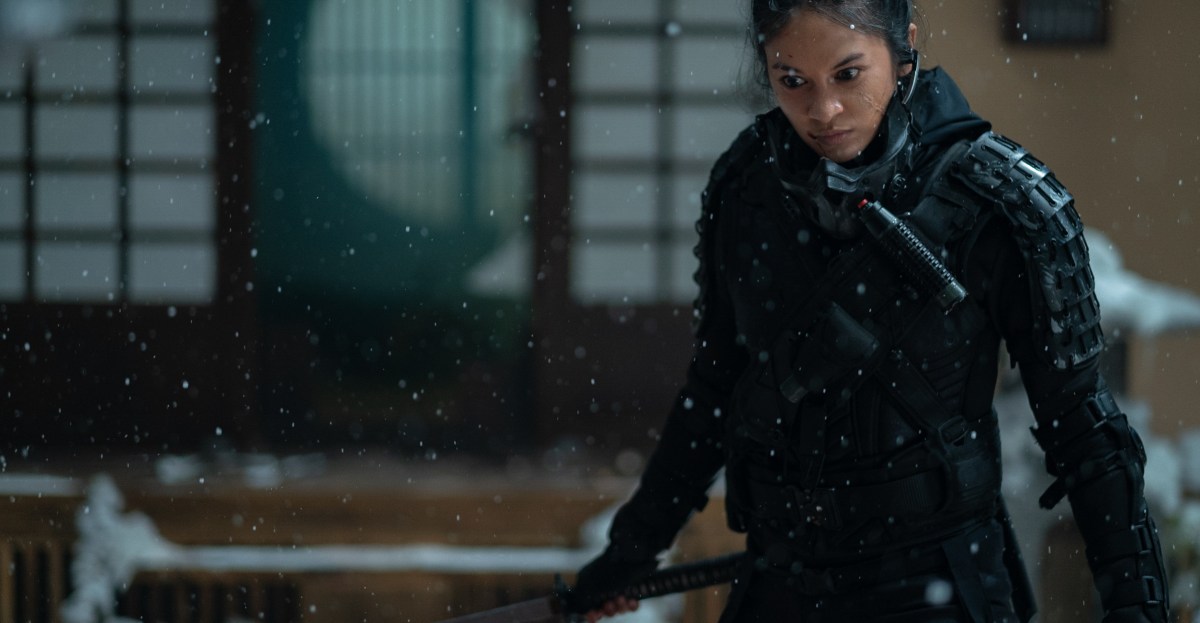
His new movie, The Shadow Strays, premiered at the Toronto International Film Festival in September, and finally dropped on Netflix on Oct. 17. It follows a teenage soldier who is being trained as a member of an elite group of top-secret assassins called the Shadows. When a mission goes wrong, she’s sidelined by the Shadows and gets entangled in a dispute between her young neighbor and local gangsters. Like most Tjahjanto projects, the film features several decapitations and “gallons” of blood. (The director estimated 85% of the blood was practical — like many splatter fans, the man loves squibs.) It’s also one of 2024’s best action movies.

But Tjahjanto doesn’t consider himself a particularly gory filmmaker — he sees his movies as a way to be honest about real-world consequences of violence. A self-described “indulgent” filmmaker, Tjahjanto — wearing a Nine Inch Nails shirt and feeling “exhausted and relieved” after recently wrapping filming on the upcoming Nobody 2 — spoke with Polygon about his approach to gore in action, his cinematic influences, and sticking with practical blood when the rest of the industry is moving to CG effects.

This interview has been edited for concision and clarity.

Polygon: I think of you as one of the gorier action directors working today. Do you see yourself that way?

Timo Tjahjanto: I don’t know. I don’t really think so. Granted, I haven’t seen them — not because I don’t want to see them, but just because of the timing of it all and the accessibility of it all — but I’ve heard there are films like Kill and Project Wolf Hunting that seem to be doing quite OK in that department. From what little clips I’ve seen, they seem to be way bloodier.

I think there was a phase in my life — when I just started as a filmmaker, I did this little film with Kimo [Stamboel], my friend. It’s called Macabre, one of the first Indonesian slasher films. And I think at the time, our goal was like, Let’s be the goriest Indonesian flick ever. But weirdly, after The Night Comes for Us and everything, I just don’t feel like I was necessarily aiming for gore. I think it’s just that there needs to be a certain, weirdly enough, respect to violence and what it can do to the human body. I feel like we have to, in some way, hold ourselves accountable as filmmakers to show just how traumatizing violence can be.

In The Night Comes For Us, three bloody men (and one small girl) hold bloody knives and look towards the camera

The Night Comes for Us
Image: Netflix

We live in a violent world. If you see what’s on the internet, what’s on formerly known as Twitter, X, just the accessibility of violent content — people from a lot of parts of America, for example, there’s a lot of people getting riled up and start beating each other up for nothing. Not that I’m saying America is the only violent place. I think the world generally has become a much more violent place, or much more exposed to the media. It’s weird when people see my films like, Holy shit, that’s so gory and violent! I’m like, Man, have you seen the real world? It’s so fucking crazy out there that I feel like sometimes my film is a PG version of it.

I’m glad you brought up the respect for violence, because one of the reasons I’m drawn to your approach to gore in action is because it feels more honest. If you’re not showing that level of destruction, you’re sanitizing the violence, and not being honest with the viewer about the actual effects of what’s happening.

That’s what I always try to do. I think the human body is weirdly fragile and resilient at the same time. If any of your bones have been broken, or if you’ve ever had a deep cut, it’s so weird how biology reacts to it all.

But beyond that, gore can also add stakes to a scene, it can add excitement, it can add humor. How do you balance those elements?

Well, that’s the thing. I think at a certain level, violence has to become funny. And I learned this from, or I copied this from, the great Takashi Miike. I think he’s always walking that line, realizing that the world is a crazy, fucked-up place, and one way you can deal with it is by using a lot of humor. If you watch something like Ichi the Killer, for example, that thing is dark, man. In Takashi Miike’s world, everything is fair and square. Women, men, we are both capable of violence, and we are both capable of being the victim. And I try to do that in my films.

A fight in The Shadow Strays — one man, wearing a suit, has a sword, while another person in all-black armor blocks the sword with their armored forearm

The Shadow Strays
Image: Netflix

One example I think is interesting is The Big 4, which has a tonal difference from your other movies.

Well, I think just because it’s gory doesn’t necessarily mean it has to be a feel-bad movie. I think that works quite well. Bad Boys can be a feel-good experience, and it has its moments of violence. And gore, especially if you’re talking about Bad Boys II — Michael Bay really pushes the limit to what kinetic violence can be. And I always feel like, you can make a less violent film and it becomes a much gloomier film, but you can also make a much more splattery and “head getting blown off by a shotgun” movie, and it still in the end has a heartwarming quality to it. Look at Shaun of the Dead, one of my favorites. And that thing is the ultimate feel-good film… depending on how you look at it.

You brought up Macabre earlier. Do you think your horror roots have an impact in terms of your perception of gore in action?

Kind of, yes. But having said that, I think it’s also childishness. Look, part of the beauty in horror is, you don’t necessarily need to be gory in terms of the approach to thrills. And as much as I would love to say, “Oh, I’m very well-versed in horror,” I think right now I’m only well-versed in a specific type of horror, which is one that is often violent. I think a lot of that comes from me growing up on Friday the 13th and Texas Chain Saw Massacre. Texas Chain Saw Massacre has such a huge impact on me in terms of how I look at violence, which is relentless.

I probably watch it maybe once or twice a year. It never ceases to amaze me. When you’re in your teens and you watch it, you think it’s the bloodiest film ever. And then when you watch it again after you’ve grown up, there’s hardly any blood in it. It is pure terror and it’s pure viscerality without actually showing you anything. And there lies the genius of Tobe Hooper making this film. So yeah, I’m just a little bit less disciplined than people like Tobe Hooper.

Timo Tjahjanto and Aurora Ribero smiling and laughing on set of the Shadow Strays

Tjahjanto and Ribero on the set of The Shadow Strays
Image: Netflix

I loved what you had to say to some critics of The Shadow Strays about how filmmaking is an indulgent act, and I really appreciate that you see it that way, that making art is something that you do for yourself, and the hope is that other people are on board with you.

I think that’s the thing. I don’t mean that to attack a critique: I think when I saw the critique, I was like, Oh, well, I agree with a lot of it. I think honestly, I’m the kind of filmmaker who always goes for character first and plotting later. So that’s why my plots tend to be simplistic. And I do admit that I feel, well, most stories have been told. For me, it’s better to rely on the humanity of the characters and hope that the audience can hold onto that.

But when people say, “Hey, too much self-indulgence can be too much of a good thing,” I feel like, Well, no. Because here I am given enough freedom, thankfully, by Netflix to do almost everything that I want to do, and I think I have to sort of indulge in it rather than restrain myself, even though I am still restraining myself. If I went full indulgence, I think you’d see a lot of kinkier shit in it, and all these sick sort of violent images that I have. I always feel like, a movie-watching experience, you have to be able to give everything you’ve got to the audience. It’s not like a series, it’s not like The Boys, where you might fail in the first episode or second episode, but you can make it up in the eighth episode.

I just feel like, Well, I have this many hours, and I just want to give my audience the shit that they want. Look at RRR — that film is self-indulgent as fuck, and it’s one of the best films ever made in the world. I just feel there’s a time for self-restraint, but action is one of those genres where you just need to keep on pulling the trigger. Someday I’ll be a better writer and I’ll probably do better plotting, but for now, I’m still learning.

A woman with a sword stands over a decapitated body which has leaked blood onto the snow in a cropped poster for The Shadow Strays

The Shadow Strays
Image: Netflix

The depiction of blood and gore has changed over time, with new technology leading a lot of productions to move away from practical blood and squibs and over to VFX blood. What’s your philosophy on that?

It’s weird. I saw that there was a critique [of The Shadow Strays] that says, Oh, the use of CGI blood. Weirdly, Shadow Strays is like 85% practical blood. I think that it’s just because of the technology that I use, which is a lot of blood tubing and all that stuff. It does look excessive to the point that you think it’s actually CGI. I pride myself in taking a lot of time for The Shadow Strays. Things can get long in the shooting process, just because placing all those squibs and blood tubes takes time.

That’s what I always hear, is how much it expands the budget and your time just from cleaning up between takes.

Exactly. And costumes, and all those little things. Fortunately, making films in Indonesia, I can sort of afford it. So I actually indulge the fuck out of making all those things. Watching The Shadow Strays so many times through editing, I had the suspicion people are going to think this is actually CGI blood, even though it’s actually meticulous condom use and timed blood tubes and all that stuff. I’m a proponent of using as many squibs as possible. I know that’s cumbersome. But actors react better to it. They react, they feel the pain. They feel like, Oh shit, blood’s really spurting out of me. And that always helps.

There are some enhancements, just because sometimes the blood doesn’t redirect the way it should. But man, we were having fun. There were always gallons of blood behind the camera where we pump it up there. Especially for the first sequence — that whole Japanese sequence is me being inspired by Takeshi Kitano’s Zatoichi, but he was using CGI blood. I was thinking, I want to be like Kitano, when he just completely goes batshit with blood, but I’m going to try to use practical blood tubes. So that’s what we did, man.

Aurora Ribero, wearing a purple hoodie, holds a bloody knife in what looks like a dance club in The Shadow Strays

The Shadow Strays
Image: Netflix

You’ve mentioned Kitano, you’ve mentioned Miike, you’ve mentioned Tobe Hooper. Are there any other big figures for you when it comes to depicting violence on screen and their use of gore?

Martin Scorsese. When he’s shooting violence, it’s almost like he sometimes reverts back to being a young filmmaker. And I think he always has that spirit of being a young filmmaker. That’s the beauty of him. He can be 89 and he still shoots like a 35-year-old Sam Peckinpah on coke and LSD. One of the best violent scenes that I think is often overlooked is actually in The Departed, when Jack Nicholson and Ray Winstone got ambushed. Just like this fucking crash zoom lands and [there’s] fucking blood and [mimics the blood spraying everywhere] and all that shit. And I was like, Man, that’s fucking beautiful! I want to steal that shit. But I still don’t have enough skill to do it. Someday!

Do you have a favorite spot of gore in The Shadow Strays?

Aurora [Ribero], who plays 13, I always said to her, “You are skilled, but you are also clumsy. That’s the whole point of your character. You have a lot of endurance because you are young,” as she is truly in real life, “but you are often clumsy in your fighting. But once we hand you a sharp-edge weapon, you go berserk.” Whenever she’s given any weapon of sharp edge, be it a kitchen knife, be it a fucking screwdriver, she just goes crazy. I always loved that.

By the end of shooting, she became so good at it. It’s so fucking cool. She never had any martial arts experience, and whenever she does the stabbing, it’s almost like somebody who’s been living in prison for 30 years and is a master shanker. She’s so good. And there’s a whole sequence later in the film, when she fights a certain somebody and she just uses a screwdriver to go crazy — I think that’s one of my favorites, just because of how ridiculous it looked with the blood and everything, and just how well it makes sense, because at this point she doesn’t have anything to lose. She’s just going crazy, and I love that.

The Shadow Strays is on Netflix now.

Tomb Raider season 2: Lara Croft’s next arc explained by creator


Tomb Raider fans, bless them, spend a lot of time wondering how the series all syncs up. If the Lara Croft we saw in the original ’90s games is the same one as the rougher-around-the-edges Lara from the Survivor trilogy, then what happened in between to have it all make sense?

Luckily, answers appear on the horizon. Tomb Raider developer Crystal Dynamics has already paraded around a new design for Lara that incorporates her post-Survivor trilogy look with throwback costuming, a commitment to the “unified” timeline. But as far as the story goes, the new Tomb Raider: The Legend of Lara Croft is doing some major lift.

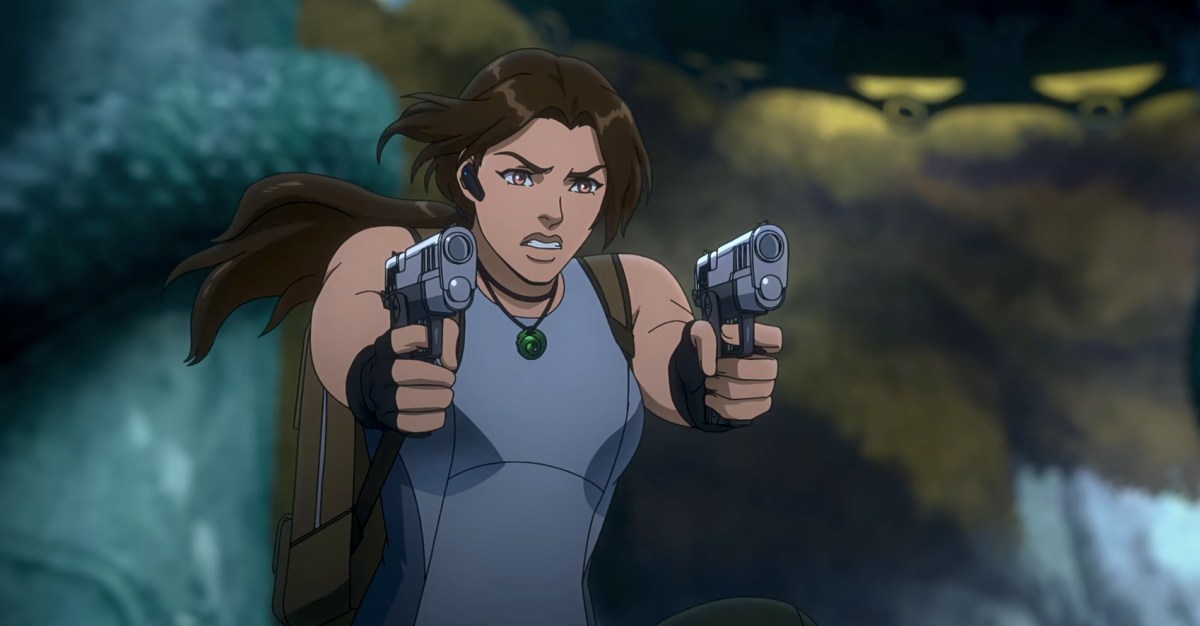
Earlier this month, showrunner Tasha Huo told Polygon that her goal for the Netflix animated series was to chart the gap between the Survivor trilogy and classic games. But Lara doesn’t get there by the end of season 1, even after defeating the Light, finding closure over the death of Conrad Roth, re-bonding with his daughter Camilla Roth, hugging it out with Jonah, and accepting her first pair of dual pistols. That’s because Huo knew that if the show was a hit there’d be more stories to tell, and she didn’t want OG Lara to suit up quite yet.

“I don’t want to just fast-track her to becoming classic Lara because it takes a lot to build that woman,” the showrunner says. “So season 2 will build upon what we’ve already seen and grow her even closer.”

Specifically, Lara will set off on a search for Sam, her filmmaker friend who first appeared in 2013’s Tomb Raider. Sam was working on a job “overseas,” last Jonah heard from her, but a dropped phone call from the old friend is enough to put Lara on high alert. The ending of season 1 only teases a few scant details of where the adventure may lead her: in Sam’s apartment, Lara finds signs of a struggle — a broken coffee mug, a tipped-over chair, a shattered picture frame — and a yarn board tying some stolen artifacts to a shady tracksuit-wearing dude with a scar and photos of cocaine.

Huo wasn’t ready to spoil any plot details, but says it’s carefully plotted so that Lara continues to grow and has room to venture on if Tomb Raider was to earn even more seasons. A top priority in season 2: Continue to draw out Lara’s sense of humor.

“Maybe she finds it in Sam,” Huo says. “Sam has a lighter personality. There’s also just a lot more for Lara to learn. So in success and in these infinite seasons, we get to explore all the lessons and how those adventures actually challenge her to take those increasing steps closer to being the woman we remember from the ’90s.”

For Huo, that classic version of Lara is also hyper-composed, in a way that she just isn’t at the stage of her life in which Tomb Raider: The Legend of Lara Croft is set. Yes, Lara Croft would rather raid a tomb than go to therapy — but Huo intends to help the character find her composure in the next archeology-fueled globetrotting mission. Just as the history-buff showrunner wants to inject Tomb Raider with tons of real history and culture specificity, she also wants to bang the drum for legit self-care.

“So much of that comes from meditation, balance, having all of these messy things inside you yet still somehow finding a way through calmness and self-composure,” Huo says. “I’m a big proponent of therapy and self-analysis as a way to just grow as a human being. It’s fantastic. And I’m glad Lara can do it. She hates therapy! So using adventure as therapy is a really great way for Lara to learn how to be better.”