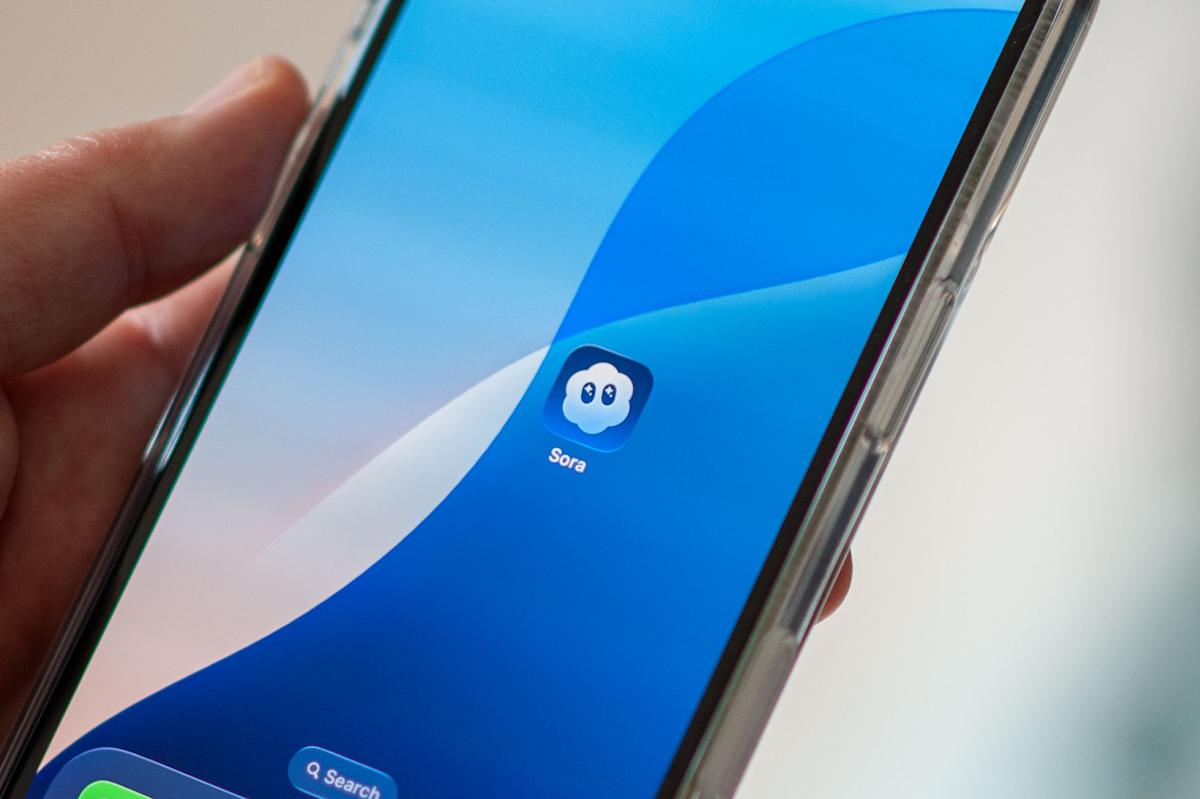
On Tuesday, OpenAI announced the release of Sora 2, an audio and video generator to succeed last year’s Sora. Along with the model, the company also launched a linked social app called Sora, where users can be able to generate videos of themselves and their friends to share on a TikTok-style algorithmic feed. OpenAI’s work on a new social platform was previously reported by Wired.
While we haven’t been able to test the invite-only app and Sora 2 model ourselves yet, OpenAI has shared impressive examples. In particular, Sora 2 is better at following the laws of physics, making the videos more realistic. OpenAI’s public clips depict a beach volleyball game, skateboard tricks, gymnastics routines, and cannonball jumps from a diving board, among others.
“Prior video models are overoptimistic — they will morph objects and deform reality to successfully execute upon a text prompt,” OpenAI wrote in a blog post. “For example, if a basketball player misses a shot, the ball may spontaneously teleport to the hoop. In Sora 2, if a basketball player misses a shot, it will rebound off the backboard.”
The Sora app comes with an “upload yourself” feature called “cameos,” which allows users to drop themselves into any Sora-generated scenes. In order to use their own likeness in a generated video, users will have to upload a one-time video-and-audio recording to verify their identity and capture their appearance.
This feature also allows users to share their “cameos” with their friends, allowing them to give other users the permission to include their likeness in videos that they generate, including videos of multiple people together.
“We think a social app built around this ‘cameos’ feature is the best way to experience the magic of Sora 2,” the company wrote.
The Sora iOS app is available to download now and will initially roll out in the U.S. and Canada, though OpenAI says it hopes to expand quickly to other countries. While the Sora social platform is currently invite-only, ChatGPT Pro users should be able to try out the Sora 2 Pro model without an invite.
Techcrunch event
San Francisco
|
October 27-29, 2025
Once videos are generated, they can be shared in a feed within the Sora app, which seems like it’ll be similar to TikTok, Instagram Reels, or other short form video feeds. Interestingly, Meta announced just last week that it added a video feed called “Vibes” to its Meta AI app (it’s basically all mindless slop).
To curate its algorithmic recommendations, OpenAI will consider a user’s Sora activity, their location (attained via their IP address), their past post engagement, and their ChatGPT conversation history, though that can be turned off. The Sora app also ships with parental controls via ChatGPT, which allow parents to override infinite scroll limits, turn off algorithmic personalization, and manage who can direct message their child. However, these features are only as powerful as the parent’s technical know-how.
The Sora app will be free at launch, which OpenAI says is “so people can freely explore its capabilities.” The company says that at launch, the only plan for monetization to charge users to generate extra videos in times of high demand.
The launch of a social platform will require significant user safety measures from OpenAI, which has struggled with the same issues in ChatGPT. While users can revoke access to their likeness at any time, this sort of access can easily be abused. Even if a user trusts someone they know with access to their AI likeness, that person could still generate deceptive content that could be used to harm that person. Non-consensual videos are a persistent problem with AI-generated video, causing significant harm with few laws explicitly governing platform responsibility.